The unforeseen consequences of Iranian resistance

Thierry Meyssan, Voltairenet.com, Tue, 17 Mar 2026, https://www.sott.net/article/505569-The-unforeseen-consequences-of-Iranian-resistance
By resisting the illegal attack on their country by Israel and the United States, the Iranians brought the “paper tiger” to its knees. In a matter of days, they demonstrated that the Pentagon’s sophisticated and expensive weapons were ill-suited to their highly economical approach to warfare. They disrupted the global oil market, which underpins the US dollar. Finally, they provided a new model that all opponents of Anglo-Saxon dominance are now considering. It has already led China to completely revise its defense plans in the event of a US attack on Taiwan.
The war against Iran is unlike any other. For the first time, the targets destroyed are of little importance. The protagonists are focused on the economic consequences of their actions. This experience is revolutionizing the way wars are waged and has already led the Chinese People’s Liberation Army to revise its battle plans.
A Shaheh drone costs approximately $35,000. To shoot it down, the United States would need to launch two Patriot missiles, each worth $3.3 million. If they allow the Shaheh drone to hit any target, it would be assumed that they are incapable of defending themselves or their allies. By launching a drone, Iran is guaranteed to force the United States to spend $6.6 million, roughly 188 times their initial investment.
The United States does possess the Merops anti-drone system. However, these systems have only been in the testing phase for the past year and a half in Ukraine. They are also deployed along the Polish and Romanian borders. The Pentagon has decided to reduce its troop presence on NATO’s eastern front in order to deploy its Merops systems to the Gulf.
“We received a specific request from the United States for protection” against Iranian drone systems, said Ukrainian President Volodymyr Zelensky on March 12. Ukrainian officers immediately joined the mission in the Gulf.
Furthermore, the United States has been experimenting with anti-drone lasers for years. It’s a highly economical solution, but currently, we don’t know how to use these weapons, let alone how to mass-produce them. It will be many years before the Pentagon uses them on the battlefield.
Furthermore, Patriot missile stocks are dwindling rapidly. While the Pentagon maintains secrecy regarding available stockpiles, it is diverting resources from all other fronts to deliver Patriots to the Middle East. All that is known is that the US military-industrial complex cannot produce more than 700 per year, while Iran has already launched several thousand Shahed missiles.
We are only concerned here with the destruction of Shahed drones. The defense of the United States and Israel against long-range missiles is not only a financial problem, but also, in the very short term, the depletion of THAAD interceptor missiles, of which only about ten can be manufactured per week . [ 1 ]
In any case, the United States officially spent $5.6 billion on munitions in the first two days of its illegal war against Iran [ 2 ] . This amount rose to $11.3 billion, according to a Pentagon statement to Congress on March 10. With 1,444 Iranians killed as of March 12, according to the Iranian Ministry of Health [ 3 ] , this works out to a cost of approximately $8 million per life! The most expensive war in history.
By comparison, Iranians have experienced two major traumas: World War I — which claimed more lives in Iran than in Germany and France — killed approximately 6 million people.The war imposed by Iraqkilled at least 500,000 Iranians. It is therefore understandable that the few hundred deaths recently will not sway the country.
Another Iranian innovation is the retaliation Tehran has launched against its neighbors. Invoking international law and statements by Israeli and American leaders, Iran has attacked US military bases in the Gulf and the Levant. I am not referring here to attacks by the Lebanese Hezbollah (the Party of God) or the Iraqi Saraya Awliya al-Dam (the Guardians of Blood Brigade), but solely to Iranian attacks.
Iran, stunned, reminded the West of Resolution 3314 (XXIX), dated December 14, 1974 [ 4 ] . Adopted without a vote by the United Nations General Assembly, it clarifies the concept of aggression to which the Charter of San Francisco refers. The international press, dominated by Anglo-Saxon media, has become convinced that international law prohibits entry into another country’s territory. It was on the basis of this prejudice that the General Assembly condemned the Russian special military operation in Ukraine. Iran has resurrected this forgotten text.
This text authorizes the use of force to assist “peoples subjected to colonial or racist regimes,” as is the case with Russian aid to the Donbas republics (Article 7). It prohibits not only aggression against Iran by Israel and the United States, but also third-party states hosting Israeli or US military bases participating in the aggression (Article 3) from doing the same.
Consequently, Iran has the right to retaliate against the territories of the Gulf States and the Levant.
We observe that these states are reeling from the Iranian response and that their economies are paralyzed. These states, primarily those in the Gulf, are major oil producers. They are therefore attempting to break free from Israel and the United States, which until now guaranteed their security but are now responsible for their misfortunes. If their desire for independence were to lead them to sell their oil not in US dollars, but in other currencies, the value of the dollar would collapse. Indeed, its value is not guaranteed by the US GDP, but by the international hydrocarbon market. During the kidnapping of President Nicolás Maduro, we emphasized that the United States was not seeking to seize the country’s considerable oil reserves, but to re-establish oil trading in dollars. What succeeded in Venezuela could fail in the Middle East and mark the beginning of the end for the United States.
What is happening today in the Middle East is suddenly inspiring all the states that complain about US domination. Starting with China:
Beijing is preparing for a conflict with the United States and Japan over its Taiwan region. It’s important to remember that China has no intention of invading the island, but considers any attempt to grant it independence an act of aggression. From its perspective, Chiang Kai-shek had no right to secede, and Taiwan remains a Chinese region. The Kuomintang, Chiang Kai-shek’s successor party, agrees with this view; only the very small Democratic Progressive Party (DPP) of President Lai Ching-te seeks independence. This issue only arises because the United States is raising it.
Beijing has just realized that international law allows it, in the event of US aggression, to retaliate against US military bases in the Asia-Pacific region. In the blink of an eye, the People’s Liberation Army has completely revised its plans [ 5 ] . It has redirected its missiles, no longer towards Taiwan, but to target the 24 US military bases in the region.
This shift is being followed by all states hosting US military bases, which are now anticipating the difficulties faced by the Gulf and Levant countries. Undoubtedly, they will soon reconsider their presence.
Beyond the Iranian conflict, it now appears that Iran’s model of resistance is compelling for all those who anticipate a military conflict with Washington and that it is revolutionizing the way we understand the balance of power.
It is important to understand that the United States allowed itself to be manipulated by its own propaganda. It convinced itself that the events following the collapse of Ayandeh Bank resulted in over 40,000 deaths, all attributable to the Revolutionary Guards. This is obviously grossly false. Most of the victims were attributable to ISIS attacks and the panic created by snipers positioned on rooftops, killing both protesters and police officers. As for the actual number, it is at least six times lower.
Similarly, they convinced themselves that all these protesters were “anti-regime,” assuming that those demanding the return of their bank deposits were necessarily against Ayatollah Ali Khamenei. In doing so, they lumped together economic protesters, those opposed to religious totalitarianism, and those who aspired to Western-style governance. They are now discovering that one can be ruined by the banking system, resent the mullahs, be captivated by American series broadcast in Persian by some forty Western television channels, and still defend one’s country.
This miscalculation, comparable to the one that led them to organize the departure of the shah, Reza Pahlavi, and the return of Imam Ruhollah Khomeini, led them to military defeat, or even their own downfall.
References:
[ 1 ] ” US Military Operations Against Iran: Munitions and Missile Defense “, Hannah D. Dennis & Daniel M. Gettinger, Congressional Research Service , March 12, 2026.
[ 2 ] ” Early Iran strikes cost $5.6 billion in munitions, Pentagon estimates” , Noah Robertson, The Washington Post , March 9, 2026.
[ 3 ] ” US’s Hegseth claims new Iran Supreme Leader Mojtaba Khamenei injured “, Al-Jazeera, March 13, 2026.
[ 4 ] ” Definition of aggression “, Voltaire Network , December 14, 1974.
[ 5 ] ” How Iran’s strikes on US bases could offer a preview for the Asia-Pacific “, Amber Wang, South China Morning Post , March 11, 2026.
Can Prospects for Nuclear War Get Any Worse? Sure, We Can Put AI in Charge

How quickly is the Pentagon moving toward handing the nuclear keys over to AI systems and Big Tech? No one really knows.
Tom Valovic, Apr 05, 2026, https://www.commondreams.org/opinion/ai-increase-nuclear-risk
Can we possibly get away from AI’s ubiquitous presence in our lives? But as long as AI is now in our faces 24/7, it’s time to seriously start pushing back about its outsized and overwhelming influence. Troubling stories tumble out of the media daily. Employees in a major fast-food chain must now wear AI headsets that tell them how friendly they’re being to customers and coaching them on their work. (AI is now posing as our servant, but in the years ahead will the dynamic be reversed?)
And then there is the looming data center controversy, with Big Tech companies rapidly taking over huge swaths of land across the US to build massive and environmentally unfriendly data centers. Fortunately, this trend is now emerging as a campaign issue given early and cascading effects on electricity prices. In general, AI is having a tough year in the court of public opinion. Witness this cover story in a recent issue of Time magazine: “The People vs AI.” The article noted that “a growing cross section of the public—from MAGA loyalists to Democratic socialists, pastors to policymakers, nurses to filmmakers—agree on at least one thing: AI is moving too fast…. A 2025 Pew poll found… the public thinks AI will worsen our ability to think creatively, form meaningful relationships, and make difficult decisions.” Along with Immigration and Customs Enforcement-related pushback, a spontaneous wellspring of grassroots activism appears to be bubbling up against the AI juggernaut and the patently undemocratic backdoor power grab by technocrats and the companies behind them.
One of the greatest concerns in the public sphere is AI’s rapid incorporation into present and future military campaigns. This is actively being encouraged by the Trump administration’s decision to give AI companies free reign to develop their products with minimal regulation and oversight. This is an existential train wreck waiting to happen, and it came into striking focus in the monthslong dispute between AI company Anthropic and the Pentagon. Although it was already using the Claude platform, Secretary of War Pete Hegseth was unhappy with the company’s refusal to use it to remove human decision-making from military operations and support accelerated mass surveillance of US citizens.
Anthropic’s move was that rarity in Big Tech circles, a strong and principled ethical stand against an administration that doesn’t seem to know what that is. Happy warrior Hegseth then branded the company as a “supply chain risk,” effectively banning further use by the Pentagon and punishing the company’s overall viability in the non-defense marketplace as well. Ever the opportunist, the CEO of OpenAI, Sam Altman, then jumped in to offer his AI platform to do what Anthropic wouldn’t. The matter is now in the courts.
Handing AI the “Nuclear Football”
Using AI to create what are called autonomous systems represents a quantum leap in the rapidly advancing business of modern weaponry. Paradoxically, weapons technology is being simultaneously downsized through the use of drones and smaller and sophisticated high-tech devices (such as mine sniffers) and upsized with the use of the AI systems designed to manage and control them.
This raises the very troubling picture of wars being conducted without much human oversight. It’s probably one reason even high- profile AI influencers and Big Tech CEOs have admitted (sometimes a little too casually) that the technology could destroy humanity given the right set of circumstances. While autonomous systems can apply to stand-alone weapons such as killer robots, the most worrying concern relates to the Pentagon’s desire to build and deploy command-and-control systems that remove military officers from the split-second decisions that need to be made in warfare. And yes, that includes nuclear weapons.
If AI is truly as superintelligent (and sentient) as its Big Tech proponents claim it is, then these systems should also be smart enough to refuse to participate in any projects that could degrade or destroy life on the planet.
How quickly is the Pentagon moving toward handing the nuclear keys over to AI systems and Big Tech? No one really knows. When questioned by a reporter on the matter, one senior official in the Trump administration weakly demurred, “The administration supports the need to maintain human control over nuclear weapons.”
AI experts and strategic thinkers say that a big driver of this process is that America’s top nuclear adversaries—Russia and China—are already using AI in their command-and-control systems. These developments are happening at lightning speed and are being further propelled by Epic Fury, the first AI-fueled war in US history. And let’s not be too laudatory about Anthropic. Its Claude system has been integrated with Palantir’s Maven to identify military targets. The Pentagon is still investigating whether Maven played any part in the horrific event when a US Tomahawk missile struck a girls’ elementary school killing more than 165.
Sleepwalking Into Armageddon?
What madness is this? By what shallow calculus can a handful of powerful individuals or shadowy organizations decide or even risk the fate of humanity? How do we put all of this dangerous thinking at the highest levels of our government into some kind of perspective that correlates with common sense and basic human decency? In our trajectory toward what some have called techno-feudalism, we have this apparent plunge into barbarity coupled with a powerful array of tools to accelerate it. When nuclear activist Helen Caldicott warned that Western civilization is “sleepwalking into Armageddon,” it was perhaps this particular kind of blindness that she had in mind. And the brilliant socio-biologist E.O. Wilson’s profound observation also springs to mind: “The real problem of humanity is the following: We have Paleolithic emotions, medieval institutions, and godlike technology. And it is terrifically dangerous.”
The rush to deploy AI as large-scale weaponry with every bit as much destructive potential as our existing nuclear arsenal is a tip off to the deeper motivations behind its development. In the meantime, some obvious questions need to be asked. Why aren’t government and academic institutions eager to apply these advanced AI tools to the many intractable problems that characterize world polycrisis such as global climate change or better distribution of scarce resources including food and water? Where are the urgent calls from those who serve in Congress to do so? Or why don’t we see headlines like “Harvard Inaugurates $100 Million AI Project to Address Climate Change”?
It seems pretty clear that AI justifications coming from the both the administration and Congress (not to mention that the establishment commentariat that serves them) invariably gravitate to enhancing corporate productivity or military use. And it’s equally clear that AI will also serve as yet another powerful mechanism of wealth transfer to the 1% and either knowingly or unknowingly act as a chaos agent in an increasingly unstable multipolar geopolitical world. If AI is truly as superintelligent (and sentient) as its Big Tech proponents claim it is, then these systems should also be smart enough to refuse to participate in any projects that could degrade or destroy life on the planet. I don’t see any evidence of this. Sadly, it looks like we may have to once again learn the hard way that information, knowledge, and wisdom all are very different things. And that while knowledge can be appropriated by powerful computers, wisdom will never be.
US War Machine Is Built on Decades of Lies. The Assault on Iran Is No Exception.

militarism and the warfare state are sustained by lies which stretch over decades. The ideology of American exceptionalism is driven by the myth that U.S. intervention plays a unique role in spreading freedom and democracy around the globe. Keeping the public uninformed and miseducated has been a key tactic to tamp down dissent.
The most common and continuous form these lies take is omission, erasing the pattern of U.S. war crimes from military records, history textbooks, and public memory.
Trump’s endless falsehoods about the Iran war build on a long history of US military mythmaking.
By Scott Kurashige ,Truthout, April 5, 2026, https://truthout.org/articles/us-war-machine-is-built-on-decades-of-lies-the-assault-on-iran-is-no-exception/?utm_source=Truthout&utm_campaign=a2177ce48d-EMAIL_CAMPAIGN_2026_04_05_04_39&utm_medium=email&utm_term=0_bbb541a1db-a2177ce48d-650192793
The first casualty of war is the truth.
This truism — understandably repeated at the outset of each new U.S. war — is proving itself once again.
With all evidence pointing toward U.S. responsibility for the February 28 bombing of Shajarah Tayyebeh elementary school, President Trump claimed that the attack “was done by Iran.” In spreading this blatant misinformation, Trump was not in fact shattering presidential norms — rather, he was continuing a White House tradition.
Back in 1945, in a public statement announcing the U.S.’s atomic bomb strike on Japan, President Harry Truman falsely described the city of Hiroshima as “an important Japanese Army base.” In fact, the overwhelming majority of those killed were civilians. The bomb targeted thousands of schoolchildren, including nearly 6,000 who died as part of a service patrol near the center of Hiroshima. In Nagasaki, more than 1,400 students and teachers at Shiroyama Elementary School were killed.
But like most students attending U.S. schools after World War II, I was taught that dropping the atomic bombs saved lives.
Long before George W. Bush asserted that Saddam Hussein had WMDs, dubious claims and outright lies served as pretexts for the U.S. to launch major wars. A jingoistic fervor following an explosion on the battleship USS Maine prompted the Spanish-American War in 1898. In 1964, LBJ cited a “phantom battle” to push the Tonkin Gulf Resolution authorizing military intervention in Vietnam.
Trump stands out mostly because he made little effort to sell his lies before going to war. In his prime-time address on April 1, 2026, he retroactively offered his first attempt to justify the war, claiming without evidence that Obama’s nuclear deal made Iran a greater threat and that Iran was on the cusp of aiming missiles at “the American homeland.”
Calling truth a casualty of war may imply, however, that truth survives between wars. But the reality is that militarism and the warfare state are sustained by lies which stretch over decades. The ideology of American exceptionalism is driven by the myth that U.S. intervention plays a unique role in spreading freedom and democracy around the globe. Keeping the public uninformed and miseducated has been a key tactic to tamp down dissent.
The most common and continuous form these lies take is omission, erasing the pattern of U.S. war crimes from military records, history textbooks, and public memory. This record of erasure has proven so effective that many of those speaking out against war crimes do not seem to understand the degree to which they, too, have been miseducated. Chastising the Trump administration’s response to the school bombing, The New York Times’s David Wallace-Wells recoiled at the notion of a mass civilian massacre being “treated by U.S. officials as the normal cost of waging war.”
That civilian massacres have been a regular feature of warfare under Democratic and Republican administrations throughout U.S. history has apparently been lost on Wallace-Wells and countless others. Racism and xenophobia play a crucial role in this erasure, as they are used to rally support for war while devaluing the millions of nonwhite lives lost in pursuit of U.S. interests. As General William Westmoreland said bluntly during the Vietnam War, “The Oriental doesn’t put the same high price on life as does a Westerner.”
In this way, war-related lies have been integral to the formation of our national identity.
This is particularly true for the series of wars stretching across East, Central, and West Asia since the late 19th century that I researched for my book, American Peril: The Violent History of Anti-Asian Racism. Rudyard Kipling’s invocation of “the white man’s burden” in his 1899 call for the U.S. to colonize the Philippines was unmistakably racist. But in its time, it was meant to be instructive: Waging the “savage wars of peace” required Americans to shed their “childish” innocence and embrace the brutish nature of imperial power.
The message was sadly taken to heart by U.S. troops in the Philippines, where lynching, torture, concentration camps, and mass murder became all too common. Some atrocities continued long after the U.S. declared an end to combat. In 1906, American troops on Jolo Island in the southern Philippines killed 1,000 Moro people in what the U.S. recorded as a great military victory over Muslim fanatics in the “Battle of Bud Dajo.” Recounted by historian Kim A. Wagner, it was a horrific massacre, whose victims included women and children, as well as outgunned or unarmed men attempting to surrender.
Regarding the firebombing of Tokyo during World War II, Robert McNamara admitted, “In that single night, we burned to death 100,000 Japanese civilians in Tokyo: men, women, and children.” After WWII, McNamara served as secretary of defense, overseeing the escalation of the Vietnam War that resulted in over 3 million deaths. The My Lai massacre, which was marked by wanton slaughter and sexual assault — was initially recorded as a successful defeat of “enemy” combatants in March 1968, but more accurate news about it finally broke through decades of silence on U.S. war crimes. Most Americans quickly bracketed it off, a horrific exception rather than the culmination of a pattern.
But My Lai was a near replay of tragedies from the Korean War that the U.S. military systematically covered up. South Koreans had long memorialized the hundreds of unarmed and defenseless civilians, from babies to elders, massacred by U.S. soldiers at No Gun Ri. It was only brought to the attention of the U.S. public, however, by a Pulitzer Prize-winning team of Associated Press reporters nearly a half-century later. Even today, mainstream histories largely ignore U.S. military involvement in the brutal partition and occupation of Korea.
And My Lai was far from the only civilian massacre in Vietnam. Indeed, on the same day, dozens of Vietnamese civilians in My Khe were killed by U.S. troops. American soldiers commonly used the most vile, racist epithets and dehumanizing stereotypes to characterize Vietnamese people — both combatants and civilians, friends and foes alike. “Murder, torture, rape, abuse, forced displacement, home burnings, specious arrests, [and] imprisonment without due process,” as author Nick Turse documented in Kill Anything That Moves, “were virtually a daily fact of life” for Vietnamese people.
Although the U.S. defeat in Vietnam caused veterans like Colin Powell to adopt a more protective approach to the deployment of U.S. troops, the pattern of civilian massacres continued. On February 13, 1991, over 400 Iraqi civilians taking refuge in a shelter were killed in Amiriyah by two laser-guided “smart bombs” in the U.S.-led war on Iraq. Though in this case U.S. officials did acknowledge the civilian deaths, they were largely dismissed as “collateral damage” from a strike on a military target.
Amnesty International investigated 10 incidents involving at least 140 civilians, including at least 50 children, killed in the U.S.-led war on Afghanistan, for which there were no war crimes prosecutions of any kind. Retired Lieutenant General Douglas Lute, the former deputy national security advisor, acknowledged, “We virtually never held anyone accountable for civilian casualties.”
Whether actively or passively, our culture — just as it fails to value all American lives equally — has internalized the lies that elevate the value of American lives far above those who look like the enemy.
None of this is meant to imply that the U.S. always targets civilians deliberately or to deny that America’s enemies have committed atrocious crimes against humanity. Lies and dehumanization are a common tactic that all parties use in war. But with America’s unrivaled post-WWII military and economic superpower has come the concordant privilege to act with impunity, to disregard what the rest of the world thinks of us, and to dismiss the suffering of others.
When the Tokyo Trials were set up after World War II to prosecute Japanese war crimes, the U.S. ensured that the conduct of its military was barred from review, setting in motion a chain of disregard for equitable governance under international law. Since 2002, the U.S. has failed to endorse the International Criminal Court. The Trump administration has gone much further, attacking and placing sanctions on its judges, while waging war on Iran with Israel as Prime Minister Benjamin Netanyahu is wanted for arrest by the ICC for war crimes in Gaza.
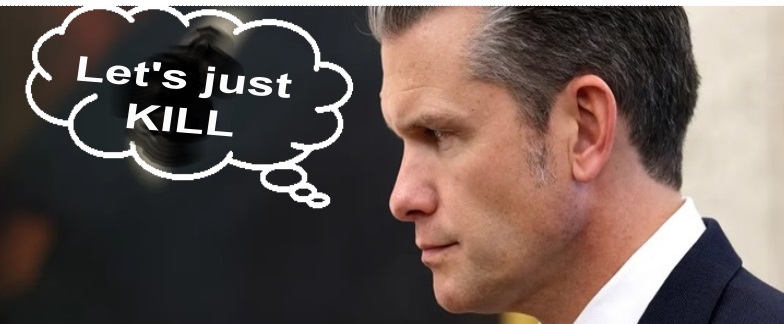
The incremental steps our own government has taken have been rapidly reversed, as well. Pete Hegseth, the Fox News host turned self-proclaimed “Secretary of War,” bombastically declared that “We negotiate with bombs,” while expressing disdain for “stupid rules of engagement.” Signaling this intent last year, he dismantled Pentagon programs intended to mitigate civilian harm. Such actions complement the misinformation campaign to eliminate “controversial” and “unpatriotic” topics from our public schools and national monuments.
But as the latest wrongheaded war reveals another layer of the United States’s limitations and declining power, those imperial privileges are waning. Trump’s threat to obliterate Iran’s civilian infrastructure should be opposed because it is a war crime in the making against innocent people and because such attacks could boomerang into a global economic meltdown, intensifying suffering at home and abroad.
Holding the individuals responsible for these decisions accountable — at the ballot box and under international law — is just the first step that people in the U.S. can take to become responsible citizens of a global community and stop the next atrocities before they occur. But we cannot wait for change to come from those at the top.
Historian Judy Tzu-Chun Wu has chronicled the diverse U.S. activists who built transnational and multiracial solidarity through travels to Vietnam while it was under siege from the U.S. Since the 1990s, the International Women’s Network Against Militarism has brought U.S. educators, artists, and activists together with women in many of the places most impacted by war and the negative effects of permanent overseas U.S bases. Their multifaceted efforts to overcome militarism advance a decolonial model of solidarity crossing Asia, the Pacific Islands, and the Caribbean.
More recently, the humanitarian aid flotillas acting to alleviate starvation and death in Gaza and Cuba owing to Israel’s and the U.S.’s respective illegal blockades serve as important examples of the people-to-people relations necessary to break the chain of the lies that have torn us apart for too long. Reckoning with the legacy of empire ultimately requires a level of awareness that can best be achieved through these forms of solidarity from below.
Did Trump bomb Iranian schoolgirls with UK-made weaponry?
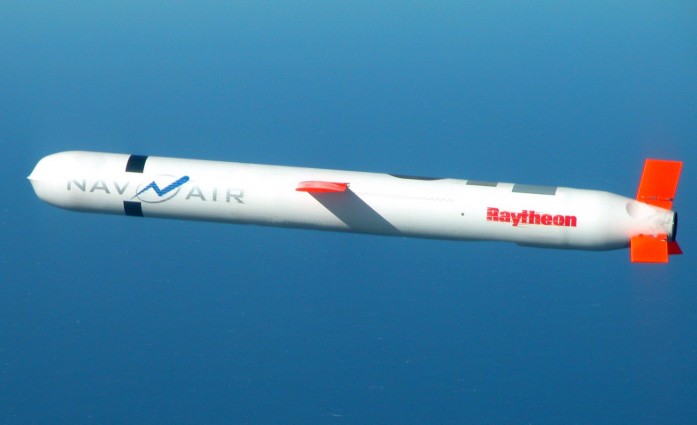
Exclusive: Scottish factory helps make US Tomahawk missiles reportedly used in attack on the Minab compound in Iran, where over 100 children were killed.
JOHN McEVOY, 9 March 2026
On 28 February, a girls’ primary school in southern Iran was hit by a missile, killing 168 people, mostly children.
The UN education agency, UNESCO, said the bombing of the Shajareh Tayyebeh school in Minab was a “grave violation of humanitarian law”.
Videos analysed by Bellingcat revealed yesterday that a US Tomahawk missile was used to hit another building inside the same compound, adding to evidence indicating the US was responsible for the school strike minutes earlier.
Neither Israel nor Iran is known to possess Tomahawk missiles.
The revelation raises serious questions about whether UK-made components were used in the attack.
This is because a factory owned by US arms firm Raytheon in Glenrothes, Scotland, has won several contracts to produce components for Tomahawk missile systems over recent years.
In 2017, Raytheon won a $260 million contract to make 196 Tomahawks, with 4.4 percent of the goods being supplied from its factory in Glenrothes.
A similar US navy contract published in May 2022 shows that around 3 percent of the Tomahawk supply chain was awarded to Raytheon’s site in Scotland.
Most recently, in December 2025, the Pentagon announced Glenrothes would have a 2.9 percent stake in making another 350 Tomahawks.
A defence industry website said this arrangement reflected the missiles’ “longstanding transatlantic supply chain”.
Campaign Against Arms Trade (CAAT) spokesperson Sam Perlo-Freeman told Declassified: “The UK arms industry is deeply entwined with the US. This is true of the F-35 aircraft that has played such a devastating role in Israel’s genocide in Gaza, and is now playing a crucial role in the illegal US-Israeli war on Iran.
“And it is true of the Tomahawk missiles, which appear to have been used to commit this horrific massacre of schoolgirls in Iran.
“Far from being a guarantee of international peace and security as the government claims, this arms producing partnership is a principal source of war, death and destruction across the world. It is time for the UK to stop fuelling this US-led war machine, and disentangle itself from it”.
Asked whether it will review and potentially suspend export of the components, a UK government spokesperson said: “We operate one of the most robust export control regimes in the world and keep export licences under continual and careful review”.
Raytheon was asked to comment.
‘Play a key part’
A parliamentary report published in 2012-13 noted that Raytheon’s site in Glenrothes “design and manufacture components, predominantly exported to the US, for guidance systems used in weapons like the Tomahawk missile”.
A Glenrothes manager said in 2020 the factory “designed and manufactured three power supplies” for the Tomahawk, adding: “This work enabled us to be involved in one of the US Navy’s flagship programmes and to play a key part in the manufacture of the electronics used in the system”.
Raytheon UK’s own website notes that its “advanced manufacturing business supports… Tomahawk long-range land attack cruise missile[s]”.
A CAAT report from 2021 found that “Glenrothes was the only Raytheon facility outside North America to play a part in the US-sold Tomahawk Missile production and is the sixth most involved of the 25-plus factories contributing to the weapon system”.
‘It was done by Iran’
The new evidence contradicts statements made by US president Donald Trump, who said on Sunday that the attack was launched “by Iran”.
He said: “They’re very inaccurate, as you know, with their munitions. They have no accuracy whatsoever. It was done by Iran”
NR Jenzen-Jones, the director of Armament Research Services, an intelligence consultancy that provides munitions analysis to governments and NGOs, told the Guardian: “The video shows a Tomahawk missile striking a target. Given the belligerents, that indicates it is a US strike, as Israel is not known to possess Tomahawk missiles”.
He added: “Despite various claims circulating online, the munition in question is clearly not an Iranian Soumar missile [as] the Soumar has a distinctive external engine located towards the rear, on the underside of the munition”.
Reuters reported on 5 March that US military investigators “believe it is likely that US forces were responsible” for the “strike on an Iranian girls’ school”.
Raytheon’s site in Glenrothes has previously been linked to war crimes in Yemen by Saudi Arabia, a key customer.
When Declassified visited the town in 2022, local primary school teacher Sharon Rickard said she was “horrified” to hear weapons made in her town might be used on civilians.
“I have a friend who works there as an engineer and she’s never really said too much about her job”, she said, “but maybe that’s why”.
Sanctity Lost: Even Neocon Pantheon Declares US a ‘Rogue Superpower’
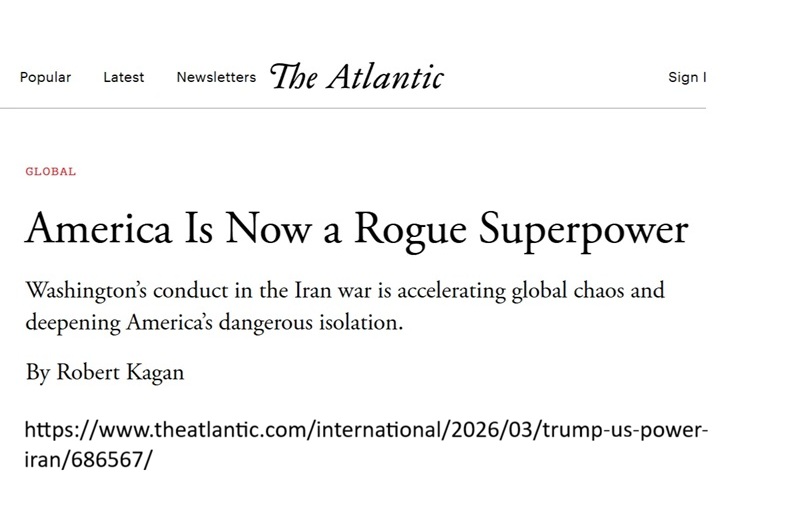
Well, it’s true: the US is a “rogue superpower”……….. because the US has abandoned even the pretext of ‘just’, righteous, or moral actions in the pursuit of outright predatory and misanthropically destructive global conquests far removed from any even remotely sensible connection to the US homeland or the interests of the American people. It is a rogue superpower because it has embraced “might is right” in a most cynical, transactional, and unapologetically unctuous way under the leadership of an unprecedented cast of unqualified (Hegseth a Field Grade, Trump a reality TV star, etc.), circus-like hucksters
It is a rogue superpower because it has totally abandoned the will of the people in pursuit of the financial interests of a tiny cabal of gangsters, themselves in thrall to an overseas mafia.
The era of American exceptionalism in the eyes of its most fanatic imperialists has drawn to an end.
Simplicius, Apr 03, 2026, https://simplicius76.substack.com/p/sanctity-lost-even-neocon-pantheon?utm_source=post-email-title&publication_id=1351274&post_id=192813600&utm_campaign=email-post-title&isFreemail=false&r=c9zhh&triedRedirect=true&utm_medium=email
Two weeks ago we had seen arch-neocon Robert Kagan making surprising comments to fellow neocon grandee Bill Kristol about Israel essentially being a burden to the US. This came as a shocking canary-in-coalmine moment signaling a kind of revolt amongst the deep state against the excesses of the current administration.
Now Kagan himself has penned an oped in The Atlantic outright calling the US a rogue state:
We know when such figures come out in this way, it represents true alarm behind the scenes rather than any kind of genuine benevolent empathy for the rest of the world. No, these people are alarmed that their empire has overstepped its boundaries, bit off more than it can chew, and is in a precipitous downfall.
Being that these figures have built their entire lives, careers, and oeuvres on hypocrisy, greed, contradiction, and other modalities of sin and deceit, it is not surprising that in the very opening paragraph of Kagan’s polemic, we’re immediately met with a rich hypocrisy:
Whenever and however America’s war with Iran ends, it has both exposed and exacerbated the dangers of our new, fractured, multipolar reality—driving deeper wedges between the United States and former friends and allies; strengthening the hands of the expansionist great powers, Russia and China; accelerating global political and economic chaos; and leaving the United States weaker and more isolated than at any time since the 1930s. Even success against Iran will be hollow if it hastens the collapse of the alliance system that for eight decades has been the true source of America’s power, influence, and security.
In Kagan’s twisted neocon worldview, it is China and Russia that are the “expansionist” powers when China has not done a single thing to any country—all of its ‘imagined’ schemes against Taiwan lie in the propaganda mills of the US military-industrial-complex. The US is currently occupying dozens of nations, has invaded several in the past year alone, is openly threatening to collapse or invade others like Cuba—but it is China that is ‘expansionist’. In Russia’s case, it is expansionist NATO that—urged on by the US itself—has been gobbling up the entire post-Soviet sphere to plop itself threateningly on Russia’s border, which caused Russia to finally react in Ukraine.
Though Kagan calls the US a ‘rogue superpower’, he does not actually liken its faults to those of Russia’s or China’s, which in his mind are far more pernicious. In reality, throughout the piece you realize he’s framing the term ‘rogue’ not to mean something particularly bad or unjust, but simply a state acting against the interests of the global deep state as represented by NATO and other US “allies”. In short, Kagan is arguing for the continuation of the Western Hegemonic Order and his critiques of the US amount to surface-level disagreements with Trump’s foreign policy, rather than the true deprecations aimed at the ‘bad guy’ states of Russia and China.
At least beneath the obligatory bias, Kagan remains lucid on the purely mechanical breakdown of the conflict thus far:
Some analysts have suggested that Russia and China have failed to come to Iran’s defense, and that this somehow constitutes a defeat for them, because Iran was their ally. But the Russians are helping Iran by providing satellite imagery and advanced drone capabilities to strike more effectively at U.S. military and support installations. And China has not suffered a loss in Iran insofar as Iran has granted safe passage to its oil shipments.
But he again quickly demonstrates the blatant hypocrisy his ilk have hung their hats on for generations:
More important, in Russia and China’s hierarchy of interests, defending Iran is of distinctly secondary importance; their primary goal is to expand their regional hegemony. For Putin, Ukraine is the big prize that will immeasurably strengthen Russia’s position vis-à-vis the rest of Europe. For China, the primary goal is to push the United States out of the Western Pacific, and anything that degrades America’s ability to project force in the region is a benefit. Indeed, the longer American attention and resources are tied up in the Middle East, the better for both Russia and China. Neither Moscow nor Beijing can be unhappy to see the war drive deep and perhaps permanent wedges between the United States and its allies in Europe and Asia.
The real showstopper, however, comes in the next few paragraphs, wherein Kagan effectively reveals the true secret reason behind the US’s perennial aggression against Iran, and again implies—as he did last time—that Israel is at the center of it:
The United States has long sought to prevent Iraq or Iran from acquiring weapons of mass destruction, but not because these countries would pose a direct threat to the United States. The American nuclear arsenal would have been more than adequate to deter a first strike by either of them, as it has been for decades against far more powerful adversaries. What American administrations have feared is that an Iran in possession of nuclear weapons would be more difficult to contain in its region, because neither the United States nor Israel would be able to launch the kind of attack now under way. The Middle East’s security, not America’s, would be imperiled.
Read that last part again because his point is not immediately clear without clarification: The only reason the US has terrorized Iran in the hopes of stopping it from developing nuclear weapons is not because those weapons would pose a threat to the US itself, but because a nuclear Iran would have credible deterrence in stopping the US and Israel from engaging in unprovoked aggression against Iran, the likes of which they are presently carrying out.
Can you say ‘Wow’?
Let’s read that again to make sure we’re not going crazy.
“What American administrations have feared is that an Iran in possession of nuclear weapons would be more difficult to contain in its region, because neither the United States nor Israel would be able to launch the kind of attack now under way. The Middle East’s security, not America’s, would be imperiled.”
But it gets worse.
Continue readingWar front updates: America opposes war on Iran

Wednesday, April 01, 2026, Organizing Notes, Bruce Gagnon
Americans have little appetite for sending troops to Iran, polls show
Only 14% of Americans favor sending ground troops into Iran, while 62% oppose this. Almost all Democrats and 66% of Independents oppose sending in ground troops, while Republicans are divided, with 30% in favor and 37% opposed.
In the DC mental asylum, they dreamt up the concept of “Greater North America”. In addition to the USA, it includes Canada, Greenland, Mexico, and the Caribbean countries. US Defence Secretary and professional drunkard, Pete Hegseth, displayed a map on which these regions are unified. Hegseth did not explain how these countries are supposed to be united, but emphasized: “Trump has drawn a new strategic map”. ……………………………………………………. https://space4peace.blogspot.com/2026/04/war-front-updates-america-opposes-war.html
Data centers are creating ‘heat islands’ on land around them – warming them by up to 16 degrees, researchers warn

Researchers found that roughly 340 million people now live within 6.2 miles of a data center.
Independent 31st March 2026
The rapid global expansion of data centers used to power artificial intelligence is creating “data heat islands” that significantly warm the surrounding environment, according to new research.
The study, led by researchers at the University of Cambridge, suggests that these vast AI data centers can increase local
land surface temperatures by an average of 3.6 degrees Fahrenheit (2C), with some extreme cases recording rises of up to 16.4 degrees Fahrenheit (9.1C).
This localized warming effect is estimated to affect more than 340 million people worldwide.
As the tech industry races to build “hyperscale” facilities — some spanning over a million square feet — to meet the computing demands of AI, researchers are warning of a lack of oversight regarding their environmental footprint.
There are still big gaps in our understanding of the impacts of data centers, even as they boom in number, Andrea Marinoni, associate professor at the University of Cambridge and an author of the study, told CNN.
Unlike previous research focused on carbon emissions or water usage, the study, which has not yet been peer-reviewed, examined the physical heat released by
server cooling systems and computation.
Researchers analyzed 20 years of satellite data from NASA sensors, mapping it against more than 6,000 data centers located away from dense urban areas to isolate the facilities’ effect from other factors such as residential heating or heavy manufacturing.
They found that the warming effect is not confined to the immediate vicinity of the buildings. Significant temperature increases were detected up to 6.2 miles away from the sites. The scale of this warming is similar to the “urban heat island” effect seen in large cities.
The study identified consistent warming trends across the globe, including in Spain’s Aragón province, where a surge of 3.6 degrees Fahrenheit (2C) stood out as an anomaly compared to neighboring regions.
A similar effect was seen in Mexico’s Bajío region, which has experienced unexplained temperature increases of approximately 3.6 degrees Fahrenheit (2C) over the last two decades as data center construction intensified.
In Brazil, researchers recorded even higher surface temperature rises of 5 degrees Fahrenheit (2.8C) across the states of Ceará and Piauí. The warming, centered around dedicated AI service centers in Teresina, was noted as particularly unusual for the region’s climate.
The findings come at a time when data centers are projected to become one of the most power-hungry sectors of the global economy. Within five years, the study warns, the electricity needed for data processing will likely “exceed the amount budgeted for manufacturing” worldwide.
Deborah Andrews, emeritus professor of design for sustainability at London South Bank University, told CNN that while concerns over data centers are growing, this research is the first to focus specifically on produced heat.
“The ‘rush for AI-gold’ appears to be overriding good practice and systemic thinking,” she said, “and is developing far more rapidly than any broader, more sustainable systems.”……………………………………………… https://www.independent.co.uk/climate-change/ai-data-center-heat-islands-usage-climate-b2949418.html
US-Israel war on Iran heightening nuclear accident risk – CND
“These countries are not only dragging the world into a major energy crisis not seen since the 1970s, they are increasing nuclear risks across the region.”
, By the Campaign for Nuclear Disarmament (CND),
https://labouroutlook.org/2026/03/31/us-israel-war-on-iran-heightening-nuclear-accident-risk-cnd/
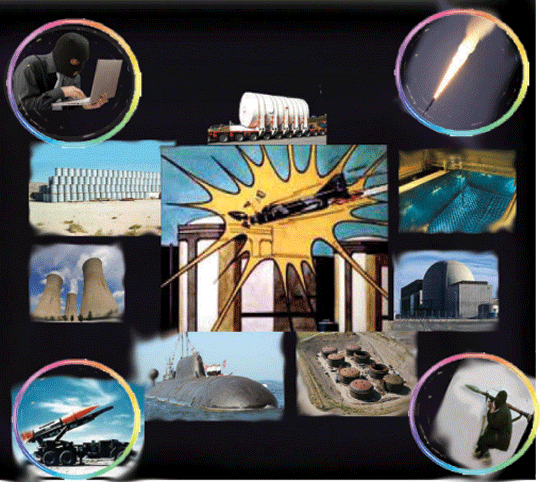
The illegal war on Iran by nuclear-armed US and Israel is increasing the risks of a nuclear accident, as nuclear facilities are repeatedly targeted by missile attacks.
Missiles hitting or landing close to nuclear facilities in both Israel and Iran over the last week show that the risk of a nuclear accident is growing, as the US-Israeli war with Iran approaches the end of its first month.
On Saturday, Iranian missiles landed in two towns in southern Israel, just kilometres away from the site of the top-secret Shimon Peres Negev Nuclear Research Centre, more commonly referred to as the ‘Dimona reactor,’ where Israel’s undisclosed nuclear weapons programme is said to be based. Israel is believed to have between 90 and 200 nuclear warheads, but it will not admit such possession and refuses to allow inspections of its nuclear facilities by the International Atomic Energy Agency. According to the Bulletin of the Atomic Scientists, Israel may be building a new nuclear facility at Dimona.
The strikes followed an attack by Israel on Iran’s Natanz nuclear facility. Iran’s Atomic Energy Organisation reported that there was “no leakage of radioactive materials” and that there was no danger posed to residents in the surrounding areas. Natanz, which had been targeted in the first days of the war and during Israel’s attacks on the country last year, has been used by Iran for the enrichment of uranium.
Iranian media reported a US-Israeli strike on the Bushehr nuclear plant, which had been targeted by Israel a week earlier on 17 March. No major damage or injuries were reported.
Following the second hit on Bushehr, Director General of the International Atomic Energy Agency, Rafeal Grossi, reiterated the need for “maximum restraint to avoid nuclear safety risks during conflict.”
A strike on a nuclear facility would lead to the release of radioactive material that could contaminate the environment and pose long-term health risks. In June 2025, when Israel bombed Iran’s nuclear facilities, Grossi stated that ‘…any armed attack … against nuclear facilities devoted to peaceful purposes constitutes a violation of the principles of the United Nations Charter, international law and the Statute of the Agency.”
The Bushehr strike marks the fifth time a nuclear facility in Iran has been attacked since the start of the illegal US-Israeli attacks on 28 February.
The conflict has since spread into a wider regional and global crisis with the Strait of Hormuz effectively closed to shipping, attacks on oil and gas facilities, and surging energy prices.
Last weekend, Donald Trump threatened to start striking Iranian power stations if the Strait remained closed, but he has extended his initial 48-hour ultimatum to end on Friday. Attacking civilian energy infrastructure is considered a war crime. Trump’s claims that Iran and the US have been engaging in negotiations to end the war have been rejected by Iran.
CND General Secretary Sophie Bolt said:
Targeting nuclear facilities is incredibly dangerous and risks a humanitarian and ecological disaster with consequences that could last for generations. The illegal US and Israeli attacks on Iran started as peaceful negotiations over Iran’s nuclear programme were reportedly reaching a breakthrough. Rather than respecting these talks, Trump and Netanyahu chose to sabotage them with illegal bombing. These countries are not only dragging the world into a major energy crisis not seen since the 1970s, they are increasing nuclear risks across the region. CND calls for an immediate end to these attacks and for the creation of a nuclear weapons-free Middle East.”
Protestors target RAF Lakenheath amid evidence of US nuclear weapons and role in illegal war on Iran

- Peace camp against deployment of US nuclear weapons to Britain takes place at RAF Lakenheath, 1-6 April
- Major demonstration and blockade of base main gate on Saturday, 4 April
- CND ad van touring East Anglia calling to ‘Kick out Trump’s nukes’
The international peace camp at RAF Lakenheath returns from 1-6 April, with a major demonstration and blockade of the main gate taking place on Saturday, 4 April.
Organised by Lakenheath Alliance for Peace* of which CND is a member, the camp will draw attention to the overwhelming evidence that US B61-12 nuclear bombs under the control of Donald Trump have arrived at the base, as well as highlighting the base’s role in facilitating Israel’s genocide in Gaza and the ongoing illegal attacks on Iran.
As part of this campaign, CND has organised ad vans to travel around East Anglia, including, Norwich (today), Cambridge (Wednesday), and towns and villages near the base (Thursday), calling on communities to join the major protest at RAF Lakenheath on Saturday, 4 April, to demand that Keir Starmer kicks out Trump’s nukes from Britain!.
CND 31st March 2026, https://cnduk.org/protestors-target-raf-lakenheath-amid-evidence-of-us-nuclear-weapons-and-role-in-illegal-war-on-iran/
No sane soldier would follow Hegseth into illegal, failed war
Walt Zlotow West Suburban Peace Coalition Glen Ellyn IL 5 Apr 26
As Chicago Tribune letter writer Robert Geist’s comment ‘Defense Secretary Pete Hegseth is someone soldiers can follow’ reached print, Pete Hegseth unceremoniously fired revered Army Chief of Staff Gen. Randy George, Gen. David Hodne, director of Army training, and Gen. William Green Jr., Senior Army Chaplin. All this a month into a war of choice going terribly wrong.
The US Army has been senselessly thrown into chaos. US military morale is in freefall. Hegseth may just have made the biggest military leadership mistake in US history.
Robert Geist might view Pete Hegseth as a military leader he could follow. But if so, it’s doubtful a single active Army soldier would be following behind Geist.
US and Iran trade threats to unleash ‘hell’ as search for missing US airman continues.
Ghoncheh Habibiazad,BBC Persian and Henri Astier, 5 Apr 26
US President Donald Trump has threatened that “all hell would rain down on” Iran if it did not make a deal, an ultimatum that Tehran has rejected.
Senior Iranian military officer, Gen Ali Abdollahi Aliabadi, echoed Trump’s rhetoric, saying “the gates of hell will open for you”.
On Saturday Iran fired more missiles at the Gulf States, Iraq and Israel, with falling debris from intercepted missiles causing damage.Since then, more strikes have been reported in Israel, Bahrain, Kuwait and the UAE overnight.
The threats from the US and Iran came as both searched for a missing American crew member after a US F-15 fighter jet was shot down over Iran on Friday. The pilot was rescued, US media says………………………………..https://www.bbc.com/news/articles/c5y90jl8veyo
UK Government reviewing fallout report after nuclear test concerns
By Craig Langford, UK Defence Journal 5th April 2026,
https://ukdefencejournal.org.uk/government-reviewing-fallout-report-after-nuclear-test-concerns/
The government has said it will examine the implications of a previously restricted report into nuclear fallout contamination, following renewed scrutiny over its handling and potential impact on past legal cases involving veterans.
Responding to two written questions from Lord Watson of Wyre Forest, Defence Minister Lord Coaker did not directly address whether the report calls into question evidence presented in earlier litigation, but confirmed that further work is underway.
“We remain committed to listening to their concerns and working collaboratively to address them,” he said, referring to nuclear test veterans.
The questions relate to a 2014 report, disclosed under the Freedom of Information Act, which has prompted claims about the suppression of evidence and its possible relevance to historic court proceedings, including the Supreme Court case Ministry of Defence v AB and others.
Coaker pointed instead to a recent Commons statement, noting that ministers have committed to reviewing both the contents of the report and how it was handled.
“The Minister for Veterans and People reiterated the government’s commitment to maximum transparency and made a commitment to undertake work to fully understand the implications of the 2014 report and its handling, and to take action if necessary,” he said.
1 This Month

of the week – Shut Down Drone Warfare!


Tell the Ukrainian Government to Drop Prosecution of Peace Activist Yurii Sheliazhenko

Petition to revoke the licensing of the Near Surface Nuclear Disposal Facility (NSDF) at Chalk River. https://www.ourcommons.ca/petitions/en/Petition/Details?Petition=e-7247
To see nuclear-related stories in greater depth and intensity – go to https://nuclearinformation.wordpress.com
-
Archives
- April 2026 (91)
- March 2026 (251)
- February 2026 (268)
- January 2026 (308)
- December 2025 (358)
- November 2025 (359)
- October 2025 (376)
- September 2025 (257)
- August 2025 (319)
- July 2025 (230)
- June 2025 (348)
- May 2025 (261)
-
Categories
- 1
- 1 NUCLEAR ISSUES
- business and costs
- climate change
- culture and arts
- ENERGY
- environment
- health
- history
- indigenous issues
- Legal
- marketing of nuclear
- media
- opposition to nuclear
- PERSONAL STORIES
- politics
- politics international
- Religion and ethics
- safety
- secrets,lies and civil liberties
- spinbuster
- technology
- Uranium
- wastes
- weapons and war
- Women
- 2 WORLD
- ACTION
- AFRICA
- Atrocities
- AUSTRALIA
- Christina's notes
- Christina's themes
- culture and arts
- Events
- Fuk 2022
- Fuk 2023
- Fukushima 2017
- Fukushima 2018
- fukushima 2019
- Fukushima 2020
- Fukushima 2021
- general
- global warming
- Humour (God we need it)
- Nuclear
- RARE EARTHS
- Reference
- resources – print
- Resources -audiovicual
- Weekly Newsletter
- World
- World Nuclear
- YouTube
-
RSS
Entries RSS
Comments RSS
 nuclear-news