Trump says Tuesday deadline for Iran to accept ceasefire ‘final, won’t change’; Israel takes out experienced IRGC intel chief.

SOTT Signs Of The Times, Tyler Durden, ZeroHedge, Mon, 06 Apr 2026
Summary:
A Sunday night Axios report on a US-proposed 45-day ceasefire has by Monday morning been rejected by Iran, which later on Monday issued a 10-point letter via Pakistan.- Israel strikes large petrochemical plant at South Pars, which is responsible for half of the country’s petrochemical production.
- Trump reaffirms Tuesday deadline before vital infrastructure gets attacked as ‘final’, calls Americans opposed to Iran war ‘foolish’ – saying it’s all about Tehran not getting a nuke.
- Israel kills experienced longtime head of IRGC intelligence; Iranian missile strike on Haifa residential complex kills 4.
With all that in mind, the odds of a ceasefire by April 30, 2026 are rising (but still low)…28%
IRGC Intel Chief Taken Out; Israel Suffers Heavy Casualties
The head of the Intelligence Organization of the Islamic Revolutionary Guard Corps (IRGC) was killed in a Monday airstrike, according to confirmation in Iranian media. IRGC-linked Tasnim News Agency reported that the IRGC Public Relations Department confirmed Monday that Major General Majid Khademi was killed earlier in the day during an attack by US and Israeli forces. However, Tasnim did not disclose the location of the strike.
The Israel Defense Forces (IDF) earlier stated on X that Khademi wasone of the IRGC’s most senior commanders with decades of experience. “Khademi worked to advance terrorist attacks worldwide, and was responsible for monitoring Iranian civilians as part of the regime’s suppression of internal protests,” it claimed.
RFE/RL reported that Khademi assumed the post last summer after Mohammad Kazemi was killed in Israeli strikes during the 12-day war. Before that, he led the Intelligence Protection Organization of the Ministry of Defense and Armed Forces Logistics.Iran is now vowing to enact vengeance on Israel for his death.
Meanwhile Sunday into Monday saw significant casualties in Israel, after the IRGC claimed in a statement carried by state media that Iranian forces had targeted an oil refinery in Haifa. But instead, it appears that the missile slammed directly into a residential building, killing at least four Israelis. Search and rescue teams have spent some 18 hours pouring through the ruins of the complex, recovering two bodies early Monday after an initial two had been found. The casualties could climb amid ongoing recovery efforts. Another regional source stated that “Over 160 Israelis have been transferred to hospitals over the past 24 hours, Israel’s Health Ministry said on Monday.”
Trump: Tuesday Deadline ‘Final, Won’t Change’; Americans Opposed to Iran War Are ‘Foolish’
At a White House annual Easter event, President Trump reaffirmed the Tuesday deadline is final, and further said he has seen every proposal. While he acknowledged the new 10-point Iran proposal as a “big step,” he still said it’s “not good enough; will see what happens.” According to more:
- War could end very quickly if they do the things they need to do.
- People talking for Iran are more reasonable now.
- War is about one thing, Iran cannot have nuclear weapons.
- “If I had my choice, I would take Iran’s oil”.
- If Iran does not yield, they will not have bridges or power plants.
- UK has a long way to go.
There were interesting remarks also claiming that “As of this morning 45,000 protesters have been killed” in Iran – though it’s entirely unclear and dubious as to where he got such a figure. He said that Iranians need guns and that he had sent some but a “certain group” decided to keep them.
“The Iranian people wanna hear bombs because they want to be free,” he also claimed, while First Lady Melania added that the US is fighting for the “future” of children in Iran. Another interesting moment as some corners of MAGA grow increasingly skeptical and angry over the war:
The US president is speaking to reporters at the White House. Asked what he would tell Americans who are opposed to the war, Trump replied: “They’re foolish. Because the war is about one thing – Iran cannot have a nuclear weapon,” he said.
Iran Issues 10-Point Rejection of ‘Simple Ceasefire’
Per PressTV:
“The ten-point plan rejects a simple ceasefire, stressing the need for a permanent resolution that safeguards Iran’s interests. Key demands include ending regional hostilities, ensuring safe passage through the Strait of Hormuz, lifting sanctions, and rebuilding affected areas.”
It’s no secret that Iran is seeking a permanent end to the war on terms that would ensure it is never attacked again.
- “According to IRNA’s foreign policy correspondent, in this response, which consists of ten paragraphs, Iran has emphasized the need for a permanent end to the war, taking into account Iran’s considerations, while rejecting a ceasefire.”
- “This answer includes a set of demands from Iran, including the end of conflicts in the region, a protocol for safe passage through the Strait of Hormuz, reconstruction and lifting of sanctions.”
Per PressTV:
“The ten-point plan rejects a simple ceasefire, stressing the need for a permanent resolution that safeguards Iran’s interests. Key demands include ending regional hostilities, ensuring safe passage through the Strait of Hormuz, lifting sanctions, and rebuilding affected areas.”
It’s no secret that Iran is seeking a permanent end to the war on terms that would ensure it is never attacked again.
- “According to IRNA’s foreign policy correspondent, in this response, which consists of ten paragraphs, Iran has emphasized the need for a permanent end to the war, taking into account Iran’s considerations, while rejecting a ceasefire.”
- “This answer includes a set of demands from Iran, including the end of conflicts in the region, a protocol for safe passage through the Strait of Hormuz, reconstruction and lifting of sanctions.”
It appears similar to the outline that Iran issued some two weeks ago. At every turn, Tehran has rejected that direct talks with Washington are even taking place. Tehran also keeps rejecting White House ceasefire overtures. And yet the same Monday little dance keeps repeating itself……………………………………………………………………………………………………………………………………………………………………………………………………………………………………… https://www.sott.net/article/505586-Trump-says-Tuesday-deadline-for-Iran-to-accept-ceasefire-final-wont-change-Israel-takes-out-experienced-IRGC-intel-chief
They attack, we defend: how the media toe the line on Iran

Unlike Russia’s war on Ukraine, British journalists rarely highlight the illegality of the US-Israeli attack on Iran
DES FREEDMAN, 12 March 2026
The UK media’s take on the use of ‘hard power’ depends entirely on who’s exercising it.
The labelling of Russia’s war in Ukraine in February 2022 was clear from the start. According to the Nexis database, 12,700 stories across the UK media in the first week of the war were focused on what was unequivocally referred to as Russia’s “invasion of Ukraine”.
Clive Myrie, presenting an extended BBC News at Ten on the first night of the war spoke of a “huge Russian military offensive” next to a strapline of “Russia invades Ukraine” that remained on screen throughout the headlines.
Tom Bradby, presenting ITV’s News at Ten, spoke of “a day of infamy for the Russian government and terror for millions of Ukranians”. Echoing the statement by then foreign secretary Liz Truss that this was “an unprovoked, premeditated attack against a sovereign democratic state”, he asserted that Putin had “invaded a democratic, sovereign neighbour in a war of imperial conquest.”
In the wall-to-wall coverage of the US-Israel pre-emptive attack on Iran on 28 February 2026, no broadcast journalists spoke of “imperial conquest” nor did they mention the issue of Iranian sovereignty.
And while coverage of the Russian invasion was consistently described as “unprovoked” – with 2336 stories in the first week – only 390 stories referred to claims that the US/Israel assault on Iran was “unprovoked” in the same period.
This is despite evidence that NATO expansion contributed to Putin’s decision to invade while ‘significant progress’ was claimed in talks between the US and Iran over the future of the latter’s nuclear programme before the bombing started.
Illegal wars?
As opposed to the single “invasion” strapline used to illustrate Russia’s aggression, the BBC’s main TV news bulletin used multiple straplines including “US-Israel attack Iran”, “Iran strikes back” and ‘Fears for Middle East war.”
In contrast to the outpouring of condemnation of Russia’s actions, there were only 1,785 stories in the first week that were specifically focused on the “attack on Iran”, just 14% of the number that spoke of a “Russian invasion” four years previously.
While 251 stories referred to Russia’s “illegal invasion” in its first week, there were just 82 stories in UK media that addressed Israel and America’s bombing of Iran as an “illegal attack” in the week after 28 February. Many of these simply reported comments made by Green and Liberal Democrat MPs in Parliament as opposed to asking their own questions about the legality of the attacks.
Laura Kuenssberg did press the Israeli president Isaac Herzog on this point in her Sunday morning BBC programme on 8 March (and was dismissed by Herzog as asking “unbelievable questions”).
The issue of legality was also addressed in a debate organised by Channel 4 News and in individual pieces by the Guardian, Reuters and Sky (though that was in an interview with the Russian ambassador).
These interventions no doubt expressed genuine tensions within Labour – anxious not to reopen the debate about the legality of the 2003 invasion of Iraq – about whether the US/Israeli attacks could be justified under international law.
Yet, at the time of writing, only two out of the 152 stories on the BBC’s “Iran War” online pages (1.3%) and just one of the 257 stories (0.39%) on Sky News’ Iran pages – a clip of Keir Starmer insisting that he wouldn’t join a war without a “lawful basis” –come close to considering the crucial question of whether the attacks were legal or not. (For some reason, Sky’s interview with the Russian ambassador isn’t listed here).
‘Defensive’
Analyses of whether devastating pre-emptive strikes by Israel and the US comply with international law have been overshadowed by the spectacle of the attacks themselves and the notion that, as the Sun posed it on 2 March, Iran presents a ‘VERY real threat to normal Brits’.
As John Irvine, ITV’s senior political correspondent, put in on the Weekend News bulletin the evening before: “I think it’s pretty obvious by now that the greatest threat to this entire region comes from Iran’s missile arsenal”.
In particular, journalists have emphasised the “defensive” nature of the UK’s role with some 715 stories on “defensive strikes” in the first week of the coverage.
Mainstream journalists have, however, failed systematically to investigate the impact of Starmer’s agreement to facilitate ‘specific and limited defensive action against missile facilities in Iran’.
All too often, the tendency has been to take the claim that the UK is engaging in legitimate self-defence at face value.
On the first night of the bombing on 28 February, ITV News’ correspondent, Jasmine Cameron-Chileshe, simply repeated Keir Starmer’s claim that “British planes are in the sky today as part of coordinated regional defensive operations to protect our people, our interests and our allies.”
Over on the BBC’s main weekend bulletin, political correspondent Chris Mason parroted Starmer’s line word for word: “Yes, British planes have been in the sky in the region in a defensive capability and he emphasises within international law so protecting allies.”
No alternative explanation was offered in either case.
Diversion tactics
Instead, there has been extensive discussion of the hollowed state of the military and of the delays in sending HMS Dragon to the eastern Mediterranean to, as the BBC put it, “join the UK’s defensive operations in the region”.
There have been breathless accounts of UK jets shooting down Iranian drones and late-night discussions on the BBC News Channel with security analyst Mikey Kay assessing the technical capacities of UK military hardware.
What there has not been is detailed investigation by defence correspondents of the implications of providing ‘safe passage’ for US planes through UK bases and of the difficulties in assessing whether it’s possible to distinguish in reality between ‘offensive’ and ‘defensive’ bombing.
Meanwhile, Gaza – whose residents are still being attacked by Israeli forces – has slipped out of the headlines as journalists focus their attention elsewhere. This has allowed Israel to step up its settlement activity in the West Bank and to present its military activity in Lebanon, where its bombs have killed 570 people, as another example of defensive activity.
UK media have helped to normalise this by, more often than not, describing the movement of Israeli troops into southern Lebanon as an “incursion” rather than an actual ground invasion.
While there were 242 stories in the first week of the war to Israel’s “incursion” into Lebanon (including 21 on BBC World), only 41 stories referred to an “invasion of Lebanon”. This included six stories on BBC World of which only three were actually about the current situation.
The UK media’s compliant coverage and its failure to challenge the current foreign policy consensus is completely at odds with the UK public. 59% of those polled by YouGov oppose US military against Iran with only 25% in support.
50% are opposed to Starmer’s decision to allow the US to use UK airbases for military action against Iran with only 32% in support.
Rather than reflecting this constituency, mainstream news are acting as loyal lieutenants in an illegitimate and profoundly destabilising war.
Des Freedman is a Professor of Media & Communications at Goldsmiths, University of London and a founding member of the Media Reform Coalition.
Trump and Greenland: Key war fighting base for Arctic control
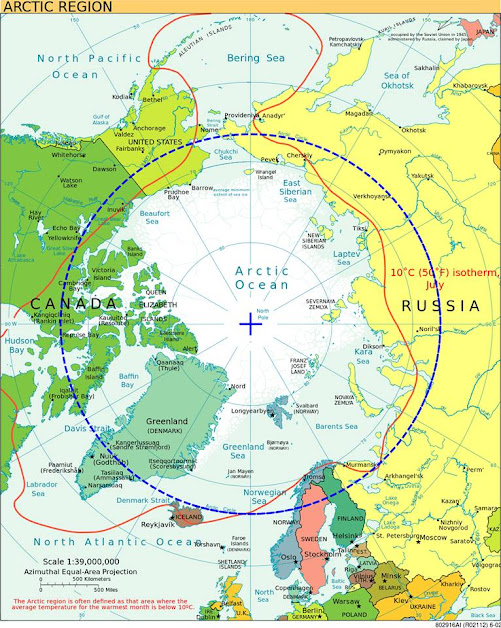
April 04, 2026, By Dr. Dave Webb , https://space4peace.blogspot.com/2026/04/trump-and-greenland-key-war-fighting.html
At time of writing, the biennial NATO military exercise ‘Cold Response 26’ is taking place from March 9 to 19. It is being led from the Norwegian-US headquarters in Reitan, near Bodø, Norway. About 32,500 personnel are participating, including around 11,800 in Norway and 7,500 in Finland. The rest are at sea and in the air. Military from 14 countries are involved – Norway, the USA, the UK, Germany, the Netherlands, France, Italy, Canada, Spain, Turkey, Sweden, Finland, Denmark, and Belgium. It is basically a NATO show of force against Russia and the High North is being used by an expanding NATO as a military practice ground in which to rehearse future war fighting strategies and to test and develop new military technologies.
According to the official website of the Norwegian Armed Forces: “The main purpose of the exercises is to contribute to deterrence, strengthen defense, calm the population”. But how is the presence of the US military in Scandinavia expected to “calm” people, given Donald Trump’s flagrant disregard for international law and his wish to own Greenland?
What is that about? Greenland, the world’s largest island, is home to more than 56,000 people. A former Danish colony and now an autonomous territory of Denmark. Its capital city Nuuk is closer to New York than it is to Copenhagen and the US already has an active military base there.
Pituffik Space base, formerly known as Thule Air Base, is on the northwest coast of Greenland, 1,126 kms north of the Arctic Circle. In the 1950s aircraft made surveillance flights from there, over the pole, to inspect Soviet defences. In 1957 four Nike Missile sites were constructed around the base and in 1961 a Ballistic Missile Early Warning System (BMEWS) radar was built to give the US warning of a missile attack from Russia.
On 21 January 1968 a US bomber from an Air Force Base in New York state carrying 4 nuclear weapons, crashed just outside the base. Luckily the failsafe mechanisms prevented a nuclear explosion but there was widespread radioactive contamination. In 2007 a BBC reporter claimed that one of the nuclear weapons was unaccounted for, but this was denied by the US and Denmark. Some details of the incident remain classified, however.
In June 1987, the BMEWS mechanically steered radar was upgraded to a two-sided, solid-state phased-array electronically steered radar system, similar to the one at Fylingdales in North Yorkshire. It then became a missile warning and tracking component of the US National Missile Defense System. After the US Space Force was established by Trump in 2019, the base was transferred to Space Delta 4, under the command of Buckley Space Force Base in Colorado. Thule Air Base was renamed Pituffik Space Base in April 2023 in recognition of the former Inuit settlement. Pituffik Space Base plays a key role in missile defence and satellite tracking and targeting. The recent retaliatory attacks by Iran on US missile defence radars is a dire warning to people who live on or near the base in Greenland and elsewhere (including Fylingdales!).
There is also a Pituffik Tracking Station, about 5.6 km southeast of the main base, which tracks and commands high-priority government satellites. It provides telemetry, tracking and command data for satellites that are used for surveillance, communication, navigation and weather. The Space Force says the base helps enable “space superiority.”
The 1951 Defence of Greenland Treaty with Denmark grants the US broad military rights, including the establishment of bases, provided Denmark and Greenland are notified, and unrestricted movement for defence purposes. However, Danish sovereignty over the territory is also recognised as part of the treaty which remains in effect as long as NATO does.
Trump has said that Greenland is needed for the ‘Golden Dome’ missile defence project, but the Pituffik radar is there already and part of US national Missile Defense, so what else might be needed? Perhaps the siting of anti-ballistic missiles there?
But there’s more – in January, Trump claimed the Arctic was covered in Russian and Chinese warships to justify his push for control of Greenland. Russia does have a nuclear submarine base in the Arctic, on the Kola peninsula, the other side of Finland and Russia and China have increased joint naval and air patrols in the North Pacific and near Alaska but there has been no evidence of “swarms” of Russian or Chinese military ships near Greenland as Trump claims.
Greenland is however, at a very strategic location. The GIUK (Greenland, Iceland, and the UK) gap is a critical maritime choke point in the North Atlantic, separating the Norwegian/North Seas from the open Atlantic Ocean. It is an important strategic, monitoring, and anti-submarine corridor that NATO uses to track Russian naval activity. The position of Faslane, guarding the GIUK gap, is also of great strategic importance to NATO.
There are also important commercial considerations. As global warming shrinks the arctic ice cap it allows more maritime traffic, mining and other commercial activity to take place in the high north. During the summer, shipping routes can operate for longer periods in the Arctic region. Shipping has risen by nearly 40% in the region over the last 12 years, according to the Arctic Council (a kind of common security organisation whose primary purpose is to advance sustainable development and environmental protection in the region, including of indigenous peoples).
These routes are particularly important for Russia and China. Russia has over 53% of the total Arctic coastline and controls most of the resources there, while China identifies as a ‘Near Arctic State’ with the opening-up of its ‘Polar Silk Road’ as a trade route, reducing travel time to Europe by 40%. The expanding China footprint in the Arctic is seen as a security challenge by the US.
Then there are the resources becoming newly available. The US Geological Survey estimates that over 87% of the Arctic’s oil and natural gas resource (about 360 billion barrels oil equivalent) is in seven key Arctic basin provinces including two to the east and west of Greenland. There are also rare earth metals present which are in high demand for electric cars and the manufacture of military equipment. A 2023 survey showed that 25 of 34 minerals considered “critical raw materials” by the European Commission were to be found in Greenland. China currently dominates global rare earth production and Trump does not like that, so controlling Greenland and its resources could really be about keeping China out.
However, the extraction of oil and gas is banned in Greenland for environmental regions, and investment in mining faces challenges – perhaps a new arrangement with Denmark could allow the US to build without planning permission and expand into mineral-rich areas?
The full details of the “framework of the future deal with respect to Greenland” announced by Trump remain unavailable and Greenlanders are concerned that they are being left out of talks between the US and Denmark. Trump seems to insist on “owning” Greenland and although there is a constitutional ban on the sale of land, Trump’s recent actions show that he has no respect for law or any other state’s sovereignty.
~ Dr. Dave Webb is the Global Network Against Weapons & Nuclear Power in Space Board of Directors convener and also chairs Yorkshire Region CND. He is a retired university professor and lives in Leeds, England.
Two Faces of Peace: How Trump’s “Peacemaker” Presidency Waged War Across the Globe

March 31, 2026 , ScheerPost Staff, https://scheerpost.com/2026/03/31/two-faces-of-peace-how-trumps-peacemaker-presidency-waged-war-across-the-globe/
When the world hears “peace,” it rarely imagines schools leveled, civilians at risk, and covert armies deployed across continents. Yet, reporting from The Intercept reveals that under President Donald Trump, the promise of a “peace presidency” has coexisted with a sprawling network of global conflicts. Nick Turse’s investigation exposes the U.S.’s secretive military footprint in more than 20 countries, while Natasha Lennard documents the deliberate targeting of Iranian universities by U.S.–Israeli airstrikes—attacks designed to cripple a nation’s capacity to rebuild. Together, these Intercept reports reveal two faces of the same strategy: the veneer of peace masking the machinery of war, from classrooms to battlefields, and from boardrooms to drone command centers.
Nick Turse’s investigative report for The Intercept exposes the stark contrast between President Donald Trump’s public image as a “peacemaker” and the reality of his administration’s military actions. While Trump campaigned on promises to avoid foreign entanglements and even founded a so-called Board of Peace, Turse details how the U.S. under Trump has been drawn into more than 20 military interventions, armed conflicts, and covert operations worldwide.
From drone strikes and proxy wars to full-scale interventions, Trump’s military footprint spans Afghanistan, Iran, Iraq, Syria, Venezuela, and dozens of other countries. The report highlights the administration’s repeated bypassing of Congress, reliance on secretive programs like 127e, and the cloak of legal euphemisms—“advise, assist, and accompany” missions or “military actions”—to obscure combat operations.
Turse documents a disturbing pattern of clandestine operations, including regime-change efforts, attacks on civilian targets, and the deployment of thousands of Special Operations forces without clear oversight. As Sarah Harrison, former Pentagon counsel, notes, these actions not only flout constitutional and international law but also put Americans at greater risk while enriching the military-industrial apparatus.
“Under the U.S. Constitution, it’s Congress that has the authority to declare war, not the president,” pointed out Katherine Yon Ebright, counsel in the Brennan Center’s Liberty and National Security Program. “Congress has not authorized conflicts in this wide array of contexts, and indeed many lawmakers — to say nothing of members of the public — would be surprised to learn that hostilities have taken place in many of these countries. Congressional authorization isn’t just a box-checking exercise: it’s a means of ensuring that the solemn decision to go to war is made democratically and accountably, with a clear purpose and goal that the American people can support.”
“The 2001 Authorization for Use of Military Force, enacted after 9/11 and stretched by successive administrations, has been invoked to justify counterterrorism operations—including airstrikes, ground combat, and support for partner militaries—in at least 22 countries, according to a 2021 report by Brown University’s Costs of War Project. Under Trump, even this framework has been circumvented in favor of more secretive programs and broad interpretations of executive authority.”
While Trump projected an image of peace abroad, Natasha Lennard reports in The Intercept on the very real human consequences of his and Israel’s military campaigns in Iran. Over the weekend, U.S.–Israeli strikes targeted the Isfahan University of Technology and the Iran University of Science and Technology in Tehran. These attacks, part of a broader campaign that has hit hospitals, power plants, desalination facilities, and schools, left Iranian students and staff unprotected and at risk.
The official justification—that the universities were connected to Iran’s weapons programs—is deeply cynical, Lennard notes. By this rationale, any advanced U.S. or Israeli institution involved in military research could be deemed a legitimate target, from MIT to Technion or Johns Hopkins. The reporting underscores the double standard of asymmetric warfare: aggressors rationalize strikes while shielding their own infrastructure.
Experts cited by Lennard emphasize that the bombings are systematic, aimed at undermining Iran’s capacity for indigenous development and sovereignty. Drawing parallels to Gaza, the attacks on universities are part of a long-term strategy to foreclose reconstruction and maintain strategic dominance
By combining Turse’s exposé of Trump’s global “peace presidency” turned conflict presidency with Lennard’s documentation of targeted strikes on educational institutions, the picture is clear: a veneer of peace masks a sprawling, violent network of operations designed to project power, suppress knowledge, and reshape global dynamics on U.S. and Israeli terms.
Both reports highlight the human cost and the hypocrisy of modern warfare, where civilian infrastructure, education, and research are treated as expendable under the guise of national security, and where the appearance of peace serves to hide the orchestration of conflict at a global scale.
Sources: Nick Turse, “Trump’s Secret Wars on the World Keep Expanding,” The Intercept, March 30, 2026; Natasha Lennard, “What Would We All Say If Iran Razed MIT Because of Military-Related Research?” The Intercept, March 30, 2026.
Bypass the Strait of Hormuz with nuclear explosives? The US studied that in Panama and Colombia in the 1960s
The Conversation, Christine Keiner, Chair of the Department of Science, Technology, and Society, Rochester Institute of Technology, April 2, 2026
With the world struggling to get oil supplies moving from the Middle East, former House Speaker Newt Gingrich raised eyebrows with a social media post highlighting a radical idea: Use nuclear bombs to cut a new channel along a route that would avoid Iranian threats in the Strait of Hormuz.
Gingrich’s March 15, 2026, post linked to an article that labeled itself as satire. Gingrich has not clarified whether his endorsement was serious. But he is old enough to remember when ideas like this were not only taken seriously but actually pursued by the U.S. and Soviet governments.
As I discuss in my book, “Deep Cut: Science, Power, and the Unbuilt Interoceanic Canal,” the U.S. version of this project ended in 1977. At the time, Gingrich was launching his political career after working as a history and environmental studies professor.
Improving global trade and geopolitical influence
The idea for a new canal to move oil from the Middle East had emerged two decades earlier, in the context of another Middle East conflict, the Suez crisis. In 1956, Egypt seized the Suez Canal from British and French control. The canal’s prolonged closure caused the price of oil, tea and other commodities to spike for European consumers, who depended on the shipping shortcut for goods from Asia.
But what if nuclear energy could be harnessed to cut an alternative canal through “friendly territory”? That was the question asked by Edward Teller, the principal architect of the hydrogen bomb, and his fellow physicists at the Lawrence Radiation Laboratory in Livermore, California.
President Dwight D. Eisenhower’s administration had already begun promoting atomic energy to generate electricity and to power submarines. After the Suez crisis, the U.S. government expanded plans to harness “atoms for peace.”
Project Plowshare advocates, led by Teller, sought to use what they called “peaceful nuclear explosions” to reduce the costs of large-scale earthmoving projects and to promote national security. They envisioned a world in which nuclear explosives could help extract natural gas from underground reservoirs and build new canals, harbors and mountainside roads, with minimal radioactive effects.
To kick-start the program, Teller wanted to create an instant harbor by burying, and then detonating, five thermonuclear bombs in an Indigenous village in coastal northwestern Alaska. The plan, known as Project Chariot, generated intense debate, as well as a pioneering environmental study of Arctic food webs……………………………………………………………………….
Nuclear explosions appeared to make a new sea-level canal financially feasible. The greatest impetus for the so-called Panatomic Canal occurred in January 1964, when violent anti-U.S. protests erupted in Panama. President Lyndon B. Johnson responded to the crisis by agreeing to negotiate new political agreements with Panama.
Johnson appointed the Atlantic-Pacific Interoceanic Canal Study Commission to determine the best site to use nuclear explosions to blast a seaway between the two oceans. Funded by a $17.5 million congressional appropriation – the equivalent of around $185 million today – the five civilian commissioners focused on two routes: one in eastern Panama and the other in western Colombia………………………………………………………………..
To avoid the radioactivity and ground shocks, planners estimated that approximately 30,000 people, half of them Indigenous, would have to be evacuated and resettled. The canal commission considered this a formidable but not impossible obstacle, writing in its final report, “The problems of public acceptance of nuclear canal excavation probably could be solved through diplomacy, public education, and compensating payments.”
A not-so-hot idea, in retrospect
As explored in my book, marine and evolutionary biologists of the late 1960s sought to study the project’s less obvious environmental effects. Among other potential catastrophes, scientists warned that a sea-level canal could unleash “mutual invasions of Atlantic and Pacific organisms” by joining the oceans on either side of the isthmus for the first time in 3 million years.
Plans for the nuclear waterway ended by the early 1970s, not over concerns about marine invasive species but rather due to other complex issues. These included the difficulties of testing nuclear explosions for peaceful purposes without violating the Limited Nuclear Test Ban Treaty of 1963 and the huge budget deficits caused by the Vietnam War……………………………………………………….
Today, given widespread awareness of the severe environmental and health effects of radioactive fallout, it is hard to envision a time when using nuclear bombs to build canals seemed reasonable. Even before Gingrich’s post sparked ridicule, press accounts described Project Plowshare using words like “wacky,” “insane” and “crazy.”
However, as societies struggle with disruptive new technologies such as generative AI and cryptocurrency, it is worth remembering that many ideas that ended up discredited once seemed not only sensible but inevitable.
As historians of science and technology point out, technological and scientific developments cannot be separated from their cultural contexts. Moreover, the technologies that become part of people’s daily lives often do so not because they are inherently superior, but because powerful interests champion them.
It makes me wonder: Which of the high-tech trends being promoted by influencers today will amuse, shock and horrify our descendants? https://theconversation.com/bypass-the-strait-of-hormuz-with-nuclear-explosives-the-us-studied-that-in-panama-and-colombia-in-the-1960s-278851
The US has declared ‘space superiority’ over Iran. What does that mean?

Iran’s nascent space program was destroyed. It’s still using other nations’ space intel.
The U.S. military declared space superiority over Iran this week, but defense experts question what that means given the country’s inchoate military space program and heavy reliance on space-based intelligence from other nations.
Adm. Brad Cooper, the head of U.S. Central Command, said Tuesday that the U.S. had established control of the space domain during Operation Epic Fury. It was nearly a month after CENTCOM had announced “Iran’s equivalent of Space Command” was destroyed, which harmed the Islamic Revolutionary Guard Corps’ ability to coordinate retaliatory strikes.
“Our Space Force has given us the ultimate high ground, delivering space superiority, which has been a critical enabler to this fight,” Cooper said in a Tuesday video.
It’s not clear if the country is still actively jamming or spoofing U.S. assets, and it’s highly unlikely that the U.S. Space Force has physically destroyed the country’s handful of satellites. Navy Capt. Tim Hawkins, a CENTCOM spokesperson, said he could not discuss details about space operations “due to classification.” Given Iran’s rudimentary space capabilities, defense experts question what has changed to prompt the military to declare space superiority.
“It isn’t stopping them from using space assets,” Victoria Samson, the Secure World Foundation’s chief director of space security and stability, said of the U.S. declaring space superiority. “There’s just a lot of question marks … In regards to how they use space as a national security enabler, I don’t know that they’ve really stopped it, because they weren’t using it other than for imagery analysis.”
Iran is reportedly relying on China and Russia’s intelligence and commercial space-based imagery to target U.S. assets throughout the region. A U.S. official told Defense One that Iran’s use of another country’s space-based data doesn’t mean the service lacks control of the space domain.
“Just because the Iranians are receiving space-based intelligence doesn’t negate that we have space superiority,” the official said.
Since 2005, the country has launched a total of 26 satellites, only 13 of which were still operational, according to the American Enterprise Institute’s space data navigator tool. Three of those are registered to the IRGC. The U.S., by comparison, has upwards of 500 operational military and intelligence satellites.
Gen. Chance Saltzman, the Space Force’s top uniformed officer, acknowledged “it wasn’t really a fair fight,” but said destroying Iran’s space capabilities gave the military an upper hand in communications and air operations within CENTCOM.
“You have space superiority if you can use space the way you want, and the adversary cannot use space the way they want, and I think those are the conditions that we’ve met in this particular instance,” Saltzman said during a Mitchell Institute event Wednesday.
The term “space superiority” was first publicized in a 1980s Air Force manual. A 2004 service document likened the idea to air superiority and said the two are “crucial first steps in any military operation.” Last year, the Space Force published a warfighting doctrine that said the service’s “formative purpose” is to achieve space superiority.
“Space superiority is the degree of control that allows forces to operate at a time and place of their choosing without prohibitive interference from space or counterspace threats, while also denying the same to an adversary,” the Space Force’s doctrine reads.
Some defense experts see the recent declaration of space superiority as a way for the service to highlight its warfighting rebrand in recent years.
“It’s a weird thing to say. I think it’s more a matter of floating the ‘Space Force as a warfighting’ thing,” Samson said.
Kari Bingen, a senior fellow at the Center for Strategic and International Studies and director of the Aerospace Security Project, said it’s not surprising to see the Space Force becoming more integrated into operations, given adversaries’ desire to target command, control, communications, and intelligence capabilities.
“Between Venezuela and Operation Epic Fury, these have been opportunities for the Space Force to better integrate space effects into a joint military campaign,” Bingen said. “We’ve long treated space as this special and different capability set. The physics are different, but to make it truly useful to the joint force, it needs to be fully integrated into planning and operations.”
Saltzman said guardians had been forward deployed to support Operation Epic Fury and continue to launch space effects in combat zones “despite being under attack from an adversary.” He also said some guardians are supporting the operation stateside out of Shaw Air Force Base in South Carolina and CENTCOM headquarters in Florida.
“I won’t go into a lot of the operational details, as you might imagine, but you don’t have to think too hard to understand what it is the Guardians are bringing to the fight,” Saltzman said. “All of the missions that we always do—missile warning, satellite communications. The links are vital. Over-the-horizon communications is as important now as it ever has been. We create disruption for an adversary.”
‘This Arrogant Enemy’: Israel’s Colonial Reversion to the Noose
April 1, 2026 SCHEERPOST, Zarefah Baroud for Thinking Palestine
“Israel is also confronted by something older than Israel itself: namely, the willingness and ability of the Palestinian people to mobilize and resist in the face of state-sanctioned death.”
The authorities cuffed the nationalist detainees, leading them to their death at the gallows, scaffolding and rope that had borne witness to the final moments of dozens of nationalists like them. As they approached the noose with grace and a sacred conviction, they declared their final tribute to the beloved homeland: “Filasteen ‘Arabiyya!” (“Palestine is Arab”), and issued a final, unflinching indictment of her oppressors.
The families and communities of the martyrs gather outside Sijn Akka, dressed in white and adorned with henna as if they were attending a wedding, receiving the martyr’s body among eruptions of ululations and celebratory songs.
This is not a romantic tale, but rather the tradition adopted by Palestinians throughout the British Mandate for Palestine, a colonial regime that saw to the systematic annihilation of an entire generation of Palestinian nationalists.
The Spectacle of the Noose
While this scene played out on many occasions throughout the British Mandate for Palestine, it could conceivably happen tomorrow, if proposals put forward by Itamar Ben Gvir, Israel’s Minister of National Security, are approved by the Israeli Knesset. If this comes to pass, the “death penalty bill” — an amendment to the current Israeli penal code – will result in the execution of those who have allegedly killed Israelis for nationalist purposes (or, more reductively and disingenuously, for “anti-Semitic” reasons).
Further, recent reports have confirmed that the Knesset’s proposed legislation draft will no longer perform the death penalty via lethal injection but rather transform the execution of Palestinian detainees into a colonial spectacle. In other words, the original mode of colonial execution would be restored as the chosen method of capital punishment par excellence.
If approved, hanging will once more become a colonial spectacle, which is enacted, in the sterile and removed wording of the National Security Committee, with the aim of “cut[ting] off terrorism at its root and creat[ing] a heavy deterrent.”
It is critical that, as we discuss this pending policy, which Abdel Nasser Farawna characterizes as improbable (though not impossible), we recognize that the extrajudicial execution of prisoners has always been Israel Prison Service (IPS) policy.
Ben-Gvir has put forward his proposal at a time (the period since October 7, 2023) when the Israeli authorities have murdered detainees at an unprecedented rate. In April 2023, the Palestinian Commission for Detainees and Ex-Detainees estimated 236 Palestinians had been killed in Israeli custody after 1967, a period of 56 years. In the post-October 7 period, in contrast, almost one hundred Palestinians have died in custody, a killing rate around 10 times the historical average.
A November 2025 report produced by Physicians for Human Rights Israel suggests that this may actually be a substantial under-estimate, by virtue of the (at least) 14,000 Gazans who are still missing, presumed to be dead or abducted at the time of writing…………………………………………………………………. https://scheerpost.com/2026/04/01/this-arrogant-enemy-israels-colonial-reversion-to-the-noose/
NuScale’s ENTRA1 “Veterans” Had Zero Nuclear Projects — Investors Lost 70%: Levi & Korsinsky, LLP
Promise vs. Reality: The NuScale Power ENTRA1 Partnership Performance Gap
March 30, 2026 Source: Levi & Korsinsky, LLP
NEW YORK, March 30, 2026 (GLOBE NEWSWIRE) — “Companies that make specific promises to investors about future performance have an obligation to disclose known risks to those projections. The contrast between what NuScale told the market about ENTRA1 and what analysts independently confirmed raises substantial questions about the accuracy of those representations,” stated Joseph E. Levi, Esq., managing partner of Levi & Korsinsky, LLP.
A securities class action has been filed on behalf of purchasers of NuScale Power Corporation (NYSE: SMR) stock between May 13, 2025 and November 6, 2025. …..
NuScale shares fell from a Class Period high above $57 to just $17, a decline exceeding 70%, after the gap between defendants’ representations and reality came to light. The lead plaintiff deadline is April 20, 2026.
The Promise
Throughout the Class Period, the Company portrayed ENTRA1 Energy LLC as a formidable commercialization engine for its small modular reactor technology. Official press materials and SEC filings described ENTRA1 as:
- An “independent global energy production platform”
- A “one-stop-shop” and “single hub” for financing, development, execution, and management of nuclear power plants
- An entity “led by an executive team of energy, infrastructure, and finance sector veterans”
- A partner with “experience in delivering large-scale power infrastructure”
- A “developer” of power plants that would “own and operate” energy facilities
- An entity whose experience was “exactly what is required” to commercialize NuScale’s reactors
The Reality
After NuScale disclosed a $495 million payment to ENTRA1 and analysts pressed for details on the November 6, 2025 earnings call, a starkly different picture emerged, the lawsuit contends:
- ENTRA1 had never built, financed, or operated any significant project during its entire operating history
- Independent analyst research identified just 3 employees and 1 investor at ENTRA1
- The “experience” defendants referenced belonged to principals of a separate entity, not ENTRA1 itself
- ENTRA1 would not actually build power plants but instead “coordinate projects” and “bring in partners”
- Guggenheim Securities described ENTRA1 as “a 3-year old company that has never built, financed or operated anything”
- ENTRA1 appeared to be organized primarily to support a single individual
The Numbers: Promised vs. Actual
What Was Promised | What Was Revealed
- “Independent global energy production platform” | Entity with 3 employees, no completed projects
- “Experience in delivering large-scale power infrastructure” | Experience belonged to principals of a different entity
- ENTRA1 “develops, finances, owns and operates” plants | ENTRA1 would “coordinate projects” and “bring in partners”
A “differentiator” justifying exclusive global rights | Analysts found “no information regarding the company’s history, management team, size or capitalization”- $35M-$55M per NPM contribution payments to a proven partner | $495 million paid to an untested entity, with potential obligations exceeding $3 billion
What the Lawsuit Alleges About the Gap
The action asserts that defendants knew or recklessly disregarded that their representations about ENTRA1 were materially false and misleading. By attributing the experience of a separate entity’s principals to ENTRA1 itself, and by describing ENTRA1 as a developer and operator when it lacked any track record, defendants allegedly created an artificial perception of commercialization readiness that inflated NuScale’s stock price……………………………………………………………….. https://www.globenewswire.com/news-release/2026/03/30/3264986/0/en/NuScale-s-ENTRA1-Veterans-Had-Zero-Nuclear-Projects-Investors-Lost-70-Levi-Korsinsky-LLP.html
What Happens When a Nuclear Site Is Hit?

2 April 26, https://www.wired.com/story/heres-what-can-happen-when-the-us-bombs-irans-nuclear-sites/
As US and Israeli strikes continue on Iran’s nuclear facilities, the real danger isn’t the explosion, but what happens if critical safety systems fail—and how that risk could spread across the Gulf.
Into the second month of the US-Iran war, the conflict in the Gulf continues to escalate—airstrikes widening, oil markets reacting, and pressure mounting around the Strait of Hormuz. But beyond the immediate security and economic concerns, another question is quietly taking shape: What actually happens if a nuclear site is hit?
That is the problem with Nuclear Power. It’s a target. There are no do overs if it goes wrong. The IAEA spends a lot of time trying to mitigate atomic problems but they can’t stop those who want to do bad things. When I think about how Chernobyl was handled by the Russians, I think would our government do what they did?
Deny and hide the truth from the public? I’m not sure I’m not willing to place a bet on nuclear but I know many are.
Back to Pentagon on Good Friday
Friday, April 03, 2026, Bruce K. Gagnon, https://space4peace.blogspot.com/2026/04/back-to-pentagon-on-good-friday.html
Sixteen activists got up early this morning and took the subway to the Pentagon where we held a 90 minute vigil as military and civilian employees walked, drove, biked and rode buses by our Good Friday peace vigil.
Yesterday Defense Secretary Pete Hegseth fired Army Chief of Staff Gen. Randy George, removing the Army’s top officer in the latest shake-up of military leadership amid the war in Iran. This was most likely done because Gen. George dared to question the US Iran war strategy on some level. George is the 24th general or admiral Hegseth has removed indicating that all is not well inside the ‘war department’.
I made a point this morning of asking any Army personnel who passed me by why their ‘boss had been fired’. One officer stopped and said to me, “I don’t why why he was fired. I only met him once and he was a good man”.
During our time on the street, now kept at a distance from the Pentagon in comparison to where we were arrested last Friday when 27 of us got deep into the bowels of the war-making institution, we got lots of ‘good mornings’, kind nods, and some words of encouragement as folks passed us by. Even a four-star general gave me a nice nod.
My sense is that there is much quiet unsettlement inside the Trump war machine these days. It felt good to be outside offering support to those on the inside who might have a good heart and good sense of which there must be many amongst the 30,000 who work at the Pentagon.
In related news Stars & Stripes military publication is reporting this morning that “A search and rescue effort was underway on Friday afternoon to locate two crew members of a U.S. fighter jet [F-15] that was shot down in Iran”.
NBC News: Two U.S. military helicopters participating in search and rescue operations were hit by Iranian fire but appear to have made it back to base. We also learned that a Pentagon A-10 Warthog plane “crashed” today in the Persian Gulf region — according to The New York Times. The plane was likely hit by Iranian air defenses, but US is concealing it to save face with saying it “crashed” — crashed how?
Trump has just requested $1.5 trillion from Congress for ‘defense’ in the 2027 fiscal year – the largest sum in the country’s recent history. Trump explains the sharp increase in spending by the ongoing war with Iran and the need to replenish depleted weapons stocks.
Trump and Hegseth are burning taxpayer dollars like they are nothing.
US scientists are escaping to Norway because of Trump’s anti-climate agenda, minister says.

.At least 23 research scientists have left the US for
Norway in the wake of Trump returning to office, including to six
pioneering climate programmes. In the first year of Trump’s second term,
the US government cut thousands of jobs at federal science agencies,
slashed grant money for universities and effectively ended
government-backed research into the climate crisis, notably with the
announcement last December that the Colorado-based National Center for
Atmospheric Research would close.
More than 10,000 doctorate-level experts
in science and other fields have now left federal government employment,
according to one analysis, leading to fears of a scientific brain drain
from the US. Research minister Sigrun Gjerløw Aasland told The Independent
that several American scientists had joined research institutes in her
country over the past year, many of which are prioritising pioneering
climate research in the Arctic.
Last summer, the centre-left Norwegian
government announced a 100m kroner (£7.8m) programme to attract
international researchers. So far, 27 scientists have come to Norway under
the programme, including 23 from the US.
Independent 1st April 2026, https://www.independent.co.uk/climate-change/trump-climate-arctic-norway-scientists-b2938958.html
1 This Month

of the week – Shut Down Drone Warfare!


Tell the Ukrainian Government to Drop Prosecution of Peace Activist Yurii Sheliazhenko

Petition to revoke the licensing of the Near Surface Nuclear Disposal Facility (NSDF) at Chalk River. https://www.ourcommons.ca/petitions/en/Petition/Details?Petition=e-7247
To see nuclear-related stories in greater depth and intensity – go to https://nuclearinformation.wordpress.com
-
Archives
- April 2026 (103)
- March 2026 (251)
- February 2026 (268)
- January 2026 (308)
- December 2025 (358)
- November 2025 (359)
- October 2025 (376)
- September 2025 (257)
- August 2025 (319)
- July 2025 (230)
- June 2025 (348)
- May 2025 (261)
-
Categories
- 1
- 1 NUCLEAR ISSUES
- business and costs
- climate change
- culture and arts
- ENERGY
- environment
- health
- history
- indigenous issues
- Legal
- marketing of nuclear
- media
- opposition to nuclear
- PERSONAL STORIES
- politics
- politics international
- Religion and ethics
- safety
- secrets,lies and civil liberties
- spinbuster
- technology
- Uranium
- wastes
- weapons and war
- Women
- 2 WORLD
- ACTION
- AFRICA
- Atrocities
- AUSTRALIA
- Christina's notes
- Christina's themes
- culture and arts
- Events
- Fuk 2022
- Fuk 2023
- Fukushima 2017
- Fukushima 2018
- fukushima 2019
- Fukushima 2020
- Fukushima 2021
- general
- global warming
- Humour (God we need it)
- Nuclear
- RARE EARTHS
- Reference
- resources – print
- Resources -audiovicual
- Weekly Newsletter
- World
- World Nuclear
- YouTube
-
RSS
Entries RSS
Comments RSS
 nuclear-news