After murdering thousands in criminal Iran war, Trump to surrender during address to nation tonight

Walt Zlotow West Suburban Peace Coalition Glen Ellyn IL 2 Apr 26
No it won’t be the unconditional surrender Trump demanded of Iran. It will be a surrender couched as a US victory over Iran. Trump will say he’s obliterated enough of Iran’s nuclear program and missile capability to wind down his criminal war within a couple of weeks.
Nonsense. It’s the US bases in the Gulf States and Israel proper being decimated by Iran’s ferocious defense that are causing Trump to trumpet victory when in fact he’s been defeated in every war goal.
Trump didn’t achieve regime change in Iran.
Trump didn’t get Iran to surrender unconditionally or any other way at all.
Trump didn’t destroy Iran’s missile and drone defense.
Trump didn’t destroy Iran as Israel’s last remaining hegemon rival in the Middle East, the primary reason he attacked on February 28.
Trump didn’t reopen the Strait of Hormuz as promised, whose closure is threatening worldwide economic disaster.
Tonight Trump will spin his colossal defeat as victory. But while speaking, Iranian missiles and drones will continue raining down on US Gulf States bases and thruout Israel. Tomorrow the Strait of Hormuz will remain closed as gas prices continue endlessly upward.
Trump will remain trapped like the rat he is while killing more thousands before his cabinet invokes the 25th amendment to take away his license to kill and destroy.
Closing Air Spaces and Cracking Alliances: Trump’s Growing Problem with Allies
2 April 2026 Dr Binoy Kampmark, https://theaimn.net/closing-air-spaces-and-cracking-alliances-trumps-growing-problem-with-allies/
With the Iran War groaning along, the Trump administration is getting increasingly indignant. Plumes of childish anger can be seen coming out of the White House and Pentagon. Having joined an illegal, joint enterprise with Israel in attacking Iran, allies are proving increasingly unwilling to play along.
That unwillingness gurgled to the top with Spain’s announcement on March 30 that it had closed its airspace to US aircraft participating in strikes on Iran. This added to Madrid’s decision earlier in the month to deny the US military access to its bases for military operations against Tehran. “We don’t authorise either the use of military bases or the use of airspace for actions related to the war in Iran,” Defence Minister Margarita Robles told reporters. Spain’s Economy Minister Carlos Cuerpo, in an interview with radio Cadena SER, called the move consistent and “part of the decision already made by the Spanish government not to participate in or contribute to a war which was initiated unilaterally and against international law.”
The government of Prime Minister Pedro Sánchez has been singularly pertinacious in its characterisation of the Iran War, and more broadly illustrative of the current bad blood in transatlantic relations. In a piece for The Economist, Sánchez wrote of his country’s misplaced support for Washington in February 2003 when the then US Secretary of State, Colin Powell, told the UN Security Council most gravely that Iraq had weapons of mass destruction, and needed to be attacked. The foolishly credulous Spanish Prime Minister at the time, José María Aznar, was convinced that the regime of Saddam Hussein had such weapons. “Today we face a similar situation, and my government’s position is the same as that voiced by Spanish society two decades ago: NO TO WAR. No to the unilateral violation of international law. No to repeating the mistakes of the past. No to the idea that the world’s problems can be solved with bombs.”
Italian authorities have also expressed displeasure at the presumptuousness of their US allies in taking liberties with their military facilities. In a March 31 report by Corriere della Sera, “several US bombers” that had intended to land at Sigonella air base on route to the Middle East were refused as they had not properly requested authorisation or consulted with the Italian military. A statement from Palazzo Chigi, the office of Italian Prime Minister Giorgia Meloni, reiterated that Italy “acts in full compliance with existing international agreements and with the policy guidelines expressed by the Government to Parliament.”
Other allies are openly rebuffing requests by US officials to secure additional military equipment to the Gulf. Critical here are air-defence systems such as the Patriot batteries that have been dramatically depleted since the outbreak of hostilities. In the first 16 days of the war, some 1,285 PAC-3 Patriot missiles were used by the US military and Gulf states.
The Polish Defence Minister, Władysław Kosiniak-Kamysz could not have been clearer in his statement on whether Poland’s complement of Patriot air defence systems would make their way to the Middle East. “Our Patriot batteries and their armaments are used to protect Polish airspace and NATO’s eastern flank. Nothing is changing in this regard, and we have no plans to move them anywhere!” Fellow allies understood “the importance of our tasks here. Poland’s security is an absolute priority.”
As has become customary, US President Donald Trump has led the growls of grievance, billowing with anger on Truth Social about the reluctance of European partners to throw in their lot in what is, at best, a criminal enterprise. On the issue of depleted jet fuel supplies restricted by the closure of the Strait of Hormuz, he brusquely suggested to his allies that they could purchase supplies from the US (“we have plenty”) and “build up some delayed courage, go to the Strait, and just TAKE IT.” With a demented paternalism, he went on to declare that “You’ll have to start learning how to fight for yourself, the USA won’t be there to help you anymore, just like you weren’t there for us.” With typically strained logic, he went on to suggest that any assistance would be minor, in any case, as Iran had been “decimated.” “The hard part is done. Go get your own oil!”
Special mention was made of mulishness on the part of the UK (“which refused to get involved in the decapitation of Iran”) and France. France, for instance, had refused to permit planes carrying military supplies destined for Israel to fly over French territory. “France has been VERY UNHELPFUL with respect to the ‘Butcher of Iran’, who has been successfully eliminated. The U.S.A. will REMEMBER!!!”.
Soon afterwards, a comically crazed and increasingly God loving Pete Hegseth struck a similar note in the Pentagon. “A lot has been laid bare, a lot has been shown to the world about what our allies would be willing to do for the United States of America,” grumbled the Secretary of Defense (he prefers War) to reporters. “When we undertake an effort of this scope on behalf of the free world, these are missiles that don’t even range the United States of America, they range allies and others and yet, when we ask for additional assistance or simple access… we get questions or roadblocks or hesitation.”
In his March 30 interview with Al Jazeera, Secretary of State Marco Rubio was also brimming with complaints. “If NATO is just about us defending Europe if they’re attacked but then denying us basic rights when we need them, that’s not a very good arrangement. That’s a hard one to stay engaged in and say this is good for the United States.” All this called for a reassessment. “All of it’s going to have to be re-examined.” The re-examination, notably judging from the temper of European states, is proving increasingly reciprocal and, in some circles, even welcome.
Israeli nuclear city emerges as focal point in escalating Iran–Israel confrontation
March 30, 2026, https://www.middleeastmonitor.com/20260330-israeli-nuclear-city-emerges-as-focal-point-in-escalating-iran-israel-confrontation/
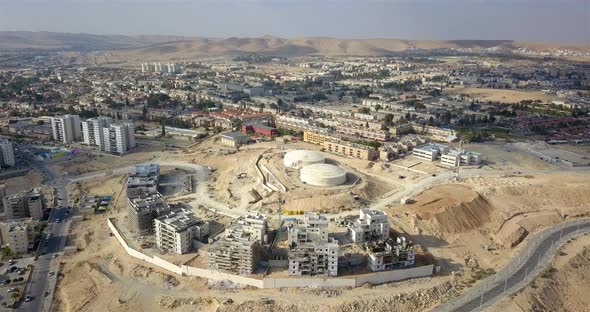
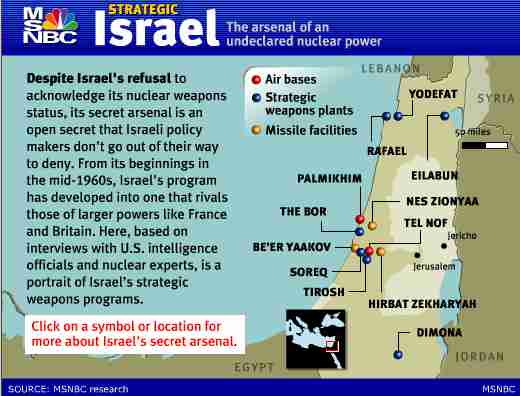
The city of Dimona has moved to the center of the escalating confrontation between Iran and Israel, following reports of an Iranian strike targeting its vicinity on 21st March.
Located deep in the Negev desert, Dimona is widely regarded as one of the most sensitive nodes in Israeli strategic infrastructure, largely due to its association with the country’s nuclear programme. Established in 1955, the city has since evolved into a key military and strategic site.
Researchers note that the area surrounding Dimona was historically inhabited by tens of thousands of Palestinian Bedouin Arabs prior to the 1948 Nakba. According to political analyst Muhammad Mustafa Shahin, the Negev region was home to between 90,000 and 95,000 Palestinians from tribes including the Tayyah, Azazmeh, and Jabarat, who relied on agriculture and herding.
Shahin highlights the geological significance of the region, noting that the Negev contains phosphate deposits rich in uranium in areas such as Aron, Zein, and Arad, alongside industrial facilities like the Rotem Amfert plants. These resources, he argues, contributed to the foundations of Israel’s nuclear development.
At the heart of Dimona’s strategic importance is the Negev Nuclear Research Center, commonly referred to as the Dimona reactor. Constructed with French assistance in the late 1950s and becoming operational in the early 1960s, the facility is widely believed to have played a central role in producing plutonium for nuclear weapons.
Shahin describes the reactor as part of what is known as Israel’s “Samson Option” — a doctrine of ultimate deterrence — which continues to fuel regional tensions, particularly in light of Israel’s refusal to sign the Nuclear Non-Proliferation Treaty (NPT).
The reported strike near Dimona marks a significant moment in the current escalation, drawing renewed attention to the risks surrounding nuclear-related infrastructure in an increasingly volatile regional conflict.
It’s all about the nukes
31 March 2026 Dr Binoy Kampmark , https://theaimn.net/its-all-about-the-nukes/
The idea of nuclear non-proliferation has come in for some heavy punishment of late. For one thing, powers with nuclear weapons, pre-eminently the United States, have been shown up as blackguards in seeking to prevent other powers in acquiring the option. In its conduct of talks with Tehran, ostensibly to stem their nuclear ambitions, Washington was merely managing a front of chatter while the warmongers were busying themselves behind the scenes. In June 2025, this culminated in the US joining Israel with Operation Midnight Hammer, which saw, according to President Donald Trump, “Monumental Damage […] done to all Nuclear sites in Iran as shown by satellite images. Obliteration is an accurate term!”
Despite these celebratory self-awarded accolades, Israel and the United States would initiate a savage and ongoing encore that began on February 28, with Trump again stating that Iran could never have a nuclear weapon. Apparently, obliterated nuclear facilities must have had some inner life that needed expunging. Diplomacy on non-proliferation was further shown to be contemptible and hypocritical.
Last year’s strikes on Iran, and the current Iran War, reveal the central hypocrisy of those who insist on keeping the nuclear club closed and limited, something made comically grotesque by the fact that one of the belligerents, Israel, is an undeclared nuclear power buttoned up in strategic ambiguity. Countries possessing the murderous nuke have been keeping those without such weapons in a state of suspended anticipation for decades. The central bargain is to be found in the Nuclear Non-Proliferation Treaty (NPT), a document that keeps club members in fattened bliss while holding off future admissions with the promise of civilian nuclear technology. Iran’s case shows that even having a civilian nuclear program is not something that will be countenanced.
The hard lesson, and one studiously understood by North Korea, is that having nukes is the ultimate security guarantee in the great family of unruly gangsters known as the international community. This much was admitted by the country’s leader, Kim Jong Un, in a March 23 speech at the Supreme People’s Assembly in Pyongyang. “Today’s reality clearly demonstrates the legitimacy of our nation’s strategic choice and decision to reject the enemies’ sweet talk and permanently secure our nuclear arsenal.”
Those who refuse to pursue such an option or have abandoned their ambitions in the face of pressure and empty undertakings given by the powerful, have been found wanting and ultimately dead: Libya’s Muammar Gaddafi, Iraq’s Saddam Hussein.
The late Iranian supreme leader, Ali Khamenei, was killed by Israeli and US airstrikes, despite having issued an expansive fatwa banning the development of nuclear weapons. The religious ruling had first surfaced at a meeting of the International Atomic Energy Agency (IAEA) in 2005. In its words, “[T]he production, stockpiling and use of nuclear weapons are forbidden under Islam and that the Islamic Republic of Iran shall never acquire such weapons.” Iran’s leadership had “pledged at the highest level that Iran will remain a non-nuclear weapon State party to the NPT and has placed the entire scope of its nuclear activities under IAEA safeguards and additional protocol, in addition to undertaking voluntary transparency measures with the Agency.”
In February 2025, the leaders of the Islamic Revolutionary Guard Corps (IRGC) begged Khamenei to reconsider the edict in light of Trump’s return to the White House and the increasingly belligerent tone he had adopted towards the regime. “We have never been this vulnerable, and it may be our last chance to obtain one before it’s too late,” stated one official to The Telegraph. Another revealed that, “The existential threat we now face has led several senior commanders – who previously insisted on following the supreme leader’s guidance – to push for making an atomic weapon.” One of Khamenei’s advisers, Kamal Kharazi, said last November that the fatwa was the only impediment to developing a nuclear capability. “If the Islamic Republic of Iran faces an existential threat, we would have no choice but to adjust our military doctrine.”
In the meantime, Iranian policy became a ragbag of options that pushed it to a point where Tehran might be considered on the brink of the nuclear threshold without quite getting there. Deterrence could be achieved without actually acquiring a weapon. “Khamenei,” writes Tom Vaughan for The Conversation, “seems to have made a bet that achieving ‘nuclear threshold’ status, where a state has the potential to develop nuclear weapons at short notice, would be enough to do this and to deter US or Israeli attacks.” In failing to achieve this, Iran had “borne all the costs of being a ‘proliferator’, while reaping none of the perceived security benefits of nuclear weapons.”
Expanding nuclear weapons arsenals has also become modish. In the face of unreliable guarantees of extended nuclear deterrence offered by the United States in Europe, French President Emmanual Macron is inclined to the view that the next five decades “will be an era of nuclear weapons.” Keeping in mind “our national and European challenges, we have to strengthen the nuclear deterrent… We must think of our nuclear deterrent on a European scale.”
John Erath, former US diplomat and currently serving as a policy director of the Center for Arms Control and Non-Proliferation says that more countries “feel insecure”, with nuclear weapons being the antidote. “There is no real alternative. Deterrence has so far prevented nuclear war, but often by luck.” Specific to Iran, reasons Ramesh Thakur, director of the Centre for Non-Proliferation and Disarmament in the Crawford School of the Australian National University, “nuclear weapons are now the only thing that will guarantee regime survival.” Jennifer Kavanagh, director of military analysis at Defense Priorities, a Washington-based think tank, suggests that a nuclear weapon may prove “a faster route to restore deterrence for a regime that is now more radical and has been attacked twice in the midst of negotiations.”
Instead of being shaded into unusable insignificance and hopeful oblivion, these weapons of homicidal lunacy have been shown to be more attractive than ever. They are virtually the only way regimes and governments of all stripes can hope to deter potential belligerents. Survivors of Iran’s leadership, now facing that existential threat long warned against, will be only too aware of that fact.
Netanyahu woke up on Iran war day 31 with a 3-front war he cannot win
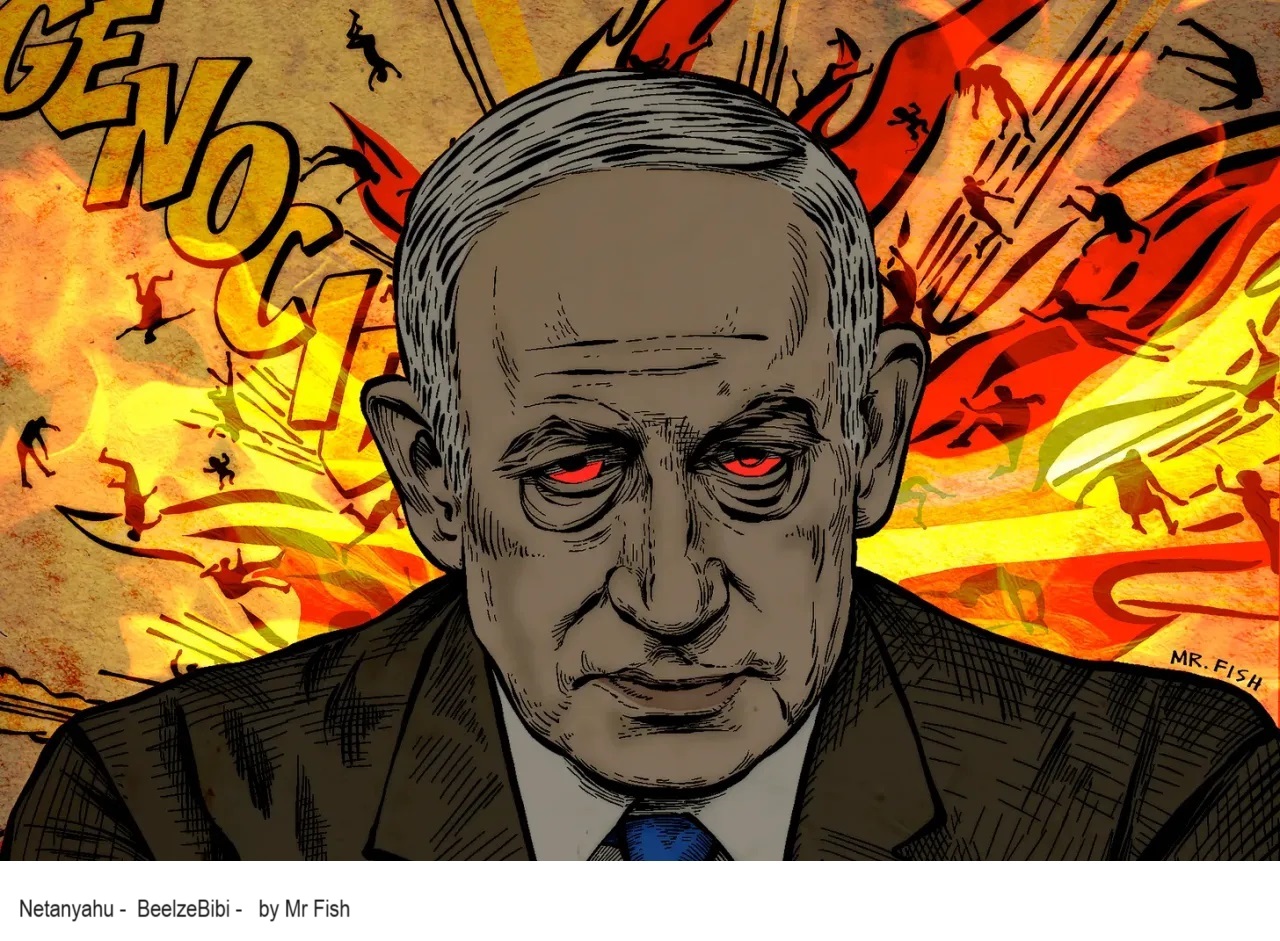
By Walt Zlotow, Walt Zlotow, West Suburban Peace Coalition Glen Ellyn IL, 31 March 2026, https://theaimn.net/netanyahu-woke-up-on-iran-war-day-31-with-a-3-front-war-he-cannot-win/
Tho scrubbed from mainstream news, Trump attacked Iran February 28 because Israeli Prime Minister Benjamin Netanyahu pleaded, begged, demanded he do so. Trump’s top diplomat, Marco Rubio, revealed this when he stupidly admitted Trump knew Israel would attack Iran and had to preemptively attack as well to avoid Iran retaliation. What Rubio didn’t admit is that the Israeli attack was fully supported by the US since Israel could not attack without total US support.
Trump’s and Netanyahu’s unprovoked war of choice had one strategy. Kill Iranian leader the Ayatollah Ali Khamenei and watch the Iranian people depose their government and capitulate within 3 days.
That failed spectacularly as the Iranian people responded like Americans after Pearl Harbor. Iran’s government did likewise, with relentless bombing of Israel, 13 US bases in the Gulf States and closing the Strait of Hormuz.
If this was all that unfolded it would still represent a catastrophic loss for the Trump/Netanyahu war criminal tag team
But for Netanyahu it gets worse. He sent his army north into Lebanon to destroy Hezbollah. That war is now going south as Hezbollah just destroyed 20 Israeli tanks in one day. Hezbollah missiles are raining down on northern Israel driving tens of thousands of Israelis from home.
It gets worse. The Houthis who control Yemen just entered the war on Iran’s side by launching 2 strikes into Israel Saturday. Houthi spokesman Yahya Saree declared Yemen bombed Israel “in support of the Islamic Republic of Iran and the resistance fronts in Lebanon, Iraq, and Palestine, and in view of the continued military escalation, the targeting of infrastructure, and the perpetration of crimes and massacres against our brothers in Lebanon, Iran, Iraq, and Palestine.”
In addition, the Houthis may reimpose the blockade on Israeli-linked shipping through the Bab el-Mandeb Strait, which connects the Gulf of Aden and the Red Sea. If so, the Bab el-Mandeh Strait will join the Strait of Hormuz in expanding economic disaster worldwide.
Worse yet. Shi’ite militias in Iraq have joined the war and will be targeting US military assets in Iraq that the US has kept there for 23 years.
When Benjamin Netanyahu goes to sleep tonight, he won’t need to count sheep to fall asleep. He just needs to count neighboring countries joining Iran’s defense against the most self-destructive criminal war this century.
No To Nuclear- Why Nuclear Power Destroys Lives, Derails Climate Progress and Provokes War.
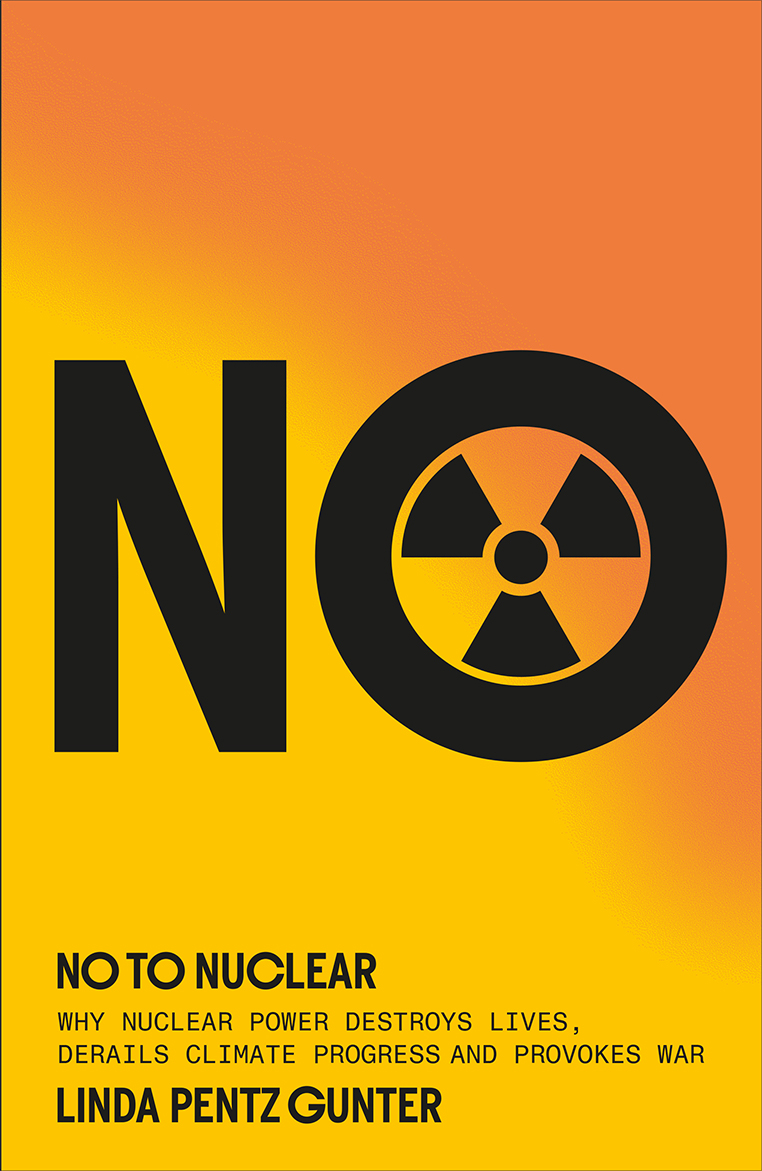
Debunks the enduring myth that nuclear power is safe and green
There is no silver bullet for the climate crisis—but that hasn’t stopped people searching. Seizing its chance, the nuclear power industry wants us to believe that theirs is the only technical fix for our deliverance. The public, politicians and the media have been easily swayed.
This should come as no surprise. After all, the pro-nuclear PR campaign is richly funded and has an army of lobbyists sowing myths while the industry reaps the rewards of taxpayer-funded subsidies.
No To Nuclear calls the industry’s bluff. Blasting aside its claims to be safe and green, Linda Pentz Gunter makes the irresistible case that nuclear power is too slow, too expensive, too dangerous and too integrally connected to the nuclear weapons complex, to serve as a rational energy choice.
The book also delves into the lives of Indigenous peoples and communities of colour, who have been harmed the most by the nuclear sector, and questions whether the way we devalue nature and the environment is costing us the chance of a genuinely just energy transition.
No To Nuclear. Why Nuclear Power Destroys Lives, Derails Climate Progress
And Provokes War by Linda Pentz Gunter, is now available to order from
Pluto Press. Purchase on or before April 8 and you will receive 40% off the
cover price as part of Pluto’s special promotion for books on the energy
transition. No to Nuclear covers a wide array of reasons to reject nuclear
power, focusing on the human rights and ecological impacts as well as the
chief detriments including cost, time, safety, waste and the link to
nuclear weapons. When ordering, click the currency symbol in the scroll
down menu at the top to select dollars or pounds.
Pluto Press 30th March 2026,
https://www.plutobooks.com/product/no-to-nuclear/
Why is Iran being singled out while others escape scrutiny? : Erase nuclear apartheid

Israel maintains a long-standing policy of nuclear ambiguity. It neither confirms nor denies its arsenal, avoids international inspections, and remains outside the NPT altogether. Despite this, it faces no comparable sanctions regime, no sustained diplomatic isolation, and no credible threat of enforced disarmament.
March 30, 2026, by Ranjan Solomon, https://www.middleeastmonitor.com/20260330-why-is-iran-being-singled-out-while-others-escape-scrutiny-erase-nuclear-apartheid/
“The world cannot preach non-proliferation while practising selective permission. That is not law – it is hierarchy.”
The global discourse on nuclear weapons has drifted far from its stated goal of disarmament. What remains today is not a principled framework for peace, but a deeply unequal system of control – one that determines who may possess the most destructive weapons ever created, and who must remain permanently under suspicion.
At the centre of this unequal order stands Iran: scrutinized, sanctioned, and threatened, not for what it has done, but for what it might one day choose to do. This is not non-proliferation. This is nuclear apartheid.
The Nuclear Non-Proliferation Treaty, which entered into force in 1970, was premised on a fundamental bargain. Non-nuclear states ag
At the same time, states outside the NPT framework – such as India and Pakistan—have developed and maintained nuclear weapons with limited global penalty. Most strikingly, Israel, widely believed to possess a sophisticated and undeclared nuclear arsenal, has never signed the NPT and remains entirely outside its inspection regime.
The result is unmistakable: a two-tier system – one for the powerful, and one for the rest.reed to forgo nuclear weapons in exchange for access to peaceful nuclear technology and a binding commitment by nuclear-armed states to pursue disarmament under Article VI. More than fifty years later, that promise stands betrayed.
The five recognized nuclear powers – United States, Russia, China, France, and United Kingdom – have not only failed to disarm, but have actively modernised their arsenals. Vast resources continue to be poured into enhancing nuclear capabilities, refining delivery systems, and ensuring the long-term viability of weapons that can destroy humanity many times over.
To understand why Iran is singled out, one must step beyond present-day accusations and examine history, law, and geopolitical power.
Iran’s nuclear programme did not begin in defiance. It began with encouragement from the United States under the “Atoms for Peace” initiative in the 1950s. At that time, Iran was a strategic ally, and its nuclear ambitions were supported rather than feared.
What changed was not technology – but politics.
The 1979 Revolution transformed Iran from a Western-aligned monarchy into an independent republic asserting sovereignty over its political and economic choices. From that moment onward, its nuclear programme was reframed—from legitimate development to potential threat.
Yet Iran remains a signatory to the NPT. It has accepted inspections and consistently maintained that its nuclear programme is for peaceful purposes, even invoking religious prohibitions against nuclear weapons.
Contrast this with Israel.
Israel maintains a long-standing policy of nuclear ambiguity. It neither confirms nor denies its arsenal, avoids international inspections, and remains outside the NPT altogether. Despite this, it faces no comparable sanctions regime, no sustained diplomatic isolation, and no credible threat of enforced disarmament.
This disparity is not incidental. It reflects geopolitical alignment.
Similarly, nuclear-armed states—both within and outside the NPT—continue to expand and refine their arsenals without facing existential scrutiny. The international system tolerates nuclear weapons in the hands of allies while criminalizing their pursuit by adversaries.
Dimona’s Shadow: How Israel’s Nuclear Monopoly Warps Middle East Security
Iran is not singled out because it is uniquely dangerous. It is singled out because it is politically inconvenient.
The dominant justification for nuclear weapons remains deterrence—the idea that possession prevents aggression. Yet deterrence is not a neutral doctrine. It is a privilege reserved for those already in possession of nuclear weapons.
For states like Iran, surrounded by nuclear-armed powers and subject to repeated threats of military action, the logic of deterrence becomes difficult to ignore. The existence of nuclear arsenals elsewhere creates the very conditions under which others feel compelled to pursue them.
This is the central contradiction of the non-proliferation regime: it seeks to prevent proliferation without addressing the incentives that drive it.
So long as nuclear weapons are seen as guarantors of security for some, they will remain objects of aspiration for others.
Under Article X of the NPT, any state has the sovereign right to withdraw if it determines that extraordinary events jeopardize its supreme national interests. This provision is not exceptional – it is foundational.
If Iran were to exercise this right, it would not be acting outside international law. It would be exercising a legal option embedded within the treaty itself.
The real question, then, is not legality – it is legitimacy.
Why should a state remain bound by a treaty that is applied selectively? Why should obligations be enforced unevenly while privileges remain protected? A legal framework that lacks reciprocity cannot command enduring compliance.
The moral argument against nuclear weapons is not abstract – it is rooted in history. The Atomic bombings of Hiroshima and Nagasaki, carried out by the United States, demonstrated the catastrophic humanitarian consequences of nuclear warfare. Entire cities were obliterated. Generations suffered from radiation, illness, and trauma.
These events should have marked the beginning of the end for nuclear weapons.
Instead, they marked the beginning of their normalization.
In response to this enduring threat, the international community has moved – however unevenly – toward prohibition. The Treaty on the Prohibition of nuclear weapons, adopted in 2017, represents a clear legal and moral rejection of nuclear weapons, declaring them incompatible with international humanitarian law. Yet none of the nuclear-armed states have joined it.
Once again, the pattern is unmistakable: law for some, exemption for others.
The path forward cannot be built on coercion or selective enforcement. It must be grounded in universality. A credible non-proliferation regime requires that all states—without exception – commit to disarmament. This includes the United States, Russia, China, France, the United Kingdom, as well as India, Pakistan, and Israel.
The principle must be simple and uncompromising: no nuclear weapons anywhere, no exceptions, no hierarchies. Anything less is not non-proliferation – it is discrimination.
Talks without balance: Why Tehran and Trump remain locked in escalation
But disarmament cannot remain a rhetorical aspiration. It demands verifiable timelines, binding commitments, and enforcement mechanisms that apply equally to all states. Without such measures, treaties risk becoming instruments of pressure rather than pathways to peace. The authority of international law depends not only on what it proclaims, but on how consistently it is applied.
The current nuclear order is unsustainable because it is fundamentally unjust. It divides the world into those permitted to wield ultimate violence and those permanently denied that power under threat of punishment.
Iran’s case lays bare this contradiction with clarity. Whether one agrees with Iran’s policies or not, the principle remains clear: international law cannot survive selective application. A system that enforces restraint on some while excusing excess in others undermines its own legitimacy.
If the world is serious about peace, it must move beyond power and toward principle—beyond dominance and toward equality. Not a peace imposed by deterrence, but a peace secured by justice. Not a stability rooted in fear, but one grounded in mutual restraint and shared accountability.
Until then, the truth will remain stark and unavoidable:
There can be no peace with nuclear weapons. And there can be no justice with nuclear apartheid
No Three Mile Island in Suffolk!
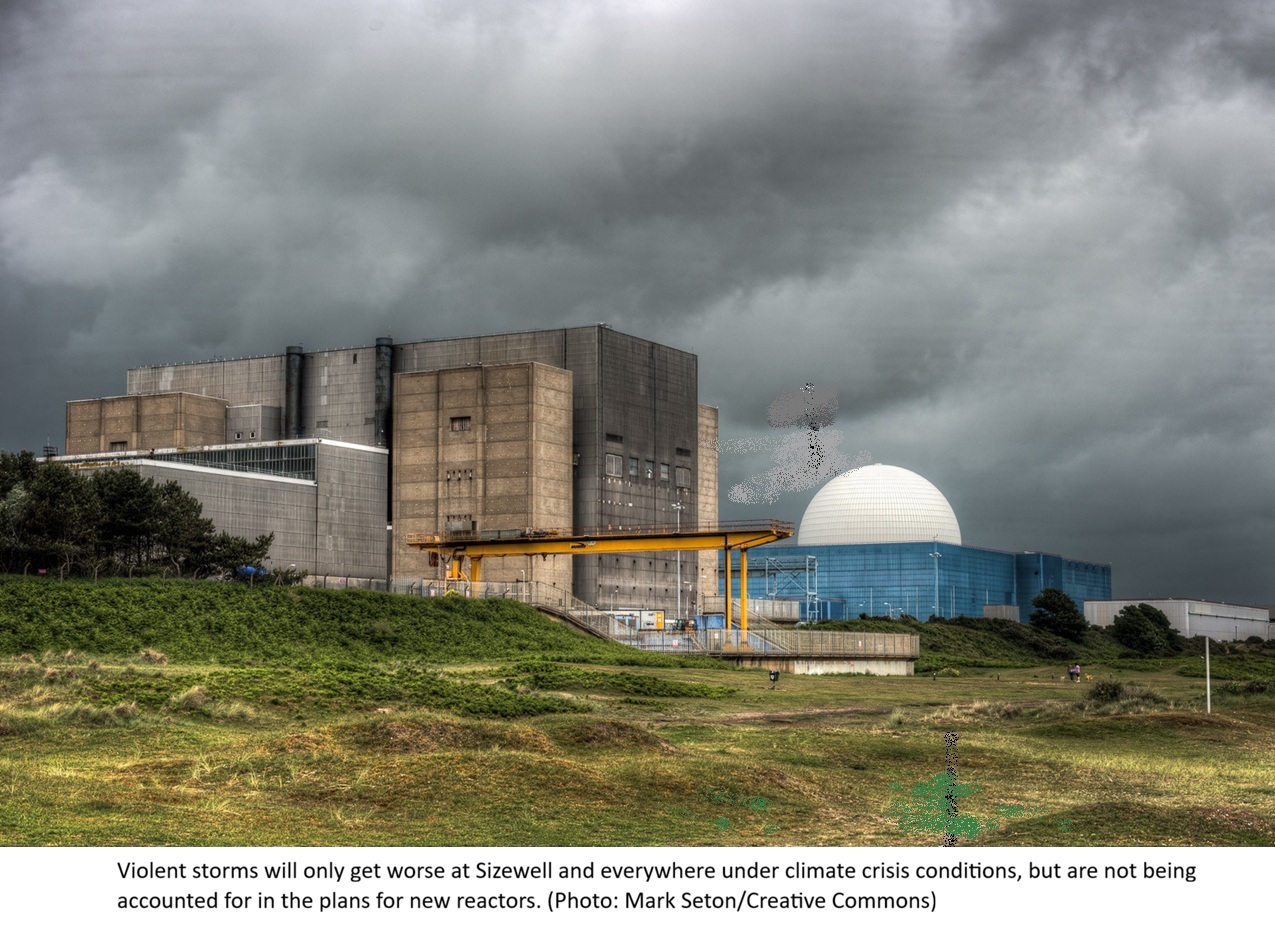
A new nuclear review will ignore the obvious perils of new reactors on a UK beach, warns Together Against Sizewell C
The following is a statement from Together Against Sizewell C (TASC) in response to the “Fingleton Nuclear Review” adopted by the UK government, entirely influenced by the nuclear power industry and its lobbyists in a frantic effort to copycat the US model of accelerating approval of dangerous, expensive and entirely unnecessary nuclear power projects.
Together Against Sizewell C (TASC) is appalled that the UK government plans to adopt all 47 recommendations of the ‘Fingleton Nuclear Review’. This review is based on a false premise that nuclear is ‘clean energy’ [see Note 1] and ‘needed to power Britain’s future’[see Note 2]. Neither of these assertions stand up to public scrutiny, the review being driven by the nuclear industry, big business and lobbyists for commercial and ideological reasons. Claims that nuclear is ‘homegrown power’ conveniently overlook the fact that the UK do not have any indigenous supplies of uranium needed to fuel the reactors, that market currently being dominated by Russia.
Those trying to convey a false impression of nuclear as clean are merely gaslighting the British public. While nuclear may be able to claim relatively low carbon production during the operational period, the long deployment times for new gigawatt nuclear reactors such as Hinkley and Sizewell C means a lot of additional carbon is produced from burning more fossil fuels while we must wait for new nuclear to become operational when compared with far cheaper, quicker to deploy renewables and energy storage.
The review makes unsubstantiated claims that nature will benefit from adopting these recommendations but in TASC’s view this is an irresponsible assumption for this government to accept, especially as environmental experts were excluded from the review team. The UK is already one of the most nature depleted nations on the planet – we cannot afford to degrade our environmental protections any further.
In TASC’s opinion, Sizewell C demonstrates that regulations need to be strengthened, not weakened – Sizewell C is sited in a National Landscape, surrounded by designated wildlife sites, in the UK’s most drought-prone region and on one of Europe’s fastest eroding coastlines. Despite this, it received DCO approval from the Secretary of State against the recommendation of the 5 independent planning experts.
£40 billion Sizewell C is proceeding at pace, even though the project has still not secured a guaranteed sustainable supply of potable water essential for its 60 years of operation. Nor has it demonstrated that the site can be kept safe for its full lifetime in a credible maximum sea level rise scenario – after DCO approval TASC discovered that Sizewell C have committed to install two huge additional sea defences in an extreme climate change scenario, the need for which EDF knew about since 2015 yet chose not to include them in their DCO application, meaning the additional sea defences have had no public scrutiny or impact assessment on the receiving environment.
TASC fear for the safety of our descendants and the precious, rapidly eroding Suffolk coastline because future generations have been left to rely on the developer’s unassessed sea defences to protect Sizewell C and its 3,900 tonnes of spent nuclear fuel from flooding in an extreme sea level rise scenario over the next 150 years or longer if a geological disposal facility is not available [see Note 3]. Hardly responsible ancestry from this government.
Notes:-
1. The myth that nuclear is ‘clean energy’ In TASC’s view, the reasons why nuclear power can’t be legitimately labelled as ‘clean’ include:-
a) The pollution generated from the mining, milling, fabrication and enrichment to produce the nuclear fuel which mainly affects indigenous peoples in producer countries,
b) The pollutants discharged to air and water from an operational nuclear power station, including the thousands of tonnes of dead fish, heavy metals, chlorine and the cocktail of other pollutants that will be discharged to the sea annually from the plant’s cooling water system, and
c) The legacy of highly radioactive spent fuel and other radioactive waste from nuclear power plants currently has no universally agreed management programme, nor any waste repository and which will be an environmental, as well as financial, burden for future generations for thousands of years – see N Scarr Report, ‘Plutonium—the complex and ‘forever’ radiotoxic element of nuclear waste. How exactly should we manage its containment?’
2. Various reports have demonstrated that the UK can fulfil its low carbon energy requirements without new nuclear, and at lower cost than new nuclear e.g. the January 2023 report by LUT University, Finland, ‘100% Renewable Energy for the United Kingdom’ and the 2022 UCL report ‘The role of new nuclear power in the UK’s net-zero emissions energy system’. Regarding national security, events in Ukraine have demonstrated that nuclear plants and their associated infrastructure are both a target and a weapon (see iNews article, ‘Attacks on nuclear plants are being normalised – and the consequences could be disastrous’ and the recent direct drone attacks on Zaporizhzhya NPP which have led to fires at the plant) so are a threat to national scrutiny. Scattering SMRs throughout the country will only increase the risk of a malicious attack (or accident).
3. TASC press release 12.01.26, ‘Escalating Erosion on East Suffolk Coast should be a huge worry for Sizewell C’
Thousands of Iranians Who Live on Kharg Island Face Possibility of US Invasion
US media talk about the island’s civilians as if they are a military problem, if they talk about them at all.
By Séamus Malekafzali , Truthout, March 30, 2026, https://truthout.org/articles/thousands-of-iranians-who-live-on-kharg-island-face-possibility-of-us-invasion/?utm_source=Truthout&utm_campaign=3106eddc85-EMAIL_CAMPAIGN_2026_03_30_09_20&utm_medium=email&utm_term=0_bbb541a1db-3106eddc85-650192793
Over the past month of the U.S.-Israeli war against Iran, Donald’s Trump mission has creeped from vowing that he’s “not putting troops anywhere” to backing himself into an escalation that makes the chance of ground invasion far more likely. As many as 17,000 American troops could be gathering in preparation for an operation to land on, and potentially even seize, any number of Iranian islands in the embattled Persian Gulf and the Strait of Hormuz.
Kharg Island, deep in the Gulf and near the coasts of Kuwait and Iraq, is the isle the Trump administration has most clearly placed in its crosshairs. Media reports have suggested the administration is also considering other special operations, such as a complex raid to seize enriched uranium from Isfahan. But taking Kharg is now being touted by some of the same hawks who pushed for the initial U.S. military action in Iran as a new central goal of the war, an opportunity to acquire significant leverage that the United States can and must take. “We did Iwo Jima,” Sen. Lindsey Graham said to Fox News on March 22, “We can do this.”
Other islands closer to the strait, like Larak, an island off Iran’s southern coast, have been more critical to Iran’s ongoing blockade of oil tankers. But 80 to 90 percent of Iran’s own crude oil exports — which have increased since the war began — run through Kharg, making the island’s oil terminal deeply important to the functioning of Iran’s economy, in wartime or otherwise. Over the past few weeks, the American government, ever-obsessed with seizing the oil of other nations as recompense, has attempted to make Kharg into its plaything. On March 13, the U.S. conducted airstrikes on the island and sent a volley of rockets, allegedly fired from Emirati territory, with CENTCOM claiming to have hit “90+ military sites” that destroyed “naval mine storage facilities” and “missile storage bunkers,” among other purported targets.
After the strikes, Trump immediately bragged that Iran now had “NO ability to defend anything we want to attack” and later said that “we may hit it a few more times just for fun.” While he made a point of claiming to spare the oil infrastructure on the island, wary of price shocks caused by Israeli attacks on oil refineries near Tehran days earlier, Trump otherwise spoke of the island as if it had been “totally demolished.” The White House social media accounts posted his message announcing the attacks with the headline: “Kharg Island Obliterated.”
This “obliteration” would have come as news to the more than 8,000 permanent residents of the island, to say nothing of the thousands more who have come to Kharg to work in the oil industry — residents and workers who have been removed from the American government’s discussion of a potential invasion, as well as American media’s reporting about the impacts of such an invasion.
Locals on the island told BBC Persian that the targets the U.S. bombed hit deep inside the city of Kharg, where most of the population resides, that “the island doesn’t really have a military base,” and that following the bombing of Kharg Airport, which runs domestic flights to cities on the Iranian mainland, there was now no way to evacuate.
The White House’s cavalier attitude towards an invasion of Iranian territory has been notable, with Trump mentioning on March 29 that “maybe we take Kharg Island, maybe we don’t” because his “favorite thing is to take the oil in Iran.” But Western media coverage has arguably done just as much to create the impression that Kharg is solely a strategic asset to be conquered, with the welfare of its native inhabitants a footnote, if mentioned at all.
Mainstream outlets like Reuters and The Washington Post have backgrounded the civilian population in favor of dry, military-focused analysis, with the Post blithely printing the words of an analyst from the pro-Israel Washington Institute that it would be “safer” for U.S. forces to simply surround the island with mines and hold it hostage. Coverage on CBS and Fox News has perpetuated outright falsehoods about the island’s population; CBS brought on an analyst from the conservative Hudson Institute to say that Kharg could easily be isolated because it had “no civilian population center” and “really is just oil infrastructure,” while Fox’s Jesse Watters featured Medal of Honor recipient David Bellavia, who told viewers that “civilians are not allowed to even go to Kharg Island.”
Outlets that have mentioned Kharg’s civilian population have often done so in passing, sometimes referring to the island’s inhabitants as a mere additional risk that U.S. paratroopers and marines will have to account for. In a Bloomberg editorial, James Stavridis, former NATO Supreme Allied Commander, writes about the thousands on the island as problems to be solved, people “who would need to be contained in their homes or evacuated; the Iranians may have planted sophisticated booby traps.”
The narrative from war hawks pushing for an invasion has suggested such an operation could be of a limited nature, more along the lines of a raid and less like the long-term occupation of Iraq, a “quagmire” that the Trump administration has insisted the war with Iran is nothing like. But while Fox Business may bring on a former Navy SEAL to talk about how oil seized from Kharg Island could be passed “back to the Iranian people once they take over this regime,” there is little indication that Trump would want to quickly exit Kharg. The president said outright on Sunday that invading it would “mean we had to be there for a while.” There’s even less indication that the Trump administration cares about giving power to the Iranian people or preserving their livelihoods or national economy.
An invasion of Kharg would place thousands of Iranians — perhaps hundreds of thousands if the U.S. military also chose to invade other islands like Larak, Kish, Abu Musa, Hormuz, or Qeshm — under direct military occupation in a form for an indefinite period with no immediate plans for exit or planned transition, a military operation with few parallels in the War on Terror era.
As U.S. threats continue to build, Iran has reportedly brought further military reinforcements to Kharg over the past several days. Life on the island continues. Iran’s Speaker of Parliament Mohammad Bagher Ghalibaf has warned of “continuous and relentless attacks” on “vital infrastructure” in the region should a U.S. ground invasion commence. Esmail Hosseini, spokesman for the parliament’s Energy Commission, was more blunt on a parliamentary visit to the island, saying that Kharg will become “the graveyard of the aggressors.” One resident of the island told a reporter from Mehr News, “The enemy thinks it can break the resistance on Kharg Island with a few attacks, but they are blind, and we will not leave the field for them.” The White House, at least for now, does not appear to be heeding these warnings.
The American narrative of having supposedly learned lessons after endless years of war in Iraq and Afghanistan is finally being challenged by brutal reality. A desire to wage war without endangering American lives, while exacting unlimited damage and chaos against any state that has the means to fight back, means the question of what to do with civilians has become virtually unmentionable. A war can ostensibly be waged for the freedom of the Iranian people in the abstract, this narrative goes, but even their mere existence is not allowed to be a factor in the actual operations of a military, one that now openly prides itself on ignoring “stupid rules of engagement” and maximizing “lethality.” The people of Kharg, and of Iran more broadly, are deemphasized, ignored, erased from discussion, until they suddenly become an immediate and shocking problem, a problem the U.S. simply didn’t anticipate, a problem to now be dealt with by a government that bragged about obliterating the land upon which they exist.
The Empire Is Losing Its Ability To Hide Its Ugly Nature
It used to be hard to help westerners see the depravity of the US empire. Now it’s just right in everyone’s face with raw genocide footage and insanely evil warmongering of direct economic consequence.
It took a lot of work to help the average westerner understand that NATO aggressions actively provoked the war in Ukraine, or that western interventionism played a major role in the violence and chaos in Syria, or that US economic warfare was largely responsible for the suffering of Cubans and Venezuelans. The murderous savagery of the empire was hidden behind layers of obfuscation, allowing the propagandists to frame the western power structure as a passive witness to the abuses of foreign regimes.
Now the propagandists have very little to work with, so those obfuscations can no longer take place. There’s no way you can spin a school full of children blown up by an American double-tap airstrike as anything other than what it is. There’s only so much narrative manipulation you can exert on raw video footage of a western-backed genocide playing out in full view of the entire world day after day for years. There’s no way to propagandize westerners into believing they want to pay a lot more more money for their fuel and groceries.
I saw former EU parliament member Luis Garicano complaining on Twitter that Trump’s actions are making it look as though leftists have been correct about the US empire this whole time, saying “Many of us, liberal Europeans, spent decades pushing back against the European extreme left’s cartoon version of America ( it’s all oil/ imperialism/getting rich at the expense of others) and then one dumb administration walks in and performs the caricature to perfection.”
Garicano’s entire worldview depends on his ability to avoid recognizing the obvious truth: that the so-called “extreme left” has always been correct, and that the empire he worships has always been evil. It’s just having a harder and harder time masking its true nature, because of the very evils it has tried to conceal.
Everything’s becoming more and more revealed. More and more transparent. What was once done solely by whistleblowers, investigative journalists, activists and dissident media is now being done by the empire itself, because there’s only so long you can hide the truth about something so malignant. An empire that is held together by lies, corruption and endless slaughter was never going to remain unseen. The brutality necessary to dominate the planet had to come out into the light eventually.
“May all be revealed” has been my prayer for our world for many years now. That dearly held wish is now being answered, and the truth is looking every bit as ugly as expected.
May all be revealed. May all that is hidden become seen. In the empire. In our governments. In our culture. In our community. In our interpersonal relationships. In ourselves.
All abusiveness ultimately boils down to a lack of clear seeing. Governments are able to abuse people because the dynamics of corruption and tyranny aren’t clearly seen by the public, who would violently revolt if they truly understood what their leaders are doing to them and to their world. Domestic violence and family sexual abuse can only continue when the rest of the community doesn’t see and understand what the abuser is doing. Our own abusive tendencies can only persist for as long as our trauma responses and maladaptive coping mechanisms remain hidden in the shadows of our subconscious mind
All of these dysfunctional dynamics will lose their durability as we become more and more conscious of what’s really going on, in ourselves and in our world. Things look ugly now because the truth is ugly, but it is only by truth revealing itself that we can move toward health and harmony as a species.
If you’ve ever done deep inner work on your own psychology you have seen this play out in your own personal experience. You can heal your inner woundedness if you can gather up the courage to plunge into your own darkness and face with uncompromising honesty the uncomfortable realities you’ve been avoiding within yourself throughout your entire life — but you kept those things unconscious for a reason. They’re scary. They’re painful. They’re shameful. Facing them can feel like the end of the world. Yet it is only by coaxing them into the light of consciousness that they can be fully seen, reconciled, and healed.
The whole world is like that. Humans as a collective cannot fix problems which we don’t clearly see and understand. Our rulers pour so much energy into maintaining influence operations like news media propaganda, Hollywood psyops, Silicon Valley algorithm manipulation and government secrecy in order to obstruct our clear seeing and understanding.
But it’s all coming tumbling out into the cold light of day now. More and more is becoming visible.
May the lies and obfuscations continue to unravel. May the truth continue to reveal itself.
How Iran war energy crisis strengthens case for renewables
Nehal Johri, 03/29/2026March 29, 2026,
https://www.dw.com/en/iran-war-strait-of-hormuz-oil-crisis-solar-wind-power-hydropower/video-76557387
The Iran war has exposed the fragility of the global energy system as countries remain dependent on fossil fuels. Could renewables like wind, solar, hydropower and photovoltaic shield people from the shock?
Global tensions have triggered an energy crisis reminiscent of the 1970s, exposing how dependent the world still is on fossil fuels.
Experts warn that disruptions like the current war involving Iran highlight the fragility of global supply chains and key chokepoints such as the Strait of Hormuz, where a fifth of global oil and LNG normally pass.
Today, around 80% of global energy still comes from fossil fuels, leaving economies vulnerable to shocks. Yet renewables are gaining ground: in 2025, wind and solar for the first time supplied more electricity to the EU than fossil fuels, driven by falling costs and rapid expansion.
Countries like Spain and Portugal already cover much of their demand with green energy, showing how a decentralized, resilient power system could reduce future risks.
Scotland won’t pursue ‘unproven’ SMRs and ‘experimental’ fusion as focus remains renewables
30 Mar, 2026 By Thomas Johnson, https://www.newcivilengineer.com/latest/scotland-wont-pursue-unproven-smrs-and-experimental-fusion-as-focus-remains-renewables-30-03-2026/
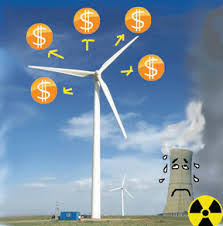
Scotland plans to focus on investing in renewables as nuclear fusion and small modular reactors (SMRs) remain “unproven technology”, a Scottish Minister has said.
The Scottish National Party (SNP), the ruling party in Scotland, has banned the development of any new nuclear in the country – and seems set to maintain this even as promising new technologies emerge.
Speaking in Scottish Parliament last week, MSP for Aberdeenshire East and cabinet secretary for climate action and energy Gillian Martin outlined how even with the buzz around fusion at the moment, the Scottish government will not be pursuing new opportunities within the nuclear sector.
“The Scottish Government recognises the increasing interest in fusion energy. However, fusion remains experimental, with no commercial deployment and uncertainties around cost, safety and timescales,” she said.
“The UK Government’s prototype fusion plant is not expected to be operational until 2040, but the climate emergency demands proven, deployable solutions now.”
Martin explained how this policy extends to the deployment of SMRs.
“We do not plan to build small nuclear reactors, which are unproven technology that has not been deployed,” she said.
“The Scottish Government has a policy against new nuclear fission.”
The topic arose in Scottish Parliament after MSP for South Scotland Martin Whitfield quizzed Martin regarding any impact on Scottish energy policy could expect in light of plans Torness nuclear power station will close by 2030.
Torness, the East Lothian‑based nuclear power plant operated by EDF, is one of the UK’s four remaining advanced gas‑cooled reactor (AGR) stations. It was due to close in 2028 but EDF announced in 2024 it would be extending its life for a further two years.
1 This Month

of the week – Shut Down Drone Warfare!


Tell the Ukrainian Government to Drop Prosecution of Peace Activist Yurii Sheliazhenko

Petition to revoke the licensing of the Near Surface Nuclear Disposal Facility (NSDF) at Chalk River. https://www.ourcommons.ca/petitions/en/Petition/Details?Petition=e-7247
To see nuclear-related stories in greater depth and intensity – go to https://nuclearinformation.wordpress.com
-
Archives
- April 2026 (19)
- March 2026 (251)
- February 2026 (268)
- January 2026 (308)
- December 2025 (358)
- November 2025 (359)
- October 2025 (376)
- September 2025 (257)
- August 2025 (319)
- July 2025 (230)
- June 2025 (348)
- May 2025 (261)
-
Categories
- 1
- 1 NUCLEAR ISSUES
- business and costs
- climate change
- culture and arts
- ENERGY
- environment
- health
- history
- indigenous issues
- Legal
- marketing of nuclear
- media
- opposition to nuclear
- PERSONAL STORIES
- politics
- politics international
- Religion and ethics
- safety
- secrets,lies and civil liberties
- spinbuster
- technology
- Uranium
- wastes
- weapons and war
- Women
- 2 WORLD
- ACTION
- AFRICA
- Atrocities
- AUSTRALIA
- Christina's notes
- Christina's themes
- culture and arts
- Events
- Fuk 2022
- Fuk 2023
- Fukushima 2017
- Fukushima 2018
- fukushima 2019
- Fukushima 2020
- Fukushima 2021
- general
- global warming
- Humour (God we need it)
- Nuclear
- RARE EARTHS
- Reference
- resources – print
- Resources -audiovicual
- Weekly Newsletter
- World
- World Nuclear
- YouTube
-
RSS
Entries RSS
Comments RSS
 nuclear-news