Alone at the Apex
17 March 2026 Michael Taylor AIM Extra, https://theaimn.net/alone-at-the-apex/
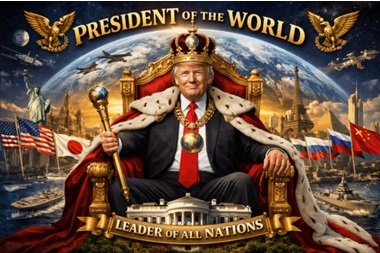
From his position at the commanding heights of American power, President Trump has often conveyed a singular conviction: the world does not sufficiently recognise his leadership – or America’s preeminence under it.
While ordinary citizens contend with everyday concerns, the president has framed his role in sweeping, almost solitary terms, as if the United States – and by extension, he personally – bears responsibility for the globe’s direction. Gratitude, in this view, is scarce; deference, even scarcer.
Consider trade policy. The administration’s use of tariffs was presented as a masterful recalibration of global economic relations – a straightforward tool to restore fairness and protect American interests. Yet the response was not passive acceptance. Major trading partners, including close allies, imposed countermeasures of their own. What was intended as a decisive unilateral stroke became a cycle of retaliation, raising costs for consumers and businesses on all sides. The expectation of unilateral acquiescence met the reality of sovereign interests.
A similar pattern emerged with the proposal to acquire Greenland. The president highlighted its strategic value – vast Arctic real estate with clear national-security implications – and floated the idea of a purchase from Denmark. The Danish government and Greenland’s leadership rejected the notion outright, citing sovereignty and self-determination. What may have appeared a bold real-estate opportunity to one side registered as an affront to national autonomy on the other. The ensuing diplomatic friction, including threats of economic pressure, underscored a fundamental disconnect: not every asset is available for negotiation, no matter the bidder’s confidence.
Efforts at broader diplomatic architecture have encountered comparable resistance. The “Board of Peace,” envisioned as a new mechanism to resolve international disputes and oversee initiatives like Gaza reconstruction, was launched with American leadership at its centre. Yet participation has been limited, with skepticism from many quarters about its structure, authority, and resemblance to existing multilateral bodies. The absence of broad buy-in has left the initiative more aspirational than operational.
Most recently, the call for international naval support in the Strait of Hormuz – urging allies and affected nations to deploy warships to secure a vital global chokepoint amid tensions with Iran – has met with tepid or nonexistent commitments. Despite appeals to countries heavily dependent on the route’s oil flows, including longstanding partners, few have stepped forward. The United States finds itself shouldering the burden largely alone, as others prioritise their own strategic calculations over collective action under American direction.
One can anticipate the familiar refrain on Truth Social: grievances about unfair treatment, unappreciative allies, thwarted deals, and the solitary burden of American greatness. The pattern is consistent – a belief that bold American initiatives should command automatic support, met instead with the stubborn pluralism of an independent world.
The deeper tension lies here: the president appears to operate from an assumption of unchallenged primacy, where U.S. proposals carry inherent authority. Yet the international system has long since moved beyond unipolarity. Other nations – democracies and autocracies alike – possess their own agendas, red lines, and capacities to say no. They are not subjects awaiting edicts; they are actors with vetoes of their own.
This is not ingratitude so much as the ordinary friction of a multipolar era. The loneliness at the top is real, but it stems less from betrayal than from the quiet erosion of exceptional leverage. The hill may be high and gilded, but it is no longer solitary – and insisting otherwise only accentuates the isolation.
No comments yet.
1 This Month


18 March Webinar @ 1 PM EST: An Assessment of SMR Projects: The Case of Canada
register for the zoom:
https://us02web.zoom.us/webinar/register/WN_o8BIIOUvQ2ONJR1nta65DQ#/registration


of the week – STOP SMALL MODULAR REACTORS IN CANADA
To see nuclear-related stories in greater depth and intensity – go to https://nuclearinformation.wordpress.com
-
Archives
- March 2026 (146)
- February 2026 (268)
- January 2026 (308)
- December 2025 (358)
- November 2025 (359)
- October 2025 (376)
- September 2025 (258)
- August 2025 (319)
- July 2025 (230)
- June 2025 (348)
- May 2025 (261)
- April 2025 (305)
-
Categories
- 1
- 1 NUCLEAR ISSUES
- business and costs
- climate change
- culture and arts
- ENERGY
- environment
- health
- history
- indigenous issues
- Legal
- marketing of nuclear
- media
- opposition to nuclear
- PERSONAL STORIES
- politics
- politics international
- Religion and ethics
- safety
- secrets,lies and civil liberties
- spinbuster
- technology
- Uranium
- wastes
- weapons and war
- Women
- 2 WORLD
- ACTION
- AFRICA
- Atrocities
- AUSTRALIA
- Christina's notes
- Christina's themes
- culture and arts
- Events
- Fuk 2022
- Fuk 2023
- Fukushima 2017
- Fukushima 2018
- fukushima 2019
- Fukushima 2020
- Fukushima 2021
- general
- global warming
- Humour (God we need it)
- Nuclear
- RARE EARTHS
- Reference
- resources – print
- Resources -audiovicual
- Weekly Newsletter
- World
- World Nuclear
- YouTube
-
RSS
Entries RSS
Comments RSS
 nuclear-news
Leave a comment