Trump’s NATO Warning Sounds More Like a Threat

17 March 2026 AIMN EditorialBy Peter Brown, https://theaimn.net/trumps-nato-warning-sounds-more-like-a-threat/
When Donald Trump warned that the North Atlantic Treaty Organization could face a “very bad future” after a lukewarm response from allies to help secure the Strait of Hormuz, the remark sounded less like diplomacy and more like a threat.
NATO was not created to serve as a backup force for American military adventures. It was created for collective defence. The alliance’s core principle – Article 5 – obliges members to assist one another only if a member state is attacked.
That principle has been invoked exactly once: after the September 11 attacks, when NATO allies rallied to support the United States in Afghanistan.
But this situation is fundamentally different.
No NATO country has been attacked. No member state has invoked Article 5. The current tensions stem from U.S. military action against Iran, not from an assault on the alliance itself.
Under those circumstances, NATO members are under no treaty obligation to participate in a U.S.-led effort to reopen shipping lanes through the Strait of Hormuz.
Yet Trump’s message to allies is unmistakable: if they do not show up, the future of the alliance itself could be in doubt.
That turns the very idea of an alliance on its head.
Collective security works because nations believe they are joining a defensive pact – one where each country comes to the aid of another when attacked. It does not work if allies believe they are being asked to endorse or participate in conflicts they did not start and may not support.
Many European governments understand the stakes. Joining a military operation in the Persian Gulf could risk direct confrontation with Iran and potentially draw their countries into a wider regional war.
Their hesitation is not betrayal. It is caution.
And from their perspective, the question is obvious: why should NATO automatically rally behind an escalation that began with the United States?
Trump has long criticised NATO members for failing to spend enough on defence and for relying too heavily on American protection. But warning that the alliance itself could have a “very bad future” if allies refuse to follow Washington into a new confrontation moves beyond burden-sharing debates.
It begins to sound like coercion.
Alliances survive on trust – trust that members will defend each other when attacked, and trust that the alliance will not be used as leverage to compel support for unilateral decisions.
If that trust erodes, NATO’s greatest strength – unity – begins to weaken.
And once an alliance starts being treated less like a partnership and more like a tool, its future really does become uncertain.
Warning: This video of Trump airing his grievances about being snubbed by NATO countries is difficult to watch (apart from when the host speaks). You will most likely go through these stages: 1) Trump’s idiocy is entertaining, 2) Trump’s constant droning is becoming boring, and 3) I can’t take this rubbish anymore. (I made it to the the beginning of the third stage. You might do better.)
Safety meltdown: Trump’s weakening of nuclear reactor regulations sparks opposition

Morning Star 16th March 2026, https://www.morningstaronline.co.uk/article/safety-meltdown-trumps-weakening-nuclear-reactor-regulations-sparks-opposition
Nuclear safety experts warn that sweeping cuts to oversight rules could undermine environmental safeguards as the White House races to bring new reactors online by 2026, says Chauncey K Robinson
ON MARCH 4, attorneys general from several states across the US announced they’d formed a coalition to oppose the Trump administration’s new rules slashing security and environmental requirements for experimental nuclear reactors.
The coalition asserts that the new rules incentivise the creation of “much more nuclear waste.” They argue that the fundamental nature of nuclear fission technology entails risks to the environment and public health, which the federal government is downplaying.
In January, exclusive reporting from National Public Radio revealed that President Donald Trump’s Department of Energy (DOE) quietly overhauled a set of safety directives related to nuclear power plants. The changes were shared with the companies the administration is charged with regulating, but not with the public, according to documents obtained by NPR.
As reported by the news outlet, the orders eliminate hundreds of pages of security requirements for reactors. The updated rules loosen protections for groundwater and the environment, cut back on record-keeping requirements, and raise the amount of radiation a worker can be exposed to before an official accident investigation is triggered.
The public announcement of this move didn’t come until early February, when the DOE finally disclosed the fact that it was establishing a categorical exclusion (CatEx) for the application of the National Environmental Policy Act (NEPA) procedures on the authorisation, construction, operation, reauthorisation, and decommissioning of advanced nuclear reactors.
The DOE defended the change, claiming that it is “based on the experience of DOE and other federal agencies, current technologies, regulatory requirements, and accepted industry practice.” In a statement sent to NPR after it broke the initial story, the DOE asserted that the “reduction of unnecessary regulations will increase innovation in the industry without jeopardizing safety.”
Yet the announcement, and the Trump administration’s rationale for it, have drawn immediate backlash from critics who say the move is dangerous and irresponsible.
Edwin Lyman, director of nuclear power safety for the Union of Concerned Scientists, asserted that the experimental reactors have insufficient operating experience “to justify a claim that you can just turn them on and they’re going to be safe and that you don’t have to worry.”
The scientist said that the administration was taking a “wrecking ball to the system of nuclear safety and security regulation oversight that has kept the US from having another Three Mile Island accident,” referencing the historic 1979 nuclear meltdown in Pennsylvania.
The overhaul of the reactor rules came about after the president signed an executive order in May last year titled “Reforming Nuclear Reactor Testing at the Department of Energy,” which called for three or more experimental reactors to come online in time for the 250th anniversary of US independence on July 4 2026. The new rules seem to be intended to help the administration meet the unprecedentedly tight deadline, despite warnings of danger.
According to the Nuclear Regulatory Commission (NRC), which has usually been in charge of regulating commercial nuclear reactors, “advanced reactors” are defined as next-generation nuclear fission systems that “differ from today’s reactors primarily by their use of inert gases, molten salt mixtures, or liquid metals to cool the reactor core.
“Advanced reactors can also consider fuel materials and designs that differ radically from today’s enriched uranium-dioxide pellets within zirconium cladding.”
While the DOE touts these new reactors as being designed for improved safety, economics and environmental impact, scientific reports paint a different picture. In 2021, a report by the Union of Concerned Scientists (UCS) found that “they [‘advanced’ non-light-water nuclear reactors] are no better — and in some respects significantly worse — than the light-water reactors in operation today.”
Critics also note that Trump’s push for more nuclear reactors by July 4 may have less to do with “advancement” or celebrating our nation’s birthday than with the demands of AI and the tech billionaires connected to it.
Billions of dollars in private equity, venture capital and public investments are reported to be backing the reactors. This includes tech giants Amazon, Google and Meta.
Last year, when numerous nuclear power industry executives visited the Oval Office, Trump called the industry “hot” and “brilliant.” This sentiment seems to align with his aggressive public rejection of renewable energy sources such as wind and solar power.
Yet, the coalition of attorneys general — from Washington, California, Illinois, Maryland, Massachusetts, Minnesota, New Mexico, New York, Nevada, Oregon, Vermont, and the District of Columbia — is sounding an alarm that the administration’s actions will be detrimental to the environment and communities.
“The words ‘exemptions,’ ‘exclusions,’ and ‘nuclear safety regulations’ should never be put together. When it comes to nuclear energy and public safety, there should be more safety regulations and environmental protections, not less,” said coalition participant California attorney general Rob Bonta.
“With this new exemption, the Trump administration is trying to run before it can walk by accelerating the development of certain experimental and largely unproven advanced nuclear reactors — just like the president himself acknowledged,” Bonta said in a statement.
Bonta noted that advanced nuclear reactors lack a proven track record of safety.
The coalition’s comment letter makes a number of key assertions. It states that the DOE failed to adequately consider the potential environmental impacts of advanced nuclear reactors and that the department provided no concrete data demonstrating the reactors do not have the potential to “create significant environmental impacts.” The letter also accuses the DOE of exceeding its authority to regulate nuclear reactors.
The recent expansion and deregulation of nuclear power around the globe, particularly in the United States, has been a cause of concern for many environmental and safety advocates who warn that the world is sliding further down a “slippery nuclear slope.”
This is an edited version of an article published at peoplesworld.org.
Alone at the Apex
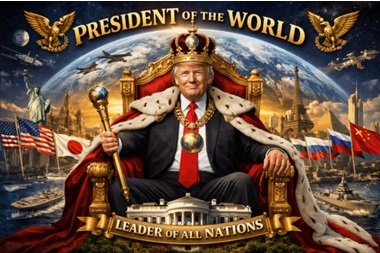
17 March 2026 Michael Taylor AIM Extra, https://theaimn.net/alone-at-the-apex/
From his position at the commanding heights of American power, President Trump has often conveyed a singular conviction: the world does not sufficiently recognise his leadership – or America’s preeminence under it.
While ordinary citizens contend with everyday concerns, the president has framed his role in sweeping, almost solitary terms, as if the United States – and by extension, he personally – bears responsibility for the globe’s direction. Gratitude, in this view, is scarce; deference, even scarcer.
Consider trade policy. The administration’s use of tariffs was presented as a masterful recalibration of global economic relations – a straightforward tool to restore fairness and protect American interests. Yet the response was not passive acceptance. Major trading partners, including close allies, imposed countermeasures of their own. What was intended as a decisive unilateral stroke became a cycle of retaliation, raising costs for consumers and businesses on all sides. The expectation of unilateral acquiescence met the reality of sovereign interests.
A similar pattern emerged with the proposal to acquire Greenland. The president highlighted its strategic value – vast Arctic real estate with clear national-security implications – and floated the idea of a purchase from Denmark. The Danish government and Greenland’s leadership rejected the notion outright, citing sovereignty and self-determination. What may have appeared a bold real-estate opportunity to one side registered as an affront to national autonomy on the other. The ensuing diplomatic friction, including threats of economic pressure, underscored a fundamental disconnect: not every asset is available for negotiation, no matter the bidder’s confidence.
Efforts at broader diplomatic architecture have encountered comparable resistance. The “Board of Peace,” envisioned as a new mechanism to resolve international disputes and oversee initiatives like Gaza reconstruction, was launched with American leadership at its centre. Yet participation has been limited, with skepticism from many quarters about its structure, authority, and resemblance to existing multilateral bodies. The absence of broad buy-in has left the initiative more aspirational than operational.
Most recently, the call for international naval support in the Strait of Hormuz – urging allies and affected nations to deploy warships to secure a vital global chokepoint amid tensions with Iran – has met with tepid or nonexistent commitments. Despite appeals to countries heavily dependent on the route’s oil flows, including longstanding partners, few have stepped forward. The United States finds itself shouldering the burden largely alone, as others prioritise their own strategic calculations over collective action under American direction.
One can anticipate the familiar refrain on Truth Social: grievances about unfair treatment, unappreciative allies, thwarted deals, and the solitary burden of American greatness. The pattern is consistent – a belief that bold American initiatives should command automatic support, met instead with the stubborn pluralism of an independent world.
The deeper tension lies here: the president appears to operate from an assumption of unchallenged primacy, where U.S. proposals carry inherent authority. Yet the international system has long since moved beyond unipolarity. Other nations – democracies and autocracies alike – possess their own agendas, red lines, and capacities to say no. They are not subjects awaiting edicts; they are actors with vetoes of their own.
This is not ingratitude so much as the ordinary friction of a multipolar era. The loneliness at the top is real, but it stems less from betrayal than from the quiet erosion of exceptional leverage. The hill may be high and gilded, but it is no longer solitary – and insisting otherwise only accentuates the isolation.
‘We deserve to know the truth’: 11 questions about US bases in Britain
From where they are exactly to the laws governing them, here’s what we need to know to hold the UK government accountable for Trump’s use of British bases
MARK CURTIS , Declassified 4th March 2026
Keir Starmer has given his approval for Donald Trump’s US to attack Iran using British military bases.
But the UK government imposes a considerable veil of secrecy over the US use of these bases, keeping the British public in the dark about how its territory is used in foreign wars.
Former Labour Party leader and independent MP Jeremy Corbyn said: “From transferring equipment to refuelling planes to surveillance flights, we deserve to know the truth about exactly what these military bases are and have been used for, whether to benefit the US or Israel or both.
“There is a reason why the government is so reluctant to tell us: they know that this information could tip British complicity in genocide and war into active participation. We will continue to push for a full, public and independent inquiry into the use of these bases.”
Here are some of the things we need to know about the US military and intelligence presence in the UK and British territories.
Where exactly are they?
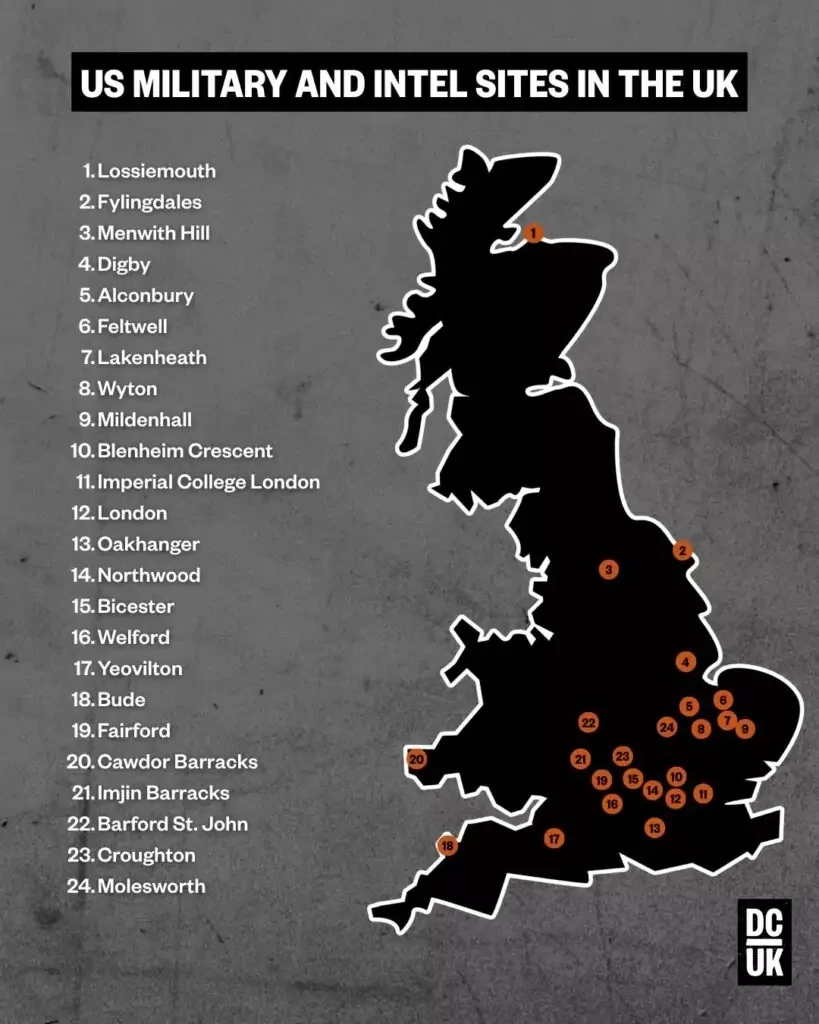
We don’t know where all US military personnel in Britain are. Whenever governments answer questions about the US presence in the UK, they mention major bases which the US Air Force operate – such as at Fairford, Mildenhall and Lakenheath – but have also referenced “undisclosed locations”.
The government also says that, in addition to the major air bases with a US presence, there are six other designated Nato facilities in the UK, where US military personnel can also be located.
But Declassified recently found a US War Department document highlighting 22 American military sites in Britain, some of which successive UK governments have failed to mention. It is not clear how many of these 22 sites are currently hosting US military personnel.
Declassified has identified other locations in Britain that are likely to host US military or intelligence personnel, bringing the total to 24.
Even this may not cover the full scale of the US military presence in the UK, since it is believed that US military personnel are frequently, if not permanently, stationed at still more sites, such as the key Royal Navy bases at Coulport, Devonport and Faslane.
Keir Starmer’s government is also refusing to tell parliament how many US forces are located at each of its major bases in Britain. The reason it gives for not saying is that “we are in a new era of threat that remains more serious and less predictable”.
The government also refuses to say where the US has any navy, army or marine detachments in the UK. Incredibly, it says “the overall US force composition across its UK footprint is a matter for the US”.
Who really owns the US military sites in Britain?
This is also unclear. The US War Department document we found states that, as of 2024, it owned, leased or otherwise controlled 22 military sites in Britain, and that these are worth £11bn. The UK government contends that the War Department owns no facilities in Britain, making the exact terms of the US presence even more unclear.
The US document, for example, said its War Department owns 12 buildings covering over 39,000 square feet at RAF Oakhanger in Hampshire, which is a satellite ground station.
Yet in answer to a recent parliamentary question, the MoD said it owns RAF Oakhanger.
The government also says it owns MOD Bicester, which is another site where the US War Department says it holds 261 buildings. What are the terms and conditions governing these holdings?
What military operations does the US conduct from Britain?
Governments have refused to give us the full picture. The standard response is: “The Ministry of Defence does not comment on the operational activity of other nations”, even when they’re operating in Britain.
When the US bombed Iran in June last year, the MoD refused to say if US aircraft based in Britain had been involved.
The MoD also refuses to say if the US has used its British bases to transport arms to Israel.
What US military operations need UK approval?
Britain has a vague agreement with the US on the use of British bases, going back to a 1952 communiqué between prime minister Winston Churchill and president Harry Truman. …………………………………………………………………………………………………………………………. https://www.declassifieduk.org/we-deserve-to-know-the-truth-11-questions-about-us-bases-in-britain/
1 This Month

of the week – Shut Down Drone Warfare!


Tell the Ukrainian Government to Drop Prosecution of Peace Activist Yurii Sheliazhenko

Petition to revoke the licensing of the Near Surface Nuclear Disposal Facility (NSDF) at Chalk River. https://www.ourcommons.ca/petitions/en/Petition/Details?Petition=e-7247
To see nuclear-related stories in greater depth and intensity – go to https://nuclearinformation.wordpress.com
-
Archives
- April 2026 (68)
- March 2026 (251)
- February 2026 (268)
- January 2026 (308)
- December 2025 (358)
- November 2025 (359)
- October 2025 (376)
- September 2025 (257)
- August 2025 (319)
- July 2025 (230)
- June 2025 (348)
- May 2025 (261)
-
Categories
- 1
- 1 NUCLEAR ISSUES
- business and costs
- climate change
- culture and arts
- ENERGY
- environment
- health
- history
- indigenous issues
- Legal
- marketing of nuclear
- media
- opposition to nuclear
- PERSONAL STORIES
- politics
- politics international
- Religion and ethics
- safety
- secrets,lies and civil liberties
- spinbuster
- technology
- Uranium
- wastes
- weapons and war
- Women
- 2 WORLD
- ACTION
- AFRICA
- Atrocities
- AUSTRALIA
- Christina's notes
- Christina's themes
- culture and arts
- Events
- Fuk 2022
- Fuk 2023
- Fukushima 2017
- Fukushima 2018
- fukushima 2019
- Fukushima 2020
- Fukushima 2021
- general
- global warming
- Humour (God we need it)
- Nuclear
- RARE EARTHS
- Reference
- resources – print
- Resources -audiovicual
- Weekly Newsletter
- World
- World Nuclear
- YouTube
-
RSS
Entries RSS
Comments RSS
 nuclear-news