While Hinkley Nuclear Was Being Built, The UK Grid Decarbonized
Clean Technica, Michael Barnard, 6th March 2026
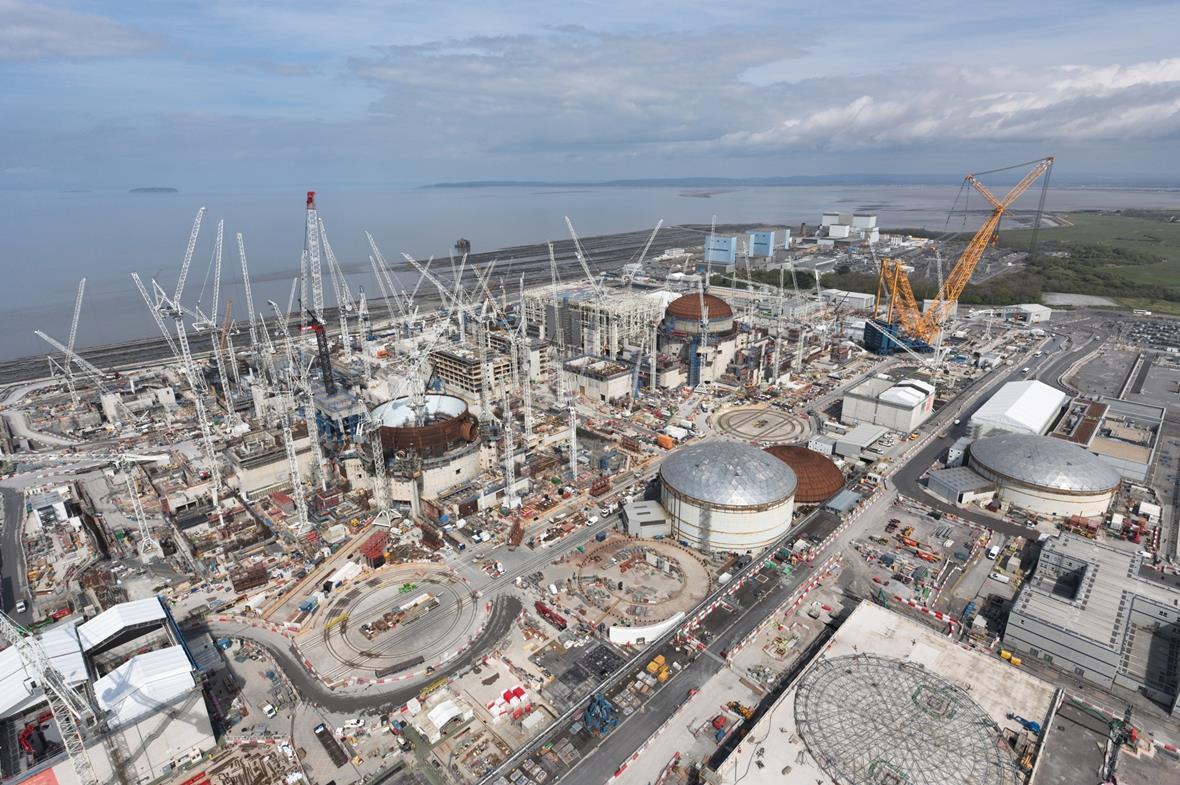
The latest announcement about Hinkley Point C was predictable. The first reactor at the plant in Somerset is now expected to begin generating electricity in 2030. The cost estimate has climbed again, now reaching roughly £35B in 2015 pounds or about £49B in current money according to Electricité de France. When the project received final approval in 2016, the expected construction cost was £18B and the first reactor was expected to begin operating in 2025. In the span of a decade, the expected capital cost nearly doubled while the schedule slipped by five years. The project illustrates the pattern described by Oxford megaproject scholar Bent Flyvbjerg. Large infrastructure projects tend to run over budget, over schedule, and deliver fewer benefits than originally promised. Hinkley Point C appears to be achieving the full trifecta.
To understand how the project arrived at this point it is necessary to revisit the electricity system that existed when Hinkley was first proposed……………………………Policymakers faced a looming capacity gap as aging coal plants approached retirement under European pollution rules and older nuclear reactors approached the end of their operating lives. Large baseload nuclear plants seemed like a logical replacement for retiring coal and nuclear capacity while maintaining system reliability and reducing emissions.
EDF entered the picture in 2008 when it acquired British Energy for about £12.4B. This acquisition gave the French utility access to several UK nuclear sites including Hinkley Point in Somerset……………………… T.he UK government supported the project through a Contract for Difference that guaranteed a strike price of £92.50 per MWh in 2012 pounds for 35 years. Adjusted for inflation that price is now roughly £120 to £130 per MWh in current money.
The timeline of the project reflects the slow progress typical of large nuclear builds……………………………………………………….. The most recent revision places the cost at about £35B in 2015 pounds with startup expected in 2030. If the schedule slips to 2031, EDF estimates another £1B in additional cost..
Hinkley is not an isolated example. The reactor design used at the site is the European Pressurized Reactor. Other projects using this design have experienced similar difficulties. Olkiluoto 3 in Finland began construction in 2005 and entered commercial operation in 2023. The project took roughly 18 years from start to finish and cost about €11B compared with an original estimate of about €3B. Flamanville 3 in France began construction in 2007 and only began producing electricity in 2024 after more than a decade of delays and cost escalation. These projects demonstrate that modern nuclear construction faces structural challenges including complex regulatory oversight, large supply chains, and one-off engineering work.
While Hinkley Point C progressed slowly, the electricity system around it began to change rapidly. UK grid carbon intensity fell from about 520 gCO2 per kWh in 2006 to roughly 120 gCO2 per kWh in 2025 according to National Grid data. That represents a reduction of about 77%. Coal generation collapsed during the same period. In 2012 coal still produced about 40% of UK electricity. By 2024 the last coal plant closed and coal generation fell to zero. Gas generation initially increased as coal declined, providing a bridge fuel that cut emissions roughly in half per kWh compared with coal. At the same time renewable energy expanded quickly.
Wind power became the largest contributor to this change. ……………………………………………………………………………..
The grid also evolved to accommodate the growing share of renewable energy. Market reforms played a significant role. The Contract for Difference program created long term price stability for renewable developers………………High voltage direct current interconnectors connected the UK to electricity markets in France, Norway, Belgium, and Denmark. These interconnectors allow power to flow between regions and help balance variable generation.
Grid operations also changed to manage a system with lower inertia and higher renewable penetration. Batteries began appearing in grid services markets around 2017. These batteries provide fast frequency response and reserve capacity.
The economic dynamics of electricity generation shifted during the same period. Nuclear plants represent a form of megaproject economics. Each plant is a large custom built facility that takes many years to construct. Learning effects are limited because each plant is unique. Wind turbines and solar panels follow a different model. These technologies are manufactured in large volumes. Production learning and scale economies reduce costs over time. ………………………………………………………………..
The rising cost of Hinkley also raises questions about opportunity cost. The current estimated cost of about £49B in today’s money represents a very large capital investment. Offshore wind projects in Europe commonly cost between £2M and £3M per MW of installed capacity depending on location and turbine size. At £2.5M per MW, £49B could finance roughly 20 GW of offshore wind capacity. With a typical offshore wind capacity factor of about 45%, that capacity would produce around 79 TWh of electricity annually. Hinkley Point C is expected to produce about 25 TWh annually. The comparison is not exact because nuclear provides firm generation while wind is variable. The scale difference is significant.
……………………………………………………………………………………………………………. The next UK nuclear project, Sizewell C in Suffolk, raises obvious questions about what lessons policymakers are drawing from the experience at Hinkley Point C. Sizewell C is planned as a near replica of Hinkley using the same European Pressurized Reactor design and similar capacity of about 3.2 GW. The estimated construction cost is currently around £20B to £30B depending on assumptions about financing and schedule. Unlike Hinkley, the project will be financed through a regulated asset base model that allows developers to collect revenue from electricity consumers during construction. This structure reduces financing risk for investors but shifts more cost exposure onto the public.
The core question is whether the UK energy system in the 2030s and 2040s still requires additional nuclear megaprojects built on decade long timelines when wind, solar, and storage technologies continue expanding on much shorter deployment cycles. A second question concerns opportunity cost. If Sizewell C ultimately approaches the capital intensity seen at Hinkley, the same level of investment could finance tens of gigawatts of renewable capacity or large expansions of grid infrastructure. Policymakers therefore face a strategic choice between continuing the megaproject model for firm low carbon generation or allocating capital toward technologies that can scale incrementally and rapidly across the electricity system.
The broader lesson from the Hinkley experience concerns the pace of technological change in energy systems. Large infrastructure projects require long planning and construction timelines. Energy technologies such as wind turbines, solar panels, and batteries follow faster innovation cycles driven by manufacturing scale and global deployment. Between the time Hinkley Point C was conceived and the time it will enter operation, the UK electricity system transformed itself. Coal disappeared. Wind capacity expanded more than tenfold. Carbon intensity fell by more than three quarters. The project will arrive into a grid that has already undergone much of the transition it was designed to support.
https://cleantechnica.com/2026/03/06/while-hinkley-nuclear-was-being-built-the-uk-grid-decarbonized/
No comments yet.
1 This Month



Tell the Ukrainian Government to Drop Prosecution of Peace Activist Yurii Sheliazhenko

Petition to revoke the licensing of the Near Surface Nuclear Disposal Facility (NSDF) at Chalk River. https://www.ourcommons.ca/petitions/en/Petition/Details?Petition=e-7247


of the week – STOP SMALL MODULAR REACTORS IN CANADA
To see nuclear-related stories in greater depth and intensity – go to https://nuclearinformation.wordpress.com
-
Archives
- March 2026 (222)
- February 2026 (268)
- January 2026 (308)
- December 2025 (358)
- November 2025 (359)
- October 2025 (376)
- September 2025 (258)
- August 2025 (319)
- July 2025 (230)
- June 2025 (348)
- May 2025 (261)
- April 2025 (305)
-
Categories
- 1
- 1 NUCLEAR ISSUES
- business and costs
- climate change
- culture and arts
- ENERGY
- environment
- health
- history
- indigenous issues
- Legal
- marketing of nuclear
- media
- opposition to nuclear
- PERSONAL STORIES
- politics
- politics international
- Religion and ethics
- safety
- secrets,lies and civil liberties
- spinbuster
- technology
- Uranium
- wastes
- weapons and war
- Women
- 2 WORLD
- ACTION
- AFRICA
- Atrocities
- AUSTRALIA
- Christina's notes
- Christina's themes
- culture and arts
- Events
- Fuk 2022
- Fuk 2023
- Fukushima 2017
- Fukushima 2018
- fukushima 2019
- Fukushima 2020
- Fukushima 2021
- general
- global warming
- Humour (God we need it)
- Nuclear
- RARE EARTHS
- Reference
- resources – print
- Resources -audiovicual
- Weekly Newsletter
- World
- World Nuclear
- YouTube
-
RSS
Entries RSS
Comments RSS
 nuclear-news
Leave a comment