‘Punching them while they’re down’: US & Israel bomb Iran’s schools & hospitals, with ‘no stupid rules of engagement’
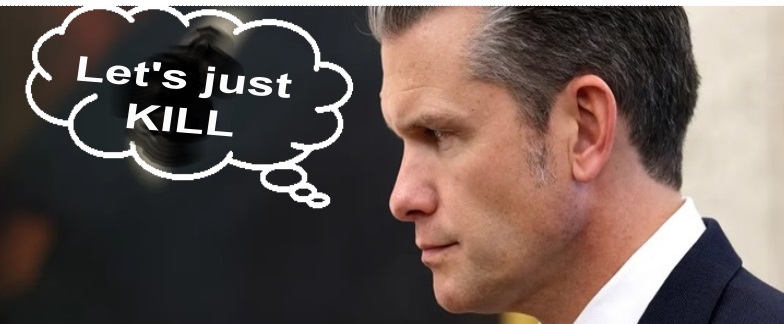
Hegseth bragged that the US is fighting with “no stupid rules of engagement”. By his admission, the Pentagon is purposefully targeting civilian areas, and does not care about the rules of war.
The US & Israel bombed 20 schools & 13 hospitals in Iran in 1 week. War Secretary Pete Hegseth boasted of unleashing “death and destruction” to provoke collapse, with “no stupid rules of engagement”.
Ben Norton, Mar 09, 2026 https://www.geopoliticaleconomy.report/p/us-israel-bomb-iran-schools-hospitals-collapse
The United States and Israel are intentionally devastating civilian areas in Iran, brutally bombing schools, hospitals, and residential neighborhoods, in an attempt not only to destroy the state but also to collapse Iranian society itself.
US Secretary of War Pete Hegseth described the scorched-earth strategy in a Pentagon press briefing on March 4.
“This was never meant to be a fair fight, and it is not a fair fight. We are punching them while they’re down, which is exactly how it should be”, Hegseth boasted.
He added with pride that the US and Israel are raining upon Iran “death and destruction from the sky, all day long”.
Hegseth noted that, in the first four days of the war on Iran (named Operation Epic Fury), the US military employed “twice the air power” that it had used in the “shock and awe” invasion of Iraq in 2003.
In another press briefing on March 2, the US secretary of war condemned international organizations like the United Nations and proclaimed, “America, regardless of what so-called international institutions say, is unleashing the most lethal and precise air power campaign in history”.
Hegseth bragged that the US is fighting with “no stupid rules of engagement”. By his admission, the Pentagon is purposefully targeting civilian areas, and does not care about the rules of war.
US and Israel bomb 20 schools and 13 hospitals in Iran in one week
According to the World Health Organization, the US and Israel bombed at least 13 hospitals and health facilities in Iran in the first five days of the war, which Donald Trump and Benjamin Netanyahu launched on February 28.
Washington and Tel Aviv bombed at least 20 Iranian schools in the first week of the war, according to UNICEF.
They also destroyed a desalination plant, depriving dozens of Iranian villages of water.
The US and Israel killed more than 1,300 Iranians in the first week. Children made up 30% of the victims.
CNN and the New York Times both independently confirmed that the US military bombed an elementary school in the city of Minab in southern Iran on the first day of the war.
The US bombed the school twice, 40 minutes apart, to make sure there were no survivors.
The US military killed at least 168 children and 14 teachers.
War Secretary Hegseth published a map of the areas in Iran that were bombed by the US, and the Minab primary school was clearly in the strike zone.
This is what Hegseth meant when he bragged that the US empire is “punching them while they’re down”, with “no stupid rules of engagement”.
The US-Israeli slaughter is so extreme that even some right-wing media outlets in the West, like the UK’s conservative newspaper The Telegraph, were forced to admit that “Tehran [is] an ‘apocalypse’ of hospitals in flames and children buried beneath rubble”, as the US and Israel intentionally bomb civilian areas.
US and Israel want a failed state and societal collapse in Iran
What Washington and Tel Aviv want to unleash in Iran is not just regime change; it is the destruction of the state and the collapse of Iranian society.
This was openly admitted by some Israeli officials, in a report in the Financial Times.
The FT cited Israeli Defense Minister Israel Katz, who declared that “every leader appointed by the Iranian terror regime . . . will be an unequivocal target for elimination”.
Tel Aviv’s plan is to kill all Iranian leaders, so the country cannot be governed and simply falls into chaos.
This was further confirmed by a former top Israeli intelligence official.
The Financial Times interviewed Danny Citrinowicz, who worked for 25 years in Israel Defense Intelligence (IDI) and was the chief of the Research and Analysis Division’s Iran branch.
Citrinowicz told the FT that what Israel wants is the “total destruction of this regime, of the pillars of this regime, of everything that holds it together”.
The former head of Israeli military intelligence’s Iran analysis said this is how Tel Aviv sees the war (emphasis added):
If we can have a coup, great. If we can have people on the streets, great. If we can have a civil war, great. Israel couldn’t care less about the future . . . [or] the stability of Iran.
In other words, the US and Israel want to repeat in Iran the same kind of war of extermination that they carried out in Gaza, which a UN commission determined to be a campaign of genocide.
US-Israeli war on Iran blatantly violates international law
It goes without saying that the US-Israeli war of aggression against Iran flagrantly violates international law.
The United Nations education agency, UNESCO, emphasized that the bombing of Iranian schools by the US and Israel “constitutes a grave violation of the protection afforded to schools under international humanitarian law”.
Legal experts have clearly stated that the US-Israeli war violates international law. They also noted that Washington was engaged in supposed “negotiations” with Tehran, and Iran was willing to make significant concessions for a deal, when Trump launched this surprise war of aggression, sabotaging the talks.
Stanford University’s elite law school published an interview with an expert on international law, Professor Allen Weiner, who stated, “From an international law perspective, my judgment is that the attack was quite clearly illegal”.
States do have a right to self-defense under international law, Weiner noted. Iran has exercised this right.
The US and Israeli regimes claimed they launched “preemptive” attacks on Iran, but Weiner stressed that this is not valid under international law.
In order to claim self-defense, states may only strike when they have evidence that “they face an imminent threat of attack”, he argued.
This does not apply in this situation, Weiner emphasized. The Stanford law professor explained:
The notion that Iran presents a general security threat to U.S. interests does not constitute a threat of imminent attack. Nor does the possibility that Iran might at some point in the future acquire either nuclear weapons or intercontinental missiles capable of reaching the U.S. homeland amount to a threat of an imminent attack.
US-Israeli war on Iran is based on lies
All of the talking points that the Trump administration has used to try to justify this illegal war have fallen apart.
The Pentagon admitted in a closed-door briefing to Congress that Iran was not going to attack the US and Israel first, and that it only had plans to retaliate in self-defense.
Similarly, the Trump administration claimed that Iran was close to developing nuclear weapons. This was false as well.
The director general of the International Atomic Energy Agency (IAEA), Rafael Grossi, said clearly in an interview on CNN that Iran was not on the verge of having nuclear weapons.
This was another lie promoted by the US government to justify an illegal war.
In US/Israeli war on Iran, all roads point to rise in global nuclear weapons.

Trump and Netanyahu are already boasting of success. But the war is not going to plan for any of the parties involved
Paul Rogers, 6 March 2026, https://www.opendemocracy.net/en/us-iran-israel-war-lead-to-nuclear-weapons-donald-trump-netanyahu/
One week in, there is little prospect of an early end to the Israeli war with Iran and even less of preventing a regional escalation. Given Binyamin Netanyahu’s success in bringing Donald Trump’s United States on board as Israel’s partner in a widening war, he may feel satisfied with progress so far. In reality, though, the conflict is not going according to plan for any of the three states involved.
Netanyahu’s intended outcome was straightforward regime termination in Tehran, with the assassination of the supreme leader and most of Iran’s senior war leaders. A public uprising would then have followed, ending the power of the theocrats.
Israel and the US could then have brought sufficient force to terminate Iran’s nuclear and ballistic missile program and cut back its conventional forces, starting with the abolition of the Iranian Revolutionary Guard Corps (IRGC).
Finally, the removal of the US’s punishing economic sanctions on Iran would have been agreed, allowing some civil recovery for the country – although this would, of course, have been contingent on the new leaders agreeing to oil and gas deals that would prove punitive for Iran and lucrative for the US, likely ensuring Trump’s continued support for Israel.
The Israeli war aims may have been clear, but it is impossible to say for sure what the White House wanted.
A muddle of reasons and statements of intent for bombing Iran have been given by Trump, his secretary of state, Marco Rubio and self-styled secretary of war, Pete Hegseth, who last year sought to rebrand from the ‘secretary of defense’ title that has been used by successive post-holders since the end of the Second World War. While Washington initially embraced Israel’s desire for total regime termination through an uprising, that aim has disappeared from its recent statements. Now it seems that crushing Iran’s military capabilities, starting with its nuclear ambitions, is the US order of the day.
For Iran’s theocratic leadership, the primary war aim was survival in the face of the massive power of the Israeli/US war machine, which would itself have been quite an achievement. Indeed, Iran’s supreme leader, Ayatollah Khamenei, barely survived the first hour or so of the war before being killed in a missile strike.
The unexpected has since become clear: Khamenei is gone, but Iran’s leadership system is likely to survive for now. His successor will probably be his son, Ayatollah Mojtaba Khamenei, who will quite possibly be as hard-line as his father. Israeli defence minister Israel Katz has declared that whoever is chosen as Iran’s next supreme leader will be “a target for elimination” – a clear indication that for Netanyahu and the Israeli Defence Forces, there is no turning back.
If regime survival is one of the surprises of the conflict, the other is Iran’s continuing ability to fire barrages of armed drones and ballistic missiles, which has been the least expected element of the war so far.
By last July, the IDF and the US believed they had massively damaged Iran’s air defences, with Trump boasting of “spectacular military success” in a press conference. On top of this, the past week has seen the determined and intensive targeting of Iran’s missile systems by the combined power of the IDF and US armed forces. Yet to the genuine surprise of many Western political and military analysts, Iran can still launch its missiles.
Three elements of this survival offer a clue as to what comes next.
One is that the regime in Tehran is likely to continue to survive. Look to Gaza, where Hamas is still active despite the massive destruction that Israel has inflicted over the past two and a half years. This, as I noted in last week’s column, is largely down to its quite extraordinary network of tunnels dug mostly by hand and reinforced with concrete walls. The network, which extends to around the distance from London to Edinburgh, has around 5,700 shafts, as well as electricity, ventilation and communication facilities.
In Iran, the IRGC now looks to have been similarly active in extensively preparing for war. It has built numerous and widely dispersed underground ‘missile cities’ – deep tunnel complexes built into mountains for making and storing armed drones and other weapons – as well as producing undersea armed drones for use against the US Navy, especially if it tries to guide tankers through the Strait of Hormuz.
The second element follows on. There are indications that the IRGC appears to be using its older and least advanced missiles and drones first, aiming to deplete Israeli and US stocks of their anti-missile defences. Quite apart from anything else, this means Israel and the US are depleting their high-cost weaponry to “catch” incoming missiles, while Iran saves its most recently developed drones and ballistic missiles – with greater reach and more power for destruction, as well as improved accuracy and reliability – for later in the war.
Finally, there is the decision to opt for economic warfare against Western interests in many Gulf states. This involves the closure of the Strait of Hormuz, alongside attacks on oil and gas processing plants and distribution systems, as well as tourist infrastructure across the Gulf, with a luxury hotel in Dubai reportedly hit by a retaliatory strike.
This puts states such as Saudi Arabia, Kuwait and the United Arab Emirates in a difficult position as to how to respond. To react forcefully by joining the war against Iran may be the natural response, but this has consequences. It means allying with an Israel that has killed at least 80,000 Palestinian Arabs in Gaza and enacted violence in the occupied West Bank to make life fraught with difficulty and increasingly dangerous.
This war is barely a week old but is having a worldwide impact and, despite Trump’s bluster, is already problematic for the US. The killing of at least 165 people, many of them children, at the Shajareh Tayyebeh Girls School in Minab is just one example of this, while another may be significant in a different way.
On Wednesday, a US Navy submarine torpedoed an Iranian frigate, the IRIS Dena, killing at least 87 crew members. The Dena had recently left a series of exercises organised by the Indian Navy in the Bay of Bengal, and its sinking was reported with great glee by Hegseth, who told reporters: “Yesterday, in the Indian Ocean, an American submarine sunk an Iranian warship that thought it was safe in international waters. Instead, it was sunk by a torpedo. Quiet death. The first sinking of an enemy ship by a torpedo since World War II.”
Earlier in the press conference, Hesgeth had used the same celebratory and boastful tone to discuss what he framed as early US success. “We are only four days into this, and the results have been incredible. Historic, really,” he said. “Only the United States of America could lead this – only us. But when you add the Israeli Defence Forces, a devastatingly capable force, the combination is sheer destruction for our radical Islamist Iranian adversaries. They are toast, and they know it. Or at least, soon enough, they will know it. America is winning – decisively, devastatingly, and without mercy.”
The US war secretary’s speech betrayed the sense of impunity in Trump’s White House, confirming that members of his administration are certain in their own minds that in this war, Israel and the US can do what they like.
The consequences of this war are impossible to say for sure, but all roads appear to lead to increased uptake of nuclear weaponry, leaving the world an even less safe and stable place. If Israel and the US fail to terminate the Iranian regime and if any significant part of the IRGC survives, the very first thing it will do is to go to the ends of the earth to put together a crude nuclear device. Across the wider region, any state that sees two nuclear-armed regimes seeking to destroy a non-nuclear regime will see a need to go nuclear itself.
Senator Joins Police to Eject Antiwar Marine From Hearing, Breaking His Arm
“America does not want to send its sons and daughters to war for Israel,” McGinnis said as he protested the hearing. “This is wrong.”
Police and Sheehy tried to force the protester out of the room as he yelled, “no one wants to fight for Israel.”
By Sharon Zhang , Truthout, March 5, 2026, https://truthout.org/articles/senator-joins-police-to-eject-anti-war-marine-from-hearing-breaking-his-arm/
Republican senator joined Capitol Police as they violently ejected an anti-war protester and U.S. Marine veteran from an Armed Services subcommittee hearing on Wednesday, appearing to break his arm as the group tried to wrestle him out of the chamber.
Video of the incident shows Sen. Tim Sheehy, a Republican from Montana, rushing over to help police as they try to tug and push the protester out of the chamber, as the protester yells, “no one wants to fight for Israel.” The protester appears to be wearing a U.S. Marine Corps dress uniform.
The protester, Green Party candidate Brian McGinnis, has his hand stuck in the door frame, with his arm hooked around the adjacent open door panel as several police try to force him out of the room. Sheehy lifts up McGinnis’s leg as police officers grab his torso and tug.
As Sheehy is moving over to dislodge the protester’s hand and tug on his arm, McGinnis’s forearm can be seen appearing to snap in half. There is a loud cracking sound, and bystanders begin to yell at the police to stop. Shortly after, officers let up on their tugging, and begin to work to dislodge McGinnis’s hand, as Sheehy returns to the front of the room.
“The senator broke his hand. A sitting U.S. senator just broke the hand of a Marine,” one person yells. One bystander asks McGinnis, “is your hand ok?”
“No, it’s not,” McGinnis responds. McGinnis is running for Senate in North Carolina, and is a Marine who fought in Iraq, according to his campaign website.
Police arrested McGinnis and have charged him with three counts of assault on a police officer, and three counts of resisting arrest and crowding, obstructing, and incommoding for his demonstration.
In a statement posted on McGinnis’s X account, his family expressed gratitude for the well wishes. “We are taking a necessary step back from the public eye to allow him to focus fully on his recovery in private,” the statement said.
The protest occurred during a hearing by the Senate Armed Services Subcommittee on Readiness and Management Support, held to hear testimony from military officials on the readiness of various military branches for combat. The hearing was scheduled before the U.S. and Israel launched their war on Iran on February 28.
“America does not want to send its sons and daughters to war for Israel,” McGinnis said as he protested the hearing. “This is wrong.”
Sheehy called McGinnis an “unhinged protester,” and claimed on social media that he was trying to “help out and deescalate the situation,” ignoring that he helped lift McGinnis off the ground, potentially helping to break his arm.
“This gentleman came to the Capitol looking for a confrontation, and he got one,” Sheehy said, though McGinnis was merely protesting the hearing.
In a video posted to social media ahead of his protest, McGinnis said that he was in D.C. to “speak out against the Senate and ask them why they’re going to send our men and women to harm’s way.”
“Anyone who feels disillusioned and betrayed, you’re not alone. Join us in demanding accountability for this betrayal,” he said. “Free Palestine, free America.”
For Denmark, Large uncertainties on the expected costs of SMRs in the 2040s and 2050s

The expected costs of SMRs in the 2040s and 2050s are extremely difficult
to project, because Western manufacturers are still proceeding towards
their first units. There are very large differences on the estimated
construction cost levels of the first-of-a-kind (FOAK) units ranging from 6
M€/MWe to 16 M€/MWe and uncertainty on what manufacturers include in
construction cost estimates.
Due to long lead times and high capital costs,
it is critical for the manufacturers to reach successful FOAK projects that
would take their SMR technologies on more favourable cost trajectories. The
first actual realized cost data can be expected when the first experiences
from actual serial production in Canada, UK and maybe Sweden could be
expected between 2035 and 2040.
Therefore, a main conclusion from this work
is, that it is probably 10 – 15 years too early to make trustworthy cost
projections. With that said, it is our central estimate that the overnight
construction costs in a Danish context could decrease to 8 M€/MWe in 2040
and approach 7 M€/MWe in 2050 with large uncertainties towards both
optimistic and pessimistic trajectories.
Danish Energy Agency 5th March 2026, https://ens.dk/media/8419/download
Is a Mass Revolt Against Technocracy Starting to Happen?

The Technocratic Takeover: Alive and Well
Let’s be clear about what’s happening here: robots and AI are taking over our culture, our politics, our way of life, and our relationships to each other as social beings.
They’re becoming the advance guard for a new and unprecedented technocratic form of governance—the apotheosis of Western scientific materialism. Further, these new forms of governance are being carried out by unelected Big Tech overlords operating behind the scenes and in the backrooms of a mediated society well out of public view
Will there be a popular uprising against AI and the vast AI-based robotic machinery that’s taking over both the means of production and the means of information?
Tom Valovic, Feb 14, 2026, Common Dreams, https://www.commondreams.org/opinion/revolt-against-big-tech
Ted Gioia has a popular Substack called “The Honest Broker.” Although, as an author, his books tend to focus on music and popular culture, he writes eloquently about a wide range of topics and offers insightful commentary about the global forced march toward technocratic lifestyle and governance that we’re now immersed in. In one posting, “25 Propositions about the New Romanticism,” Gioia posits that there is a new movement afoot mimicking (or, better, reflecting) the Romantic Period of the 18th century. This movement coincided with the first industrial revolution and, as a counterweight to that trend, saw a great shift toward impulses to re-enchant the world via poetry, art, and music, and reconnecting to nature. Gioia writes:
More than two years ago, I predicted the rise of a New Romanticism—a movement to counter the intense rationalization and expanding technological control of society. Rationalist and algorithmic models were dominating every sphere of life at that midpoint in the Industrial Revolution—and people started resisting the forces of progress. Companies grew more powerful, promising productivity and prosperity. But Blake called them “dark Satanic mills” and Luddites started burning down factories—a drastic and futile step, almost the equivalent of throwing away your smartphone.
Even as science and technology produced amazing results, dysfunctional behaviors sprang up everywhere. The pathbreaking literary works from the late 1700s reveal the dark side of the pervasive techno-optimism—Goethe’s novel about Werther’s suicide, the Marquis de Sade’s nasty stories, and all those gloomy Gothic novels. What happened to the Enlightenment?
As the new century dawned, the creative class (as we would call it today) increasingly attacked rationalist currents that had somehow morphed into violent, intrusive forces in their lives—an 180° shift in the culture. For Blake and others, the name Newton became a term of abuse. Artists, especially poets and musicians, took the lead in this revolt. They celebrated human feeling and emotional attachments—embracing them as more trustworthy, more flexible, more desirable than technology, profits, and cold calculation.
He goes on to posit that we’re poised for a return to that modality and points out that the notion of a New Romanticism has spread “like a wildfire,” citing influencers such as Ross Barkan, Santiago Ramos, and Kate Alexandra. Gioia sees what he describes as cultural trends at the leading edge of this transformation citing popular TV series such as Pluribus and Yellowstone. But is this really happening or has Gioia just stumbled on a pocket of cultural resistance and pushback against technocracy that’s primarily a pocket of unified self-expression rather than something representing deep and substantive cultural and societal change?
The Technocratic Takeover: Alive and Well
Let’s be clear about what’s happening here: robots and AI are taking over our culture, our politics, our way of life, and our relationships to each other as social beings. They’re becoming the advance guard for a new and unprecedented technocratic form of governance—the apotheosis of Western scientific materialism. Further, these new forms of governance are being carried out by unelected Big Tech overlords operating behind the scenes and in the backrooms of a mediated society well out of public view.
The tech takeover is such a massive appropriation of our social, political, and cultural life—and indeed our own biological substrate—that stoic acceptance might not be the way to go this time around.
I certainly hope that Gioia is right about a major cultural rejection of technocracy. There are indeed hopeful signs. The fundamental human values that make societies work and cohere have gotten steadily shunted aside by the technocracy takeover of culture and education—essentially becoming a new value system. This behind-the-scenes power shift has been amplified and compounded by an over-emphasis in education on STEM, corporate modalities, neo-Darwinian utilitarianism, and the continuing erosion of the humanities that began decades ago. So yes, without a doubt, we need to get “back to the garden” and return to a wider and deeper set of the kind of core values that ultimately hold societies together. Without positive shared values, societies become rudderless and fall into a kind of benighted chaos. All we need to do is look around.
All of that said, in his Substack post, Gioia missed an important component of this transition—if indeed it is coming to pass (and we can only hope). Throwing off technocracy and emerging from our involuntary digital cages also means reconnecting with the natural world, a fundamental human relationship that’s now increasingly mediated by digital devices. The need for this reconnection, this existential about-face, was a key aspect of the romanticism of the 18th century. In literature, for example, the Romantic poets were rather obsessed with it as poet Robert Bly points out in his stellar book News of the Universe (I highly recommend it.) In allowing our daily life to be shifted into an increasingly claustrophobic and self-reinforcing digital cage, we have abandoned not only our connection to the natural world but also to each other. Connecting to nature also lets us tap into the mystery of the universe, which despite human folly remains nonetheless fully intact even if absurdly rationalized by scientific reductionism. Carl Sagan and Albert Einstein were both scientists who could appreciate this. We need more like them.
The Robot Wars: No Longer Sci-Fi

In the 80s and 90s, science fiction movies and literature commonly offered themes of “robot wars” where humans were pitted against the dominance of an ugly dystopian society. Will this be our future courtesy of Elon Musk and his cohorts? Or, alternatively, will there be a mass uprising against AI and the vast AI-based robotic machinery that’s taking over both the means of production and the means of information? We humans are known for our adaptability and stoicism in difficult situations such as world wars and major disasters. That stoicism and sense of “accepting what can’t be changed” seems to be part of our psychological and perhaps even biological makeup. But the tech takeover is such a massive appropriation of our social, political, and cultural life—and indeed our own biological substrate—that stoic acceptance might not be the way to go this time around.
In the next few years, it most certainly will have finally dawned on the mass of humanity, especially in advanced Western nations, that something is badly amiss. Many will realize at a visceral level that their everyday lives are trapped in a claustrophobia-inducing closed-circuit technocratic system and control grid that robs them of autonomy and freedom while purporting to do the opposite.
I totally agree that a new romanticism is a very necessary sea change at this strange time in human history but am perhaps a bit less optimistic that it will happen—at least over the next few years. The forces of technocracy seem too powerful at the moment to be countered because so many of the necessities of everyday life depend on our attachment to this digital realm. This includes paying bills, financial maintenance, government-related necessities such as getting a license renewed, and so much more. Further, technological dependency keeps getting ratcheted up by the self-appointed masters of the universe represented by Big Tech’s unchallenged and ever-growing power. That said, I sincerely hope I’m wrong about this and Gioia is right. Time will tell.
A Japanese ‘conman’ tried to sell an undercover DEA agent nuclear materials – but how did he get them?
A Japanese ‘conman’ tried to sell an undercover DEA agent nuclear
materials – but how did he get them? Takeshi Ebisawa, sentenced to 20 years
in prison last week, believed he was selling weapons-grade plutonium to
Iran. In court last week, Ebisawa, 62, pleaded guilty to six counts of
conspiracy to traffic nuclear materials, including uranium and
weapons-grade plutonium, from Myanmar to other countries, as well as his
participation in international narcotics trafficking, weapons and money
laundering.
Guardian 7th March 2026, https://www.theguardian.com/us-news/2026/mar/07/japanese-conman-convicted-drug-nuclear-weapons
NRC ends work on three proposed rules for securing spent fuel

Fri, Feb 27, 2026, https://www.ans.org/news/2026-02-26/article-7800/nrc-ends-work-on-three-proposed-rules-for-securing-spent-fuel/
The Nuclear Regulatory Commission on Wednesday announced it was discontinuing three rulemaking activities intended to enhance the security of a deep geologic repository and the protection of spent nuclear fuel.
The NRC said that, among other reasons, it has decided not to proceed with the previously proposed rules due to a change in agency priorities resulting from President Trump’s Executive Order (EO) 14300, “Ordering the Reform of the Nuclear Regulatory Commission.”
As published in the February 25 Federal Register, the NRC has discontinued the following three rulemaking activities:
Security and MC&A requirements: In December 2007, the NRC proposed a rule regarding security measures for the protection of spent nuclear fuel, high-level radioactive waste, and other radioactive material at a geologic repository licensed under 10 CFR Part 63, Disposal of High-Level Radioactive Wastes in a Geologic Repository at Yucca Mountain, Nevada.
The rule would have amended the NRC’s regulations to revise the security requirements and material control and accounting requirements for a geologic repository operations area, setting new requirements for training, access authorization, defensive strategies, and reporting. Proposed in response to the events of September 11, 2001, the rule would have focused on strengthening, streamlining, and consolidating all repository material control and accounting regulations. It also would have required an emergency plan to address radiological emergencies.
In addition to changing priorities under EO 14300, the NRC said it decided not to proceed with the rulemaking due to the amount of time that has passed since it was first proposed.
Fitness-for-duty requirements: In 2008, the NRC began plans for a rulemaking that would have amended regulations regarding the fitness-for-duty requirements for personnel at a geologic repository. The rule would have imposed fatigue provisions on security personnel and reinstated the alcohol and drug provisions of the fitness-for-duty requirements.
Protections for spent fuel: In 2015, the NRC began plans for a rulemaking on “enhanced weapons for spent fuel storage installations and transportation” that would have amended the agency’s regulations to implement the authority in Section 161A of the Atomic Energy Act of 1954, as amended, related to access to enhanced weapons and associated firearms background checks for the protection of spent fuel.
According to the NRC, the rule would have designated additional classes of facilities and activities appropriate for Section 161A authority as a follow-on to the agency’s original enhanced weapons rule. The NRC said it decided to terminate work on the follow-on rule due to a lack of expressed interest from NRC licensees interested in obtaining enhanced weapons authority.
“If in the future the NRC receives a license application for a class of facility not already eligible for enhanced weapons authority, the commission may grant such authority via order or license condition,” the NRC said.
Next step: The NRC is to update the next edition of the agency’s Unified Agenda of Regulatory and Deregulatory Actions to reflect the discontinued status of the three rulemaking activities.
The Welsh dragon is getting ready to roar.
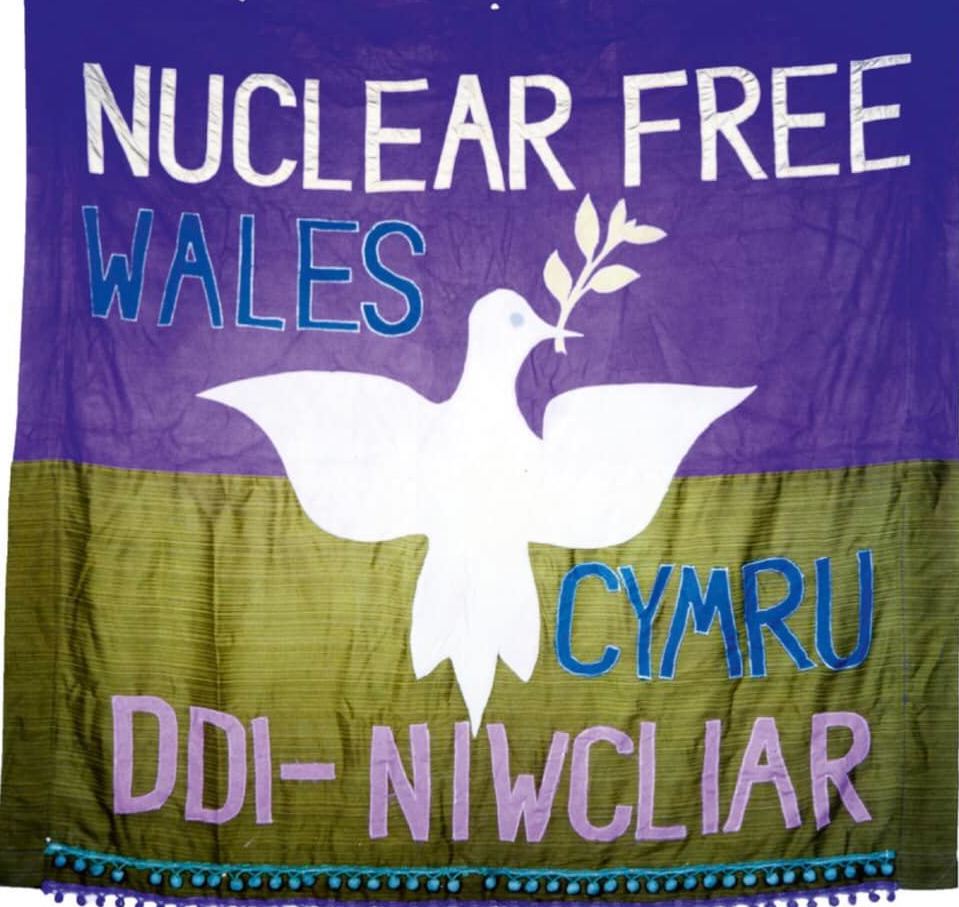
Citizens of Wales are gearing up for another assault on their right to a safe, clean and healthy environment
Anti-nuclear campaigners meeting in Wrexham last October issued a declaration calling on politicians representing Welsh constituencies in parliaments in Cardiff and Westminster to work for a nuclear-free, renewables-powered Wales.
Welsh campaigners are working with US, Canadian and other UK activists to establish a Transatlantic Nuclear-Free Alliance to campaign on issues of common concern. The new initiative came in conjunction with a screening of the award-winning film SOS: The San Onofre Syndrome, which highlights the impact of the decommissioning and the legacy of managing deadly radioactive waste faced by the neighbors of the San Onofre nuclear power plant in California.
The film’s messages resonate with international audiences faced with identical threats and challenges. At the screening, the audience heard from the filmmakers Marybeth Brangan and the now sadly late Jim Heddle as well as from Professor Stephen Thomas, Emeritus Professor in Energy Policy at Greenwich University and Richard Outram, Secretary of the Welsh Nuclear Free Local Authorities.
“The nuclear industry tries to assure us the radioactive waste disposal and reactor decommissioning are established processes with easily affordable costs,” Thomas said. “The truth is that we are three or more decades away from permanent disposal of waste and of carrying out the most challenging stages of decommissioning. The cost will be high, and the failure of previous funding schemes means the burden will fall on future taxpayers, generations ahead”.
Despite this, the UK Government will introduce developer-led siting plans, permitting nuclear operators to apply to locate new plants in sites throughout Wales, and intends to reduce regulation in the nuclear industry.
A recent Memorandum of Understanding was also signed with the United States that could lead to British regulators being obliged to accept US reactor designs not currently approved for deployment in the UK. Great British Energy – Nuclear has also acquired land at Wylfa in Anglesey (Ynys Môn) as a potential site for the deployment of one or more so-called Small Modular Reactors being commissioned from Rolls-Royce and the US company Westinghouse has also expressed interest in constructing a larger nuclear plant there.
The Welsh Government specifically created Cwmni Egino to develop a new nuclear plant on the Trawsfynydd site at the heart of the beautiful Eryri National Park. And in South Wales, US newcomer Last Energy is seeking permission to deploy multiple micro reactors on a former coal power station site at Llynfi outside Bridgend.
Eight leading campaign groups have backed the Wrexham Declaration which denounces the continued political obsession with the pursuit of nuclear power as a ‘fool’s errand’. NFLA Secretary Richard Outram explains why:
“Nuclear is too slow, too costly, too risky, contaminates the natural environment compromising human health, and leaves a legacy of nuclear plant decontamination and radioactive waste management lasting millennia that is ruinously expensive and uncertain. And nuclear plants represent obvious targets to terrorists and, as we have seen in Ukraine, to hostile powers in times of war”.
Campaigners are also convinced that nuclear power will worsen fuel poverty and climate change. As Welsh people face spiraling energy costs, with many in fuel poverty, while a new nuclear levy is to be added to all customers’ energy bills to help pay for the construction of the eye-wateringly expensive Sizewell C nuclear plant in Suffolk. Further, nuclear generation costs much more than generation from renewables, meaning more expensive electricity for consumers……………………………………………………………………………………………………………………………………………………………………………………………………………………… Read the Declaration. https://beyondnuclearinternational.org/2026/03/08/the-dragon-is-getting-ready-to-roar/
Pointless sending of UK nuclear submarine HMS Anson to Australia?

Peter Remta, 6 Mar 26
It seems incongruous that with a fleet of nine nuclear
powered submarines the United Kingdom has only one
operational vessel from the fleet which has been sent to
Garden Island in Western Australia instead of using it for
protective deployment around the British Isles
That submarine being HMS Anson still requires some minor
maintenance work for its continued operations which is
being undertaken at Garden Island
It appears that the real reason for Anson being sent to
Australia is for the United Kingdom to demonstrate some
capacity in being able to be an active participant in the
AUKUS agreement but this may be a rather hopeless
exercise in view of the strained relationship with the United
States over the Iran war
The lack of naval capacity of the United Kingdom is best
demonstrated by the fact that the destroyer HMS Dragon
proposed to be send to Cyprus for protection of its naval
1 of 2 base on the island cannot be put to sea due to the
incapacity of undertaking the necessary dockyard work for
it seagoing status
All of this should be borne in mind when planning for the
future development of the AUKUS proposals
It is therefore beyond the wildest dreams to contemplate
the design and subsequent construction of the SSN-
AUKUS submarine
How will the Australian government react to this situation
when AUKUS is a major part of its defence strategy?
Humanity heating planet faster than ever before, study finds

Humanity is heating the planet faster than ever before, a study has found.
Climate breakdown is occurring more rapidly with the heating rate almost
doubling, according to research that excludes the effect of natural factors
behind the latest scorching temperatures. It found global heating
accelerated from a steady rate of less than 0.2C per decade between 1970
and 2015 to about 0.35C per decade over the past 10 years. The rate is
higher than scientists have seen since they started systematically taking
the Earth’s temperature in 1880.
Guardian 6th March 2026, https://www.theguardian.com/environment/2026/mar/06/humanity-heating-planet-faster-than-ever-before-study-finds
1 This Month
10 March A LIVE WEBINAR THE REAL EFFECTS OF NUCLEAR POWER
What the Industry Isn’t Telling Us
1:00 PM Mountain, 2 pm Central, 3 pm Eastern. Live on the Keepers of the Water Facebook page



18 March Webinar @ 1 PM EST: An Assessment of SMR Projects: The Case of Canada
register for the zoom:
https://us02web.zoom.us/webinar/register/WN_o8BIIOUvQ2ONJR1nta65DQ#/registration


of the week – STOP SMALL MODULAR REACTORS IN CANADA
To see nuclear-related stories in greater depth and intensity – go to https://nuclearinformation.wordpress.com
-
Archives
- March 2026 (119)
- February 2026 (268)
- January 2026 (308)
- December 2025 (358)
- November 2025 (359)
- October 2025 (376)
- September 2025 (258)
- August 2025 (319)
- July 2025 (230)
- June 2025 (348)
- May 2025 (261)
- April 2025 (305)
-
Categories
- 1
- 1 NUCLEAR ISSUES
- business and costs
- climate change
- culture and arts
- ENERGY
- environment
- health
- history
- indigenous issues
- Legal
- marketing of nuclear
- media
- opposition to nuclear
- PERSONAL STORIES
- politics
- politics international
- Religion and ethics
- safety
- secrets,lies and civil liberties
- spinbuster
- technology
- Uranium
- wastes
- weapons and war
- Women
- 2 WORLD
- ACTION
- AFRICA
- Atrocities
- AUSTRALIA
- Christina's notes
- Christina's themes
- culture and arts
- Events
- Fuk 2022
- Fuk 2023
- Fukushima 2017
- Fukushima 2018
- fukushima 2019
- Fukushima 2020
- Fukushima 2021
- general
- global warming
- Humour (God we need it)
- Nuclear
- RARE EARTHS
- Reference
- resources – print
- Resources -audiovicual
- Weekly Newsletter
- World
- World Nuclear
- YouTube
-
RSS
Entries RSS
Comments RSS
 nuclear-news