Natural Resources Defense Council supports restart of NextEra’s Duane Arnold nuclear station, a known danger.
March 5, 2026, https://beyondnuclear.org/nrdc-lends-support-to-restart-closed-reactor/
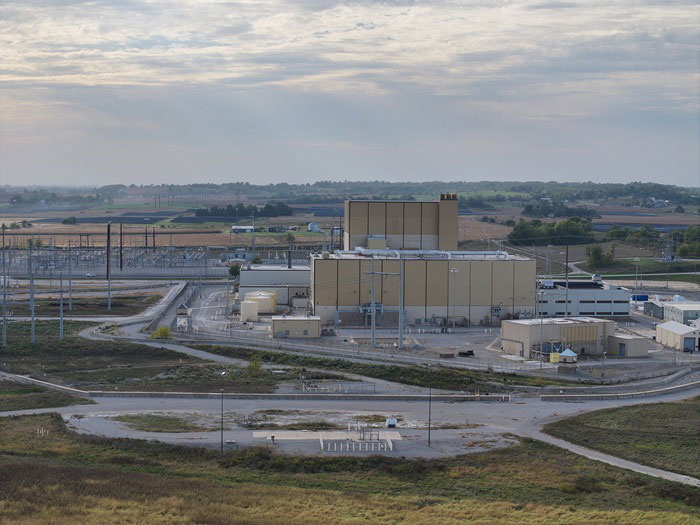
Natural Resources Defense Council supports the proposed restart of Iowa’s permanently closed Duane Arnold nuclear power station on assurances of adequate public safety upgrades to a Fukushima-style reactor from the US Nuclear Regulatory Commission
In a disappointing reversal of its previously critical stance toward nuclear power and especially the dangerously flawed 1960s vintage GE Mark I boiling water reactor, a major green group now appears to be supporting the restart of exactly that reactor model. The Natural Resources Defense Council’s stated in a blog “Rising Demand, Real Choices” that it had submitted comments to the Nuclear Regulatory Commission supporting the restart of the permanently closed and decommissioning GE Mark I Duane Arnold nuclear reactor in Iowa. NRDC “filed comments today at the Nuclear Regulatory Commission supporting an early step in the reactor’s restart: the transfer of the plant’s license to NextEra.” Duane Arnold is nearly identical to the three reactors that melted down in Japan in March 2011.
NRDC nuances its advocacy for the restart with, “To be clear, NRDC’s long-held concerns regarding nuclear energy—including issues related to siting, cost, safety risks, waste management, water use, mining supply chain issues, and community impacts—remain unchanged and must be addressed. The Duane Arnold plant will have to prove it can operate safely and responsibly.”
Let the record reflect, “easier said than done” as this nation’s nuclear regulatory agencies, from the beginning, with the Atomic Energy Commission (AEC) first licensing Duane Arnold on November 24, 1974, knowing full well in 1972 that the undersized design of the GE Mark I boiling water reactor containment would very likely fail under the tremendous overpressurization and explosive hydrogen gas generated under severe nuclear accident conditions and their top safety official encouraged development to be halted. That scientifically confirmed warning was not only ignored but suppressed for years by AEC fears that the halt of construction and cancellations would derail the government plan for a massive nuclear power build up. Duane Arnold was one of the those obfuscated start-ups.
Since then, the US Nuclear Regulatory Commission (NRC) is identified as a captured regulator and an expert at stonewalling reactor safety concerns from fire protection for safe reactor shutdown to ignoring currently projected climate change impacts on severe nuclear accident risks and frequency.
The NRC relicensed Duane Arnold on December 16, 2010, with an initial extension of 20 years to February 21, 2034 with the built-in containment vulnerability. Eighty-five days later, the Fukushima nuclear accident demonstrated a 100% containment failure rate under overpressurization from hydrogen gas detonations for the three units at that were at full power. NRC wrangled for years with the weak, undersized containment vulnerability only to allow the fundamental design flaw to remain unchecked to date.
Duane Arnold is presently utility certified to the NRC as “permanently” closed and defueled reactor for the purpose of decommissioning in SAFSTOR mode or “deferred dismantling”. The 615 megawatts electric Mark I boiling water reactor is owned by three utility entities; the majority owner, NextEra Energy Resources (70% interest) and two minority owners, Central Iowa Power Cooperative (CIPCO with 20% interest) and Corn Belt Power Cooperative (10% interest). The utilities have submitted an application to the NRC to consolidate a 100% ownership transfer to NextEra as sole owner and a plan to reverse the decommissioning certification to instead seek NRC approval for a likely to exceed $1.6 billion rehabilitation, refueling and restart effort by 2029. Google has signed with NextEra for a Power Purchase Agreement as the primary electricity customer for an expanded AI infrastructure, cloud computing and energy guzzling data centers. Post-consolidation, CIPCO, at 0%, will purchase Duane Arnold surplus electricity and Corn Belt Power Cooperative, at 0%, will sell its share to NextEra.
In Beyond Nuclear’s view, as well as many public safety, environmental protection and safe energy advocates, the immediate, permanent closure, decommissioning and environmental cleanup of Duane Arnold and all GE Mark I boiling water reactors are warranted in the ever extending aftermath of the Fukushima Daiichi’s multiple hydrogen explosions. The subsequent reactor core meltdowns breached the universally flawed GE Mark I containment design and construction, releasing harmful radiation downwind into the atmosphere and recurring radioactive batch releases from the wreckage of the three melted reactor cores into the Pacific Ocean that persist today.
The uneconomical, aging and dangerously flawed Duane Arnold nuclear power station was first announced by NextEra Energy Resources in a Federal Register Notice of its intent to the NRC on March 2, 2020 to permanently close and defuel the reactor by October 30, 2020.
Then, on August 10, 2020, a fierce “derecho” with severe thunderstorms, a deluge of rain and straight line winds reaching up to 140 mph swept across the hundreds of miles of prairie knocking out vast stretches of the electric grid including all six offsite power lines to 100% of Duane Arnold’s safety systems causing the reactor to SCRAM. Onsite back up generators restored critical reactor cooling systems but the badly damaged site included the collapse of the reactor’s cooling towers. NextEra’s subsequent damage assessment concluded, “[O]ur evaluation found that replacing those towers before the site’s previously-scheduled decommissioning on Oct. 30, 2020, was not feasible.” NextEra elected to immediately set the date for permanent closure of Duane Arnold, a Fukushima-style reactor, a notorious General Electric Mark I boiling water reactor even in 1972 under warnings from the Atomic Energy Commission safety officials that it was not safe.
We are now coming up on the 15th commemoration of the triple meltdown of Japan’s Fukushima Daiichi reactors caused by a combination of natural disasters that overwhelmed the significantly flawed and identified vulnerable design problem built into every GE Mark I reactors containments. These containments are now demonstrated to have a 100% failure rate under severe accident conditions as were all three Fukushima reactors at full power on March 11, 2011 experiencing devastating hydrogen gas explosions and widespread radioactive releases. This widespread radioactive contamination of the biosphere (land and sea) from the fallout persists to date and indefinitely into the future.
Where Fukushima’s radioactive releases largely blew out over the Pacific Ocean, a radioactive breach from the volumetrically undersized Mark I reactor containment system in the event of a severe over-pressurization accident, will instead spread out over US populations sickening those caught in the fallout, contaminating farms, pastures and agriculture, and similarly dislocating local, commercial and industrial economies.
If restarted, as NRDC supports, Duane Arnold initial 20-year license renewal (40 to 60 years) will expire on February 21, 2034. And well before that date, NextEra will most assuredly file an application to extend the operating license of a still fundamentally flawed and vulnerable reactor with an additional 20 year subsequent license renewal application (60 to 80 years) out to February 21, 2054, presently without a hard look at a changing climate that might already have been central to it closure.
Beyond Nuclear and the Sierra Club presently have a “petition for judicial review” pending ruling from an October 30, 2025 oral argument in the US Court of Appeals for the District of Columbia Circuit, Beyond Nuclear and Sierra Club v. US NRC. The petitioners through legal counsel have raised a purely legal issue of whether the US NRC, as a matter of law, can refuse to evaluate climate change change impacts (derechos, increasingly severe hurricanes, flooding, sea level rise, etc.) on the risk and frequency of severe nuclear accidents. The NRC is illegally entrenched in refusing to perform a lawfully required environment impact statement that fully evaluates the impact of climate change, saying only that such an evaluation is “out of scope” of reactor licensing.
No comments yet.
1 This Month


18 March Webinar @ 1 PM EST: An Assessment of SMR Projects: The Case of Canada
register for the zoom:
https://us02web.zoom.us/webinar/register/WN_o8BIIOUvQ2ONJR1nta65DQ#/registration


of the week – STOP SMALL MODULAR REACTORS IN CANADA
To see nuclear-related stories in greater depth and intensity – go to https://nuclearinformation.wordpress.com
-
Archives
- March 2026 (141)
- February 2026 (268)
- January 2026 (308)
- December 2025 (358)
- November 2025 (359)
- October 2025 (376)
- September 2025 (258)
- August 2025 (319)
- July 2025 (230)
- June 2025 (348)
- May 2025 (261)
- April 2025 (305)
-
Categories
- 1
- 1 NUCLEAR ISSUES
- business and costs
- climate change
- culture and arts
- ENERGY
- environment
- health
- history
- indigenous issues
- Legal
- marketing of nuclear
- media
- opposition to nuclear
- PERSONAL STORIES
- politics
- politics international
- Religion and ethics
- safety
- secrets,lies and civil liberties
- spinbuster
- technology
- Uranium
- wastes
- weapons and war
- Women
- 2 WORLD
- ACTION
- AFRICA
- Atrocities
- AUSTRALIA
- Christina's notes
- Christina's themes
- culture and arts
- Events
- Fuk 2022
- Fuk 2023
- Fukushima 2017
- Fukushima 2018
- fukushima 2019
- Fukushima 2020
- Fukushima 2021
- general
- global warming
- Humour (God we need it)
- Nuclear
- RARE EARTHS
- Reference
- resources – print
- Resources -audiovicual
- Weekly Newsletter
- World
- World Nuclear
- YouTube
-
RSS
Entries RSS
Comments RSS
 nuclear-news
Leave a comment