US and Israeli attack on Iran: At least 51 girls reported killed in strike on school
February 28, 2026 , by Joshua Scheer, https://scheerpost.com/2026/02/28/us-and-israeli-attack-on-iran-at-least-51-girls-reported-killed-in-strike-on-school/
In the latest escalation of the U.S.–Israel assault on Iran, at least 51 young girls were reportedly killed when an airstrike struck a primary school in the southern city of Minab. According to Iranian state media, the victims — between the ages of seven and twelve — were inside Shajareh Tayyebeh elementary school when the building was hit in broad daylight.
Footage circulating online appears to show civilians digging through the rubble as smoke rises over the surrounding neighborhood.
Washington says the strikes are aimed at “eliminating imminent threats.” Tehran calls it a massacre.
The truth — and the consequences — demand scrutiny.
Here is breakthrough news on the ground
In moments like this, journalism is not a matter of slogans — it is a matter of moral clarity.
If the reports from Minab are confirmed, the bombing of an elementary school filled with young girls is not a “strike on imminent threats.” It is the annihilation of children. It is the kind of act that shatters whatever remains of the language of precision warfare and exposes the brutality beneath it.
The United States and Israel insist they are acting defensively. Tehran calls it a massacre. The world is left with rubble, grieving families, and the now-familiar choreography of denial, justification and geopolitical spin.
But certain facts demand scrutiny regardless of allegiance: Why were negotiations underway if war was already being prepared? What intelligence justified striking a civilian school in broad daylight? Who will independently verify the casualty count? And most importantly — who will be held accountable if the worst fears are confirmed?
The pattern is not new. From the siege of Gaza to suffocating sanctions regimes, from covert operations to open bombardment, the language of “security” has too often masked policies that devastate civilian life. The human cost is absorbed by those with the least power: children in classrooms, families in apartment blocks, workers in cities far from decision-making centers.
We should resist both reflexive propaganda and reflexive dismissal. Iranian state media must be scrutinized. Pentagon briefings must be scrutinized. Viral footage must be verified. But skepticism cannot become moral paralysis. If dozens of schoolgirls have been killed, that reality outweighs every talking point.
Escalation with Iran is not a contained regional maneuver. It risks a wider war, global economic shock, environmental catastrophe, and a further erosion of international law. Once normalized, the bombing of civilian infrastructure becomes precedent.
The responsibility of independent media is not to amplify rage, but to insist on evidence, accountability, and humanity. If civilians are being killed in the name of “security,” the public deserves answers that go far beyond press releases.
The truth — and the consequences — demand scrutiny.
This tweet bears repeating again and again:
“Bombing Iran in the middle of negotiations, while starving Cuba, while genociding Palestinians, while threatening to invade Greenland… the U.S. and Israel are the single greatest threat to humanity — and it’s not even close. We are all forced to live in the nightmare they create.” https://x.com/jasonhickel
‘Bombs Will Be Dropping Everywhere’: Trump Launches Illegal Regime Change War Against Iran
February 28, 2026, By Jake Johnson for Common Dreams, https://scheerpost.com/2026/02/28/bombs-will-be-dropping-everywhere-trump-launches-illegal-regime-change-war-against-iran/
President Donald Trump announced in the early hours of Saturday morning that the US has launched a massive military operation aimed at toppling the Iranian government as blasts were reported in Tehran, including near the offices of Supreme Leader Ayatollah Ali Khamenei.
Israel, under the leadership of Prime Minister Benjamin Netanyahu, is taking part in the assault. Unnamed Israeli security sources told Channel 12 that Israel and the Trump administration are “going all in” against Iran as Trump instructed Iranians to “stay sheltered,” warning that “bombs will be dropping everywhere.” People were seen seeking cover in Tehran as the US and Israeli bombs began to fall.
The assault, dubbed “Operation Epic Fury” by the Pentagon, comes days after the US and Iran took part in talks in Geneva, which Trump’s envoys characterized as “positive.” In announcing military action on Saturday, Trump said falsely that the Iranian government has “rejected every opportunity to renounce their nuclear ambitions.”
The US and Israeli attacks—which both nations characterized as “preemptive”—are plainly illegal under international law, which prohibits the threat or use of force except in response to an armed attack. The Trump administration is also violating US law, which gives Congress the sole power to declare war.
“The term ‘preemptive’ is pure propaganda,” wrote Drop Site journalist Jeremy Scahill. “The US once again used the veneer of negotiations as a cover to bomb Iran. Tehran had just offered terms that went far beyond the 2015 nuclear deal. What was preempted was diplomacy. The same propaganda tactics used in the 2003 Iraq war.”
Trump, who ditched the 2015 nuclear deal during his first White House term, repeatedly made clear in his remarks Saturday that he does not intend the new assault on Iran to be limited in scope like his bombings of Iranian nuclear sites last year. In the weeks leading up to Saturday’s attack, the Trump administration carried out a massive military buildup in the Middle East even as the president publicly claimed he was open to a diplomatic resolution.
“We may have casualties,” the US president said of American troops. “That often happens in war. But we’re doing this not for now. We’re doing this for the future.”
Trump also urged the Iranian armed forces to surrender or “face certain death” as the US fired Tomahawk cruise missiles and other munitions at Iran.
The Iranian government’s immediate response to Saturday’s onslaught was a pledge of “crushing retaliation” and a wave of drone and missile attacks on Israel. The Associated Press reported that “hours after the strikes on Iran, explosions rocked northern Israel as the country worked to intercept incoming Iranian missiles.”
Iran’s foreign minister later informed his Iraqi counterpart that Iran would be targeting US military installations in the region in retaliation for Saturday’s attacks.
A spokesperson for the Iranian military declared that “we will teach Israel and America a lesson they have never experienced in their history.”
“Any base that helps America and Israel will be the target of the Iranian armed forces,” the official added.
The non-corporate nuclear news this week

Some bits of good news – This City Turned Its Rooftops into a Climate Shield. Wales passed a ‘life-changing’ homelessness bill. a form of blindness.
TOP STORIES.
Trump Advisers Want Israel To ‘Attack Iran First’ For Better Optics: Politico.
National analysis of cancer mortality and proximity to nuclear power plants in the United States.
Year 4: The Timeline That Tells the Tale
“Selling a dream”: the French nuclear start-up that ran aground.
AUSTRALIA.
AUKUS & potential terrorism threats.
- Is Australia-US Alliance Hurting Australia?
- Jewish groups call on Tony Burke to cancel Israeli journalist visa.
- Good enough for Gina Rinehart should be good enough for Palantir.
- Australia invests $310m to fast-track parts for first AUKUS nuclear submarines.
NUCLEAR-RELATED ITEMS.
ATROCITIES. ‘Flagrant War Crime’: Investigation Recreates 2025 Israeli Massacre, Cover-Up of 15 Gaza Aid Workers. Israeli troops fired900+ rounds at Gaza medics – report
EVENTS
Webinar “Debunking Nuclear Hopium – Small Modular Nuclear Reactors, Advanced Nuclear Reactors, and Fusion” at https://www.grassrootsinfo.org/forums
| HEALTH. Middle-aged women ‘most at risk of cancer’ from nuclear power plants. |
| INDIGENOUS ISSUES. The hidden health crisis tied to America’s nuclear arsenal: How Native American families suffer the grisly side-effects from uranium mines. |
| LEGAL. Appeal court refuses TASC’s appeal against the High Court’s Sizewell C JR application decision. |
| MEDIA.New Book: The Dangers of Ionising Radiation Israel Responsible for Two-Thirds of Journalist Deaths in 2025: Press Freedom Group |
| OPPOSITION to NUCLEAR . No to uranium mining in Greenland. Britain must rethink its disastrous nuclear expansion – public protest can make it happen! |
| POLITICS Schumer, Jeffries blink…Senate, House to vote on War Powers Resolution next week to stop Trump’s criminal war on Iran . Democratic congressional leaders are working to stop War Powers Resolution opposing Trump’s criminal Iran war. |
| POLITICS INTERNATIONAL and DIPLOMACY. “The Surgery of the World”: Netanyahu Arrives in Washington to Deliver the Final Blow to Diplomacy and Ignite a Major War. DOOMSDAY: The Suicide Pact Nobody Voted For. US-UK tech talks restart with a focus on nuclear projects– ALSO AT https://nuclear-news.net/2026/02/28/3-b1-us-uk-tech-talks-restart-with-a-focus-on-nuclear-projects/ |
| SAFETY . ‘Making America Unsafe Again’: Alarm Over Environmental Review Exemption for Nuclear Reactors. UK regulators to begin formal assessment of TerraPower’s 345MWe sodium-cooled fast reactor. Nuclear power station workers ‘failed to ensure safety‘ after incident. Babcock CEO responds to Rosyth nuclear handling concerns. |
| SECRETS and LIES. National Endowment for Democracy leader cut off in Congress after boasting of ‘deploying’ 200 Starlinks to Iran amid violence. |
| SPACE. EXPLORATION, WEAPONS. SpaceX and Blue Origin abruptly shift priorities amid US Golden Dome push |
| SPINBUSTER. The Innate and Inseparable Ties Between Nuclear Weapons and Energy |
| WASTES. Decommissioning. The Nuclear Decommissioning Authority (NDA) group Strategy Effective from March 2026 |
| WAR and CONFLICT. Could Hungary’s fight over oil change course of Ukraine War? |
| WEAPONS and WEAPONS SALES. Hegseth Demands Anthropic Let Military Use AI However It Wants—Even for Autonomous Killer Drones and Spying On Americans– https://www.youtube.com/watch?v=0CFkZOmAUFE The Bombs Which Polish the Skulls of the Dead. Nuclear waste leaks show the need for focus on renewables. Zelenskyy says he’d accept nuclear weapons from UK, France ‘with pleasure’ |
“Selling a dream”: the French nuclear start-up that ran aground

Naarea’s unravelling provides cautionary tale for dozens of small reactor
developers racing to bring designs to fruition.
In December 2023 the founder of French nuclear start-up Naarea gathered employees and investors
in Paris for a black-tie dinner and dance at which it revealed a large
model of the mini reactor it hoped would revolutionise the world of energy.
The gala capped an ebullient year for the group after it scored €10mn in
public subsidies and encapsulated the verve of its chief executive Jean-Luc
Alexandre, according to people who know him and a person who attended the
party.
Then came a cash squeeze and a brutal unravelling. The six-year-old
company, which had pledged to start rolling out reactors by the start of
the next decade, is now a step away from a court-managed liquidation.
The downfall of Naarea — “Nuclear Abundant Affordable Resourceful Energy
for All” — comes as more than 100 nuclear ventures around the world
race to bring their designs for small reactors to fruition. Yet the
technical challenges of some projects, and the huge funding many will need
to withstand years without revenues, are becoming increasingly apparent.
Earlier experiments with microreactors were largely abandoned in the 1970s
as the atomic energy industry sought economies of scale by moving towards
much bigger plants, including in France, home to Europe’s biggest fleet of
57 nuclear power stations.
FT 26th Feb 2026, https://www.ft.com/content/a782639d-1ac1-4252-a7ef-e8052925bbce
The hidden health crisis tied to America’s nuclear arsenal: How Native American families suffer the grisly side-effects from uranium mines

The Navajo Nation – a 27,000-square-mile piece of land that overlaps with parts of Arizona, New Mexico, and Utah – has more than 500 abandoned uranium mines that have been identified by the EPA.
‘The government was mining this uranium for the nuclear program, for nuclear weapons, and they put national security and having easy, inexpensive access to uranium ahead of the interests of the health and well-being of the people living there
By JAMES CIRRONE, US NEWS REPORTER, Daily Mail 25th Feb 2026 [Excellent pictures]
Teracita Keyanna’s youngest son was born with a hole in his heart after she spent decades living in a uranium-contaminated Navajo community in New Mexico.
Kravin Keyanna, now 19, spent the first decade of his life dealing with a severely weakened immune system. He constantly got ear infections, his mother said, which led to him having sensitive hearing.
‘We spent a lot of time in the hospital because he was more sickly than most kids,’ Teracita told the Daily Mail. ‘Because of his immune system, they didn’t want to do surgery on him because they were afraid that it was going to cause more harm in the long run.’
After about 11 years, his heart closed up on its own and healed without surgical intervention.
Meanwhile, Teracita’s 11-year-old daughter, Katherine, has continued to develop abnormal tissue growths underneath her top layer of skin near her lymph nodes.
‘She’s had to have them removed. And so she has gone through four different surgeries in five different locations,’ Teracita said. ‘Her first surgery was when she was 3 years old and the latest one was last year at 10 years old.’
Kravin and Katherine spent years of their childhood living on Red Water Pond Road, a Navajo settlement less than two miles away from the New Mexico border. Their family home was sandwiched between three abandoned uranium mines that remain highly toxic to this day.
These mines were part of a Cold War-era uranium boom that helped build America’s nuclear arsenal. Extraordinarily high levels of radiation from hundreds of long-forgotten sites in the Navajo Nation have exposed generations of Native American families to elevated health risks, including cancer and other unknown ailments.
Teracita was born in 1981 and has spent the majority of her life in the Red Water Pond Road community. Uranium ore extraction continued in the area until 1986 at the two nearby mining sites owned by Quivira Mining.
Mining at the United Nuclear Corporation-owned Northeast Church Rock Mine, immediately south of her ancestral home, lasted until 1982.
‘When I was young, nobody ever told me personally about the dangers of uranium,’ she said. ‘I didn’t know that the mines that were near my home were uranium mines. It was like living with a time bomb, and you didn’t even know that it was there.’
Doug Brugge, the chair of the Department of Public Health Sciences at the University of Connecticut School of Medicine, said Kravin and Katherine’s conditions cannot be definitively tied to uranium exposure. But he didn’t dismiss the possibility either.
Brugge led a project in the 1990s that interviewed Navajo uranium miners, many of whom developed lung cancer from the radon gas released when cutting into uranium ore.
The effects on them are ‘unequivocally well established,’ Brugge said. The effects on their wives, children and grandchildren are murkier and harder to pin down.
Brugge actually grew up in the Navajo Nation as one of the few white children among his peers. He left with his family when he was 14 and when he returned in his thirties to study the uranium issue, he heard many stories similar to Teracita’s.
‘The thing that has long bothered me is many people told us they didn’t know. They had no idea there was anything hazardous associated with this mining,’ he said. ‘A lot of them didn’t speak English. They had a limited education level. Their access to news and media was fairly limited.’
On top of a lack of communication from authorities about the dangers, Teracita said the mines near her did not have fences or barriers, which meant people and livestock could freely wander into contaminated areas.
n March 2024, the Environmental Protection Agency took soil samples from Church Rock No. 1, the nearest Quivira-owned mine to where Teracita lived.
Exposure to contaminated surface soil at and around the 44-acre site carried an estimated one-in-100 cancer risk — meaning one additional person out of every 100 exposed residents could develop cancer in their lifetime. About 30 families, including Teracita’s, lived near the mine as of 2006, according to the EPA.
Brugge said that level of risk is ‘really high’ and pointed out that the EPA is usually already concerned if it’s at one in 100,000 or one in a million.
Teracita also lived half a mile away from the Church Rock uranium mill, also owned by United Nuclear Corporation. Facilities like this can extract uranium from mined rock to produce a powder called ‘yellowcake’.
This material can later be converted for use as fuel in nuclear power plants or, at higher enrichment levels, in nuclear weapons. The process is not entirely clean, however, as it also produces sandy-looking radioactive waste called ‘mill tailings’.
In 1979, two years before Teracita was born, the Church Rock uranium mill had a catastrophic spill that sent 1,100 tons of mill tailings and 93 million gallons of radioactive wastewater into the Navajo Nation via the Puerco River.
There have not been extensive studies on the extent of the damage caused by this disaster, which to this day is considered the largest accidental release of radioactive material in US history.
While it is unknown how many people were possibly exposed and developed health conditions later in life, children who swam in the river or herded sheep across the water were left with serious burns on their skin.
Teracita said many of her neighbors and friends on Red Water Pond Road have mysteriously developed diabetes or cirrhosis of the liver without excessive drinking or smoking.
Teracita lived on Red Water Pond Road with her family until around 2018, when the EPA offered them financial assistance to move away while the agency cleaned up the mines. Prior to that, she had been exploring economically feasible ways to leave.
‘I was already trying to figure out what we could do for our kids in order to safeguard them further, considering that when I was a kid, nobody safeguarded me,’ she said.
The Department of Energy says there are a total of 4,225 uranium mines across the United States, the vast majority of them abandoned.
The Navajo Nation – a 27,000-square-mile piece of land that overlaps with parts of Arizona, New Mexico, and Utah – has more than 500 abandoned uranium mines that have been identified by the EPA.
This means the Navajo have just over 11 percent of the country’s abandoned mines within their borders, despite making up just 0.8 percent of America’s total landmass.
‘The government was mining this uranium for the nuclear program, for nuclear weapons, and they put national security and having easy, inexpensive access to uranium ahead of the interests of the health and well-being of the people living there” Brugge said.
It is not just the Navajo, who call themselves Diné in their language, who have been disproportionately exposed to the radioactive byproducts of mining operations, most of which ceased in the 1980s.
Although Native American land takes up 5.6 percent of the western US, about 25 percent of uranium mines in this area of the country are located within 6 miles of a reservation, a 2015 study from the Native American Budget & Policy Institute found………………………………………………………………………………………………………..
https://www.dailymail.co.uk/news/article-15503365/navajo-kids-health-defects-uranium-exposure-nuclear-weapons.html
Appeal court refuses TASC’s appeal against the High Court’s Sizewell C JR application decision

23rd February 2026. https://tasizewellc.org.uk/appeal-court-refuses-tascs-appeal-against-the-high-courts-sizewell-c-jr-application-decision-23-02-26/
Together Against Sizewell C Ltd (TASC) is extremely disappointed to learn that our appeal against the Secretary of State, Ed Miliband’s, decision not to subject Sizewell C’s secret sea defences to public scrutiny and assessment has been refused. We are, however, thankful that our legal challenge has helped to expose the Sizewell C project’s lack of resilience to extreme climate change.
TASC spokesperson, Chris Wilson, said, “TASC fear for the safety of our descendants and the precious Suffolk coastline because this judgement leaves future generations to rely on the developer’s ‘hypothetical’ i.e. ’imaginary or suggested’ (note 1), unassessed sea defences to protect Sizewell C and its 3,900 tonnes of spent nuclear fuel from flooding in an extreme sea level rise scenario over the next 150 years.
This decision rules out consideration of alternatives, such as raising the platform height, an option that will be lost once the plant has been built – a raised platform height will likely be less impactful on the environment and would negate the need for future generations to build the two additional huge sea defences.
“The Appeal Court’s decision sanctions the Government and developer’s choice to push ahead with £40 billion Sizewell C in the full knowledge that the project currently under construction is not resilient to a ‘credible maximum climate change scenario’ – contrary to Habitat Regulations, government policies and Labour’s claims that infrastructure projects are resilient to climate change impacts (note 2). Yet here, the project approved in the Development Consent Order (DCO) makes no provision for the two additional sea defences.
“Sizewell C is sited on one of Europe’s fastest eroding coastlines. Recent rapid erosion at nearby Thorpeness has resulted in many homes having to be demolished and in front of the development site the beach may need to be replenished before the nuclear plant has even been built (note 3) – demonstrating the threat of erosion is real and immediate and should be a wake-up call for government that Sizewell is not a suitable site for new nuclear “This government wants to ‘rip up the rules to fire-up nuclear power’ (also refer to note 5). TASC, however, believe there should be an inquiry into how the developer, EDF, was allowed to exclude the additional sea defences from their 2020 DCO application, even though national policy statements require developers to include plans for adaptive sea defences to deal with a credible maximum climate change scenario – EDF knew as far back as 2015 that the site requires additional flood defences in an extreme sea level rise scenario but chose to keep them secret, thereby avoiding public scrutiny and environmental impact assessment. One would have hoped that any sensible government would want to guarantee that there is a viable, fully assessed plan to ensure the plant and its spent fuel can be kept safe for its full lifetime to avoid a catastrophic event.
“It is imperative we all speak up for future generations, who have no voice in the decision-making of today, to ensure it is demonstrated that there is a fully assessed, viable option to keep the Sizewell C site and its 3,900 tonnes of spent fuel safe from flooding throughout its full lifetime. By not doing so, this government is placing an immoral burden on our descendants who will be forced to clear up the mess resulting from ill thought-out choices made today.”
Fuel Supply Gap Could Hold Back U.S. Nuclear Energy Renaissance
- The U.S. push to quadruple nuclear capacity by 2050 faces a near-term fuel bottleneck.
- Centrus, Orano, and Urenco are expanding U.S. enrichment facilities, backed by billions in DOE funding.
- Surging electricity needs driven by AI and data centers are accelerating urgency, with enrichment capacity needing to scale dramatically if nuclear power is to play a central role in meeting long-term U.S. energy demand.
By Tsvetana Paraskova Oil Price 25th Feb 2026- https://oilprice.com/Alternative-Energy/Nuclear-Power/Fuel-Supply-Gap-Could-Hold-Back-US-Nuclear-Energy-Renaissance.html
Nuclear energy is a distant prospect – wind and solar are here now
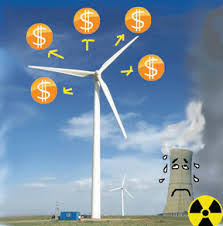
Sceptics don’t outright deny climate change but dismiss solutions as unrealistic
Sadhbh O’Neill, Irish Times 26th Feb 2026
Recent commentary on Ireland’s energy system is a reminder that not everyone is comfortable with change.
For people unconvinced by the potential of renewable energy to provide all our energy needs, the focus of energy policy should still be on large-scale sources of generation, as it was in the glory days of the ESB when it ran everything (and it took up to 18 months to get a grid connection).
Amid nostalgia for a simpler past, there are still voices making the case that fossil fuels and nuclear energy should form the backbone of the grid. This case is made on the basis that renewables can only match demand up to a certain point due to their intermittency, low energy densities and the challenges of integrating them into the grid.
And it is always hard to make the case for energy efficiency and demand management when fossil fuels, on paper at least, are plentiful, and there is no sign yet of the big energy producers slowing down extraction or divesting from fossil energy………………………………………………..
With regard to nuclear energy, there is a lot of interest in small modular reactors (SMRs), which, at approximately 400MW generating capacity, would be much more appropriate in scale for Irish electricity needs. The problem with nuclear energy is that traditional power plants, at about 1.3GW, are too individually large for Ireland, not to mention the likelihood of a nuclear plant taking decades to secure the required approvals and get built.
The ESB in its 2025 Emerging Technology Insights report notes that SMRs remain unproven due to a lack of demonstration projects. None of the SMR projects to date will have a demonstration plant completed before 2030.
Given that we are just four years away from key climate deadlines, nuclear power is so unrealistic in the context of what we need to do right now that it might as well be irrelevant.
The SEAI Energy in Ireland 2025 report highlights that Ireland needs proven, immediate solutions to avoid missing its second carbon budget (2026–2030). Luckily for Ireland, we have abundant renewable resources, which have never been so cheap to develop.
Renewable energy costs have come down so fast and by so much that even when you factor in the grid upgrades required, in 90 per cent of the world they outcompete new fossil fuel infrastructure easily, including the US. This is because wind and solar technologies are proven, scalable and cost-competitive over the long run, making them more attractive to investors…………………………………………. https://www.irishtimes.com/environment/climate-crisis/2026/02/26/nuclear-energy-is-a-distant-prospect-wind-and-solar-are-here-now/
Babcock CEO responds to Rosyth nuclear handling concerns
Dunfermline Press 25th Feb 2026, By Hannah Shedden
Babcock International Group’s CEO has sought to reassure residents who are concerned about the potential presence of nuclear weapons or waste at Rosyth Dockyard.
Fears were raised after SNP councillor Brian Goodall said that iodine tablets to counteract the effects of radiation would need to be given to “half the population of Rosyth” if proposals to bring more nuclear subs to the dockyard went ahead.
Cllr Goodall highlighted the “seriousness of the implications” of providing a contingency dock for the Dreadnought class of vessels that could be carrying Trident missiles.
His comments last year then prompted a row between the councillor and Labour MP, Graeme Downie, who accused Cllr Goodall of spreading “misinformation” and “arguing against highly skilled nuclear jobs in the safe dismantlement of nuclear subs at Rosyth”.
The Press spoke to Babcock CEO, David Lockwood, and asked him what his response would be to those who are fearful about nuclear materials in Rosyth.
He said: “I would say that we are the largest nuclear company in the UK and probably have the most experience handling civilian and military waste than anyone else, so I think you can take a lot of assurance from that…………………..
https://www.dunfermlinepress.com/news/25885325.babcock-ceo-responds-rosyth-nuclear-handling-concerns/
1 This Month

of the week – Shut Down Drone Warfare!


Tell the Ukrainian Government to Drop Prosecution of Peace Activist Yurii Sheliazhenko

Petition to revoke the licensing of the Near Surface Nuclear Disposal Facility (NSDF) at Chalk River. https://www.ourcommons.ca/petitions/en/Petition/Details?Petition=e-7247
To see nuclear-related stories in greater depth and intensity – go to https://nuclearinformation.wordpress.com
-
Archives
- April 2026 (114)
- March 2026 (251)
- February 2026 (268)
- January 2026 (308)
- December 2025 (358)
- November 2025 (359)
- October 2025 (376)
- September 2025 (257)
- August 2025 (319)
- July 2025 (230)
- June 2025 (348)
- May 2025 (261)
-
Categories
- 1
- 1 NUCLEAR ISSUES
- business and costs
- climate change
- culture and arts
- ENERGY
- environment
- health
- history
- indigenous issues
- Legal
- marketing of nuclear
- media
- opposition to nuclear
- PERSONAL STORIES
- politics
- politics international
- Religion and ethics
- safety
- secrets,lies and civil liberties
- spinbuster
- technology
- Uranium
- wastes
- weapons and war
- Women
- 2 WORLD
- ACTION
- AFRICA
- Atrocities
- AUSTRALIA
- Christina's notes
- Christina's themes
- culture and arts
- Events
- Fuk 2022
- Fuk 2023
- Fukushima 2017
- Fukushima 2018
- fukushima 2019
- Fukushima 2020
- Fukushima 2021
- general
- global warming
- Humour (God we need it)
- Nuclear
- RARE EARTHS
- Reference
- resources – print
- Resources -audiovicual
- Weekly Newsletter
- World
- World Nuclear
- YouTube
-
RSS
Entries RSS
Comments RSS
 nuclear-news