‘Making America Unsafe Again’: Alarm Over Environmental Review Exemption for Nuclear Reactors
“I think the DOE’s attempts to cut corners on safety, security, and environmental protections are posing a grave risk to public health, safety, and our natural environment,” said one expert.
By Jessica Corbett, February 18, 2026, https://worth.com/trump-nuclear-safety-changes/
ess than a week after NPR revealed that “the Trump administration has overhauled a set of nuclear safety directives and shared them with the companies it is charged with regulating, without making the new rules available to the public,” the U.S. Department of Energy announced Monday that it is allowing firms building experimental nuclear reactors to seek exemptions from legally required environmental reviews.
Citing executive orders signed by President Donald Trump in May, a notice published in the Federal Register states that the DOE “is establishing a categorical exclusion for authorization, siting, construction, operation, reauthorization, and decommissioning of advanced nuclear reactors for inclusion in its National Environmental Policy Act (NEPA) implementing procedures.”
NEPA has long been a target of energy industries and Republican elected officials, including Trump. The exemption policy has been expected since Trump’s May orders—which also launched a DOE pilot program to rapidly build the experimental reactors—and the department said in a statement that even the exempted reactors will face some reviews.
“The U.S. Department of Energy is establishing the potential option to obtain a streamlined approach for advanced nuclear reactors as part of the environmental review performed under NEPA,” the DOE said. “The analysis on each reactor being considered will be informed by previously completed environmental reviews for similar advanced nuclear technologies.”
“The fact is that any nuclear reactor, no matter how small, no matter how safe it looks on paper, is potentially subject to severe accidents.”
However, the DOE announcement alarmed various experts, including Daniel P. Aldrich, director of the Resilience Studies Program at Northeastern University, who wrote on social media: “Making America unsafe again: Trump created an exclusion for new experimental reactors from disclosing how their construction and operation might harm the environment, and from a written, public assessment of the possible consequences of a nuclear accident.”
Foreign policy reporter Laura Rozen described the policy as “terrifying,” while Paul Dorfman, chair of the Nuclear Consulting Group and a scholar at the University of Sussex’s Bennett Institute for Innovation and Policy Acceleration, called it “truly crazy.”
As NPR reported Monday:
Until now, the test reactor designs currently under construction have primarily existed on paper, according to Edwin Lyman, director of nuclear power safety at the Union of Concerned Scientists, a nonprofit environmental advocacy group. He believes the lack of real-world experience with the reactors means that they should be subject to more rigorous safety and environmental reviews before they’re built.
“The fact is that any nuclear reactor, no matter how small, no matter how safe it looks on paper, is potentially subject to severe accidents,” Lyman said.
“I think the DOE’s attempts to cut corners on safety, security, and environmental protections are posing a grave risk to public health, safety, and our natural environment here in the United States,” he added.
Lyman was also among the experts who criticized changes that NPR exposed last week, after senior editor and correspondent Geoff Brumfiel obtained documents detailing updates to “departmental orders, which dictate requirements for almost every aspect of the reactors’ operations—including safety systems, environmental protections, site security, and accident investigations.”
While the DOE said that it shared early versions of the rules with companies, “the reduction of unnecessary regulations will increase innovation in the industry without jeopardizing safety,” and “the department anticipates publicly posting the directives later this year,” Brumfiel noted that the orders he saw weren’t labeled as drafts and had the word “approved” on their cover pages.
In a lengthy statement about last week’s reporting, Lyman said on the Union of Concerned Scientists website that “this deeply troubling development confirms my worst fears about the dire state of nuclear power safety and security oversight under the Trump administration. Such a brazen rewriting of hundreds of crucial safeguards for the public underscores why preservation of the Nuclear Regulatory Commission (NRC) as an independent, transparent nuclear regulator is so critical.”
“The Energy Department has not only taken a sledgehammer to the basic principles that underlie effective nuclear regulation, but it has also done so in the shadows, keeping the public in the dark,” he continued. “These long-standing principles were developed over the course of many decades and consider lessons learned from painful events such as the Chernobyl and Fukushima disasters. This is a massive experiment in the deregulation of novel, untested nuclear facilities that could pose grave threats to public health and safety.”
“These drastic changes may extend beyond the Reactor Pilot Program, which was created by President Trump last year to circumvent the more rigorous licensing rules employed by the NRC,” Lyman warned. “While the DOE created a legally dubious framework to designate these reactors as ‘test’ reactors to bypass the NRC’s statutory authority, these dramatic alterations may further weaken standards used in the broader DOE authorization process and propagate across the entire fleet of commercial nuclear facilities, severely degrading nuclear safety throughout the United States.”
Proximity to nuclear power plants associated with increased cancer mortality

The study found that U.S. counties located closer to nuclear power plants experienced higher cancer mortality rates, even after accounting for socioeconomic, environmental, and health care factors. The researchers estimated that over the course of the study period, roughly 115,000 cancer deaths across the U.S. (or about 6,400 deaths per year) were attributable to proximity to NPPs.
By Maya Brownstein, February 23, 2026, https://hsph.harvard.edu/news/proximity-to-nuclear-power-plants-associated-with-increased-cancer-mortality/
Boston, MA—U.S. counties located closer to operational nuclear power plants (NPPs) have higher rates of cancer mortality than those located farther away, according to a new study led by Harvard T.H. Chan School of Public Health.
The study is the first of the 21st century to analyze proximity to NPPs and cancer mortality across all NPPs and every U.S. county. The researchers emphasized that the findings are not enough to establish causality but do highlight the need for further research into nuclear power’s health impacts.
The study was published Feb. 23, 2026, in Nature Communications.
Numerous studies on the potential link between NPPs and cancer have been conducted around the world, with conflicting results. In the U.S., these studies have been rare and limited in their scope, focused on a single NPP and its surrounding community.
To expand the evidence base, the researchers conducted a national assessment of NPPs and cancer mortality between 2000 and 2018 using “continuous proximity.” They used advanced statistical modeling that captured the cumulative impact of all nearby NPPs, rather than just one. The locations and dates of operation of U.S. NPPs—as well as some nearby in Canada—were obtained from the U.S. Energy Information Administration, and county-level data on cancer mortality was obtained from the Centers for Disease Control and Prevention. The researchers controlled for potential confounders in each county, including educational attainment, median household income, racial composition, average temperature and relative humidity, smoking prevalence, BMI, and proximity to the nearest hospital.
The study found that U.S. counties located closer to nuclear power plants experienced higher cancer mortality rates, even after accounting for socioeconomic, environmental, and health care factors. The researchers estimated that over the course of the study period, roughly 115,000 cancer deaths across the U.S. (or about 6,400 deaths per year) were attributable to proximity to NPPs. The association was strongest among older adults.
“Our study suggests that living near a NPP may carry a measurable cancer risk—one that lessens with distance,” said senior author Petros Koutrakis, Akira Yamaguchi Professor of Environmental Health and Human Habitation. “We recommend that more studies be done that address the issue of NPPs and health impacts, particularly at a time when nuclear power is being promoted as a clean solution to climate change.”
The researchers noted that the results are consistent with the results of a similar study they conducted in Massachusetts, which identified elevated cancer incidence among populations living closer to NPPs.
They also noted some limitations to the study, including that it did not incorporate direct radiation measurements and instead assumed equal impact by all NPPs.
Article information
“National Analysis of Cancer Mortality and Proximity to Nuclear Power Plants in the United States,” Yazan Alwadi, Barrak Alahmad, Carolina L. Zilli Vieira, Philip J. Landrigan, David C. Christiani, Eric Garshick, Marco Kaltofen, Brent Coull, Joel Schwartz, John S. Evans, Petros Koutrakis, Nature Communications, February 23, 2026, doi: 10.1038/s41467-026-69285-4
The Bombs Which Polish the Skulls of the Dead
The madness behind these attitudes is fuelled by the enormous profits earned by the arms industry, which seeks to modernise nuclear systems around the counterforce doctrine. A 2025 report by PAX and the International Campaign to Abolish Nuclear Weapons (ICAN) titled At Great Cost: The Companies Building Nuclear Weapons and their Financiers found that, between January 2022 and August 2024, 260 global financial institutions (including pension funds, insurance companies, and asset managers) financed 24 nuclear weapons producers, with investors holding just under $514 billion in shares and bonds and with around $270 billion provided in loans and underwriting.
With New START now expired, the United States’ withdrawal from arms control treaties and its embrace of nuclear ‘warfighting’ doctrines are raising the risk of catastrophic conflict between nuclear powers.
19 February 2026, Tricontinental: Institute for Social Research, https://thetricontinental.org/newsletterissue/start-nuclear-weapons/
On 5 February 2026, the New Strategic Arms Reduction Treaty (New START) expired, ending the last surviving legal constraint on the strategic nuclear arsenals of the United States and the Russian Federation. New START, which was signed in 2010 and entered into force in 2011, should have been replaced by a successor agreement. The treaty limited strategic warheads and delivery vehicles deployed by each side and established a verification regime of inspection, notification, and information exchange. These measures were not cosmetic; they were thin threads that restrained the most destructive machinery ever assembled.
These companies include Airbus, BAE Systems, Bechtel, Boeing, General Dynamics, L3Harris Technologies, Northrop Grumman, and Rolls-Royce. ICAN’s 2025 report Hidden Costs: Nuclear Weapons Spending in 2024 estimates that the nine nuclear-armed states spent $100.2 billion on their nuclear arsenals in 2024, with the private sector earning at least $42.5 billion from nuclear weapons contracts. That sum could have paid the UN’s budget 28 times and fed 345 million people facing the most severe hunger for nearly two years. The nuclear weapons industry is a striking waste of human resources.
Despite the collapse of the bilateral arms control regime, the global nuclear deterrence and eradication system has not vanished. But what remains is irradiated by US domination over the architecture of nuclear policy:
- The Nuclear Non-Proliferation Treaty (NPT, 1970) remains in force even though it reinforces the system of nuclear apartheid (despite Article VI, which asks nuclear-armed countries to pursue disarmament). The expiration of New START deepens the NPT’s crisis of legitimacy and exposes the disarmament promise as perpetually deferred. India, Israel, and Pakistan never signed the NPT; the Democratic People’s Republic of Korea (DPRK) signed it in 1985 but withdrew in 2003.
The expiration of New START did not arrive suddenly. Due to the decade-long breakdown in US-Russia relations, on-site inspections were paused by both sides in March 2020 and never resumed. In February 2023, Russia suspended its participation in New START, and the US responded in kind (Russia has publicly said it intends to continue observing New START’s numerical limits, provided the US does the same). By the time the treaty formally lapsed, its verification spine had already been severed.
We now live in a world where the two largest nuclear powers are unrestrained by any binding treaty limits.
Since 2002, the United States has unilaterally exited one arms control treaty after another, eroding the architecture that helped stabilise deterrence. These treaties include the following:
- The Anti-Ballistic Missile Treaty of 1972 – US withdrawal, June 2002.
- The Intermediate-Range Nuclear Forces Treaty of 1987 – US withdrawal, August 2019.
- The Treaty on Open Skies of 1992 – US withdrawal, November 2020.
- The New START of 2011 – expired, February 2026.
The end of New START unfolds within a broader turn toward nuclear ‘warfighting’ doctrines, including a renewed emphasis on the diabolical idea of counterforce – the outlines of which appear in the 2018 US Nuclear Posture Review (NPR). The idea is simple: to attack an adversary’s nuclear forces and command systems rather than its cities. Such an attack is seen to be more rational and even more humane. In reality, an attack of this kind destabilises all deterrence systems. Counterforce doctrines reward speed, pre-emption, and first-strike advantage, thereby compressing decision-making time. The doctrine creates a use-it-or-lose-it pressure – the fear that you must launch before your forces are destroyed – that makes miscalculation structural, not accidental.
. As warfare technologies advance, this logic is amplified. Highly developed conventional strike systems, missile defences, hypersonic delivery systems, and integrated command-and-control networks (shared systems that link sensors, communications, and decision-making) blur the boundary between nuclear and non-nuclear war. A missile launched with conventional intent may be interpreted as a nuclear strike. Dual-use platforms – systems that can carry conventional or nuclear payloads – undermine signalling clarity by making it difficult to determine whether a launch is conventional or nuclear. Escalation ladders shorten. The margin for error narrows to seconds.
The counterforce doctrine is not merely an abstract debate but has materialised in government budgets and arms procurement contracts. The 2022 US NPR affirmed the modernisation of the nuclear triad: land-based intercontinental ballistic missiles, submarine-launched ballistic missiles, and nuclear-capable strategic bombers. Crucially, the 2022 NPR rejects ‘no first use’ and ‘sole purpose’ policies (‘no first use’ means committing not to use nuclear weapons first; ‘sole purpose’ means limiting their role to deterrence and, if necessary, for responding to nuclear attack). The current policy holds that the US would only consider the use of nuclear weapons, under ‘extreme circumstances’, to defend its vital interests or those of its allies and partners, but it does not foreclose first use, and leaves open a ‘narrow range of contingencies’ in which nuclear weapons may deter attacks with ‘strategic effect’. This posture preserves the option to target adversary military capabilities – including their strategic forces if necessary – without overtly committing to the counterforce doctrine.
The 2023 Congressional Commission on the Strategic Posture of the United States took this further, arguing that US nuclear planning should continue to target what adversaries ‘value most’. In these texts, nuclear weapons are not presented as tragic necessities of modern statecraft but as normal tools that can be used in certain circumstances.
The madness behind these attitudes is fuelled by the enormous profits earned by the arms industry, which seeks to modernise nuclear systems around the counterforce doctrine. A 2025 report by PAX and the International Campaign to Abolish Nuclear Weapons (ICAN) titled At Great Cost: The Companies Building Nuclear Weapons and their Financiers found that, between January 2022 and August 2024, 260 global financial institutions (including pension funds, insurance companies, and asset managers) financed 24 nuclear weapons producers, with investors holding just under $514 billion in shares and bonds and with around $270 billion provided in loans and underwriting.
- The International Atomic Energy Agency (IAEA, 1957) operates a safeguards regime of inspections, material accountancy, and monitoring. The 1997 Additional Protocol to the IAEA extends these capacities, yet this mechanism remains plagued by selective enforcement. The IAEA’s investigations of Iran, for instance, are not shaped by evidence but by the Global North’s hostility to the Iranian government.
- The Nuclear Suppliers Group (NSG, 1975) is an informal export-control regime for sensitive technologies and dual-use materials used in nuclear fuel-cycle and weapons-related programmes. While the purpose of the NSG is to constrain proliferation (reinforced by UN Security Council resolution 1540), it ends up reinforcing technological hierarchies. The nuclear-armed states dominate the informal institutions, exercising their authority while insisting on restraint from others.
Some tattered norms remain outside the full control of the United States, but they are fractured and unable to advance a comprehensive agenda. These include:
- The Treaty on the Prohibition of Nuclear Weapons (2017). This is a legally binding instrument that represents a categorical rejection of nuclear arms. As of late 2025, ninety-nine countries had either ratified or signed the treaty, but none of the world’s nine nuclear-armed states are among them. In Europe, only Austria, the Holy See (Vatican), Ireland, Malta, and San Marino have ratified the treaty. The treaty, which was driven by the International Campaign to Abolish Nuclear Weapons, is largely a Global South initiative.
- Nuclear Weapon Free Zones. Five regions of the world adopted treaties to make their territories free of nuclear weapons. These agreements are the Treaty of Tlatelolco (1967) covering Latin America and the Caribbean, the Treaty of Rarotonga (1985) covering the South Pacific, the Treaty of Bangkok (1995) covering Southeast Asia, the Treaty of Pelindaba (1996) covering Africa, and the Semipalatinsk Treaty (2006) covering Central Asia. These treaties are, in practice, among the most successful achievements in nuclear disarmament.
- The Comprehensive Nuclear-Test Ban Treaty (1996). This treaty has not been able to enter into force because several required states have not ratified it, yet it remains politically significant because it prohibits nuclear test explosions and has helped make nuclear testing internationally taboo. The treaty’s monitoring system functions daily, detecting seismic and atmospheric signals, making tests harder to hide.
The post-New START landscape contains some institutions and norms, but the central restraint on the largest nuclear arsenals has vanished. What we have now are three overlapping crises:
- A crisis of stability. With no transparency and verification on the largest nuclear weapons arsenals there is only suspicion between the major powers.
- A crisis of legitimacy. The countries with the largest arsenals demand obedience to non-proliferation while abandoning their own treaty commitment to disarmament.
- A crisis of conscience. Horrifyingly, nuclear weapons are now being spoken of as being usable, manageable, and necessary – as legitimate options on the battlefield.
A return to an arms control regime is necessary. But we need to consider a broader agenda. Even the best treaties only manage danger but do not eliminate it. The deeper contradiction remains intact: a world in which a few states claim the right to annihilate humanity in the name of security. The demise of New START strips away illusions to reveal a nuclear weapons order that preserves power and does not advance peace.
Libya abandoned its nuclear weapons programme in December 2003. Eight years later, a UN Security Council resolution (no. 1973) imposing an arms embargo and a no-fly zone was used by NATO to justify the military intervention that destroyed the Libyan state. It was logical, therefore, for the DPRK to test a nuclear weapon in 2006 and build a shield against the regime-change ambitions of the US and its East Asian allies. The counterforce doctrine of the US encourages countries to build such a shield, a painful reality in a world marinated in the anxieties provoked by hyper-imperialism.
In 2003, the British playwright Harold Pinter (1930–2008), exasperated by the Global War on Terror, wrote a powerful poem called ‘The Bombs’. I remember hearing Pinter read this poem in London, the cadence powerful, the hope in the ugliness clear. In his memory, here is the poem:
There are no more words to be said
All we have left are the bombs
Which burst out of our head
All that is left are the bombs
Which suck out the last of our blood
All we have left are the bombs
Which polish the skulls of the dead.
The priciest electricity in the world
.

by beyondnuclearinternational, https://beyondnuclearinternational.org/2026/02/23/the-priciest-electricity-in-the-world/
New York governor Kathy Hochul is betting on nuclear power but her numbers simply don’t add up, writes the The Nuclear Skeptic
New York Governor Kathy Hochul’s desire to build 5GW of new nuclear power in order to keep New York’s electric bills affordable and meet future energy demand has one pesky problem: the numbers simply don’t add up. That’s the overarching conclusion of a new report authored by the University of Pennsylvania’s Dr. Joseph Romm, which was presented in New York last week.
Echoing the Trump administration’s desire to revive the nuclear energy industry from its global downturn over the past few decades, Governor Hochul and President Trump appear to be in lock-step in their shared desire to build new nuclear reactors, despite the economic reality that cheaper and faster power alternatives exist and are already being utilized across the globe to meet growing electricity needs.
There are a myriad of possible reasons why both politicians believe new nuclear generation is a viable option moving forward, but it’s clear neither are paying attention to what just happened in Georgia – when two incumbent Republican Public Service Commission (PSC) members were removed from office by voters following massive increases in consumer electric bills. To be fair, neither Hochul nor Trump will be around to face the music if their plans are realized and New York starts the decades-long process to build 5GW worth of the world’s most expensive source of energy.
Keeping the lights on and affordable should be a top priority for any politician in the current economic landscape but there is a clear disconnect between major decisions about our future energy grid being made today and the future ramifications of those decisions both economically and electorally.
New sources of affordable and clean electricity are needed to power data centers, vehicle electrification and other sources of new demand, but it’s unclear how much electricity is truly needed and how fast. According to AI proponents, New York and the U.S. at large are going to need massive amounts of new electric power and fast. For example, New York’s Master Energy Plan anticipates nearly 40GW of new power needed by 2040, therefore doubling New York’s current energy supply in the next 15 years.
Setting aside the (very real) possibility of the AI data center bubble bursting far before 2040, Hochul and Trump are calling for more nuclear generation to meet energy demand predictions and both have cited nuclear’s “affordability” as reason why. Well, as Romm’s recent report concludes, this is pure fantasy.
Romm notes that Georgia’s two new reactors at Plant Vogtle, which went online in 2024 after nearly two decades of construction and delays, resulted in a 25% percent increase in consumer electric bills. The ~2GW from the twin Vogtle reactors cost more than $36 billion, 2.5+ times more than original estimates! But that sudden spike in electric bills is just the tip of the iceberg.
The recent spike doesn’t account for the billions of taxpayer dollars currently subsidizing the plant, the billions in loans from the Department of Energy used to build it, nor does it account for the high cost of servicing debt and ongoing operations into the future which will inevitably require further subsidization – similar to New York’s $33 billion in state subsidies going towards the existing reactors at Ginna, Nine Mile Point, and FitzPatrick accounting for 5.4GW in capacity.
Simply put, Georgia’s two new reactors are the most expensive electricity on the planet and for a myriad of reasons not related to “affordability,” both Trump and Hochul want to recreate that terrible recipe.
But the most disturbing finding in Romm’s report is what was buried in the middle of the NY Master Energy Plan. The plan inexplicably does not include cost or cost overrun figures, instead references a separate analysis used to inform the state’s approach. Hochul’s team, in Trump-like fashion, has decided to ignore its own experts, relying on financial figures included in a separate report by a NYSERDA ‘contractor’ that begins with the unprecedented disclaimer:
“NYSERDA, the State of New York, and the contractor make no warranties or representations, expressed or implied, as to … the usefulness, completeness, or accuracy of any processes, methods, or other information contained, described, disclosed, or referred to in this report. NYSERDA, the State of New York, and the contractor … will assume no liability for any loss, injury, or damage resulting from, or occurring in connection with, the use of information contained, described, disclosed, or referred to in this report.”
To sum it up, the plan to build 5GW of new nuclear generation in New York is based on an economic analysis that might as well be a science fiction novel. The basic assumption of the “contractors’” economic analysis is that the cost to build reactors in New York, notorious for its cheap construction costs, will be cheaper than at Plant Vogtle in Georgia. Did anyone on Hochul’s team ask Plant Vogtle’s construction monitor if this was achievable? Apparently not.
Anyone who claims new nuclear power plants in New York will lower your electric bill is lying. We should ask why? Why is Hochul drinking the nuclear Kool-aid? I don’t believe New York will actually build and operate a new nuclear reactor any time soon, but like the cancelled-after-spending-$9-billion-dollars twin reactors at South Carolina’s VC Summer, or the abandoned-after-spending-$6-billion dollars reactor at Shoreham which Long Islanders are still paying for, there’s a lot of money still on the table. Our money.
Middle-aged women ‘most at risk of cancer’ from nuclear power plants
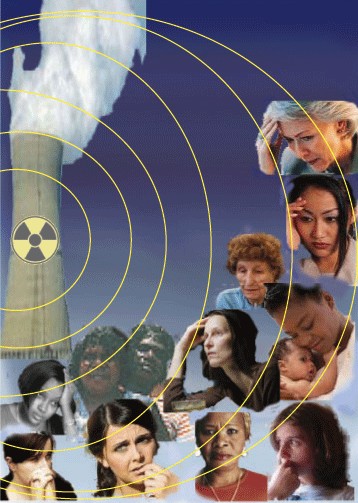
2.1 per cent of cancers in women aged 55-64 attributable to living near a plant, research shows
Sarah Knapton,Telegraph, Science Editor, 23 February 2026
Middle-aged women are the most at risk from living near power plants, a study suggests.
Researchers at Harvard University found that US counties closer to nuclear plants had higher cancer death rates than those farther away, even after accounting for socioeconomic, environmental and health factors.
The team estimated that 2.1 per cent of cancers in women aged 55-64 were “attributable” to living near a plant, the highest of all age groups and genders.
Similarly, 2 per cent of cancers in men aged 65-74 were linked to nuclear plants, the highest age range for males.
Younger people aged 35-44 had the lowest risk, with proximity to nuclear plants accounting for 0.4 per cent of cancers in females and 0.6 per cent in males.
Radiation fears
“Our study suggests that living near a nuclear power plant may carry a measurable cancer risk – one that lessens with distance,” said Dr Petros Koutrakis, the senior author and professor of environmental health and human habitation at Harvard TH Chan School of Public Health.
“We recommend that more studies be done that address the issue of nuclear power plants and health impacts, particularly at a time when nuclear power is being promoted as a clean solution to climate change.”
Last year, Harvard discovered that people living near the Mallinckrodt Chemical Works in Missouri, which processed uranium for the first atomic bomb, had a far higher chance of developing most cancers than those living farther away.
There have been ongoing fears that radiation from power stations can cause cancer, with some evidence showing clusters of leukaemia and non-Hodgkin lymphoma near Sellafield in Cumbria, and Dounreay, on the north coast of Scotland.
The Committee on Medical Aspects of Radiation in the Environment was set up in 1985 to investigate.
Although it confirmed the raised rates, it also found that other nearby villages did not show similar increases as might be expected if the plants were to blame.
Investigators theorised that an influx of workers moving to Seascale and Thurso to work in the nuclear industry might have exposed residents to new infections, causing a rise in childhood cancer rates…………………………………………………………… https://www.telegraph.co.uk/news/2026/02/23/middle-aged-women-most-at-risk-of-cancer-from-nuclear-power/
Rapid UK coastal erosion throws spotlight on £40bn nuclear plant
More than 27 metres of cliff lost over a year in area just 2km from Sizewell C.

Swaths of the eastern UK coastline are eroding faster than expected,
forcing the demolition of homes and putting the spotlight on the risks
surrounding a £40bn nuclear power plant being built at Sizewell.
The coast
around Norfolk and Suffolk is one of the fastest eroding in Europe but the
disintegration has intensified in several parts in recent months including
an area just 2km from the Sizewell C construction site.
More than 27 metres
of cliff at the village of Thorpeness has been lost since December 2024,
compared with an erosion rate of 2 metres a year on average, according to
East Suffolk Council, which said the “sudden and significant pace”
meant safety levels were breached far more quickly than expected. Ten homes
in the upmarket area, including two flats that sold within the last few
years for more than £600,000, have been knocked down since October.
FT 24th Feb 2026,
https://www.ft.com/content/7f093296-41cd-498c-ba81-f3707204eca9
Fuel shortage threatens US nuclear resurgence, warns top supplier.
Centrus Energy says rising demand and ban on Russian imports risks uranium
enrichment ‘supply gap’.
One of the largest suppliers of enriched
uranium fuel to US nuclear power plants has warned of a looming supply
crunch because of fast-rising demand and a ban on Russian imports. Centrus
Energy chief executive Amir Vexler told the FT the company is racing to
build enrichment capacity at its Ohio plant to meet a $2.3bn backlog in
sales of enriched uranium to customers.
But the restart of several US
nuclear plants and upgrading of the reactor fleet to boost electricity
output would put pressure on the handful of western suppliers of enriched
uranium — a critical component in nuclear fuel, he said.
FT 23rd Feb 2026,
https://www.ft.com/content/717ed9ab-d6c0-4d4f-b2c6-386edfa5e71c
UK regulators to begin formal assessment of TerraPower’s 345MWe sodium-cooled fast reactor.
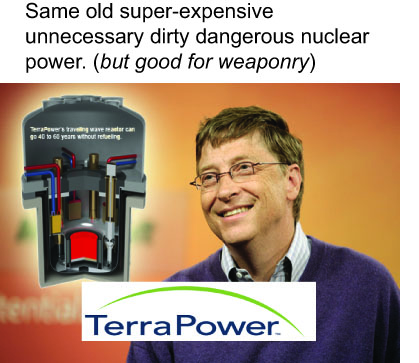
New Civil Engineer 23rd Feb 2026, By Thomas Johnson
UK regulators have been asked to begin a formal assessment of the Natrium nuclear reactor design developed by US company TerraPower.
The Department for Energy Security and Net Zero (DESNZ) told the Office for Nuclear Regulation (ONR), the Environment Agency and Natural Resources Wales to prepare for a Generic Design Assessment (GDA) of the sodium-cooled fast reactor after a readiness review concluded the design is prepared to enter the regulatory process. The GDA will not start until the regulators have agreed timetables and resourcing.
The GDA is a multi-year scrutiny process in which regulators examine the safety, security and environmental arrangements for a reactor design before any site-specific consents or construction are made. It has been used for previous new-build designs and is intended to give investors and potential operators clearer regulatory certainty.
TerraPower, co-founded by Microsoft’s Bill Gates, is developing the Natrium design as part of a US public–private partnership. The company’s first demonstration plant is being built with support from the US Department of Energy’s Advanced Reactor Demonstration Program (ARDP). The ARDP allows up to $2bn (£1.5bn) in federal funding for the project on a 50:50 cost-share basis; TerraPower and its partners are expected to match that investment……………………………………………………………………………………
sodium-cooled reactors pose different technical and regulatory challenges to light-water designs. Liquid sodium reacts chemically with water and air, which requires specialised handling, testing and safety arrangements…………………………..
https://www.newcivilengineer.com/latest/uk-regulators-to-begin-formal-assessment-of-terrapowers-345mwe-sodium-cooled-fast-reactor-23-02-2026/
Hinkley Point C faces further delays as costs continue to mount
Hinkley Point C, the UK’s first nuclear plant in a generation, is now not expected to start generating electricity until 2030 at the earliest in yet another delay to the project.
French energy giant EDF, which has been overseeing construction on the nuclear plant, blamed the delay on lower-than-expected productivity on its major electromechanical installation programme.
The programme includes installation works such as piping, cabling and system integration for both reactor units – although only Unit 1, the first reactor, is expected to begin generating in 2030.
Unit 2 is generally expected to come online about one year after Unit 1, which suggests it will be the early 2030s based on how the project timeline is currently understood. Workers only lifted the 245-tonne steel dome onto Unit 2 in July 2025, roughly 18 months after Unit 1.
Last month, Hinkley Point C received the second and final nuclear reactor that will be welded into place in the coming years. The power station received its first nuclear reactor in 2023, which has subsequently been installed in Unit 1……………………………………………………………………………………..https://eandt.theiet.org/2026/02/23/hinkley-point-c-faces-further-delays-costs-continue-mount
The Nuclear Decommissioning Authority (NDA) group Strategy Effective from March 2026
This Strategy sets the long-term direction for how the NDA carries out its functions under the Energy Act (2004). It also provides the context for government oversight by the Department for Energy Security and Net Zero (DESNZ) and for public accountability.
NDA 23rd Feb 2026, https://www.gov.uk/government/publications/the-nda-group-strategy-effective-from-march-2026
1 This Month

of the week – Shut Down Drone Warfare!


Tell the Ukrainian Government to Drop Prosecution of Peace Activist Yurii Sheliazhenko

Petition to revoke the licensing of the Near Surface Nuclear Disposal Facility (NSDF) at Chalk River. https://www.ourcommons.ca/petitions/en/Petition/Details?Petition=e-7247
To see nuclear-related stories in greater depth and intensity – go to https://nuclearinformation.wordpress.com
-
Archives
- April 2026 (103)
- March 2026 (251)
- February 2026 (268)
- January 2026 (308)
- December 2025 (358)
- November 2025 (359)
- October 2025 (376)
- September 2025 (257)
- August 2025 (319)
- July 2025 (230)
- June 2025 (348)
- May 2025 (261)
-
Categories
- 1
- 1 NUCLEAR ISSUES
- business and costs
- climate change
- culture and arts
- ENERGY
- environment
- health
- history
- indigenous issues
- Legal
- marketing of nuclear
- media
- opposition to nuclear
- PERSONAL STORIES
- politics
- politics international
- Religion and ethics
- safety
- secrets,lies and civil liberties
- spinbuster
- technology
- Uranium
- wastes
- weapons and war
- Women
- 2 WORLD
- ACTION
- AFRICA
- Atrocities
- AUSTRALIA
- Christina's notes
- Christina's themes
- culture and arts
- Events
- Fuk 2022
- Fuk 2023
- Fukushima 2017
- Fukushima 2018
- fukushima 2019
- Fukushima 2020
- Fukushima 2021
- general
- global warming
- Humour (God we need it)
- Nuclear
- RARE EARTHS
- Reference
- resources – print
- Resources -audiovicual
- Weekly Newsletter
- World
- World Nuclear
- YouTube
-
RSS
Entries RSS
Comments RSS
 nuclear-news