What if Nuclear Deterrence was an Obsolete Concept?
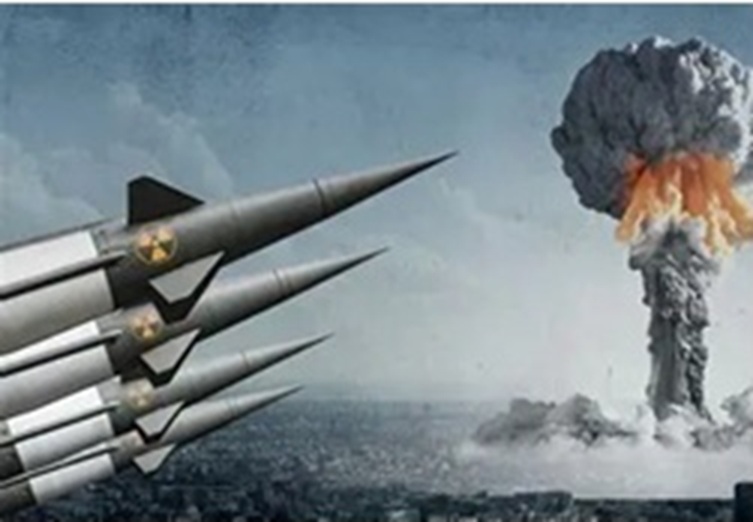
nuclear deterrence is currently an act of power, an act of domination by “those who have” over “those who have not.”
03 Apr 2024, Trends, Pierre Boussel, Researcher, Associate Fellow at the Fondation pour la Recherche Stratégique (FRS), France
The nuclear bomb is one of the few weapons in the world that can claim to have spilled more ink than blood. Thousands of books written on the subject debate the validity of the original concept of ultimate chaos deterring mankind from provoking a global conflict.[1] Its tactical and strategic raison d’être remains unresolved.
The American nuclear bombing of Japan in 1945 and the establishment of a managed nuclear world order (IAEA, NPT, UN Security Council, CTBTO)[2] have not deterred warmongers from launching invasions, starving besieged populations, committing genocide, carrying out terrorist attacks, committing war crimes or provoking humanitarian crises. Israel’s nuclear arsenal did not prevent the Yom Kippur War, the First and the Second Intifada, and the Gaza War. The Uppsala Conflict Data Program estimates that since the Hiroshima tragedy there have been 270 to 300 state and non-state conflicts worldwide.[3]
Nuclear deterrence does not bring peace. It does not prevent frontal clashes and it does not speed up peace settlements. Countries wage war despite threats like Russian President Vladimir Putin’s words, “We will use them if necessary”[4] over Ukraine. At best, conflicts are limited to what the military calls “acceptable damage.”[5] When the Russian army targets the Zaporizhzhia power station and has its bombers modified to carry nuclear warheads, the U.S. limits the firepower of weapons delivered to the Ukrainians. This means that the war will continue as is, with several hundred people killed every day, and not escalate.[6]
Assuming the Worst
The atomic bomb embodies both the desire for hyper-power and the fear of chaos, and there has been no shortage of initiatives to curb its proliferation.[7] The Treaty on the Non-Proliferation of Nuclear Weapons (NPT) came into force in 1970, signed by 191 nations. Arab countries have not been left behind. In the 1960s,[8] Egypt promoted the creation of a Middle East Nuclear-Weapon Free Zone (MENWFZ)[9] to protect the Middle East from nuclear proliferation. This did not prevent Israel from developing its first bombs at a secret site in Dimona (Beer Sheva).
In 1974, the Shah of Iran adopted the Egyptian idea of creating a nuclear weapon-free zone (ZEAN),[10] but it did not materialize. After the Israeli bombing of Iraq’s Osirak reactor,[11] several Arab chancelleries tried to resolve the issue of access to the atom. In 1991, Cairo called for a ban on weapons of mass destruction and demanded that Israel’s arsenal be exposed — in vain. It was as if the West had turned a deaf ear to Arab demands, preferring to entrust the IAEA with organizing disarmament forums and verifying suspected sites.[12] Once again, in vain: the only constant in these meetings has been, in the end, their ineffectiveness.[13]
The West has been ambivalent about nuclear energy. It has not responded to Arab diplomatic proposals and has not been very tough in condemning countries that have been tempted by military nuclear capabilities: Libya, Iraq, Syria, or Iran, whose military program was discovered by the IAEA in 2002-2003. Despite its ambivalence the West does fear insane behavior of a leader who appears ready to bring about the end of the world and considers that low and medium intensity conflicts increase the risk of escalation. The worst-case scenario for the West would be the use of tactical nuclear weapons, i.e., limited power (10 to 25 kilotons) with a ballistic capability of a hundred kilometers.[14] What would happen if the Afghan Taliban acquired tactical nuclear weapons? Would they use them against the local branch of the Islamic State group (IS-K)? How many warheads would have to be launched to defeat radical fighters hiding in deep, inaccessible mountains? What operational effectiveness would be recommended, and for what level of environmental disaster?
The West believes it can manage a war, for example, in Ukraine, because it considers itself to have the insight and maturity to avoid a nuclear conflagration. Anyone else who aspires to this capacity must demonstrate clarity and serenity to qualify for membership in the club of the powerful.
While the West enjoys the power of the atom and poor countries — suspected of being “irrational” or “slippery” — are exhausted by endless asymmetric wars, little attention is paid to India and Pakistan, two major nuclear powers fighting over control of Kashmir. This illustrates the differences in approach between the defenders of deterrence, who believe that the atom fulfills its deterrent mission and prevents the conflict from degenerating, and the detractors of deterrence, pointing out that these two countries have behaved beyond reproach. Meanwhile, Islamabad could be criticized for being unstable because of its alleged involvement in Afghanistan, and India for having mutated from Gandhian pacifism to unabashed nationalism.
The Vexation Strategy
Nuclear deterrence is, above all, vexatious, a notion too often overlooked in studies. Yet it has importance. One can imagine a country, say a poor, landlocked and indebted nation, that develops a weapon of unprecedented power — the ultimate weapon, the one that could replace all others. How would Washington, Moscow, Beijing, or Brussels react if the president of that country refused to share the new technology on the grounds that the superpowers are unreasonable and risk violating the principles of precaution and military proportionality? How would the nuclear giants react if they were deprived of this capability in the name of non-proliferation? Perhaps then the great powers would understand what it means to be offended: to be suspected of irresponsibility and forced to justify oneself and show their credentials in the vein hope of obtaining a new technology.
Access to the atom granted as a reward for good behavior raises the question of eligibility: the ability of a country to manage endogenous factors including terrorism, secessionism, and regional ambitions. This form of nuclear elitism is asserted with so much authority that we forget that the exemplarity on which the powerful pride themselves is shaky. On several occasions, humanity has come within a hair’s breadth of catastrophe. The history of nuclear power is littered with harrowing incidents: misunderstood orders that almost released chaos, technical errors corrected at the last minute (the Petrov affair), poorly applied procedures and even a simple airplane crash. On 17 January 1966, a U.S. Air Force Boeing B-52 collided with its tanker and crashed. Two of its four H-bombs spread radioactive material around the Spanish village of Palomares (250 hectares), where they fortunately fell without exploding. The United States, the world’s leading power, which never fails to show absolute intransigence on the conditions of access to nuclear energy, has lost at least six nuclear bombs.[15]………………………………………………………………………………………………………………………………………………………………………………………………………………………………
The World Atomic Order
Ultimately, the fundamental question is: what regulates access to nuclear energy, and what are the right or wrong reasons for authorizing or prohibiting its use. History tells us that the great despots — Hitler, Pol Pot, and Stalin — engaged in destructive follies that were terribly rational and attracted considerable popular support (Thomas C. Schelling).[31] Caution is therefore called for. It is not only legitimate but necessary, given the specific characteristics of nuclear energy and the devastating uses to which it can be put.[32] There is unanimity on this point.
The problem is that the nuclear world order mechanically provokes defiant reactions, like those of Iran and North Korea, two nations that have deliberately chosen to continue their clandestine nuclear enrichment programs.[33] Not only international authorities (IAEA, UN) have no means to act, but worse still, Pyongyang, for instance, is in the process of reappropriating the concept of deterrence, with no limits other than those set by itself. It has created a de facto counter-system in which it can do as it pleases with minimal risk, keeping superpowers from considering the dismantlement of their nuclear arsenals.
The discretionary power of the major powers to grant nuclear licenses, like a “delegation of authority”, to countries in urgent need of energy, creates a sense of inequality. One example is the nuclear cooperation agreement with the U.S., which operates under Article 123 of the U.S. Atomic Energy Act (AEA),[34] nicknamed the “gold standard”. Washington reserves the right to terminate agreements at the first sign of non-compliance on uranium enrichment. So even when signed, this type of agreement is only partially secure. The same is true of the IAEA, which imposes highly restrictive charters on would-be nuclear-weapon states, while Russia is suspected of developing a space-based nuclear weapon[35] likely to reignite proliferation. Add to this the New Start Treaty expiring in 2026 with no prospect of reducing arsenals, and China, which continues to grow in power. It would not take much to write that we have entered into a re-nuclearization of the strategic chessboard, a new arms race, less spectacular, less media-friendly, but one that takes us further away from the Treaty on the Prohibition of Nuclear Weapons, signed by 92 states in 2017.[36]
At the end of the Second World War, the geopolitics of the blocs was based on the concept of Melian dialogue, which postulates that justice between men is exercised when their “forces are equal.” [37] When this is not the case, “the strong exercise their power and the weak must yield.”[38] This model has been eroded in recent decades. Weaker states (Vietnam, Afghanistan) have defeated superpowers and the uncertainty factor, by definition, remains unresolved. In the 1950s, the Swedish diplomat Dag Hammarskjöld declared that the great organizations dedicated to peace were working “not to create paradise, but to avoid hell.”[39] The uncertainty factor should not be underestimated, but nuclear deterrence is currently an act of power, an act of domination by “those who have” over “those who have not.” Nuclear power is all too often seen as a lever to exert pressure on countries that are being asked to make their energy transition as quickly as possible, but to which control and non-proliferation norms are being imposed — countries that, in most cases, are simply expressing the desire to have access to nuclear energy to support their economic development. All in all, a normal request.
References………………………………………………………………………………………………………………………………….https://trendsresearch.org/insight/what-if-nuclear-deterrence-was-an-obsolete-concept/
No comments yet.
1 This Month

of the week – Shut Down Drone Warfare!


Tell the Ukrainian Government to Drop Prosecution of Peace Activist Yurii Sheliazhenko

Petition to revoke the licensing of the Near Surface Nuclear Disposal Facility (NSDF) at Chalk River. https://www.ourcommons.ca/petitions/en/Petition/Details?Petition=e-7247
To see nuclear-related stories in greater depth and intensity – go to https://nuclearinformation.wordpress.com
-
Archives
- April 2026 (7)
- March 2026 (251)
- February 2026 (268)
- January 2026 (308)
- December 2025 (358)
- November 2025 (359)
- October 2025 (376)
- September 2025 (257)
- August 2025 (319)
- July 2025 (230)
- June 2025 (348)
- May 2025 (261)
-
Categories
- 1
- 1 NUCLEAR ISSUES
- business and costs
- climate change
- culture and arts
- ENERGY
- environment
- health
- history
- indigenous issues
- Legal
- marketing of nuclear
- media
- opposition to nuclear
- PERSONAL STORIES
- politics
- politics international
- Religion and ethics
- safety
- secrets,lies and civil liberties
- spinbuster
- technology
- Uranium
- wastes
- weapons and war
- Women
- 2 WORLD
- ACTION
- AFRICA
- Atrocities
- AUSTRALIA
- Christina's notes
- Christina's themes
- culture and arts
- Events
- Fuk 2022
- Fuk 2023
- Fukushima 2017
- Fukushima 2018
- fukushima 2019
- Fukushima 2020
- Fukushima 2021
- general
- global warming
- Humour (God we need it)
- Nuclear
- RARE EARTHS
- Reference
- resources – print
- Resources -audiovicual
- Weekly Newsletter
- World
- World Nuclear
- YouTube
-
RSS
Entries RSS
Comments RSS
 nuclear-news
Leave a comment