19 February – VIRTUAL EVENT-Decision Time: AI and Our Nuclear Arsenal
12:45 p.m. Central / 1:45 p.m. Eastern https://pages.thebulletin.org/ai-in-nuclear-command-and-control?utm_source=ActiveCampaign&utm_medium=email&utm_content=Can%20the%20%22ick%20factor%22%20stop%20alt%20meat%3F&utm_campaign=20260212%20Thursday%20Newsletter
Command and control of nuclear weapons is a delicate and complicated system, designed to prevent error while ensuring reliability under high-pressure conditions. In environments where vast amounts of data shape high-stakes outcomes, artificial intelligence has become a natural consideration.
The integration of a rapidly evolving technology raises fundamental questions about responsibility, data quality, and system reliability. When a single error could have irreversible consequences, how can confidence be built around the integration of machine learning into systems that have long relied on human judgment and oversight? What guardrails should be maintained? Where are there opportunities for international collaboration and consensus?
Join the Bulletin of the Atomic Scientists and the Outrider Foundation as a group of experts examine the current state of AI in nuclear command and control, identify where the greatest risks reside, and explore the policies that must be considered now to govern this technology in the years ahead.
Shrimp with a side of cancer? Radioactive contamination is real.
by Kimberly Roberson, opinion contributor – 01/18/26,
https://thehill.com/opinion/healthcare/5692924-fda-radioactive-shrimp-threat/
The specter of radioactivity in food just reared its head again, with another shipment of imported shrimp recalled for possible Cesium-137 contamination.
The MAHA Commission 2025 report unfotunately ignored radioactivity as a possible cause of rising cancer and chronic illness. But even leaving aside nuclear accidents, studies show living near nuclear plants elevates cancer risk. Nuclear reactors generate radioactive waste and ionizing radiation, which get into the environment, contaminating air, water, soil and food.
Harmful isotopes like Cesium-137 aren’t natural; they’re made only in reactors, but persist in the environment and food for centuries. Decades after Chernobyl, for instance, researchers found Cesium-137 in meat from domestic and game animals in Poland, and in food and children’s bodies in Belarus, which caused pediatric cardiovascular disease.
Cesium-137 has a 30-year half-life but remains dangerous for 300 years, especially when ingested or inhaled. It lodges in soft tissues inside the body, irradiating cells and increasing cancer risk, according to the Centers for Disease Control and Prevention. Even very low doses have been shown to cause cancer, renal pathology and other damage.
This summer, the Food and Drug Administration issued multiple health hazard warnings about Cesium-137 detected in imported Indonesian shrimp, triggering massive recalls and worried coverage in mainstream outlets like “Martha Stewart Living.” Consumer Reports found evidence a wide swath of Indonesia’s land may be contaminated.
U.S. Sens. Bill Cassidy (R-L.) and John Kennedy (R-La.) then launched an inquiry, asking grocery chains how they will keep radioactive shrimp off their shelves. Kennedy said that eating Cesium-137-laced shrimp “will kill you. Even if doesn’t turn you into the alien from ‘Alien,’ I guarantee you’ll grow another ear.” Rep. Clay Higgins (R-La.) wrote to President Trump, calling radioactive shrimp a “significant public health threat” and asking him to pause all shrimp imports.
“Alien” shrimp penetrated public consciousness, but the radioactivity problem is much bigger. The FDA recently found radioactive cloves, and Malta customs officials found radioactive clothing, both contaminated with Cesium-137. The World Customs Organization launched “Operation Stingray” to intercept nuclear and radioactive materials, seizing 51 shipments in just three weeks.
Such action is overdue. Long before so-called “forever chemicals” or microplastics were recognized as health threats, watchdog groups were flagging the threat of radioactivity in food, especially after the 2011 Fukushima disaster. A 2013 FDA Citizen Petition demanded tighter regulation and lower allowable radioactivity levels. My organization has collected 1,600 comments and thousands of companion signatures.
Fears about radioactive fish surged in 2023 as Fukushima resumed dumping radioactive water into the Pacific. The FDA downplayed them, claiming “Cs-137 is readily excreted and does not accumulate in seafood.” But that’s a misdirection. The point is, it accumulates in our bodies when we ingest it, even in tiny amounts, according to the International Commission on Radiological Protection.
Health advocacy groups recently pointed this out in a joint letter, exhorting Kennedy and federal officials to “finally address the impact of radiation contamination of U.S. food on the trajectory of cancer and chronic illness by setting and enforcing much safer levels for Americans.” In its reply FDA demurred, calling it “unlikely that a fish exposed to significant levels of radionuclides near the [Fukushima] reactor could travel to U.S. waters and be caught and harvested.”
Yet we see evidence of consumer goods contaminated with radioactivity all around us. Instead of downplaying the problem, the FDA should tighten and enforce protective standards.
The Indonesian shrimp flagged as a health hazard had 68 becquerels of Cesium-137. The FDA’s “derived intervention level” — more of a guideline than an enforceable standard — is about 20 times higher, at 1,200 becquerels.
No level of Cesium-137 or other harmful radioactive isotopes is safe, yet Trump’s recent executive orders raise exposure limits and depart from the longstanding linear no-threshold model of radiation safety. Advocates warned the public health consequences would be severe, with women, children and fetuses worst impacted.
The standard should be, if Cesium-137 or other isotopes of concern are detectable in food items, they ought to be pulled off shelves, or at the very least labeled with warnings so consumers can make an informed decision. Unfortunately, that’s not the system we have. The importance of humility and transparency are among the lessons of Chernobyl and Fukushima, but the Trump administration is ignoring them in an explosion of hubris.
That’s nothing new; it’s deep in the nuclear culture. That 2011 International Commission on Radiological Protection report states, “There may be situations where a sustainable agricultural economy is not possible without placing contaminated food on the market. As such foods will be subject to market forces, this will necessitate an effective communication strategy to overcome the negative reactions from consumers outside the contaminated areas.”
But a communications strategy designed to soft-pedal radioactive contamination of food won’t make America healthy. Only setting and enforcing science-based standards will.
Kimberly Roberson is director of the Fukushima Fallout Awareness Network, a project of the National Institute for Science, Law and Public Policy.
Hanford begins removing waste from 24th single-shell tank.

Nuclear Newswire, Thu, Feb 12, 2026,
The Department of Energy’s Office of Environmental Management said crews at the Hanford Site near Richland, Wash., have started retrieving radioactive waste from Tank A-106, a 1-million-gallon underground storage tank built in the 1950s.
Tank A-106 will be the 24th single-shell tank that crews have cleaned out at Hanford, which is home to 177 underground waste storage tanks: 149 single-shell tanks and 28 double-shell tanks. Ranging from 55,000 gallons to more than 1 million gallons in capacity, the tanks hold around 56 million gallons of chemical and radioactive waste resulting from plutonium production at the site.
According to the Washington Department of Ecology, at least 68 of Hanford’s tanks are assumed to have leaked in the past, and three are currently leaking.
The transfer: Tank A-106 contains about 80,000 gallons of solid waste, which now are being transferred to one of the newer, double-shell tanks for continued safe storage. A-106 is one of two tanks currently undergoing retrieval operations by the Hanford Field Office and its tank operations contractor, Hanford Tank Waste Operations and Closure (H2C). In March 2025, H2C began retrieving waste from Tank A-102, a 1-million-gallon tank holding about 41,000 gallons of solid waste……………………………
Hanford’s waste tanks are organized into 18 different groups, called tank farms. The A Tank Farm, which contains six tanks, each with a million-gallon capacity, is the third farm to undergo retrieval at the site. Retrieval field operations on the farm’s first tank and Hanford’s 22nd single-shell tank, A-101, were completed last September……………………………… https://www.ans.org/news/2026-02-11/article-7751/hanford-begins-removing-waste-from-24th-singleshell-tank/
Russia says it will stick to limits of expired nuclear treaty if US does the same

Reuters, By Dmitry Antonov and Mark Trevelyan, February 12, 2026
- New START treaty expired, no binding constraints on arsenals
- Russia commits to treaty limits as long as US does
- Russia wary of costly arms race amid Ukraine conflict
MOSCOW, Feb 11 (Reuters) – Russia will keep observing the missile and warhead limits in the expired New START nuclear treaty with the United States as long as Washington continues to do the same, Foreign Minister Sergei Lavrov said on Wednesday.
The 2010 treaty ran out on February 5, leaving the world’s two biggest nuclear-armed powers with no binding constraints on their strategic arsenals for the first time in more than half a century.
U.S. President Donald Trump rejected an offer from Russian President Vladimir Putin to voluntarily abide by the New START limits for another year, saying he wanted a “new, improved and modernized” treaty rather than an extension of the old one.
“Our position is that this moratorium on our side that was declared by the president is still in place, but only as long as the United States doesn’t exceed the said limits,” Lavrov told the State Duma, Russia’s lower house of parliament.
“We have reason to believe that the United States is in no hurry to deviate from these indicators, and for the foreseeable future these indicators will be observed,” he said, without explaining the basis for that assumption
Lavrov reiterated that Russia wanted to start a “strategic dialogue” with the U.S., saying it was “long overdue”.
NEW THREAT ENVIRONMENT
New START’s expiry has spurred fears of a three-way arms race involving Russia, the U.S. and China, which has far fewer warheads than the other two countries but is arming rapidly……………………………….. https://www.reuters.com/world/russia-says-it-wont-breach-limits-expired-nuclear-treaty-if-us-does-same-2026-02-11/
Air Force urged to build 200 B-21 bombers
By Bill Gertz – The Washington Times – Thursday, February 12, 2026
Current plans for U.S. bomber forces are inadequate for winning a future conflict with China and the Air Force needs 200 new B-21 bombers to bolster the strategic bomber shortfall, according to a new report by a think tank that supports the Air Force.
The larger bomber force is needed to attack Chinese inland sanctuaries should a war break out between the U.S. and China over Taiwan or other regional allies, the report by the Mitchell Institute for Aerospace Studies stated.
The U.S. military today lacks the post-Cold War combat aircraft power for conducting Air Force strikes deep inside enemy lines and denying operational sanctuary to enemies like China and its People’s Liberation Army………………………………………………
“A strong offense is the best defense, and a war-winning U.S. campaign must include strategic attacks against China’s military leadership, command and control, and long-range combat forces that now threaten the U.S. military’s ability to operate effectively in the Western Pacific,” the report said………………………………
“B-21s in sufficient numbers are necessary to seize the operational advantage in a conflict with China,” the report said.
Additionally, the Pentagon should build at least 300 of the new, sixth-generation F-47 jets.
“At that force size, the F-47’s longer range, larger payload, and all-aspect, wideband low observability may provide the Air Force a combat advantage against China’s formidable [integrated air defense systems],” the report said. “F-47s and B-21s in combination will be able to strike any target on China’s mainland to deny sanctuary and eliminate capabilities critical to the PLA’s air and missile forces.” https://www.washingtontimes.com/news/2026/feb/12/air-force-urged-build-200-b-21-bombers/?utm_source=Boomtrain&utm_medium=subscriber&utm_campaign=threat_status&utm_term=threat_status&utm_content=threat_status&bt_ee=wjQ2GCMecOIl6%2Ftk98uhjTa%2F2aWCScEubIvYIkRk66Y0v%2FpyHece2aahuYzGEgHT&bt_ts=1770914789113
Department of War Partners With Department of Energy in Historic Nuclear Energy Initiative

U.S. Department of War, Feb. 13, 2026
The Department of War (DoW) and the Department of Energy (DoE) are partnering to mark a historic milestone in advancing America’s nuclear energy landscape and strengthening national security.
This groundbreaking collaboration with Valar Atomics is directly aligned with President Trump’s Executive Order to reshape and modernize America’s nuclear energy landscape.
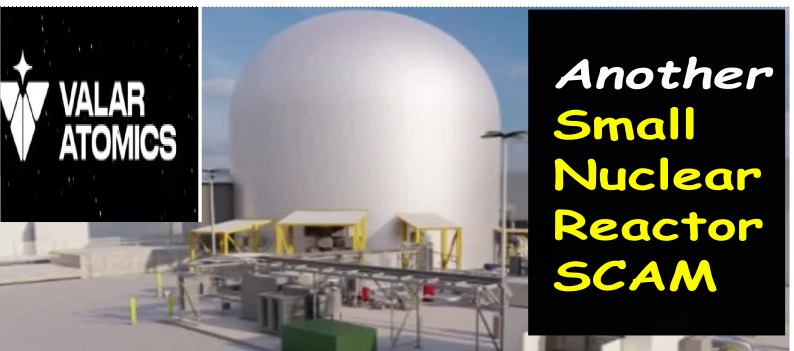
On Sunday, February 15, 2026, a next-generation nuclear reactor will be transported via C-17 from March Air Reserve Base in California to Hill Air Force Base in Utah. The reactor will then be transported to Utah San Rafael Energy Lab (USREL) in Orangeville, Utah, for testing and evaluation…………………………………………
This event is a testament to the ingenuity of the American spirit and a critical advancement in securing our nation’s freedom and strength for generations to come. https://www.war.gov/News/Releases/Release/Article/4406864/department-of-war-partners-with-department-of-energy-in-historic-nuclear-energy/
Russian nuclear agency insists it can run seized Ukrainian atomic power plant
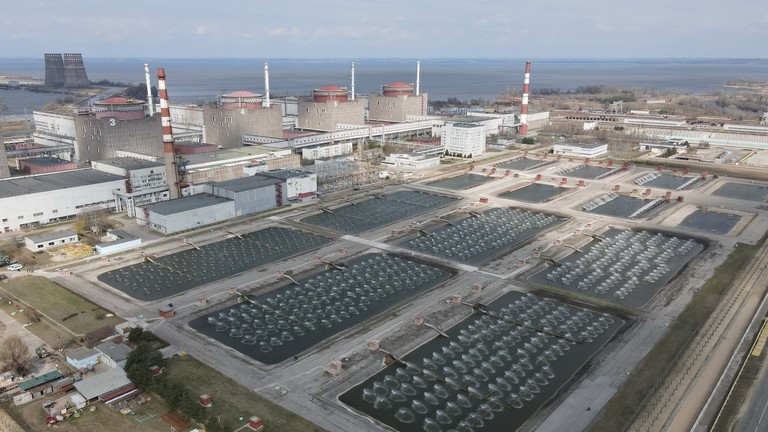
Europe’s largest atomic power station was seized by Russia from Ukraine in 2022
Guy Faulconbridge, Thursday 12 February 2026 , https://www.independent.co.uk/news/world/europe/rosatom-zaporizhzhia-plant-ukraine-russia-b2919153.html
Russia’s state nuclear corporation, Rosatom, has rejected Ukrainian accusations that it lacks the necessary equipment and components to safely operate the Soviet-built Zaporizhzhia nuclear power plant.
The claims were made by Pavlo Kovtoniuk, head of Ukraine’s state nuclear firm Energoatom, who told Reuters in Kyiv that Russia’s alleged deficiencies could lead to a nuclear accident if it attempted to restart the reactors.
Mr Kovtoniuk stated Russia lacked some equipment and spare parts to operate the plant, and risked a nuclear accident if it tried to restart the reactors.
Europe’s largest atomic power station, the facility was seized by Russia from Ukraine in 2022.
All six of its Soviet-designed VVER-1000 pressurised water reactors are currently in a “cold shutdown” state.
The plant’s future remains a critical point of contention in ongoing peace negotiations between Moscow and Kyiv, with both nations vying for control.
“Rosatom categorically rejects claims that Russia lacks the equipment and components required to ensure the safe operation of the Zaporozhskaya Nuclear Power Plant,” Rosatom said in a statement to Reuters in English when asked about the remarks.
“Russia operates one of the world’s largest nuclear fleets, including VVER-1000 units identical to those installed at Zaporozhskaya NPP, and has full capacity to produce equipment, components and nuclear fuel.”
Rosatom, ranked as one of the world’s biggest nuclear corporations in terms of nuclear construction, enrichment services and mining, said that the key issue affecting nuclear safety at the plant was continued shelling in the area.
Ukraine’s Kovtoniuk argued that control equipment and monitoring systems at the plant were Ukrainian, that Russia would have to replace US fuel in the reactors, and that there was not enough water to cool the reactors if restarted.
“Insinuations implying that the plant’s systems are incompatible with Russian fuel are technically unfounded,” Rosatom said, adding that in late 2025, reactor No. 1 received a 10-year operating licence from Russia’s nuclear safety authority, Rostechnadzor.
Rosatom said the plant’s cooling system had never depended exclusively on the Kakhovka reservoir, adding that the cooling pond used a closed-loop system and had sufficient water.
Trump warns Iran of ‘very traumatic’ outcome if no nuclear deal

Al Arabiya English, 13 Feb 26
US President Donald Trump threatened Iran Thursday with “very traumatic” consequences if it fails to make a nuclear deal – but Israeli Prime Minister Benjamin Netanyahu said he was skeptical about the quality of any such agreement.
Speaking a day after he hosted Netanyahu at the White House, Trump said he hoped for a result “over the next month” from Washington’s negotiations with Tehran over its nuclear program.
“We have to make a deal, otherwise it’s going to be very traumatic, very traumatic. I don’t want that to happen, but we have to make a deal,” Trump told reporters.
“This will be very traumatic for Iran if they don’t make a deal.”
Trump – who is considering sending a second aircraft carrier to the Middle East to pressure Iran – recalled the US military strikes he ordered on Tehran’s nuclear facilities during Israel’s 12-day war with Iran in July last year.
“We’ll see if we can get a deal with them, and if we can’t, we’ll have to go to phase two. Phase two will be very tough for them,” Trump said.
Netanyahu had traveled to Washington to push Trump to take a harder line in the Iran nuclear talks, particularly on including the Islamic Republic’s arsenal of ballistic missiles.
But the Israeli and US leaders apparently remained at odds, with Trump saying after their meeting at the White House on Wednesday that he had insisted the negotiations should continue……………………………………
Despite their differences on Iran, Trump signaled his strong personal support for Netanyahu as he criticized Israeli President Isaac Herzog for rejecting his request to pardon the prime minister on corruption charges.
“You have a president that refuses to give him a pardon. I think that man should be ashamed of himself,” Trump said on Thursday.
Trump has repeatedly hinted at potential US military action against Iran following its deadly crackdown on protests last month, even as Washington and Tehran restarted talks last week with a meeting in Oman.
The last round of talks between the two foes was cut short by Israel’s war with Iran and the US strikes.
So far, Iran has rejected expanding the new talks beyond the issue of its nuclear program. Tehran denies seeking a nuclear weapon, and has said it will not give in to “excessive demands” on the subject. https://english.alarabiya.net/News/middle-east/2026/02/12/trump-says-failure-to-make-deal-will-be-very-traumatic-for-iran
1 This Month

of the week – Shut Down Drone Warfare!


Tell the Ukrainian Government to Drop Prosecution of Peace Activist Yurii Sheliazhenko

Petition to revoke the licensing of the Near Surface Nuclear Disposal Facility (NSDF) at Chalk River. https://www.ourcommons.ca/petitions/en/Petition/Details?Petition=e-7247
To see nuclear-related stories in greater depth and intensity – go to https://nuclearinformation.wordpress.com
-
Archives
- March 2026 (237)
- February 2026 (268)
- January 2026 (308)
- December 2025 (358)
- November 2025 (359)
- October 2025 (376)
- September 2025 (257)
- August 2025 (319)
- July 2025 (230)
- June 2025 (348)
- May 2025 (261)
- April 2025 (305)
-
Categories
- 1
- 1 NUCLEAR ISSUES
- business and costs
- climate change
- culture and arts
- ENERGY
- environment
- health
- history
- indigenous issues
- Legal
- marketing of nuclear
- media
- opposition to nuclear
- PERSONAL STORIES
- politics
- politics international
- Religion and ethics
- safety
- secrets,lies and civil liberties
- spinbuster
- technology
- Uranium
- wastes
- weapons and war
- Women
- 2 WORLD
- ACTION
- AFRICA
- Atrocities
- AUSTRALIA
- Christina's notes
- Christina's themes
- culture and arts
- Events
- Fuk 2022
- Fuk 2023
- Fukushima 2017
- Fukushima 2018
- fukushima 2019
- Fukushima 2020
- Fukushima 2021
- general
- global warming
- Humour (God we need it)
- Nuclear
- RARE EARTHS
- Reference
- resources – print
- Resources -audiovicual
- Weekly Newsletter
- World
- World Nuclear
- YouTube
-
RSS
Entries RSS
Comments RSS
 nuclear-news