The non-corporate nuclear-related news this week
Some bits of good news
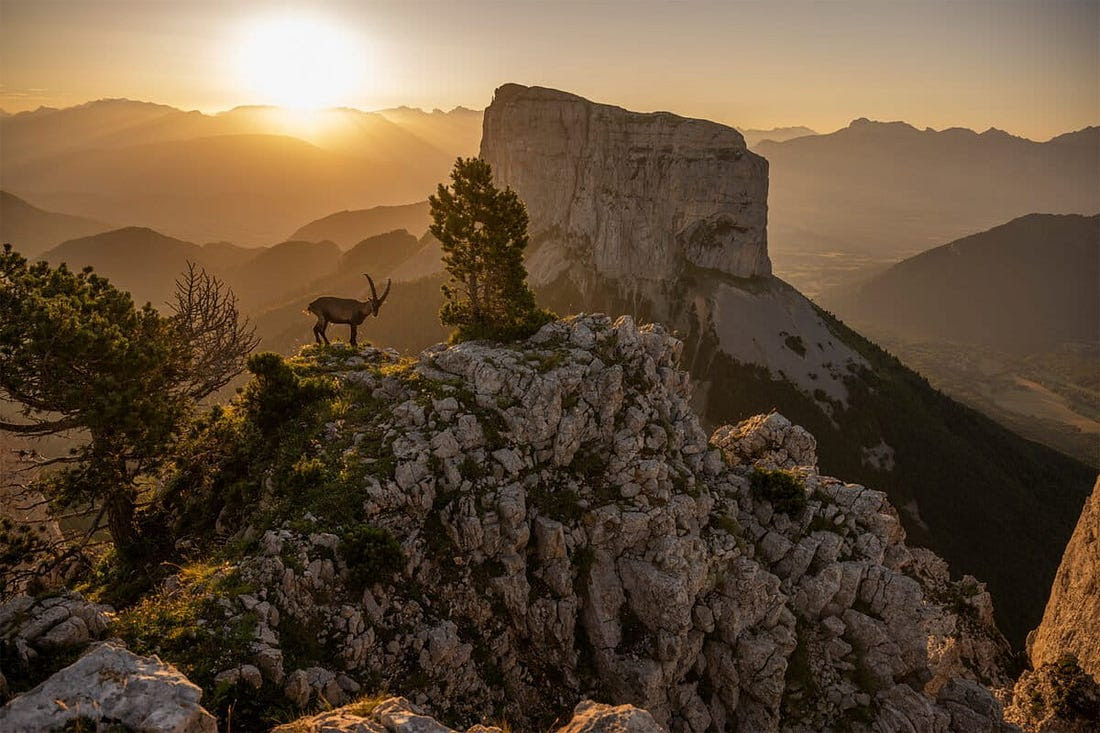
France launches its largest ever rewilding project in the Dauphiné Alps.
Chile’s dark skies look set to stay that way.
Colombia Cedes Vast Amazon Land to Indigenous Peoples as Deforestation Surges
TOP STORIES.
As Landmark Treaty Expires, No Binding Limits on US-Russia Nuclear Arsenals.
The right to have nukes.
The Future of Los Alamos Lab: More Nuclear Weapons or Cleanup?
If You Think Our Rulers Do Bad Things In Secret, Wait Til You See What They Do Out In The Open.
Left to Bleed: How Israeli Forces Treat the Killing of Palestinian Children as Routine.
WANTED: Volunteers to host nuclear waste, forever.
Climate. These US states want polluters to pay for the rising insurance costs of climate disasters.
Noel’s notes. The complex, long-form writers – but is anybody listening?
AUSTRALIA. Aussie Flotilla Team to Gaza Announced. . In Australia The Police Beat You Up For Opposing Genocide. Selective context: Why Isaac Herzog’s visit deepens Australia’s moral failure. Albanese v Albanese.
For more see Australian nuclear-related news this week
NUCLEAR-RELATED ITEMS
| ATROCITIES. Israel Destroyed Gaza’s Hospitals – Now It’s Banning Doctors Without Borders. |
| ECONOMICS. Electricity: A confidential EDF report anticipates an explosion in costs and risks. |
| EMPLOYMENT. Nuclear weapons workers vote for strike action. Dounreay workers among 200 allowed to leave Nuclear Restoration Services’ UK in early exit scheme |
| ENERGY. Nuclear Power –A White Elephant in the Energy Debate. |
| ENVIRONMENT ‘Green laws hold up nuclear plans —but we can’t say where’– ALSO AT https://nuclear-news.net/2026/02/14/4-b1-green-laws-hold-up-nuclear-plans-but-we-cant-say-where/ A Business Necessity: Align With Nature or Risk Collapse, IPBES Report Warns. Trump nixes nukes from environmental reviews. £700m plan with ‘fish disco’ could save 90% of marine life, says Hinkley Point C study. New Mexico Environment Department Takes Necessary Action on Los Alamos National Laboratory’s Hexavalent Chromium Plume. |
| ETHICS and RELIGION. Rot at the Top: The Elite’s Darkest Secrets Spill Out. |
| EVENTS. 19 February – VIRTUAL EVENT-Decision Time: AI and Our Nuclear Arsenal |
| HEALTH. Residential proximity to nuclear power plants and cancer incidence in Massachusetts, USA (2000–2018). |
| INDIGENOUS ISSUES. Submissions to the Federal Court of Appeal about UN Declaration on the Rights of Indigenous Peoples (UNDRIP) .Sizewell C opponents to appeal High Court decision. Palestine Action protesters found not guilty of Elbit burglary. |
| MEDIA. Leading PapersCall for Destroying Iran to Save It. Whitehaven’s Polluted Harbour is “Riviera of the North” NuSpeak Lives. |
| OPPOSITION to NUCLEAR . An environmental coalition defends Environmental Justice (EJ) against the Canadian Nuclear Waste Management Organization’s (NWMO) latest Deep Geological Repository (DGR) scheme. |
- Is the UK keeping up with the nuclear revival? – ALSO AT https://nuclear-news.net/2026/02/14/4-b1-is-the-uk-keeping-up-with-the-nuclear-revival/ REVEALED: Labour said Scottish nuclear study could be seen as ‘waste of money’.
- France slashes renewable energy targets, expands nuclear power with new law.
- Japan Restarts Nuclear Power at Kashiwazaki Kariwa After 14 Years. Japan to restart world’s biggest nuclear plant on Monday.
- The West Bank- Israel’s atrocities in clear sight, but out of mind.
- Sixth Trump meeting with his de facto boss…good day to fire him.
- Our Leaders Couldn’t Fix Our Problems If They Wanted To (And They Don’t Want To). US Military Helping Trump to Build Massive Network of ‘Concentration Camps,’ Navy Contract Reveals.
POLITICS INTERNATIONAL and DIPLOMACY.
- Russia says it will stick to limits of expired nuclear treaty if US does the same.
- Without an economic reset with Russia, a peace deal for Ukraine may render Britain and Europe weakened relics of a unipolar past.
- Collapsing Empire:US Bows To African Revolutionaries.
- Bad Beginnings:The End of New START. Last arms control treaty expires.
- Iran’s Comprehensive Peace Proposal to the United States. Trump warns Iran of ‘very traumatic’ outcome if no nuclear deal. Trump is not threatening war on Iran over its nuclear program, but because it challenges U.S. dominance. Has Trump been trumped by large, powerful, resolute Iran? Why Iran–US negotiations must move beyond a single-issue approach to the nuclear problem. Iran offers to dilute enriched uranium in exchange for full sanctions relief. Iran suggests it could dilute highly enriched uranium for sanctions relief.
| RADIATION. Shrimp with a side of cancer? – Radioactive contamination is real. |
| SAFETY. Russian nuclear agency insists it can run seized Ukrainian atomic power plant. France must start to plan nuclear closures – safety chief. |
| SECRETS and LIES. UK ignores corruption scandals when awarding major military contracts. |
| SPACE. EXPLORATION, WEAPONS. Hegseth calls for U.S. space dominance. |
| SPINBUSTER. Ontario – Lecce’s nuclear spin –and the $3.3 billion he forgot to mention EDF makes distorted claims about Hinkley C fish deterrent. |
| TECHNOLOGY. US campaign puts case for disposal, not reprocessing, of used nuclear fuel. |
| WASTES. Hanford begins removing waste from 24th single-shell tank. |
WAR and CONFLICT.
- 66 years after France’s firstnuclear test in Algeria, justice is still denied.
- Eight Decades Later, It Remains One World or None. On the road to nuclear war. The risk of nuclear war is rising again- We need a new movement for global peace.
- Over 2,000 Britons served for Israel amid Gaza genocide.
- The Calculus of Conflict: How Russia’s Military Doctrine is Reshaping Modern Warfare .
- Department of War Partners With Department of Energy in Historic Nuclear Energy Initiative.
- Uncharted Nuclear Territory. People Are Not Upset Enough About the End of New START
- The 24-site US military network in Britain worth £11 billion.
The Future of Los Alamos Lab: More Nuclear Weapons or Cleanup?
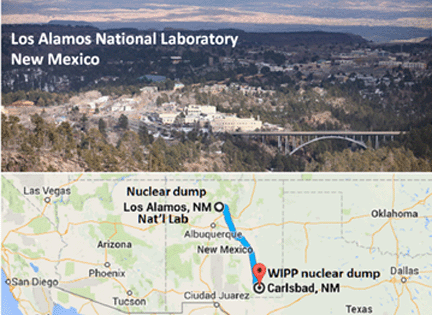
New Mexico Environment Department Issues Corrective Action Order
February 11, 2026, Jay Coghlan, lScott Kovac, nukewatch.org
Santa Fe, NM – In its own words, “The New Mexico Environment Department [NMED] issued several actions today to hold the U.S. Department of Energy accountable for failing to prioritize the cleanup of Los Alamos National Laboratory’s “legacy waste” for disposal at the Waste Isolation Pilot Plant.”
Amongst these actions is an Administrative Compliance Order designed to hasten cleanup of an old radioactive and toxic waste dump that should be the model for Lab cleanup. Nuclear Watch New Mexico strongly supports NMED’s aggressive efforts to compel comprehensive cleanup given Department of Energy obstruction.
This Compliance Order comes at a historically significant time. On February 5 the New Strategic Arms Reduction Treaty expired, leaving the world without any arms control for the first time since the middle 1970s. The following day the Trump Administration accused China of conducting a small nuclear weapons test in 2020, possibly opening the door for matching tests by the United States.
NMED’s Compliance Order comes as LANL’s nuclear weapons production programs are radically expanding for the new nuclear arms race. The directors of the nuclear weapons laboratories, including LANL’s Thom Mason, are openly talking about seizing the opportunity provided by the Trump Administration’s deregulation of nuclear safety regulations to accelerate nuclear warhead production.
As background, in September 2023 NMED released a groundbreaking draft Order mandating the excavation and cleanup of an estimated 198,000 cubic meters of radioactive and toxic wastes at Material Disposal Area C, an old unlined dump that last received wastes in 1974. However, in a legalistic maneuver to evade real cleanup, DOE unilaterally declared that Area C:
“…is associated with active Facility operations and will be Deferred from further corrective action under [NMED’s] Consent Order until
it is no longer associated with active Facility operations.”
The rationale of DOE’s semi-autonomous nuclear weapons agency, the National Nuclear Security Administration (NNSA), is that Area C is within a few hundred yards of the Lab’s main facility for plutonium “pit” bomb core production. LANL is prioritizing that production above everything else while cutting cleanup and nonproliferation programs and completely eliminating renewable energy research. DOE’s and NNSA’s unilateral deferment of Area C until it “is no longer associated with active Facility operations” in effect means that it will never be cleaned up. No future plutonium pit production is to maintain the safety and reliability of the U.S.’ existing nuclear weapons stockpile. Instead, it is all for new design nuclear weapons for the new arms race that the NNSA intends to produce until at least 2050. Further, new-design nuclear weapons could prompt the United States to resume full-scale testing, which would have disastrous international proliferation consequences.
To break up the legalistic log jam around cleanup of Area C, NMED’s new Administrative Compliance Order orders DOE, NNSA, and their contractors to:
1) Provide within 30 days specific justifications for their unilateral “deferment” of an old radioactive and toxic waste dump from cleanup; and
2) Rescind their withdrawal of a 2021 “Corrective Measures Evaluation” (CME) which proposed possible cleanup methods. DOE had claimed that withdrawing the CME had mooted any legal basis for NMED to mandate comprehensive cleanup at LANL.
The Lab’s budget for nuclear weapons programs that caused the need for cleanup has more than doubled over the last decade, with a one billion dollar increase in this year alone. Nevertheless, DOE et al want cleanup on the cheap. Their plan is to “cap and cover” existing wastes, leaving them permanently buried in unlined pit and trenches as a perpetual threat to groundwater.
Ironically, there is no current need for pit production. In 2006 independent experts concluded that plutonium pits have serviceable lifetimes of at least 100 years (their average age now is ~43). Moreover, at least 20,000 existing pits are already stored at the NNSA’s Pantex Plant near Amarillo, TX.
Pit production is the NNSA’s most complex and expensive program ever. It will likely cost more than $60 billion over the next 25 years, exceeding the cost of the original Manhattan Project that designed and built a plutonium pit from scratch. However, the independent Government Accountability Office has repeatedly concluded that the NNSA has no credible cost estimates and no “Integrated Master Schedule” for planned redundant pit production at LANL and the Savannah River Site in South Carolina
In addition, it’s not clear where an estimated 57,500 cubic meters of radioactive transuranic wastes from future pit production will go. DOE is fundamentally changing the cleanup mission of the only existing permanent repository, the Waste Isolation Pilot Plant (WIPP) in southern New Mexico, to become the dumping ground for new nuclear bomb production. However, WIPP is already oversubscribed for all of the radioactive wastes that DOE wants to send to it. Moreover, NMED has previously ordered DOE to prioritize disposal of LANL’s Cold War wastes at WIPP (which it is not doing) and to begin looking for a new out-of-state waste dump, which will be politically controversial.
In all, NNSA’s expanded plutonium pit production is so plagued with problems that the DOE Deputy Secretary ordered a “special assessment” of the program completed by December 8, 2025. However, it is still not publicly available.
LANL and DOE have a long history of deception concerning contamination and cleanup. In 1992 a Lab pamphlet was inserted into the Sunday edition of The New Mexican newspaper which claimed that plutonium from LANL had never been found in the Rio Grande. This was despite the fact that a 1987 study detected Lab plutonium 17 miles south down the Rio Grande in Cochiti Lake, a popular recreational site.
As late as the late 1990s LANL was claiming that groundwater contamination was impossible, going so far as to request a waiver from even having to monitor for it (fortunately denied by NMED). Today we know of a massive hexavalent chromium plume whose size is still not known that has migrated onto San Ildefonso Pueblo lands (Lab maps showed it stopping at exactly the Pueblo border). Plutonium, high explosives and perchlorates have all been detected in groundwater. A 2005 hydrogeological study concluded that “Future contamination at additional locations is expected over a period of decades to centuries as more of the contaminant inventory reaches the water table.”
In 2018 DOE was falsely claiming that cleanup at the Lab was more than half complete. In Nuclear Watch New Mexico’s view, genuine cleanup of LANL has yet to begin. It will start with a final Order by NMED to DOE mandating excavation and treatment of the radioactive and toxic wastes at Area C. Lab-wide comprehensive cleanup is the only sure way to protect New Mexico’ life-sustaining groundwater and will provide hundreds of long-term, high paying jobs.
Jay Coghlan, Director of Nuclear Watch New Mexico, commented: “What is more important to New Mexicans, clean, uncontaminated groundwater or more nuclear weapons for the accelerating global arms race? We salute NMED’s efforts under the leadership of Secretary James Kenney to hold the Lab accountable and make it genuinely clean up. This enforcement action is a crucial step toward reining in Lab contamination. But it is also a global step in forcing the Los Alamos Lab to focus on cleanup instead of the buildup of nuclear weapons for another arms race that threatens us all.”
The right to have nukes
by beyondnuclearinternational, https://beyondnuclearinternational.org/2026/02/11/the-right-to-have-nukes/
No country should have nuclear weapons, but the ones that do should disarm first before telling others they can’t have them, writes Linda Pentz Gunter
The trouble with telling Iran it can’t have nuclear weapons is, look who’s doing the talking. The United States, which, with more than 5,000 nuclear weapons, has the second largest inventory in the world behind Russia. And Israel, an undeclared nuclear weapons nation with anywhere from 80 to 200 bombs. Israel is actually allowed to maintain the disingenuous position of “nuclear opacity” within the UN, neither confirming nor denying its nuclear arsenal.
This is despite the fact that the UN General Assembly adopts a resolution every year calling on Israel to renounce possession of nuclear weapons and to place its nuclear facilities under international supervision, something the Jerusalem Center for Security and Foreign Affairs, equally disingenuously describes as “the annual three-month ‘Israel-bashing’ festival”.
Since we know that US President Trump doesn’t actually care whether or not the Iran government is shooting demonstrators in the streets, especially given he is quite happy for his own Homeland Security to do it here —albeit in not nearly as high numbers, or not yet — we must reckon with the other motivations for continuing to threaten Iran. And one of those is absolutely about stopping Iran from developing the bomb.
There is further irony here, because, unlike nuclear-armed Israel, non-nuclear armed Iran is a signatory to the nuclear Non-Proliferation Treaty (NPT). And unlike the US, Iran so far appears to have abided by its terms. Article IV — one of the major flaws of the treaty as Iran perfectly exemplifies — gives signatories the “inalienable right” to develop nuclear power as long as they don’t transition to nuclear weapons development. Article VI demands that the nuclear-armed nations pursue negotiations in good faith on effective measures relating to cessation of the nuclear arms race at an early date and to nuclear disarmament.
Iran could argue that it is abiding by Article IV. The US clearly cannot make the case that it is abiding in any way by Article VI. On the contrary, with the collapse last week of the New START Treaty, the last surviving nuclear arms reduction treaty between the US and Russia, both countries could now significantly ramp up their respective arsenals.
According to a statement put out last week by International Physicians for the Prevention of Nuclear War, which won the Nobel Peace Prize back in 1985, these increases could happen by uploading additional warheads on each country’s existing long-range missiles. This would mark the first increase in the sizes of their deployed nuclear arsenals in more than 35 years. According to independent estimates, Moscow and Washington could double the number of strategic deployed warheads without New START.
Iran’s nuclear facilities were seemingly pulverized by the provocative bombing raids carried out by Israel and the US last June. But they were no means completely “obliterated”, as Trump claimed. New satellite imagery suggests there is currently considerable activity at the Iranian nuclear sites, but some of these appear to be simple repairs such as the rebuilding of roofs and other structures destroyed in the attacks. There is more activity, according to analysis of the satellite images by the New York Times, at conventional missile sites, presumably in anticipation of another attack by Israel and/or the US.
Iran has and may well continue to insist it is developing its uranium enrichment capabilities for a civil nuclear program. And that could be true. Or not. The level to which it has lately been enriching uranium — to at least 60 percent and possible higher — before first Israel and then the US bombed its nuclear facilities, puts it in that gray area of weapons-usable rather than weapons-grade uranium enrichment. All this points once again the flaw in the NPT that continues to hand back the keys to the nuclear weapons lab by encouraging the development of nuclear power.
A delegation from the White House went to Oman last Friday to negotiate a new nuclear deal with Iran, even though it was Trump’s own regime back in 2018 that destroyed the perfectly workable Iran nuclear deal — known as the Joint Comprehensive Plan of Action — that had been in place up until then.
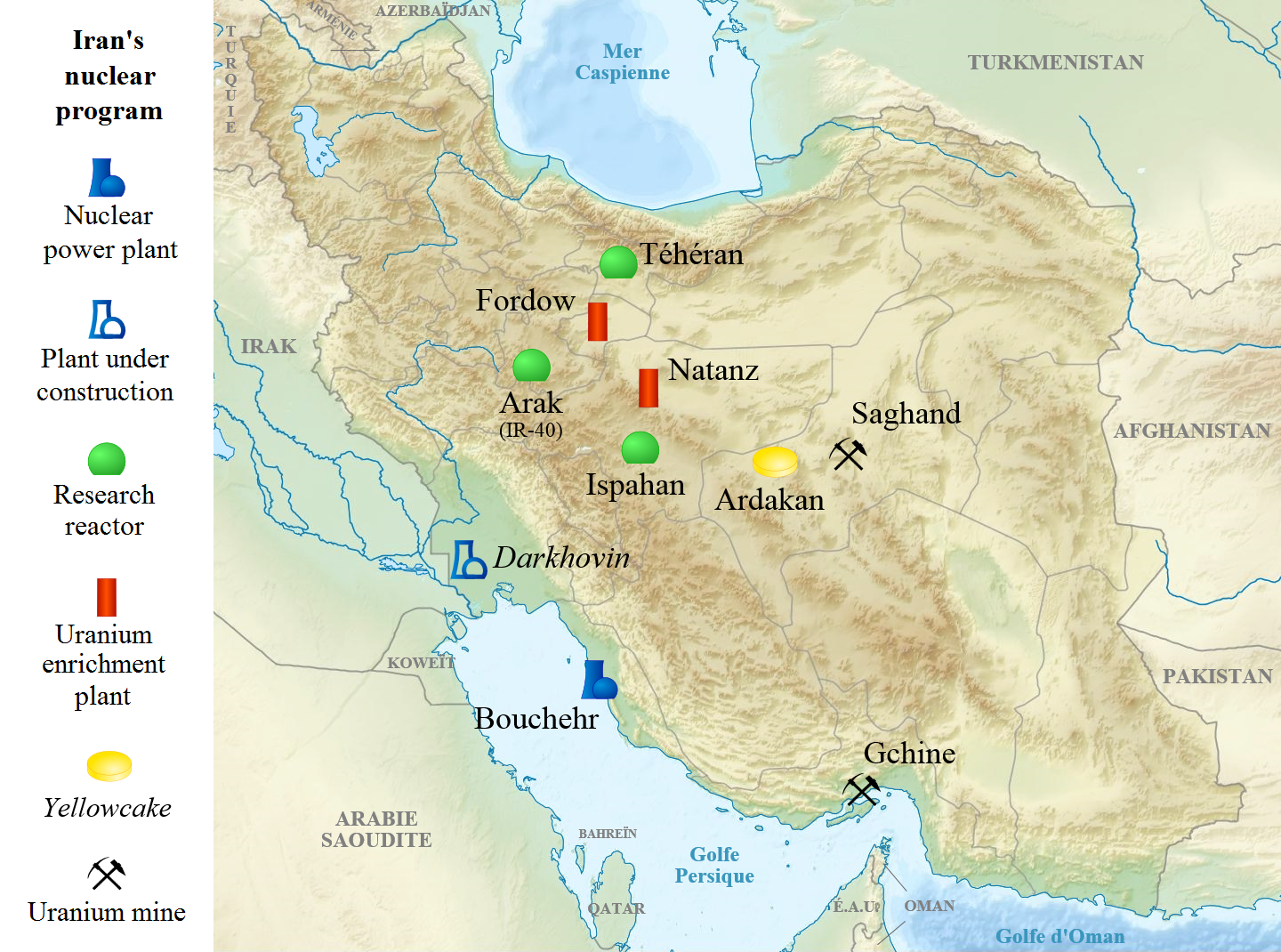
The negotiating team was led by Steve Witkoff and Jared Kushner. Witkoff is Trump’s Middle East Envoy but Kushner has no official position within the US government and no actual qualifications, other than an unsavory and predatory zeal about beachfront property — Iran has 5,800 km of coastline along the Caspian Sea, the Persian Gulf and Sea of Oman.
Should Iran have nuclear weapons? Of course not. But that also goes for the nine nations who do. And they should be the first to disarm before any demands are made elsewhere.
Linda Pentz Gunter is the founder of Beyond Nuclear and serves as its international specialist. Her book, No To Nuclear. Why Nuclear Power Destroys Lives, Derails Climate Progress and Provokes War, can be pre-ordered now from Pluto Press
A Business Necessity: Align With Nature or Risk Collapse, IPBES Report Warns
IPS News, By Busani Bafana, February 13, 2026
BULAWAYO, Zimbabwe & MANCHESTER, United Kingdom, Feb 9 2026 (IPS) – Business can still remain profitable while protecting the environment but invest in nature-positive operations, says a landmark report by the Intergovernmental Platform on Biodiversity and Ecosystem Services (IPBES), which finds that global companies have contributed to the escalating loss of biodiversity.
The IPBES Methodological Assessment Report on the Impact and Dependence of Business on Biodiversity and Nature’s Contributions to People, known as the Business and Biodiversity Report, says global business has benefited from nature but has immensely contributed to the decline in biodiversity. It is time it changes how it does business because biodiversity decline is a “critical systemic risk threatening the economy, financial stability, and human well-being.”
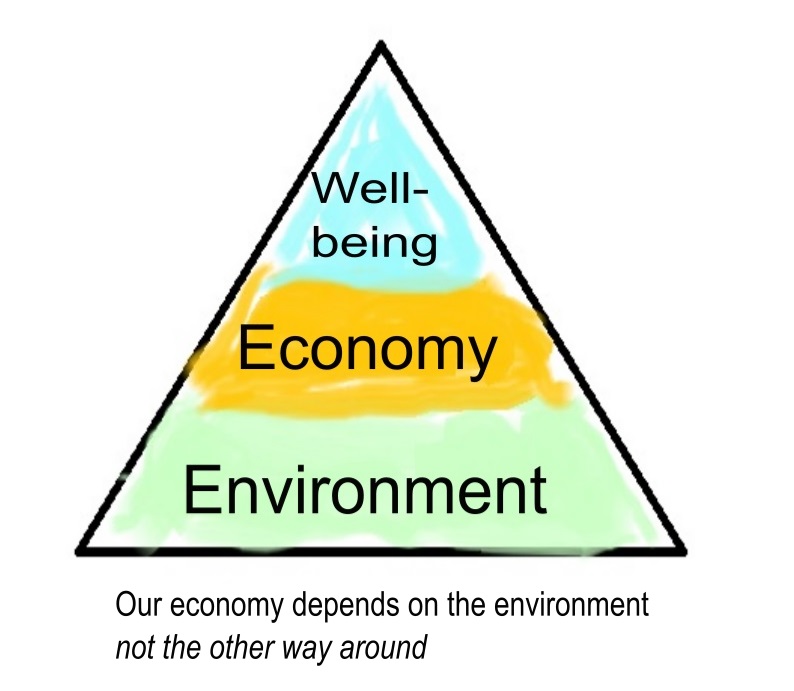
The global economy, driven by business, is dependent on healthy biodiversity and nature for materials, climate regulation, clean water, and pollination. However, the current economic system treats nature as free and infinite, creating perverse incentives for its exploitation. Businesses are largely rewarded for short-term profit, even when their activities degrade the natural systems they rely on, creating a huge risk to the economy and society, the report said.
It Must Be Business Unusual Now
Approved at the recent 12th session of the IPBES Plenary, held in Manchester, United Kingdom, the report calls for the end of business as usual. Global businesses, heavily dependent on nature and impacted by nature, must quickly change their operations or face collapse.
“Businesses and other key actors can either lead the way towards a more sustainable global economy or ultimately risk extinction… both of species in nature but potentially also their own,” noted the report.
Based on thousands of sources and prepared over three years by 79 leading experts from 35 countries from all regions of the world, the report is the first assessment of the impacts and dependencies of business on biodiversity and nature’s contributions to people.
Current conditions perpetuate business as usual and do not support the transformative change necessary to halt and reverse biodiversity loss, said the report, pointing out that large subsidies that drive biodiversity losses are directed to business activities with the support of businesses and trade associations………………………………………………………………………………………………………………………………………………………………………………………………………………
An Enabling Environment Is Good for Biodiversity
The report offers a key solution of creating a new “enabling environment” where what is profitable for business aligns with what is good for biodiversity and society. Current conditions — laws, financial systems, corporate reporting rules, and cultural norms — do not reward businesses for protecting nature.
There are many barriers to protecting nature, such as the focus on short-term profits versus long-term ecological cycles. In addition, there is a lack of mandatory disclosure and accountability for environmental impacts, inadequate data, metrics, and capacity within the business community, as well as the failure to integrate Indigenous and local knowledge in biodiversity protection.
The creation of an enabling environment needs coordinated action policy and legal frameworks where governments should integrate biodiversity into all trade and sectoral policies. Besides, there is a need to redirect the USD 7.3 trillion in harmful flows using taxes, green bonds, and sustainability-linked loans to reward positive action.
Businesses must engage with Indigenous Peoples and local communities with Free, Prior, and Informed Consent (FPIC), while access to and sharing of location-specific data on business activities and biodiversity should be improved. Leverage technology such as remote sensing and artificial intelligence for better monitoring and traceability across business supply chains………………………………………………………………………………………………………………………………………….
The report underscored that we cannot business-as-usual our way out of the biodiversity crisis. Governments need to stop incentivising the destruction of biodiversity and start rewarding environmental stewardship. Besides, business leaders should now integrate natural capital accounting into their business strategy to disclose their environmental footprint while contributing to a positive global economy.
The evidence is clear: our economic prosperity is inextricably linked to nature’s health, and we are severing that vital link at our peril.
The West Bank. Israel’s atrocities in clear sight, but out of mind
by Ben Bohane | Feb 7, 2026 , https://michaelwest.com.au/the-west-bank-israels-atrocities-in-clear-sight-but-out-of-mind/
While the world has focussed on the atrocities in Gaza, Israel continues its support of illegal settlements, hostility and apartheid in the West Bank. Ben Bohane reports from Bethlehem.
We are no more than 5 minutes out of Bethlehem on a crisp December morning when my Palestinian driver – let’s call him Ahmed – stops and points to a curl of smoke rising in the valley below, near Beit Jala.
“That’s a local restaurant the Israeli’s are burning since last night. They demand permits even when it is on family land. Israel then gives demolition orders, and no one can stop them.”
It’s the day before Christmas. I’m in the West Bank and Israel for a month to see the situation for myself, to try and understand how this comparatively small area continues to hijack history and our news agenda. Gaza remains off-limits to all foreign media attempting to report on Israel’s genocide there, so I can’t go.
The international Committee to Protect Journalists (CPJ) states 249 media personnel have been killed so far by Israel in Gaza, Yemen, Lebanon, Israel and Iran since the Gaza war began.
“Israel has killed more journalists in the past three years than any other government in history,“
assassinating more than all media personnel killed in all the wars of the 20th century combined.
Israel has also now banned many reputable international NGOs from operating there. In late January, the IDF finally acknowledged the death toll tally compiled by Palestinian health authorities as accurate, saying it believed 71,000 people had been killed so far.
I’ve come to the other front, the West Bank, as Israeli settlers and the IDF establish new illegal settlements and make life difficult for Palestinians just trying to eke out a living.
While I’m there, Israel announces 19 new settlements, bringing to 69 the number of new settlements approved in the past few years.
They are slowly circling and strangling Palestinian towns by taking the high ground on hilltops, establishing their own roads to link up with other settlements, and destroying ancient olive groves which locals have long relied on for a meagre income. Some of these trees are many hundreds of years old, and their desecration seems somehow symbolic of Israel’s attempts to change history and geography.
“We are trapped here”, says Ahmed. “Ever since October 7, Israel has closed off our access to Jerusalem and the rest of Israel. A lot of businesses are struggling to survive after 5 years of shutdowns – first it was Covid, and then the Gaza war. No tourists for years.”
Unless they are employed in one of a handful of jobs, such as in hospitals or working for a Christian organisation, Palestinians in the West Bank can’t leave. Denied both Palestinian statehood and Israeli citizenship,
“West Bank Palestinians are caught in a limbo where they can’t travel into wider Israel or beyond.“
“Israel controls all our movements, all our water, and controls our petrol supply”, says Ahmed. “The only thing they don’t control is the air we breathe, and if they could control that, they would.”
Bulldozer warfare
We visit a home recently bulldozed by settlers and fields uprooted because they were considered too close to the expanding nearby Israeli settlement of Beitar Illit. As locals lose access to their olive orchards, the only trees safe are those within towns or around their homes. I see a young boy with a wheelbarrow full of seedlings and uprooted olive saplings moving towards a nearby field. Ahmed translates:
“The boy says that part of their resistance is to immediately replant the olive trees when settlers chop them down. The olives aren’t just an income for us, they are part of our identity on this land.”
We have to be quick when visiting the contested edges of these towns and fields, as settlers are always watching from nearby hilltops and the IDF can be on scene in less than 5 minutes. On two occasions, my driver yells to get us back in the car for a hurried exit when he spots settlers driving down to intercept us.
Returning to Bethlehem, the annual Christmas parade is underway. Hundreds of Palestinian, Arab and Armenian Christians in uniforms march along roads leading to Manger Square in the heart of Bethlehem. Palestinian Authority police guard the route and Churches, including the Orthodox Basilica of the Nativity, first begun by Emperor Constantine’s Christian mother, Saint Helena, in the 4th century. Under this Byzantine church is a grotto where Jesus was supposedly born.
This is the first time in two years that Christmas celebrations, including a huge Christmas tree, have taken place. With few foreign tourists, shops in Bethlehem are happy to see many Muslim families from across the West Bank visiting with children to see Santa and the holy sites. It’s a peaceful time with Christian and Muslim families celebrating together.
I met Father Issa Thaljieh, a Palestinian (Greek Orthodox) priest overseeing the Basilica. ‘Issa’ is the Muslim name for Jesus. He says the number of Christians continues to dwindle, from 10% of the Palestinian population during the British mandate period 100 years ago, to around 1% today. Most live overseas now, with Israel incentivising their departure.
Apartheid
One thing I hadn’t known until I came here is that Israelis are forbidden from entering any West Bank towns. At the entrance to many towns I visited, including Jericho and Bethlehem, are large road signs in red warning Israeli citizens not to enter.
Although usually framed as a security measure to prevent kidnapping, it has the additional impact of preventing ordinary Israelis and Palestinians from mixing together and stops Israelis from really understanding what is going on across the West Bank. It underlined the sense of apartheid, along with the long winding separation wall that snakes between Jerusalem, Bethlehem and the rest of the West Bank.
Always interested in art and graffiti as forms of resistance, I cruise a length of the wall, near two refugee camps inside Bethlehem and come across artist Banksy’s ‘Walled Off’ hotel, which had only reopened the week before after 5 years of closure. Upstairs is a gallery supporting local artists, downstairs a museum about the wall and ‘occupation’, along with a chintzy piano bar styled like a frontier saloon.
The hotel faces a section of the wall emblazoned with graffiti and promises ‘the worst views in the world’. The wall began construction substantially in 2002, runs for 810kms and is Israel’s biggest infrastructure project. Banksy’s museum quotes the man put in charge of the build, Danny Tirza:
“The main thing the government told me in giving me the job was,
“to include as many Israelis inside the fence and leave as many Palestinians outside as possible.“
Down the road, a number of local stores have popped up selling cheap Banksy merch, and apparently, Banksy is fine with all the rip-offs.
Other days are spent visiting Jericho and Hebron with its shrine containing the tomb of Abraham, patriarch of all the monotheistic faiths.
It is a town often at flashpoint between Palestinians and hardcore Israeli settlers who have moved right into pockets of the town, protected by IDF soldiers. A day trip to Ramallah is aborted when my driver says that Israeli forces had entered that morning to destroy dozens of shops and shot two people.
“It’s too dangerous today to visit, and besides, it would take us 5 hours to get through the checkpoints instead of one hour as normal”, he says.
Every day across the West Bank, Palestinians must navigate security challenges, declining business and hungry families. Given the impunity with which Israel operates in Gaza, Palestinians across the West Bank are still standing their ground, but without much hope that the international community will stop Israel’s encroachment.
Netanyahu’s government wants to extinguish any hope of a two-state solution, but Palestinians will not cede their homes – or their olive trees – easily.
Rot at the Top: The Elite’s Darkest Secrets Spill Out
February 12, 2026, by Joshua Scheer, https://scheerpost.com/2026/02/12/rot-at-the-top-the-elites-darkest-secrets-spill-out/
In a political moment defined by secrecy, impunity, and the open decay of democratic institutions, few conversations cut as sharply as this one. Chris Hedges — Pulitzer Prize–winning former New York Times Middle East bureau chief — joins George Galloway to dissect the explosive Epstein files and the global elite they expose. What emerges is not a scandal at the margins, but a portrait of a ruling class so insulated, so depraved, and so unaccountable that its corruption has become a structural feature of Western power.
From the redactions shielding Trump and Netanyahu, to the British political meltdown engulfing Starmer’s inner circle, to the bipartisan rot in Washington, Hedges argues that the Epstein revelations are not an aberration but a window into a collapsing order. As he puts it, the files reveal “a depraved corrupt ruling global elite that has created a club that has locked the rest of us out,” one now reaching for authoritarian tools as its legitimacy crumbles.
This is a conversation about the Epstein affair — but also about the death spiral of American democracy, the rise of police‑state tactics, and the dangerous volatility of a declining empire whose leaders are losing their grip on reality. And with the Persian Gulf once again on the brink, Hedges warns that the same unaccountable forces exposed in the Epstein files are steering the world toward catastrophe.
If you want to understand the moment we’re living through — the corruption, the cover‑ups, the authoritarian drift, and the geopolitical brinkmanship — this exchange is essential.
Key Highlights
1. The Epstein Files as a Window Into Elite Rot
- Hedges calls the documents “a depraved corrupt ruling global elite that has created a club that has locked the rest of us out.”
- He argues the files expose not just individuals but the structure of unaccountable power across the US, UK, Israel, and Europe.
2. Trump’s Deep Exposure in the Files
- Mentioned “38,000 times” in emails, according to Hedges.
- Hedges says the redactions were designed “to protect Trump and Netanyahu.”
- The Republican Party’s resistance to releasing the files “crumbled,” forcing Trump’s hand.
3. UK Political Meltdown
Galloway details cascading scandals around Starmer’s appointments — from Mandelson to a newly exposed associate tied to a convicted pedophile.- British media saturation contrasts sharply with US silence, which Hedges says reflects “the breakdown of democratic institutions.”
4. Bipartisan Complicity in the US
- Hedges names Clinton, George Mitchell, and even Noam Chomsky as figures caught in the web.
- He stresses that both parties are implicated, making accountability structurally impossible.
5. The Missing Videos & Intelligence Links
- Epstein’s mansion contained a “closet‑sized safe” filled with recorded material.
- Hedges: “It’s a question to what extent Epstein was working for the Mossad.”
- Clear ties to Ehud Barak and Israeli intelligence raise the specter of kompromat.
6. Trump’s Cognitive Decline
- Hedges cites Trump claiming he imposed tariffs on Switzerland because of its “prime minister” — a position that doesn’t exist.
- He warns that a mentally deteriorating commander‑in‑chief is dangerous amid multiple potential war fronts.
7. The Rise of American Death‑Squad Policing
- Hedges describes ICE and federal agents as “death squads… killing with impunity,” ignoring court orders.
- He frames this as the defining feature of a police state.
8. Will Trump Attack Iran?
- Pentagon opposition remains strong.
- Netanyahu’s repeated visits suggest he’s not getting the commitment he wants.
- Hedges: Trump is impulsive enough that “he could wake up tomorrow” and reverse course.
9. Epstein as a Global Operator, Not a Lone Predator
- Epstein involved in Ukraine, Somaliland, even “a potential coup against Putin.”
- Hedges emphasizes his inexplicable rise: “He can barely write English… that is the enigma.”
10. The Authoritarian Turn as Self‑Protection
- As elites are exposed, Hedges argues they are “rapidly imposing authoritarian states” to maintain control.
- He cites both US and UK crackdowns on dissent as evidence.
Ontario – Lecce’s nuclear spin –and the $3.3 billion he forgot to mention

| Ontario Clean Air Alliance, 13 Feb 2026 |
Energy Minister Stephen Lecce likes to trumpet how Ontario Power Generation (OPG) finished its Darlington Refurbishment Project on budget and ahead of schedule. It’s a great story. Except it’s not true.
In fact, as OPG has admitted in filings with the Ontario Energy Board (OEB), the project will run at least 25% over budget and take another six years to fully complete.
As our new fact sheet describes, OPG will have to spend at least another $3.3 billion to ensure the safe operation of the Darlington Nuclear Station until 2055.
So the truth is that Ontario has maintained a perfect record on nuclear projects: every single one has been over budget and finished behind schedule.
That’s just a little unsettling given the province’s plans to spend about $400 billion on new nuclear projects, including what it hopes will be the world’s largest nuclear station in Port Hope. You’re already paying more for power every month thanks to rising costs for nuclear power. All the happy talk in the world isn’t going to change the reality of eye watering costs and huge financial risks when it comes to new nuclear.
Instead of betting on costly nuclear, Minister Lecce should direct OPG to work with First Nations to develop offshore wind in the Great Lakes and solar farms at OPG’s generating station sites in Port Hope, Nanticoke and St. Clair Township.
Please tell Energy Minister Stephen Lecce that we need to invest in renewables and energy storage – not new nuclear – to make electricity more affordable for Ontario’s families and businesses.
EDF makes distorted claims about Hinkley C fish deterrent.
Tuesday 10 February 2026, https://www.wildlifetrusts.org/news/edf-makes-distorted-claims-about-hinkley-c-fish-deterrent
The developers of Hinkley C continue to misrepresent the impact that the nuclear plant will have on nature
Today EDF has published a press release which misrepresents the cost of its acoustic fish deterrent and the impact that the Hinkley Point C nuclear plant will have on wildlife.
It comes as England’s leading nature groups and over 60 MPs publish a letter calling on the Secretary of State for Energy Security and Net Zero, Ed Milliband, to reject the three recommendations of the Nuclear Regulatory Review which threaten to undermine protections for nature.
Matt Browne, head of public affairs at The Wildlife Trusts, says:
“The developers of Hinkley C continue to misrepresent the impact that the nuclear plant will have on nature. Today’s press release claims that a number of plant safety measures are fish protection measures. This is highly misleading and allows EDF to pretend that £700 million is being spent to protect nature, when the real figure is closer to £50m. It also misrepresents the number of fish affected by the proposed plant – they spotlight the suggestion that just two salmon will be killed per year when Environment Agency experts warn that 4.6 million fish will die every year – including critically endangered species such as European eel.
“It’s shocking that these claims were accepted without interrogation by the Nuclear Regulatory Review. On the basis of these false claims, the Government is now considering progressing recommendations which will lead to nature protections being severely compromised.
“The leaders of England’s largest nature groups and over 60 MPs have written to the Government today to express concerns about errors in the Review, and the damage its recommendations would cause to wildlife that is already on the brink.”
The Wildlife Trusts recently published ‘Why the Nuclear Regulatory Review is flawed – and how it could turn the nature crisis into a catastrophe’ which exposed the faulty evidence behind recommendations to cut environmental protections made in the Government’s review of nuclear delivery.
It revealed that:
The review claimed that fish protection measures at Hinkley C nuclear power station will cost £700 million. The actual cost of the fish deterrent system is £50 million. This £50 million is in the context of an overall project cost of £46 billion, up from an original £18 billion due to ballooning costs that are nothing to do with the environment.
- The review claimed that that fish protection measures at Hinkley C will protect just 0.08 salmon, 0.02 trout and 6 lamprey per year. The actual numbers from research carried out by Environment Agency suggest that 4.6 million adult fish per year could be killed per year without protection measures, a scale of wildlife destruction which would have significant consequences for ecosystems across the internationally important Severn Estuary. Many of these fish are already rare or endangered.
Natural England wrote yesterday: “The Severn Estuary has the highest recorded number of fish species in the UK and is the nursery ground for many of the young fish that our fishing industry depends on. The estuary also plays a crucial role in the lifecycle of a range of endangered migratory fish species including Atlantic Salmon. It is for these reasons that the estuary and some of its species are protected by law.”
Uncharted Nuclear Territory

Dr Paul Dorfman, Bennett Scholar, explores the question – ‘As a key nuclear weapons treaty falls away, is the world heading towards a new arms race?’
12 February 2026, https://bennettinstitutesussex.org/stories/uncharted-nuclear-territory/
Russia and the US control 87% of the world’s nuclear warheads. The US has 1,419 deployed strategic warheads, Russia has 1,549.
NewSTART (the Measures for the Further Reduction and Limitation of Strategic Offensive Arms Treaty) is built on the START (Strategic Arms Reduction Treaty) plus earlier agreements that drove large reductions in Cold War nuclear arsenals. Decades of negotiation have massively reduced warheads, with neither Russia or the US testing a nuclear bomb in more than 30 years.
Treaty compliance meant that each country received on-site access to each other’s nuclear weapons military sites, committed to not interfere with satellites and other intelligence collection about nuclear forces, regularly traded data, and committed to use a treaty dispute resolution mechanism – the Bilateral Consultative Commission (BCC). The verification measures in the treaty were robust. Each detail was carefully negotiated by experienced diplomats and military service members.[1]
However, on 4 February 2026, this key nuclear arms control agreement between Russia and the US expired. With it, a new nuclear arms race seems set to begin, allowing the two states to significantly increase their deployed warheads within a matter of months. This is because, given their reserves, both have the capacity to increase the number of operational warheads on each of their missiles and bombers.[2] Inexplicably, Trump seems sanguine at the prospect – “if it expires, it expires”.
“It sounds like a good idea to me”
Following the Russian war of aggression in Ukraine, Putin has placed his nuclear weapons on heightened alert, and plans to deploy warheads to Belarus. That said, Russia seems prepared to continue observing NewSTART deployed warhead numerical limits for one more year if the US does the same.[3] Correspondingly, on 11 Feb 2026, Russian Foreign Minister Sergey Lavrov pledged to observe the expired treaty’s nuclear limits if the US also maintains compliance.[4] Unfortunately, at time of writing, besides an aside by Trump – “it sounds like a good idea to me” – the US hasn’t formally responded to the Russian offer. In this context, it’s perplexing to reflect that observers suggest that this worrying state of affairs may owe less to ideology than to the potentially limited capacity of the Trump administration. In other words, with career diplomats side-lined, it could be that remaining staff may not have either the bandwidth or the stamina to negotiate a complex nuclear arms agreement.[5] Meanwhile, China ‘regrets’ the expiration of the Treaty, urging the US to engage in talks with Russia.[6]
All in all, as the UN Secretary General, Antonio Guterres says, it’s a “grave moment for international peace and security. For the first time in more than half a century, we face a world without any binding limits on the strategic nuclear arsenals of … the two states that possess the overwhelming majority of the global stockpile of nuclear weapons. This dissolution of decades of achievement could not come at a worse time – the risk of a nuclear weapon being used is the highest in decades.”[7]
Meanwhile, the disappearance of NewSTART is likely to have knock on effects, with UK and France facing increased pressure to expand their arsenals – so too, Pakistan and India, not forgetting Israel. Likewise, if South Korea begins nuclear weapons development, Japan seems likely to follow. Plus, with tensions continuing to rise in the Middle East and negotiations intensifying over curbing Iran’s nuclear weapons programme,[8] Saudi Arabia has made no secret of its nuclear weapons ambitions, emphasising the proliferation risks associated with new civil nuclear and weapons proliferation – quite literally, beating ploughshares into swords.[9]
Negotiation Spaces
Trump further complicates matters by insisting that negotiations on any future nuclear arms control agreements include China. However, China has, for the time being, rejected this,[10] suggesting that there’s no precedent for trilateral nuclear control or disarmament negotiations. Though substantive and growing (China is estimated to have 600 nuclear warheads) Xi Jinping’s arsenal is still considerably less than those of the US and Russia.
Negotiating a new treaty – whether bilateral or trilateral – would be a major undertaking even in a more stable political environment, requiring complex technical work on definitions, counting rules and verification. It also needs sustained diplomatic engagement and a degree of trust. None of these conditions are in place, and the idea that a workable new treaty could be concluded quickly seems deeply unrealistic.[11]
The unsettling reality is that, along with NewSTART, other key long-standing arms control treaties fall by the way, including: the Open Sky’s Treaty[12] (allowing unarmed reconnaissance over-flights); the Conventional Armed Forces in Europe Treaty[13] (limiting NATO and Russian tank, troop, and artillery deployment numbers in Europe); and the Intermediate Range Nuclear Force Agreement,[14]
Direction of travel
All things considered, we seem to be entering a new strategic nuclear and tactical conventional weapons phase – uncertain and uncharted. A new unconstrained nuclear and conventional arms race with more weapons, no verification, data transfer or dialogue, and an increased risk of miscalculation.
References…………………………………………..
Japan Restarts Nuclear Power at Kashiwazaki Kariwa After 14 Years
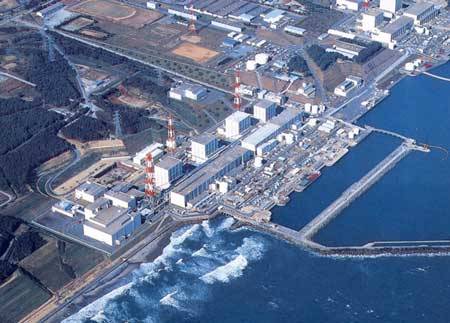
By Alex Kimani – Feb 11, 2026,
https://oilprice.com/Latest-Energy-News/World-News/Japan-Restarts-Nuclear-Power-at-Kashiwazaki-Kariwa-After-14-Years-in-the-Dark.html
Japan’s Tokyo Electric Power Company (TEPCO) has restarted Unit 6 of the Kashiwazaki-Kariwa nuclear power plant, following a 14-year shutdown following the 2011 Fukushima disaster. The 1,360 MW reactor is the first unit to come online since the nuclear accident that saw Japan halt operations at all its nuclear plants pending regulatory changes.
The accident was caused by the 9.1-magnitude T?hoku earthquake – the third-largest in the world since 1900 – that triggered a tsunami, resulting in electrical grid failure and damage to nearly all of the power plant’s backup energy sources. With a total capacity of roughly 7,965 MW, the Kashiwazaki-Kariwa Nuclear Power Plant is the largest in the world.
TEPCO has implemented extensive, multi-layered safety enhancements at the Kashiwazaki-Kariwa Nuclear Power Plant to prevent accidents, particularly focusing on tsunami, earthquake, and terrorism risks. The company has constructed a 15-meter-high reinforced concrete seawall (extending 1,000 meters) to protect against tsunamis far exceeding the predicted maximum of 7-8 meters; critical buildings, including reactor and turbine buildings, have been fitted with heavy, watertight doors and barriers to prevent water from entering during a flood while essential equipment and emergency diesel generators have been moved to higher ground (up to 35 meters) to remain operational if the site floods.
Similar to many Western nations, Japan is doing a 180 on nuclear power after virtually ditching the power source as it looks to enhance energy security, reduce heavy reliance on expensive imported fossil fuels, meet rising electricity demand (including for AI data centers), and achieve 2050 carbon neutrality goals. Japan imports 60-70% of its electricity resources. In 2024, the country spent nearly $70 billion on liquefied natural gas (LNG) and coal imports, with nuclear power offering a [?] cheaper, [?] home-grown alternative.
Dounreay workers among 200 allowed to leave Nuclear Restoration Services’ UK in early exit scheme
By Iain Grant, John O’Groat Journal 10th Feb 2026
About 30 workers at Dounreay are believed to have been offered early leaving terms in a scheme designed to trim the size of Nuclear Restoration Services’ UK-wide workforce.
Many others at the Caithness site who applied for the mutually agreed voluntary exit (MAVE) initiative were unsuccessful.
The scheme, which has raised the hackles of unions, offers one month of salary per year of service, capped at 21 months of pay or £95,000.
No numbers for Dounreay have been made available but about 500 applied at NRS’s 14 sites throughout the country. Of those, about 200 have been made offers.
It is part of a wider Treasury drive to cut the public sector payroll following its growth during the pandemic.
About 1200 are employed by NRS at Dounreay though that will increase by more than 300 when plans to put NRS in charge of the neighbouring MoD plant at Vulcan come to pass.
Dounreay provide £128k over 3 years for STEM activities for Caithness and Sutherland primary pupils
Read More
The MAVE scheme is opposed by Prospect, which along with GMB and Unite, is running a What a Waste campaign, to highlight the loss of scarce, skilled specialists in the nuclear sector.
They claim the job cuts will cost the government more in the long term as it will put a spoke in the programme to decommission redundant nuclear sites and mean it has to fork out to rebuild the workforce in the future……………………..
In addition to Dounreay, NRS runs nuclear sites at Berkley, Bradwell, Chapelcross, Dungeness, Harwell, Hinkley Point, Hunterston, Oldbury, Sizewell, Trawsfynydd, Winfrith and Wyfla and the Maentwrog hydro-electric plant. https://www.johnogroat-journal.co.uk/news/dounreay-workers-among-200-allowed-to-leave-nrs-in-early-exi-426869/
REVEALED: Labour said Scottish nuclear study could be seen as ‘waste of money’
by Tom Pashby, The Canary 11th Feb 2026
The UK government has admitted that a study into the suitability of Scottish sites for new nuclear power projects could have been “a waste” of money. The government commissioned Great British Energy-Nuclear (GBE-N), a public body, to carry out the study.
The revelation came after Department for Energy Security and Net Zero (DESNZ) secretary of state Ed Miliband told Scottish journalists in October 2025 that:
given the growing interest in nuclear in Scotland, I’m asking GBE-N to assess Scotland’s capability for new nuclear power stations, including at Torness and Hunterston.
This is going to be a very, very big issue in the Scottish election campaign. We are saying yes to new nuclear in Scotland.
Labour hoping to end SNP ban on new nuclear in Scotland
Scotland is due to go to the polls to elect a new Scottish parliament and Scottish government in May 2026. Labour is hoping to wrest back control from the Scottish National Party (SNP).
In an article about the same interview published in October 2025, the Scotsman newspaper reported that a “senior UK government source” had said they were considering submitting planning applications for new nuclear developments at Torness and Hunterston because they expected a Scottish Labour victory at the Holyrood election.
The UK Labour Party and Scottish Labour support nuclear power and nuclear weapons. This position is coming under pressure as the Green Party of England and Wales, which vehemently opposes all nuclear, increasingly challenges Labour in public opinion polls.
Under the Freedom of Information (FOI) Act, the government released documents to the Canary about Miliband’s request to GBE-N. These included a Q&A document prepared by DESNZ officials. It revealed that officials knew there would be concerns about new nuclear proposals in Scotland.
No new nuclear can be built in Scotland because planning policy is a devolved matter, and the ruling SNP opposes nuclear power. The rebuttal in the DESNZ Q&A was that there is “cross-party interest in new nuclear” in Scotland.
Energy department officials contradict each other on responsibility for study
The documents released under FOI also revealed that a DESNZ official, whose name was redacted, had sought to reassure GBE-N colleagues that DESNZ was not “behind the briefing” in an email sent on 22 October 2025 at 4:02pm.
That position was contradicted by an email in a separate earlier conversation where, on 21 October 2025 at 6:46pm, John Staples, DESNZ director for new nuclear strategy and fusion energy, said:
our SpAds [special advisors] want SoS [secretary of state] to be able to say the below to Scottish journalists.
‘Below’ in the email were lines drafted for Miliband which included:
I will ask Great British Energy – Nuclear to begin assessing Scotland’s capability for new nuclear power stations.
The internally prepared Q&A included a question which asked:
Isn’t this study a waste of money?
The DESNZ answer said:
New nuclear projects can deliver millions of pounds of investment and thousands of high-quality jobs to a region – UK ministers want to understand the potential for new projects right across Great Britain.
The Canary approached the Labour Party for comment, which deferred to DESNZ. DESNZ did not respond to a request for comment.
‘Obvious’ that study would be ‘waste of money’ – Scottish CND
A Scottish Campaign for Nuclear Disarmament (CND) spokesperson told the Canary:
It is obvious that an assessment of the viability of new nuclear sites in Scotland would be a waste of money, since the foremost issue is not the viability of sites but Scottish government policy.
Energy policy is devolved to Holyrood and the Scottish government very sensibly opposes new nuclear plants in Scotland.
There are a whole host of reasons why new nuclear plants in Scotland would be a terrible idea, including the absolutely exorbitant cost of nuclear plant construction, the reliance on destructive and unjust international uranium supply chains, and the enormous and cross-generational burden of decommissioning nuclear plants, which in the case of Dounreay is expected to take hundreds of years.
In particular, the notion that Scotland, which is a net energy exporter and has the potential to become an international renewables powerhouse, should pivot to costly nuclear projects at this stage is somewhat absurd.
Investing the same sums invested in nuclear power plants – scores of billions and climbing for Hinkley Point C and Sizewell C – into the grid, home insulation and the renewables sector across Scotland would be an immeasurably better investment.
For Scottish CND, another concerning element of the renewed push for nuclear power is the deep imbrication [overlapping] of the ‘civil’ and military nuclear industries, as openly promoted in the 2025 Industrial Strategy.
From this perspective, investment in new nuclear power plants can be seen as defence spending by stealth and a means of shoring up the UK nuclear weapons industry – something which is of no benefit to Scotland and indeed causes major risks and harms in Scottish communities.
New nuclear would be incredibly expensive – Scottish government minister………………………………………………….
SNP criticises ‘Westminster obsession with nuclear’………………………………………………
‘New nuclear would waste time, money and political attention’ – Scottish Greens……………………………………… https://www.thecanary.co/uk/news/2026/02/11/scottish-nuclear-study/
Over 2,000 Britons served for Israel amid Gaza genocide
More than 2,000 Britons served in the Israel Defence Forces (IDF) during the Gaza genocide, it can be revealed.The information was obtained by Declassified via a Freedom of Information request issued to the IDF by lawyer Elad Man from the NGO Hatzlacha.The data outlines the number of people with dual and multiple nationalities who were IDF service members as of March 2025. |
It shows how 1,686 British-Israelis and a further 383 people with British, Israeli, and another nationality served in the IDF amid the annihilation of Gaza.
They were among over 50,000 IDF soldiers with Israeli and at least one other nationality.
The largest cohorts come from the US, Russia, Ukraine, France, and Germany.
Prior to this, data was only available on the number of Britons without Israeli citizenship serving in the IDF, so-called lone soldiers, a figure that was as low as 54.
The revelation that far more UK passport holders served in the IDF will raise serious legal questions for the British authorities, which have thus far failed to prosecute any citizens returning home after fighting in Gaza.
Paul Heron, a lawyer with the Public Interest Law Centre (PILC), told Declassified: “There must be no impunity where credible evidence links British nationals to grave breaches of international law.
The revelation that far more UK passport holders served in the IDF will raise serious legal questions for the British authorities, which have thus far failed to prosecute any citizens returning home after fighting in Gaza.Paul Heron, a lawyer with the Public Interest Law Centre (PILC), told Declassified: “There must be no impunity where credible evidence links British nationals to grave breaches of international law.“The UK has clear duties to prevent genocide and avoid assisting unlawful military action. “Where dual nationals have served in units implicated in atrocities, the authorities must investigate promptly and, where the evidence meets the threshold, pursue arrest and prosecution like any other serious crime”. |
Declassified contributor Hamza Yusuf previously exposed how Britons were serving in some of Israel’s “craziest” combat units in Gaza where they viewed Palestinian fighters as “rats” and “animals”.
Among the Britons identified by Yusuf was Levi Simon, who was seen “rummaging through the underwear drawers of Palestinian women forced to flee their homes” in Gaza. Another was master sergeant Sam Sank from London, who filmed himself fighting in Gaza between December 2023 and January 2024. |
Sank had told The Times that “based on the number of his friends in the IDF, which includes a Scot in his own small unit, [he] believes there are hundreds, if not thousands, more Britons fighting in Israel.”
Sank had told The Times that “based on the number of his friends in the IDF, which includes a Scot in his own small unit, [he] believes there are hundreds, if not thousands, more Britons fighting in Israel.” His estimates match with the data Hatzlacha has now obtained from Israeli authorities. The UK Foreign Office declined to comment on the new data but confirmed that it does not collect information on the number of Britons in the IDF. You can read the full story here. |
Nuclear Power – A White Elephant in the Energy Debate

By Pete Roche, David Hume Institute 12th Feb 2026,
https://davidhumeinstitute.org/latest-news/2026/2/12/nuclear-power-a-white-elephant-in-the-energy-debate
As Scotland prepares for elections, pro‑nuclear lobbyists are urging the Scottish Government to lift its ban on new nuclear developments.Yet the evidence shows that building new nuclear power stations would be an expensive white elephant — too slow, too costly, and ultimately unnecessary for tackling climate change.
Investing in nuclear now risks diverting resources from cheaper, faster, and safer renewable alternatives that are ready to deploy and without the risk of hazardous waste.
Nuclear makes us more vulnerable
Recent events in Europe underline nuclear’s vulnerabilities in a warming world. In summer 2025, prolonged heatwaves forced several French nuclear plants to reduce output or shut down entirely because the rivers and coastal waters used for cooling became too warm to operate safely. At sites including Golfech and Blayais operators had to curtail production, while the Gravelines plant faced additional disruption when swarms of jellyfish clogged its cooling systems. These incidents show how our changing climate can turn nuclear plants into operational white elephants at precisely the time electricity demand is high as people try to cool homes and buildings.
All energy sources produce carbon emissions over their lifecycle, but nuclear power stations typically emit more CO₂ per kilowatt-hour than wind or solar when construction, uranium mining, and waste management are included. For example, Sizewell C, currently under construction in Suffolk, is not expected to offset the emissions generated during its build phase until the late 2030s — well after the UK should have largely eliminated fossil fuels from electricity generation. Renewables, by contrast, deliver low-carbon power from day one.
Nuclear increases risk
Nuclear also carries long-term environmental and security risks. Coastal and riverside sites face rising sea levels and heatwave-induced water shortages, creating further potential for nuclear plants to become white elephants. They produce long-lived radioactive waste with no permanent disposal solution, are vulnerable to terrorism or armed conflict, and uranium mining causes serious ecological damage.
Advocates argue nuclear is needed for “baseload” power because wind and solar are variable. But baseload is an outdated concept.
Modern grid operators emphasise flexibility — blending renewables, storage, and demand management — rather than relying on inflexible generators. Large nuclear plants cannot easily ramp output to match demand and risk creating the same mismatch that critics cite for renewable variability. Proposed small modular reactors (SMRs) are similarly problematic: only two operate commercially worldwide, they are unproven at scale, and early evidence suggests they may be even more expensive per unit of electricity while producing more toxic waste — another potential white elephant.
Voters need real solutions, not white elephants
Meeting Scotland’s energy needs with renewables is feasible and cost-effective. Analyses suggest a renewable-first strategy could save the UK hundreds of billions compared to nuclear-centric plans, making the most of Scotland’s wind, solar, and engineering expertise. In contrast, costly nuclear projects risk becoming long-term white elephants — expensive, slow, and unsafe — at a time when voters need solutions that work now, not in a far distant future.
1 This Month



Tell the Ukrainian Government to Drop Prosecution of Peace Activist Yurii Sheliazhenko

Petition to revoke the licensing of the Near Surface Nuclear Disposal Facility (NSDF) at Chalk River. https://www.ourcommons.ca/petitions/en/Petition/Details?Petition=e-7247


of the week – STOP SMALL MODULAR REACTORS IN CANADA
To see nuclear-related stories in greater depth and intensity – go to https://nuclearinformation.wordpress.com
-
Archives
- March 2026 (222)
- February 2026 (268)
- January 2026 (308)
- December 2025 (358)
- November 2025 (359)
- October 2025 (376)
- September 2025 (258)
- August 2025 (319)
- July 2025 (230)
- June 2025 (348)
- May 2025 (261)
- April 2025 (305)
-
Categories
- 1
- 1 NUCLEAR ISSUES
- business and costs
- climate change
- culture and arts
- ENERGY
- environment
- health
- history
- indigenous issues
- Legal
- marketing of nuclear
- media
- opposition to nuclear
- PERSONAL STORIES
- politics
- politics international
- Religion and ethics
- safety
- secrets,lies and civil liberties
- spinbuster
- technology
- Uranium
- wastes
- weapons and war
- Women
- 2 WORLD
- ACTION
- AFRICA
- Atrocities
- AUSTRALIA
- Christina's notes
- Christina's themes
- culture and arts
- Events
- Fuk 2022
- Fuk 2023
- Fukushima 2017
- Fukushima 2018
- fukushima 2019
- Fukushima 2020
- Fukushima 2021
- general
- global warming
- Humour (God we need it)
- Nuclear
- RARE EARTHS
- Reference
- resources – print
- Resources -audiovicual
- Weekly Newsletter
- World
- World Nuclear
- YouTube
-
RSS
Entries RSS
Comments RSS
 nuclear-news