Germany: Ministry of the Environment: Mini‑reactors [SMNRs] not an option

Berlin (energate) – The gap between the hype and industrial reality surrounding nuclear energy is widening. This applies in particular to the smaller nuclear reactors, Small Modular Reactors (SMR). This is the conclusion of the World Nuclear Industry Status Report, which was commissioned by the Heinrich Böll Foundation, the Federal Office for the Safety of Nuclear Waste Management (BASE) and the Friedrich Ebert Foundation, among others.
by Leonie Wolf, energate, 22 January 2026
According to the study, nuclear energy remains “irrelevant” on the global market, as the 5.4
GW increase in nuclear capacity is offset by 100 times the combined new capacity of over 565
GW of wind and solar energy. Wind and solar plants
worldwide currently generate 70 per cent more electricity than nuclear reactors.
According to the report, there is still no market-ready product for Small Module Reactors (SMR), only a design certification and an approved standard design. Both come from the US company NuScale. The US Nuclear Regulatory Commission has already approved a total of three of the company’s models, but previous contracts with potential customers have been cancelled due to increased costs.
A first mini-reactor was cancelled in 2023.
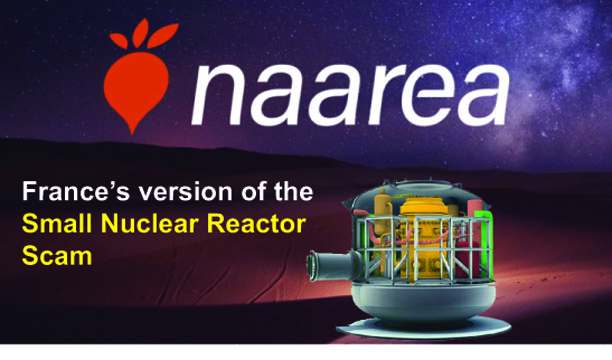
According to the study, the two largest European start-ups Newcleo and Naarea are in financial difficulties; the French start-up Naarea has already filed for insolvency. The start-up is now to be taken over by the Polish-Luxembourgish group Eneris.
The Netherlands and France continue to rely on nuclear power
Despite these failures, other countries are sticking with nuclear energy. In the Netherlands, a debate on the use of SMR, which is seen as a measure to achieve the 2030 climate targets, has been ongoing for several years. In addition, the Dutch company Mammoet signed a memorandum of understanding with Electricité de France (EDF) at the end of 2025, which provides for the construction of nuclear plants in the Netherlands. Two nuclear power plants were already planned for 2022 and two more are still in operation.
Debate continues in Germany
Although Germany has withdrawn from nuclear energy, the debate about its benefits continues. Parliamentary State Secretary Rita Schwarzelühr-Sutter also spoke at the presentation of the World Nuclear Industry Status Report. When asked by energate, a spokesperson for the Federal Ministry for the Environment explained that Germany had “good reasons” for withdrawing from the use of nuclear power. The risks of nuclear energy and also of the use of SMRs remain “ultimately unmanageable”. In addition, the development and construction of smaller reactors raises many other unresolved issues.
There is also no reliable evidence to date for the safety promises. As a result, the disadvantages of nuclear energy would be transferred from a few large plants to many small ones. Ultimately, “the individual plants may become smaller, but the problems as a whole tend to become bigger”.
The spokesperson also referred to a study by the Federal Office for the Safety of Nuclear Waste Management, which energate has already reported on. According to the report, the advantages of mass production of SMRs would only outweigh their fundamental cost disadvantages compared to large reactors with a production volume of around 3,000 units.
The CDU/CSU (Christian Democrats) parliamentary group takes a different view. At the end of 2024, the CDU and CSU published a position paper in which they advocated research and development of nuclear power plants, including SMRs. CSUChairman Markus Söder also spoke out in favour of the use of SMRs in an interview with Die Welt at the end of 2025.
A total of 127 different designs worldwide
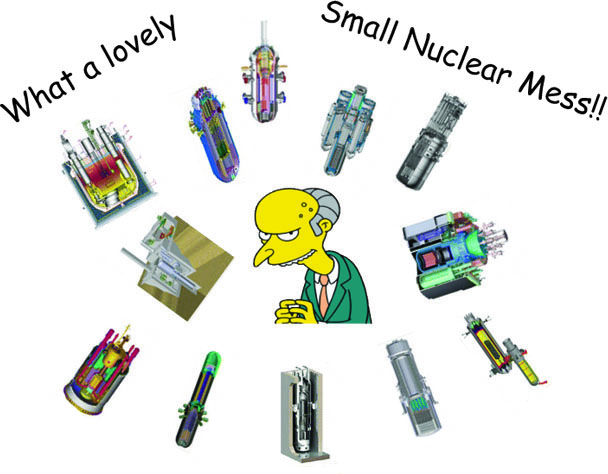
The report states that it is above all the continuous financial and political support for SMRs that keeps faith in them alive. In particular, private capital injections are playing an increasingly important role in driving research and development forward. There are 127 different SMR designs, so the funding amounts are widely spread. This means that most designs do not have sufficient financial resources to drive development forward
. According to the report, even the US start-up NuScale is still years away from building the first Small Module Reactor, although several designs have already been approved.
No comments yet.
1 This Month

of the week – Shut Down Drone Warfare!


Tell the Ukrainian Government to Drop Prosecution of Peace Activist Yurii Sheliazhenko

Petition to revoke the licensing of the Near Surface Nuclear Disposal Facility (NSDF) at Chalk River. https://www.ourcommons.ca/petitions/en/Petition/Details?Petition=e-7247
To see nuclear-related stories in greater depth and intensity – go to https://nuclearinformation.wordpress.com
-
Archives
- April 2026 (7)
- March 2026 (251)
- February 2026 (268)
- January 2026 (308)
- December 2025 (358)
- November 2025 (359)
- October 2025 (376)
- September 2025 (257)
- August 2025 (319)
- July 2025 (230)
- June 2025 (348)
- May 2025 (261)
-
Categories
- 1
- 1 NUCLEAR ISSUES
- business and costs
- climate change
- culture and arts
- ENERGY
- environment
- health
- history
- indigenous issues
- Legal
- marketing of nuclear
- media
- opposition to nuclear
- PERSONAL STORIES
- politics
- politics international
- Religion and ethics
- safety
- secrets,lies and civil liberties
- spinbuster
- technology
- Uranium
- wastes
- weapons and war
- Women
- 2 WORLD
- ACTION
- AFRICA
- Atrocities
- AUSTRALIA
- Christina's notes
- Christina's themes
- culture and arts
- Events
- Fuk 2022
- Fuk 2023
- Fukushima 2017
- Fukushima 2018
- fukushima 2019
- Fukushima 2020
- Fukushima 2021
- general
- global warming
- Humour (God we need it)
- Nuclear
- RARE EARTHS
- Reference
- resources – print
- Resources -audiovicual
- Weekly Newsletter
- World
- World Nuclear
- YouTube
-
RSS
Entries RSS
Comments RSS
 nuclear-news
Leave a comment