Trump slashing nuclear reactor safety and security rules
January 29, 2026, https://beyondnuclear.org/trump-slashing-reactor-safety-and-security-rule
Department of Energy executes White House Executive Order
Radical changes to nuclear safety and security at new reactors withheld from public review
In response to White House Executive Order 14301 issued on May 23, 2025, the US Department of Energy (DOE) is deregulating federal reactor safety /security standards and rules in order to expedite at least three experimental designs of eleven new advanced reactors. The DOE cuts are intended to speed up licensing, construction and operational testing phase so as to achieve reactor criticality by July 4, 2026. The expedited approval process will be used to demonstrate proof-of-product for full commercial operation of these designs as ready for mass assembly line production.
National Public Radio (NPR) reported on January 28, 2026, that it had obtained copies of the DOE documents as the basis for their news story headlined “The Trump administration has secretly rewritten nuclear safety rules.” The new rules and standards for reactor safety and security of unproven experimental reactor designs have not yet been publicly released. As NPR reports, the new rules are being rewritten to alter 5o years of duly promulgated regulatory law by the US Nuclear Regulatory Commission (NRC) not to bolster public safety, national security and environmental protection but to hasten the deployment of unproven, untested and still dangerous nuclear power technology.
In an earlier NRC interview on December 17, 2025. Dr. Allison Macfarlane, a former NRC Chairwoman, warned that the federal government cannot both commercially promote nuclear power and independently regulate nuclear safety and security with reasonable assure a very low probability of the next severe nuclear accident or by deliberate malice. On numerous occasions, Dr. Macfarlane, other NRC Commissioners and independent scientists point to an established historical conflict of interest created by federal government and nuclear industry’s simultaneous collaborative promotion and regulatory expansion of nuclear power and nuclear arms race.
That proved to be the downfall of the US Atomic Energy Commission (AEC) principally established for the development of atomic bombs and cogenerate electricity from the waste heat from the weaponization of the atom. The AEC was subsequently abolished by Congress with the passage of the Energy Reorganization Act of 1974 (ERDA) because of gross neglience of nuclear safety. On January 19, 1975, the AEC responsibilities were divided up creating the US Nuclear Regulatory Commission to take over the safety licensing and regulation of commercial nuclear power and the Energy Research and Development Agency (ERDA) to handle energy research, development, and the functions of nuclear weapons production. ERDA was later incorporated into the US Department of Energy in 1977.
The United States has now come full circle with the Trump Administration’s executive orders dismantling 50 years of promulgation of nuclear power safety regulation and regulatory law to return safety to the back seat and nuclear energy promotion as the priority. It is further alarming and no secret that several of the new commercial reactor designs under licensing review by the DOE are in fact “dual purpose” reactors that once operational will have the capability to produce both electrical energy and the basic building blocks for nuclear weapon enhancement and expansion.
The January 28th NPR analysis finds that DOE’s nuclear rules “slash hundreds of pages of requirements for security at the reactors. They also loosen protections for groundwater and the environment and eliminate at least one key safety role. The new orders cut back on requirements for keeping records, and they raise the amount of radiation a worker can be exposed to before an official accident investigation is triggered.”
Where the protection of groundwater from radioactive contamination once was required as a “must,” the new DOE rules and standards need only provide “‘consideration’ to ‘avoiding or minimizing’ radioactive contamination. Radioactive monitoring and documentation are also softened,” NPR observed.
An independent scientist is quoted in the NPR story, “They’re taking a wrecking ball to the system of nuclear safety and security regulation oversight that has kept the U.S. from having another Three Mile Island accident,’ said Edwin Lyman, director of nuclear power safety at the Union of Concerned Scientists. ‘I am absolutely worried about the safety of these reactors.’”
Now here we are, during the 50th anniversary of the US Nuclear Regulatory Commission, the Trump Administration, the DOE and the nuclear industry are poised for “Unleashing American Energy” by deregulatory Executive Orders.
The DOE announced the “Reactor Pilot Program” in June 2025, following the release of Executive Order 14301, which accelerates and expands the federal experimental reactor testing program to streamline commercial reactor licensing and oversight. At the same time, the Trump Administration is deregulating the NRC by slashing its safety and security standards and regulatory law.
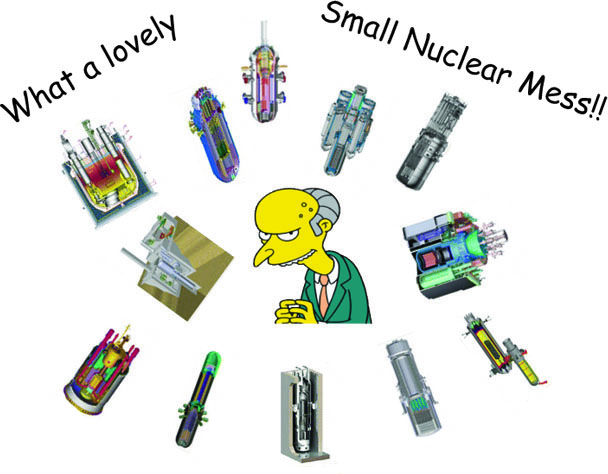
The DOE “Pilot Reactor Program” is comprised of eleven projects. The DOE will choose at least three units to be licensed for operational criticality by July 4, 2026:
- Aalo Atomics Inc.—The Austin, Texas-based startup nuclear company has broken ground for its experimental 10 MWe sodium cooled reactor under development at the Idaho National Laboratory near Idaho Falls, Idaho. Five units are intended to make up a 50 MWe “pod” for electrical power production.
- Antares Nuclear Inc.— Headquartered in Los Angeles, California, Antares Nuclear has submitted a construction permit application filed for a four-unit, non-power, light-water-cooled, pool-type Versatile Isotope Production Reactor facility to be located at the Idaho National Laboratory desert site, in Bingham County, Idaho.
- Atomic Alchemy Inc.—Atomic Alchemy Inc. is headquartered in Idaho National Laboratory, Idaho Falls, Idaho. The company operates in the nuclear technology sector, specifically focused on non-power radioisotope production reactors for the defense, industrial and medical sectors using the 15-MWtVersatile Isotope Production Reactor (VIPR).
- Deep Fission, Inc.— The start-up company is headquartered in Berkeley, CA for the development of a 15 MWe pressurized water microreactor that first broke ground in Parsons, Kansas on December 9, 2025. It is proposed as a first-of-a-kind deep geological reactor at the Great Plains Industrial Park in Labette County on the Kansas-Oklahoma border. Deep Fission signed a Memorandum of Understanding (MOU) with its “sister” company Deep Isolation to collocate the power generation facility in a mile deep 30 inch wide borehole in the bedrock. The natural bedrock body and a mile deep column of water overhead are credited for the reactor containment system. The same borehole and bedrock body are credited as a permanent, deep geological high-level radioactive waste disposal facility. After seven years of operation, the reactor vessel is disconnected from the surface turbogenerator and control room and abandoned, capped and sealed in place in-place at the bottom of the borehole. The next fresh fuel loaded reactor unit is lowered down the borehole and connected to the surface to resume operation stacked on top of the now sealed unit nuclear waste unit. And so on.
- Last Energy Inc.—Last Energy Inc. corporate headquarters are in Austin, Texas. The start-up company is proposing to build a fleet of 20-MWe micro-modular reactors near Abilene, Texas targeting data center power needs (specifically the PWR-20, a downsized model of the currently operational commercially sized Point Beach reactor Unit 1 rated at 625 MWe in Wisconsin).
- Oklo Inc. (two projects)— Oklo Inc. is headquartered in Santa Clara, California. Its Aurora Powerhouse is a 75 MWe small modular liquid sodium-cooled fast reactor under development at the Idaho National Laboratory. Oklo is additional developing an estimated $1.7 billion project to build the nation’s first privately funded nuclear fuel recycling facility at the Oak Ridge Heritage Center in Tennessee. This project aims to recycle used nuclear fuel from existing reactors into fuel for fast reactors, with operations targeted for 2030. The proposed fast reactors are identified as a global nuclear weapons proliferation risk to be exported around the world.
- Natura Resources LLC— Natura Resources is headquartered in Abilene, Texas. The company is developing a Generation IV liquid-fueled molten salt reactor (MSR). They are proposing to site their first reactor at the Science and Engineering Research Center (SERC) on the campus of Abilene Christian University in Abilene, Texas.
- Radiant Industries Inc.— Radiant Industries is headquartered in El Segundo, California for modular microreactors. Radiant has announced that it will build its first microreactor factory on a decommissioned Manhattan Project site in Oak Ridge, Tennessee. World Nuclear News reports, “Radiant is developing the 1 MWe Kaleidos high-temperature gas-cooled portable microreactor, which will use a graphite core and TRISO (tri-structural isotropic) fuel. The electric power generator, cooling system, reactor, and shielding are all packaged in a single shipping container, facilitating rapid deployment.”
- Terrestrial Energy Inc.— Terrestrial Energy, Inc. is headquartered in Charlotte, North Carolina. They are developing the Integral Molten Salt Reactor (IMSR) which is a Generation IV small modular reactor (SMR) designed to produce both high-grade industrial heat and electricity. Their pilot project is planned for the Texas A&M University RELLIS Campus in Bryan, Texas.
- Valar Atomics Inc.— Valar Atomics Inc. is headquartered in El Segundo, California. The company is developing the Ward 250, a 100-kWt, helium-cooled, TRISO-fueled high-temperature gas reactor (HTGR) designed for modular, behind-the-meter, or microgrid use. The pilot project is located at the Utah San Rafael Energy Lab (USREL) in Emery County, Utah.
No comments yet.
1 This Month

of the week – Shut Down Drone Warfare!


Tell the Ukrainian Government to Drop Prosecution of Peace Activist Yurii Sheliazhenko

Petition to revoke the licensing of the Near Surface Nuclear Disposal Facility (NSDF) at Chalk River. https://www.ourcommons.ca/petitions/en/Petition/Details?Petition=e-7247
To see nuclear-related stories in greater depth and intensity – go to https://nuclearinformation.wordpress.com
-
Archives
- April 2026 (7)
- March 2026 (251)
- February 2026 (268)
- January 2026 (308)
- December 2025 (358)
- November 2025 (359)
- October 2025 (376)
- September 2025 (257)
- August 2025 (319)
- July 2025 (230)
- June 2025 (348)
- May 2025 (261)
-
Categories
- 1
- 1 NUCLEAR ISSUES
- business and costs
- climate change
- culture and arts
- ENERGY
- environment
- health
- history
- indigenous issues
- Legal
- marketing of nuclear
- media
- opposition to nuclear
- PERSONAL STORIES
- politics
- politics international
- Religion and ethics
- safety
- secrets,lies and civil liberties
- spinbuster
- technology
- Uranium
- wastes
- weapons and war
- Women
- 2 WORLD
- ACTION
- AFRICA
- Atrocities
- AUSTRALIA
- Christina's notes
- Christina's themes
- culture and arts
- Events
- Fuk 2022
- Fuk 2023
- Fukushima 2017
- Fukushima 2018
- fukushima 2019
- Fukushima 2020
- Fukushima 2021
- general
- global warming
- Humour (God we need it)
- Nuclear
- RARE EARTHS
- Reference
- resources – print
- Resources -audiovicual
- Weekly Newsletter
- World
- World Nuclear
- YouTube
-
RSS
Entries RSS
Comments RSS
 nuclear-news
Leave a comment