Inside Japan’s Controversial Shift Back to Nuclear Energy
Oil Price, By Felicity Bradstock – Jan 24, 2026
- Japan is shifting its energy policy to redevelop its nuclear energy capacity, aiming for 20 percent of its power from nuclear energy by 2040 to support climate goals.
- The world’s largest nuclear facility, the Kashiwazaki-Kariwa plant, is preparing to restart operations, which marks a major step in the government’s nuclear deployment plans despite significant public opposition and safety concerns.
- Public confidence in the nuclear sector has been harmed by the 2011 Fukushima disaster and further damaged by recent news of a utility, Chubu Electric Power, fabricating seismic risk data.
Alongside plans to establish a strong renewable energy sector, Japan aims to redevelop its nuclear energy capacity to boost its power and support its climate goals. However, with memories of the Fukushima nuclear disaster still fresh, many in Japan are worried about the risks involved with developing the country’s nuclear capacity. Nevertheless, the government has big plans for a new nuclear era, commencing with the restarting of the world’s biggest nuclear facility…………………………………………………………..
The Fukushima accident prompted a widespread distrust of nuclear power in Japan for more than a decade. However, in February 2025, Japan’s Economy, Trade and Industry Ministry published a draft revision of the national basic energy plan, in which the statement on moving away from nuclear power has been removed. Later that month, the Cabinet approved the revised Seventh Strategic Energy Plan, which stated the aim of producing 20 percent of power from nuclear energy by 2040. This marked a significant shift in Japan’s approach to nuclear power.
Before 2011, Japan had 54 reactors that provided around 30 percent of the country’s electricity. At present, just 14 of 33 operable reactors are producing power, while efforts to restart others have been thwarted due to public opposition.
Japan is home to the world’s largest nuclear facility, the 8.2 GW Kashiwazaki-Kariwa plant, which covers 4.2 km2 of land in Niigata prefecture, 220km north-west of Tokyo. The facility was developed in 2012, but it has yet to come online, as, following the Fukushima disaster, the poor public perception of safety in the nuclear sector led the government to shut down several nuclear reactors.
Kashiwazaki-Kariwa is operated by Tokyo Electric Power (Tepco), the same utility that managed Fukushima. Tepco aimed to restart one of the seven reactors at Kashiwazaki on 19th January, but was forced to delay the restart as an alarm malfunctioned during a test of equipment, although the company expects to bring it online within the next few days. The restarting of reactor No. 6 will increase Tokyo’s electricity supply by around 2 percent, as well as mark a major step forward in the government’s plans to deploy more nuclear power in the coming years.
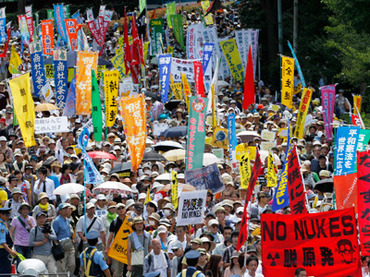
However, many in Japan are still wary about the risks involved with nuclear power projects. Many of those living with proximity to Kashiwazaki-Kariwa are worried about the potential for another Fukushima-scale event, which could lead up to 420,000 residents to be evacuated from across a 30 km radius…………………..
public confidence in nuclear power companies in nuclear power companies has been further harmed due to recent news of a firm fabricating data. It was found that Chubu Electric Power, a utility in central Japan, fabricated seismic risk data during a regulatory review, ahead of a possible restart of two reactors at its idle Hamaoka plant. In response, Japan’s Nuclear Regulation Authority (NRA) scrapped the safety screening at the plant, which is located on the coast, around 200 km west of Tokyo, in an area prone to Nankai Trough megaquakes. The NRA is now considering inspecting Chubu’s headquarters.
…………Despite overwhelming public opposition to the development of Japan’s nuclear power sector, the government plans to gradually restart several reactors and expand nuclear capacity in the coming decades to support decarbonisation aims. https://oilprice.com/Alternative-Energy/Nuclear-Power/Inside-Japans-Controversial-Shift-Back-to-Nuclear-Energy.html
No comments yet.
1 This Month

of the week – Shut Down Drone Warfare!


Tell the Ukrainian Government to Drop Prosecution of Peace Activist Yurii Sheliazhenko

Petition to revoke the licensing of the Near Surface Nuclear Disposal Facility (NSDF) at Chalk River. https://www.ourcommons.ca/petitions/en/Petition/Details?Petition=e-7247
To see nuclear-related stories in greater depth and intensity – go to https://nuclearinformation.wordpress.com
-
Archives
- April 2026 (7)
- March 2026 (251)
- February 2026 (268)
- January 2026 (308)
- December 2025 (358)
- November 2025 (359)
- October 2025 (376)
- September 2025 (257)
- August 2025 (319)
- July 2025 (230)
- June 2025 (348)
- May 2025 (261)
-
Categories
- 1
- 1 NUCLEAR ISSUES
- business and costs
- climate change
- culture and arts
- ENERGY
- environment
- health
- history
- indigenous issues
- Legal
- marketing of nuclear
- media
- opposition to nuclear
- PERSONAL STORIES
- politics
- politics international
- Religion and ethics
- safety
- secrets,lies and civil liberties
- spinbuster
- technology
- Uranium
- wastes
- weapons and war
- Women
- 2 WORLD
- ACTION
- AFRICA
- Atrocities
- AUSTRALIA
- Christina's notes
- Christina's themes
- culture and arts
- Events
- Fuk 2022
- Fuk 2023
- Fukushima 2017
- Fukushima 2018
- fukushima 2019
- Fukushima 2020
- Fukushima 2021
- general
- global warming
- Humour (God we need it)
- Nuclear
- RARE EARTHS
- Reference
- resources – print
- Resources -audiovicual
- Weekly Newsletter
- World
- World Nuclear
- YouTube
-
RSS
Entries RSS
Comments RSS
 nuclear-news
Leave a comment