60 years since the Palomares incident “The residents were constantly misinformed”.
On the Palomares nuclear accident, symbolic decontamination actions, and the lasting damage to people and the environment. A conversation with José Herrera Plaza.Interview: Norbert Suchanek
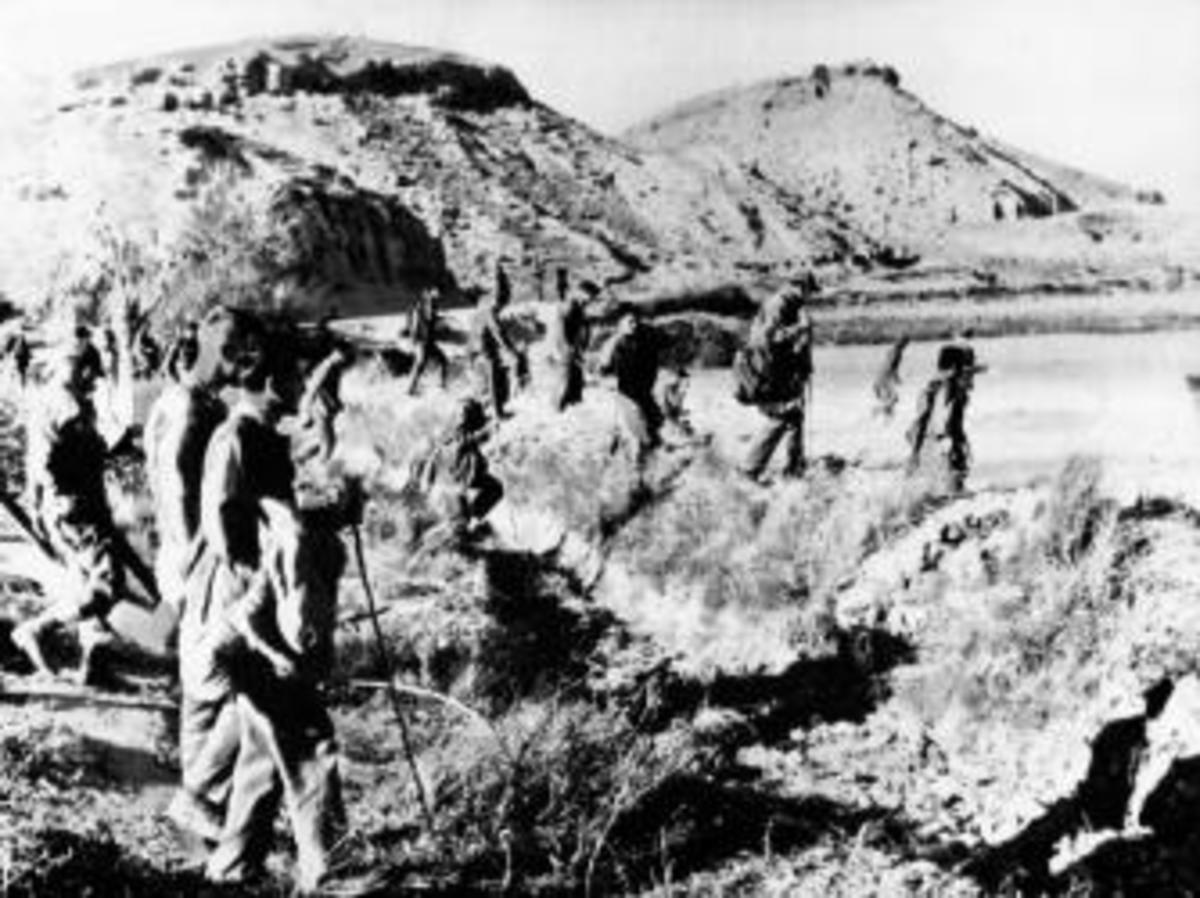
Sixty years ago, on January 17, 1966, one of the most serious nuclear accidents of the Cold War occurred over southern Spain. A US Air Force tanker collided with a B-52 bomber carrying four hydrogen bombs. Both aircraft exploded; the debris and the dangerous cargo fell from the sky over the small coastal village of Palomares in Andalusia. The parachutes on two of the four bombs failed to deploy. They shattered on impact, contaminating the air and soil around Palomares with plutonium and uranium. The fourth bomb fell into the Mediterranean Sea and was not recovered for 80 days. Where were you in January 1966 when the hydrogen bombs fell from the sky?
I was just starting school in Almería at the time. That’s about 90 kilometers from Palomares. Like most people in Andalusia, I had no idea about the hydrogen bombs hanging over our heads.
When and why did you begin your research on the Palomares accident and make it your main topic?
On January 13, 1986, I attended a meeting of the residents of Palomares. It was three days before the 20th anniversary of the accident, and their claims for compensation for health damages were about to expire. I wanted to make a documentary about this little-known, almost unbelievable story, but at the time, the source material relevant for a documentary was classified. I waited 21 years, gathering all available documents, until I was finally able to complete the documentary “Operation Broken Arrow: The Palomares Nuclear Accident.”
What does “Operation Broken Arrow” stand for?
“Broken arrow” is a code word used by the US military. It refers to an incident involving nuclear weapons, such as an accidental or unexplained nuclear explosion, or the loss or theft of nuclear weapons.
How did the local Spanish authorities react in January 1966? Were they aware of the plutonium danger?
The local authorities reacted according to the standard protocol for an aircraft accident and were without information for several days regarding the involvement of nuclear weapons and consequently also regarding the widespread contamination.
How and when did the Madrid government react?
Spanish authorities learned of the crash almost immediately, thanks to warnings transmitted by a Spanish Navy helicopter via emergency channels. Also on the same day, they learned from the US ambassador that the aircraft was carrying four hydrogen bombs. However, both governments remained silent until the media informed the public three days later.
How was it possible that the media reported on it so quickly during the Franco dictatorship?
Two days after the accident, the Spanish-American journalist André del Amo, working for United Press, was in Palomares and confirmed the involvement of nuclear weapons as well as the ground measurements taken with Geiger counters. His report appeared in major media outlets worldwide the following day. The dictatorship reacted in its usual manner: it confiscated newspapers from kiosks and at the airports in Madrid and Barcelona as soon as international flights landed.
What were the direct consequences of the hydrogen bombs bursting? Was there a risk of a nuclear explosion?
The two Mk-28-FI bombs had 68 times the explosive power of the atomic bomb dropped on Hiroshima. Upon impact in Palomares, the bombs exploded because the conventional explosive charge detonated in the fuse. An area of 635 hectares was subsequently contaminated with fissile fuel: approximately ten kilograms of plutonium-239 and -241, as well as slightly more than ten kilograms of uranium-235 and depleted uranium-238. While the risk of an accidental nuclear detonation was very low, it did exist. These hydrogen bombs were among the most technologically advanced in the US arsenal at the time. Their safety systems were quite good—with the exception of the conventional explosive, which was sensitive to shocks. Due to this accident and a similar one two years later in Greenland, the US military replaced this explosive with a shock- and fire-resistant alternative.
Was the population warned about the plutonium contamination and the consumption of potentially contaminated food such as tomatoes?
The inhabitants of Palomares were continually and insidiously misinformed for fifty years, both under the Franco dictatorship and in democratic Spain. They learned about their precarious situation largely through banned shortwave radio stations such as the communist Radio España Independiente , as well as through the BBC and Radio Paris with their nightly Spanish-language programs. A prominent member of the Spanish nobility, the Duchess of Medina Sidonia, also contributed to informing the local population about their situation and their rights, for which she was imprisoned by the fascist dictatorship.
Are there any data or estimates on the number of people who became ill or died as a result of the radioactive contamination?
No, because a comprehensive epidemiological study was never permitted. Independent attempts failed miserably. At the same time, the governments in Madrid and Washington maintain the official narrative that there has never been a single case of cancer caused by plutonium. In reality, however, Palomares is an environmental disaster zone with significant health risks for its inhabitants. Yet Palomares is not an exception compared to similar incidents elsewhere in the world: an invisible minority, invisible consequences.
Did the nuclear incident have any impact on tourism in southern Spain, which was then becoming an important economic factor?
In 1966, tourists visited other parts of Spain, but not this region. The province of Almería was very poor at the time and virtually isolated due to its poor transport infrastructure. However, there were fears that the accident could negatively impact tourism in the rest of the country, as the international press—especially the British and Italian press in Europe—reported on it. In Australia, a newspaper owned by the young Rupert Murdoch claimed there had been a nuclear explosion, that thousands of people were fleeing, and that the entire Spanish Mediterranean coast was contaminated. This led to the Spanish Minister of Information and the American ambassador swimming in the sea at Palomares beach in front of the media.
The US military conducted a large-scale search and cleanup operation after the crash in Palomares. How did the local population react?
The main priority of the extensive military operation was the search for the missing bomb on land and underwater. The search on land lasted over 45 days, the search at sea 80 days. Second priority was the recovery of the flight recorder and the classified B-52 components, primarily the radio equipment used for the combat log. Thirdly, over 125 tons of wreckage from the bomber and the tanker aircraft were to be recovered and sunk off the coast in the Mediterranean Sea. Finally, a symbolic decontamination operation was carried out for the international community. After the disaster, some people likely suffered from a kind of post-traumatic stress. Subsequently, a collective paranoia gripped the city, exacerbated by the contradictions between the statements of the authorities of both countries. The population was suddenly catapulted into the nuclear age and had to grapple with a new concept: radioactivity.
Was the military able to remove all the plutonium from the region?
After lengthy and asymmetrical negotiations between the hegemonic power, the USA, and the Franco dictatorship, they agreed to remove the plutonium, which had been scattered to the winds, and return it to the USA. However, they transported only 650 cubic meters of contaminated soil and 350 cubic meters of contaminated crop residue to the USA. The agreement was not honored because the excavated soil, stored in metal drums, was not the most heavily contaminated. It is estimated that less than one percent of the plutonium, just under 100 grams, returned to the USA in the 4,810 metal drums, each holding 208 liters. The remaining contaminated fields were plowed to inject the plutonium 30 centimeters into the soil. Forty years later, two secretly constructed pits containing approximately 4,000 cubic meters of radioactive waste were discovered in the region.
What happened to the contaminated material from Palomares in the USA?
Two metal drums were sent to the Los Alamos National Laboratory for plant experiments. 4,808 metal drums were transported to Aiken, South Carolina, to the Savannah River Nuclear Complex of the U.S. Atomic Energy Commission and buried at a depth of six meters. This was accompanied by a comprehensive, worldwide propaganda campaign. The fact that 99 percent of the plutonium and uranium remained in the soil of Palomares was kept secret from the public, and especially from the residents and farmers who cultivated these radioactively contaminated areas. The U.S. Air Force and the Spanish government assured them that the land was completely decontaminated and that there was no danger. Meanwhile, the U.S. Atomic Energy Commission and the Junta de Energía Nuclear in Spain used the situation to conduct a secret experiment program on the local population. The aim was to investigate the uptake and storage of plutonium and uranium in the human body by a representative number of individuals from a population potentially exposed to inhaling plutonium oxide aerosol. This was the secret program codenamed “Indalo Project,” which was carried out without the informed consent of the local population.
What is the current situation in Palomares? Are there still contaminated areas and radioactive hazards in the region?
Despite assurances from Spain and the US that there was no longer any danger to farmers and their families, the plowing of the soil with plutonium in 1966 led to the stirring up and release of numerous aerosols containing radioactive elements. For forty years, the residents of Palomares were exposed to radioactive nuclides. It wasn’t until 2006 that the first radiation protection measures were implemented for the population, restricting access to and agricultural use of a 40-hectare area through fencing and marking. Now, sixty years later, we are still waiting for the central government in Madrid to carry out the decontamination. It has never prioritized the issue, even though it is documented that more than 210 residents exhibited symptoms of internal lung contamination. The actual number of those affected, however, remains unknown. After all, the political elites of the central government live over 520 kilometers away in Madrid.
Why did the B-52 bomber fly over southern Spain with nuclear weapons back then?
This occurred as part of Operation Chrome Dome, which began on January 18, 1961. From then on, four to six strategic bombers flew round-trip missions over Spain every day, year after year. During the Cuban Missile Crisis of 1962, 42 bombers were in the air daily. They came from the East Coast of the United States, crossed Spanish airspace, approached southern Italy, and returned to their bases over Spain. Each B-52 carried four thermonuclear bombs. In an attack scenario, they could reach and attack their targets within one to two hours, depending on whether the target was in the USSR or another Warsaw Pact state. For five years, more than 17,000 bombers flew over Spain and were refueled 26,000 times. No other country in Europe permitted such dangerous maneuvers in its airspace. Almost 35,000 hydrogen bombs flew over our heads. The collisions over Palomares and two years later over Thule in Greenland occurred because the law of probability came into play.
How will you commemorate the 60th anniversary of this never-ending Palomares disaster?
I am planning a photo exhibition and a panel discussion at the Villaespesa Library in Almería entitled “Palomares – 60 Years of Government Failure.” I also expect to present my new book at the end of January. It is titled “The Year of the Bombs: Stories from Palomares.” The book brings together the testimonies of 27 Spaniards and Americans who were involuntarily involved in the Palomares disaster. It is written in the style of a documentary narrative, similar to Svetlan Alexievich’s “Voices from Chernobyl,” a work to which it thus pays homage. It is about counteracting oblivion. The story of Palomares is not yet over. It continues to be written.
No comments yet.
1 This Month


18 March Webinar @ 1 PM EST: An Assessment of SMR Projects: The Case of Canada
register for the zoom:
https://us02web.zoom.us/webinar/register/WN_o8BIIOUvQ2ONJR1nta65DQ#/registration


of the week – STOP SMALL MODULAR REACTORS IN CANADA
To see nuclear-related stories in greater depth and intensity – go to https://nuclearinformation.wordpress.com
-
Archives
- March 2026 (129)
- February 2026 (268)
- January 2026 (308)
- December 2025 (358)
- November 2025 (359)
- October 2025 (376)
- September 2025 (258)
- August 2025 (319)
- July 2025 (230)
- June 2025 (348)
- May 2025 (261)
- April 2025 (305)
-
Categories
- 1
- 1 NUCLEAR ISSUES
- business and costs
- climate change
- culture and arts
- ENERGY
- environment
- health
- history
- indigenous issues
- Legal
- marketing of nuclear
- media
- opposition to nuclear
- PERSONAL STORIES
- politics
- politics international
- Religion and ethics
- safety
- secrets,lies and civil liberties
- spinbuster
- technology
- Uranium
- wastes
- weapons and war
- Women
- 2 WORLD
- ACTION
- AFRICA
- Atrocities
- AUSTRALIA
- Christina's notes
- Christina's themes
- culture and arts
- Events
- Fuk 2022
- Fuk 2023
- Fukushima 2017
- Fukushima 2018
- fukushima 2019
- Fukushima 2020
- Fukushima 2021
- general
- global warming
- Humour (God we need it)
- Nuclear
- RARE EARTHS
- Reference
- resources – print
- Resources -audiovicual
- Weekly Newsletter
- World
- World Nuclear
- YouTube
-
RSS
Entries RSS
Comments RSS
 nuclear-news
Leave a comment