HIGH LEVEL NUCLEAR WASTE REMAINS UNAPPROACHABLE AND EXTREMELY TOXIC FOR HUNDREDS OF MILLIONS OF YEARS

Gordon Edwards, 20 Jan 26
Q: When is irradiated nuclear fuel less radioactive than uranium ore?
A: Never!
Mark Twain once wrote, “There are three kinds of lies: lies, damned lies, and statistics.” I would add to that short list many of the reassurances promulgated by nuclear enthusiasts. Take high-level nuclear waste for example.
Nuclear proponents often reassure the public and decision-makers that, after 10 million years or so, the high-level radioactive waste from nuclear reactors is more-or-less on a par with the original uranium ore found in nature from which the uranium fuel was extracted. Sounds reassuring, no doubt, but it is not true.
First of all, the language itself can be misleading. Many people may not realize that uranium ore is much more dangerously radioactive than uranium itself.
That’s because the ore is a mélange of uranium and its two dozen radioactive progeny, including isotopes of radium, polonium, and radon, as well as radioactive varieties of bismuth and lead. See www.ccnr.org/U-238_decay_chain.png & www.ccnr.org/U-235_decay_chain.png
Each one of these byproducts of uranium is much more radiotoxic (i.e.following ingestion or inhalation) than uranium itself. Indeed these pernicious radioactive poisons have already killed countless hundreds of thousands of humans exposed to them in one way or another.
Due to the presence of the radioactive progeny, uranium ore gives off a lot of highly penetrating gamma radiation (the principal cause of external whole-body irradiation) – far more than uranium itself. Pure uranium gives off very little gamma radiation.
Secondly, not all uranium ore is the same. Some ores are a lot more dangerous than others.
The potential health hazard of uranium ore depends on the “grade” of the ore. The grade is the concentration of uranium per gram of ore. The grade dictates the concentration of all of the radioactive progeny as well. So, the higher the grade, the more radioactive and the more radiotoxic the ore is.
At Cigar Lake in Northern Saskatchewan, for example, we have “high-grade” ore averaging about 17 percent uranium, which makes that ore more than 150 times more radioactive (and radiotoxic) than uranium ore from Elliot Lake Ontario (having a grade of about 0.1 percent).
The Cigar Lake ore is the richest (i.e. the highest grade) ever found. The ore is so radioactive that it cannot be safely mined by human beings, but must be mined using robotic equipment. See https://saskpolytech.ca/news/posts/2021/Cigar-Lake-project-collaboration-a-high-tech-home-grown-win.aspx .
But hold on a minute. Even after ten million years, the concentration of uranium left in spent fuel is about 98.5 percent. That is a MUCH higher grade than any ore ever found in nature.
So even after ten million years, used nuclear fuel is about 480 percent MORE radioactive and radiotoxic than the uranium ore at Cigar Lake – which is in turn more than 100 times more radioactive and radiotoxic than most other uranium deposits that have been mined in other countries. And that estimate is based ONLY on the uranium progeny mentioned above.
But that’s not all. In addition to uranium and its progeny, the ten-million-year-old CANDU used fuel bundles contain other radioactive poisons not found in uranium ore at all, such as caesium-135 (half-life 2.3 million years), iodine-129 (half-life 16 million years), palladium-107 (half-life 6.5 million years), and zirconium-93 (half-life 1.6 million years).
So when Canadian nuclear establishment people tell you that after 10 million years CANDU spent fuel is about as dangerous as naturally-occurring uranium ore, they are bending the truth by a significant amount. They are also misleading people by not explaining the difference between uranium ore and uranium in a refined form.
Incidentally, the Ontario Royal Commission on Electric Power Planning (commonly called the Porter Commission) published a graph in their 1978 Report “A Race Against Time” showing that the overall radiotoxicity of used CANDU fuel (the blue line in the graph) decreases for the first 50,000 years or so, and then increases to a higher level as the result of inbreeding of uranium progeny. Although it is not stated in the report, the radiotoxicity level of used nuclear fuel after ten million years does not change for a very long time – it remains relatively constant for the next several hundred millions of years.
Zionist Billionaires Openly Acknowledge Manipulating The US Government.
Caitlin Johnstone, Jan 19, 2026, https://www.caitlinjohnst.one/p/zionist-billionaires-openly-acknowledge?utm_source=post-email-title&publication_id=82124&post_id=185023681&utm_campaign=email-post-title&isFreemail=true&r=1ise1&triedRedirect=true&utm_medium=email
Speaking together at the Israeli-American Council Summit on Saturday, billionaire Zionist megadonors Miriam Adelson and Haim Saban strongly implied that they are engaged in some extremely shady activities to manipulate the US government in advancement of Israeli interests.
There’s a guy I follow on Twitter named Chris Menahan who’s always posting clips from Zionist events which might otherwise go unnoticed, frequently turning up jarring admissions from pro-Israel operatives who tend to loosen their lips a bit when addressing an audience of like-minded individuals. I recently cited a clip he spotted featuring former Obama speechwriter Sarah Hurwitz decrying the way social media has allowed the public to view evidence of Israeli atrocities in Gaza.
Menahan has spotlighted some very revealing moments from Adelson and Saban, both of whom are dual US-Israeli citizens, and both of whom have provided funding to the Israeli-American Council (IAC). In 2014, The Nation’s MJ Rosenberg wrote that Saban and Miriam Adelson’s late husband Sheldon were using influence operations like the IAC to become “the Koch brothers on Israel.”
Here’s a transcript of a very revealing interaction between Adelson and event host Shawn Evenhaim:
Evenhaim: Miri, you and Sheldon created a lot of relationships over the years with politicians, at the state level, and especially at the federal level. I want you to share with everyone why is it so important and how you do it, and again, writing cheques is a part of it, but there is more than writing just cheques so, how do you do it?
Adelson: Shawn, can you allow me not to answer?
Evenhaim (shrugs): You choose!
Adelson: I want to be truthful and there are so many things that I don’t want to talk about.
Evenhaim: Yeah, I mean we don’t want specifics but that’s okay.
Miriam Adelson is here admitting that in addition to the hundreds of millions of dollars that she and Sheldon are known to have poured into the political campaigns of Donald Trump and other Republican politicians, they have also been manipulating US politics behind the scenes in ways that she would prefer to keep secret from the public. Presumably because it would cause a significant scandal if the public ever found out.
Trump, for the record, has repeatedly admitted that he provided political favors to Israel at the urging of the Adelsons during his first term, saying he moved the US embassy in Israel from Tel Aviv to Jerusalem and legitimized the Israeli annexation of the Golan Heights in order to please them.
And please them he did. He must have, because Miriam Adelson donated another $100 million to Trump’s 2024 campaign to help him become president again. And now he’s spent the first year of his administration bombing Iran and Yemen, working to take control of Gaza, and aggressively stomping out criticism of Israel in the United States.
Back in 2020, before all these blatant admissions, musician Roger Waters was smeared as an antisemite by the Anti-Defamation League and other Zionist groups for saying that Sheldon Adelson was using his wealth to exert influence over US politics.
Saban was even more guarded about his political operations than Adelson in his response to the same question from Evenhaim:
“I want to be cautious how I’m saying… (Pause) It’s a system that we did not create. It’s a system that’s in place. It’s a legal system and we just play within the system. And that’s it! I mean it’s really quite simple. If you support a politician, you, under normal circumstances, should have access to be able to share opinions and try to help them see your point of view. That’s what access grants you, and the contribution and the financial support grants you the access, sooooo… I mean…. (shrugs) those that give more have more access and those that give less have less access. It’s a simple math. Trust me.”
Haim Saban, whose campaign donations focus on the other side of the aisle with Democratic Party funding, has famously said “I’m a one-issue guy, and my issue is Israel.” In 2022 AIPAC’s superpac cited Saban’s financial clout to argue that deviating from support for Israel would cost the Democrats critical funding, saying “Our activist donors, who include one of the largest donors to the Democratic Party, are focused on ensuring that we have a U.S. Congress that, like President Biden, supports a vibrant and robust relationship with our democratic ally, Israel.”
As with Adelson, we can surmise that Saban said he wanted to be “cautious” how he described his influence operations because it would cause a major scandal if the American people understood what he’s been up to.
Some people will look at these clips and claim it’s antisemitic to even share them. Others will look at them and cite them as evidence that the world is ruled by Jews. For me they’re just evidence that the world is ruled by wealthy sociopaths, and that western democracy is an illusion.
I mean, you really couldn’t ask for a better illustration of the sham of American democracy than this. Two billionaires from supposedly opposite political parties publicly admitting that they use their obscene wealth to manipulate US politics to advance the military and geopolitical agendas of a foreign state on the other side of the planet.
And as Saban said, it’s all legal. Corruption is legal in the United States of America. Plutocrats are allowed to leverage their fortunes to manipulate the US government using campaign funding and lobbying for the advancement of their personal, financial, and ideological agendas. If you have a few million dollars to spare you can use them to make criminal charges go away, to roll back environmental regulations or worker protections which hurt the profit margins of your business, or even to get military explosives shipped to a foreign government for use in an ongoing genocide.
And it’s all being done with complete disregard for the will of the electorate. The American people have no control over what their government does under the current political system. They vote for one oligarchic puppet, then they vote for the oligarchic puppet in the other party when that doesn’t work out, going back and forth without realizing that at no point are they changing the actual power structure under which they live.
That power structure is called plutocracy. That’s only real political system the United States has.
Guterres warns of ‘powerful forces’ undermining ‘global cooperation’.
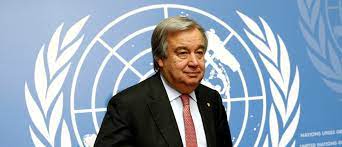
The secretary general, who will step down at the end of 2026, will say: “Last year, global military spending reached $2.7tn – over 200 times the UK’s current aid budget, or equivalent to over 70% of Britain’s entire economy.”
The deepening investment in weaponry runs alongside his concerns that the drivers of climate breakdown are being wilfully ignored and online content is undermining democracy.
Mark Townsend, 17 January, 26 https://www.theguardian.com/world/2026/jan/17/antonio-guterres-warns-forces-undermining-global-cooperation-un-80th-anniversary-secretary-general-multilateralism-international-law
In historic speech to mark UN’s 80th anniversary, secretary general makes impassioned plea for multilateralism and international law amid drastic US funding cuts.
The United Nations secretary general, António Guterres, will warn on Saturday of the peril posed by “powerful forces lining up to undermine global cooperation” in an address to mark the 80th anniversary of the UN’s first major meeting.
Speaking in London’s Methodist Central Hall – the site where eight decades earlier delegates from 51 countries came together for the inaugural session of the general assembly – the UN head will make an impassioned plea for the virtues of multilateralism and international law to prevail during a period of deepening global uncertainty.
In January 1946, the general assembly’s first resolution focused on disarmament and the elimination of atomic weapons as a global goal.
Now, Guterres warns of a planet facing myriad threats that were then unthinkable, citing the climate crisis and threat from “cyberspace” at a time many countries are locked into a new arms race, though he will hold off from naming offending states.
The secretary general, who will step down at the end of 2026, will say: “Last year, global military spending reached $2.7tn – over 200 times the UK’s current aid budget, or equivalent to over 70% of Britain’s entire economy.”
The deepening investment in weaponry runs alongside his concerns that the drivers of climate breakdown are being wilfully ignored and online content is undermining democracy.
“As the planet broke heat records, fossil fuel profits continued to surge. And in cyberspace, algorithms rewarded falsehoods, fuelled hatred, and provided authoritarians with powerful tools of control,” he will tell the London audience.
Comments from the 76-year-old come at a time of chronic funding difficulties for the UN, largely driven by the decisions of the US president, Donald Trump.
The US has announced it would be allocating just $2bn (£1.5bn) to UN humanitarian assistance, a fraction of its previous contributions as the leading funder. The announcement came with a warning from the US state department that the global body must “adapt, shrink or die”, and that demands would be imposed on countries receiving the money.
Just over a week later, Trump announced the US withdrawal from multiple UN agencies as well as its key climate treaty.
Experts say the funding cut will lead to a shrunken, less effective international aid system, with the UN already saying a funding shortfall threatens to cripple its global peacekeeping operations.
Guterres, however, says reforms will ensure the “United Nations is more agile, more coordinated and more responsive”.
IAEA chief says nuclear accident risk in Ukraine outweighs fear of atomic weapons.
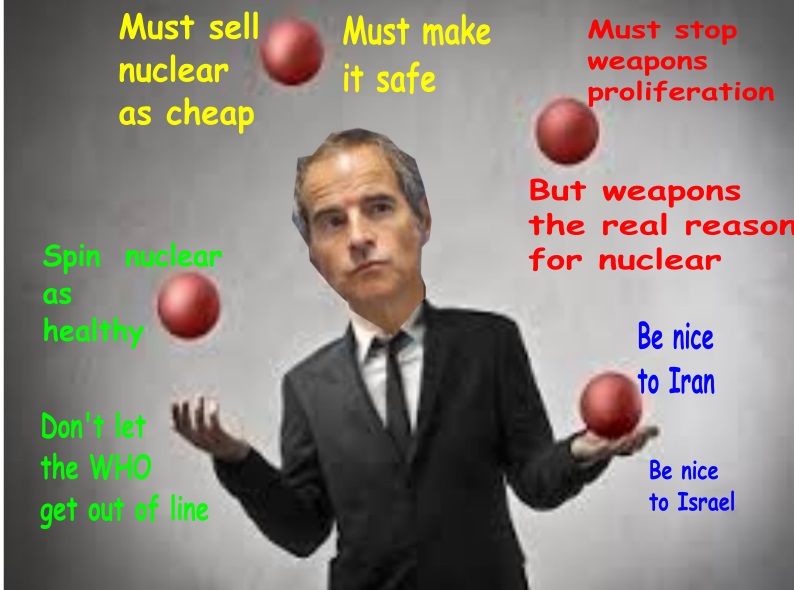
Rafael Grossi says fighting around Zaporizhzhia nuclear power plant has left Europe’s largest facility in ‘extremely fragile, volatile condition’ –
Beyza Binnur Donmez |16.01.2026 GENEVA, https://www.aa.com.tr/en/russia-ukraine-war/iaea-chief-says-nuclear-accident-risk-in-ukraine-outweighs-fear-of-atomic-weapons/3801135
The head of the UN nuclear watchdog said he is more worried about the risk of a nuclear accident in Ukraine than the potential use of atomic weapons, stressing the fragile situation at Europe’s largest nuclear power plant.
In an interview published on Friday, International Atomic Energy Agency Director General Rafael Grossi told RTVE that while the possibility of nuclear weapons being used in the Ukraine war cannot be fully ruled out, it remains unlikely.
“I believe that the possibility of the use of nuclear weapons in the context of this conflict is not very high,” Grossi said. “Therefore, we are immediately more concerned about the possibility of a nuclear accident than about the use of the nuclear weapon itself.”
Grossi underlined the dangers surrounding the Zaporizhzhia Nuclear Power Plant, which he described as “the most important nuclear power plant in Europe,” noting that it once supplied 20% of Ukraine’s electricity. The plant, located in a combat zone and occupied by Russia, remains highly vulnerable to military activity and power outages that could disrupt cooling systems.
“The situation today is extremely fragile. It is a combat zone,” he said, adding: “We are exercising this function of permanent observation and mediating between both belligerents to achieve, for example, specific ceasefires. We have already successfully negotiated four that allow us to carry out, for example, repairs on the high voltage lines that surround the plant, in order to precisely avoid radiological emergency situations.”
“It is an extremely fragile and volatile situation that we follow day by day,” he stressed.
Iran holds ‘significant amount’ of enriched uranium
Turning to Iran, Grossi said the country continues to hold a “significant amount” of highly enriched uranium, amid tensions and suspended inspections following attacks on nuclear facilities.
“There is still a significant amount of uranium enriched to 60% isotopic purity in Iran, which is practically the level required for the manufacture of nuclear weapons,” he said.
Grossi also warned against any Iranian move to withdraw from the Treaty on the Non-Proliferation of Nuclear Weapons, saying: “This would only aggravate the situation of tension that is already being experienced.”
To a question, the IAEA chief said the agency remains engaged in dialogue with Tehran and other key actors, including the US, to restore monitoring and prevent further escalation.
Labeling Kidnapping a ‘Capture,’ Media Legitimate Violation of International Law.

The word “abduct” was never used in the voice of a reporter from any of these papers to describe what the US had done.
These linguistic choices matter. “Capture” and “arrest” paint Trump, Delta Force and the CIA as righteous heroes protecting their country—as well as Venezuela and the rest of the world—from the villainous Maduros. “Abduct” and “kidnap” morally invert the good guy and bad guy roles, and would portray US actors as the wrongdoers
Gregory Shupak, January 20, 2026, https://fair.org/home/labeling-kidnapping-a-capture-media-legitimate-violation-of-international-law/
Corporate media have deployed a lexicon of legitimation in their coverage of the deadly US invasion of Venezuela and the abduction of President Nicolás Maduro, along with his wife and fellow politician Cilia Flores. Major news outlets have routinely described these events using words like “capture” (New York Times, 1/3/26) or “arrest” (BBC, 1/3/26), which presents them as a matter of enforcing the law against fugitives or criminals, and carries the built-in but false assumption that the US had the right or even duty to conduct its operation in the first place.
The ludicrous premise is that any time an arrest warrant is issued somewhere in the United States, the US has the right to do anything, anywhere in the world, in pursuit of the subject—including bombing another country, invading it, killing its citizens, and spiriting away its president and first lady. Cornell Law School professor Maggie Gardner (Transnational Litigation Blog, 1/5/26) rebuked the idea that the US merely enforced the law in Venezuela, pointing out (emphasis in original):
The ludicrous premise is that any time an arrest warrant is issued somewhere in the United States, the US has the right to do anything, anywhere in the world, in pursuit of the subject—including bombing another country, invading it, killing its citizens, and spiriting away its president and first lady. Cornell Law School professor Maggie Gardner (Transnational Litigation Blog, 1/5/26) rebuked the idea that the US merely enforced the law in Venezuela, pointing out (emphasis in original):
I used the news aggregator Factiva to examine New York Times, Wall Street Journal and Washington Post coverage from January 3 through January 5, the day of the US’s attack on Venezuela and the first two days after these developments. The papers published a combined 223 pieces that featured Maduro’s name, and 166 of these (74%) used the term “capture” or a form of it, such as “captured” or “capturing.” Sixty of these pieces, or 27%, included the word “arrest” or variations on the term, like “arrested” or “arresting.”
“Abduction” or “kidnapping”—synonyms that mean to take someone away unlawfully and by force—are far more suitable words for what the US did to Maduro and Flores. Only two pieces in the Post and one in the Journal used any form of “abduct” (such as “abduction”) in any of the articles that refer to Maduro—1% of the combined total articles. In each case, the term appears in quotation marks. The Times ran no pieces in which the word appeared.
The Post (1/3/26) shared a perplexing perspective from Geoffrey Corn—head of the Center for Military Law and Policy at Texas Tech University, and a former top legal adviser to the US Army—who said that the US Supreme Court has been clear since the late 19th century that “you can’t claim that you were abducted and therefore the court should not be allowed to assert authority over you.” The article went on:
“Maduro is not going to be able to avoid being brought to trial because he was abducted, so to speak, even if he can establish it violated international law,” Corn said, adding that in his view, the administration’s overnight military operation lacked any “plausible legal basis.”
So, despite Corn’s view that the US attack was illegal, he couldn’t bring himself to present Maduro’s abduction as literal rather than figurative.
That article, as well another in the Post (1/3/26) and one in the Wall Street Journal (1/5/26), quoted Democratic Senator Mark R. Warner:
If the United States asserts the right to use military force to invade and capture foreign leaders it accuses of criminal conduct, what prevents China from claiming the same authority over Taiwan’s leadership? What stops Vladimir Putin from asserting a similar justification to abduct Ukraine’s president?
Even as Warner is skeptical about the US’s actions in Venezuela, he still uses the language of “capture” for Maduro, while using “abduct” for a hypothetical scenario in which the official enemy Putin carries out a parallel crime. None of the articles that included Warner’s quote commented on this linguistic inconsistency.
The word “abduct” was never used in the voice of a reporter from any of these papers to describe what the US had done.
‘It’s not a bad term’
Venezuelan officials, including Maduro himself (New York Times, 1/5/26), say that he was “kidnapped” by the US. They’re not the only ones. On Democracy Now! (1/3/26), Venezuelan journalist Andreína Chávez and US-based Venezuelan historian Miguel Tinker Salas both used that word to characterize what the US did to Maduro and Flores.
Canada’s national broadcaster, the CBC (1/5/26), regarded the idea that Maduro was “kidnapped” as at least meriting serious discussion. Co-anchor Andrew Chang asked:
Did the US military just kidnap Nicholas Maduro?… “Kidnap” is a loaded word because it implies illegality. Maybe a more neutral way of describing Maduro’s capture is as an “abduction,” but the US government calls it an “arrest.”…
This isn’t some nerdy question about semantics. It’s a question about law, and whether the US has the legal right to extract world leaders from their homes, and maybe even whether other countries might have that right, too.
Notably, when Trump was told that Venezuela’s acting President Delcy Rodríguez said it was a “kidnapping,” he didn’t push back, saying, “It’s not a bad term.”
However, the only times “kidnap” appeared in the Times, Journal or Post in relation to Maduro and Flores—in 10 pieces, or 4% of the coverage—came when that term was attributed to representatives of the Venezuelan state. Suggesting to readers that a government that has been demonized in US media for decades is the only source that regards Maduro and Flores as having been “kidnapped” is tantamount to suggesting that no credible sources take that position.
The three papers combined to run zero articles treating as an objective fact the view that America “abducted” or “kidnapped” a sitting head of state in defiance of international law, while they regularly used “captured” and “arrested” outside of quotation marks, as if those word choices are merely flat descriptions of reality.
ICE also ‘arrests’
These linguistic choices matter. “Capture” and “arrest” paint Trump, Delta Force and the CIA as righteous heroes protecting their country—as well as Venezuela and the rest of the world—from the villainous Maduros. “Abduct” and “kidnap” morally invert the good guy and bad guy roles, and would portray US actors as the wrongdoers.
This particular form of word play is part of a pattern for corporate media under this Trump administration. Immigration and Customs Enforcement (ICE) round-ups of migrants in the United States have featured what can most accurately be described as abductions or kidnappings of people—off the streets, at courts, in workplaces and elsewhere—by armed, masked and unaccountable agents, into unmarked vehicles. It’s little surprise, then, that immigration lawyers, members of Congress, and law professors (LA Times, 10/21/25), among others, routinely use the word “abduct” to describe these events.
And describing ICE’s practices as “kidnappings” isn’t some fringe view. Rep. Jesus “Chuy” Garcia (D-Ill.) uses the word (Independent, 12/5/25), as does Rolling Stone editor Tim Dickinson (7/2/25), and the academic and author Natasha Lennard of the New School for Social Research in New York (Intercept, 7/1/25). ICE’s victims (Mother Jones, 7/18/27; NPR, 7/27/25) and their families (Guardian, 4/15/25, 6/10/25, 6/26/25) frequently describe their ordeal in such terms.
Yet corporate media eschew such language for the same sanitized “arrest” or “capture” language they employed for Maduro and Flores. When I used Factiva to pair “ICE” with the words “abduct” or “kidnap,” just two articles turned up that included the perspective that ICE “abducts” people (New York Times, 7/13/25; Washington Post, 12/3/25), both attributed to critical sources. Five (2%) included a version of the word “kidnap,” all in quotation marks.
Three of these quotes were from the much-maligned Venezuelan government (New York Times, 3/18/25, 11/25/25; Washington Post, 5/4/25), one came from a man whose father and daughter-in-law had been detained by ICE (Washington Post, 3/21/25), and another from a member of the Chicago Board of Education (New York Times, 10/22/25).
The language is freighted in the same way, whether it is migrants under attack from US jackboots, or those same forces unleashed against socialist politicians in Global South countries seeking to escape imperial domination.
The word “abduct” was never used in the voice of a reporter from any of these papers to describe what the US had done.
d “kidnap” morally invert the good guy and bad guy roles, and would portray US actors as the wrongdoers.
Gregory Shupak, January 20, 2026
Corporate media have deployed a lexicon of legitimation in their coverage of the deadly US invasion of Venezuela and the abduction of President Nicolás Maduro, along with his wife and fellow politician Cilia Flores. Major news outlets have routinely described these events using words like “capture” (New York Times, 1/3/26) or “arrest” (BBC, 1/3/26), which presents them as a matter of enforcing the law against fugitives or criminals, and carries the built-in but false assumption that the US had the right or even duty to conduct its operation in the first place.
The ludicrous premise is that any time an arrest warrant is issued somewhere in the United States, the US has the right to do anything, anywhere in the world, in pursuit of the subject—including bombing another country, invading it, killing its citizens, and spiriting away its president and first lady. Cornell Law School professor Maggie Gardner (Transnational Litigation Blog, 1/5/26) rebuked the idea that the US merely enforced the law in Venezuela, pointing out (emphasis in original):
Under customary international law, a sovereign can only exercise enforcement jurisdiction in the territory of another sovereign if it has that sovereign’s consent. This hard line limiting enforcement powers to a sovereign’s own territory is clear and well-established.
Venezuela, of course, didn’t consent to being bombed, or to having Maduro and Flores taken from the country at gunpoint. Accordingly, what happened in Caracas is best understood not as the US enforcing the law, but as the US breaking international law. It’s misleading, therefore, to use language like “capture” and “arrest,” which evoke the US upholding the law, to describe blowtorch-wielding, heavily armed US forces taking Maduro and Flores prisoner in the middle of the night (BBC, 1/4/26).
‘Abducted, so to speak’
I used the news aggregator Factiva to examine New York Times, Wall Street Journal and Washington Post coverage from January 3 through January 5, the day of the US’s attack on Venezuela and the first two days after these developments. The papers published a combined 223 pieces that featured Maduro’s name, and 166 of these (74%) used the term “capture” or a form of it, such as “captured” or “capturing.” Sixty of these pieces, or 27%, included the word “arrest” or variations on the term, like “arrested” or “arresting.”
“Abduction” or “kidnapping”—synonyms that mean to take someone away unlawfully and by force—are far more suitable words for what the US did to Maduro and Flores. Only two pieces in the Post and one in the Journal used any form of “abduct” (such as “abduction”) in any of the articles that refer to Maduro—1% of the combined total articles. In each case, the term appears in quotation marks. The Times ran no pieces in which the word appeared.
The Post (1/3/26) shared a perplexing perspective from Geoffrey Corn—head of the Center for Military Law and Policy at Texas Tech University, and a former top legal adviser to the US Army—who said that the US Supreme Court has been clear since the late 19th century that “you can’t claim that you were abducted and therefore the court should not be allowed to assert authority over you.” The article went on:
“Maduro is not going to be able to avoid being brought to trial because he was abducted, so to speak, even if he can establish it violated international law,” Corn said, adding that in his view, the administration’s overnight military operation lacked any “plausible legal basis.”
So, despite Corn’s view that the US attack was illegal, he couldn’t bring himself to present Maduro’s abduction as literal rather than figurative.
That article, as well another in the Post (1/3/26) and one in the Wall Street Journal (1/5/26), quoted Democratic Senator Mark R. Warner:
If the United States asserts the right to use military force to invade and capture foreign leaders it accuses of criminal conduct, what prevents China from claiming the same authority over Taiwan’s leadership? What stops Vladimir Putin from asserting a similar justification to abduct Ukraine’s president?
Even as Warner is skeptical about the US’s actions in Venezuela, he still uses the language of “capture” for Maduro, while using “abduct” for a hypothetical scenario in which the official enemy Putin carries out a parallel crime. None of the articles that included Warner’s quote commented on this linguistic inconsistency.
The word “abduct” was never used in the voice of a reporter from any of these papers to describe what the US had done.
‘It’s not a bad term’
Venezuelan officials, including Maduro himself (New York Times, 1/5/26), say that he was “kidnapped” by the US. They’re not the only ones. On Democracy Now! (1/3/26), Venezuelan journalist Andreína Chávez and US-based Venezuelan historian Miguel Tinker Salas both used that word to characterize what the US did to Maduro and Flores.
Canada’s national broadcaster, the CBC (1/5/26), regarded the idea that Maduro was “kidnapped” as at least meriting serious discussion. Co-anchor Andrew Chang asked:
Did the US military just kidnap Nicholas Maduro?… “Kidnap” is a loaded word because it implies illegality. Maybe a more neutral way of describing Maduro’s capture is as an “abduction,” but the US government calls it an “arrest.”…
This isn’t some nerdy question about semantics. It’s a question about law, and whether the US has the legal right to extract world leaders from their homes, and maybe even whether other countries might have that right, too.
Notably, when Trump was told that Venezuela’s acting President Delcy Rodríguez said it was a “kidnapping,” he didn’t push back, saying, “It’s not a bad term.”
However, the only times “kidnap” appeared in the Times, Journal or Post in relation to Maduro and Flores—in 10 pieces, or 4% of the coverage—came when that term was attributed to representatives of the Venezuelan state. Suggesting to readers that a government that has been demonized in US media for decades is the only source that regards Maduro and Flores as having been “kidnapped” is tantamount to suggesting that no credible sources take that position.
The three papers combined to run zero articles treating as an objective fact the view that America “abducted” or “kidnapped” a sitting head of state in defiance of international law, while they regularly used “captured” and “arrested” outside of quotation marks, as if those word choices are merely flat descriptions of reality.
ICE also ‘arrests’
These linguistic choices matter. “Capture” and “arrest” paint Trump, Delta Force and the CIA as righteous heroes protecting their country—as well as Venezuela and the rest of the world—from the villainous Maduros. “Abduct” and “kidnap” morally invert the good guy and bad guy roles, and would portray US actors as the wrongdoers.
This particular form of word play is part of a pattern for corporate media under this Trump administration. Immigration and Customs Enforcement (ICE) round-ups of migrants in the United States have featured what can most accurately be described as abductions or kidnappings of people—off the streets, at courts, in workplaces and elsewhere—by armed, masked and unaccountable agents, into unmarked vehicles. It’s little surprise, then, that immigration lawyers, members of Congress, and law professors (LA Times, 10/21/25), among others, routinely use the word “abduct” to describe these events.
And describing ICE’s practices as “kidnappings” isn’t some fringe view. Rep. Jesus “Chuy” Garcia (D-Ill.) uses the word (Independent, 12/5/25), as does Rolling Stone editor Tim Dickinson (7/2/25), and the academic and author Natasha Lennard of the New School for Social Research in New York (Intercept, 7/1/25). ICE’s victims (Mother Jones, 7/18/27; NPR, 7/27/25) and their families (Guardian, 4/15/25, 6/10/25, 6/26/25) frequently describe their ordeal in such terms.
Yet corporate media eschew such language for the same sanitized “arrest” or “capture” language they employed for Maduro and Flores. When I used Factiva to pair “ICE” with the words “abduct” or “kidnap,” just two articles turned up that included the perspective that ICE “abducts” people (New York Times, 7/13/25; Washington Post, 12/3/25), both attributed to critical sources. Five (2%) included a version of the word “kidnap,” all in quotation marks.
Three of these quotes were from the much-maligned Venezuelan government (New York Times, 3/18/25, 11/25/25; Washington Post, 5/4/25), one came from a man whose father and daughter-in-law had been detained by ICE (Washington Post, 3/21/25), and another from a member of the Chicago Board of Education (New York Times, 10/22/25).
The language is freighted in the same way, whether it is migrants under attack from US jackboots, or those same forces unleashed against socialist politicians in Global South countries seeking to escape imperial domination.
60 years since the Palomares incident “The residents were constantly misinformed”.
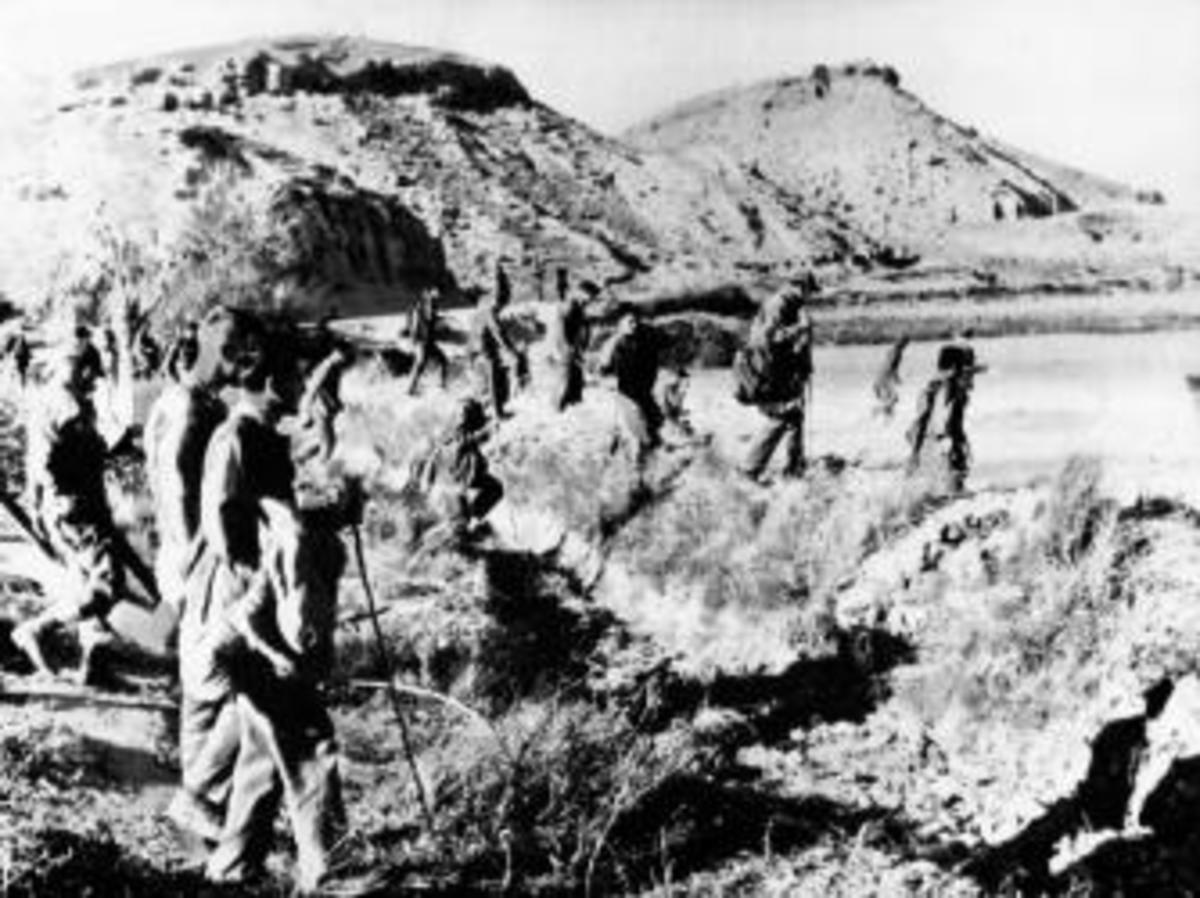
On the Palomares nuclear accident, symbolic decontamination actions, and the lasting damage to people and the environment. A conversation with José Herrera Plaza.Interview: Norbert Suchanek
Sixty years ago, on January 17, 1966, one of the most serious nuclear accidents of the Cold War occurred over southern Spain. A US Air Force tanker collided with a B-52 bomber carrying four hydrogen bombs. Both aircraft exploded; the debris and the dangerous cargo fell from the sky over the small coastal village of Palomares in Andalusia. The parachutes on two of the four bombs failed to deploy. They shattered on impact, contaminating the air and soil around Palomares with plutonium and uranium. The fourth bomb fell into the Mediterranean Sea and was not recovered for 80 days. Where were you in January 1966 when the hydrogen bombs fell from the sky?
I was just starting school in Almería at the time. That’s about 90 kilometers from Palomares. Like most people in Andalusia, I had no idea about the hydrogen bombs hanging over our heads.
When and why did you begin your research on the Palomares accident and make it your main topic?
On January 13, 1986, I attended a meeting of the residents of Palomares. It was three days before the 20th anniversary of the accident, and their claims for compensation for health damages were about to expire. I wanted to make a documentary about this little-known, almost unbelievable story, but at the time, the source material relevant for a documentary was classified. I waited 21 years, gathering all available documents, until I was finally able to complete the documentary “Operation Broken Arrow: The Palomares Nuclear Accident.”
What does “Operation Broken Arrow” stand for?
“Broken arrow” is a code word used by the US military. It refers to an incident involving nuclear weapons, such as an accidental or unexplained nuclear explosion, or the loss or theft of nuclear weapons.
How did the local Spanish authorities react in January 1966? Were they aware of the plutonium danger?
The local authorities reacted according to the standard protocol for an aircraft accident and were without information for several days regarding the involvement of nuclear weapons and consequently also regarding the widespread contamination.
How and when did the Madrid government react?
Spanish authorities learned of the crash almost immediately, thanks to warnings transmitted by a Spanish Navy helicopter via emergency channels. Also on the same day, they learned from the US ambassador that the aircraft was carrying four hydrogen bombs. However, both governments remained silent until the media informed the public three days later.
How was it possible that the media reported on it so quickly during the Franco dictatorship?
Two days after the accident, the Spanish-American journalist André del Amo, working for United Press, was in Palomares and confirmed the involvement of nuclear weapons as well as the ground measurements taken with Geiger counters. His report appeared in major media outlets worldwide the following day. The dictatorship reacted in its usual manner: it confiscated newspapers from kiosks and at the airports in Madrid and Barcelona as soon as international flights landed.
What were the direct consequences of the hydrogen bombs bursting? Was there a risk of a nuclear explosion?
The two Mk-28-FI bombs had 68 times the explosive power of the atomic bomb dropped on Hiroshima. Upon impact in Palomares, the bombs exploded because the conventional explosive charge detonated in the fuse. An area of 635 hectares was subsequently contaminated with fissile fuel: approximately ten kilograms of plutonium-239 and -241, as well as slightly more than ten kilograms of uranium-235 and depleted uranium-238. While the risk of an accidental nuclear detonation was very low, it did exist. These hydrogen bombs were among the most technologically advanced in the US arsenal at the time. Their safety systems were quite good—with the exception of the conventional explosive, which was sensitive to shocks. Due to this accident and a similar one two years later in Greenland, the US military replaced this explosive with a shock- and fire-resistant alternative.
Was the population warned about the plutonium contamination and the consumption of potentially contaminated food such as tomatoes?
The inhabitants of Palomares were continually and insidiously misinformed for fifty years, both under the Franco dictatorship and in democratic Spain. They learned about their precarious situation largely through banned shortwave radio stations such as the communist Radio España Independiente , as well as through the BBC and Radio Paris with their nightly Spanish-language programs. A prominent member of the Spanish nobility, the Duchess of Medina Sidonia, also contributed to informing the local population about their situation and their rights, for which she was imprisoned by the fascist dictatorship.
Are there any data or estimates on the number of people who became ill or died as a result of the radioactive contamination?
No, because a comprehensive epidemiological study was never permitted. Independent attempts failed miserably. At the same time, the governments in Madrid and Washington maintain the official narrative that there has never been a single case of cancer caused by plutonium. In reality, however, Palomares is an environmental disaster zone with significant health risks for its inhabitants. Yet Palomares is not an exception compared to similar incidents elsewhere in the world: an invisible minority, invisible consequences.
Did the nuclear incident have any impact on tourism in southern Spain, which was then becoming an important economic factor?
In 1966, tourists visited other parts of Spain, but not this region. The province of Almería was very poor at the time and virtually isolated due to its poor transport infrastructure. However, there were fears that the accident could negatively impact tourism in the rest of the country, as the international press—especially the British and Italian press in Europe—reported on it. In Australia, a newspaper owned by the young Rupert Murdoch claimed there had been a nuclear explosion, that thousands of people were fleeing, and that the entire Spanish Mediterranean coast was contaminated. This led to the Spanish Minister of Information and the American ambassador swimming in the sea at Palomares beach in front of the media.
The US military conducted a large-scale search and cleanup operation after the crash in Palomares. How did the local population react?
The main priority of the extensive military operation was the search for the missing bomb on land and underwater. The search on land lasted over 45 days, the search at sea 80 days. Second priority was the recovery of the flight recorder and the classified B-52 components, primarily the radio equipment used for the combat log. Thirdly, over 125 tons of wreckage from the bomber and the tanker aircraft were to be recovered and sunk off the coast in the Mediterranean Sea. Finally, a symbolic decontamination operation was carried out for the international community. After the disaster, some people likely suffered from a kind of post-traumatic stress. Subsequently, a collective paranoia gripped the city, exacerbated by the contradictions between the statements of the authorities of both countries. The population was suddenly catapulted into the nuclear age and had to grapple with a new concept: radioactivity.
Was the military able to remove all the plutonium from the region?
After lengthy and asymmetrical negotiations between the hegemonic power, the USA, and the Franco dictatorship, they agreed to remove the plutonium, which had been scattered to the winds, and return it to the USA. However, they transported only 650 cubic meters of contaminated soil and 350 cubic meters of contaminated crop residue to the USA. The agreement was not honored because the excavated soil, stored in metal drums, was not the most heavily contaminated. It is estimated that less than one percent of the plutonium, just under 100 grams, returned to the USA in the 4,810 metal drums, each holding 208 liters. The remaining contaminated fields were plowed to inject the plutonium 30 centimeters into the soil. Forty years later, two secretly constructed pits containing approximately 4,000 cubic meters of radioactive waste were discovered in the region.
What happened to the contaminated material from Palomares in the USA?
Two metal drums were sent to the Los Alamos National Laboratory for plant experiments. 4,808 metal drums were transported to Aiken, South Carolina, to the Savannah River Nuclear Complex of the U.S. Atomic Energy Commission and buried at a depth of six meters. This was accompanied by a comprehensive, worldwide propaganda campaign. The fact that 99 percent of the plutonium and uranium remained in the soil of Palomares was kept secret from the public, and especially from the residents and farmers who cultivated these radioactively contaminated areas. The U.S. Air Force and the Spanish government assured them that the land was completely decontaminated and that there was no danger. Meanwhile, the U.S. Atomic Energy Commission and the Junta de Energía Nuclear in Spain used the situation to conduct a secret experiment program on the local population. The aim was to investigate the uptake and storage of plutonium and uranium in the human body by a representative number of individuals from a population potentially exposed to inhaling plutonium oxide aerosol. This was the secret program codenamed “Indalo Project,” which was carried out without the informed consent of the local population.
What is the current situation in Palomares? Are there still contaminated areas and radioactive hazards in the region?
Despite assurances from Spain and the US that there was no longer any danger to farmers and their families, the plowing of the soil with plutonium in 1966 led to the stirring up and release of numerous aerosols containing radioactive elements. For forty years, the residents of Palomares were exposed to radioactive nuclides. It wasn’t until 2006 that the first radiation protection measures were implemented for the population, restricting access to and agricultural use of a 40-hectare area through fencing and marking. Now, sixty years later, we are still waiting for the central government in Madrid to carry out the decontamination. It has never prioritized the issue, even though it is documented that more than 210 residents exhibited symptoms of internal lung contamination. The actual number of those affected, however, remains unknown. After all, the political elites of the central government live over 520 kilometers away in Madrid.
Why did the B-52 bomber fly over southern Spain with nuclear weapons back then?
This occurred as part of Operation Chrome Dome, which began on January 18, 1961. From then on, four to six strategic bombers flew round-trip missions over Spain every day, year after year. During the Cuban Missile Crisis of 1962, 42 bombers were in the air daily. They came from the East Coast of the United States, crossed Spanish airspace, approached southern Italy, and returned to their bases over Spain. Each B-52 carried four thermonuclear bombs. In an attack scenario, they could reach and attack their targets within one to two hours, depending on whether the target was in the USSR or another Warsaw Pact state. For five years, more than 17,000 bombers flew over Spain and were refueled 26,000 times. No other country in Europe permitted such dangerous maneuvers in its airspace. Almost 35,000 hydrogen bombs flew over our heads. The collisions over Palomares and two years later over Thule in Greenland occurred because the law of probability came into play.
How will you commemorate the 60th anniversary of this never-ending Palomares disaster?
I am planning a photo exhibition and a panel discussion at the Villaespesa Library in Almería entitled “Palomares – 60 Years of Government Failure.” I also expect to present my new book at the end of January. It is titled “The Year of the Bombs: Stories from Palomares.” The book brings together the testimonies of 27 Spaniards and Americans who were involuntarily involved in the Palomares disaster. It is written in the style of a documentary narrative, similar to Svetlan Alexievich’s “Voices from Chernobyl,” a work to which it thus pays homage. It is about counteracting oblivion. The story of Palomares is not yet over. It continues to be written.
Ukraine and Russia agree temporary ceasefire to allow repairs to Zaporizhzhia nuclear power line.
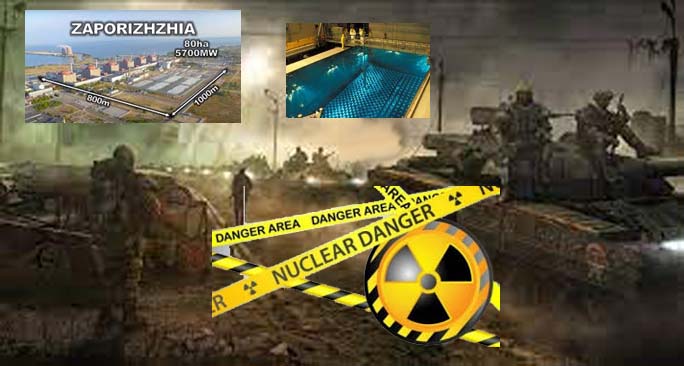
The IAEA director warned that attacks on Ukraine’s power infrastructure have “direct implications on the nuclear safety of its nuclear facilities”.
Mirror UK, Emma O’Neill Content Editor, 16 Jan 2026
Ukraine and Russia have agreed a temporary ceasefire to allow urgent repair work on a damaged power line at Europe’s largest nuclear plant, the Zaporizhzhia Nuclear Power Plant (ZNPP), IAEA officials confirmed today……….
The 330 kV backup line was disconnected on 2 January during military activity, leaving the plant reliant on a single 750 kV main power line. Technicians from Ukraine’s electrical grid operator are expected to begin repairs under the short-term truce in the coming days.
An IAEA team has departed Vienna to travel to the frontline and monitor the work, ensuring that safety measures are strictly followed during the repairs.
The agency confirmed that winter protection measures are in place at the plant, including temperature controls to prevent freezing in groundwater wells that supply cooling systems for reactors and spent fuel pools. Emergency diesel generators are also fully operational should the plant lose off-site power again.
The situation highlights the ongoing risks to Ukraine’s nuclear facilities, with military activity recently damaging a substation at the Chernobyl plant and forcing temporary power reductions at other sites.
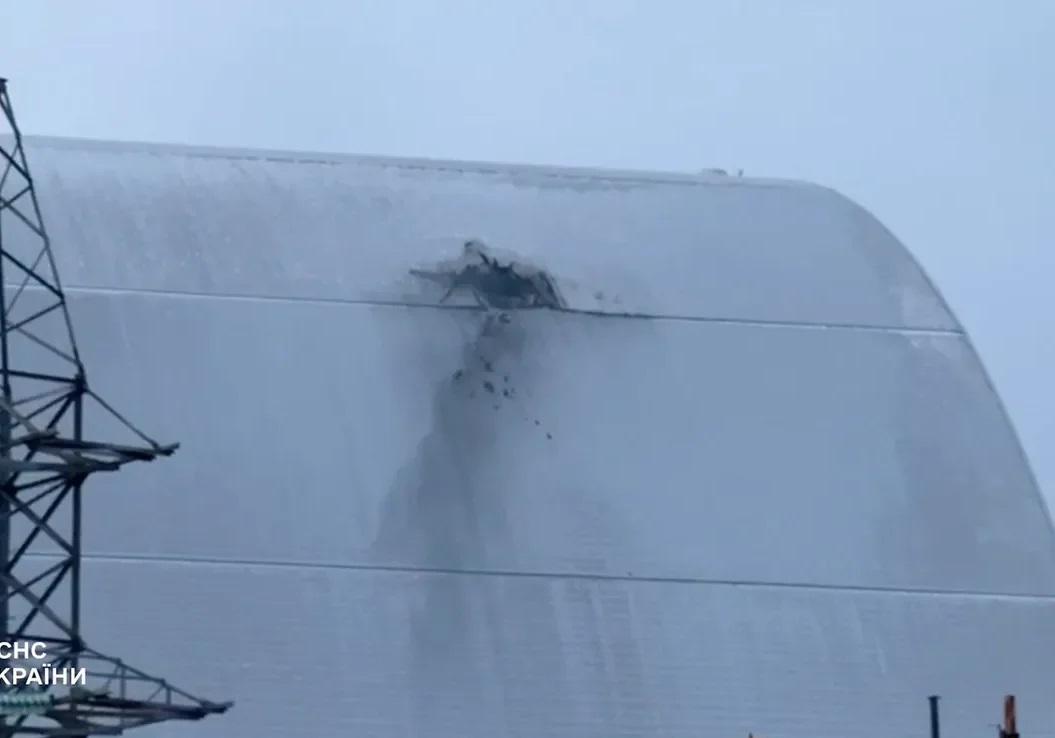
Grossi warned that attacks on Ukraine’s power infrastructure have “direct implications on the nuclear safety of its nuclear facilities” and announced plans for another IAEA mission to assess 10 critical substations supplying electricity for reactor cooling systems and safety equipment.
Over the past week, IAEA teams reported air raid alarms and military activity near all five nuclear sites in Ukraine, including explosions and flying objects close to Zaporizhzhia, Khmelnitsky, South Ukraine, and Chernobyl plants.
The temporary ceasefire now allows repairs to the ZNPP backup line to go ahead, providing a vital safeguard for Europe’s largest nuclear facility and reducing the risk of a serious nuclear incident. https://www.mirror.co.uk/news/world-news/ukraine-russia-agree-temporary-ceasefire-36566368
The Mirage of the Enemy: Deconstructing Contemporary Media Bias
Following the “12-Day War” strikes in June 2025, which targeted Iranian facilities at Natanz and Fordow, the narrative shifted from “containment” to “inevitable conflict.” By painting the Iranian leadership as “Mad Mullahs” who cannot be deterred, the West creates a self-fulfilling prophecy where diplomacy is framed as cowardice and bombardment as “safety.”
20 January 2026 David Tyler , Australian Independent Media
In the opening weeks of 2026, the Western media’s portrait of Iran has reached a fever pitch of distortion. We are told, with the practised urgency of a countdown, that we are witnessing the final days of a “mad” regime, a nuclear-armed chaos factory that must be dismantled for the safety of the world. Yet, if we pull back the curtain on this narrative, we find a much more complex and tragic story, one where Iran is not merely a rogue actor, but a civilisation trapped between the hammer of domestic repression, and the anvil of imperial design whilst being wickedly misreported by a mainstream media, at the service of a power elite.
To understand Iran today, we must first dismantle two colliding fictions that monopolise our screens: the myth of the “irrational” religious state and the “imminent” nuclear menace. Blend in blame the victim in the guise of Coalition Islamophobia such Tony Abbott’s jibe that Islam “has a massive problem”.
The Original Sin: A Democracy Interrupted
The “anti-Western” sentiment so often cited by CNN or the ABC as proof of Iranian fanaticism did not emerge from a theological vacuum. It was set up in 1953. When Prime Minister Mohammad Mossadegh, a secular nationalist, dared to nationalise Iran’s oil to benefit his own people, the CIA and MI6 responded with Operation Ajax. By toppling a democratically elected leader to reinstate the Shah, the West sent a clear message: Iranian sovereignty is secondary to the flow of crude.
Historical amnesia is the bedrock of modern disinformation. We are taught to see the 1979 Revolution as a sudden burst of “madness,” ignoring a quarter-century of torture by the Shah’s SAVAK secret police that preceded it. The West did not lose a “friend” in 1979; it lost a compliant oil warden, and it has never forgiven the Iranian people for the replacement.
The Nuclear Paradox: A Richly Hypocritical Charge
The most potent weapon in the media’s arsenal is the “Nuclear Menace.” For over two decades, we have been told Iran is “months away” from a bomb. It’s a claim that persists despite IAEA confirmations of compliance and US intelligence assessments that Tehran has not, in fact, decided to weaponise.
There is a profound irony in watching nuclear-armed powers; including Israel, with its uninspected arsenal of hundreds of warheads; lecture a nation under total siege about the “danger of annihilation.” This is the collision of the Whipping Boy and the Existential Threat: Iran must be small enough to be bullied by sanctions, yet large enough to justify the $100 billion arms deals the U.S. signs with its regional rivals.
Following the “12-Day War” strikes in June 2025, which targeted Iranian facilities at Natanz and Fordow, the narrative shifted from “containment” to “inevitable conflict.” By painting the Iranian leadership as “Mad Mullahs” who cannot be deterred, the West creates a self-fulfilling prophecy where diplomacy is framed as cowardice and bombardment as “safety.”
The Starlink Catastrophe: A Digital Trojan Horse
Nowhere is the gap between Western “solidarity” and tactical reality more glaring than in the recent Starlink disaster. Throughout late 2025, Western pundits celebrated a “digital liberation” as thousands of Starlink internet terminals were reportedly smuggled into Iran to bypass government blackouts. It was framed as a gift from the tech elite “billionaire-Bros” to the brave dissidents in the streets of Tehran.
Were the dissidents ranks swollen by foreign agents? Certainly. It was Israel who prevailed upon “Help is on its way” Trump not to proceed because so many “assets” had been lost. We will never know the true figures. But we do know that rebels were trapped. In reality, it was a digital Trojan Horse. By January 2026, it was clear that the “liberation” had been turned into a mass-surveillance dragnet. The Iranian Cyber Police (FATA) and the IRGC’s intelligence wing had not been outsmarted; they had been waiting.
The Trap: Because Starlink terminals require a clear line of sight to the sky, activists were forced to place them on rooftops and in open squares.
The Triangulation: Using signal-intercept technology and GPS-tracking beacons embedded in intercepted shipments, the Iranian police were able to map the exact coordinates of every active terminal.
The Fallout: In a series of ruthless raids across Tehran, Isfahan, and Mashhad, thousands of individuals, believing they were using “secure” Western tech, unwittingly broadcast their locations to the state.
This catastrophe reveals a dark truth: Western “help” often functions more as a tool for intelligence gathering than for any liberation. The thousands of young Iranians and “helpers” now in custody are the human cost of a “regime change” fantasy that prioritises high-tech optics over the safety of the people on the ground.
Sanctions as Slow-Motion War
We are told that sanctions target “the regime,” (never the government) but the reality is collective punishment. By severing Iran from the SWIFT banking system, the West has triggered 70% food inflation and chronic shortages of life-saving medicines. This is the Shock Doctrine in action: hollow out the middle class, starve the vulnerable, and wait for the “inevitable” uprising.
As the 2026 protests continue, fuelled by both genuine grievance and economic desperation, we must be wary of “selective outrage.” The same outlets that decry Iranian repression remain silent on Saudi beheadings or the UAE’s labour- camps. This hypocrisy suggests that the West is not interested in Iranian freedom, but in Iranian subservience.
Myths vs. Realities of 2026
| The Myth | The Ground Reality | The Strategic Goal |
| “Irrational Actors” | Iran’s strategy is a defensive response to 70 years of encirclement. | Justify pre-emptive strikes. |
| “Tech Liberation” | Tools like Starlink were compromised, leading to 2,400+ arrests. | Co-opt domestic dissent for foreign Intel. |
| “Targeted Sanctions” | 85 million people are suffering from medicine and food shortages. | Destabilise for regime change. |
This guide deconstructs the mechanisms of “perception management” used by mainstream Western media as we navigate the crises of 2026. It highlights the stark contrast between the breathless coverage of Iran’s internal strife and the calculated silence or obfuscation regarding the “old news” of a post-Assad Syria and the enduring genocide in Gaza.
1. Selective Credibility: The Death Toll Gap
One of the most potent tools of manipulation is the Hierarchy of Proof. In 2026, we see a radical divergence in how Western outlets verify human loss.
In Iran: Media outlets like CBS and the ABC frequently lead with headlines such as “Over 12,000 feared dead,” citing “anonymous sources” or single activists with a VPN. These figures are treated as objective truth to manufacture a sense of immediate, catastrophic urgency that demands foreign intervention.
In Gaza: Despite the “first live-streamed genocide” producing mountains of forensic video evidence, Western media continues to use the “Gaza Health Ministry” caveat to cast doubt on Palestinian death tolls. Even as the count surpassed 70,000 in late 2025, it was framed as “disputed” or “unverifiable,” a technique designed to stall public empathy and political action.
2. The Starlink Catastrophe: A Case Study in Techno-Orientalism
The recent tragedy involving Starlink terminals in Iran serves as a masterclass in how Western media markets “liberation” while obscuring tactical reality. In late 2025, a narrative was sold to the Western public: Silicon Valley would “break the mullahs’ internet” by smuggling thousands of terminals into the country.
The catastrophe unfolded in three distinct phases of media manipulation:………………………………………………………………………………………………………………………………………….. https://theaimn.net/the-mirage-of-the-enemy-deconstructing-contemporary-media-bias/
US aggression, UK support: The ‘special relationship’
From Iran to Libya, from Panama to Venezuela, there is a history of the UK supporting illegal US military interventions
MARK CURTIS, 12 January 2026, https://www.declassifieduk.org/us-aggression-uk-support-the-special-relationship/
Forty years ago, US warplanes bombed Libya, attempting to assassinate its leader Muammar Gaddafi. Failing in that task, they managed to kill dozens of civilians in Tripoli, Libya’s capital.
The attacks, which were in response to the bombing of a Berlin nightclub blamed on Gaddafi, were strongly supported by Margaret Thatcher’s government. Indeed, she allowed some of the US jets to take off from bases in Britain.
In the face of widespread public opposition to the US raid, a defiant Thatcher told parliament it was “a necessary and proportionate response to a clear pattern of Libyan terrorism” and to “uphold international law”.
However, the UN General Assembly, and most world opinion, condemned the attack as a violation of international law.
But for the British prime minister: “The United States has stood by us in times of need, as we have stood by her. To refuse their request for the use of bases here would have been to abandon our responsibilities as an ally and to weaken the fight against terrorism.”
Fast forward two decades, and we find ourselves in a not dissimilar situation over US attacks on Venezuela.
UK ministers give their backing to the kidnapping of a foreign head of state amidst a military intervention, condemned in the wider world but supported in Whitehall because of the so-called “special relationship”.
‘Our full support’
It was always thus. Three years after the attack on Libya, the US invaded Panama in December 1989. US aggression killed up to 3,000 people in this instance, and overthrew President Manuel Noriega, who had been on the CIA’s payroll for decades.
The invasion was widely considered to be illegal and in violation of the charters of both the UN and the Organization of American States.
A Foreign Office legal adviser wrote on the day of the invasion that “it is not possible to conclude that the American action was justified in international law”.
This didn’t matter in the British corridors of power. In a private phone call, Thatcher assured US president George W Bush that the intervention “was a very courageous decision which would have our full support”.
In the days that followed, Britain even vetoed a UN Security Council resolution which “strongly deplores” the invasion.
Clinton/Blair double act
A change in leadership in London and Washington made little difference to this pattern in the 1990s when the double act became Bill Clinton and Tony Blair.
In August 1998, Clinton launched a wave of cruise missile attacks on targets in Afghanistan and Sudan in retaliation for Al Qaeda’s bombing of US embassies in Kenya and Tanzania earlier that month.
Al Qaeda’s bombings were horrific, killing over 300 people. But while the US retaliation struck terrorist training camps in Afghanistan, its target in Sudan was a pharmaceuticals factory that produced medicines for the country’s population.
The US claimed the plant was manufacturing chemical weapons but no strong evidence ever emerged for this.
Amid the controversy, Bill Clinton blocked proposals for a UN investigation into the matter while Tony Blair strongly backed his ally’s attacks — against the advice of some British diplomats reportedly being appalled at them.
‘Proper legal authority’
It was only a few months later, in December 1998, that Bill and Tony worked even more closely together in a new bombing campaign.
They authorised four days of air strikes on Iraq, ostensibly to degrade dictator Saddam Hussein’s ability to store and produce weapons of mass destruction (which, of course, never materialised).
The declassified files show that Blair and his closest advisers were consistently informed by UK legal advisers that attacking Iraq would not be lawful.
The only exception would be if a new UN Security Council resolution were to be passed saying Saddam was in “material breach” of Iraq’s previous commitments – which London and Washington never secured.
In a sign of Blair’s attitude towards legal requirements, he privately wrote at the time that he found his law officers’ legal advice “unconvincing”.
When he announced military action to parliament in November 1998, Blair misled the house by saying: “I have no doubt that we have the proper legal authority, as it is contained in successive Security Council resolution documents”.
‘Act of war’
Over 20 years later, it was the turn of Boris Johnson to acquiesce to Donald Trump in an overtly illegal US act of aggression.
In January 2020, Trump ordered a drone strike that killed Iranian General Qasem Soleimani, the commander of the Quds force, a branch of Iran’s Islamic Revolutionary Guard Corps which the US had designated a terrorist organisation.
Washington tried to justify the killing by claiming it had intelligence that Soleimani was plotting imminent attacks on US interests across the Middle East.
But a UN report found that the assassination was illegal. Indeed, the then UN special rapporteur on extrajudicial executions, Agnes Callamard, said it marked a watershed in international law.
“It is hard to imagine that a similar strike against a Western military leader would not be considered as an act of war, potentially leading to intense action, political, military and otherwise, against the State launching the strike”, she wrote.
By contrast, Johnson defended the US action and said that “we will not lament” Soleimani’s death. He added that “the strict issue of legality is not for the UK to determine since it was not our operation” — precisely what Keir Starmer has just said about Venezuela.
London’s support for Washington also came in the form of Johnson’s equally belligerent foreign secretary, Dominic Raab, who added that the US “had a right to exercise self-defence”.
Bombing Iran
Trump attacked Iran again after Keir Starmer had been in office for nearly a year. In June last year, the US launched air strikes on nuclear-related sites in the country, ostensibly to prevent Tehran developing a nuclear arms programme.
A group of UN experts condemned the intervention, stating: “These attacks violate the most fundamental rules of world order since 1945 – the prohibition on the aggressive use of military force and the duties to respect sovereignty and not to coercively intervene in another country.”
Yet Starmer’s response was a rehearsal of his reaction to Trump’s recent kidnapping of Nicolas Maduro in Venezuela. The British prime minister failed to condemn the US intervention, instead going along with it by saying it was “clear Iran cannot have a nuclear weapon”.
Similarly, foreign secretary David Lammy was repeatedly asked whether the US attacks were illegal, and refused to say.
Backing the law by violating it
By the time the US under Trump overthrew the Venezuelan government earlier this month, the UK response was utterly predictable.
Starmer and other ministers welcomed Maduro’s overthrow, failed to identify it as an obvious violation of international law and even had the audacity to claim they remained strong supporters of that law.
Foreign secretary Yvette Cooper said in a parliamentary debate on Venezuela that “we will always argue for the upholding of international law”, precisely at a time she was supporting an obvious violation of it.
It was the same with her deputy. A day after telling parliament she welcomed the illegal US removal of Maduro, foreign minister Jenny Chapman told parliament the UK’s “support for international law… is unwavering”.
Maduro’s kidnapping was strongly condemned by UN experts while its human rights chief, Volker Turk, said it “violates the country’s sovereignty and the UN charter”.
This failed to deter the UK immediately proceeding with military collaboration with Trump’s rogue state. Four days after the kidnapping, the UK provided military support to Washington to help it seize a Russian-flagged oil tanker near the northwest waters of the UK.
Declassified asked legal experts to comment on Trump’s latest military intervention and many are concluding it is yet another violation.
The decades-long cycle goes on. The US and UK have long been repeatedly undermining what exists of a rules-based international order – while claiming to uphold it.
Who knows where it will lead us in terms of future wars and what price will be paid by ordinary people for the world’s leading states creating a global law of the jungle.
Russia Blasts US at UN Security Council Over Iran
By Joe Lauria, Consortium NewsJanuary 16, 2026
Russia blasted the U.S. for running a “regime change” operation in Iran, while the Iranian envoy said “any act of aggression, direct or indirect, will be met with a decisive, proportionate, and lawful response.”
Russia’s U.N. Ambassador Vassily Nebenzia, in an address to the U.N. Security Council on Thursday, accused the United States of taking part in a regime change operation in Iran.
He said:
“What is happening on the streets of Iranian cities in recent days has gone far beyond peaceful protests. There have been documented cases of the use of firearms, killings of law enforcement officers and civilians, arson attacks on medical facilities and public institutions, and attacks on emergency services facilities. These actions cannot be covered up by the pretext of freedom of expression or the protection of human rights.
What is happening in Iran is yet another example of the use of tried and tested methods of ‘color revolutions,’ in which specially trained armed provocateurs turn peaceful protests into senseless riots, pogroms, destruction of public property, and brutal murders of police officers, state security personnel, and peaceful protesters, including children.
As we have already seen time and again in a number of countries, all these actions are either orchestrated or supported by external forces that are interested in so-called ‘regime change.’”
He said:
“Today’s meeting, convened by our American colleagues, is nothing but yet another attempt to justify blatant aggression and interference in the internal affairs of a sovereign state. And if the Iranian authorities do not ‘come to their senses’ – as Washington put it – then the US will resolve the Iranian problem in their favorite way, namely through strikes geared towards overthrowing the undesirable regime.
In fact, in the current situation, these external forces are not not even bothering to hide their involvement in violent actions, especially given that the U.S. president has openly called on protesters to take over Iranian state institutions.
The U.S. and its ‘cheerleaders’ are actively exploiting the economic and social problems of ordinary Iranians, caused by the unlawful sanctions pressure imposed on Iran by Western countries. They are using sanctions to stir up public tensions and destabilize the domestic political situation.”……………………………………………………………………. https://consortiumnews.com/2026/01/16/russia-blasts-us-at-un-security-council-on-iran/
1 This Month
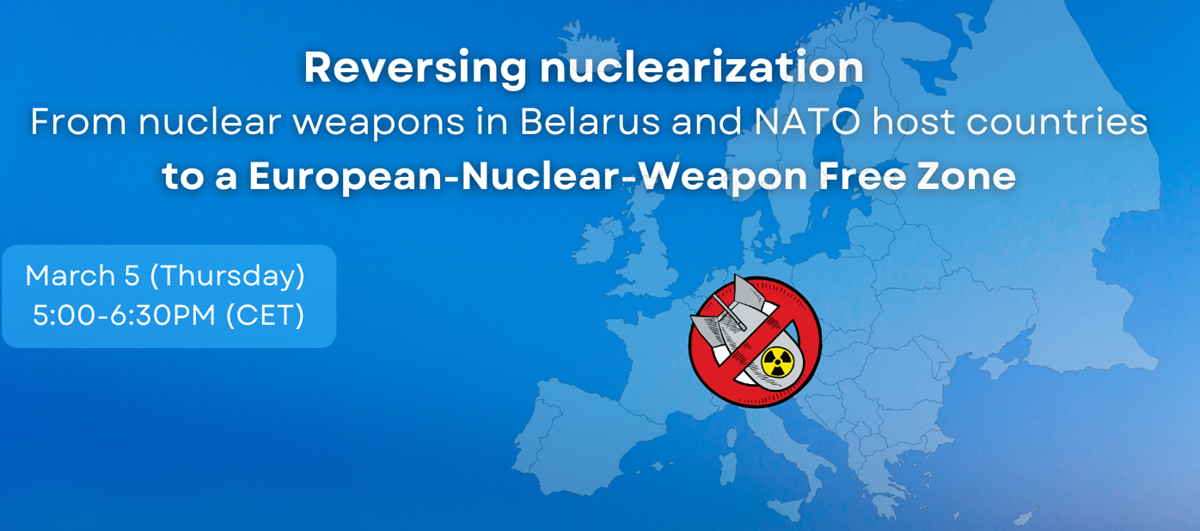
5 March -Online – Reversing nuclearization:
From nuclear weapons in Belarus and NATO host countries to a European-Nuclear-Weapon Free Zone
11am-12:30pm Eastern Time USA / 5pm-6:30pm CET

of the week – Advocating for a
nuclear free beach – https://www.samuellawrencefoundation.org/
The Samuel Lawrence Foundation advocates for a Nuclear Waste Free Beach at San Onofre, join us and take action!
10 March A LIVE WEBINAR THE REAL EFFECTS OF NUCLEAR POWER
What the Industry Isn’t Telling Us
1:00 PM Mountain, 2 pm Central, 3 pm Eastern. Live on the Keepers of the Water Facebook page

18 March Webinar @ 1 PM EST: An Assessment of SMR Projects: The Case of Canada
register for the zoom:
https://us02web.zoom.us/webinar/register/WN_o8BIIOUvQ2ONJR1nta65DQ#/registration

of the week – STOP SMALL MODULAR REACTORS IN CANADA
To see nuclear-related stories in greater depth and intensity – go to https://nuclearinformation.wordpress.com
-
Archives
- March 2026 (27)
- February 2026 (268)
- January 2026 (308)
- December 2025 (358)
- November 2025 (359)
- October 2025 (376)
- September 2025 (258)
- August 2025 (319)
- July 2025 (230)
- June 2025 (348)
- May 2025 (261)
- April 2025 (305)
-
Categories
- 1
- 1 NUCLEAR ISSUES
- business and costs
- climate change
- culture and arts
- ENERGY
- environment
- health
- history
- indigenous issues
- Legal
- marketing of nuclear
- media
- opposition to nuclear
- PERSONAL STORIES
- politics
- politics international
- Religion and ethics
- safety
- secrets,lies and civil liberties
- spinbuster
- technology
- Uranium
- wastes
- weapons and war
- Women
- 2 WORLD
- ACTION
- AFRICA
- Atrocities
- AUSTRALIA
- Christina's notes
- Christina's themes
- culture and arts
- Events
- Fuk 2022
- Fuk 2023
- Fukushima 2017
- Fukushima 2018
- fukushima 2019
- Fukushima 2020
- Fukushima 2021
- general
- global warming
- Humour (God we need it)
- Nuclear
- RARE EARTHS
- Reference
- resources – print
- Resources -audiovicual
- Weekly Newsletter
- World
- World Nuclear
- YouTube
-
RSS
Entries RSS
Comments RSS
 nuclear-news