TEPCO postpones 1st reactor restart since Fukushima due to alarm trouble.
January 19, 2026 (Mainichi Japan), https://mainichi.jp/english/articles/20260119/p2g/00m/0bu/023000c
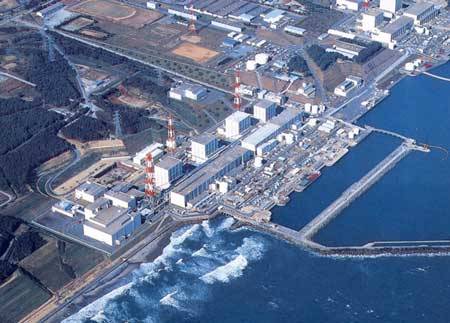
TOKYO (Kyodo) — Tokyo Electric Power Company Holdings Inc. said Monday it will postpone until an unspecified date the restart of its nuclear reactor northwest of Tokyo — its first since the 2011 Fukushima disaster — due to a control-rod alarm failure.
The Kashiwazaki-Kariwa nuclear complex in Niigata Prefecture was initially set to restart on Tuesday, but an alarm designed to sound when two non-paired control rods are withdrawn from the reactor fuel core failed to trigger during a test Saturday, the utility said at a press conference.
The company said it will announce a new date for restarting the No. 6 unit of the nuclear power complex.
After the latest incident, which was deemed a deviation from operational limits stipulated in the plant’s safety regulations, TEPCO returned all control rods to the fully inserted position.
The cause of the error was determined to be an incorrect control rod pairing that had persisted since the No. 6 unit began commercial operation in November 1996.
According to TEPCO, investigations since Saturday revealed that 88 of approximately 20,000 control rod pairs had configuration errors. The incorrect pairings had not been discovered until now because alarm tests are conducted at random.
Yutaka Kikukawa, unit director at the Kashiwazaki-Kariwa plant, denied that any mistakes were made by operational staff, saying, “We will do what needs to be done to correct the error discovered by chance.”
The configuration errors have since been corrected, and the plant was returned to its pre-deviation state Sunday night, TEPCO said.
The rescheduling came as it will take several days for the operator to conduct verification checks on each of the 205 control rods at the No. 6 reactor and examine the fission reaction of the fuel assemblies.
The reactors at the seven-unit complex have been offline since the No. 6 unit entered regular inspection in March 2012.
No comments yet.
1 This Month

of the week – Shut Down Drone Warfare!


Tell the Ukrainian Government to Drop Prosecution of Peace Activist Yurii Sheliazhenko

Petition to revoke the licensing of the Near Surface Nuclear Disposal Facility (NSDF) at Chalk River. https://www.ourcommons.ca/petitions/en/Petition/Details?Petition=e-7247
To see nuclear-related stories in greater depth and intensity – go to https://nuclearinformation.wordpress.com
-
Archives
- April 2026 (7)
- March 2026 (251)
- February 2026 (268)
- January 2026 (308)
- December 2025 (358)
- November 2025 (359)
- October 2025 (376)
- September 2025 (257)
- August 2025 (319)
- July 2025 (230)
- June 2025 (348)
- May 2025 (261)
-
Categories
- 1
- 1 NUCLEAR ISSUES
- business and costs
- climate change
- culture and arts
- ENERGY
- environment
- health
- history
- indigenous issues
- Legal
- marketing of nuclear
- media
- opposition to nuclear
- PERSONAL STORIES
- politics
- politics international
- Religion and ethics
- safety
- secrets,lies and civil liberties
- spinbuster
- technology
- Uranium
- wastes
- weapons and war
- Women
- 2 WORLD
- ACTION
- AFRICA
- Atrocities
- AUSTRALIA
- Christina's notes
- Christina's themes
- culture and arts
- Events
- Fuk 2022
- Fuk 2023
- Fukushima 2017
- Fukushima 2018
- fukushima 2019
- Fukushima 2020
- Fukushima 2021
- general
- global warming
- Humour (God we need it)
- Nuclear
- RARE EARTHS
- Reference
- resources – print
- Resources -audiovicual
- Weekly Newsletter
- World
- World Nuclear
- YouTube
-
RSS
Entries RSS
Comments RSS
 nuclear-news
Leave a comment