Trump names son-in-law, Rubio, Blair to Gaza ‘Board of Peace’

Jessica Gardner, Jan 17, 2026 , https://www.afr.com/world/north-america/trump-names-son-in-law-rubio-blair-to-gaza-board-of-peace-20260117-p5nuqb
Washington | United States President Donald Trump has named Secretary of State Marco Rubio, his Middle East fixer Steve Witkoff, his son-in-law Jared Kushner and private equity baron Marc Rowan to a Board of Peace to oversee the rehabilitation of wartorn Gaza.
The formation of the board, which will be chaired by Trump, was one of the 20-steps in a peace plan that Israeli Prime Minister Benjamin Netanyahu and the terror group Hamas agreed to in September 2025, which led to the longest enduring ceasefire in the two-year conflict.
A White House statement released on Friday afternoon (Saturday AEDT) named the seven-member executive board, which also includes former British prime minister Sir Tony Blair, World Bank president Ajay Banga and US national security adviser Robert Gabriel.
There are no women on the board, nor are there any Palestinian representatives or leaders from Arab nations.
Each board member will “oversee a defined portfolio critical to Gaza’s stabilisation and long-term success,” the White House said. These responsibilities included governance capacity-building, regional relations, reconstruction, investment attraction, large-scale funding, and capital mobilisation.
Trump has also appointed Major General Jasper Jeffers to command an International Stabilisation Force to “establish security, preserve peace, and establish a durable terror-free environment”.
Trump has previously relied on Witkoff and Kushner as on-the-ground sherpas of his unorthodox style of foreign policy. Witkoff, a former real estate developer, has also been heavily involved in negotiations to end the Russia-Ukraine war.
The two men, as well as Blair and Rowan, the chief executive of $US908 billion ($1.4 trillion) investment giant Apollo Global Management, will also join a Gaza Executive Board responsible for supporting governance and service delivery.
Other members of that board include Turkish Foreign Minster Hakan Fidan, Qatari diplomat Ali Al-Thawadi, Egyptian intelligence official Hassan Rashad and United Arab Emirates Minister of State for International Cooperation Reem Al-Hashimy.
Trump earned praise for his role in persuading Netanyahu to end his military campaign in Gaza, which was sparked by the October 7, 2023 attack on Israel by the terror group Hamas, which killed 1200 Israelis and took 250 hostages. Israel’s two-year retaliation led to the death of over 70,000 Palestinians, the majority of them civilians.
The ceasefire led to the return of all living hostages and almost all the remains of those hostages who had been killed.
Witkoff said in a post on social media platform X on Wednesday that the White House was moving into the second phase of Trump’s peace plan, which will include establishing a transitional Palestinian governing committee and beginning the complicated tasks of disarming Hamas and reconstruction.
The United Nations has estimated reconstruction will cost over $US50 billion. This process is expected to take years, and little money has been pledged so far.
Trump’s 20-point plan — which was approved by the U.N. Security Council — lays out an ambitious vision for ending Hamas’ rule in Gaza. If successful, it would see the rebuilding of a demilitarized Gaza under international supervision, the normalization of relations between Israel and the Arab world, and the creation of a possible pathway to Palestinian independence.
But if the deal stalls, Gaza could be trapped in an unstable limbo for years to come, with Hamas remaining in control of parts of the territory, Israel’s army enforcing an open-ended occupation, and its residents stuck homeless, unemployed, unable to travel abroad and dependent on international aid to stay alive.
The ceasefire took effect on October 10, 2025, although Israeli fire has killed more than 450 Palestinians since then, according to Gaza health officials. Palestinian militants, meanwhile, continue to hold the remains of the last hostage — an Israeli police officer killed in the Hamas-led attack that triggered the war.
Gaza’s population of more than 2 million people has struggled to keep cold weather and storms at bay while facing shortages of humanitarian aid and a lack of more substantial temporary housing, which is badly needed during the winter months.
Ontario’s proposed nuclear waste repository poses millennia-long ethical questions
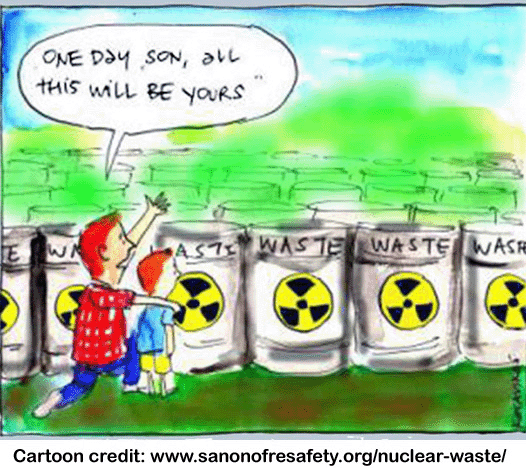
Maxime Polleri, Assistant Professor, Université Laval, January 16, 2026 , https://theconversation.com/ontarios-proposed-nuclear-waste-repository-poses-millennia-long-ethical-questions-273181
The heat produced by the radioactive waste strikes you when you enter the storage site of Ontario Power Generation at the Bruce Nuclear Generating Station, near the shore of Lake Huron in Ontario.
Massive white containers encase spent nuclear fuel, protecting me from the deadly radiation that emanates from them. The number of containers is impressive, and my guide explained this waste is stored on an interim basis, as they wait for a more permanent solution.
I visited the site in August 2023 as part of my research into the social acceptability of nuclear waste disposal and governance. The situation in Ontario is not unique, as radioactive waste from nuclear power plants poses management problems worldwide. It’s too dangerous to dispose of spent nuclear fuel in traditional landfills, as its radioactive emissions remain lethal for thousands of years.
To get rid of this waste, organizations like the International Atomic Energy Agency believe that spent fuel could be buried in deep geological repositories. The Canadian government has plans for such a repository, and has delegated the task of building one to the Nuclear Waste Management Organization (NWMO) that’s funded by Canadian nuclear energy producers.
In 2024, NWMO selected an area in northwestern Ontario near the Township of Ignace and the Wabigoon Lake Ojibway Nation as a potential site for a deep geological repository. Now, a federal review has begun bringing the project closer to potential reality.
Such repositories raise complex ethical questions around public safety, particularly given the millennia-long timescales of nuclear waste: How to address intergenerational issues for citizens who did not produce this waste but will inherit it? How to manage the potential dangers of these facilities amid short-term political cycles and changing public expectations?
While NWMO describes the deep geological repository as the safest way to protect the population and the environment, its current management plan does not extend beyond 160 years, a relatively short time frame in comparison with the lifespan of nuclear waste. This gap creates long-term public safety challenges, particularly regarding intergenerational ethics. There are specific issues that should be considered during the federal review.
NWMO argues that the deep geological repository will bring a wide range of benefits to Canadians through job creation and local investment. Based on this narrative, risk is assessed through a cost-benefit calculus that evaluates benefits over potential costs.
Academics working in nuclear contexts have, however, criticized the imbalance of this calculus, as it prioritizes semi-immediate economic benefits, like job creation, over the long-term potential impacts to future generations.
In many official documents, a disproportionate emphasis on short-term economic benefits is present over the potential dangers of long-term burial. When risks are discussed, they’re framed in optimistic language and argue that nuclear waste burial is safe, low risk, technically sound and consistent with best practices accepted around the world.
This doesn’t take into account the fact that the feasibility of a deep geological repository has not been proven empirically. For the federal review, discussions surrounding risks should receive an equal amount of independent coverage as those pertaining to benefits.
Intergenerational responsibilities and risks
After 160 years, the deep geological repository will be decommissioned and NWMO will submit an Abandonment License application, meaning the site will cease being looked after.
Yet nuclear waste can remain dangerous for thousands of years. The long lifespan of nuclear waste complicates social, economic and legal responsibility. While the communities of Ignace and Wabigoon Lake Ojibway Nation have accepted the potential risks associated with a repository, future generations will not be able to decide what constitutes an acceptable risk.
Social scientists argue that an “acceptable” risk is not something universally shared, but a political process that evolves over time. The reasons communities cite to decide what risks are acceptable will change dramatically as they face new challenges. The same goes for the legal or financial responsibility surrounding the project over the centuries.
In the space of a few decades, northwestern Ontario has undergone significant municipal mergers that altered its governance. Present municipal boundaries might not be guarantees of accountability when millennia-old nuclear waste is buried underground. The very meaning of “responsibility” may also undergo significant changes.
NWMO is highly confident about the technical isolation of nuclear waste, while also stating that there’s a low risk for human intrusion. Scientists that I’ve spoken with supported this point, stating that a deep geological repository should not be located in an area where people might want to dig.
The area proposed for the Ontario repository was considered suitable because it does not contain significant raw materials, such as diamonds or oil. Still, there are many uncertainties regarding the types of resources people will seek in the future. It’s difficult to make plausible assumptions about what people might do centuries from now.
Communicating long-term hazards
When the repository is completed, NWMO anticipates a prolonged monitoring phase and decades of surveillance. But in the post-operation phase, there is no plan for communicating risks to generations of people centuries into the future. The long time frame of nuclear materials complicates the challenges of communicating hazards. To date, several attempts have surrounded the semiotics of nuclear risk; that is, the use of symbols and modes of communication to inform future generations.
For example, the Waste Isolation Pilot Plan in New Mexico tried to use various messages to communicate the risk of burying nuclear waste. However, the lifespan of nuclear waste vastly exceeds the typical lifespan of any known human languages.
Some scientists even proposed a “ray cat solution.” The project proposed genetically engineering cats that could change color near radiation sources, and creating a culture that taught people to move away from an area if their cat changed colour. Such projects may seem outlandish, but they demonstrate the difficulties of developing pragmatic long-term ways of communicating risk.
Current governing plans around nuclear waste disposal have limited time frames that don’t fully consider intergenerational public safety. As the Canadian federal review for a repository goes forward, we should seriously consider these shortcomings and their potential impacts on our society. It is crucial to foster thinking about the long-term issues posed by highly toxic waste and the way it is stored, be it nuclear or not.
This Nuclear Renaissance Has a Waste Management Problem

12 Jan, 26, https://energyathaas.wordpress.com/2026/01/12/this-nuclear-renaissance-has-a-waste-management-problem/
Three sobering facts about nuclear waste in the United States.
Americans are getting re-excited about nuclear power. President Trump has signed four executive orders aiming to speed up nuclear reactor licensing and quadruple nuclear capacity by 2050. Big tech firms ( e.g. Google, Amazon, Microsoft, Meta) have signed big contracts with nuclear energy producers to fuel their power-hungry data centers. The federal government has signed a deal with Westinghouse to build at least $80 billion of new reactors across the country. Bill Gates has proclaimed that the “future of energy is sub-atomic”.
It’s easy to see the appeal of nuclear energy. Nuclear reactors generate reliable, 24/7 electricity while generating no greenhouse gas emissions or local air pollution. But these reactors also generate some of the most hazardous substances on earth. In the current excitement around an American nuclear renaissance, the formidable challenges around managing long-lived radioactive waste streams are often not mentioned or framed as a solved problem. This problem is not solved. If we are going to usher in a nuclear renaissance in this country, I hope we can keep three sobering facts top-of-mind.
Fact 1: Nuclear fission generates waste that is radioactive for a very long time.
After 4-6 years of hard work in a commercial fission reactor, nuclear fuel can no longer generate energy efficiently and needs to be replaced. When this “spent” fuel comes out of the reactor it is highly radioactive and intensely hot, so it must be carefully transferred into deep pools where it spends a few years cooling off…
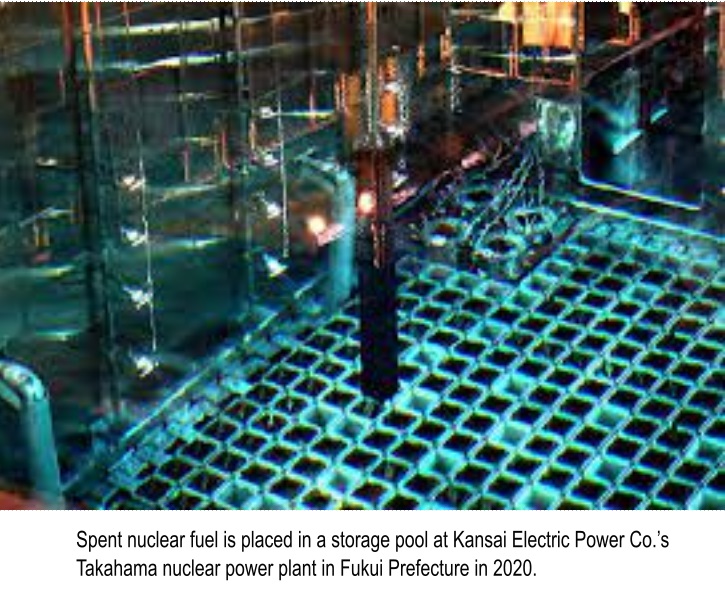
Once cooled, this spent fuel is still not something you want to spend time with because direct exposure is lethal. While most of the radioactivity decays after about 1000 years, some will persist for over a million years. U.S. efforts to site and build a permanent repository for nuclear waste have failed (more on this below). After spending time in the pool, spent fuel is stored on sites of operating or retired reactors in steel canisters or vaults.
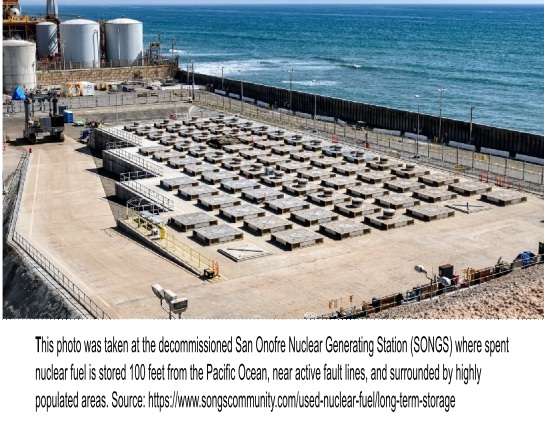
Across the country, more than 90,000 metric tons of radioactive fuel is sitting in pools or dry storage at over 100 sites in 39 states. These sites are licensed by the Nuclear Regulatory Commission (NRC) and regulated by the EPA. They are designed to be safe! But experts agree that this is an unacceptable long-term waste management situation (see, for example, here, here, and here).
Fact 2: The U.S. has no permanent nuclear waste disposal plan
For more than half a century, the United States has tried—and failed—to find a forever-home for its nuclear waste. Early efforts in the 1960s and 1970s went nowhere. In 1982, Congress passed the Nuclear Waste Policy Act which laid out a comparative siting process that was designed to be technically rigorous and politically fair. But this process was slow, expensive, and politically exhausting.
By 1987, Congress lost patience, scrapped its own framework, and tried to force the issue by designating Yucca Mountain in Nevada as the chosen one. Nevada’s resistance was relentless. After roughly $15 billion in spending on site development, the Yucca Mountain proposal was finally withdrawn in 2010. As I understand it, these siting efforts did not fail because the location was declared unsafe. They failed because nuclear waste storage siting was being forced on an unwilling community.
In the years since, Blue Ribbon panels, expert advisory groups, and national research councils have been convened. All have reached the same conclusion. The U.S. needs to break the impasse over a permanent solution for commercial spent nuclear fuel and this will require a fair, transparent, and consent-based process.
You might be thinking that spent fuel reprocessing, which is also enjoying an American renaissance right now, could eliminate the need for a geological repository. It’s true that reprocessing breaks spent fuel down to be used again. But in that process, new types of radioactive wastes are created that need to be managed in deep repositories or specialized landfills. This creates a potentially more (versus less) challenging mess to clean up (reprocessing leaders like France are pursuing costly geological repositories for these wastes).
Fact 3: We are actively undermining public trust in the nuclear waste management process
Convincing a community to host thousands of tons of radioactive waste for thousands of years is not easy. But it’s not impossible. Efforts in Sweden, Finland, France, Switzerland, and Canada are starting to find some success.
All of these international success stories share one important feature: a sustained commitment to building public trust in both nuclear industry regulation and the nuclear waste storage siting process. Alas, here in the United States, we seem to be moving in the opposite direction.
A series of recent developments make it hard to feel hakuna matata about our nuclear waste management protocols:
- In May, an executive order called for a “wholesale revision” of the NRC directing it to accelerate reactor licensing, reconsider radiation standards, and reduce staffing.
- In June, an NRC commissioner was abruptly fired, prompting a letter from concerned career staff .
- The Department of Energy has pledged to “use all available authorities to eliminate or expedite its environmental reviews for authorizations, permits, approvals, leases, and any other activity requested” by nuclear reactor projects under its supervision.
- The Supreme Court recently ruled that Texas lacks legal standing to challenge NRC approval of a privately operated interim nuclear waste facility, raising questions about state’s abilities to challenge nuclear waste siting decisions.
These developments may ultimately succeed in accelerating nuclear deployment across the United States. But they also undermine the public trust and independent governance that are essential inputs into the building of a long-term nuclear waste management strategy.
Weighing our nuclear options
Taking a step back, it is worth asking why nuclear energy is enjoying such a resurgence in this country right now. The growing availability of low-cost renewables and storage, together with an increasingly flexible demand-side, complicates the claim that nuclear power is some kind of moral climate necessity. There are cheaper ways to decarbonize the grid.
The renewed push for nuclear energy is not really about climate necessity. It seems to be driven by anxiety about reliability in a strained power system, industrial policy aimed at rebuilding domestic manufacturing capacity, and the commercial interests of firms chasing revenue streams tied to data centers and federal support. This nuclear revival trades off today’s politically urgent reliability concerns for a long-term obligation to manage radioactive waste (along with some low-probability risk of catastrophic failure). If that’s the trade off we want to make, we should understand that a nuclear renaissance without a viable long-term waste management plan saddles future generations with the messy consequences of our policy choices.
Do the Democrats Have the Guts to Outflank Trump on Defense Industry Looting?
Les Leopold, Jan 14, 2026, https://lesleopold.substack.com/p/do-the-democrats-have-the-guts-to
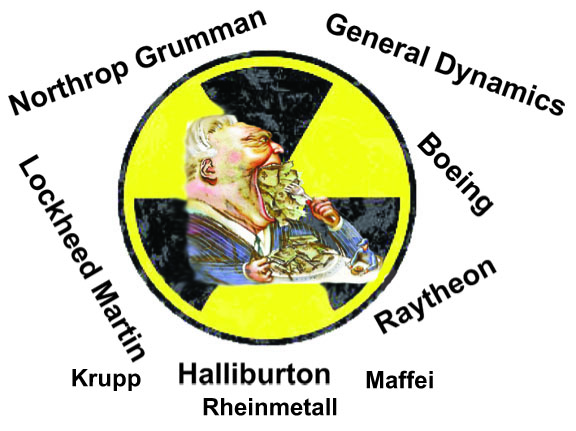
Trump has decided that the government should not give money to defense contractors who then reroute our tax dollars via stock buybacks to stockholders and executives. (A stock buyback is when a corporation repurchases its own shares, thus boosting the share’s price, a legalized form of stock manipulation. CEOs, who are paid mostly in stock incentives, and large investors directly benefit from stock buybacks, and unlike with dividends, don’t have to pay taxes until they sell their shares.)
This isn’t news. Studies show that defense contractors spent three times more on dividends and stock buybacks than on capital investments needed to fulfill their contracts over the last decade. In Europe it was the other way around with defense companies spending twice as much on capital investments than on dividends. (They don’t do stock buybacks.)
The New York Times cited a Department of Defense study during the Biden administration that “found that top U.S. defense contractors spent more on returning cash to shareholders in the form of dividends and stock buybacks between 2010 and 2019 compared to the previous decades, while spending on research and new or upgraded factories had declined.”
You’ve got to wonder why the Biden administration didn’t try to stop this scam. Maybe it feared looking anti-military. Or maybe it thought such an action would be too upsetting to their Wall Street donors who feast on stock buybacks?
Now we have Trump doing what the Democrats should have done long ago, announcing he will stop buybacks and cap executive salaries at profligate defense contractors:
- His Executive Order directs the Secretary of War to take steps to ensure that future contracts prohibit stock buybacks and corporate distributions during periods of underperformance, non-compliance, insufficient prioritization or investment, or insufficient production speed.
- The Secretary shall further take steps to ensure that future contracts permit the Secretary to, upon determining that a contractor is experiencing such issues, cap executive base salaries at current levels (with inflation adjustments permitted) while scrutinizing executive incentives to ensure they are directly, fairly, and tightly tied to prioritizing the needs of the warfighter.
How about Preventing Mass Layoffs?
If the Democrats wanted to show more concern for working people they would jump all over this executive order and push legislation to expand it to include a prohibition of compulsory layoffs at all defense contractors. If a contractor wants to change staffing levels, they should offer voluntary financial buyout packages. No one should be forced to leave.
This is an easy case to make. Why should taxpayers give money to corporations that then lay off taxpayers so that they can shovel more and more of our tax dollars to the wealthy? If the problem is that these defense contractors fail to deliver products on time they need more workers, not fewer.
Instead of wallowing in the Epstein files, the Democrats should declare again and again that mass layoffs are the weapon of choice to enrich executives and Wall Street. Fight for the damn jobs!
In April, the Labor Institute, in cooperation with the Center for Working Class Politics, produced a YouGov survey of 3,000 voters in Michigan, Ohio, Pennsylvania, and Wisconsin. In it we asked the surveyed voters to evaluate a state ballot initiative we invented that read:
“Corporations with more than 500 employees that receive taxpayer-funded federal contracts are prohibited from conducting involuntary layoffs of American workers. All layoffs during the life of a taxpayer-funded contract must be voluntary, based on employer financial incentives. No one shall be forced to leave.”
Overall, 42 percent supported the proposal, while 26 percent opposed it and 32 percent were not sure. The no-layoff proposal was brand new, unheard of by anyone before the survey was administered, yet it tied for fifth in popularity among 25 economic proposals. Furthermore, we reported that:
“Respondents from key demographic groups that Democrats have struggled to reach in recent electoral cycles showed robust support for the policy, which was tied for fifth among respondents without a four-year college degree and those whose family income was less than $50,000 per year, and tied for sixth among respondents who reported a declining standard of living and those who live in rural areas and small towns.”
This no-layoffs policy would be a big winner for the Democrats leading up to the mid-terms. But it would not be a winner for the financial backers of the party who cherish their stock buybacks.
So here we are again. Trump outflanking the Democrats on a populist economic proposal, like cancelling NAFTA, one that the Democrats failed to address while in power. In this case the Democrats could push Trump even further by tying job stability to federal defense contracts, something that working people would greatly value but would be upsetting to Wall Street.
The Democrats could push Trump, but will they dare to take that leap? One would hope so, but don’t hold your breath.
The failure to rigorously defend working people over the last forty years against needless mass layoffs may be why so many voters right now are willing to consider a new political party, independent of the two billionaire parties.
Much more on that to come.
Spectral Threats: China, Russia and Trump’s Greenland Rationale

Were Russia or China to attempt an occupation of Greenland through military means, Article V of the North Atlantic Treaty would come into play, obliging NATO member states, including the United States, to collectively repel the effort.
“There are no Russian and Chinese ships all over the place around Greenland,”
“Russia and/or China has no capacity to occupy Greenland or to take control over Greenland.”
14 January 2026 Dr Binoy Kampmark, https://theaimn.net/spectral-threats-china-russia-and-trumps-greenland-rationale/
The Trump administration’s mania about Greenland, a self-governing territory of Denmark, is something to behold. Its untutored thuggery, its brash assertiveness, and the increasingly strident threats to either use force, bully Denmark into a sale of the island, or simply annex the territory, have officials and commentators scrambling for theories and precedents. The Europeans are terrified that the NATO alliance is under threat from another NATO member. The Greenlanders are anxious and confused. But the ground for further action by Washington is being readied by finding threats barely real and hardly plausible.
The concerns about China and Russia seizing Greenland retells the same nonsense President Donald Trump promoted in kidnapping the Venezuelan President Nicolás Maduro and his wife. Looking past the spurious narcoterrorism claims against the former leader, it fell to the issue of who would control the natural resources of the country. If we don’t get Venezuelan oil now and secure it for American companies, the Chinese or the Russians will. he gangster’s rationale is crudely reductionist, seeing all in a similar veinThe obsession with Beijing and Moscow runs like a forced thread through a dotty, insular rationale that repels evidence and cavorts with myth: “We need that [territory],” reasons the President, “because if you take a look outside Greenland right now, there are Russian destroyers, there are Chinese destroyers and, bigger, there are Russian submarines all over the place. We are not gonna have Russia or China occupy Greenland, and that’s what they’re going to do if we don’t.” On Denmark’s military capabilities in holding the island against any potential aggressor, Trump could only snort with macho dismissiveness. “You know what their defence is? Two dog sleds.”
This scratchy logic is unsustainable for one obvious point. Were Russia or China to attempt an occupation of Greenland through military means, Article V of the North Atlantic Treaty would come into play, obliging NATO member states, including the United States, to collectively repel the effort. With delicious perversity, any US effort to forcibly acquire the territory through use of force would be an attack on its own security, given its obligations under the Treaty. In such cases, it becomes sound to assume, as the Danish Prime Minister Mette Frederiksen does, that the alliance would cease to exist.
Such matters are utterly missed by the rabidly hawkish Deputy Chief of Staff Stephen Miller, who declared that, “Nobody’s going to fight the United States militarily over the future of Greenland.” It was up to the US “to secure the Arctic region, to protect and defend NATO and NATO interests” in incorporating Greenland. To take territory from a NATO ally was essentially doing it good.
Given that the United States already has a military presence on the island at the Pituffik Space Base, and rights under the 1951 agreement that would permit an increase in the number of bases should circumstances require it, along with the Defence Cooperation Agreement finalised with Copenhagen in June 2025, much of Miller’s airings are not merely farcical but redundant. Yet, Trump has made it clear that signatures and understandings reflected in documents are no substitute for physically taking something, the thrill of possession that, by its act, deprives someone else of it. “I think ownership gives you a thing that you can’t do, whether you’re talking about a lease or a treaty,” he told the New York Times. “Ownership gives you things and elements that you can’t get from just signing a document.”
What, then, of these phantom forces from Moscow and Beijing, supposedly lying in wait to seize the frozen prize? “There are no Russian and Chinese ships all over the place around Greenland,” states the very convinced research director of the Oslo-based Fridtjof Nansen Institute, Andreas Østhagen. “Russia and/or China has no capacity to occupy Greenland or to take control over Greenland.”
Danish Foreign Minister Lars Lokke Rasmussen is similarly inclined. “The image that’s being painted of Russian and Chinese ships right inside the Nuuk fjord and massive Chinese investments being made is not correct.” Senior “Nordic diplomats” quoted in the Financial Times add to that version, even if the paper is not decent enough to mention which Nordic country they come from. “It is simply not true that the Chinese and Russians are there,” said one. “I have seen the intelligence. There are no ships, no submarines.” Vessel tracking data from Marine Traffic and LSEG have so far failed to disclose the presence of Chinese and Russian ships near the island.
Heating engineer Lars Vintner, based in Greenland’s capital, Nuuk, wondered where these swarming, spectral Chinese were based. “The only Chinese I see,” he told Associated Press,“ is when I go to the fast food market.” This sparse presence extends to the broader security footprint of China in the Arctic, which remains modest despite a growing collaboration with Russia since the 2022 invasion of Ukraine. These have included Arctic and coast guard operations, while the Chinese military uses satellites and icebreakers equipped with deep-sea mini submarines, potentially for mapping the seabed.
However negligible and piffling the imaginary threat, analysts, ever ready with a larding quote or a research brief, are always on hand to show concern with such projects as Beijing’s Polar Silk Road, announced in 2018, which is intended as the Arctic extension of its transnational Belt and Road initiative. The subtext: Trump should not seize Greenland, but he might have a point. “China has clear ambitions to expand its footprint and influence in the region, which it considers… an emerging arena for geopolitical competition.” Or so says Helena Legarda of the Mercator Institute for China Studies in Berlin.
The ludicrous nature of Trump’s claims and acquisitive urges supply fertile material for sarcasm. A prominent political figure from one of the alleged conquerors-to-be made an effort almost verging on satire. “Trump needs to hurry up,” mocked the Deputy Chairman of the Russian Security Council and former President Dmitry Medvedev. “According to unverified information, within a few days, there could be a sudden referendum where all 55,000 residents of Greenland might vote to join Russia. And that’s it!” With Trump, “that’s it” never quite covers it.
100 days into ceasefire Gaza still deliberately deprived of water as aid groups forced to scavenge under illegal blockade
14 January 2026 AIMN Editorial https://theaimn.net/100-days-into-ceasefire-gaza-still-deliberately-deprived-of-water-as-aid-groups-forced-to-scavenge-under-illegal-blockade/
Oxfam Australia
Oxfam and partners restore limited water access for 156,000 amid near-total water and sanitation infrastructure collapse.
100 days into the ceasefire announcement, in a week that has seen more severe weather hitting Gaza, needs remain desperate. Oxfam and dozens of other INGOs working in Gaza have had to further adapt their operations to keep life-saving work continuing, even as they face uncertainty over new registration requirements imposed by Israeli authorities.
Oxfam and partners restore limited water access for 156,000 amid near-total water and sanitation infrastructure collapse.
100 days into the ceasefire announcement, in a week that has seen more severe weather hitting Gaza, needs remain desperate. Oxfam and dozens of other INGOs working in Gaza have had to further adapt their operations to keep life-saving work continuing, even as they face uncertainty over new registration requirements imposed by Israeli authorities.
Despite months of severely restricted aid inflows, amidst power disruptions, access shutdowns and repeated rejection of essential materials, work has continued. Oxfam has worked around the clock with experts from local partner organisations, to restore vital water wells – even sifting through rubble to salvage and repurpose damaged materials, including sheet metal.
According to assessments carried out by Oxfam’s partner, the Coastal Municipalities Water Utility (CMWU), the total cost to rebuild all of the water and sanitation facilities, systems and infrastructure which have been destroyed or damaged by Israel in Gaza will be around $800 million. However, the figure could be even higher, since parts of Gaza remain inaccessible and construction costs have also doubled, due to the lack of materials being allowed in.
The wells restored by Oxfam and partners are located in Gaza City and Khan Younis, and are now providing at least 156,000 people with a life-saving and sustainable water supply. Work continues on a further eight wells and two water pumping stations, which should be working again by February, providing continuous fresh water for 175,000 more people.
Wassem Mushtaha, Oxfam Gaza Response lead, said: “We did not just re-open these wells. We have been solving a moving puzzle under the siege and restrictions to make the wells operational – salvaging parts, repurposing equipment, and paying inflated prices to get critical components, all while trying to keep our teams safe.
“For as long as systematic policies and practices preventing aid agencies from getting essential supplies into Gaza persist, we will have to keep finding a way to reach people in need. It’s not an acceptable situation, but as humanitarians, we can never give up trying to save lives.
So much more could have been achieved if our efforts had not been undermined at every turn – which continues to this day. Oxfam alone has over 2 million dollars’ worth of aid and water and sanitation equipment ready to enter Gaza, but these supplies have been repeatedly rejected since March 2025.”
Israeli authorities have made a meaningful humanitarian response impossible by design. Israel defends threats to deregister up to 37 international NGOs – claiming humanitarian organisations’ impacts have been “inconsequential.” But NGOs have repeatedly appealed to Israel to be allowed to do their jobs, calling on Israel to lift restrictions undermining civilian survival. In reality, Israel continues to block effective relief efforts and the restoration of essential infrastructure.
In response to the challenges, Oxfam has increased its procurement of aid from local markets where possible, and continues to expand services in areas such as social-psychological support and health promotion, WASH, emergency livelihoods, multi-purpose cash transfer, food voucher distribution, and public health promotion – essential areas, with less reliance on materials that Israel continues to systematically reject.
Monther Shoblaq, Director General of CMWU, said aid agencies should not have to operate in a way that is needlessly time consuming and exhausting:
“While it’s commendable that dedicated staff are going to such lengths to bring water access to those who need it so desperately, the equipment needed is just across the border, blocked from entry. Agencies are having to resort to salvaging materials from the rubble of bombed water infrastructure and the remains of people’s homes, repurposing parts, and paying inflated prices. This is the direct result of Israeli restrictions, last-resort measures forced by siege conditions.
Needs in Gaza exceed far beyond the aid and reconstruction materials Israel is allowing in and the situation will worsen if Israel’s collective punishment and illegal blockade continues. Water deprivation is just one of the many human rights violations Israel has undertaken with impunity. Oxfam and other organisations who have operated in Gaza for decades must be allowed to respond at the scale.
Challenge to Latest Sellafield Discharges to the Rivers Calder, Ehen and the Irish Sea
By mariannewildart, on behalf of Lakes Against Nuclear Dump, https://lakesagainstnucleardump.com/2026/01/16/still-waiting-for-judge-to-make-decision-on-our-challenge-to-latest-sellafield-discharges/
The hearing on whether our Judicial Review into the challenge of Sellafield’s latest discharges to the rivers Calder and Ehen took place at the end of November. Incredibly we are still waiting for the decision on whether our Judicial Review can go forward. In the meantime here is a lovely photo [on original] of Rowbank Farm.
This is just one of the many farms and grand houses in the once fertile plain between the Lake District mountains and the Irish Sea to be obliterated by Sellafield’s nuclear waste sprawl along the once meandering and braided river Calder. This photo [on original] along with many more can be found on the Calderbridge and Ponsonby Parish Council website (no endorsement of our challenge by the Parish Council is implied – the photos are in the public domain)
Onwards and Upwards
TerraPower and Meta partner on Natrium nuclear plants

The agreement launches early work on two initial units and secures Meta rights to energy from six more, marking the tech giant’s largest investment in advanced nuclear energy to date.
erraPower and Meta have agreed to develop up to eight Natrium nuclear reactor and energy storage system plants in the United States, a move that could supply Meta with up to 2.8 gigawatts of carbon-free baseload energy. With the Natrium system’s built-in energy storage, total output could be increased to as much as 4 gigawatts.
The agreement supports early development of two initial Natrium units and gives Meta rights to energy from up to six additional units. Each reactor provides 345 MW of baseload power and can ramp up to 500 MW for more than five hours. A dual-unit site could deliver up to 690 MW of firm power and as much as 1 GW of dispatchable electricity.
The companies said delivery of the first units could begin as early as 2032. They also plan to identify a site for the initial dual-reactor project in the coming months.
Donald Trump calls for emergency energy auction to make tech giants pay for AI power
Donald Trump and a number of state governors are pushing the US’s
largest electrical grid operator to hold an emergency auction to make tech
giants foot the bill for AI power infrastructure.
The administration along
with governors of states including Pennsylvania, Ohio and Virginia have
urged PJM — which serves more than 67mn people in the US north-east and
Midwest — to hold a power auction in which big data centre operators bid
for 15-year contracts to build new power plants. Such contracts could
support the construction of about $15bn worth of new power plants, with
tech companies paying for them regardless of whether they use the resulting
electricity, a White House official confirmed.
FT 16th Jan 2026
https://www.ft.com/content/9b3d179e-129c-4aa1-a5c0-1cc1703b0234
‘Wall of money’ to invest in Scottish nuclear power if Labour win election
Prime Minister Keir Starmer said the SNP were saying Scotland was ‘shut for business’.
Danyel VanReenen, Politics Reporter, Jan 15th, 2026
The Prime Minister said the UK Labour Government is ready and willing to invest in nuclear power in Scotland if Anas Sarwar wins the Holyrood election in May.
The current SNP Government has consistently been against the creation of new nuclear power stations north of the border, with control of planning laws giving ministers an effective veto.
Keir Starmer said there is a “wall of money” Labour wants to invest in Scottish nuclear power, but he said the SNP are saying no “for ideological reasons”.
“If there’s a Labour Government in Scotland, we’ll be back the day after the election to make sure that money is translated into good, well-paying jobs in renewables and nuclear,” Starmer said.
“That can’t happen at the moment because the SNP is basically saying ‘we’re shut for business’.”…………………………………………………………………………………………. https://news.stv.tv/politics/wall-of-money-to-invest-in-scottish-nuclear-power-if-labour-win-election
Is a deep geological repository (DGR) for IGNACE a good idea?
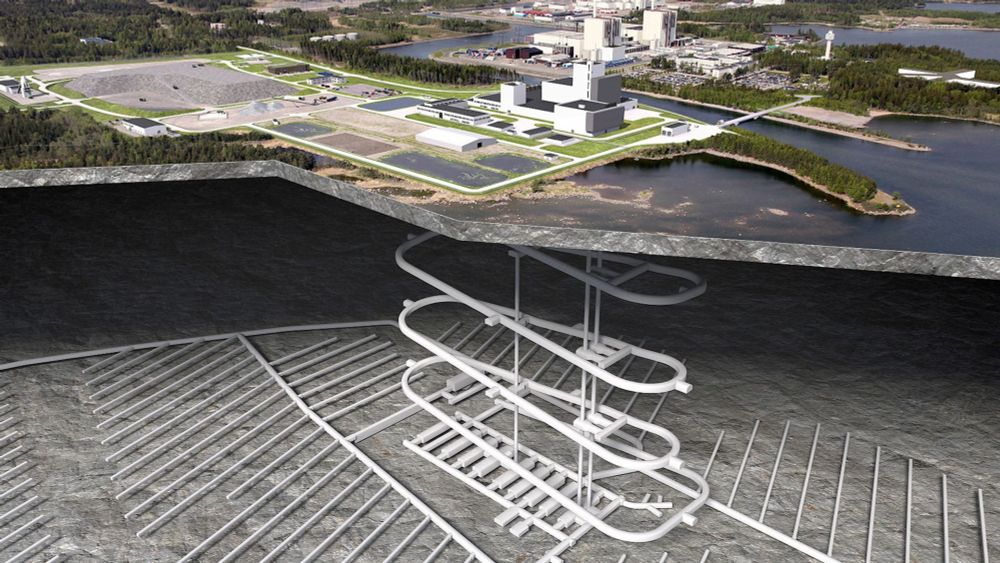
I would say that the most important issue – and one that is totally disregarded by NWMO – is the inordinate extra cost (of about $500 million) of shipping used fuel to Ignace rather than Teeswater or some more southerly location. The mass transfer of used fuel from locations such as Bruce, Pickering and Darlington to the township of Ignace will involve dozens of 50-ton trucks travelling up and down major roads, such as Highways 401, 400, 69 and 17, a total of 25,000 times between 2043 and 2068. This protracted activity adds up to a total highway travel time of over 200 years!
| Frank Greening, 13 Jan 26 |
Questioning the wisdom of NWMO’s plan for a used fuel DGR to be constructed near Ignace in Northern Ontario, in view of the issues presented below:
From the Project description document AMP-REP-05000-0211-R000
11. ESTIMATED MAXIMUM PRODUCTION CAPACITY OF THE PROJECT
An estimated 5.9 million bundles of used fuel will be processed in the UFPP over its operational lifetime of approximately 50 years (about 120,000 used fuel bundles per year). On average, per the current conceptual reference design, 10 used fuel containers (UFCs) are planned to be processed and placed in the repository each workday, or approximately 2,500 UFCs each year.
To achieve this throughput, the UFPP is likely to incorporate multiple processing lines. Based on annual shipping (receipt) assumptions, the maximum number of certified transportation packages received at the UFPP in any given year is estimated to be approximately 885, holding between 120 and 192 used fuel bundles in each certified transportation package. The UFPP is designed to receive and process up to five certified transportation packages each day.
I would say that the most important issue – and one that is totally disregarded by NWMO – is the inordinate extra cost (of about $500 million) of shipping used fuel to Ignace rather than Teeswater or some more southerly location. The mass transfer of used fuel from locations such as Bruce, Pickering and Darlington to the township of Ignace will involve dozens of 50-ton trucks travelling up and down major roads, such as Highways 401, 400, 69 and 17, a total of 25,000 times between 2043 and 2068. This protracted activity adds up to a total highway travel time of over 200 years!
Closely related to the issue of shipping costs, is the additional problem of the high probability of inclement weather along Highway 17 from November to March each year. It appears that NWMO’s approach to dealing with this issue is simply to limit used fuel shipments to Ignace to just 9 months per year. However, this is barely adequate, given the common occurrence of snow storms along Highway 17 from as early as October to as late as April each year. Indeed, the Ontario Ministry of the Environment states in reference to winter driving on Highway 17: “Expect snowfall amounts of 10 –15 cm; reduced visibility due to snow and blowing snow; icy and slippery surfaces, and quickly changing and deteriorating travel conditions”.
This clearly shows the severity of the winter weather for the township of Ignace, with heavy snowfall dominating the months from November to March. Interestingly, NWMO has stated – See NWMO Report APM-REP-00440-0209-R001, issued September 2021 – that moving used nuclear fuel by truck to Ignace would mean “two to three shipments a day for approximately nine months of the year”. It is not clear why NWMO stipulates shipments being made for only 9 months per year, but this is presumably to allow for three months of inclement weather.
However, as previously noted, meteorological data for Ignace indicate that heavy snow is possible for this region from November to March, which is five months, not three! In addition, one is left wondering what happens at the DGR site for the three months when there are no used fuel shipments. Indeed, this lack of shipments is inconsistent with NWMO’s assertion, previously noted in this email, that “10 used fuel containers (UFCs) are planned to be processed and placed in the repository each workday. I would like someone to explain how this will happen over winter, when NWMO admits there will be no used fuel shipments for at least three months each year, (December, January and February?). What will workers at the used fuel packaging plant do when there are no UFC’s to process?
Highway 17 in Northern Ontario has earned a reputation for frequent accidents, particularly involving heavy trucks. In 2022, the Ontario Provincial Police (OPP) reported over 9,100 collisions involving large trucks across the province, with 71 fatalities — many occurring on routes like Highway 17. Addressing the issues plaguing Highway 17 requires more than incremental fixes—it demands a transformative overhaul. Experts and residents alike stress the need for substantial investments to bring this critical corridor up to modern standards. Proposals extend far beyond doubling lanes or adding passing areas, emphasizing winter-specific design improvements, enhanced lane visibility, and the permanent operation of weigh stations with robust enforcement to eliminate unsafe vehicles. Rest stops must be expanded and maintained year-round to provide safe havens for drivers, particularly during extreme weather. Furthermore, the integration of advanced monitoring systems, including traffic cameras and real-time condition updates, is essential for proactive safety management of this Highway. Only through a comprehensive and bold approach can Highway 17 meet the safety, accessibility, and efficiency needs of the communities and industries it serves. Without such improvements to Highway 17, NWMO’s plan to build a DGR near Ignace is both reckless and potentially very dangerous!
NWMO’s nonchalant approach to the selection of a site for a used fuel DGR is deeply concerning. Just because the residents of a small northern Ontario town are willing to host a DGR does NOT make it the best possible option for Canada. And let’s remember that, once the site selection is made, it’s not just for a while, but in perpetuity!
Flamanville nuclear plant to remain offline to 1 Feb following storm
(Montel) Units 1 (1.3 GW) and 3 (1.6 GW) of French utility EDF’s Flamanville nuclear plant will remain offline until 1 February due to the damage caused by storm Goretti last week.
by: Elise Wu12 Jan 2026, https://montelnews.com/news/2d1b9548-51d9-41fa-932f-6d42f4c4d017/flamanville-nuclear-plant-to-remain-offline-to-1-feb-following-storm
Sizewell C injects nearly £1bn of tax-payers’ money into East of England as construction hits two-year milestone.

Sizewell C has awarded almost £1bn worth of contracts to businesses
across the East of England, as the project celebrates two years since
formal construction began on the Suffolk coast. The 3.2GW nuclear power
station – set to deliver 70% of its construction value to UK companies
and support tens of thousands of jobs nationwide – is committed to
investing £4.4bn in the East of England over the course of its build. This
contract milestone caps a hugely successful second year for Sizewell C,
highlighted by its Final Investment Decision last summer, which unlocked
£38bn of funding and made it the first majority British-owned nuclear
power station in more than 30 years.
Sizewell C 15th Jan 2026,
https://www.sizewellc.com/news-views/sizewell-c-injects-nearly-1bn-into-east-of-england-as-construction-hits-two-year-milestone/
1 This Month

of the week – Shut Down Drone Warfare!


Tell the Ukrainian Government to Drop Prosecution of Peace Activist Yurii Sheliazhenko

Petition to revoke the licensing of the Near Surface Nuclear Disposal Facility (NSDF) at Chalk River. https://www.ourcommons.ca/petitions/en/Petition/Details?Petition=e-7247
To see nuclear-related stories in greater depth and intensity – go to https://nuclearinformation.wordpress.com
-
Archives
- April 2026 (103)
- March 2026 (251)
- February 2026 (268)
- January 2026 (308)
- December 2025 (358)
- November 2025 (359)
- October 2025 (376)
- September 2025 (257)
- August 2025 (319)
- July 2025 (230)
- June 2025 (348)
- May 2025 (261)
-
Categories
- 1
- 1 NUCLEAR ISSUES
- business and costs
- climate change
- culture and arts
- ENERGY
- environment
- health
- history
- indigenous issues
- Legal
- marketing of nuclear
- media
- opposition to nuclear
- PERSONAL STORIES
- politics
- politics international
- Religion and ethics
- safety
- secrets,lies and civil liberties
- spinbuster
- technology
- Uranium
- wastes
- weapons and war
- Women
- 2 WORLD
- ACTION
- AFRICA
- Atrocities
- AUSTRALIA
- Christina's notes
- Christina's themes
- culture and arts
- Events
- Fuk 2022
- Fuk 2023
- Fukushima 2017
- Fukushima 2018
- fukushima 2019
- Fukushima 2020
- Fukushima 2021
- general
- global warming
- Humour (God we need it)
- Nuclear
- RARE EARTHS
- Reference
- resources – print
- Resources -audiovicual
- Weekly Newsletter
- World
- World Nuclear
- YouTube
-
RSS
Entries RSS
Comments RSS
 nuclear-news