Ontario Power Generation seeks rate increase for electricity from nuclear plants
Matthew McClearn, 13 Jan, 26 https://www.theglobeandmail.com/business/article-ontario-power-generation-rate-increase-application-electricity-nuclear
The Pickering Nuclear Generation Station in January, 2020. In November the Ontario government approved the $26.8-billion refurbishment of four aging reactors at the station.
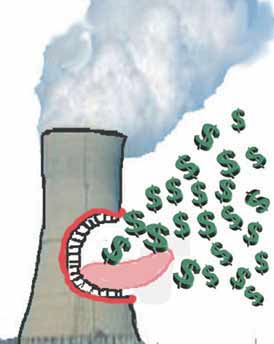
Ontario Power Generation is seeking a near-doubling of payments it receives for electricity produced by its nuclear power plants, a request that could lead to surging power bills.
In a rate application submitted to the Ontario Energy Board in December, OPG requested payments of nearly $207 dollars per megawatt hour produced by its nuclear power stations beginning Jan. 1, 2027, roughly double what it received as recently as last year. It seeks similar amounts for each year through 2031.
OPG spokesperson Neal Kelly said the sought rates would cause a typical residential customer’s payments to rise by roughly 2.4 per cent annually in each of the next five years.
Ontario has generated roughly half of its power in recent years from its Darlington, Pickering and Bruce nuclear stations. (The latter is operated by private power producer Bruce Power and is not part of OPG’s application.) Energy Minister Stephen Lecce is pursuing an aggressive expansion of the reactor fleet to meet an expected surge in demand for electricity between now and mid-century, which includes plans to build large new multi-reactor stations.
Chelsea McGee, a spokesperson for Mr. Lecce, referred an interview request from The Globe and Mail to the OEB and OPG.
The requested payment increases require the board’s approval. OEB spokesperson Tom Miller said it would be inappropriate to comment on OPG’s application because it is before a panel of commissioners. Mr. Miller said it will be adjudicated later this year.
Made in Canada: Inside an urban Toronto facility making uranium fuel for CANDU reactors
OPG is entering a period of intense capital spending. Last year, it began constructing the first of four new small modular reactors at its Darlington station, with an estimated cost of $20.9-billion. OPG said that project accounts for about one-quarter of the sought payment increases.
Far more consequential, at 60 per cent of the payment increase, is the $26.8-billion refurbishment of four aging reactors at Pickering station. The government approved that overhaul in November; it’s expected to wrap up in the mid-2030s.
OPG is also spending to refurbish many of its hydroelectric stations.
“Every investment in the application has been carefully evaluated, planned prudently and designed to provide long-term value to Ontarians,” Mr. Kelly wrote in a statement.
Mark Winfield, a professor at York University’s environmental faculty, said that because OPG’s projects have been approved by the government, the OEB has little room to disallow the payment increases sought by the utility.
“They can’t really say no to OPG,” he said.
“The system runs by political fiat, and all the agencies are basically mandated to fulfill the minister’s will.”
Ontario to spend $1.5-billion on underwater electricity cable from nuclear plant to Toronto
Ontario’s residential electricity rates previously increased 29 per cent on Nov. 1. The OEB attributed those hikes to “higher-than-expected generation costs” as well as increased spending on conservation programs, but it provided few additional details. Those rate hikes were largely offset by a 23.5-per-cent increase in the Ontario Electricity Rebate, a taxpayer-funded instrument the government uses to provide relief on residential power bills.
The Globe twice requested interviews with OEB officials in December to explore the role rising nuclear costs played in the Nov. 1 rate increases. Mr. Miller denied those requests but agreed to answer questions by e-mail. The Globe sent questions to the OEB on Jan. 5, but had not received responses by late Monday.
A report by Power Advisory LLC, a consultancy that performed work for the OEB related to the Nov. 1 rate increases, attributed them partly to “higher-than-expected nuclear generation.” That report noted payments for OPG’s nuclear generation rose to $123.76 per megawatt hour in 2026, as compared with $111.61 per megawatt hour last year.
The current trajectory for power rates has attracted concern from the Association of Major Power Consumers in Ontario, which represents industrial power users including automakers Ford Motor Co. and Toyota Motor Corp., and steel producers Stelco and ArcelorMittal Dofasco.
AMPCO president Brad Duguid said the province has no choice but to overhaul and expand its nuclear fleet – a decision he argued will preserve the provincial grid’s reliability. But he’s concerned that industrial power rates are already “skyrocketing” for AMPCO’s members – increases he mainly attributed to rising natural gas generation as reactors are taken offline for refurbishment.
“Over the next seven to 10 years, we’re seeing significant increases in the market energy rates to make up that difference,” he said.
“We’re talking about increases in the range of 165 per cent for the market rate over the next three years alone. That’s untenable. That’s an absolute threat to the competitiveness of our industrial sector and the hundreds of thousands of jobs it supports.”
Ottawa, Ontario pledge combined $3-billion for new nuclear reactors
Jack Gibbons, chair of the Ontario Clean Air Alliance, attributed the hikes directly to the government’s nuclear expansion and predicted the situation will only worsen.
“It’s just absurd to be investing in high-cost nuclear,” he said.
“It’s going to push up rates, make life less affordable for hard-working families and make Ontario’s businesses less competitive.”
York University’s Mr. Winfield said the government has four options to address the upward pressure on electricity rates. First, it can allow them to rise, but that would undermine affordability and could stall electrification of Ontario’s economy.
The government could also further increase subsidies such as the Ontario Energy Rebate. But at a total annual cost “of $8.5-billion per year, this has to be already at or near the limits of fiscal feasibility,” Mr. Winfield wrote in an e-mail.
Another option is to reconsider the province’s electricity plans to focus on lower-cost options. Finally, the government could conceal the additional costs as debt, a choice previous governments pursued.
Electricity rates are also rising sharply in many other jurisdictions across North America, including ones with little or no nuclear generation. According to the U.S. Energy Information Administration, average residential rates across the United States increased 5 per cent for the year ended Oct. 31, reaching nearly 18 US cents per kilowatt hour.
No comments yet.
1 This Month

of the week – Shut Down Drone Warfare!


Tell the Ukrainian Government to Drop Prosecution of Peace Activist Yurii Sheliazhenko

Petition to revoke the licensing of the Near Surface Nuclear Disposal Facility (NSDF) at Chalk River. https://www.ourcommons.ca/petitions/en/Petition/Details?Petition=e-7247
To see nuclear-related stories in greater depth and intensity – go to https://nuclearinformation.wordpress.com
-
Archives
- April 2026 (7)
- March 2026 (251)
- February 2026 (268)
- January 2026 (308)
- December 2025 (358)
- November 2025 (359)
- October 2025 (376)
- September 2025 (257)
- August 2025 (319)
- July 2025 (230)
- June 2025 (348)
- May 2025 (261)
-
Categories
- 1
- 1 NUCLEAR ISSUES
- business and costs
- climate change
- culture and arts
- ENERGY
- environment
- health
- history
- indigenous issues
- Legal
- marketing of nuclear
- media
- opposition to nuclear
- PERSONAL STORIES
- politics
- politics international
- Religion and ethics
- safety
- secrets,lies and civil liberties
- spinbuster
- technology
- Uranium
- wastes
- weapons and war
- Women
- 2 WORLD
- ACTION
- AFRICA
- Atrocities
- AUSTRALIA
- Christina's notes
- Christina's themes
- culture and arts
- Events
- Fuk 2022
- Fuk 2023
- Fukushima 2017
- Fukushima 2018
- fukushima 2019
- Fukushima 2020
- Fukushima 2021
- general
- global warming
- Humour (God we need it)
- Nuclear
- RARE EARTHS
- Reference
- resources – print
- Resources -audiovicual
- Weekly Newsletter
- World
- World Nuclear
- YouTube
-
RSS
Entries RSS
Comments RSS
 nuclear-news
Leave a comment