The New German Warfare State
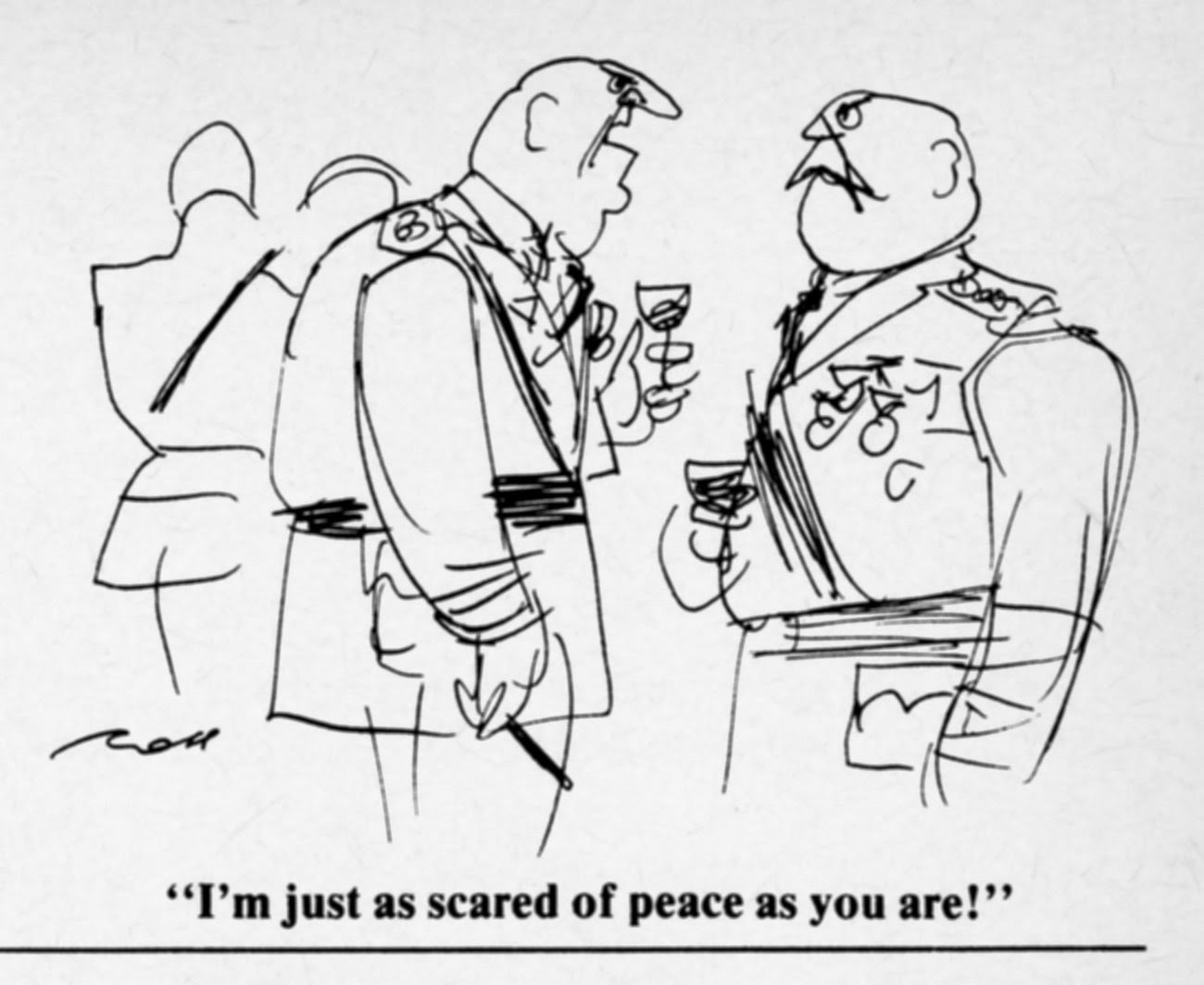
a leading sector of the political and economic elites in Germany and the EU view the project of rampant militarization as a means to counter the massive upheavals that are threatening their power on a geopolitical, domestic, and economic level. And for this purpose, the maintenance of a major threat, of a terrifying enemy that will not go away quickly, is indispensable. If the Russian threat, in contrast, turned out to be not as serious as it is portrayed, and if Russia could be accommodated with a peace deal that includes Ukrainian neutrality, the complete system of justification for the military build-up would crumble.
Fabian Scheidler, Substack, Jan 06, 2026
How boundless militarization has become the key project of Germany and the European Union in the unfolding polycrisis.
The European Union, Britain and other European NATO members have embarked on a path of massive militarization, which in its speed and ambition is unprecedented since World War II. While most NATO members had previously been unwilling or unable to meet the goal of spending two percent of their GDP for the military, a target set in 2014, they suddenly jumped to a commitment of five per cent per year at the 2025 NATO summit, bowing to Donald Trump’s pressure. Only the Spanish government refused to comply.
What NATO, its member states and major media are not communicating is the fact that five per cent of GDP corresponds to around 50 per cent of national budgets. If states were indeed to implement their commitments, they would have to drastically reduce spending on welfare, including education and healthcare, while simultaneously swelling their national deficits. The Financial Times summed up the agenda in a March 2025 headline: ‘Europe Must Trim its Welfare State to Build a Warfare State’. In other words, the planned militarization is class war from above. Although governments have somewhat watered down their commitments, stating that only 3.5 per cent will go directly to the military while 1.5 per cent is meant to revamp infrastructures for military use, even 35 per cent of national budgets would still be a major blow for what is left of the European welfare model.
Massive cuts to public spending in order to channel the funds into the military-industrial complex are on the agenda in most European countries. The German government is among the most zealous in this respect. Finance Minister Lars Klingbeil from the Social Democratic Party (SPD) pledged to triple the military budget from 52 billion € in 2024 to an unprecedented 153 billion in 2029, while chancellor Friedrich Merz (CDU) has already announced drastic cuts in unemployment benefits to fill some of the gap. Resistance within the Bundestag is eerily feeble. The Greens have long been among the most ardent advocates of rearmament and in March 2025 they voted in favour of a constitutional amendment that has removed all budget constraints for the military and intelligence services while maintaining austerity for all other types of spending. The right-wing Alternative für Deutschland (AfD), which has been leading in some recent polls, is equally devoted to the military build-up and a cutback of the welfare state. While Die LINKE officially opposes this agenda, their representatives in the second federal chamber, the Bundesrat, have voted for the constitutional amendment, causing unrest within the party. For some observers, the lack of parliamentary opposition has brought back sinister memories of the war credits in 1914, which were unanimously approved in the Reichstag – with the votes of the SPD.
In other European countries, however, more resistance has emerged. In the UK, Keir Starmer met fierce opposition to his plans to cut welfare benefits, even within his own Labour Party, and was forced to backtrack. In France, prime minister François Bayrou was toppled by a motion of no confidence over a € 44 billion budget cut plan. In Spain, mass demonstrations against rearmament have put significant pressure on prime minister Sanchez to limit military spending.
While it remains unclear to what extent European governments will be able to push through their ‘all guns, no butter’ agenda, the onslaught on public services and the working class is ongoing and pervasive. Unbound militarization has become the key project of the European Union, which is trying to mend its fractured foundations by forging a military union.
The militarization of German society
In Germany, a wave of militarization that would have been unthinkable a few years ago is sweeping through the country, affecting schools, universities, the media, and public spaces. Tramways are painted in military camouflage. Huge advertisements for the army depict war as a great adventure that strengthens team spirit. The Bundeswehr is aggressively recruiting young people in the streets, at school, and at universities. Even minors under 18 are being recruited, in violation of the principles of the UN Convention on the Rights of the Child, as organizations such as Terre des Hommes point out. Youth officers are sent into classrooms where they are advertising the army in front of students who are sometimes barely 13 years old. Rather than encouraging debates about the military at school, the army is being given free rein. The administration is also planning to introduce regular civil defense drills in schools, with the explicit intention of preparing the students mentally for war.
In the media, the German public broadcaster ARD has started to promote the army and its preparations for war in its children’s program ‘9 ½’, with recommendations on how to get involved. The program does not ask any critical questions about the army, nor does it mention the fact that deployment to war zones can result in death and trauma. The same is true of the second public broadcaster, which advertises the army as a cute and charitable force of peace in its children’s program ZDFtivi.
Universities are increasingly being forced to cooperate with the military. While a few federal states still prohibit military research in public universities and around 70 universities have voluntarily committed to engage exclusively in civil research, Robert Habeck (The Greens) declared in early 2025, when he was vice chancellor, that we ‘need to rethink the strict separation of military and civilian use and development’ in academia. In Bavaria, the administration has already banned any ‘civil clauses’ in universities, eliminating the option of declining military research. Furthermore, the German Army has developed a comprehensive classified ‘Operation Plan Germany’ to subordinate civil institutions to military objectives.
These concerted efforts to create a Warfare State are not least intended to transform the attitudes of the German population, which in its majority has been skeptical of the military, and of foreign involvements in particular, for decades……………………………………………………………………………………………
The ‘rules-based international order’ and the Gaza genocide
The project of the Warfare State, and the sacrifices that the population is supposed to make for its creation, is portrayed by political leaders both in Germany and the EU as being without alternative. The argument justifying this position is based on two pillars. The first one is the claim that massive rearmament is required to defend democracy, ‘Western values’, and international law against a despotic rogue state that is willing to dismantle the ‘rules-based international order’. ……………………………………………………………………………………………….
Within Europe, German governments have particularly excelled in trampling on international law when it comes to Palestine. After the Israeli onslaught began, the German government increased its arms exports to Israel tenfold, to a total 326 million euros in 2023 alone, making it the world’s second-largest supplier of arms to Israel, behind only the US. In November 2023, when overwhelming evidence of systematic Israeli war crimes had long been available, German Chancellor Olaf Scholz (SPD) declared that Israel ‘is committed to human rights and international law and acts accordingly’. Even after the International Court of Justice deemed South Africa’s genocide lawsuit against Israel to be ‘plausible’ in January 2024, the German government did not alter its stance. …………………………………
…………………. Germany has been the main force in the EU blocking all initiatives to sanction Israel for its behavior, for example by suspending the EU-Israel Association Agreement. German authorities and institutions have also engaged in suppressing freedom of speech on a scale unprecedented in recent German history, including attempts to prevent the UN Special Rapporteur on the Occupied Territories, Francesca Albanese, from speaking in Berlin……………………………………………………………………
The Russian threat
While the argument that the new arms race is about defending a rules-based international order and the inviolability of borders (which Israel violates on a daily basis) has lost credibility, and with Ukraine’s chances of winning back their territories dwindling, another narrative has emerged to justify the military build-up: the threat of a Russian invasion of NATO countries. In June 2024, German Defense Minister Boris Pistorius stated that Germany must become ‘fit for war’ because Russia will be able to invade NATO by 2029.
However, there is no indication that Russia has any intention of attacking NATO countries, let alone Germany. Even the annual US intelligence report clearly states that the Kremlin ‘is almost certainly not interested in a direct military conflict with US and NATO forces’.[10] Admiral Sir Tony Radakin, Commander-in-Chief of the British Armed Forces and anything but a Russian stooge, confirmed: ‘Vladimir Putin does not want a direct war with NATO.’ In fact, there are no plausible motives for an attack on NATO, which would plunge Russia into a devastating conflict with the most powerful military alliance in human history. Even if the Russian leadership were utterly insane and suicidal (for which there is no evidence), they would lack the means to undertake such an endeavor. For years, Russia has made only slow advances against an exhausted Ukrainian army. NATO’s military budget is still ten times larger than Russia’s, and European NATO states alone spend more than three times as much and are overwhelmingly superior to Russia militarily.
Given that the Russian threat to NATO is clearly greatly exaggerated, even in the eyes of Western intelligence, the question arises as to why the German government, along with other European leaders, continues to circulate the narrative of an impending invasion. The question becomes even more pertinent given that the EU and its most powerful member states are actively undermining serious peace negotiations, thus increasing the risk of a major confrontation with Russia. The proposal to send NATO troops to Ukraine in the wake of a possible ceasefire, for example, increases the incentives for Russia to continue fighting, since preventing NATO troops from being deployed to Ukraine was a key motive for starting the war in the first place. While the EU should have a clear interest in extinguishing the fire on its doorstep, it continues to pour more oil on it, compromising its own security interests as well as Ukraine’s. What is driving this seemingly irrational behavior?
The geopolitical upheaval and the ‘international division of humanity’
A possible answer to this puzzle is that a leading sector of the political and economic elites in Germany and the EU view the project of rampant militarization as a means to counter the massive upheavals that are threatening their power on a geopolitical, domestic, and economic level. And for this purpose, the maintenance of a major threat, of a terrifying enemy that will not go away quickly, is indispensable. If the Russian threat, in contrast, turned out to be not as serious as it is portrayed, and if Russia could be accommodated with a peace deal that includes Ukrainian neutrality, the complete system of justification for the military build-up would crumble.
To consider this argument more carefully, we need to take a closer look at the historical context. Geopolitically, the West is losing its dominant position in the world-system that it has occupied for centuries, a process that has triggered severe turbulence and fractures within the Western bloc. The US is deploying all possible strategies to regain its once hegemonic position, not hesitating to throw the EU under the bus if necessary. . After the Biden administration’s strategy of weakening Russia through the Ukraine war failed, driving Russia in the arms of Beijing, the Trump administration has been desperately trying to pull out of Ukraine in order to pivot to Asia and contain its main rival China. For this reason, the US is attempting to shift the financial burden of the war to Europe.
For European governments, and the German administration in particular, which have been following US instructions to the letter while subordinating their own interests, this U-turn has provoked considerable chaos and confusion. First of all, they had bowed to US pressure to cut all ties with Russia. While this did nothing to end the Ukraine war, it caused severe economic pain, especially to Germany. …………………………………………………………………………………………………
Despite the rivalry and in-fighting among Western nations, the new wave of militarization has at least one common geopolitical denominator: the maintenance of what Vijay Prashad has called the ‘international division of humanity’. The capitalist world-system has been based for centuries on the dominance of white Western nations over the peoples of the Global South through colonization and neocolonial rule. This order is threatened by the rise of the Global South and the BRICS, and Germany, much like other European powers, is not willing to let the ‘darker nations’ have an equal say in world affairs and give up its own privileged position among the top predators of the food chain. Given that the economic leverage and the soft power of Germany are in decline, its leaders seem to believe that they can reverse trends by increased militarization.
Economic decay and remilitarization
On the economic and domestic level, Germany has become, like many other Western countries, a society in decline. …………………………………………………………………………………………………………………………………….
If the program was indeed about restarting the national economy by creating domestic demand the question arises as to why German governments, as in other Western countries, have been and still are so unwilling to spend more money on education, healthcare, and other public services, which would create domestic demand much more effectively. The March 2025 constitutional amendment gets to the heart of this paradox: While maintaining austerity for society at large, it has enabled limitless spending and borrowing for the military and the deep state.
……………………………………………………………………………………………………………………………………………….. With ideological coherence in the West crumbling, the War State can provide a sense of direction and unity among the governing elites. Moreover, the threat of an overwhelming enemy, whether real or fictitious, allows the imposition of a state of exception on society as a whole.
……………………………………. the latent or manifest state of war is a perfect means of distracting an increasingly skeptical population from considering the systemic root causes of the deepening polycrisis. Whether it is inequality or climate chaos, the logic of war calls on us to put these issues aside in order to defend Western civilization against the Saurons and Voldemorts of the barbaric East.
………………………. war seems to be the only remaining option for a body politic that has no answers for anything, whether it is mass poverty, climate chaos, popular anger, or geopolitical challenges. While it is often said that politics is about the solution of problems, the War State project is about distracting from all real problems by hypnotizing the public and focusing its attention on an external threat.
………………………………………………………………………………………………… Welfare, not warfare
The convergence of movements around the issue of peace will play a key role in determining whether the race to the abyss can be stopped. The attacks on welfare in order to finance the arms build-up have already incited mass popular resistance in countries like Britain, Spain, France, and Italy. While the German peace movements are still historically weak due to internal splits, a series of major demonstrations this autumn, both on the issues of Gaza and Ukraine, might indicate a turning point. Stopping the military build-up and the new bloc confrontation is a key issue for the left in Europe, as all possible progressive achievements in terms of workers’ rights, democracy, and environmental justice would be wiped out if EU leaders get their way with the War State agenda. After all, it’s about welfare, not warfare, today more than ever. https://fabianscheidler.substack.com/p/the-new-german-warfare-state
No comments yet.
1 This Month

of the week – Shut Down Drone Warfare!


Tell the Ukrainian Government to Drop Prosecution of Peace Activist Yurii Sheliazhenko

Petition to revoke the licensing of the Near Surface Nuclear Disposal Facility (NSDF) at Chalk River. https://www.ourcommons.ca/petitions/en/Petition/Details?Petition=e-7247
To see nuclear-related stories in greater depth and intensity – go to https://nuclearinformation.wordpress.com
-
Archives
- April 2026 (7)
- March 2026 (251)
- February 2026 (268)
- January 2026 (308)
- December 2025 (358)
- November 2025 (359)
- October 2025 (376)
- September 2025 (257)
- August 2025 (319)
- July 2025 (230)
- June 2025 (348)
- May 2025 (261)
-
Categories
- 1
- 1 NUCLEAR ISSUES
- business and costs
- climate change
- culture and arts
- ENERGY
- environment
- health
- history
- indigenous issues
- Legal
- marketing of nuclear
- media
- opposition to nuclear
- PERSONAL STORIES
- politics
- politics international
- Religion and ethics
- safety
- secrets,lies and civil liberties
- spinbuster
- technology
- Uranium
- wastes
- weapons and war
- Women
- 2 WORLD
- ACTION
- AFRICA
- Atrocities
- AUSTRALIA
- Christina's notes
- Christina's themes
- culture and arts
- Events
- Fuk 2022
- Fuk 2023
- Fukushima 2017
- Fukushima 2018
- fukushima 2019
- Fukushima 2020
- Fukushima 2021
- general
- global warming
- Humour (God we need it)
- Nuclear
- RARE EARTHS
- Reference
- resources – print
- Resources -audiovicual
- Weekly Newsletter
- World
- World Nuclear
- YouTube
-
RSS
Entries RSS
Comments RSS
 nuclear-news
Leave a comment