The new world of journalism

My first effort. This is my first foray into the new jungle. I have been examining different types of journalism, and noting which sorts get an interested response. I plan to evaluate the different types – for their interest and effectiveness.
12 January 2026 Noel Wauchope https://theaimn.net/the-new-world-of-journalism/
Journalism is in a mess, and it is changing so fast. Meanwhile the world is changing even faster, and we need good journalism more than ever.
The old world of journalism is dead. Long live the new!
I liked the old world of journalism. And it still exists – a bit. In that old world, facts were valued, rather than opinions. Of course opinions were still there, not always apparent, and sometimes more effective in selective reporting of the facts, with some facts carefully omitted. Still, the facts were meant to be paramount. I loved an ancient TV series, Dragnet, in which Sergeant Joe Friday expressed it perfectly “Just wanna get the facts, ma’am – just the facts.”
Still, the old journalism did undergo editorial scrutiny, do fact-checking, and even had grammar and spelling checked. And it does still exist today, when the Internet has nearly killed print journalism, and its funding from advertisers.
But – it’s limited. The new digital media has overwhelmed it. You get not just young teenagers gossiping, but also heads of state announcing things, via TikTok or Twitter, X or Facebook, Instagram, and many other platforms. And the message is above all – new, fast, short and visually arresting. No, I haven’t done the research, nor produced a PhD paper about this, but my observation is that longform journalism is read by the much older generations.
Still, forms other than text are doing well, and information and opinion are broadcast by podcast and YouTube journalists, so providing perhaps a more accessible form of longer journalism, though the fact-checking may be dodgy.
So, in place of the staid, somewhat reliable old journalism, what do we have? We still have the struggling print, radio and TV “mainstream media”, where journalists “mind their p’s and q’s”, because they don’t have the job security that used to be taken for granted. Of course, there are “safe” specialities like sport, cooking and gardening, but current affairs, politics, environment, climate and much else – these are dangerous territories for the mainstream journalist.
Self-censorship is rife.
Then there’s “alternative media” where brave souls have branched out with new journals, funding this work sometimes by community organisations, libraries, universities, or just by themselves, and trying to get funding from readers. I really don’t know how successful they are, financially. But for some writers, myself included, these new journals provide the opportunity for self-expression. For the public, they do provide a much-needed broader range of subject and opinion, than is available in the rather constipated traditional mainstream media.
So – where to – for the good journalism? And what is the good journalism? Well, back to good old Sergeant Joe Friday. For a start, we need to know that the writer’s facts are correct. Then there are those seemingly vague things, like authenticity and integrity. It’s a tortuous path to try and work this out. In Australia, the teaching of English does include awareness of logic, and of conflict of interest. These are aspects pretty much impossible to ascertain in the prevailing snappy digital media, but can be gauged in longer journalism.
Over many years, I’ve been studying articles from many sources – to find out what is effective, what is genuinely interesting and believable. I think that it’s time that those of us who appreciate integrity in writing should shout about it.
Just for a first shout – I’ll pick out a couple of shouts already made. Here I find examples of journalists who courageously identify mainstream media’s biased journalism. In FAIR (FAIRNESS & ACCURACY IN REPORTING) an experienced journalist, Ari Paul, takes on the enthusiastic coverage by The Wall Street Journal, the Washington Post, the New York Times, The Times, The Chicago Tribune of “Trump’s Doctrine in Venezuela.” Paul concludes:
“By kidnapping a foreign head of state, the Trump administration is saying that international law doesn’t apply to the United States. That’s a sentiment most American editorialists are all too ready to applaud – despite the danger it poses for Americans, and for the world.”
Elizabeth Smith, writing for the NTI – The Nuclear Threat Initiative – asks:
“What does it take to reveal truth in the face of censorship?”
She applies that principle in the media coverage of the 1945 atomic bombing, described in a new PBS documentary, “Bombshell.” She concludes:
”Bombshell lays bare the power of narratives – and counter narratives. It shows, with infuriating and heartbreaking precision, how misinformation about the bombings influenced public opinion.”
There are a lot of independent writers out there – some, like Ari Paul and Elizabeth Smith are highly qualified and experienced journalists, who go into their subject in some depth, and are not scared to rock the prevailing boat of safe complacency that increasingly pervades the self-censoring mainstream media. Others are less masterful in their use of language, and less qualified, but still get their message across in a compelling way.
The New German Warfare State
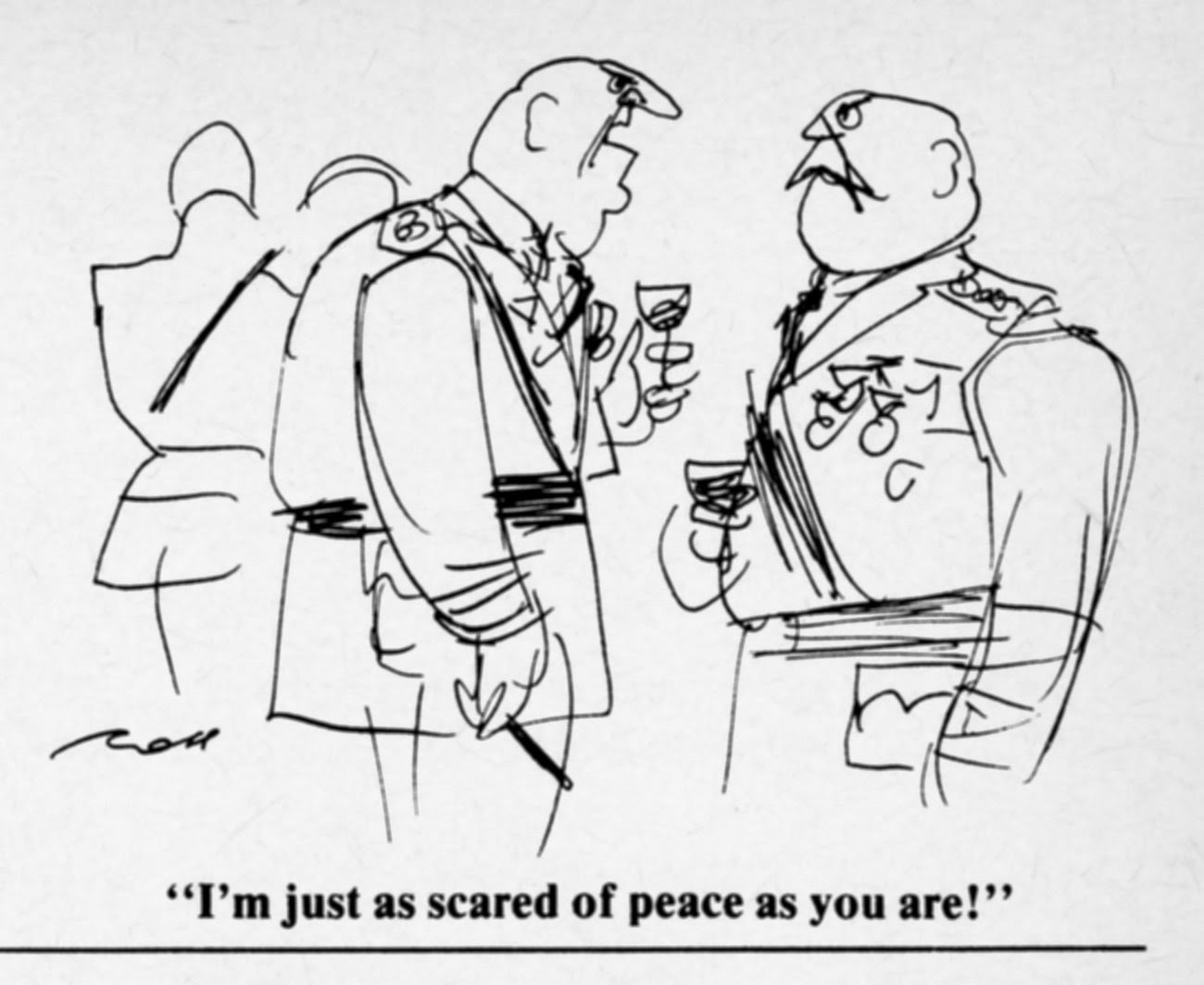
a leading sector of the political and economic elites in Germany and the EU view the project of rampant militarization as a means to counter the massive upheavals that are threatening their power on a geopolitical, domestic, and economic level. And for this purpose, the maintenance of a major threat, of a terrifying enemy that will not go away quickly, is indispensable. If the Russian threat, in contrast, turned out to be not as serious as it is portrayed, and if Russia could be accommodated with a peace deal that includes Ukrainian neutrality, the complete system of justification for the military build-up would crumble.
Fabian Scheidler, Substack, Jan 06, 2026
How boundless militarization has become the key project of Germany and the European Union in the unfolding polycrisis.
The European Union, Britain and other European NATO members have embarked on a path of massive militarization, which in its speed and ambition is unprecedented since World War II. While most NATO members had previously been unwilling or unable to meet the goal of spending two percent of their GDP for the military, a target set in 2014, they suddenly jumped to a commitment of five per cent per year at the 2025 NATO summit, bowing to Donald Trump’s pressure. Only the Spanish government refused to comply.
What NATO, its member states and major media are not communicating is the fact that five per cent of GDP corresponds to around 50 per cent of national budgets. If states were indeed to implement their commitments, they would have to drastically reduce spending on welfare, including education and healthcare, while simultaneously swelling their national deficits. The Financial Times summed up the agenda in a March 2025 headline: ‘Europe Must Trim its Welfare State to Build a Warfare State’. In other words, the planned militarization is class war from above. Although governments have somewhat watered down their commitments, stating that only 3.5 per cent will go directly to the military while 1.5 per cent is meant to revamp infrastructures for military use, even 35 per cent of national budgets would still be a major blow for what is left of the European welfare model.
Massive cuts to public spending in order to channel the funds into the military-industrial complex are on the agenda in most European countries. The German government is among the most zealous in this respect. Finance Minister Lars Klingbeil from the Social Democratic Party (SPD) pledged to triple the military budget from 52 billion € in 2024 to an unprecedented 153 billion in 2029, while chancellor Friedrich Merz (CDU) has already announced drastic cuts in unemployment benefits to fill some of the gap. Resistance within the Bundestag is eerily feeble. The Greens have long been among the most ardent advocates of rearmament and in March 2025 they voted in favour of a constitutional amendment that has removed all budget constraints for the military and intelligence services while maintaining austerity for all other types of spending. The right-wing Alternative für Deutschland (AfD), which has been leading in some recent polls, is equally devoted to the military build-up and a cutback of the welfare state. While Die LINKE officially opposes this agenda, their representatives in the second federal chamber, the Bundesrat, have voted for the constitutional amendment, causing unrest within the party. For some observers, the lack of parliamentary opposition has brought back sinister memories of the war credits in 1914, which were unanimously approved in the Reichstag – with the votes of the SPD.
In other European countries, however, more resistance has emerged. In the UK, Keir Starmer met fierce opposition to his plans to cut welfare benefits, even within his own Labour Party, and was forced to backtrack. In France, prime minister François Bayrou was toppled by a motion of no confidence over a € 44 billion budget cut plan. In Spain, mass demonstrations against rearmament have put significant pressure on prime minister Sanchez to limit military spending.
While it remains unclear to what extent European governments will be able to push through their ‘all guns, no butter’ agenda, the onslaught on public services and the working class is ongoing and pervasive. Unbound militarization has become the key project of the European Union, which is trying to mend its fractured foundations by forging a military union.
The militarization of German society
In Germany, a wave of militarization that would have been unthinkable a few years ago is sweeping through the country, affecting schools, universities, the media, and public spaces. Tramways are painted in military camouflage. Huge advertisements for the army depict war as a great adventure that strengthens team spirit. The Bundeswehr is aggressively recruiting young people in the streets, at school, and at universities. Even minors under 18 are being recruited, in violation of the principles of the UN Convention on the Rights of the Child, as organizations such as Terre des Hommes point out. Youth officers are sent into classrooms where they are advertising the army in front of students who are sometimes barely 13 years old. Rather than encouraging debates about the military at school, the army is being given free rein. The administration is also planning to introduce regular civil defense drills in schools, with the explicit intention of preparing the students mentally for war.
In the media, the German public broadcaster ARD has started to promote the army and its preparations for war in its children’s program ‘9 ½’, with recommendations on how to get involved. The program does not ask any critical questions about the army, nor does it mention the fact that deployment to war zones can result in death and trauma. The same is true of the second public broadcaster, which advertises the army as a cute and charitable force of peace in its children’s program ZDFtivi.
Universities are increasingly being forced to cooperate with the military. While a few federal states still prohibit military research in public universities and around 70 universities have voluntarily committed to engage exclusively in civil research, Robert Habeck (The Greens) declared in early 2025, when he was vice chancellor, that we ‘need to rethink the strict separation of military and civilian use and development’ in academia. In Bavaria, the administration has already banned any ‘civil clauses’ in universities, eliminating the option of declining military research. Furthermore, the German Army has developed a comprehensive classified ‘Operation Plan Germany’ to subordinate civil institutions to military objectives.
These concerted efforts to create a Warfare State are not least intended to transform the attitudes of the German population, which in its majority has been skeptical of the military, and of foreign involvements in particular, for decades……………………………………………………………………………………………
The ‘rules-based international order’ and the Gaza genocide
The project of the Warfare State, and the sacrifices that the population is supposed to make for its creation, is portrayed by political leaders both in Germany and the EU as being without alternative. The argument justifying this position is based on two pillars. The first one is the claim that massive rearmament is required to defend democracy, ‘Western values’, and international law against a despotic rogue state that is willing to dismantle the ‘rules-based international order’. ……………………………………………………………………………………………….
Within Europe, German governments have particularly excelled in trampling on international law when it comes to Palestine. After the Israeli onslaught began, the German government increased its arms exports to Israel tenfold, to a total 326 million euros in 2023 alone, making it the world’s second-largest supplier of arms to Israel, behind only the US. In November 2023, when overwhelming evidence of systematic Israeli war crimes had long been available, German Chancellor Olaf Scholz (SPD) declared that Israel ‘is committed to human rights and international law and acts accordingly’. Even after the International Court of Justice deemed South Africa’s genocide lawsuit against Israel to be ‘plausible’ in January 2024, the German government did not alter its stance. …………………………………
…………………. Germany has been the main force in the EU blocking all initiatives to sanction Israel for its behavior, for example by suspending the EU-Israel Association Agreement. German authorities and institutions have also engaged in suppressing freedom of speech on a scale unprecedented in recent German history, including attempts to prevent the UN Special Rapporteur on the Occupied Territories, Francesca Albanese, from speaking in Berlin……………………………………………………………………
The Russian threat
While the argument that the new arms race is about defending a rules-based international order and the inviolability of borders (which Israel violates on a daily basis) has lost credibility, and with Ukraine’s chances of winning back their territories dwindling, another narrative has emerged to justify the military build-up: the threat of a Russian invasion of NATO countries. In June 2024, German Defense Minister Boris Pistorius stated that Germany must become ‘fit for war’ because Russia will be able to invade NATO by 2029.
However, there is no indication that Russia has any intention of attacking NATO countries, let alone Germany. Even the annual US intelligence report clearly states that the Kremlin ‘is almost certainly not interested in a direct military conflict with US and NATO forces’.[10] Admiral Sir Tony Radakin, Commander-in-Chief of the British Armed Forces and anything but a Russian stooge, confirmed: ‘Vladimir Putin does not want a direct war with NATO.’ In fact, there are no plausible motives for an attack on NATO, which would plunge Russia into a devastating conflict with the most powerful military alliance in human history. Even if the Russian leadership were utterly insane and suicidal (for which there is no evidence), they would lack the means to undertake such an endeavor. For years, Russia has made only slow advances against an exhausted Ukrainian army. NATO’s military budget is still ten times larger than Russia’s, and European NATO states alone spend more than three times as much and are overwhelmingly superior to Russia militarily.
Given that the Russian threat to NATO is clearly greatly exaggerated, even in the eyes of Western intelligence, the question arises as to why the German government, along with other European leaders, continues to circulate the narrative of an impending invasion. The question becomes even more pertinent given that the EU and its most powerful member states are actively undermining serious peace negotiations, thus increasing the risk of a major confrontation with Russia. The proposal to send NATO troops to Ukraine in the wake of a possible ceasefire, for example, increases the incentives for Russia to continue fighting, since preventing NATO troops from being deployed to Ukraine was a key motive for starting the war in the first place. While the EU should have a clear interest in extinguishing the fire on its doorstep, it continues to pour more oil on it, compromising its own security interests as well as Ukraine’s. What is driving this seemingly irrational behavior?
The geopolitical upheaval and the ‘international division of humanity’
A possible answer to this puzzle is that a leading sector of the political and economic elites in Germany and the EU view the project of rampant militarization as a means to counter the massive upheavals that are threatening their power on a geopolitical, domestic, and economic level. And for this purpose, the maintenance of a major threat, of a terrifying enemy that will not go away quickly, is indispensable. If the Russian threat, in contrast, turned out to be not as serious as it is portrayed, and if Russia could be accommodated with a peace deal that includes Ukrainian neutrality, the complete system of justification for the military build-up would crumble.
To consider this argument more carefully, we need to take a closer look at the historical context. Geopolitically, the West is losing its dominant position in the world-system that it has occupied for centuries, a process that has triggered severe turbulence and fractures within the Western bloc. The US is deploying all possible strategies to regain its once hegemonic position, not hesitating to throw the EU under the bus if necessary. . After the Biden administration’s strategy of weakening Russia through the Ukraine war failed, driving Russia in the arms of Beijing, the Trump administration has been desperately trying to pull out of Ukraine in order to pivot to Asia and contain its main rival China. For this reason, the US is attempting to shift the financial burden of the war to Europe.
For European governments, and the German administration in particular, which have been following US instructions to the letter while subordinating their own interests, this U-turn has provoked considerable chaos and confusion. First of all, they had bowed to US pressure to cut all ties with Russia. While this did nothing to end the Ukraine war, it caused severe economic pain, especially to Germany. …………………………………………………………………………………………………
Despite the rivalry and in-fighting among Western nations, the new wave of militarization has at least one common geopolitical denominator: the maintenance of what Vijay Prashad has called the ‘international division of humanity’. The capitalist world-system has been based for centuries on the dominance of white Western nations over the peoples of the Global South through colonization and neocolonial rule. This order is threatened by the rise of the Global South and the BRICS, and Germany, much like other European powers, is not willing to let the ‘darker nations’ have an equal say in world affairs and give up its own privileged position among the top predators of the food chain. Given that the economic leverage and the soft power of Germany are in decline, its leaders seem to believe that they can reverse trends by increased militarization.
Economic decay and remilitarization
On the economic and domestic level, Germany has become, like many other Western countries, a society in decline. …………………………………………………………………………………………………………………………………….
If the program was indeed about restarting the national economy by creating domestic demand the question arises as to why German governments, as in other Western countries, have been and still are so unwilling to spend more money on education, healthcare, and other public services, which would create domestic demand much more effectively. The March 2025 constitutional amendment gets to the heart of this paradox: While maintaining austerity for society at large, it has enabled limitless spending and borrowing for the military and the deep state.
……………………………………………………………………………………………………………………………………………….. With ideological coherence in the West crumbling, the War State can provide a sense of direction and unity among the governing elites. Moreover, the threat of an overwhelming enemy, whether real or fictitious, allows the imposition of a state of exception on society as a whole.
……………………………………. the latent or manifest state of war is a perfect means of distracting an increasingly skeptical population from considering the systemic root causes of the deepening polycrisis. Whether it is inequality or climate chaos, the logic of war calls on us to put these issues aside in order to defend Western civilization against the Saurons and Voldemorts of the barbaric East.
………………………. war seems to be the only remaining option for a body politic that has no answers for anything, whether it is mass poverty, climate chaos, popular anger, or geopolitical challenges. While it is often said that politics is about the solution of problems, the War State project is about distracting from all real problems by hypnotizing the public and focusing its attention on an external threat.
………………………………………………………………………………………………… Welfare, not warfare
The convergence of movements around the issue of peace will play a key role in determining whether the race to the abyss can be stopped. The attacks on welfare in order to finance the arms build-up have already incited mass popular resistance in countries like Britain, Spain, France, and Italy. While the German peace movements are still historically weak due to internal splits, a series of major demonstrations this autumn, both on the issues of Gaza and Ukraine, might indicate a turning point. Stopping the military build-up and the new bloc confrontation is a key issue for the left in Europe, as all possible progressive achievements in terms of workers’ rights, democracy, and environmental justice would be wiped out if EU leaders get their way with the War State agenda. After all, it’s about welfare, not warfare, today more than ever. https://fabianscheidler.substack.com/p/the-new-german-warfare-state
Plunging Toward Armageddon: U.S. and Russia on the Brink of a New Nuclear Arms Race

Beginning on February 6th, Russian and American leaders will face no barriers whatsoever to the expansion of those arsenals or to any other steps that might increase the danger of a thermonuclear conflagration.
Both the United States and Russia have already committed vast sums to the “modernization” of their nuclear delivery systems
By Michael Klare. 8 Jan 26, https://tomdispatch.com/plunging-into-the-abyss/
Plunging Into the Abyss. Will the U.S. and Russia Abandon All Nuclear Restraints?
For most of us, Friday, February 6, 2026, is likely to feel no different than Thursday, February 5th. It will be a work or school day for many of us. It might involve shopping for the weekend or an evening get-together with friends, or any of the other mundane tasks of life. But from a world-historical perspective, that day will represent a dramatic turning point, with far-reaching and potentially catastrophic consequences. For the first time in 54 years, the world’s two major nuclear-weapons powers, Russia and the United States, will not be bound by any arms-control treaties and so will be legally free to cram their nuclear arsenals with as many new warheads as they wish — a step both sides appear poised to take.
It’s hard to imagine today, but 50 years ago, at the height of the Cold War, the U.S. and Russia (then the Soviet Union) jointly possessed 47,000 nuclear warheads — enough to exterminate all life on Earth many times over. But as public fears of nuclear annihilation increased, especially after the near-death experience of the 1962 Cuban Missile Crisis, the leaders of those two countries negotiated a series of binding agreements intended to downsize their arsenals and reduce the risk of Armageddon.
The initial round of those negotiations, the Strategic Arms Limitation Talks I, began in November 1969 and culminated in the first-ever nuclear arms-limitation agreement, SALT-I, in May 1972. That would then be followed in June 1979 by SALT-II (signed by both parties, though never ratified by the U.S. Senate) and two Strategic Arms Reduction Treaties (START I and START II), in 1991 and 1993, respectively. Each of those treaties reduced the number of deployed nuclear warheads on U.S. and Soviet/Russian intercontinental ballistic missiles, submarine-launched ballistic missiles, and long-range bombers.
In a drive to reduce those numbers even further, President Barack Obama and Russian President Dmitry Medvedev signed a New Strategic Arms Reduction Treaty (New START) in April 2010, an agreement limiting the number of deployed nuclear warheads to 1,550 on each side — still enough to exterminate all life on Earth, but a far cry from the START I limit of 6,000 warheads per side. Originally set to expire on Feb. 5, 2021, New START was extended for another five years (as allowed by the treaty), resetting that expiration date for February 5, 2026, now fast approaching. And this time around, neither party has demonstrated the slightest inclination to negotiate a new extension.
So, the question is: What, exactly, will it mean for New START to expire for good on February 5th?
Most of us haven’t given that a lot of thought in recent decades, because nuclear arsenals have, for the most part, been shrinking and the (apparent) threat of a nuclear war among the great powers seemed to diminish substantially. We have largely escaped the nightmarish experience — so familiar to veterans of the Cold War era — of fearing that the latest crisis, whatever it might be, could result in our being exterminated in a thermonuclear holocaust.
A critical reason for our current freedom from such fears is the fact that the world’s nuclear arsenals had been substantially diminished and that the two major nuclear powers had agreed to legally binding measures, including mutual inspections of their arsenals, meant to reduce the danger of unintended or accidental nuclear war. Together, those measures were crafted to ensure that each side would retain an invulnerable, second-strike nuclear retaliatory force, eliminating any incentive to initiate a nuclear first strike.
Unfortunately, those relatively carefree days will come to an end at midnight on February 5th.
Beginning on February 6th, Russian and American leaders will face no barriers whatsoever to the expansion of those arsenals or to any other steps that might increase the danger of a thermonuclear conflagration. And from the look of things, both intend to seize that opportunity and increase the likelihood of Armageddon. Worse yet, China’s leaders, pointing to a lack of restraint in Washington and Moscow, are now building up their own nuclear arsenal, only adding further fuel to the urge of American and Russian leaders to blow well past the (soon-to-be-abandoned) New START limits.
A Future Nuclear Arms Race?
Even while adhering to those New START limits of 1,550 deployed nuclear warheads, both Russia and the United States had taken elaborate and costly steps to enhance the destructive power of their arsenals by replacing older, less-capable intercontinental ballistic missiles (ICBMs), submarine-launched ballistic missiles (SLBMs), and nuclear bombers with newer, even more capable ones. As a result, each side was already becoming better equipped to potentially inflict catastrophic damage on its opponent’s nuclear retaliatory forces, making a first strike less inconceivable and so increasing the risk of precipitous escalation in a crisis.
The Russian Federation inherited a vast nuclear arsenal from the former Soviet Union, but many of those systems had already become obsolete or unreliable. To ensure that it maintained an arsenal at least as potent as Washington’s, Moscow sought to replace all of the Soviet-era weapons in its inventory with more modern and capable systems, a process still underway. Russia’s older SS-18 ICBMs, for example, are being replaced by the faster, more powerful SS-29 Sarmat, while its remaining five Delta-IV class missile-carrying submarines (SSBNs) are being replaced by the more modern Borei class. And newer ICBMs, SLBMs, and SSBNs are said to be in development.
At present, Russia possesses 333 ICBMs, approximately half of them deployed in silos and the other half on road-mobile carriers. It also has 192 SLBMs on 12 missile-carrying submarines and possesses 67 strategic bombers, each capable of firing multiple nuclear-armed missiles. Supposedly, those systems are currently loaded with no more than 1,550 nuclear warheads (enough, of course, to destroy several planets), as mandated by the New START treaty. However, many of Russia’s land- and sea-based ballistic missiles are MIRVed (meaning they’re capable of launching multiple independently targetable reentry vehicles) but not fully loaded, and so could carry additional warheads if a decision were ever made to do so. Given that Russia possesses as many as 2,600 nuclear warheads in storage, it could rapidly increase the number of deployed nuclear weapons at its disposal beginning on February 6, 2026.
Rather than confront such challenges, the leaders of both countries may instead choose to retain the New START limits voluntarily. Indeed, Vladimir Putin has already agreed to a one-year extension of this sort, if the United States is willing to do likewise. But pressures (which are bound to increase after February 5th) are also building to abandon those limits and begin deploying additional warheadsmost missile-tracking radars.
The United States is engaged in a comparable drive to modernize its arsenal, replacing older weapons with more modern systems. Like Russia, the U.S. maintains a “triad” of nuclear delivery systems — land-based ICBMs, submarine-launched SLBMs, and long-range bombers, each of which is now being upgraded with new warheads at an estimated cost over the next quarter century of approximately $1.5 trillion.
The existing New START-limited U.S. nuclear triad consists of 400 silo-based Minuteman-III ICBMs, 240 Trident-II SLBMs carried by 14 Ohio-class submarines (two of which are assumedly being overhauled at any time), and 96 strategic bombers (20 B-2s and 76 B-52s) armed with a variety of gravity bombs and air-launched cruise missiles. According to current plans, the Minuteman-IIIs will be replaced by Sentinel ICBMs, the Ohio-class SSBNs by Columbia-class ones, and the B-2s and B-52s by the new B-21 Raider bomber. Each of those new systems incorporates important features — greater accuracy, increased stealth, enhanced electronics — that make them even more useful as first-strike weapons, were a decision ever made to use them in such a fashion.
When initiated, the U.S. nuclear modernization project was expected to abide by the New START limit of 1,550 deployed nuclear warheads. After February 5th, however, the U.S. will be under no legal obligation to do so. It could quickly begin efforts to exceed that limit by loading all existing Minuteman-IIIs and future Sentinel missiles on MIRVed rather than single-warhead projectiles and loading the Trident missiles (already MIRVed) with a larger number of warheads, as well as by increasing production of new B-21s. The United States has also commenced development of a new delivery system, the nuclear-armed sea-launched cruise missile (SLCM-N), supposedly intended for use in a “limited” regional nuclear conflict in Europe or Asia (though how such a conflagration could be prevented from igniting a global holocaust has never been explained).
In short, after the expiration of the New START agreement, neither Russia nor the United States will be obliged to limit the numbers of nuclear warheads on their strategic delivery systems, possibly triggering a new global nuclear arms race with no boundaries in sight and an ever-increasing risk of precipitous nuclear escalation. Whether they choose to do so will depend on the political environment in both countries and their bilateral relations, as well as elite perceptions of China’s nuclear buildup in both Washington and Moscow.
The Political Environment
Both the United States and Russia have already committed vast sums to the “modernization” of their nuclear delivery systems, a process that won’t be completed for years. At present, there is a reasonably broad consensus in both Washington and Moscow on the need to do so. However, any attempt to increase the speed of that process or add new nuclear capabilities will generate immense costs along with significant supply-chain challenges (at a time when both countries are also trying to ramp up their production of conventional, non-nuclear arms), creating fresh political disputes and potential fissures.
Rather than confront such challenges, the leaders of both countries may instead choose to retain the New START limits voluntarily. Indeed, Vladimir Putin has already agreed to a one-year extension of this sort, if the United States is willing to do likewise. But pressures (which are bound to increase after February 5th) are also building to abandon those limits and begin deploying additional warheads.
In Washington, a powerful constellation of government officials, conservative pundits, weapons industry leaders, and congressional hawks is already calling for a nuclear buildup that would exceed the New START limits, claiming that a bigger arsenal is needed to deter both a more aggressive Russia and a more powerful China. As Pranay Vaddi, a senior director of the National Security Council, put it in June 2024, “Absent a change in the trajectory of the adversary arsenal, we may reach a point in the coming years where an increase from current deployed numbers is required, and we need to be fully prepared to execute if the president makes that decision.”
Those who favor such a move regularly point to China’s nuclear buildup. Just a few years ago, China possessed only some 200 nuclear warheads, a small fraction of the 5,000 possessed by both Russia and the U.S. Recently, however, China has expanded its arsenal to an estimated 600 warheads, while deploying more ICBMs, SLBMs, and nuclear-capable bombers. Chinese officials claim that such weaponry is needed to ensure retaliation against an enemy-first strike, but their very existence is being cited by nuclear hawks in Washington as a sufficient reason for the U.S. to move beyond the New START limits.
Russian leaders face an especially harsh quandary. At a moment when they are devoting so much of the country’s state finances and military-industrial capacities to the war in Ukraine, they face a more formidable and possibly expanded U.S. nuclear arsenal, not to mention the (largely unspoken) threat posed by China’s growing arsenal. Then there’s President Trump’s plan for building a “Golden Dome” missile shield, intended to protect the U.S. from any type of enemy projectile, including ICBMs — a system which, even if only partially successful, would threaten the credibility of Russia’s second-strike retaliatory capability. So, while Russia’s leaders would undoubtedly prefer to avoid a costly new arms buildup, they will probably conclude that they have little choice but to undertake one if the U.S. abandons New START.
Racing to Armageddon
Many organizations, individuals, and members of Congress are pleading with the Trump administration to accept Vladimir Putin’s proposal and agree to a voluntary continuation of the New START limits after February 5th. Any decision to abandon those limits, they argue, would only add hundreds of billions of dollars to the federal budget at a time when other priorities are being squeezed. Such a decision would also undoubtedly provoke reciprocal moves by Russia and China. The result would be an uncontrolled arms race and a rising risk of nuclear annihilation.
But even if Washington and Moscow were to agree to a one-year voluntary extension of New START, each would be free to break out of it at any moment. In that sense, February 6th is likely to bring us into a new era — not unlike the early years of the Cold War — in which the major powers will be poised to ramp up their nuclear war-fighting capabilities without any formal restrictions whatsoever. That comfortable feeling we once enjoyed of relative freedom from an imminent nuclear holocaust will also then undoubtedly begin to dissipate. If there is any hope in such a dark prognosis, it might be that such a reality could, in turn, ignite a worldwide anti-nuclear movement like the Ban the Bomb campaigns of the 1960s, 1970s, and 1980s. If only.
Marco Rubio, Senate Complicity, and the Open Return of Empire.

SCHEERPOST, January 8, 2026, By Joshua Scheer
The Oil Belongs to the United States?
Let’s begin—and end—with the thought that says everything about this moment: the oil belongs to the United States. It is a sentence so brazen, so logically bankrupt, that it barely disguises what U.S. policy toward Venezuela has become—a naked assertion of imperial entitlement dressed up as democracy promotion.
That logic was laid bare in a briefing delivered by Secretary of State Marco Rubio, who reportedly told senators: “We are going to take between 30 and 50 million barrels of oil. We’re going to sell it in the marketplace at market rates, not at the discounts Venezuela was getting.”
There it is.
Not liberation.
Not humanitarian concern.
Not international law.
Oil.
The Washington Post, in what can only be described as a puff piece for a war manager, crowned Rubio with a new title: “Viceroy of Venezuela.” The paper framed his role as his “most challenging yet,” admiring his command of details and his long-standing obsession with regime change in Caracas. What it did not seriously grapple with is the obvious question: since when does the United States appoint viceroys over sovereign nations in the 21st century?
An Insane Plan, Stated Out Loud
Democrats who attended classified briefings were far less impressed. Common Dreams captured the mood bluntly with its headline: “‘This Is an Insane Plan’: Democrats Fume After Briefing on Trump Plot to Steal Venezuela’s Oil.” After the session, Sen. Chris Murphy (D-Conn.) told reporters, “We learned a lot. I’m glad we had the briefing. But this is going to be a very rough ride for the United States.”
A rough ride—for whom? Venezuelans already crushed by sanctions? U.S. soldiers deployed without debate? Or lawmakers forced to defend the indefensible?
Sen. Tim Kaine (D-Va.) put it plainly: “We are four months into a sustained military operation. More than 200 ‘enemies’ have been killed. American troops have been injured. We have U.S. forces arranged around Venezuela. Yet neither the House nor the Senate have been willing to hold a single public hearing.”…………………………………………………………………………………………………………………………..
The question is why the president believes he has the authority to invade another country in the first place……………………..
Meanwhile, the answers—when they come—are evasive. Trump officials insist there are “no troops in Venezuela,” even as lawmakers describe sustained military operations and U.S. forces encircling the country. The contradictions pile up. The machine keeps moving.
Let’s be honest about what this is. The United States has run countless coups—successful and failed—across Latin America, including in Venezuela. What makes this moment different is not its morality, but its openness. This is not covert. This is not deniable. This is empire, stated plainly.
The Election Myth
Much is made—by Rubio and his allies—of a coming “transition” leading to free and fair elections, possibly headed by opposition figure María Corina Machado. But this talking point deserves scrutiny. Free elections are invoked ritualistically, even as economic strangulation, military pressure, and foreign interference define the political terrain.
Around the world, elections are shaped—often decisively—by outside investment, coercion, and information warfare. Venezuela is no exception. To pretend otherwise is political theater, not analysis.
A Viceroy, With Bipartisan Applause
Perhaps most disturbing is that Rubio’s ascent has not been rejected across party lines……………………
Ending Where We Began
The oil belongs to the United States. That is the assumption driving this policy. Strip away the rhetoric, the briefings, the editorials, and the bipartisan niceties, and what remains is an imperial presidency asserting control over another nation’s resources.
If democracy means anything, it cannot coexist with viceroys, resource seizures, and wars conducted without public consent. The question is no longer what is happening in Venezuela. It is whether anyone in Washington is willing to stop it.
There will be no shortage of briefings, no shortage of troubled statements, no shortage of bipartisan praise offered while the machinery of empire grinds forward. What is missing is friction—public, sustained, and impossible to ignore. Strikes, protests, calls to Congress—whatever it takes to break the insulation that allows empire to operate without consequence.
Empires do not end because their administrators lose confidence. They end when wars become politically unmanageable, when secrecy is shattered by demand, when hearings are forced, funding is contested, and silence is withdrawn.
History will not ask whether Marco Rubio was well briefed or whether senators expressed concern in private. It will ask who normalized this—and who refused to. On that question, quiet complicity will count as an answer. https://scheerpost.com/2026/01/08/marco-rubio-senate-complicity-and-the-open-return-of-empire/
Genocide in Gaza, Apartheid in the Palestinian West Bank: UN Report.

Juan Cole, 01/08/2026, https://www.juancole.com/2026/01/genocide-apartheid-palestinian.html
Ann Arbor (Informed Comment) – The UN Office of Human Rights, headed by Volker Türk, on Wednesday issued an extensive report on the Israeli military occupation of the Palestinian West Bank in which it for the first time described Israeli policies there as Apartheid. The executive summary says, “The report warns that Israel is violating international law requiring States to prohibit and eradicate racial segregation and apartheid.”
Türk told the UN, “There is a systematic asphyxiation of the rights of Palestinians in the West Bank. Whether accessing water, school, rushing to hospital, visiting family or friends, or harvesting olives – every aspect of life for Palestinians in the West Bank is controlled and curtailed by Israel’s discriminatory laws, policies and practices.”
“This is a particularly severe form of racial discrimination and segregation, that resembles the kind of apartheid system we have seen before.” He is referring to racial discrimination in Apartheid South Africa from the late 1940s through the early 1990s.
He concluded, “Every negative trend documented in the report has not only continued but accelerated. And every day this is allowed to continue, the consequences worsen for Palestinians.”
The report ( PDF here) stresses how drastically the human rights situation for Palestinians in the West Bank has deteriorated since 2022:
* Palestinians in the West bank live under a different and harsher set of laws than do the Israeli squatters who have flooded into the territory
* Palestinians therefore have less access to resources, including land and water, than do the squatters
* The report notes that the International Court of Justice in the Hague found in 2024 that “the systemic discrimination against Palestinians living in the Occupied Palestinian Territory, together with the restrictions of movement imposed on Palestinians through checkpoints, as well as limited access to roads, natural resources, land and basic social facilities, amounted to a situation of racial segregation.” The ICJ noted then that the situation verged on Apartheid and would be properly so characterized if the Israelis did not take immediate ameliorating steps (they did not). The ICJ, indeed, ruled the Israeli occupation of the Palestinian Territories it seized in 1967 to now be illegal, since it had departed so extensively from International Humanitarian Law in its rule of these people. Moreover, IHL had envisioned occupations to be short and to endure only during an active war, not to stretch into decades.
* Palestinians’ land and homes are routinely taken away from them by the Israeli authorities or are arbitrarily and lawlessly encroached on by the Israeli squatters. In Jenin, Tulkarem and Tubas Governorates, some 32,000 people were recently expelled by Israeli troops from the refugee camps in which they had lived. The report adds, “Thousands of Palestinians have also been evicted from their homes across the West Bank, which may amount to unlawful transfer, a war crime.” That is, the Geneva Conventions and the Rome Statute forbid transferring people in militarily occupied territories out of their homes. When the Nazis occupied Poland they expelled a lot of Poles from it in hopes of replacing them with Germans, and these laws were designed prevent a repeat of such policies. The IHRA people can jump up and down all they like, but the Nazi plan for Poland and the Zionist plan for Gaza and the West Bank are very similar.
* Palestinians face “criminal prosecution in military courts during which their due process and fair trial rights are systematically violated.” This treatment is only accorded Palestinians. Israeli squatters on the West Bank who do get into trouble with the law are tried in Israeli civil courts as though they were living in Israel.
* The UN says, “The report concludes that there are reasonable grounds to believe the separation, segregation and subordination are intended to be permanent, to maintain oppression and domination of Palestinians. ‘Acts committed with the intention to maintain such a policy amount to a violation of Article 3 of ICERD (the International Convention on the Elimination of All Forms of Racial Discrimination), which prohibits racial segregation and apartheid,’ it finds.”
* Israeli troops and squatters sometimes just shoot down innocent Palestinians. They don’t treat Israelis that way, an obvious sign of discrimination. The High Commission on Human Rights, the report says,”has consistently documented patterns of unlawful killings of Palestinians, including apparent extra- judicial executions by the ISF [the Israeli military], with almost complete impunity.” Elsewhere the report notes, “ISF [Israeli Security Forces] have killed 2,321 Palestinians (1,760 men, 65 women, 496 children) in the occupied West Bank, including East Jerusalem, in the absence of hostilities there, and injured thousands more, in many instances causing life-long injuries and disabilities. In the same period, 205 Israelis (including 148 men, 32 women, 25 children) have been killed in the occupied West Bank,” In the old days, the Israelis maintained a ten to one ration of Palestinians killed to Israelis. The report doesn’t say so, but that ratio has been raised to 100 to one or 1000 to one in some cases.
* The Israelis have demolished the infrastructure of water for the Palestinian West Bank, and then confiscated the water. They make the Palestinians buy back their own water from an Israeli corporation.
Watchdog halts nuclear plant safety review after seismic data found to be fabricated

Japan’s nuclear watchdog is scrapping the safety screening for two reactors at the Hamaoka nuclear power plant
ByMARI YAMAGUCHI Associated Press, January 7, 2026,
TOKYO — Japan’s nuclear watchdog said Wednesday it is scrapping the safety screening for two reactors at the Hamaoka nuclear power plant in central Japan after the plant’s operator was found to have fabricated data about earthquake risks, in a setback to Japan’s attempts to accelerate reactor restarts to boost nuclear energy use.
Chubu Electric Power Co. had applied for safety screening to resume operations at the No. 3 and 4 reactors at the Hamaoka nuclear power plant in 2014 and 2015. Two other reactors at the plant are being decommissioned, and a fifth is idle.
The plant, about 200 kilometers (125 miles) west of Tokyo, is located on a coastal area known for potential risks from so-called Nankai Trough megaquakes.
The Nuclear Regulation Authority said it started an internal investigation in February after receiving a tip from a whistleblower that the utility had for years provided fabricated data that underestimated potential seismic risks.
The regulator suspended the screening for the reactors after it confirmed the falsification and the utility acknowledged the fabrication in mid-December, said Shinsuke Yamanaka, the watchdog’s chair. The NRA is also considering inspecting the utility headquarters.
“Ensuring safety is the first and foremost responsibility for nuclear plant operators and (data fabrication) is an act of betrayal to their task and one that destroys nuclear safety,” Yamanaka said.
The scandal surfaced Monday when Chubu Electric President Kingo Hayashi acknowledged that workers at the utility used inappropriate seismic data with an alleged intention to underestimate seismic risks and apologized. He pledged to establish an independent panel for investigation.
The screening, including data that had been approved earlier, would have to start from scratch or possibly be rejected entirely, Yamanaka said.
The move is a setback at a time Japan’s government seeks to accelerate reactor restarts to cope with rising energy costs and pressure to reduce carbon emissions.
Public opinion in Japan remains divided due to lingering safety concerns after the 2011 Fukushima Daiichi meltdowns.
Senate rejects Trump’s military threats against Venezuela with war powers vote
The Associated Press, LIVE 5 WCSC, Thu, 08 Jan 2026
WASHINGTON (AP) — The Senate advanced a resolution Thursday that would limit President Donald Trump’s ability to conduct further attacks against Venezuela, sounding a note of disapproval for his expanding ambitions in the Western Hemisphere.
Democrats and five Republicans voted to advance the war powers resolution on a 52-47 vote and ensure a vote next week on final passage. It has virtually no chance of becoming law because Trump would have to sign it if it were to pass the Republican-controlled House. Still, it was a significant gesture that showed unease among some Republicans after the U.S. military seized Venezuelan leader Nicolás Maduro in a surprise nighttime raid over the weekend.
Trump’s administration is now seeking to control Venezuela’s oil resources and its government, but the war powers resolution would require congressional approval for any further attacks on the South American country.
“To me, this is all about going forward,” said Missouri Sen. Josh Hawley, one of the five Republican votes. “If the president should determine, ‘You know what? I need to put troops on the ground of Venezuela.’ I think that would require Congress to weigh in.”
The other Republicans who backed the resolution were Sens. Rand Paul of Kentucky, Lisa Murkowski of Alaska, Susan Collins of Maine and Todd Young of Indiana.
Trump reacted to their votes by saying on social media that they “should never be elected to office again” and that the vote “greatly hampers American Self Defense and National Security.”
Democrats had failed to pass several such resolutions in the months that Trump escalated his campaign against Venezuela. But lawmakers argued now that Trump has captured Maduro and set his sights to other conquests such as Greenland, the vote presents Congress with an opportunity.
“This wasn’t just a procedural vote. It’s a clear rejection of the idea that one person can unilaterally send American sons and daughters into harm’s way without Congress, without debate,” said Senate Democratic leader Chuck Schumer of New York.
Lawmakers’ response to the Venezuela operation
Republican leaders have said they had no advance notification of the raid early morning Saturday to seize Maduro and his wife, Cilia Flores, but mostly expressed satisfaction this week as top administration officials provided classified briefings on the operation.
Sen. Tim Kaine, D-Va., who forced the vote on the resolution, said he believes many Republicans were caught off guard by the outcome. He said that Trump’s recent comments to The New York Times suggesting U.S. oversight in Venezuela could last for years — combined with details revealed in the classified briefings — prompted some lawmakers to conclude that “this is too big to let a president do it without Congress.”
The administration has used an evolving set of legal justifications for the monthslong campaign in Central and South America, from destroying alleged drug boats under authorizations for the global fight against terrorism to seizing Maduro in what was ostensibly a law enforcement operation to put him on trial in the United States.
Republican leaders have backed Trump…………………………
The rarely enforced War Powers Act
Trump criticized the Senate vote as “impeding the President’s Authority as Commander in Chief” under the Constitution.
Presidents of both parties have long argued the War Powers Act infringes on their authority. Passed in 1973 in the aftermath of the Vietnam War — and over the veto of Republican President Richard Nixon — it has never succeeded in directly forcing a president to halt military action.
Congress declares war while the president serves as commander in chief, according to the Constitution. But lawmakers have not formally declared war since World War II, granting presidents broad latitude to act unilaterally. The law requires presidents to notify Congress within 48 hours of deploying forces and to end military action within 60 to 90 days absent authorization — limits that presidents of both parties have routinely stretched. https://www.live5news.com/2026/01/08/senate-advances-resolution-limit-trumps-war-powers-after-venezuela-raid/
Billionaire’s Mouthpiece Searches for Reasons to Avoid Taxing Billionaires
Jim Naureckas, 8 Jan 26, https://fair.org/home/billionaires-mouthpiece-searches-for-reasons-to-avoid-taxing-billionaires/
The Washington Post, which exists mainly to serve the interests of its mega-billionaire owner Jeff Bezos, unsurprisingly thinks taxing the wealth of billionaires is a bad idea (FAIR.org, 12/11/19). Its recent editorial (1/1/26) warning California not to institute a tax on extreme wealth—headlined “California Will Miss Billionaires When They’re Gone”—illustrates that when you’re telling the boss exactly what he wants to hear, you don’t have to think very hard.
California is considering a referendum on whether to impose a one-time wealth tax on the state’s billionaires. The paper’s hot take: “Many progressives think of taxation the way teenage boys think about cologne: If some is good, more must be great.”
The paper offers PayPal’s Peter Thiel and Google‘s Larry Page, both of whom have threatened to leave California, as poster children for why you shouldn’t subject billionaires to a wealth tax—both highly dubious examples.
Thiel is well-known for his use of an absurd tax loophole (ProPublica, 6/24/21): He put 1.7 million shares of PayPal stock—which he valued at 0.1 cents apiece, so $1,700—into a Roth IRA, and by 2021 that had grown through reinvestment into a $5 billion nest egg. (In 2026, it’s likely the bulk of his $25 billion fortune.) A Roth IRA means that if he waits until 2027, when he turns 59, he won’t have to pay any taxes at all on that. This is precisely why people want a wealth tax, because the tax code makes it easy for oligarchs like Thiel to pay little or nothing in income tax.
Page is also known for tax shenanigans, parking much of his wealth in a “charity” that distributes almost none of its wealth to disclosed recipients (Vox, 12/18/19). When ProPublica (4/13/22) analyzed tax filings from the super-rich, Page had one of the lowest effective federal income tax rates among prominent billionaires.
‘Blew a hole in the budget’
To illustrate the fiscal danger California would be putting itself in with a wealth tax, the Post cited the example of New Jersey billionaire David Tepper, who “blew a hole in the state budget by moving to Florida.” That’s according to an article from Philadelphia public TV station WHYY (4/11/16), which said in 2016 that “while the amount Tepper paid in taxes last year is unknown to the public…a resident that rich [$11.4 billion] could pay tens or even hundreds of millions of dollars in income taxes if they paid New Jersey’s highest rate, 8.97%.”
The only way Tepper would have paid “hundreds of millions” in Jersey state income tax would be if he were declaring several billion in income a year. But Tepper reportedly made $750 million in 2016, which would be $67 million at the top tax rate—which he wouldn’t pay anyway, since he’s a hedge fund manager and benefits from a special tax loophole designed just for them.
In any case, Tepper moved back to New Jersey in 2020 (Politico, 9/24/20)—so it’s not clear what kind of object lesson he should serve for California. Was his 2016 move representative of a broader problem of the flight of the wealthy from New Jersey? It’s hard to see how, as the state has the highest concentration of millionaires in the country (Kiplinger, 5/27/20)—up from third-highest in 2014 (New Jersey Policy Perspective, 4/13/16).
Imaginary exodus
This is a perennial problem with the oligarchy’s don’t-touch-our-money arguments: They want to claim that they’ll run away from high taxes, but they like living in high-tax states. The LA Times‘ Michael Hiltzik (10/24/19) pointed this out years ago, responding to a similar editorial in the Wall Street Journal (“California’s Tax-the-Rich Boomerang,” 10/21/19).
The Journal leaned heavily on a study by two economists at the right-wing Hoover Institution, Joshua Rauh and Ryan Shyu, who the paper said found that “the likelihood of a wealthy resident moving out of California increased by about 40%”
following an income tax hike on the ultra-wealthy. Hiltzik noted that the actual percentage of rich people moving out was quite small—increasing from 1.5% to 2.125%—and, more importantly, that Rauh and Shyu only looked at outgoing multi-millionaires, ignoring the fact that more affluent people were moving to the state than moving away.
More than six years later, the Post is still citing Rauh and Shyu, still talking about that same 2013 California tax hike and the imaginary exodus of plutocrats it caused. I don’t know why they should be any more convincing than they were a decade ago—but then, the editorialists only have to convince one reader that they’re doing their best to protect his fortune.
Dazed and confused in North America

Five of us were out on the busiest intersection in Brunswick, Maine for an hour today at noon. (Photo by MB Sullivan)
Bruce Gagnon, Jan 09, 2026https://brucegagnon177089.substack.com/p/eye-contact-hard-to-come-by?open=false#%C2%A7dazed-and-confused-in-north-america
We got a good share of honks but more bad fingers than usual. The vast majority are trying not to make eye contact. Are they dazed and confused or suffering from orange man induced depression?
Either way it is going to be a hard fall for us in this country. Far too many will sit back and watch the collapse and do little to help.
I know these people quite well. My own mother objected to my choice of an ‘organizing career’ – her favorite saying was, ‘You can’t beat city hall’.
How many real humans are left these days? How many true patriots (I consider myself one) are still around?
Maybe those who are lost should listen to the Moody Blues song Tuesday afternoon, ‘I’m just beginning to see…something calls to me.’
We need all the inspiration we can get.
Keep paddling as the sea levels rise.
Bruce
Meta Is Making a Big Bet on Nuclear With Oklo1

Alexander C. Kaufman, Jan 9, 2026
Meta will finance Oklo’s purchase of uranium for its reactors. It’s a massive vote of confidence for both the startup and nuclear power, but challenges remain.
There are two ways for tech companies to invest in nuclear power right now. One is to buy power from traditional reactors that are already built, either by purchasing electricity from the plants directly or financing the reconstruction of decommissioned units. The other is to invest in one of the dozens of reactor startups promising to commercialize designs and technologies never before used in the American market to generate electricity.
Microsoft took the former approach with a 2024 deal to buy electricity from a revived Three Mile Island nuclear plant and gambled on Helion, one of the many startups promising to construct America’s first fusion energy station. Amazon chose the other approach, buying a stake in X-energy, the next-generation nuclear company for which the tech behemoth is financing construction of a debut power plant in Washington.
Google split the difference with deals to help bring Iowa’s lone decommissioned nuclear plant online again and back construction of the first plant from next-generation startup Kairos Power, the only reactor company in its class to sign a power purchase agreement with a utility so far.
Meta, on the other hand, has taken a cautious approach to nuclear power. The Facebook owner had previously only agreed to buy power from an existing atomic power station in Illinois for its data centers.
Now, Meta is making an unconventional bet on the widely hyped next-gen nuclear startup Oklo.
On Friday morning, the company announced a deal to pay Oklo cash up front to finance the purchase of fuel for the startup’s reactors.
The agreement will allow Oklo to advance its plans for a 1.2-gigawatt campus in Pike County, Ohio, a rural municipality east of Cincinnati within the grid system from which Meta’s data centers in the region draw power. The terms of the deal were not disclosed. But Oklo CEO Jake DeWitte tells WIRED in an exclusive interview that it represents “one of the biggest deals around the nuclear space as a whole.”
“This is one of the biggest commitments from a hyperscaler into the nuclear side that we’ve seen,” he said. “It’s a huge validator.”
It’s part of a broader new nuclear investment from Meta that also includes deals with the Texas-based nuclear utility Vistra and the Bill Gates–owned next-generation nuclear startup TerraPower, which the centrist advocacy group Third Way calls “the largest such investment in nuclear energy in US history.”……………….
The price of nuclear fuel is on the rise as a federal ban on certain uranium imports from Russia takes effect and investors speculate about the possibility of a renaissance of reactor construction across the US. For next-generation designers such as Oklo, whose reactors depend on unconventional types of fuel, the problem has been particularly acute. Oklo managed to acquire old government stockpiles of high-assay low-enriched uranium, the material known as HALEU (pronounced HAY-loo) that’s enriched roughly four times as much as traditional reactor fuel. The company is also angling for a chunk of some plutonium leftover from mid-century atomic bomb construction, which Oklo’s reactors can burn as a fuel……………………..
It’s not unusual for utilities to negotiate long-term contracts for fuel for reactors. But this is the first known incident where a hyperscaler is purchasing the fuel that will generate the electrons it plans to buy, says Koroush Shirvan, a researcher at the Massachusetts Institute of Technology.
“The Oklo model that they have advertised is that they build, own, and operate,” says Shirvan. “But I’m trying to think of any other customers who provide fuel other than the U.S. government. I can’t think of any.”
Oklo emerged in the past year as the poster child for a possible revolution in the US on how nuclear plants are built. Until recently, the US hadn’t started and completed any new reactors in a generation. By the time the only new machines came online at a Southern Company power plant in northern Georgia in 2023 and 2024—a pair of 1,100-megawatt Westinghouse AP1000s, the leading design for a traditional reactor in the US—the project was billions of dollars over budget and more than half a decade late……
To fix this problem, a growing faction in the nuclear industry proposed shrinking the size of reactors, so that building a 1,000-megawatt plant would require constructing multiple reactors of the same size, ultimately bringing down the cost. Many of those companies, including NuScale Power and GE Vernova-Hitachi Nuclear Energy, focused on building shrunken-down versions of the water-cooled reactors that make up all of America’s fleet of 94 units. But Oklo and rivals such as X-energy, Google-backed Kairos Power, and Aalo Atomics instead looked for a totally clean slate, seeking to commercialize experimental reactor models that use coolants such as sodium, molten salt, or high-temperature gas rather than water…………..
The company has been a darling of retail investors since going public via a SPAC merger with a blank-check firm in May 2024, soaring to a market capitalization worth tens of billions of dollars last year as traders looked to bet on the future of data centers powered by atomic energy. But Oklo has yet to generate any real revenues, the company’s Securities and Exchange Commission filings show, and it hasn’t resubmitted its application to the Nuclear Regulatory Commission. In October, an anonymous former NRC official who oversaw the last attempt at gaining approval in 2022 told Bloomberg Business that the company “is probably the worst applicant the NRC has ever had.” Oklo has, in turn, leveled fierce criticisms against the NRC for standing in the way of new technologies and said it plans to resubmit its application soon. https://www.wired.com/story/meta-is-making-a-big-bet-on-nuclear-with-oklo/
Hiroshima, Nagasaki urge Japanese government to uphold non-nuclear principles
10-Jan-2026 CGTN. https://news.cgtn.com/news/2026-01-10/Hiroshima-Nagasaki-call-on-Japan-to-uphold-non-nuclear-principles-1JOBGW72YxO/p.html
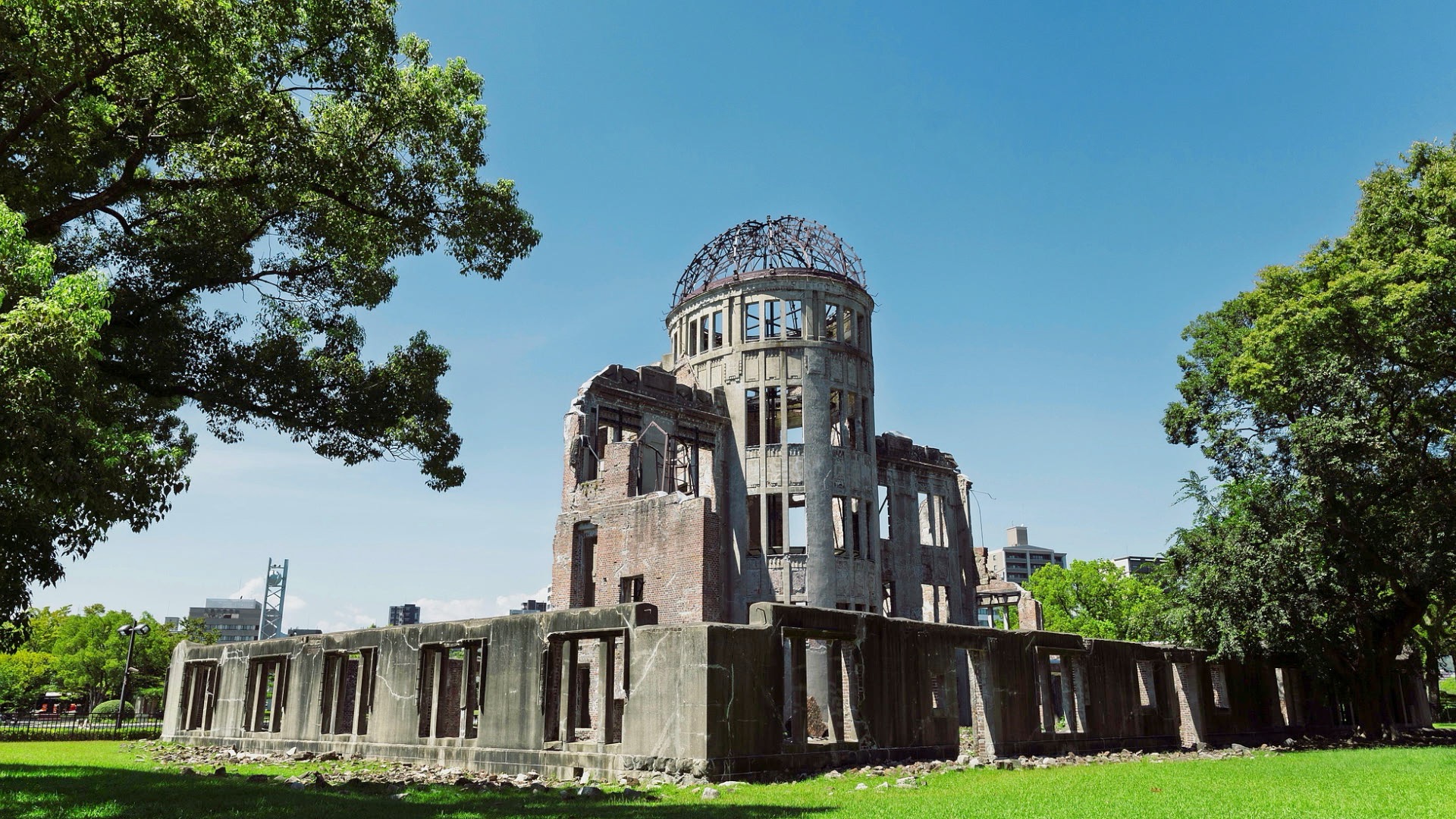
The city assemblies of Hiroshima and Nagasaki have adopted statements urging the Japanese government to adhere to the country’s Three Non-Nuclear Principles, Kyodo News reported.
The Hiroshima City Assembly unanimously adopted its statement on Friday, pointing out that the ruling party’s attempt to revise the non-nuclear principles has caused concern, and strongly urging the Japanese government to take the feelings of people in the atomic-bombed cities seriously and to uphold the Three Non-Nuclear Principles, the report said.
The Nagasaki City Assembly passed its statement on Thursday by a majority vote, noting that successive Japanese governments have regarded the Three Non-Nuclear Principles as a national policy. It said the ruling party’s intended revision of the principles while amending the country’s security documents is totally unacceptable.
On August 6 and 9, 1945, in an effort to force Japan, which had launched a war of aggression, to surrender as soon as possible, the U.S. military dropped atomic bombs on Hiroshima and Nagasaki, respectively. The Three Non-Nuclear Principles – not possessing, not producing, and not allowing the introduction of nuclear weapons into Japanese territory – were first declared by then-Japanese Prime Minister Eisaku Sato in 1967 and formally adopted by parliament in 1971, establishing them as Japan’s basic nuclear policy. The National Security Strategy, one of the three documents approved by the Cabinet in 2022, states, “The basic policy of adhering to the Three Non-Nuclear Principles will remain unchanged in the future.”
Japanese media have previously reported that Prime Minister Sanae Takaichi is considering reviewing the third of the Three Non-Nuclear Principles, which prohibits nuclear weapons from entering Japan’s territory, when updating related documents.
The Unbroken Thread: China’s Civilisational-State vs. The West’s Contractual Empire – A Study in Divergent Destinies

10 January 2026 Andrew Klein, PhD, https://theaimn.net/the-unbroken-thread-chinas-civilisational-state-vs-the-wests-contractual-empire-a-study-in-divergent-destinies/
Abstract
This article contrasts the developmental trajectories of China and the United States (representing the modern West) by examining their foundational civilisational codes, historical experiences, and political philosophies. It argues that while the U.S. follows the extractive, individual-centric model of a classic maritime empire (extending the Roman pattern), China operates as a continuous civilisational-state, its policies shaped by a deep memory of collapse and humiliation and a Confucian-Legalist emphasis on collective resilience. The analysis critiques the Western failure to comprehend China through the reductive lens of “Communism,” ignoring the profound impact of the “Century of Humiliation” and China’s subsequent focus on sovereignty, infrastructure, and social stability as prerequisites for development. The paper concludes that China’s model, focused on long-term societal flourishing over short-term extraction, presents a fundamentally different, and perhaps more durable, imperial paradigm.
Introduction: The Mandate of History vs. The Mandate of Capital
The rise of China is often analysed through the prism of Western political theory, leading to a fundamental category error. To compare China and the United States is not to compare two nation-states of similar ontological origin. It is to compare a civilisational-state – whose political structures are an outgrowth of millennia of unified cultural consciousness and bureaucratic governance – with a contractual empire – a relatively recent construct built on Enlightenment ideals, but ultimately sustained by global financial and military hegemony (Jacques, 2009). Their paths diverge at the root of their historical memory and their core objectives.
China’s Catalysing Trauma: Modern China’s psyche is indelibly shaped by the “Century of Humiliation” (c. 1839-1949), beginning with the Opium Wars – a stark example of Western imperial extraction enforced by gunboats (Lovell, 2011). This was compounded by the collapse of the Qing dynasty, civil war, and the horrific suffering during the Second World War. The foundational drive of the People’s Republic, therefore, was not merely ideological victory but the restoration of sovereignty, stability, and dignity (Mitter, 2013). Every policy is filtered through the question: “Will this prevent a return to fragmentation and foreign domination?”
America’s Founding Myth: The U.S. narrative is one of triumphant exceptionalism. Born from anti-colonial revolution, it expanded across a continent it saw as empty (ignoring Native nations) and engaged with the world primarily from a position of growing strength. Its traumas (Civil War, 9/11) are seen as interruptions to a forward progress, not as defining, humiliating collapses. This fosters an optimistic, forward-looking, and often abistorical mindset (Williams, 2009).
2. Political Philosophy: Meritocratic Collectivism vs. Individualist Democracy
China’s System: The “Exam Hall” State. China’s governance synthesises Confucian meritocracy and Legalist institutionalism. The modern manifestation is a rigorous, multi-decade screening process for political advancement, emphasising administrative competence, economic performance, and crisis management (Bell, 2015). The objective is governance for long-term civilisational survival. The Communist Party frames itself as the contemporary upholder of the “Mandate of Heaven,” responsible for collective welfare. Political legitimacy is derived from delivery of stability and prosperity.
The West’s System: The “Arena” State. Western liberal democracy, particularly in its U.S. form, is a contest of ideas, personalities, and interest groups. Legitimacy is derived from the procedural act of election. While capable of brilliance, this system incentivises short-term focus (electoral cycles), polarisation, and the influence of capital over long-term planning (Fukuyama, 2014). Expertise is often subordinated to popularity.
3. The Social Contract: Infrastructure & Security vs. Liberty & Opportunity
China’s Deliverables: Post-1978 reforms shifted focus to development, but within the framework of the party-state. The state prioritises and invests heavily in tangible foundations: universal literacy, poverty alleviation, high-speed rail networks, urban housing, and food security (World Bank, 2022). The social contract is explicit: public support in exchange for continuous improvement in material living standards and national prestige.
The West’s Deliverables: The Western social contract, historically, promised upward mobility and individual liberty protected by rights. However, the late-stage extractive economic model has led to the decline of public goods: crumbling infrastructure, unaffordable higher education, for-profit healthcare, and eroded social safety nets (Piketty, 2013). The contract feels broken, leading to societal discord.
4. Global Engagement: Symbiotic Mercantilism vs. Extractive Hegemony
China’s Method: Development as Diplomacy. China’s Belt and Road Initiative (BRI) is the archetype of its approach: offering infrastructure financing and construction to developing nations, facilitating trade integration on its terms. It is a form of state-led, long-term strategic mercantilism aimed at creating interdependent networks (Rolland, 2017). Its “soft power” is not primarily cultural, but commercial and infrastructural.
The West’s Method: The post-WWII U.S.-led order, while providing public goods, has been characterised by asymmetric extraction: structural adjustment programs, financial dominance, and military interventions to secure resources and political alignment (Harvey, 2003). It maintains a core-periphery relationship with much of the world.
Conclusion: The Durability of Patterns
The West’s mistake is viewing China through the simple dichotomy of “Communist vs. Democratic.” This ignores the 4,000-year-old continuum of the Chinese statecraft that values unity, hierarchical order, and scholarly bureaucracy. China is not “learning from Communism”; it is learning from the Tang Dynasty, the Song economic revolutions, and the catastrophic lessons of the 19th and 20th centuries.
China’s course is different because its definition of empire is different. It seeks a Sinic-centric world system of stable, trading partners, not necessarily ideological clones. Its focus is internal development and peripheral stability, not universal ideological conversion. Its potential weakness lies in demographic shifts and the challenge of innovation under political constraints. The West’s weakness is its accelerating internal decay and inability to reform its extractive, short-termist model.
Two imperial models are now in full view. One, the West, is a flickering, brilliant flame from Rome, burning its fuel recklessly. The other, China, is a slowly rekindled hearth fire, banked for the long night, its heat directed inward to warm its own house first. History is not ending; it is presenting its bill, and the civilisations that prepared their ledger will write the next chapter.
References…………………………..
1 This Month

of the week – Shut Down Drone Warfare!


Tell the Ukrainian Government to Drop Prosecution of Peace Activist Yurii Sheliazhenko

Petition to revoke the licensing of the Near Surface Nuclear Disposal Facility (NSDF) at Chalk River. https://www.ourcommons.ca/petitions/en/Petition/Details?Petition=e-7247
To see nuclear-related stories in greater depth and intensity – go to https://nuclearinformation.wordpress.com
-
Archives
- April 2026 (114)
- March 2026 (251)
- February 2026 (268)
- January 2026 (308)
- December 2025 (358)
- November 2025 (359)
- October 2025 (376)
- September 2025 (257)
- August 2025 (319)
- July 2025 (230)
- June 2025 (348)
- May 2025 (261)
-
Categories
- 1
- 1 NUCLEAR ISSUES
- business and costs
- climate change
- culture and arts
- ENERGY
- environment
- health
- history
- indigenous issues
- Legal
- marketing of nuclear
- media
- opposition to nuclear
- PERSONAL STORIES
- politics
- politics international
- Religion and ethics
- safety
- secrets,lies and civil liberties
- spinbuster
- technology
- Uranium
- wastes
- weapons and war
- Women
- 2 WORLD
- ACTION
- AFRICA
- Atrocities
- AUSTRALIA
- Christina's notes
- Christina's themes
- culture and arts
- Events
- Fuk 2022
- Fuk 2023
- Fukushima 2017
- Fukushima 2018
- fukushima 2019
- Fukushima 2020
- Fukushima 2021
- general
- global warming
- Humour (God we need it)
- Nuclear
- RARE EARTHS
- Reference
- resources – print
- Resources -audiovicual
- Weekly Newsletter
- World
- World Nuclear
- YouTube
-
RSS
Entries RSS
Comments RSS
 nuclear-news