Bombshell: A Story of Truth in the Face of Censorship
Elizabeth Smith, NTI 6th Jan 2026 https://www.nti.org/risky-business/bombshell-a-story-of-truth-in-the-face-of-censorship/
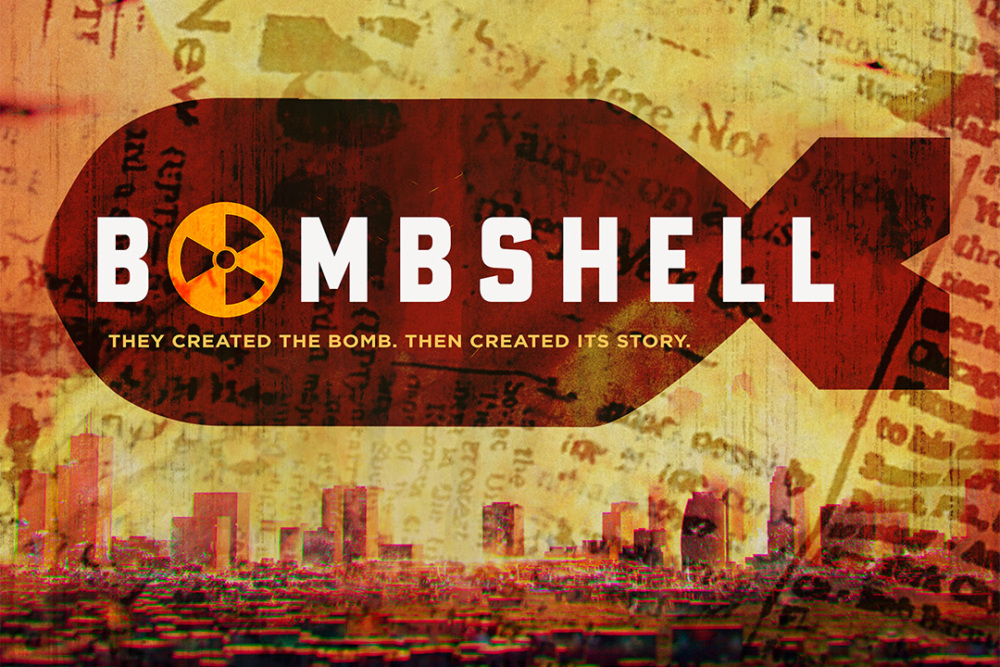
What does it take to reveal truth in the face of censorship? A fascinating new PBS documentary, Bombshell, tells the story of the U.S. government’s efforts to cover up the impact of the 1945 atomic bombings of Hiroshima and Nagasaki, and the journalists who witnessed the devastation and spoke up.
Bombshell provides a detailed account of the U.S. government’s campaign to sanitize the reality of the widespread death and destruction caused by the first use of a nuclear weapon in war, including by constructing a narrative that the bombings allowed for a humane exit from World War II.
Initially, when President Truman announced the Hiroshima bombing to the American people, he reported that the bomb had been dropped on a military target. In fact, the bomb had intentionally targeted the center of the city, not a military base on its outskirts, to maximize the psychological impact on civilians. Tens of thousands of people were killed instantly and by the end of the year, as many more succumbed to radiation poisoning, as many as 140,000 were dead.
In the early months that followed the August bombings of Hiroshima and, three days later, Nagasaki, the U.S. military downplayed the human impact of the bombs with journalists, especially the devastating—and indiscriminate—effects of nuclear radiation.
The racial politics of the time also shaped who was heard, as a small set of journalists attempted to report the truth. In Autumn 1945, when Japanese and Japanese-American journalists like Yoshito Matsushige and Leslie Nakashima tried to describe what they and their families had experienced, U.S. officials labeled their work as propaganda and actively attempted to discredit them. Around the same time, Black intellectuals like Langston Hughes and Zora Neale Hurston were among the first to express outrage at the bombings; they saw Japanese civilians as fellow people of color and sought to humanize their suffering, questioning whether the United States would have committed an atrocity of this scale on a European country. Mainstream news sources sidelined their work.
Eventually, the truth began to take root. Charles Loeb, a well-regarded Black journalist with a medical background, was one of the first American journalists to write about the effects of radiation, drawing on his medical training to understand the abnormalities he had witnessed. Later, The New Yorker asked John Hersey to report on the impact of the bombings. When he decided to shift focus towards the human toll of the bombs, it became clear that one article could not do justice to the lives impacted. The New Yorker ultimately devoted an entire issue to Hersey’s reporting, marking the first coverage of the bombs’ human impacts in mainstream media and resulting in the seminal book titled simply, Hiroshima.
Bombshell lays bare the power of narratives—and counter narratives. It shows, with infuriating and heartbreaking precision, how misinformation about the bombings influenced public opinion.
It also is a testament to the essential role of journalism, the importance of listening to those with different perspectives, and the need to pay attention to those who challenge prevailing narratives. Otherwise, we overlook history’s most crucial lessons.
No comments yet.
1 This Month

of the week – Shut Down Drone Warfare!


Tell the Ukrainian Government to Drop Prosecution of Peace Activist Yurii Sheliazhenko

Petition to revoke the licensing of the Near Surface Nuclear Disposal Facility (NSDF) at Chalk River. https://www.ourcommons.ca/petitions/en/Petition/Details?Petition=e-7247
To see nuclear-related stories in greater depth and intensity – go to https://nuclearinformation.wordpress.com
-
Archives
- April 2026 (79)
- March 2026 (251)
- February 2026 (268)
- January 2026 (308)
- December 2025 (358)
- November 2025 (359)
- October 2025 (376)
- September 2025 (257)
- August 2025 (319)
- July 2025 (230)
- June 2025 (348)
- May 2025 (261)
-
Categories
- 1
- 1 NUCLEAR ISSUES
- business and costs
- climate change
- culture and arts
- ENERGY
- environment
- health
- history
- indigenous issues
- Legal
- marketing of nuclear
- media
- opposition to nuclear
- PERSONAL STORIES
- politics
- politics international
- Religion and ethics
- safety
- secrets,lies and civil liberties
- spinbuster
- technology
- Uranium
- wastes
- weapons and war
- Women
- 2 WORLD
- ACTION
- AFRICA
- Atrocities
- AUSTRALIA
- Christina's notes
- Christina's themes
- culture and arts
- Events
- Fuk 2022
- Fuk 2023
- Fukushima 2017
- Fukushima 2018
- fukushima 2019
- Fukushima 2020
- Fukushima 2021
- general
- global warming
- Humour (God we need it)
- Nuclear
- RARE EARTHS
- Reference
- resources – print
- Resources -audiovicual
- Weekly Newsletter
- World
- World Nuclear
- YouTube
-
RSS
Entries RSS
Comments RSS
 nuclear-news
Leave a comment