Palestine Before Nationalism: What Was Lost – and Why It Matters Now
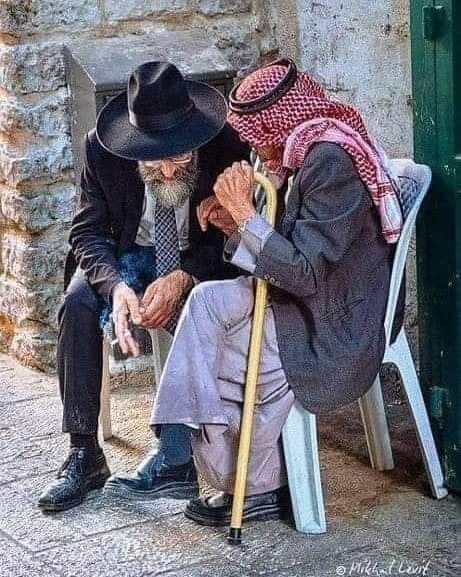
Zionism transformed Jewish identity from a plural, diasporic, and ethical tradition into a political nationality defined by territory, demography, and security doctrine. Dissent increasingly became framed as disloyalty. Equality became a threat.
2 January 2026 Lachlan McKenzie , https://theaimn.net/pa
Before Palestine became a battlefield of competing nationalisms, it was something far less dramatic and far more instructive: a plural society. Muslims, Christians, and Jews lived across the country under the governance of the Ottoman Empire – not as equals in the modern democratic sense, but as communities governed by a legal order that prioritised coexistence over domination.
That historical reality matters today, because it challenges a central myth: that Zionism arrived to redeem a land defined by religious hostility or demographic absence. Neither was true.
A plural society, not a vacuum
In the late nineteenth century, Palestine was overwhelmingly Arab in language and culture, religiously mixed, and socially interconnected. Jewish communities – often called the Old Yishuv – were long-established, Arabic-speaking, and locally embedded. Christian Palestinians maintained churches, schools, and civic institutions dating back centuries. Identity was local and communal, not nationalist.
This was not an idyllic society. Ottoman Palestine was hierarchical and imperfect. But it was not organised around ethnic replacement, nor did it pursue a political project of removing one people to secure the sovereignty of another.
Were Ottoman laws fair?
By contemporary standards, Ottoman governance was not democratic or fully equal. Yet by the standards of its time, it was comparatively tolerant and functional.
Under the Ottoman millet system, non-Muslims were recognised as protected communities (dhimmi), permitted to practise their religion, manage communal affairs, and hold property. Jews expelled from Christian Europe repeatedly sought refuge in Ottoman lands, including Palestine.¹
In the nineteenth century, the empire initiated the Tanzimat Reforms, which aimed – however unevenly – to equalise subjects before the law regardless of religion.² These reforms reduced religious hierarchy rather than intensifying it.
Crucially, Ottoman law did not pursue demographic engineering. It governed diversity; it did not attempt to erase it.
Zionism as rupture, not return
Political Zionism emerged not from Palestinian Jewish life but from nineteenth-century Europe, shaped by ethnic nationalism and colonial settlement logic. Its leaders were explicit about the central obstacle they faced: Palestine was already inhabited.
Rather than abandoning the project, early Zionists debated how to overcome that reality. Theodor Herzl wrote privately of removing the indigenous population through economic exclusion.³ Zionist institutions adopted policies of land acquisition coupled with tenant removal, “Hebrew labour only”, and the construction of a separate economy.⁴
Demographic dominance was understood as a prerequisite for sovereignty. Mass immigration would create irreversible “facts on the ground,” after which political recognition could follow.
“Transfer” and force
By the 1930s, leading Zionists discussed population removal – often termed “transfer” – as necessary. David Ben-Gurion acknowledged that a Jewish state could not be realised without displacement, writing that compulsory transfer could provide “something which we never had.”⁵
Ze’ev Jabotinsky was even more candid. In his 1923 essay The Iron Wall, he argued that indigenous peoples never consent to colonisation, and that Jewish sovereignty would require overwhelming force until resistance was broken.⁶ This was not a religious argument; it was a settler-colonial one.
Palestinian Jewish opposition – erased from memory
These developments were not universally welcomed by Jews in Palestine. Many Palestinian Jews opposed Zionism, fearing it would shatter coexistence, recast Jews as settlers, and provoke conflict with Muslim and Christian neighbours. Their objections were pragmatic and prescient. They understood that they – not European ideologues – would live with the consequences.
Zionism’s eventual dominance owed less to universal Jewish consent than to imperial sponsorship, particularly British support following the 1917 Balfour Declaration, and to the catastrophic narrowing of perceived alternatives after the Holocaust.
What was lost
Zionism transformed Jewish identity from a plural, diasporic, and ethical tradition into a political nationality defined by territory, demography, and security doctrine. Dissent increasingly became framed as disloyalty. Equality became a threat.
The tragedy is not that Ottoman Palestine was perfect. It is that a plural society governed by law – however flawed – was dismantled and replaced by a project that required dominance to succeed.
That is the historical rupture. And it is why the conflict is modern, political, and structural – not ancient or inevitable.
A society that already contained Jews, Christians, and Muslims was remade into a battlefield by a European nationalist project that could not tolerate equality.
Understanding that history does not deny Jewish suffering. It honours it – by insisting that persecution should never be answered with its reproduction.
Footnotes and Primary Sources……………..
No comments yet.
1 This Month

of the week – Shut Down Drone Warfare!


Tell the Ukrainian Government to Drop Prosecution of Peace Activist Yurii Sheliazhenko

Petition to revoke the licensing of the Near Surface Nuclear Disposal Facility (NSDF) at Chalk River. https://www.ourcommons.ca/petitions/en/Petition/Details?Petition=e-7247
To see nuclear-related stories in greater depth and intensity – go to https://nuclearinformation.wordpress.com
-
Archives
- April 2026 (7)
- March 2026 (251)
- February 2026 (268)
- January 2026 (308)
- December 2025 (358)
- November 2025 (359)
- October 2025 (376)
- September 2025 (257)
- August 2025 (319)
- July 2025 (230)
- June 2025 (348)
- May 2025 (261)
-
Categories
- 1
- 1 NUCLEAR ISSUES
- business and costs
- climate change
- culture and arts
- ENERGY
- environment
- health
- history
- indigenous issues
- Legal
- marketing of nuclear
- media
- opposition to nuclear
- PERSONAL STORIES
- politics
- politics international
- Religion and ethics
- safety
- secrets,lies and civil liberties
- spinbuster
- technology
- Uranium
- wastes
- weapons and war
- Women
- 2 WORLD
- ACTION
- AFRICA
- Atrocities
- AUSTRALIA
- Christina's notes
- Christina's themes
- culture and arts
- Events
- Fuk 2022
- Fuk 2023
- Fukushima 2017
- Fukushima 2018
- fukushima 2019
- Fukushima 2020
- Fukushima 2021
- general
- global warming
- Humour (God we need it)
- Nuclear
- RARE EARTHS
- Reference
- resources – print
- Resources -audiovicual
- Weekly Newsletter
- World
- World Nuclear
- YouTube
-
RSS
Entries RSS
Comments RSS
 nuclear-news
Leave a comment