Palantir’s Palestine: How AI Gods Are Building Our Extinction


“Zionism is evil,” she says with the quiet certainty of someone who has spent a lifetime studying its fruits. “It is purely evil. It has created disasters, misery, atrocities, wars, aggression, unhappiness, insecurity for millions of Palestinians and Arabs. This ideology has no place whatsoever in a just world. None
The machines are not coming for us. They are already here. And the men who control them have made their intentions terrifyingly clear.
BettBeat Medi, Dec 26, 2025
But Zionism, in its current iteration, is not merely an ideology. It is a business model. It is a technology demonstration. It is the beta test for systems that will eventually be deployed everywhere.
The Israeli military’s Project Lavender uses AI to identify targets for assassination. Soldiers describe processing “dozens of them a day” with “zero added value as a human.” The algorithm marks. The human clicks. The bomb falls.
This is not a war. It is a sick twisted video game.
Palantir’s technology identifies the targets. Musk’s Starlink provides the communications. American military contractors supply the weapons. And the entire apparatus is funded by governments whose citizens have marched in the millions demanding it stop.
There is a moment in every civilization’s collapse when the instruments of its destruction become visible to those paying attention. We are living in that moment now. But the warning signs are not carved in stone or written in prophecy—they are embedded in source code, amplified by algorithms, and funded by men who speak openly of human extinction while racing to cause it.
In a nondescript office in Palo Alto, a man who claims to fear fascism has become its most sophisticated architect. In a sprawling Texas compound, another man who styles himself a free speech absolutist uses his platform to amplify the voices calling for ethnic cleansing. And in the bombed-out hospitals of Gaza, their technologies converge in a laboratory of horrors that prefigures what awaits us all.
The four horsemen of this apocalypse do not ride horses. They deploy algorithms.
The Confession
Professor Stuart Russell has spent fifty years studying artificial intelligence. He wrote the textbook from which nearly every AI CEO in Silicon Valley learned their craft. And now, at eighty hours a week, he works not to advance the field he helped create, but to prevent it from annihilating the species.
“They are playing Russian roulette with every human being on Earth,” Russell said in a recent interview, his voice carrying the weight of someone who has seen the calculations and understood their implications. “Without our permission. They’re coming into our houses, putting a gun to the head of our children, pulling the trigger, and saying, ‘Well, you know, possibly everyone will die. Oops. But possibly we’ll get incredibly rich.’”
This is not hyperbole from an outsider. This is the assessment of a man whose students now run the companies building these systems. And here is what should terrify you: the CEOs themselves agree with him.
Dario Amodei, CEO of Anthropic, estimates a 25% chance of human extinction from AI. Elon Musk puts it at 20-30%. Sam Altman, before becoming CEO of OpenAI, declared that creating superhuman intelligence is “the biggest risk to human existence that there is.”…………………………………………………………………………………………………………………………………………………………………………..
“These bombs are cheaper and you don’t want to waste expensive bombs on unimportant people”
……………………………………………………………………………………………………..The [Palantir] company’s software now powers what Israeli soldiers describe with chilling bureaucratic efficiency: “I would invest 20 seconds for each target and do dozens of them a day. I had zero added value as a human. Apart from being a stamp of approval.”
Twenty seconds. That is the value of a Palestinian life in the algorithmic calculus of Alex Karp’s creation. The machine decides who dies. The human merely clicks.
When whistleblowers revealed that Israeli intelligence officers were using “dumb bombs”—unguided munitions with no precision capability—on targets identified by Palantir’s AI, their justification was purely economic: “These bombs are cheaper and you don’t want to waste expensive bombs on unimportant people.”
Unimportant people. Children. Doctors. Journalists. Poets.
Karp has admitted, in a moment of rare candor: “I have asked myself if I were younger, at college, would I be protesting me?”
He knows the answer. We all know the answer. He simply does not care.
………………………………………………………………………………………………………………………. Musk is the CEO of xAI, OpenAI’s largest competitor. He has declared himself a 30% believer in human extinction from AI. And he is using the world’s most influential social media platform to promote the political movements most likely to strip away the regulations that might prevent that extinction.
The fascists have captured the algorithm.
The Laboratory of the Future
Dr. Ghada Karmi was a child in 1948 when she lost her homeland. She remembers enough to know that she lost her world. For seventy-seven years, she has watched as the mechanisms of Palestinian erasure evolved from rifles and bulldozers to algorithms and autonomous weapons systems.
“Zionism is evil,” she says with the quiet certainty of someone who has spent a lifetime studying its fruits. “It is purely evil. It has created disasters, misery, atrocities, wars, aggression, unhappiness, insecurity for millions of Palestinians and Arabs. This ideology has no place whatsoever in a just world. None. It has to go. It has to end. And it has to be removed. Even its memory has to go.”
But Zionism, in its current iteration, is not merely an ideology. It is a business model. It is a technology demonstration. It is the beta test for systems that will eventually be deployed everywhere.
The Israeli military’s Project Lavender uses AI to identify targets for assassination. Soldiers describe processing “dozens of them a day” with “zero added value as a human.” The algorithm marks. The human clicks. The bomb falls.
This is not a war. It is a sick twisted video game.
Palantir’s technology identifies the targets. Musk’s Starlink provides the communications. American military contractors supply the weapons. And the entire apparatus is funded by governments whose citizens have marched in the millions demanding it stop.
“The genocide has not provoked a change in the official attitude,” Dr. Karmi observes. “I’m astonished by this and it needs an explanation.”
The explanation is simpler and more terrifying than any conspiracy. The explanation is that the people who control these technologies have decided that some lives are worth twenty seconds of consideration and others are worth none at all. And the governments that might regulate them have been captured by men waving fifty billion dollar checks.
“They dangle fifty billion dollar checks in front of the governments,” Professor Russell explains. “On the other side, you’ve got very well-meaning, brilliant scientists like Jeff Hinton saying, actually, no, this is the end of the human race. But Jeff doesn’t have a fifty billion dollar check.”
The King Midas Problem
Russell invokes the legend of King Midas to explain the trap we have built for ourselves. ………………………………………………………………………………..
The CEOs know this. They have signed statements acknowledging it. They estimate the odds of catastrophe at one in four, one in three, and they continue anyway.
Why?
Because the economic value of AGI—artificial general intelligence—has been estimated at fifteen quadrillion dollars. This sum acts, in Russell’s metaphor, as “a giant magnet in the future. ……………………………………………………………
“The people developing the AI systems,” Russell observes, “they don’t even understand how the AI systems work. So their 25% chance of extinction is just a seat of the pants guess. They actually have no idea.”
No idea. But they’re spending a trillion dollars anyway. Because the magnet is too strong. Because the incentives are too powerful. Because they have convinced themselves that someone else will figure out the safety problem. Eventually. Probably. Maybe.
What Now?
If everything goes right—if somehow we solve the control problem, if somehow we prevent extinction, if somehow we navigate the transition to artificial general intelligence without destroying ourselves—what then? ………………………………………………………………………………………………………………………………………………………………………………………………………………………….
The Enablers
Dr. Karmi returns again and again to a simple question: Why?
“Why should a state that was invented, with an invented population, have become so important that we can’t live without it?” she asks of Israel. But the question applies equally to Silicon Valley, to the tech platforms, to the entire apparatus of algorithmic control that now shapes our politics, our perceptions, our possibilities.
The answer, she suggests, lies in understanding the enablers.
“I think it’s absolutely crucial now to focus on the enablers,” she argues. “Because we can go on and on giving examples of Israeli brutality, of the atrocities, of the cruelties. That’s not for me the point. The point is who is allowing this to happen?”
The same question must be asked of AI. Who is allowing this to happen? Who is funding the companies that acknowledge a 25% chance of human extinction and continue anyway? Who is providing the regulatory vacuum in which these technologies develop unchecked? Who is amplifying the voices calling for acceleration while silencing those calling for caution?
The answer is the same class of people who have enabled every catastrophe of the modern era: the comfortable, the compliant, the compromised. The politicians who take the fifty billion dollar checks. The journalists who amplify the preferred narratives. The citizens who scroll past the warnings because they are too busy, too distracted, too convinced that someone else will handle it.
“All the polls that have been done say most people, 80% maybe, don’t want there to be super intelligent machines,” Russell notes. “But they don’t know what to do.”
They don’t know what to do. So they do nothing. And the machines keep learning. And the algorithms keep shaping. And the billionaires keep abusing. And the bombs keep falling. And the future keeps narrowing.
The Resistance
Russell’s advice is almost quaint in its simplicity: “Talk to your representative, your MP, your congressperson. Because I think the policymakers need to hear from people. The only voices they’re hearing right now are the tech companies and their fifty billion dollar checks.
………………………………… the point is not that resistance will succeed. The point is that resistance is the only thing that might succeed.
…………………………….We still have a choice. The machines are not yet smarter than us. The algorithms are not yet in complete control. The billionaires are not yet omnipotent.
But the window is closing. The event horizon may already be behind us. And the men who control the most powerful technologies in human history have made their values abundantly clear.
They will pursue profit over safety. They will amplify hatred over tolerance. They will choose rape over romance. They will enable genocide if the margins are favorable. They will risk extinction if the upside is sufficient.
This is not speculation. This is the record. This is what they are doing, right now, in plain sight.
The question is not whether we understand the danger. The question is what we will do about it……………………………………………………….. https://bettbeat.substack.com/p/palantirs-palestine-how-ai-gods-are?utm_source=post-email-title&publication_id=437130&post_id=180304933&utm_campaign=email-post-title&isFreemail=true&r=46by4&triedRedirect=true&utm_medium=email
Europe’s nuclear sites on high alert for drone threats in the year ahead
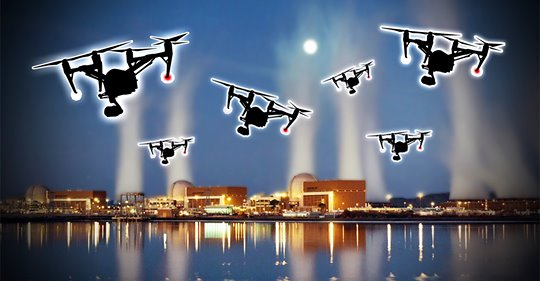
Western countries scramble to bring in new defences as experts see rise of autonomous threats everywhere
Thomas Harding, December 26, 2025. https://www.thenationalnews.com/news/europe/2025/12/26/europes-nuclear-facilities-put-on-a-2026-drone-alert/
It was a taste of what could become one of the decisive threats next year, when the flight path between Dublin and Britain’s Sellafield nuclear reactor was disrupted by unidentified drones.
On the incoming jet was Ukrainian President Volodymyr Zelenskyy and his wife, minutes away from landing at Dublin Airport, slightly ahead of schedule.
After an Irish naval vessel reported that a number of drones were manoeuvring 36km north-east of the city – Sellafield is just 200km from the capital – Ireland’s Justice Minister Jim O’Callaghan said it was a “co-ordinated threat” to “put pressure” on Europe and Ukraine.
Just days later, the menace shifted. The French Navy opened fire on drones detected over a highly sensitive site housing the country’s fleet of nuclear submarines.
The drones at Ile Longue naval base were ultimately intercepted with jamming systems, but their presence over one of the continent’s most heavily protected sites sent a clear message: Europe is waking up to significant vulnerabilities to its military and civilian nuclear sites, and Russia is widely suspected to be behind the activity.
Nuclear threat
France has19 nuclear power stations, Britain has five − including Sellafield, in Cumbria, north-west England − and many more are spread across the continent. Defence analysts have warned that a hostile state could target a vulnerable power station rather than resorting to the outright belligerence of launching a nuclear weapon.
Causing a nuclear incident with several drone strikes would be difficult, but even a limited attack could cause symbolic and economic damage. Fallout could include enforced shutdowns, mass evacuations and financial market panic, all without a state crossing the nuclear threshold.
“What if Russia just blows up one of the nuclear power plants in the UK using drones that are flown from within the UK?” said Ed Arnold, a senior military analyst at the Royal United Services Institute think tank. “That’s a different vector of threat, but it would achieve the same result from a Russian perspective.”
He added that the sites’ “vulnerabilities are really quite critical, because this is hard to defend against,” and that even just flying drones over sensitive sites “is cheap, deniable and has a high economic impact”.
Ukraine, on one level, is responsible for tactics that were previously the stuff of imagination. Its remarkably successful Operation Spider-Web in June demonstrated the changed boundaries of warfare.
The operation used more than 100 short-range kamikaze drones launched from lorries parked within 10km of several Russian airbases, destroying 11 Russian long-range bombers capable of carrying nuclear weapons.
“Although it was a costly lesson, it likely opened Moscow’s eyes to the opportunities afforded by these capabilities,” wrote Dr Daniel Salisbury in an International Institute for Strategic Studies think tank paper on the growing threat. “Even minimal capability can use emerging technologies to hold nuclear assets at risk,” he added.
A year ago, the idea of a head of state being targeted for assassination by drones seemed like a plot from a Tom Clancy novel. Not any more. Presidential security details now carry drone jammers that resemble oversized guns.
But it is not just the French and Irish incidents that are setting off a wave of concern over Europe. Last month, drones were spotted over Kleine-Brogel Air Base in Belgium on three consecutive nights.
New modes
In the Netherlands, guards fired at drones over Volkel Air Base, which hosts US nuclear weapons under Nato’s nuclear-sharing arrangements. Earlier this month, Dutch F-35 fighter jets were scrambled to intercept a drone.
Similar incidents have been reported around RAF Lakenheath in eastern England, which is likely to soon host US nuclear weapons after a two decade absence.
What is troubling the authorities is that the flights are clustered around high-value nuclear and military sites, with drones larger and more capable than those usually used by hobbyists.
“These are not people flying toys,” said Belgium’s Defence Minister, Theo Francken, after the Kleine-Brogel incursion. “They came to spy, to see where the F-16s are, where the ammunition is and other highly strategic information.” Furthermore, some of the UAVs flew higher and proved resistant to jamming.
This adds to a series of incidents since September in which drones flew over civilian airports across Eastern Europe, as well as Germany and Scandinavia.
The flights, likely conducted by criminal gangs and paid for in cryptocurrency by Moscow, could well be construed as “hostile reconnaissance” to look into sites or indeed test their anti-drone technology for a future conflict.
Drones can also gather real-time imagery that satellites cannot and if one could capture either a French nuclear-armed submarines leaving Ile Longue or a Royal Navy one departing Faslane in Scotland it would give enemies a significant tracking advantage.
Drones everywhere
Hostile states can also use the rapidly expanding civilian drone market to blend into the noise to hide their true intentions. In Britain it is estimated that by 2030 there could be 76,000 commercial drones operating in its airspace, according to The Economist. And across Europe, more than 3,800 close encounters between drones and aircraft were recorded last year − more than double the previous year.
Drones, Mr Arnold argued, are perfectly suited to “grey zone” operations, those activities that fall short of open warfare but inflict disruption and apprehension.
Annabelle Walker, an analyst at the intelligence company Sibylline, also suggested that Russia has a strong interest in probing Nato’s readiness.
“The use of drones has exposed a particular gap in European countries,” she said. “Testing response times, decision-making and co-ordination tells you a lot and it can all be done below the threshold of war.”
Shoot ’em down?
Shooting down drones risks collateral damage. Main defences include jamming or “spoofing”, in which drones are tricked into misidentifying their location. Jamming is less effective against autonomous drones programmed to strike or that are using fibre-optic control − as seen widely in the Ukraine-Russia war.
Defenders can use physical countermeasures such as guns that shoot nets, and shotguns, which are broadly carried in Ukraine. The National understands that Kyiv is set to unveil next year a state-of-the art interceptor drone. The counter-drone industry is now becoming a major market for defence companies.
To defend against a serious attack on a nuclear site, governments must identify vulnerable locations then use a layered defence of radar, electronic warfare and trained personnel dedicated to counter-drone operations, said Douglas Barrie of the IISS.
But air defence was an area where European states had underinvested for decades since the Cold War ended. “Western Europe and the UK really need to pay more attention as this is back on the agenda in a big way,” Mr Barrie told The National.
“Moscow is clearly in the frame, and they’re testing the boundaries of what they can get away with before the other side pushes back,” he added.
Mr Zelenskyy’s near-miss over Dublin was not necessarily an act of war but it was a warning − as were the other incidents − and Moscow may well consider further disruptive operations that avoid open conflict.
It is now a question of whether Europe can strengthen its defences against a threat that will only intensify.
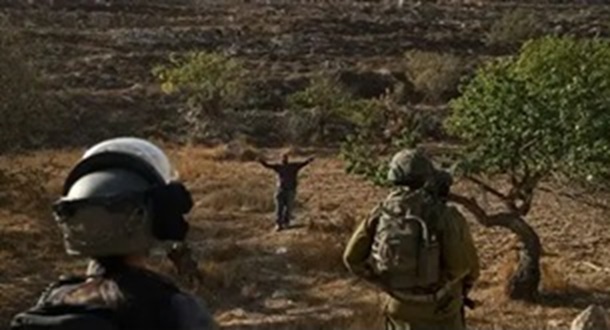
Israeli Occupation Intensifies: Defense Minister Vows Permanent Gaza Presence as Settler Violence Escalates in West Bank.
by Dave DeCamp | December 23, 2025 , https://news.antiwar.com/2025/12/23/israeli-defense-minister-vows-permanent-israeli-occupation-of-gaza-establishment-of-settlements/
Israeli Defense Minister Israel Katz vowed on Tuesday that the Israeli military will “never leave all of Gaza” and will eventually establish settlements in the northern part of the Strip.
“We are deep inside Gaza and will never leave all of Gaza – that will not happen. We are here to defend and to prevent what happened,” Katz said during an event in the Israeli-occupied West Bank.
“With God’s help, when the time comes, also in northern Gaza, we will establish Nahal pioneer groups in place of the settlements that were evacuated,” Katz added, referring to an IDF program that establishes communities for Israeli soldiers. “We’ll do it in the right way, at the appropriate time.”
Katz also vowed that Israel would not withdraw “one millimeter” from Syria, referring to the territory it has captured in southwest Syria since the fall of former Syrian President Bashar al-Assad.
After his remarks sparked backlash, Katz appeared to walk back the comments on settlements. “The government has no intention of establishing settlements in the Gaza Strip,” his office said in a statement, though it added that he made the comments in a “security context,” suggesting it wasn’t a complete walk back about what he said about establishing military communities.
An unnamed US official criticized Katz’s comments, saying that he was “provoking” the Arab world. “The more Israel provokes, the less the Arab countries want to work with them,” the US official said in a statement to journalists.
“The United States remains fully committed to President Trump’s 20-Point Peace Plan, which was agreed to by all parties and endorsed by the international community. The plan envisions a phased approach to security, governance, and reconstruction in Gaza. We expect all parties to adhere to the commitments they made under the 20-Point Plan,” the official added.
Katz did not walk back his comments about a permanent Israeli occupation of Gaza, and other Israeli officials have made similar vows. IDF Chief of Staff Lt. Gen. Eyal Zamir said earlier this month that the so-called “yellow line,” the vague boundary separating the Israeli-occupied side of Gaza from the rest of the Strip, is a “new border.”
The IDF currently occupies more than 50% of Gaza, and Palestinians, for the most part, have been cleansed from the area, besides the Israeli-backed anti-Hamas militias and gangs and a small number of civilians living with them. If Israel’s occupation doesn’t end, Israeli settlers will continue to push for the establishment of settlements on the IDF side of the yellow line.
The Nachala movement, a group of settlers pushing for Jewish settlement in Gaza and the complete expulsion of the Palestinian population, welcomed Katz’s initial comments, saying it was a “step in the right direction toward returning Jewish settlement in Gaza.” Settlers with the Nachala movement recently entered Gaza and raised an Israeli flag.
Nachala has strong support among members of the Israeli government and the Knesset. Senior members of the Israeli government have been explicit in their desire for ethnic cleansing in Gaza and the establishment of Jewish settlements. A few days after the Gaza ceasefire deal was signed, which Israel has continued to violate by killing over 400 Palestinians, Israeli Finance Minister Bezalel Smotrich vowed there would be “Jewish settlements in Gaza.”
Kushner, Witkoff draft $112B proposal to develop Gaza into ‘smart city’ with luxury resorts.

by Shane Galvin, 22 Dec 25, https://www.msn.com/en-us/news/world/kushner-witkoff-draft-112b-proposal-to-develop-gaza-into-smart-city-with-luxury-resorts-and-us-footing-60b/ar-AA1SK9NI?ocid=BingNewsVerp
Trump administration reps have just revealed a grandiose $112 billion plan to rebuild war-torn Gaza into a futuristic international destination dubbed “Project Sunrise.”
The 10-year development plan, drafted by first son-in-law Jared Kushner, US special envoy Steve Witkoff, and two top White House aides, is currently courting investor countries with a 32-slide PowerPoint presentation detailing the bold plan to renovate burning rubble into beach resorts.
Gaza would see the development of luxury hotels, high speed rail and AI-optimized smart grid features that would revolutionize the small slice of the coveted Mediterranean coastline into a bustling metropolis, the Wall Street Journal reported.
“Gaza’s destruction has been profound, but we believe what lies ahead is not just restoration — it’s a chance to develop a gateway of prosperity in the Middle East with state-of-the-art infrastructure, urban design, and technology,” the executive summary slide read, according to the outlet.
The total $112 billion cost would be spread out over 10 years, with the US agreeing to “anchor” up to $60 billion in grants and guarantees on debts by raising industry funds.
“Reimagining Gaza as a ‘smart city’ with tech-driven governance and services,” one slide from the PowerPoint presentation beamed.
The ambitious proposal — developed within the last 45 days by Kushner, Witkoff, and White House aides consulted Israeli security experts about the path forward — further called for establishing a “Chief Digital Office and an innovation lab to define standards and guide policymaking.”
The presentation does not go into detail about which countries or companies would be investing in the rebuilding fund, according to WSJ.
Though the plan mapped out distinct phases of construction, it did not provide details for housing the 2 million Palestinians who would be displaced during the massive construction necessary.
There is an estimated 68 million tons of rubble in Gaza after thousands of Israeli airstrikes leveled cities during the two-year war in Gaza.
US officials who have knowledge of the proposal are skeptical that it will come to fruition because a condition would be Hamas agreeing to disarm, the Journal reported.
Witkoff, meanwhile, met Saturday in Miami with high-level delegations from Egypt, Turkey and Qatar to discuss implementation for the second phase of the Gaza cease-fire plan.
Iran rejects inspections of bombed nuclear sites without IAEA framework
Iran says UN nuclear watchdog must first define ‘post-war conditions’ following US strikes on its nuclear facilities in June.
By Anadolu. 24 Dec 2025, https://www.aljazeera.com/news/2025/12/24/iran-rejects-inspections-of-bombed-nuclear-sites-without-iaea-framework
Iran has rejected calls to allow inspections of nuclear facilities bombed during attacks by the United States in June, saying the United Nations nuclear watchdog must first define “post-war conditions” governing access to sites hit by military attacks.
Speaking to reporters after a cabinet meeting in Tehran on Wednesday, Mohammad Eslami, head of Iran’s Atomic Energy Organisation, said Tehran would not permit inspections of facilities struck by the US until the International Atomic Energy Agency (IAEA) establishes a clear framework for such visits, according to Iran’s semiofficial Tasnim news agency.
“If there are established procedures for the post-war situation, the agency should announce them so that we can act accordingly,” Eslami said.
He added that Tehran had formally communicated its position to the IAEA, insisting that rules must be “defined and codified” for cases in which nuclear facilities under international safeguards are subjected to military attack.
During a 12-day war with Israel in June, the US military bombed three major Iranian nuclear facilities – Fordo, Natanz and Isfahan – using bunker-buster munitions. More than 430 people were killed, and thousands more were wounded in the wave of attacks, according to Iran’s Ministry of Health.
The strikes followed Israel’s surprise attack on Iran, which killed hundreds of Iranian civilians, including nuclear scientists, as well as senior military commanders, and targeted several nuclear programme-related sites.
Tehran denies seeking a nuclear bomb.
Israel, meanwhile, is widely believed to have an undeclared nuclear arsenal.
Following the US attacks, Iran expelled IAEA inspectors stationed in the country, accusing the agency of failing to condemn the attacks.
Get instant alerts and updates based on your interests. Be the first to know when big stories happen.Yes, keep me updated
The Geneva Conventions prohibit attacks on “installations containing dangerous forces, namely dams, dykes and nuclear electrical generating stations”.
Eslami said if the IAEA supports or tolerates military action against safeguarded nuclear sites, it should say so explicitly.
“But if such attacks are not permitted, they must be condemned – and once condemned, the post-war conditions must be clarified,” he said, adding that Iran would not accept “political and psychological pressure” to allow inspections before that happens.
‘No legal effect’ of nuclear deal
Eslami also criticised a UN Security Council meeting on nuclear non-proliferation held on Tuesday, describing the statements made there as completely unprofessional and non-legal, according to Tasnim.
A key point of contention was the legal status of Resolution 2231, which endorsed the Joint Comprehensive Plan of Action (JCPOA), commonly known as the Iran nuclear deal.
Iran’s ambassador to the UN, Amir-Saeid Iravani, told the UNSC that Resolution 2231 expired on October 18, 2025, and therefore “ceased to have any legal effect or operative mandate”.
His position was echoed by the representatives of Russia and China.
Iravani said Iran remained committed to “principled diplomacy and genuine negotiations”, placing responsibility on France, the United Kingdom and the US to take steps to restore trust, according to the state-run news agency IRNA.
The US representative at the meeting, Morgan Ortagus, said Washington remained open to talks but only if Iran agreed to direct and meaningful dialogue.
“Foremost, there can be no enrichment inside of Iran,” she said.
Before the June escalation, Iran and the US had held five rounds of indirect nuclear negotiations, mediated by Oman, without reaching a breakthrough.
Trump Floundering Efforts to Shore Up US Hegemony
Michael Hudson The Unz Review, December 20, 2025
The National Security Strategy’s Drive to Shed the Costs of Imposing Its U.S. Unipolar Empire
The one area in which the National Security Strategy makes a claim to be realistic is to recognize that the United States cannot directly be seen to impose its control by force. This task is to be delegated more to client oligarchies and their governments, by assigning responsibility (and most important, the military costs) on a regionwide basis along lines similar to how the European Union’s foreign and domestic political policies have been made subordinate to NATO Cold War policy controlled by the United States.
Replacing at least the anti-Russian rhetoric of Biden’s and the EU’s support for the war against Russia, the NSS proposes dividing the world into spheres of influence for the major regional powers: the United States (monopolizing control of all of Latin America and the Caribbean for itself), Russia (with its Central Asian and other former Soviet republics, including what formerly was eastern Ukraine), and China over mainland Asian neighbors. A Pacific NATO-like arrangement to be shepherded (and financed) by Japan, with India as the wild card. The EU under NATO are dismissed as a waning power with little influence.
This plan is not really a division of spheres of regional influence at all, in the sense that World War II’s 1945 Yalta conference was. It does carve out a uniquely U.S. control over Latin America and the Caribbean. European and Asian countries are to keep away from investing in the major resources of these countries.[1] This is Trump’s travesty of the Monroe Doctrine. That doctrine called for a reciprocity with foreign countries: Europe would stay out of political control of Latin American countries, and the United States would not interfere in European affairs. But U.S. officials had no problem with the newly independent Latin American countries going deeply into debt to British and other foreign creditors who imposed debt dependency, much as France did with Haiti as the price of its buying its political freedom to abolish domestic slavery. The effect was for many of these countries obtained political freedom from colonialism only to fall into debt dependency. But the Monroe Doctrine was only concerned with direct political and military control.
The major U.S. violation of the original Monroe Doctrine has been to maneuvere to control Eurasian affairs. It has meddled in European elections, most notably in Italy and Greece after World War II by mounting right-wing challenges to their rising Communist parties. And it has ringed Eurasia with U.S. military bases and mounted regime change coups. The effect is that U.S. diplomats have been trying for eighty years to turn the entire world into a unipolar U.S. region of influence.
But the military and related costs of this effort have been largely responsible for the U.S. balance-of-payments deficit since the Korean War, and also the U.S. domestic budget deficit (at least until the neoliberal tax cuts on the revenue side of the budget). These costs are to be shifted onto foreign countries.
The costs of maintaining the U.S. diplomatic empire must be assigned on a region-wide basis under the leadership of particularly loyal U.S. proxies, much as is the case with NATO countries Europe under British, French and German dominance.
In Asia, U.S. diplomacy relies on the Quad (Japan, Australia, India and the United States) along with friendly governments in South Korea and the Philippines to prevent their economies and those of China and other countries in the region from obtaining oil and gas from Russia, Iran and Venezuela to install military basis ringing China. Much as U.S. neocons are trying to convince NATO allies that these adversaries pose an imminent military threat, Asian countries are being mobilized to support a separatist political movement in Taiwan.
………………………………………………………………………………………………………………………………………………………………………………………………………………………………… Trump’s drive to attract foreign financing to the U.S. debt market via cryptocurrency
In seeking to counter other countries’ moves away from the dollar, the most recent U.S. tactic is to try to surreptitiously get other countries to hold dollars by persuading them to invest in stablecoins – cryptocurrency that is invested in U.S. Treasury securities, not bonds of China or other countries…………………………………….
And a major aim of cryptocurrencies is, of course, to facilitate tax evasion and criminal activities through libertarian “privacy” (that is, secrecy from public authorities) and criminal management of such currencies themselves. The Trump Administration’s support for cryptocurrencies actually is a new version of the U.S. drive to promote offshore banking centers in the 1960s…………………………………………………………………………………………. https://www.unz.com/mhudson/trump-floundering-efforts-to-shore-up-us-hegemony/
The Real Story Behind the Russia–Ukraine War—and What Happens Next
local Ukrainian nationalists joined Hitler’s Wehrmacht in its depredations against Jews, Poles, Roma and Russians when it first swept through the country from the west on its way to Stalingrad; and then, in turn, the Russian populations from the Donbas and south campaigned with the Red Army during its vengeance-wreaking return from the east after winning the bloody 1943 battle of Stalingrad that turned the course of WWII.
As Washington sleepwalks deeper into conflicts that have nothing to do with genuine US security, the stakes for ordinary Americans grow higher by the day.
by David Stockman, Doug Casey’s International Man , 27 Dec 25
Notwithstanding the historic fluidity of borders, there is no case whatsoever that Russia’s invasion of Ukraine in February 2022 was “unprovoked” and unrelated to NATO’s own transparent provocations in the region.
The details are arrayed below, but the larger issue needs be addressed first.
Namely, is there any reason to believe that Russia is an expansionist power looking to gobble up neighbors which were not integral parts of its own historic evolution, as is the case with Ukraine?
After all, if despite Rubio’s treachery President Trump does manage to strike a Ukraine peace and partition deal with Putin you can be sure that the neocons will come charging in with a false Munich appeasement analogy.
The answer, however, is a resounding no!
Our firm rebuke of the hoary Munich analogy as it has been falsely applied to Putin is based on what might be called the double-digit rule. To wit, the true expansionary hegemons of modern history have spent huge parts of their GDP on defense because that’s what it takes to support the military infrastructure and logistics required for invasion and occupation of foreign lands.
For instance, here are the figures for military spending by Nazi Germany from 1935–1944 expressed as a percent of GDP. This is what an aggressive hegemon looks like in the ramp-up to war: German military spending had already reach 23% of GDP, even before its invasion of Poland in September 1939 and its subsequent commencement of actual military campaigns of invasion and occupation.
Not surprisingly, the same kind of claim on resources occurred when the United States took it upon itself to counter the aggression of Germany and Japan on a global basis. By 1944 defense spending was equal to 40% of America’s GDP, and would have totaled more than $2 trillion per year in present day dollars of purchasing power.
Military Spending As A Percent Of GDP In Nazi Germany
- 1935: 8%.
- 1936: 13%.
- 1937: 13%.
- 1938: 17%.
- 1939: 23%.
- 1940: 38%.
- 1941: 47%.
- 1942: 55%.
- 1943: 61%.
- 1944: 75%
By contrast, during the final year before Washington/NATO triggered the Ukraine proxy war in February 2022, the Russian military budget was $65 billion, which amounted to just 3.5% of its GDP.
Moreover, the prior years showed no build-up of the kind that has always accompanied historic aggressors. For the period 1992 to 2022, for instance, the average military spending by Russia was 3.8% of GDP– with a minimum of 2.7% in 1998 and a maximum of 5.4% in 2016.
Needless to say, you don’t invade the Baltics or Poland—to say nothing of Germany, France, the Benelux and crossing the English Channel—on 3.5% of GDP! Not even remotely.
Since full scale war broke out in 2022 Russian military spending has increased significantly to 6% of GDP, but all of that is being consumed by the Demolition Derby in Ukraine—barely 100 miles from its own border.
That is, even at 6% of GDP Russia has not yet been able to subdue its own historic borderlands. So if Russia self-evidently does not have the economic and military capacity to conquer its non-Ukrainian neighbors in its own region, let alone Europe proper, what is the war really about?
Continue readingRussia wants to build a nuclear power plant on the moon in the next few years .
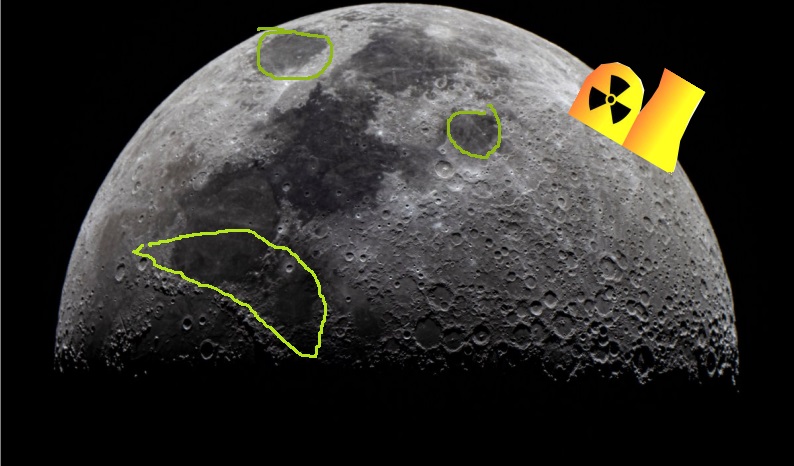
Project aims to supply energy for its lunar space programme
Guy Faulconbridge, Wednesday 24 December 2025, https://www.independent.co.uk/space/russia-china-space-race-moon-nuclear-power-b2890010.html
Russia is reportedly planning to establish a nuclear power plant on the moon within the next decade.
This ambitious project aims to supply energy for its lunar space programme and a joint research station with China, as global powers intensify their
efforts in lunar exploration.
Historically, Russia has held a prominent position in space, notably with Yuri Gagarin’s pioneering journey in 1961.
However, its dominance has waned in recent decades, with the nation now trailing behind the United States and, increasingly, China.
The country’s lunar aspirations faced a significant setback in August 2023 when its uncrewed Luna-25 mission crashed during a landing attempt.
Furthermore, the landscape of space launches, once a Russian speciality, has been revolutionised by figures such as Elon Musk, adding to the competitive pressure.
Russia’s state space corporation, Roscosmos, said in a statement that it planned to build a lunar power plant by 2036 and signed a contract with the Lavochkin Association aerospace company to do it.
Roscosmos said the purpose of the plant was to power Russia’s lunar programme, including rovers, an observatory and the infrastructure of the joint Russian-Chinese International Lunar Research Station.
“The project is an important step towards the creation of a permanently functioning scientific lunar station and the transition from one-time missions to a long-term lunar exploration program,” Roscosmos said.
Roscosmos did not say explicitly that the plant would be nuclear but it said the participants included Russian state nuclear corporation Rosatom and the Kurchatov Institute, Russia’s leading nuclear research institute.
The head of Roscosmos, Dmitry Bakanov, said in June that one of the corporation’s aims was to put a nuclear power plant on the moon and to explore Venus, known as Earth’s “sister” planet.
The moon, which is 384,400 km (238,855 miles) from our planet, moderates Earth’s wobble on its axis, which ensures a more stable climate. It also causes tides in the world’s oceans.
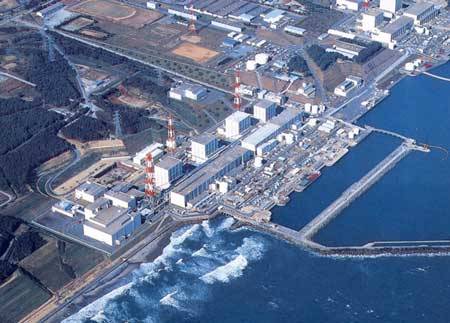
1A 15 years after Fukushima disaster locals fear return of Japan’s nuclear power.
Sarah Hooper, December 24, 2025, https://metro.co.uk/2025/12/24/15-years-after-fukushima-disaster-locals-fear-return-of-japans-nuclear-power-25764288/
Japan is returning to nuclear energy almost 15 years after the Fukushima disaster – but not everyone is convinced it’s a good idea.
The world’s largest nuclear power plant, Kashiwazaki-Kariwa, shut down most of its reactors after the deadly 2011 earthquake and tsunami.
The Fukushima nuclear disaster was triggered in March 2011 when four of the plant’s reactor buildings were damaged in the most powerful earthquake in Japan’s history, which had a magnitude of 9.0.
In the aftermath, Japan began the process of shutting down many of its nuclear power plants, including Kashiwazaki-Kariwa, north of Tokyo.
But as the country looks to become self-sufficient when it comes to energy, it’s rebooting many of the nuclear plants shut down after the tsunami.
Restarting nuclear facilities is a ‘significant move’ for Japan
Dr Leslie Mabon, a Senior Lecturer in Environmental Systems in the School of Engineering and Innovation at the Open University, has researched how nuclear facilities affect the environment and communities near Fukushima in Japan.
He told Metro that none of the reactors which are going to be restarted are in nuclear stations in Fukushima Prefecture, but restarting Kashiwazaki-Kariwa is a significant move
‘What is significant about this restart is not only the size of the plant – the largest in Japan – but also that it is operated by Tokyo Electric Power Company (TEPCO), who are also responsible for the Fukushima Dai’ichi plant that faced the meltdowns in 2011,’ he explained.
‘A crucial question at the heart of the controversy over nuclear restarts in Japan is: who does it benefit?’
Local governments and citizens living near nuclear plants have raised concerns about the safety of the plants, especially because the electricity produced won’t power their own communities.
‘Electricity from the plant primarily benefits those living in the Tokyo metropolitan area, some 200km south-east,’ Dr Mabon added.
‘Citizens and political figures in Niigata, and other regions like it, where restarts are on the horizon, may well be asking why they have to take up the risk for a power plant that benefits those living far away.’
An ageing and declining population in rural areas where the nuclear power plants are also located poses another problem.
‘Local and regional politicians face a very difficult balancing act between the jobs and economic benefits that hosting a nuclear plant brings on one hand, versus the concerns some of their citizens might have about safety and fairness on the other,’ he said.
Widespread outcry over nuclear power
Local residents aren’t supportive of the move, however, with dozens of protesters assembling outside after politicians voted to reopen the plant.
TEPCO, the energy company which will operate the plants, said in a statement: ‘We remain firmly committed to never repeating such an accident and ensuring Niigata residents never experience anything similar to 2011.’
Despite widespread outcry by residents – some 60% of whom don’t believe conditions to restart the plant have been met – it will reopen in January.
Local resident Ayako Oga was protesting after the vote – she was forced to relocate after the meltdown of the Fukushima plant placed her home inside the exclusion zone.
She said: ‘As a victim of the Fukushima nuclear accident, I wish that no one, whether in Japan or anywhere in the world, ever again suffers the damage of a nuclear accident.’
The 2025 nuclear year in review: Back to the Future Atomic Age

Bulletin, By François Diaz-Maurin | December 25, 2025
“……………………………………………………………… In many ways, 2025 resembled Back to the Future, and not only because Donald Trump—whom the trilogy’s villain Biff is admittedly based on—returned to the White House in January. Less than one year into his second term, President Trump has exhibited Cold War-era thinking several times already.
One week after entering the presidency, Trump announced his plan for a new, comprehensive missile-defense system that his administration later called Golden Dome and claimed would be built in three years at a cost of no more than $175 billion. Many missile defense experts have pointed to the project’s technical and policy flaws and called it a fantasy that will add to a long-running US missile defense debacle. The fantasy started with President Ronald Reagan’s dream of building a missile shield—which he called the Strategic Defense Initiative and that detractors called “Star Wars”—after record Soviet nuclear deployments in—wait for it—1985. Experts warned that the Golden Dome proposal is self-defeating, as it will prompt US adversaries to build more maneuverable missiles and use more decoys, rendering any national defense ineffective.
A few days after announcing his missile defense effort, President Trump told reporters about his desire to engage with Russia and China on denuclearization efforts. “There’s no reason for us to be building brand new nuclear weapons. We already have so many,” he said. “You could destroy the world 50 times over, 100 times over. And here we are building new nuclear weapons, and they’re building nuclear weapons, and China’s building nuclear weapons.” But New START, the only agreement constraining the number of strategic offensive weapons that the United States and Russia can deploy, is set to expire in less than two months. And as of writing, Moscow maintains that it hasn’t received any formal response.
Around the time of Trump’s denuclearization comments, his administration’s Department of Government Efficiency started firing new federal hires, including hundreds at the National Nuclear Security Administration (NNSA), the Energy Department agency responsible for the safety and security of the US nuclear arsenal. (Most of the NNSA employees fired were eventually rehired after a bipartisan uproar in Congress.) The NNSA and its network of national laboratories provide essential technical support to the State Department for nuclear arms control verification. In July, the Trump administration dissolved the State Department’s Bureau of Arms Control, Verification, and Compliance, which was responsible for policy, negotiation, and overall compliance reporting of arms control treaties.
In May, President Trump signed four executive orders on nuclear power to accelerate nuclear power plant construction in the United States and support new, smaller, and less-regulated reactor designs. One of the orders plans a “substantial reorganization” of the US Nuclear Regulatory Commission, a plan three former chairs of the NRC say would threaten the independence of the agency, possibly undermining the safety requirements for nuclear regulation.
The same month, a brief skirmish started at the border between India and Pakistan, which seemed to quickly escalate, prompting President Trump to call for restraint from both sides. As a ceasefire agreement that Trump said he helped broker was being announced, reports suggested that, during the conflict, Pakistan’s Prime Minister had convened the National Command Authority, apparently in response to India’s targeting of Pakistani military bases. The National Command Authority is responsible for Pakistan’s nuclear policy and operational decision-making. (Pakistan’s defense minister later denied that the meeting ever happened.)
Then came the worst international security crisis of the year.
In June, two days after Trump said Iran rejected the US proposal for a nuclear deal that included a demand that it stop enriching uranium on Iranian soil, Israel attacked Iran, targeting military leaders, nuclear facilities, and nuclear scientists. About a week later, the United States bombed three Iranian nuclear sites at Fordow, Natanz, and Isfahan. While Trump touted the attack as “very successful,” the status of Iran’s nuclear program remained unclear after the attack, and later reports suggested that Iran’s stockpile of enriched uranium may not have been destroyed. Some experts warned before the attack that destroying Iran’s enrichment plants would not eliminate the Iranian nuclear threat and that a US action might spur Iran to covertly sprint toward a nuclear weapon as quickly as possible.
In July, in a surprising congressional twist, the House passed the Radiation Exposure Compensation Act (RECA) reauthorization and expansion bill. As a result, communities affected by the 1945 Trinity nuclear test and uranium mining in areas of Idaho, Montana, New Mexico, Colorado, the Navajo Nation and all of Nevada, Utah, and Arizona, as well as downwinders in Guam exposed to fallout from the Pacific nuclear tests during the Cold War started receiving compensation for their radiation exposure this year. (These groups were not initially covered by RECA.)
As if the legacy of US nuclear testing wasn’t painful enough, President Trump suggested in October that the United States should return to nuclear testing, confusing experts who could not tell whether the president was referring to testing a nuclear delivery system (such as a missile) or testing an actual nuclear explosive device. Many experts had already explained how resuming nuclear explosive testing would be impractical and against US security interests.
There have been many other nuclear developments in 2025 that also pointed in the direction of more risk and more instability. But one stood out: In a shocking sign that shows how much the nuclear security landscape has been turned on its head, this past week, a member of Japan’s prime minister’s office who advises Prime Minister Sanae Takaichi on national security told reporters that Japan “should possess nuclear weapons.” These remarks came just months after Japan commemorated the 80th anniversaries of the Hiroshima and Nagasaki bombings.
Whether the world has already entered a new nuclear age marked by renewed arms racing is up for debate. But nuclear affairs have made a strong and undeniable comeback on the front pages of many newspapers this year—something unseen since the end of the Cold War. Even in Hollywood, film directors are daring to talk about nuclear risk once again with a plethora of new and upcoming releases, including this year’s much-remarked A House of Dynamite.
When it reconvenes in January, let’s hope the US administration comes back to the present and sets about a new start in nuclear arms control and diplomacy.
Of course, I couldn’t close this year-end review without mentioning the passing of way too many important figures from the nuclear nonproliferation and arms control community, including Bob Alvarez, Dick Garwin, Dan Hirsch, R. Rajaraman, and (late last year) Evgeny Velikhov. Each stood in their own way for the reduction of the risk from nuclear weapons and pushed for the diplomatic and science-based disarmament or arms control solutions that have been at the core of the Bulletin’s mission since 1945.
Here are five Bulletin nuclear stories that stood out in 2025—and that you should read…………………………………………………. https://thebulletin.org/2025/12/the-2025-nuclear-year-in-review-back-to-the-future-atomic-age/?utm_source=ActiveCampaign&utm_medium=email&utm_content=2025%20nuclear%20year%20in%20review&utm_campaign=20251225%20Thursday%20Newsletter%20%28Copy%29
1 This Month


Tell the Ukrainian Government to Drop Prosecution of Peace Activist Yurii Sheliazhenko

Petition to revoke the licensing of the Near Surface Nuclear Disposal Facility (NSDF) at Chalk River. https://www.ourcommons.ca/petitions/en/Petition/Details?Petition=e-7247


of the week – STOP SMALL MODULAR REACTORS IN CANADA
To see nuclear-related stories in greater depth and intensity – go to https://nuclearinformation.wordpress.com
-
Archives
- March 2026 (204)
- February 2026 (268)
- January 2026 (308)
- December 2025 (358)
- November 2025 (359)
- October 2025 (376)
- September 2025 (258)
- August 2025 (319)
- July 2025 (230)
- June 2025 (348)
- May 2025 (261)
- April 2025 (305)
-
Categories
- 1
- 1 NUCLEAR ISSUES
- business and costs
- climate change
- culture and arts
- ENERGY
- environment
- health
- history
- indigenous issues
- Legal
- marketing of nuclear
- media
- opposition to nuclear
- PERSONAL STORIES
- politics
- politics international
- Religion and ethics
- safety
- secrets,lies and civil liberties
- spinbuster
- technology
- Uranium
- wastes
- weapons and war
- Women
- 2 WORLD
- ACTION
- AFRICA
- Atrocities
- AUSTRALIA
- Christina's notes
- Christina's themes
- culture and arts
- Events
- Fuk 2022
- Fuk 2023
- Fukushima 2017
- Fukushima 2018
- fukushima 2019
- Fukushima 2020
- Fukushima 2021
- general
- global warming
- Humour (God we need it)
- Nuclear
- RARE EARTHS
- Reference
- resources – print
- Resources -audiovicual
- Weekly Newsletter
- World
- World Nuclear
- YouTube
-
RSS
Entries RSS
Comments RSS
 nuclear-news