EU leaders agree on $160b loan to Ukraine after plan to use frozen Russian assets unravels
Polish Prime Minister Donald Tusk warned early on Thursday that it would be a case of sending “either money today or blood tomorrow” to help Ukraine.
19 December 25, https://www.abc.net.au/news/2025-12-19/eu-leaders-agree-on-90-billion-euro-loan-to-ukraine/106163816
In short:
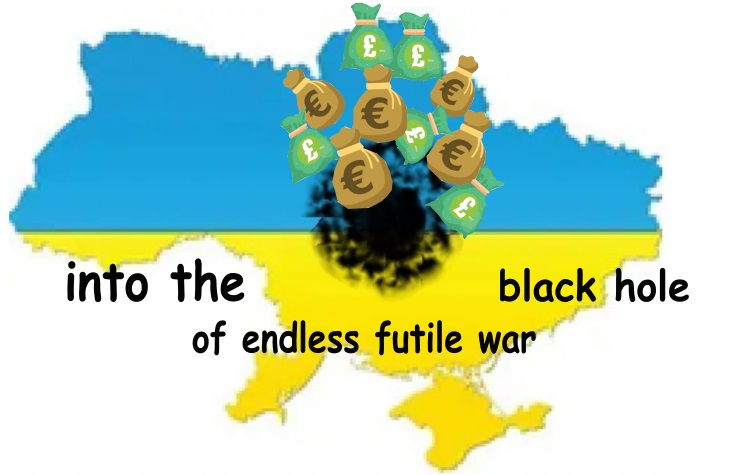
The EU has approved a $160 billion interest-free loan to Ukraine as the country verges on bankruptcy amid its war with Russia.
Europe had planned to use frozen Russian assets — mostly in Belgium — to fund its ally, but failed to bridge differences with Belgium, which deemed it legally risky.
What’s next?
The EU says it reserves the right to use the frozen assets to repay the loan if Russia fails to pay reparations.
European Union leaders have agreed to provide a massive interest-free loan to Ukraine to meet its military and economic needs for the next two years, but they failed to agree to use frozen Russian assets to raise the funds.
After almost four years of war, the International Monetary Fund estimates Ukraine will need 137 billion euros ($242 billion) in 2026 and 2027.
Kyiv is on the verge of bankruptcy and desperately needs the money by the Northern Hemisphere spring.
The plan had been to use some of the $372 billion worth of Russian assets that are frozen in Europe, mostly in Belgium.
However, the EU failed to bridge differences with Belgium that would have allowed it to use the assets.
The decision came after EU leaders worked deep into Thursday night to reassure Belgium they would provide guarantees to protect it from Russian retaliation if it backed the “reparations loan” plan for Ukraine.
But in the end, the leaders did not use that option, and as the talks bogged down, they eventually opted to borrow the money on capital markets.
“We have a deal. Decision to provide 90 billion euros ($159 billion) of support to Ukraine for 2026–27 approved. We committed, we delivered,” EU Council president Antonio Costa said in a post on social media on Friday.
“The money would be borrowed by the EU on capital markets and underwritten by the 27-nation bloc’s seven-year budget.”
French President Emmanuel Macron described the deal agreed to as a major advance, saying this option “was the most realistic and practical way” to fund Ukraine and its war efforts.
He added that the deal included a mechanism to protect three countries — Hungary, Slovakia and the Czech Republic — from any financial fallout.
German Chancellor Friedrich Merz hailed the announcement.
“The financial package for Ukraine has been finalised,” he said in a statement, noting that “Ukraine is granted a zero-interest loan.”
“These funds are sufficient to cover the military and budgetary needs of Ukraine for the two years to come.”
Mr Merz said the frozen assets would remain blocked until Russia paid war reparations to Ukraine. Ukrainian President Volodymyr Zelenskyy has said that would cost more than $1.06 trillion.
“If Russia does not pay reparations, we will — in full accordance with international law — make use of Russian immobilised assets for paying back the loan,” Merz said.
Not all countries agreed to the loan package.
Hungary, Slovakia and the Czech Republic refused to support Ukraine and opposed it, but a deal was reached in which they did not block the package and were promised protection from any financial fallout.
Hungarian Prime Minister Viktor Orbán, who is Russian President Vladimir Putin’s closest ally in Europe and who describes himself as a peacemaker, said: “I would not like a European Union in war.”
“To give money means war,” he said.
Mr Orbán also described the rejected plan to use the frozen Russian assets as a “dead end”.
Polish Prime Minister Donald Tusk warned early on Thursday that it would be a case of sending “either money today or blood tomorrow” to help Ukraine.
Russia seeks to block mobilisation of assets
Ukrainian President Volodymyr Zelenskyy had appealed for a quick decision to keep Ukraine afloat in the new year.
Some $372 billion worth of Russian assets are frozen in Europe, most of them in the Belgian financial clearing house Euroclear.
Belgium had objected to the loan plan, calling it legally risky and warning that it could harm Euroclear’s business.
The plan to use frozen Russian assets got bogged down as Belgian Prime Minister Bart De Wever rejected the scheme as legally risky, and warned that it could harm the business of Euroclear.
Brussels was rattled last Friday when Russia’s Central Bank launched a lawsuit against Euroclear to prevent any loan being provided to Ukraine with frozen Russian funds.
“For me, the reparations loan was not a good idea,” De Wever told reporters after the meeting.
“When we explained the text again, there were so many questions that I said, I told you so, I told you so. There are a lot of loose ends. And if you start pulling at the loose ends in the strings, the thing collapses.
“We avoided stepping into a precedent that risks undermining legal certainty worldwide. We safeguarded the principle that Europe respects law, even when it is hard, even when we are under pressure,” he said, adding that the EU “delivered a strong political signal. Europe stands behind Ukraine.”
But the EU Council president said: “The union reserves its right to make use of the immobilised assets to repay this loan.”
No comments yet.
1 This Month

of the week – Shut Down Drone Warfare!


Tell the Ukrainian Government to Drop Prosecution of Peace Activist Yurii Sheliazhenko

Petition to revoke the licensing of the Near Surface Nuclear Disposal Facility (NSDF) at Chalk River. https://www.ourcommons.ca/petitions/en/Petition/Details?Petition=e-7247
To see nuclear-related stories in greater depth and intensity – go to https://nuclearinformation.wordpress.com
-
Archives
- April 2026 (7)
- March 2026 (251)
- February 2026 (268)
- January 2026 (308)
- December 2025 (358)
- November 2025 (359)
- October 2025 (376)
- September 2025 (257)
- August 2025 (319)
- July 2025 (230)
- June 2025 (348)
- May 2025 (261)
-
Categories
- 1
- 1 NUCLEAR ISSUES
- business and costs
- climate change
- culture and arts
- ENERGY
- environment
- health
- history
- indigenous issues
- Legal
- marketing of nuclear
- media
- opposition to nuclear
- PERSONAL STORIES
- politics
- politics international
- Religion and ethics
- safety
- secrets,lies and civil liberties
- spinbuster
- technology
- Uranium
- wastes
- weapons and war
- Women
- 2 WORLD
- ACTION
- AFRICA
- Atrocities
- AUSTRALIA
- Christina's notes
- Christina's themes
- culture and arts
- Events
- Fuk 2022
- Fuk 2023
- Fukushima 2017
- Fukushima 2018
- fukushima 2019
- Fukushima 2020
- Fukushima 2021
- general
- global warming
- Humour (God we need it)
- Nuclear
- RARE EARTHS
- Reference
- resources – print
- Resources -audiovicual
- Weekly Newsletter
- World
- World Nuclear
- YouTube
-
RSS
Entries RSS
Comments RSS
 nuclear-news
Leave a comment