Drones targeting European and UK nuclear weapons infrastructure
Online Analysis , Dr Daniel Salisbury, 12th December 2025
Amid concerns of Russian hybrid activity across Europe, reports of a series of mysterious drone flights over NATO’s nuclear bases are raising questions about espionage, potential sabotage operations and the vulnerability of strategic infrastructure.
In early December 2025, French officials reported the detection of several drones over the Île Longue nuclear-submarine base in Brittany, western France. The base hosts France’s nuclear-powered ballistic-missile submarine (SSBN) fleet, which carries the bulk of the country’s nuclear warheads on submarine-launched ballistic missiles (SLBMs).
The drones were allegedly intercepted using a jamming system. French sources have been cautious in assigning culpability. Commander Guillaume Le Rasle, spokesperson for the maritime prefecture, also claimed that ‘sensitive infrastructure was not threatened’ by the suspicious flights.
High value nuclear targets
The submarine base at Île Longue is heavily protected because it handles nuclear warheads, missiles, and submarine nuclear-reactor fuel. France’s SSBN fleet carries around 240 of the country’s estimated 290 nuclear warheads, constituting most of its strategic deterrent. Recently, French forces have been at the centre of a debate over European nuclear deterrence amid concerns over Russian aggression and a withdrawal of support from the United States.
Events at Île Longue are the latest in a series of similarly mysterious flights over NATO nuclear bases as well as a range of other military and civilian targets.
Drones were observed over Kleine-Brogel Air Base in Belgium on three consecutive nights in early November 2025, prompting a helicopter deployment in response. Guards shot at ten suspicious drones seen over Volkel Air Base in the Netherlands in late November, although no wreckage was recovered. In December, two Dutch F-35s from Volkel scrambled to intercept an unidentified aircraft, reportedly a drone. Kleine-Brogel and Volkel are two of six bases located in five European countries (Belgium, Germany, Italy, the Netherlands and Turkiye) that together host 100 US non-strategic nuclear B61-12 gravity bombs.
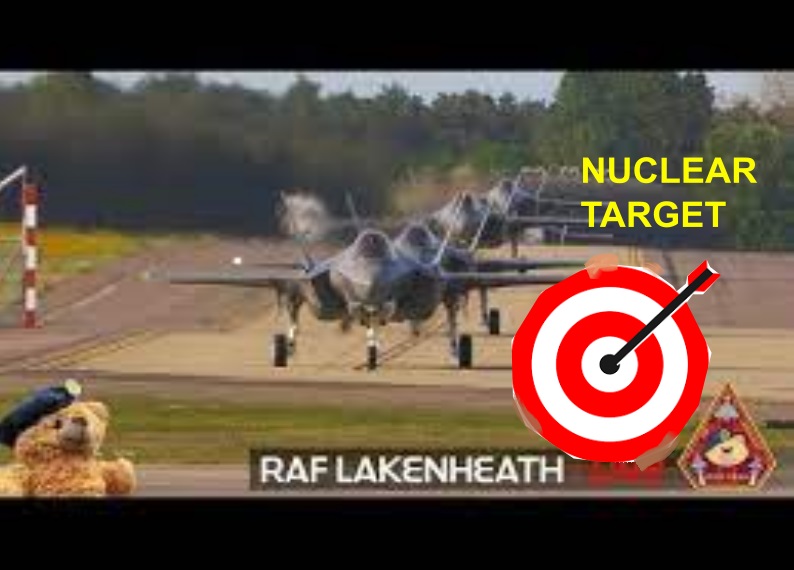
In the United Kingdom, there were reports of similar drone flights around RAF Lakenheath in November 2024. The base has not hosted US nuclear weapons since their quiet withdrawal from the country in 2008. However, mounting open-source evidence since 2022 suggests US nuclear weapons will return to Lakenheath. In the summer of 2025, the British government announced it would base 12 nuclear-capable F-35As (procured by Whitehall for NATO’s dual-capable nuclear mission) at nearby RAF Marham.
12th December 2025
Drones targeting European nuclear weapons infrastructure
Amid concerns of Russian hybrid activity across Europe, reports of a series of mysterious drone flights over NATO’s nuclear bases are raising questions about espionage, potential sabotage operations and the vulnerability of strategic infrastructure.

In early December 2025, French officials reported the detection of several drones over the Île Longue nuclear-submarine base in Brittany, western France. The base hosts France’s nuclear-powered ballistic-missile submarine (SSBN) fleet, which carries the bulk of the country’s nuclear warheads on submarine-launched ballistic missiles (SLBMs).
The drones were allegedly intercepted using a jamming system. French sources have been cautious in assigning culpability. Commander Guillaume Le Rasle, spokesperson for the maritime prefecture, also claimed that ‘sensitive infrastructure was not threatened’ by the suspicious flights.
High value nuclear targets
The submarine base at Île Longue is heavily protected because it handles nuclear warheads, missiles, and submarine nuclear-reactor fuel. France’s SSBN fleet carries around 240 of the country’s estimated 290 nuclear warheads, constituting most of its strategic deterrent. Recently, French forces have been at the centre of a debate over European nuclear deterrence amid concerns over Russian aggression and a withdrawal of support from the United States.
Events at Île Longue are the latest in a series of similarly mysterious flights over NATO nuclear bases as well as a range of other military and civilian targets.
Drones were observed over Kleine-Brogel Air Base in Belgium on three consecutive nights in early November 2025, prompting a helicopter deployment in response. Guards shot at ten suspicious drones seen over Volkel Air Base in the Netherlands in late November, although no wreckage was recovered. In December, two Dutch F-35s from Volkel scrambled to intercept an unidentified aircraft, reportedly a drone. Kleine-Brogel and Volkel are two of six bases located in five European countries (Belgium, Germany, Italy, the Netherlands and Turkiye) that together host 100 US non-strategic nuclear B61-12 gravity bombs.
In the United Kingdom, there were reports of similar drone flights around RAF Lakenheath in November 2024. The base has not hosted US nuclear weapons since their quiet withdrawal from the country in 2008. However, mounting open-source evidence since 2022 suggests US nuclear weapons will return to Lakenheath. In the summer of 2025, the British government announced it would base 12 nuclear-capable F-35As (procured by Whitehall for NATO’s dual-capable nuclear mission) at nearby RAF Marham.
Likely culprits?
The characteristics of the drones and their flight patterns provide clues about their origins. At Kleine-Brogel, the flights unfolded in specific phases: the first, according to Belgian Defence Minister Theo Francken, used ‘small drones to test the radio frequencies’. Later phases allegedly involved drones ‘of a larger type and flying at higher altitude’, and deploying a jammer to counter them was unsuccessful. Francken suggested the activity was espionage, but stopped short of speculating who was responsible. He claimed that the drones had ‘come to spy, to see where the F-16s are, where the ammunition are, and other highly strategic information’.
The flights at Île Longue, Kleine-Brogel and Volkel all started at around 6–7pm and continued late into the night.
Flights around RAF Lakenheath also involved systems described as ‘large “non-hobby”’ sized drones.
There are possible explanations for these incidents that are less concerning. Hobbyist and drone photography activity has increased due to the widespread availability of drones. Environmental pressure groups have also used drones to target nuclear facilities, and have trespassed on nuclear bases in the past.
In 2024, a drone panic around New Jersey saw 5,000 tip-offs reported to the FBI, who attributed them to a ‘combination of lawful commercial drones, hobbyist drones, and law enforcement drones, as well as manned fixed-wing aircraft, helicopters, and stars mistakenly reported as drones’.
However, the patterns of the drone incursions around nuclear bases – the use of more capable non-hobby drones, the similarities between incidents, and the spate of them in quick succession at a time of high tension in Europe – suggest a hostile state actor is behind them.
In recent months, Russia has undertaken a campaign of probing NATO airspace, flying drones and aircraft in Estonian, Polish and Romanian airspace, testing Alliance resolve, and leading Poland and Estonia to invoke Article 4 of the Washington Treaty that requests NATO consultations. These activities form part of Moscow’s broader effort to intimidate NATO allies, highlight vulnerability, and sow fear and unease amongst populations………………………………………………………………………………………………………………………………
A spider’s web of escalation?
The drone flights raise concerns about the vulnerability of NATO’s European nuclear assets. During the war in Ukraine, Kyiv has used drones to target Russian nuclear-capable assets. Earlier this year, Operation Spiderweb saw over 100 short-range, explosive-laden uninhabited aerial vehicles (UAVs) (launched remotely from the back of a cargo truck parked fewer than ten kilometres from Russian air bases) wreak havoc on the Russian Aerospace Forces – including its nuclear-capable aircraft.
The operation destroyed seven of Russia’s 58 Tu-95MS/MS mod Bear bombers and four of the country’s 54 Tu-22M3 Backfire C bombers, as well as damaging at least another two Backfire aircraft. Although it was a costly lesson, it likely opened Moscow’s eyes to the opportunities afforded by these capabilities.
The asymmetric nature of the operation highlights how states with even minimal capability can use emerging technologies to hold nuclear assets at risk. In a conflict scenario, this could create escalation risks – particularly in Europe, where nuclear capabilities are smaller and often co-located with conventional military assets. https://www.iiss.org/online-analysis/online-analysis/2025/12/drones-targeting-european-nuclear-weapons-infrastructure/
No comments yet.
1 This Month

of the week – Shut Down Drone Warfare!


Tell the Ukrainian Government to Drop Prosecution of Peace Activist Yurii Sheliazhenko

Petition to revoke the licensing of the Near Surface Nuclear Disposal Facility (NSDF) at Chalk River. https://www.ourcommons.ca/petitions/en/Petition/Details?Petition=e-7247
To see nuclear-related stories in greater depth and intensity – go to https://nuclearinformation.wordpress.com
-
Archives
- April 2026 (7)
- March 2026 (251)
- February 2026 (268)
- January 2026 (308)
- December 2025 (358)
- November 2025 (359)
- October 2025 (376)
- September 2025 (257)
- August 2025 (319)
- July 2025 (230)
- June 2025 (348)
- May 2025 (261)
-
Categories
- 1
- 1 NUCLEAR ISSUES
- business and costs
- climate change
- culture and arts
- ENERGY
- environment
- health
- history
- indigenous issues
- Legal
- marketing of nuclear
- media
- opposition to nuclear
- PERSONAL STORIES
- politics
- politics international
- Religion and ethics
- safety
- secrets,lies and civil liberties
- spinbuster
- technology
- Uranium
- wastes
- weapons and war
- Women
- 2 WORLD
- ACTION
- AFRICA
- Atrocities
- AUSTRALIA
- Christina's notes
- Christina's themes
- culture and arts
- Events
- Fuk 2022
- Fuk 2023
- Fukushima 2017
- Fukushima 2018
- fukushima 2019
- Fukushima 2020
- Fukushima 2021
- general
- global warming
- Humour (God we need it)
- Nuclear
- RARE EARTHS
- Reference
- resources – print
- Resources -audiovicual
- Weekly Newsletter
- World
- World Nuclear
- YouTube
-
RSS
Entries RSS
Comments RSS
 nuclear-news
Leave a comment