Sizewell C — the last of its kind
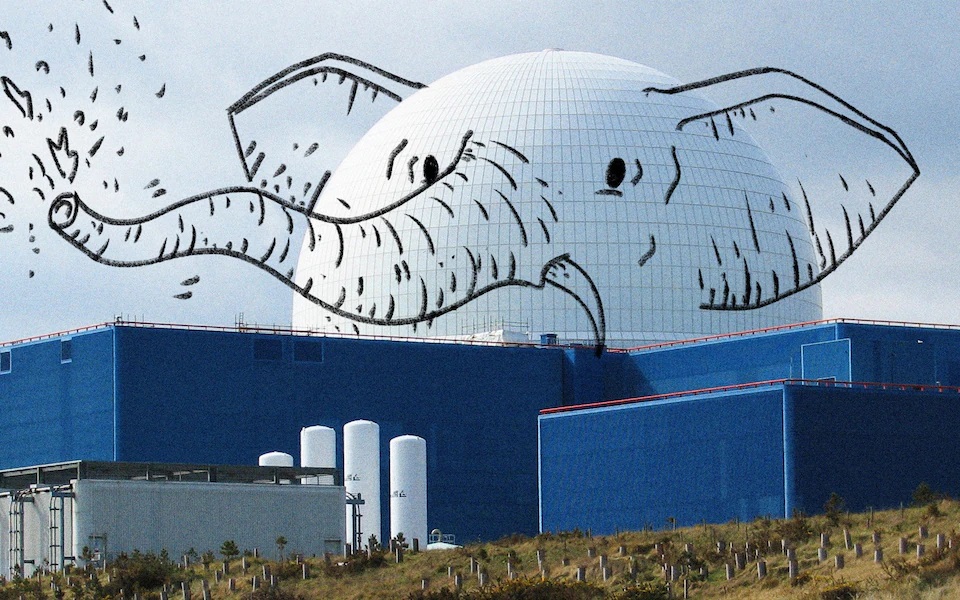
The deal to build the Sizewell C, two reactors using the European Pressurised Reactor (EPR) design, using the Regulated Asset Base (RAB) finance model was inevitably a bad one for the UK public. It gives guaranteed profits to investors by placing the risks on consumers while the EPR has an unenviable record of huge cost and time overruns. It requires consumers to pay the finance charges in the construction period – of the same order as the construction cost – as a surcharge on their bills. However, the additional subsidies and risk removal that were necessary to persuade private investors to take stakes are shocking.
The new finance deal for Sizewell C
RAB financing deal, developed from 2018, was announced in 2021 and legislated for in 2021-2022 when Kwasi Kwarteng was Secretary of State for Business, Energy and Industrial Strategy (BEIS) and completed under Ed Miliband at the Department for Energy Security and Net Zero (DESNZ) in July 2025. The Regulated Asset Base (RAB) finance model for nuclear power plants was sold to the public on the basis that it would provide cheaper power than using the fixed power price financial model under which the Hinkley Point C reactors1 are being built.
It was claimed the model would bring in new sources of investment, particularly institutional investors such as pension funds. The power price reduction would be achieved if the public shared the economic risks with the investors and offered limited subsidies and guarantees. Reducing the risk borne by investors would reduce the cost of capital, a major element in the cost of power from a nuclear power plant, and hence the price of electricity. The subsidies were portrayed not so much as paying costs that would be expected to have been borne by investors, as is normal for subsidies, but as giving the investors guarantees they were not at risk from the consequences of low-probability, high-consequence events and from volatile wholesale electricity market prices.
After five years of effort by government to complete the deal, a Final Investment Decision (FID) for Sizewell C was finally taken on July 22, 2025. The contracts were finalised on November 4, 20252. The largest investor is the UK government (44.9%). The other investors are the Canadian pension fund, La Caisse (20%), Centrica (15%), EDF (12.5%) and Amber Infrastructure (7.6%). Amber Infrastructure is acting on behalf of the UK’s Nuclear Liabilities Fund, NLF, (4.6%), arguably public funds, and International Public Partnerships Limited 3.0%. So only 23% of the investment will come from institutional investors, 27.5% from energy companies and about half (if we include the NLF) from public sources.
An analysis of the Sizewell C deal shows that balance of risks is one-sided with the risks falling almost entirely on taxpayers and consumers, with minimal penalties and generous incentives offered to investors. The subsidies offered are far more extensive than those acknowledged by government and represent large amounts of public money being given to the private investors for no public return. The price of power from Sizewell C is unknown and will vary unpredictably from year to year, but there can be little confidence the RAB model will produce a lower power price than Hinkley Point C even if the cost of the subsidies is not factored in. The incentives required to bring in private investors are so expensive and risky to consumers that the model should not be repeated, and, like the Hinkley Point C deal, it ought to be a one-off, not a door-opener for new nuclear investments.
The Risk/Reward balance
The plan to use the Hinkley Point C finance model for Sizewell C was abandoned by EDF in 2018. This was because it was not willing to accept the financial risks it had signed up to for Hinkley by agreeing a fixed power purchase price with all construction cost and time risks falling on itself. Costs have escalated dramatically at Hinkley since the deal was signed in 2016, by up to 90% but cannot be passed through to the power purchase price: and this commitment led to EDF writing off €12.9bn of its investment in Hinkley Point C in 20233.
The investors in the Sizewell project frequently talk about the project being ‘derisked’4 by which they mean not that the risk has been reduced, but that it falls on others………………………………………………………………………………………………………………………………………..
Subsidies…………………………………………………………………………………………………………………………… “The acknowledgement that ‘Difference’ payments will be substantial demonstrates that it is expected that consumers will be forced to buy power from Sizewell C that will cost more than alternatives in the market.”
…………………………………………………………………………………………….. Will the power be cheaper than for Hinkley?……………………………………………………………………….
Is the Sizewell deal repeatable?………………………………………………………………………………. If the deal proves not to be repeatable, the huge amount of government time and cost that has gone into completing the deal will, as with Hinkley Point C, have been a costly diversion of more than a decade from pursuing the cheaper, quicker and more reliable ways of meeting the government’s promises of net zero…………………………………………………………………………………………………………………………………….Is Sizewell the last large reactor for the UK?…………………………………………………………………………………
Endnotes -……… [copious] https://policybrief.org/briefs/sizewell-c-the-last-of-its-kind/
No comments yet.
1 This Month

of the week – Shut Down Drone Warfare!


Tell the Ukrainian Government to Drop Prosecution of Peace Activist Yurii Sheliazhenko

Petition to revoke the licensing of the Near Surface Nuclear Disposal Facility (NSDF) at Chalk River. https://www.ourcommons.ca/petitions/en/Petition/Details?Petition=e-7247
To see nuclear-related stories in greater depth and intensity – go to https://nuclearinformation.wordpress.com
-
Archives
- April 2026 (7)
- March 2026 (251)
- February 2026 (268)
- January 2026 (308)
- December 2025 (358)
- November 2025 (359)
- October 2025 (376)
- September 2025 (257)
- August 2025 (319)
- July 2025 (230)
- June 2025 (348)
- May 2025 (261)
-
Categories
- 1
- 1 NUCLEAR ISSUES
- business and costs
- climate change
- culture and arts
- ENERGY
- environment
- health
- history
- indigenous issues
- Legal
- marketing of nuclear
- media
- opposition to nuclear
- PERSONAL STORIES
- politics
- politics international
- Religion and ethics
- safety
- secrets,lies and civil liberties
- spinbuster
- technology
- Uranium
- wastes
- weapons and war
- Women
- 2 WORLD
- ACTION
- AFRICA
- Atrocities
- AUSTRALIA
- Christina's notes
- Christina's themes
- culture and arts
- Events
- Fuk 2022
- Fuk 2023
- Fukushima 2017
- Fukushima 2018
- fukushima 2019
- Fukushima 2020
- Fukushima 2021
- general
- global warming
- Humour (God we need it)
- Nuclear
- RARE EARTHS
- Reference
- resources – print
- Resources -audiovicual
- Weekly Newsletter
- World
- World Nuclear
- YouTube
-
RSS
Entries RSS
Comments RSS
 nuclear-news
Leave a comment