The non-corporate nuclear news – week to 13 December

Some bits of good news –
What Happened When Tennessee Unleashed Its River.
Giving Away Money Is Good for You.
1 Million Turtle Nests Counted on India’s Coast– ‘Crazy High’ Number is 10x More Than Decades Ago
TOP STORIES.
Nuclear power will never be “beneficial”.
Britain’s nuclear submarine fleet ‘no longer fit for purpose’-ALSO AT https://nuclear-news.net/2025/12/09/1-a-britains-nuclear-submarine-fleet-no-longer-fit-for-purpose/
When it all comes crashing down: The aftermath of the AI boom.
Israel’s biggest con trick: Hiding the true numbers it has killed in Gaza. U.S. Military Budget Bill Would Ramp Up Israel Aid to Fill In ‘Gaps’ When Other Countries Impose Embargoes Over Genocide.
The Moral Urgency of Compromise in Ukraine.
Climate. Climateflation: the food system in crisis.
Environment. UN environment report ‘hijacked’ by US and others over fossil fuels, top scientist says.
AUSTRALIA.
- Marles’ new Defence agency – rearranging deck chairs on the HMAS Titanic.
- The people and environment of South Australia must be protected from Federal imposed storage of AUKUS High-Level nuclear waste.
- The Colby Review, AUKUS and Lopsided Commitments.
- Segal Secrets: docs reveal Antisemitism Envoy’s big pay day.
- Will the lights go out if we don’t have baseload? – “No, absolutely not,” say those whose job it is to keep them on.
NUCLEAR-RELATED TOPICS
ECONOMICS.
- Cashing in on war: Why stealing Russia’s assets actually makes things worse for the EU.
- Reeves’ £150 cut in UK’s energy bills will be nuked by Sizewell costs, ex-Labour donor claims.
- Japan pulls out of Vietnam nuclear project, complicating Hanoi’s power plans.
- American-owned consortium assumes control of Canada’s premier nuclear research facility.
- Why this nuclear energy stock could face a meltdown in 2026. South Carolina’s abandoned nuclear plants could be revived as company offers $2.7 billion.
- Oil and gas industries join with nuclear to fight renewable energy.
- Nuclear power?- Its account is (almost) OK.
- Schemes of Bankruptcy: The United Nations, Funding Dues and Human Rights.
| EMPLOYMENT. Fears raised that specialist Vulcan MoD work could shift to Sellafield |
| ENERGY.Nuclear (in)flexibility, nearly 100% electricity from solar PV and offshore wind surge! Claims that we can go back to some of old tech for a better future! Report: Small Modular Distractors: Why a European SMR strategy hinders the energy transition. Britain’s AI boom is running straight into an energy wall. Renewables deliver nearly two thirds of power fed to grid in Germany, not including self-consumption. Building energy resilience in an uncertain world. |
| ENVIRONMENT. As the UK looks to invest in nuclear, here’s what it could mean for Britain’s environment. |
| HEALTH. Nuclear Kills Kids. |
| HISTORY. Manufactured Narratives: A Century of Distortion and Dispossession in Palestine |
| INDIGENOUS ISSUES. The ‘Nuclearity’ of the Marshall Islands, and the Threat of US Testing |
| LEGAL. Sizewell C sea defences at centre of High Court challenge. Activists fight plans for nuclear power station over threat to rare bird- ALSO AT https://nuclear-news.net/2025/12/11/1-b1-activists-fight-plans-for-nuclear-power-station-over-threat-to-rare-bird/ |
| MEDIA. New York Times Wants The US Military Built Up For War With China. |
| OPPOSITION to NUCLEAR . Delays in constructing Hinkley C nuclear power station highlighted by protestors. Campaigners call for absolute protection for Welsh national parks from nuclear plants. Nuclear Free Local Authorities Policy Briefing 330: NFLA Progress Report, October – December 2025. |
| POLITICS. Nuclear Notebook: The changing nuclear landscape in Europe.Ontario’sNuclear Folly. Tony Blair’s digital ID dream, brought to you by Keir Starmer. The UK wants to unlock a ‘golden age of nuclear’ but faces key challenges in reviving historic lead. U.S. Nuclear Fusion Industry Asks for Federal Help. Zelensky’s rush to elections is an effort to cling to power and keep the money flowing. |
| POLITICS INTERNATIONAL and DIPLOMACY. A New UN Secretary-General Needs the Blessings of the US–or Get Vetoed. The Authoritarian Stack –How Tech Billionaires Are Building a Post-Democratic America — And Why Europe Is Next. Russia says it awaits an answer from the US on New START as nuclear treaty ticks down. THE NEXT WARS WERE ALWAYS HERE: How Post 9/11 Law and the Monroe Doctrine Converged in the Caribbean. Trump’s Monroe Doctrine 2.0 Outlines Imperial Intentions for Latin America. Venezuela and the colonial enterprise. Trump gives Zelensky ‘days’ to respond to peace plan – Financial Times. Zelensky resists ceding Donbas, after abandoning it years ago. US House passes $800mn aid package for Ukraine. Trump says Ukraine should hold elections . Trump scores an own goal for FIFA. Perfectly Appropriate: Trump, Infantino and the FIFA Peace Prize .Across the world we are marking 5 years since the Treaty on the Prohibition of Nuclear Weapons became international law. |
| RADIATION. All French nuclear power plants are releasing tritium, according to Criirad. |
| SAFETY. Japan inspects nuclear sites as seismologists warn of another large quake.Iran says bombed nuclear sites present radiation risk. |
| SECRETS and LIES.The Story They Forgot to Tell: Ten Years of Ukraine’s Corruption and the Media’s Convenient Timeline. Zelensky ‘systematically sabotaged’ Ukraine anti-corruption efforts: Report. FBI Labels Antifa a Major Terror Threat, but Lawmakers Say Evidence Is Lacking as Trump’s Obsession Distracts From Far-Right Extremism. |
| TECHNOLOGY. Search for UK fusion plant engineering partner to restart in 1-2 years after failed first attempt. |
| WASTES. Further delay in Finnish repository licence review. |
| WAR and CONFLICT. Mayors for Peace Briefing . Venezuela charges Washington with ‘theft, piracy’ after seizure of oil tanker. War Crimes Prosecutor Reed Brody on Trump’s Boat Strikes – https://www.youtube.com/watch?v=0uswKsQ4q2g US should exit lost Ukraine war, obsolete NATO – ALSO AT https://nuclear-news.net/2025/12/13/1-b1-us-should-exit-lost-ukraine-war-obsolete-nato/ THE EUROPEANS: BLIND TO REALITY, DEAF TO ALL WARNINGS & HEADED FOR DISASTER |
| WEAPONS and WEAPONS SALES. Britain’s “borrowed bombs”. Rosyth earmarked as temporary repair base for new fleet of UK submarines. Submarines in for repairs at Rosyth could contain nuclear weapons. China’s New Underwater Drones Could Blindside the U.S. Navy.Danger of letting AI into the nuclear weapons chain of command. The War Department Unleashes AI on New GenAI.mil Platform. Israel firm Elbit to help build Trump’s Golden Dome. ‘Genocide is not an Oakland value:’ inside Oakland’s grassroots campaign to end military shipments to Israel. Making Sense of The Après-Ukraine. |
US should exit lost Ukraine war, obsolete NATO
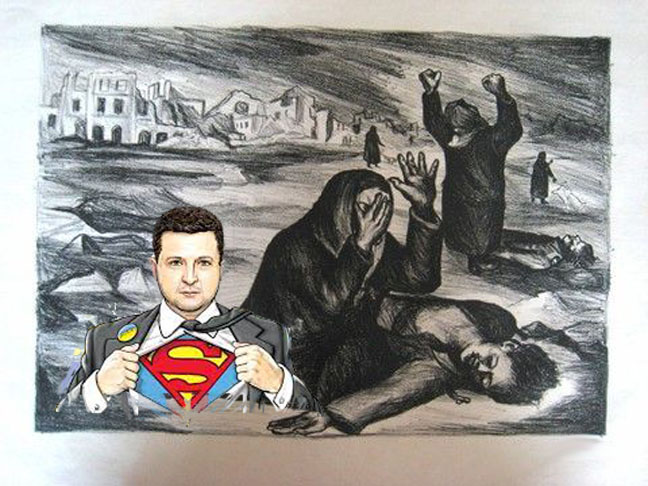
Walt Zlotow West Suburban Peace Coalition Glen Ellyn IL, substack.com/@waltzlotow 12 Dec 25
President Trump appears to relish killing innocents worldwide. He’s still enabling the Israeli genocide in Gaza that has killed over 100,000. He’s obliterated 20 little unarmed boats in the Caribbean killing over 80 hapless innocents. He’s bombed imagined bad guys in Somalia 111 times in 10 months. Why? Because he wants to and can.
But one killing field Trump wants out of is Ukraine. His predecessor Biden provoked the war there 4 years ago. It has largely destroyed Ukraine as a viable state with millions fled, dead, injured, with a shattered economy propped up by US, NATO treasure.
Trump is working with Russia to end the war largely on Russia’s sensible terms. No NATO for Ukraine which will remain neutral between Europe and Russia. No return of the seized territory containing the Russian speaking Ukrainians their government was systematically destroying. End of sanctions allowing reintegration of Russia into the European political economy.
This is good for Ukraine, good for Russia, good for Europe.
For Ukraine it ends further destruction which will alas, now be a rump state of its former self. Had Ukraine not allowed the US and NATO to sabotage the April, 2022 Istanbul peace agreement, Ukraine could have achieved peace then with no loss of territory and its economy largely intact.
For Russia, its security concerns regarding NATO encroachment allowing NATO nukes on its borders, and further destruction of Russian leaning Donbas Ukrainians will achieved be.
For Europe, peace will allow redirection of squandered treasure to the commons, ward off right wing political movements likely to topple pro war leaders, and buy cheap energy from Russia to revitalize their stagnant economies.
While Russia is on board, neither Ukraine nor Europe will have any of this sanity. Ukraine wants to fight on to regain lost territory that will forever be part of Russia. Hurling teens and grandfathers into the cauldron of lost war further cements Ukraine’s destruction.
European NATO pretends defeating Russia in Ukraine is critical to preventing Russia from attacking NATO countries in their imagined obsession Russia is recreating the Soviet Union.
Ukraine and Europe continue in their delusions in spite of Trump’s clear message that the war is lost and must be ended to prevent further disintegration of Ukraine. Neither Ukraine nor Europe has anywhere near the military resources to continue the war largely financed by the Russophobic Biden administration.
Trump must not weaver in his efforts to exit the money pit of senseless war in Ukraine. But he should go further and exit NATO, allowing Europe to provide for their own defense. No US Sugar Daddy might be just the tonic to dissuade foolish European leaders like UK’s Starmer, France’s Macron and Germany’s Merz from endlessly screaming ‘The Russians are coming, the Russian’s are coming.’
Congress is starting to recognize the need to exit NATO. House Republican Thomas Massie and Senate Republican Mike Lee have both introduced legislation to end US membership in NATO.
Their common sense justification is long overdue fresh air. Massie noted, “NATO was created to counter the Soviet Union, which collapsed over thirty years ago. Since then, U.S. participation has cost taxpayers trillions of dollars and continues to risk US involvement in foreign wars. Our Constitution did not authorize permanent foreign entanglements, something our Founding Fathers explicitly warned us against. America should not be the world’s security blanket—especially when wealthy countries refuse to pay for their own defense.”
Lee observed, “America’s withdrawal from NATO is long overdue. NATO has run its course – the threats that existed at its inception are no longer relevant 76 years later “If they were, Europe would be paying their fair share instead of making American taxpayers pick up the check for decades. My legislation will put America first by withdrawing us from the raw deal NATO has become.”
Trump must support this legislation as he works with Russia to end the carnage that addresses Russia’s valid security concerns. Ending this war and exiting NATO will bring peace to Europe and revitalize the economies of all combatants. It might also avert something infinitely more ominous…nuclear war.
A New UN Secretary-General Needs the Blessings of the US–or Get Vetoed.

“The new SG will need to be someone Trump allows, as he has a veto,”
By Thalif Deen, https://www.ipsnews.net/2025/12/a-new-un-secretary-general-needs-the-blessings-of-the-us-or-get-vetoed/?utm_source=email_marketing&utm_admin=146128&utm_medium=email&utm_campaign=A_New_UN_SecretaryGeneral_Needs_the_Blessings_of_the_US_or_Get_Vetoed_Sindh_Peoples_Housing_Redefine
UNITED NATIONS, Dec 11 2025 (IPS) – When there was widespread speculation that a UN Under-Secretary-General (USG), a product of two prestigious universities—Oxford and Cambridge—was planning to run for the post of Secretary-General back in the 1980s, I pointedly asked him to confirm or deny the rumor during an interview in the UN delegate’s lounge.
“I don’t think”, he declared, “anyone in his right mind will ever want that job”.
Fast forward to 2026.
As a financially stricken UN is looking for a new Secretary-General, who will take office beginning January 2027, the USG’s remark in a bygone era was a reflection of a disaster waiting to happen.
The current Secretary-General is facing a daunting task battling for the very survival of the UN, with a hostile White House forcing the world body to sharply reduce its staff, slash funding and relocate several UN agencies, moving them out of New York.
The bottom line: the incoming Secretary-General will inherit a virtually devastated United Nations.
Addressing the General Assembly last September, President Trump remarked, “What is the purpose of the United Nations? It’s not even coming close to living up to [its] potential.”
Dismissing the U.N. as an outdated, ineffective organization, he boasted, “I ended seven wars, dealt with the leaders of each and every one of these countries, and never a phone call from the United Nations offering to help in finalizing the deal.”
Whoever is elected, the new UN chief will have to faithfully abide by the ground rules of the Trump administration virtually abandoning what the UN stands for, including racial equality and gender empowerment (DEI)
“Diversity, equity and inclusion (DEI) policies that were adopted to address historical and structural injustices are being vilified as unjust,” says Volker Turk, UN High Commissioner for Human Rights.
In his 345-page book titled “Unvanquished: A US-UN Saga,” released in 1999, Boutros Boutros-Ghali, a former Secretary-General, points out that although he was accused by Washington of being “too independent” of the US, he eventually did everything in his power to please the Americans.
But when he ran for a second term, the US, which preaches the Western concept of majority rule, exercised its veto even though Boutros-Ghali received 14 of the 15 votes in the Security Council, including the votes of the other four permanent members of the Council, namely the UK, France, Russia and China.
In such circumstances, tradition would demand the dissenting US abstain on the vote and respect the wishes of the overwhelming majority in the Security Council. But the US did not.
Unlike most of his predecessors and successors, Boutros-Ghali refused to blindly play ball with the US despite the fact that he occasionally caved into US pressure at a time when Washington had gained a notoriety for trying to manipulate the world body to protect its own national interests.
Jesselina Rana, UN Advisor at CIVICUS’ UN Hub in New York and the steering committee of the 1 for 8 Billion campaign, told IPS when key international norms are being openly flouted by certain member states and the veto is used to undermine the very principles the UN was built on, will structural reforms alone be enough to restore trust in the institution?”
Can the UN80 process genuinely rebuild trust in multilateralism, she asked, when the process itself has been opaque and has lacked meaningful civil society participation?
“An accountable and transparent Secretary-General selection process requires stronger and more explicit support from member states.”
A process that is open and inclusive of civil society and grounded in feminist leadership will strengthen the UN’s ability to navigate today’s difficult geopolitical conditions and help rebuild trust in multilateralism, she argued.
After 80 years of male leadership, the next Secretary-General should be a woman with a proven record on gender equality, human rights, peace, sustainable development, and multilateralism, declared Rana.
Felix Dodds, Adjunct Professor at the Water Institute, University of North Carolina and Associate Fellow, the Tellus Institute, Boston, who has written extensively on the UN, told IPS the UN is experiencing challenging times, living through what are probably the most difficult times since the Cold War.
It may not be a bad idea to move some UN bodies. UNDP did a lot of that under Helen Clarke—being closer to the people you are working to help, maybe it is a cost-cutting issue, but it may also be something that should have been considered before.
“The new SG will need to be someone Trump allows, as he has a veto,” he pointed out.
“Of the candidates we looked at before, the only one that is realistic is Rebeca Grynspan from UNCTAD. She has shown herself to be a good bureaucrat and has led UNCTAD well, as she did for Costa Rica when she was the Deputy President, said Dodds, City of Bonn International Ambassador.
“We may be looking at a man again,” he said.
Clearly, the new secretary-general taking over in 2027 has a daunting task ahead. Whoever it is will have had to make concessions to the P5 on the size and reach of the UN. The present cuts may be just the first set to come down.
“A UN with a clearer mandate on what it will do may be a result. Stakeholders need to, of course, defend the UN as a critical body for multilateral affairs BUT they must at the same time be putting forward reforms that are simple and strengthen the area they are working on.”
There is no way we can get security reform through—it doesn’t mean it shouldn’t be proposed, but what is realistic in the areas being reformed is that stakeholders and governments can work together on it.
Ultimately, the driving force should be a more effective UN delivering on the ground. Do reform proposals do that? he asked.
“The organization has always worked in a world of political pressures. I agree the body should be a place for dialogue and protection of the most vulnerable. UN80 offers an opportunity for dialogue on realistic proposals. The question is, what are they in the different areas?” he said.
Dr. Stephen Zunes, Professor of Politics and International Studies at the University of San Francisco, where he serves as coordinator of the program in Middle Eastern Studies, told IPS following the Napoleonic Wars, the Council of Europe largely kept the peace until the Central Powers decided it no longer worked for them. The result was World War I.
The League of Nations then set up a framework to keep the peace until the Axis powers decided it no longer worked for them. The result of World War II, he said.
“We are now at a similar crossroads, where the United Nations system is being challenged by both Russia and the United States which–as demonstrated through the invasions of Iraq and Ukraine—no longer feel constrained by the prohibition against aggressive war.”
On the road with radioactive waste: Canada’s roads are not safe.

Transporting nuclear waste is inherently dangerous because it involves moving materials that remain hazardous to human health and the environment for centuries to millennia. Even under ideal conditions, risks cannot be fully eliminated — accidents, mechanical failures, weather events, security threats, or human error can all result in the release or exposure of radioactive materials.
Unlike other hazardous goods, radioactive waste cannot simply be cleaned up with standard emergency response measures; contamination can render land unusable, water unsafe, and ecosystems damaged for generations. Every shipment is a high-stakes event, and the impacts of even a single failure could be irreversible for the communities and lands along the transport route.
by Mayara Gonçalves e Lima, December 11, 2025
Canada is decommissioning a nuclear power plant for the first time, marking a new chapter in the country’s nuclear history. The decommissioning of Gentilly-1 in Bécancour, Quebec — on the St. Lawrence River in Wabanaki territory — is a milestone in the country’s reckoning with its radioactive legacy, setting a precedent that will influence how future projects are approached across Canada.
The implications extend far beyond Quebec. How Gentilly-1 is dismantled, how its waste is transported, and how oversight is conducted will set precedents for future decommissioning projects across the country.
For New Brunswick, these decisions will shape the expectations, policies, and protections in place when it comes time to decommission Point Lepreau — a process that will carry even higher stakes for this province.
The threat of radioactive waste on the move
Gentilly-1 recently entered its active dismantling phase, with the removal of remaining radioactive and structural components, including equipment, piping, cabling, and control panels from the service and turbine buildings.
Under the current dismantling plan, the resulting radioactive waste is expected to be transferred to Canadian Nuclear Laboratories at Chalk River, Ontario, for interim storage.
This planned transfer follows an earlier shipment of Gentilly-1 used fuel to Chalk River that occurred without publicity or demonstrated compliance with regulatory requirements.
Transporting nuclear waste is inherently dangerous because it involves moving materials that remain hazardous to human health and the environment for centuries to millennia. Even under ideal conditions, risks cannot be fully eliminated — accidents, mechanical failures, weather events, security threats, or human error can all result in the release or exposure of radioactive materials.
Unlike other hazardous goods, radioactive waste cannot simply be cleaned up with standard emergency response measures; contamination can render land unusable, water unsafe, and ecosystems damaged for generations. Every shipment is a high-stakes event, and the impacts of even a single failure could be irreversible for the communities and lands along the transport route.
These risks are compounded by the fact that current storage solutions for Gentilly-1 nuclear waste are only temporary. Neither Canada nor any country in the world has a permanent solution for radioactive waste — meaning the waste will eventually need to be moved again, effectively doubling both the risks and costs associated with its handling and transportation.
Bloc Québécois urges halt to radioactive waste shipments to Chalk River
On October 17, 2025, amid growing national debate over nuclear waste transport, the Bloc Québécois formally called on Federal Natural Resources Minister Tim Hodgson to immediately halt the transfer of radioactive materials from Gentilly-1 to the Chalk River Laboratories.
To reinforce their position, the Bloc Québécois has launched a petition allowing the public to voice their opposition to the project. It underscores the environmental risks of transporting radioactive waste and storing it so close to a major drinking water source, as well as the lack of meaningful consultation with Indigenous communities.
The Bloc’s petition also highlights a separate proposal for the Chalk River site: the construction of a nuclear waste landfill known as the Near Surface Disposal Facility (NSDF). This project also has become a major source of controversy. The Kebaowek First Nation, along with more than 140 municipalities in Quebec and Ontario, has voiced strong opposition to placing large volumes of radioactive waste near the Kichi Sibi (Ottawa River) and its tributaries.
Whistleblowers raise alarm over secretive transport practices
More than 60 groups, with the Passamaquoddy Nation among them, have endorsed a letter sent to the Prime Minister and key members of Cabinet on December 2, 2025, sounding the alarm about the federal government’s management of radioactive waste transport in Canada.
The signatories state that they are “blowing the whistle” on a practice that has remained largely hidden from public view: the movement of radioactive waste along public roads, bridges, and through First Nations territories without consultation, notification, or parliamentary oversight.
The letter focuses on Canadian Nuclear Laboratories’ decision to consolidate federally-owned radioactive waste at the Chalk River Laboratories site. The signatories emphasize that Chalk River is an unsuitable and inherently vulnerable location due to its proximity to the Ottawa River and its exposure to seismic activity.
In response to these escalating concerns, the signatories call for three concrete actions: an immediate cessation on shipments of radioactive waste to Chalk River; a full ban on the import of radioactive waste; and a strategic assessment under section 95 of the Impact Assessment Act to evaluate the cumulative and long-term risks of transporting radioactive waste on public highways.
Such an assessment, they argue, is essential to ensuring informed, democratic decision-making and to guiding future reviews of nuclear facilities, reactor decommissioning projects, and federal waste policies.
Canada’s radioactive waste crisis demands action
Canada urgently needs to halt the practice of transporting radioactive waste over public roads, through municipalities, across public bridges, and over Indigenous territories without meaningful consultation, public notification, or clear regulatory justification.
These shipments — often occurring quietly and without community awareness — pose risks that are collectively borne by the public while decisions are made by a small number of government and industry actors.
The lack of transparency erodes trust and fails to meet even the basic standards of democratic governance, environmental protection, or respect for Indigenous rights. Communities have the right to know when hazardous materials are moving through their homelands, and they deserve a real voice in determining whether and how such shipments occur.
The Age of Nuclear Waste is only beginning, and Canada is unprepared to manage the growing challenges of transporting, importing, and exporting radioactive materials.
As reactors age, decommissioning accelerates, and new nuclear projects emerge, waste shipments will only increase — but federal oversight remains fragmented, inconsistent, and insufficiently accountable to the public.
Without a coherent national policy grounded in precaution, transparency, and genuine consultation — especially with First Nations whose territories are routinely crossed — Canada risks locking in a legacy of poorly governed radioactive waste movements.
Canada must act now to establish responsible oversight and build a safer, more accountable framework before today’s shortcomings become tomorrow’s crises.
At times like these, we’re reminded that every chapter of Canada’s nuclear history carries lasting responsibilities: our nuclear past has left behind a trail of toxic legacy that no technology, no policy, and no promise can safely contain for the timescales required.
Mayara Gonçalves e Lima works with the Passamaquoddy Recognition Group Inc., focusing on nuclear energy. Their work combines environmental advocacy with efforts to ensure that the voice of the Passamaquoddy Nation is heard and respected in decisions that impact their land, waters, and future.
Venezuela charges Washington with ‘theft, piracy’ after seizure of oil tanker
The US had imposed sanctions on the vessel under claims it was involved in the Iranian oil trade.
The Cradle, DEC 11, 2025
Venezuela has accused the US government of “blatant theft” and “piracy,” following Washington’s seizure of a Venezuelan oil tanker off the Latin American country’s coast on 10 December.
The Venezuelan Foreign Ministry strongly condemned what it said was a “blatant theft and an act of international piracy, publicly announced by the President of the US, who confessed to the assault on an oil tanker in the Caribbean Sea.”
“Already in his 2024 campaign, [US President Donald Trump] openly stated that his objective has always been to keep Venezuelan oil without paying any consideration in return, making it clear that the policy of aggression against our country responds to a deliberate plan to plunder our energy wealth,” the Venezuelan Foreign Ministry added.
“The true reasons for the prolonged aggression against Venezuela have finally been revealed. It is not migration. It is not narcotics trafficking. It is not democracy. It is not human rights. It has always been about our natural wealth,” the statement went on to say.
Cuban President Miguel Diaz-Canel Bermudez also condemned Washington’s theft of the oil tanker.
“Cuba expresses its full support for the denunciation issued by the government of Venezuela and strongly condemns the assault on an oil tanker in the Caribbean Sea, carried out by the Armed Forces of the United States. This constitutes an act of piracy, a violation of international law, and an escalation in the aggression against that sister nation,” he said.
The US announced the seizure on Wednesday. The move caused a jump in oil prices and has fanned the flames of an already tense situation between Caracas and Washington – which has recently targeted the Latin American country with brutal strikes under the pretext of stopping the flow of drugs into the US.
Video footage of the seizure showed armed US soldiers descending onto the vessel from a helicopter. The Venezuelan oil tanker was subject to illegal US sanctions. ………………………………………………..
The seizure of the Venezuelan tanker comes as part of a massive military buildup in the Caribbean Sea and recent airstrikes on what Washington claims are “drug boats” responsible for the flow of Fentanyl into the US.
At least 87 people, among them innocent fishermen from Colombia, Ecuador, and Trinidad and Tobago, have been killed by the US attacks since September. https://thecradle.co/articles/venezuela-charges-washington-with-theft-piracy-after-seizure-of-oil-tanker
Nuclear Notebook: The changing nuclear landscape in Europe
Bulletin, By Hans M. Kristensen, Matt Korda, Eliana Johns, Mackenzie Knight-Boyle | December 10, 2025
Evolving nuclear weapons postures in Europe
Since Russia annexed Crimea in 2014 and invaded Ukraine in 2022, the rhetoric, prominence, operations, and infrastructures of nuclear weapons in Europe have changed considerably and, in many cases, increased. This trend is in sharp contrast with the two decades prior that—despite modernization programs—were dominated by efforts to reduce the numbers and role of nuclear weapons.
During this period, Russia has fielded several new nonstrategic nuclear weapons systems, increased military exercises, issued a long list of nuclear signals and threats, and upgraded its nuclear doctrine in a way that gives the impression that it has broadened the role of nuclear weapons and potentially lowered its nuclear threshold.
NATO, for its part, is also modernizing its nuclear forces and has further reacted by increasing its strategic bomber operations and nonstrategic nuclear posture, changing its strategic nuclear ballistic missile submarine operations, and talking more openly and assertively about the role and value of nuclear weapons.
Each side believes it has good reasons for beefing up the nuclear posture, but the combined effect is that the role and presence of nuclear weapons in Europe are increasing again after decades of efforts to curtail them. Unless the governments and parliaments of European countries increase efforts to halt this trend, the region is likely to descend further into growing nuclear weapons competition and posturing over the next decade.
In this Nuclear Notebook, we provide an overview with examples of how the nuclear postures in Europe are evolving, especially the infrastructures and operations. The overview is focused on nonstrategic nuclear weapons but also includes examples of how strategic nuclear forces are operated. The intention is to provide a factual resource for the public debate about the evolving role of nuclear weapons in Europe. As such, this notebook is not intended to be comprehensive but informative.
Nine countries currently operate nuclear forces in Europe: Belarus, Belgium, Germany, France, Italy, the Netherlands, Russia, the United States, and the United Kingdom. The latter has announced plans to acquire nonstrategic nuclear weapons (see Figure 1), and a tenth country (Türkiye) hosts nuclear weapons on its territory.
Nuclear developments involving the Russian Federation…………………………………………………………………………………………………………………………………..
Nuclear developments involving NATO………………………………………………………………………………………………………………
The United Kingdom…………………………………………………………………………………..
France…………………………………………………………………………………………………
………………………………………….. copious references……………..https://thebulletin.org/premium/2025-12/the-changing-nuclear-landscape-in-europe/
Nuclear Free Local Authorities Policy Briefing 330: NFLA Progress Report, October – December 2025.

NFLA, Richard Outram, NFLA / Mayors for Peace Secretary 11 December 2025
Key Developments:
UK Government: EN-7
The UK Government’s revised National Policy Statement for Nuclear Energy Generation (EN-7) was
finalised and published in November 2025 introducing a developer led, criteria-based approach for siting new fission gigawatt, SMR and AMR nuclear plants (but not fusion – this will be covered by EN-8 in development). The previous policy EN-6 was Government led, with a strategic assessment leading to the listing of specific sites for redevelopment.
The NFLAs have been critical of this approach as it provides for new nuclear power stations to be built at sites that have not previously hosted such infrastructure, raising the prospect of a market led free-for-all. Energy Minister Michael Shanks described the new policy as ‘agile’ meaning there is
much not to like as very few criteria in the new policy explicitly rule out development; the emphasis is more upon facilitation with the caveat that there shall be a ‘mitigation of impacts on the host community’.
Two silver linings are that the Government has:
1. (For now) Retained the Semi-Urban Population Density Criterion (SUPDC), much to the chagrin of developers, meaning that reactors cannot be built near populated areas; developers, claiming their unproven, unbuilt reactor designs, are safer would much prefer this be lifted as it would permit them to co-locate new plants near to large industrial consumers.
2. Placed a focus upon developments being designed to be resilient to climate change. These are both issues the NGO community, and NFLAs, have made representations to Government upon.
Nuclear Regulatory Taskforce
John Fingleton’s Nuclear Regulatory Taskforce , mostly comprising nuclear industry representatives, has just published its final report (unsurprisingly) calling for a radical reset of the ‘overly complex’ nuclear regulatory system. The report makes 47 recommendations to speed up nuclear projects at a lower cost. It says the UK has become the “most expensive place in the world” to build nuclear plants.
Shockingly, contrary to the commitment in EN-7, the NRT recommended that nuclear plants should be built closer to urban areas and should be allowed to harm the local environment.
This confirms the fears of the NFLAs and NGO community that the Taskforce was charged with dispensing with regulation in the industry to make it cheaper and quicker for developers to build new nuclear plants with the risk that safety and environmental and human protection will be compromised. (A similar approach contributed to the accident at Three Mile Island)………………….
The Office for Nuclear Regulation has previously rigorously contested the claims of EDF and others like Britain Remade that over regulation led to a significant increase in costs at the Hinkley Point C development. And Nuclear Consult Chair, Dr Paul Dorfman, writing in The National said the report
does not provide any evidence that regulation is responsible for huge delays and ballooning costs, rather these can be attributed to the incompetence of the builders and the issues with designs.
However, at the recent ONR NGO Forum we were informed that the government intends to establish one overarching regulatory commission with the ultimate power to make determinations upon nuclear projects. At its head will be the Chief Nuclear Inspector as Chair of this prestigious new body. In response to the report, the ONR issued a statement casting its former criticism to the winds and instead warmly welcoming the recommendations; coincidence, surely?
Worryingly, the report also recommends limiting legal challenges to a ‘single bite of the cherry’ and talks of ‘indemnifying’ nuclear developers from ‘damages’ incurred because of judicial reviews.
And, in another move by the Labour Government to curtail the rights of lawful protestors, Chancellor Rachel Reeves has ordered courts to open hearings on judicial review processes which could threaten to block critical infrastructure projects within four months of an application being made.
Nuclear can access green finance
The Treasury has published an updated Green Financing Framework which adds nuclear energy-related expenditures to the list of Eligible Green Expenditures.
Worryingly it permits the employment of public money invested from November 2025 in the Government’s Green Bonds scheme into nuclear power; this is something we need to raise public awareness of…………………………………………………………………………………………………………………………………………………..https://www.nuclearpolicy.info/briefings/nfla-policy-briefing-330-nfla-progress-report-october-december-2025/
The Authoritarian Stack – How Tech Billionaires Are Building a Post-Democratic America — And Why Europe Is Next
[Superb graphics on original]
The Authoritarian Stack
A project led by Prof. Francesca Bria with xof-research.org, 12 December 2025. https://www.authoritarian-stack.info/
Research and editorial team: Francesca Bria, José Bautista
Data analysis: Autonomy Institute
Map development and design: xof-research.org
Web development: José Núñez
Supported by: Rosa Luxemburg Stiftung
Funded by: Friedrich-Ebert-Stiftung (FES) Future of Work
The Contract That Changed Everything
In late July 2025, deep within the Pentagon’s bureaucratic machinery, the U.S. Army quietly signed away a piece of its sovereignty.
A ten-billion-dollar contract with Palantir Technologies—one of the largest in the Department of Defense’s history—was framed as a move toward “efficiency.”
It consolidated seventy-five procurement agreements into a single contract.
A strategic handover of core military functions to a private company whose founder, Peter Thiel, has declared that “freedom and democracy are no longer compatible.”
The Authoritarian Tech Network:
The Kingmakers
J.D. Vance, propelled to the vice-presidency by $15 million from Peter Thiel, became the face of tech-right governance. Behind him, Thiel’s network moved into the machinery of the state.
Under the banner of “patriotic tech“, this new bloc is building the infrastructure of control—clouds, AI, finance, drones, satellites—an integrated system we call the Authoritarian Stack. It is faster, ideological, and fully privatized: a regime where corporate boards, not public law, set the rules.
Our investigation shows how these firms now operate as state-like powers—writing the rules, winning the tenders, and exporting their model to Europe, where it poses a direct challenge to democratic governance.
Silicon Valley isn’t building apps anymore.
It’s building empires.
State Capture: Personnel Pipeline
To understand why this capture is happening so rapidly, follow the personnel. The revolving door no longer spins between government and industry—it locks them together into a new architecture of power.
Detachment 201: The Army’s Executive Innovation Corps
This goes further—commissioning Silicon Valley executives directly into military ranks. In June 2025, four tech executives were sworn in as lieutenant colonels:
The line between contractor and commander has been erased.
The Pipeline Made Visible
Unlike old authoritarianism built on fear and force, this new system rules through code, capital, and infrastructure — making resistance feel architecturally impossible.
It’s a self-reinforcing loop:
Ideology fuels venture capital → capital captures the state → the state feeds the same private systems that built it. A new model of power — privatized sovereignty.
Each layer reinforces the others. Ideology justifies investment. Investment captures state power. State power secures contracts. Contracts build infrastructure. Infrastructure becomes indispensable. Indispensability generates returns. Returns fund more ideology.
The Capital Machine: Financial Flows — From Taxpayers to Venture Capital
Follow the Money
Funding
Government
Tech Companies
Venture Capital
Founders Fund, Thiel’s $17 billion flagship, led Anduril’s $1 billion round at a $30.5 billion valuation. It was the first institutional investor in both Palantir and SpaceX. Palantir’s quarterly revenue now exceeds $1 billion—up 53 percent in government contracts. 1789 Capital epitomizes dynasty.
Founded by Thiel’s confidants and joined by Donald Trump Jr., it grew from $150 million to over $1 billion. It channels tens of millions into Musk’s empire—SpaceX for orbital dominance, xAI for military AI.
Andreessen Horowitz (a16z), through its “American Dynamism” fund, backs defense tech and what it calls builders of the American state. Andreessen rallied Silicon Valley’s billionaire class to Trump’s 2024 campaign.
Smaller giants like 8VC and General Catalyst reinforce the pattern. 8VC poured $450 million into Anduril; General Catalyst led a $1.48 billion round.
The Stack: Five Domains of Privatized Sovereignty
Critical state infrastructures are being privatized across five domains—data, defense, space, energy, and money—the foundations of democratic power. These domains form the architecture of privatized sovereignty: a technological regime where power flows through laws, infrastructure and automated platforms.
Crypto Sovereignty
The Nuclear AI Complex
SpaceX: Orbital Infrastructure
Anduril: Autonomous Warfare
Palantir: The Operating System of Government
Privatizing the state’s data and decision making.
Systems
- Gotham (intelligence)
- Foundry (DOGE budget automation)
- ImmigrationOS (ICE tracking)
- NHS Federated Data Platform
Contracts
ICE Immigration Platform (2025)
$10 B U.S. Army Enterprise Agreement
Europe’s Deepening Trap
y mid-2025, its reverberations were already felt across Europe. In Rome, Italian defense officials moved to integrate Elon Musk’s Starlink into military communications. In Berlin, Rheinmetall and Anduril expanded their joint venture to deploy autonomous drone swarms for NATO. The German variants of its drones still run on Californian code. Musk livestreams with the AfD’s Alice Weidel, endorsing the German far-right while supplying NATO infrastructure.
In London, the NHS scaled Palantir’s £330 million Federated Data Platform across tens of millions of patient records, By May 2025, the government had to pay KPMG £8 million just to encourage hospital adoption. Meanwhile, a £1.5 billion defense partnership binds Britain to Palantir’s AI systems.
None of these decisions provoked real debate. Few reached front pages. Together, they reveal the systematic outsourcing of European sovereignty to American oligarchs whose ideology openly undermines democracy.
It is a paradox with devastating implications: pursuing digital sovereignty while ceding control through every signed contract.
Each new contract deepens the trap. Once Palantir becomes indispensable, once Anduril’s drones are NATO standard, once nuclear facilities power AI that runs everything else— the transformation is irreversible.
Europe faces an existential choice: build genuine technological sovereignty now, or accept governance by platforms whose architects view democracy as an obsolete operating system.
The Infrastructure of Control
ilicon Valley’s Authoritarian Tech Right is not theorizing this world. They are already building it. The pipelines are operational. The feedback loops are functioning. The sovereignty transfers are completing.
Democracy persists as a legacy interface— maintained for stability, while being systematically hollowed out and replaced.
The question now is whether democratic societies can recognize this formation for what it is—and build alternatives before the infrastructure of control becomes too deeply embedded to dislodge.
The Authoritarian Tech Complex
Explore the Map [by clicking on graphic on original]
Rosyth earmarked as temporary repair base for new fleet of UK submarines

Herald, 11th December
Work is underway to design an emergency planning zone as plans progress for Rosyth to be the temporary repair base for the UK’s new fleet of nuclear deterrent submarines.
Rosyth has been earmarked as a temporary contingent for the UK Government’s Dreadnought class of submarines – the first of which is expected to launch towards the end of the decade.
Members of Fife Council’s South and West Fife area committee were given an update on the proposals at their meeting on Wednesday where it was explained that “non-nuclear” repairs would be carried out from the dockyard when required.
Grant Reekie, head of radioactive waste and health physics at Babcock International in Rosyth, told councillors: “The next generation of submarines is going to be launched from Barrow towards the end of this decade.
“The intention is these will be maintained at the HM Naval base Clyde however the Clyde facilities will not be available until mid 2030s.
“We have been asked to provide a contingent facility by the MoD to bridge a gap of submarines coming into service in late 2020s from 2029 through to mid 2030s when they will no longer be required as it will be done in Faslane.
“Rosyth is the only location in the UK where this can be done due to the facilities, the expertise and the availability of the dock in Rosyth.”……………………..
Mr Reekie said the next step would be defining a “detailed emergency planning zone” which would then be sent to Fife Council.
“As soon as we have done the consequence assessment, which we are looking at the middle of next year, we need to go to the local authority and need to offer engagement to the local authority,” he said………………….
Rosyth councillor Brian Goodall questioned why there was no public consultation.
“For something as significant as this, something that would lead to a significant percentage of the population of Rosyth being told there will be Potassium iodate tablets available in the event of an emergency, why is there no public consultation on this?”………………………….
When probed, Ian Brown, from the MoD, also told councillors that policy would mean there would be no confirmation of if nuclear weapons were on board.
“My position is we do not comment on the condition of the boat whether it is armed or not,” he added.
………………….. Committee convener David Barratt was less pleased with the plans.
“Morally, and as a CND member, I find the existence of nuclear weapons abhorrent,” he said.
“I was going to ask if there is anything in the powers of council to frustrate, delay or in any way stop nuclear weapon activities and I take it from the answers the answer to that is an absolute no.
“Yes this will create jobs but war tends to do that. I don’t think we would advocate for war and job creation doesn’t lead me to advocate for nuclear weapons.” https://www.heraldscotland.com/news/25689769.rosyth-earmarked-temporary-repair-base-new-fleet-submarines/
As the UK looks to invest in nuclear, here’s what it could mean for Britain’s environment
In this week’s newsletter: The government’s bid to speed up nuclear construction could usher in sweeping deregulation, with experts warning of profound consequences for nature.
Helena Horton, Guardian, 12 Dec 25
When UK prime minister Keir Starmer announced last week that he was “implementing the Fingleton review”, you can forgive the pulse of most Britons for failing to quicken.
But behind the uninspiring statement lies potentially the biggest deregulation for decades, posing peril for endangered species, if wildlife experts are to be believed, and a likely huge row with the EU.
Earlier this year, John Fingleton, a lively, intelligent Irish economist, was commissioned by the government to lead a “taskforce” with a mission to come up with a way to build nuclear power faster and cheaper. It’s accepted by experts that we need more nuclear if we are to meet net zero, and that Britain is the most expensive place in the world to build it. In the end, Fingleton turned in a review with 47 recommendations aimed at speeding up the process. So far, so snoozeworthy.
However, his recommendations, if adopted, could well lead to the biggest divergence from retained EU habitat and environment law since Brexit. Changes could be made to the habitats directive, which Britain helped write when we were in the EU, and which protect rare species and the places they live. The government could also make it more costly for individuals and charities to take judicial reviews against infrastructure projects……………
Legal advice is that removing these rules for nuclear power will inevitably lead for other infrastructure projects to be subject to the same, weaker regulatory system. Expert planning lawyer Alexa Culver said: “It’s a clever move to sneak broadbrush environmental deregulation, as the government can point to ‘net zero’ as being the ultimate driver. In reality, though, if you don’t protect ecosystems while reducing emissions, you’ve lost the battle. We’re gone anyway.”
It’s not surprising Starmer is clinging to anything which might increase economic growth…….. OBR has predicted an anticipated average GDP growth of 1.5% over the next five years. This is despite the controversial Planning and Infrastructure Bill which Starmer introduced in order to “get Britain building” and experts say it will weaken environmental protections.
Nature also continues to decline. The recently released biodiversity indicators show species numbers continue to decrease in the UK, which is extremely concerning when you consider just how much wildlife has dropped off since the 1970s. Some species, including one-fifth of mammals, are facing extinction, and recent figures show wild bird numbers are in freefall.
Of the review, Georgia Dent, CEO of Somerset Wildlife Trust said: “The government seems to have adopted a simple, reductive narrative that nature regulations are blocking development, and this is simply wrong. Nature in the UK is now in steep decline and the government has legally binding targets for nature’s recovery, and is failing massively in this at the moment. To reduce the hard-won protections that are allowing small, vulnerable populations of species to cling on for dear life is absolutely the wrong direction to take.”
…………………………. the UK is negotiating an energy deal with the EU. There are competition and non-regression clauses in the newest free trade agreement, which prevent either side from weakening environmental law. Government sources tell me their legal advice has been that implementing the Fingleton review could put the free trade agreement at risk……………
………..When MPs, environmental experts and the EU look past the boring title and read the detail, Starmer may have a fight on his hands. https://www.theguardian.com/environment/series/down-to-earth
Delays in constructing Hinkley C nuclear power station highlighted by protestors
ANTI-nuclear campaigners have staged an annual Christmas
protest outside the Hinkley Point C (HPC) construction site to highlightthe years-long delay in completing it. Members of the campaign group Stop Hinkley took a giant stuffed turkey and set up a traditional Christmas dinner complete with sprouts on a table outside the site. They unveiled a banner reading ‘It is now 2025, where is the lecce for the HPC Turkey’,
‘lecce’ being local slang for electricity.
The stunt, which started eight years ago, was prompted by a claim made in 2007 by then-EDF Energy plc chief executive Vincent de Rivas that by 2017 people would be eating their turkeys cooked with electricity provided by Hinkley C.
West Somerset Free Press 11th Dec 2025, https://www.wsfp.co.uk/news/delays-in-constructing-hinkley-c-nuclear-power-station-highlighted-by-protestors-860631
Trump gives Zelensky ‘days’ to respond to peace plan – Financial Times
The US president reportedly hopes for a deal by Christmas.
10 Dec, 2025, https://www.rt.com/news/629243-trump-sets-zelensky-deadline/?utm_source=substack&utm_medium=email
US negotiators have given Ukrainian leader Vladimir Zelensky days to respond to a peace proposal requiring Kiev to accept territorial losses to Russia in exchange for unspecified security guarantees, the Financial Times reported on Tuesday, citing officials familiar with the matter.
One person told the FT that US President Donald Trump was hoping to reach a deal by Christmas. Zelensky reportedly told US envoys that he needed time to consult with Kiev’s European backers.
Although Trump had said last month that he would like to see an agreement by Thanksgiving, he later told journalists that he did not have a specific timeline.
he US president submitted a peace plan in November that reportedly called for Ukraine to withdraw troops from part of Russia’s Donbass they currently control, one of Moscow’s key conditions for a broad ceasefire.
Zelensky acknowledged during his trip to London on Monday that the US was pushing him towards “a compromise,” but added that no agreement on territory had been reached. He reiterated that Ukraine was not willing to give up any land without a fight.
Russian troops have been making steady gains on different sections of the front line, while Ukrainian commanders say they are outgunned and struggling to replenish battlefield losses with new conscripts.
In early December, the Russian Defense Ministry announced the liberation of Krasnoarmeysk (Pokrovsk), a Donbass city President Vladimir Putin has described as an important “bridgehead” for further offensives.
US House passes $800mn aid package for Ukraine
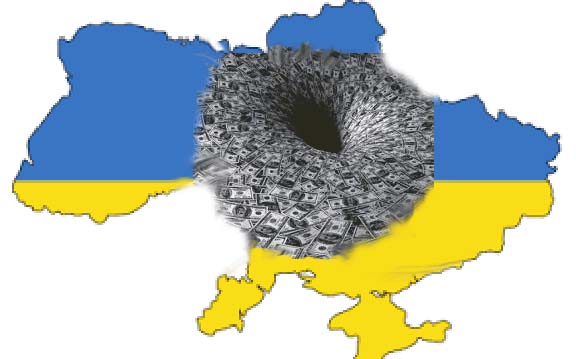
New military assistance has been signed off on a month after Kiev was shaken by a major corruption scandal.
The US House of Representatives has passed a defense spending bill that would provide $800 million in military aid to Ukraine through 2027.
The 2026 National Defense Authorization Act (NDAA) was approved 312-122 on Wednesday and will now advance to the Senate, where it is expected to receive bipartisan support, according to The Hill.
Some legislators objected to directing more taxpayers’ money to help Ukraine fight Russia. “I thought we were getting out of Ukraine. I don’t know why we still need to spend money there,” Thomas Massie, a Republican from Kentucky, said.
On Wednesday, US President Donald Trump slammed what he described as a “massive corruption situation” in Kiev, referring to the recently uncovered $100 million kickback scheme in the country’s energy sector, which heavily relies on Western aid.
Prosecutors named Ukrainian leader Vladimir Zelensky’s longtime associate and former business partner Timur Mindich as the ringleader. Mindich fled the country to evade arrest after apparently being tipped off.
The scandal led to the resignation of two government ministers, and further anti-corruption raids prompted Zelensky to fire chief of staff Andrey Yermak last month.
Ukraine’s military procurement system has also been shaken by several graft and embezzlement scandals, one of which led to the resignation of Defense Minister Aleksey Reznikov in 2023.
The bill was approved as Trump has been pressuring Ukraine to sign a peace deal with Russia, with some reports suggesting that he hopes to reach an agreement by Christmas.
Russia considers Western military cooperation with Ukraine one of the root causes of the conflict and has listed ending foreign weapons deliveries as a condition for a ceasefire. President Vladimir Putin has argued that otherwise, Ukraine would use the pause in the fighting to rearm and regroup, as he says happened when Ukraine refused to implement the 2014-2015 Minsk
Zelensky resists ceding Donbas, after abandoning it years ago

Zelensky objects to ceding the Donbas region under Trump’s peace plan. But when offered the chance to keep the region under a compromise with Russia, he adamantly refused.
Aaron Maté, Dec 13, 2025
Since the Trump administration began pressuring him to reach a peace deal with Russia last month, Ukrainian president Volodymyr Zelensky has refused to cede any territory to Moscow. On Thursday, after a new round of salvos from President Trump, Zelensky appeared to leave some wiggle room. “The Russians want the whole of Donbas — we don’t accept that,” Zelensky told reporters. However, for the first time, he floated the idea of putting the issue to a national vote: “I believe that the Ukrainian people will answer this question. Whether in the form of elections or a referendum, the Ukrainian people must have a say.”
Any Ukrainian-administered referendum on the fate of the Donbas would exclude most of its population, who now live under Russian rule. While Zelensky insists that he will not reward what he sees as an illegal Russian land grab, the Ukrainian leader has squandered several opportunities to keep his borders intact. The February 2015 Minsk accords would have left the Donbas within Ukraine by granting it limited autonomy and abandoning Kyiv’s chances of joining NATO. Under the threat of ultra-nationalist violence, successive Ukrainian governments instead opted to retake Donbas by force and demonize the ethnic Russians who live there……………………………………………………………(Subscribers only) https://www.aaronmate.net/p/zelensky-resists-ceding-donbas-after?utm_source=post-email-title&publication_id=100118&post_id=181439166&utm_campaign=email-post-title&isFreemail=true&r=ln98x&triedRedirect=true&utm_medium=email
1 This Month

of the week – Shut Down Drone Warfare!


Tell the Ukrainian Government to Drop Prosecution of Peace Activist Yurii Sheliazhenko

Petition to revoke the licensing of the Near Surface Nuclear Disposal Facility (NSDF) at Chalk River. https://www.ourcommons.ca/petitions/en/Petition/Details?Petition=e-7247
To see nuclear-related stories in greater depth and intensity – go to https://nuclearinformation.wordpress.com
-
Archives
- April 2026 (114)
- March 2026 (251)
- February 2026 (268)
- January 2026 (308)
- December 2025 (358)
- November 2025 (359)
- October 2025 (376)
- September 2025 (257)
- August 2025 (319)
- July 2025 (230)
- June 2025 (348)
- May 2025 (261)
-
Categories
- 1
- 1 NUCLEAR ISSUES
- business and costs
- climate change
- culture and arts
- ENERGY
- environment
- health
- history
- indigenous issues
- Legal
- marketing of nuclear
- media
- opposition to nuclear
- PERSONAL STORIES
- politics
- politics international
- Religion and ethics
- safety
- secrets,lies and civil liberties
- spinbuster
- technology
- Uranium
- wastes
- weapons and war
- Women
- 2 WORLD
- ACTION
- AFRICA
- Atrocities
- AUSTRALIA
- Christina's notes
- Christina's themes
- culture and arts
- Events
- Fuk 2022
- Fuk 2023
- Fukushima 2017
- Fukushima 2018
- fukushima 2019
- Fukushima 2020
- Fukushima 2021
- general
- global warming
- Humour (God we need it)
- Nuclear
- RARE EARTHS
- Reference
- resources – print
- Resources -audiovicual
- Weekly Newsletter
- World
- World Nuclear
- YouTube
-
RSS
Entries RSS
Comments RSS
 nuclear-news