Non-corporate nuclear-related news – week to 7 December
Some bits of good news- A roadmap for ending plastic pollution was published. Antarctica’s shrinking ozone hole ‘signals hope’. One Year Later: A Dam Removal and a River’s Rebirth, The Nationwide Movement Turning Guns into Garden Tools
TOP STORIES.What Defeat Looks Like.
Russia Dangles Business Ties To U.S. at Europe’s Expense – Kremlin pitched White House on investments and industry to end war – today’s Wall Street Journal.
Von der Leyen pushes ahead with reparations loan for Ukraine as Belgium maintains its opposition.
Trump’s AI Push May Hinge on Renewable Energy.
Climate. What’s behind the massive death toll in floods across Southeast Asia –and why it should serve as a warning. ‘Deeply disappointing’: Experts slam Cop30 for ignoring climate’s impact on food supply.
Noel’s notes. Why my work is clearly biased. The obscenity of Christmas, and how to fix it?
AUSTRALIA.
Australia’s New Censorship Is Voluntary – and That’s Why It’s Dangerous.
The Moral Hazard of Being US Deputy-Sheriff .
No fog, no war – Hegseth’s war crimes put Australian soldiers at risk.
US submarines carrying nuclear weapons could dock in Australia despite ban, Senate told.
Labor backs ‘practical’ nuclear disarmament, Wong says.
Government backflips on nuclear-capable submarines under AUKUS .
The architecture of a vassal: how US bases in Australia project power, not protection.
Follow the money – A radioactive farce of failed land purchases.
Australia’s most advanced renewable grid is its most secure, but NSW must scramble as it nears “no coal” scenario.
South Australia averages 100 pct wind and solar over week, 90 pct over last 28 days.
Solar and wind reach 100 pct of demand in biggest isolated grid, as batteries allow it to keep its thermals on.
NUCLEAR TOPICS
| ART and CULTURE. On Becoming The First Species To Go Extinct From Politeness. |
ATROCITIES.
Gaza Denied the Right to Heal: Ceasefire Fails, New ‘Green-Zone’ Plan Threatens Modern Ghettos and Collective Imprisonment. International tribunal finds Israel guilty of genocide, ecocide, and the forced starvation of the Palestinians in Gaza.
A Ceasefire in Name Only: Gaza’s Prolonged Purgatory. Amnesty: So-Called Gaza ‘Ceasefire’ becoming Smokescreen for continued Israeli Genocide
ECONOMICS.
- Europe could be on the hook for $160 billion to keep Ukraine afloat.
- UK energy bill payers will hand £2bn a year to EDF for new power stations.
- Former Heads of CIA, MI5, Mossad and CSIS Profit From Israel’s Genocide.
- Russia’s economy is not about to explode..
| EDUCATION. Educators Worry Palestine Censorship Could Reshape Public Education Entirely. |
| ENERGY. Inside the power-hungry data centres taking over Britain-ALSO AT https://nuclear-news.net/2025/12/03/1-b1-inside-the-power-hungry-data-centres-taking-over-britain/ Use less energy : Demand-led policy scenarios show promise. |
| ENVIRONMENT. UK is running out of water – but data centres refuse to say how much they use– ALSO AT https://nuclear-news.net/2025/12/04/1-b1-uk-is-running-out-of-water-but-data-centres-refuse-to-say-how-much-they-use/ New mini nuclear reactors are jeopardised by wildlife fears – ALSO AT https://nuclear-news.net/2025/12/07/2-b1-new-mini-nuclear-reactors-are-jeopardised-by-wildlife-fears/ |
| ETHICS and RELIGION. A line crossed, a standard shattered. |
| EVENTS. PETITION, No solutions for nuclear waste – no new nuclear power plants!Week of Protest sees 100 Actions Demanding No War with Venezuela |
| HEALTH. ‘A New Form of Genocide’: Gazans Feel Little Relief from Israeli Strangulation Since the Ceasefire. |
| HUMAN RIGHTS.Outrage after footage of Israeli soldiers executing two Palestinians in Jenin goes viral.After Canadian Police Raid Homes, Six Peace Activists Face Charges. |
| LEGAL.Together Against Sizewell C (TASC)’s new legal challenge against Sizewell C’s secret flood defences. Legal Experts Accuse Hegseth of ‘War Crimes, Murder, or Both’ After New Reporting on Boat Strike Order. Hegseth ‘Responsible’ for ‘Murder’: Family Files Formal Complaint Over Killing of Colombian Fisherman. First strike on small, unarmed boat off Venezuela, not second, makes Trump and Hegseth war criminals. Microsoft Faces Reckoning for Assisting Israel’s Genocide in Gaza. |
MEDIA. Earth’s Greatest Enemy, the second feature film project by Abby Martin, is a groundbreaking anti-imperialist environmental documentary –https://www.youtube.com/watch?v=rphBWk15_h4
MAGA media scramble to defend Pete Hegseth.
PERSONAL STORIES. Israel Is Quietly Expanding Its Occupation of Gaza Under Cover of “Ceasefire”
| RADIATION. $400 Million DOE Bailout for “SMRs” at Palisades. CT scans: benefits vs cancer risks. The mysterious black fungus from Chernobyl that may eat radiation |
| SAFETY. Bombed Chornobyl shelter no longer blocks radiation and needs major repair – IAEA Chernobyl nuclear plant’s shield damaged: UN agency. U.N. nuclear agency returns to Chernobyl to check damage from recent Russian drone attack. Ukraine’s Zaporizhzhia nuclear plant temporarily lost power overnight, IAEA says. Decommissioning. Fifth Belgian reactor is permanently shut down. UK Government’s nuclear taskforce does not radiate authority –ALSO AT https://nuclear-news.net/2025/12/07/2-b1-uk-governments-nuclear-taskforce-does-not-radiate-authority/ Hinkley Point C contractor issued notice after ‘significant fire safety shortfalls‘ . British Energy Ruled Out Nuclear At Heysham Due to Geological Fault. Incidents. Illegal drone shot down at nuclear submarine base. French navy shoots at 5 drones buzzing nuclear submarine base, AFP reports. Opponents ‘vehemently disagree’ on omitting transport from nuclear assessment. |
| SECRETS AND LIESUkraine’s Energoatom, Holtec International, and the US retreat from fighting corruption abroad. How Israeli-Linked Operatives and Firms Are Embedded in U.S. Cyber Systems. |
| SPACE. EXPLORATION, WEAPONS. Europe militarizes its space agency. Star Wars redux: the false promise of space-based missile defense. |
| SPINBUSTER. Michael Mann To Bill Gates: What World Are You Living In? |
| TECHNOLOGY. Do we really want to bust net zero targets for AI cat pics? -ALSO AT https://nuclear-news.net/2025/12/07/2-b1-do-we-really-want-to-bust-net-zero-targets-for-ai-cat-pics/ |
| WASTES. Ministry Of Defence looking at ‘various sites’ for sub dismantling project. Towards a transparent and responsible management of radioactive waste. |
| WAR and CONFLICT. France & UK Still Insist On Sending Troops To Ukraine, In Effort To Sabotage Trump Peace Plan. Trump’s buried complicity in lost US proxy war against Russia No Quarter: The White House’s New ‘War’ Lets the President Kill First — and Pardon Drug Lords Later. Trump and Rubio’s Venezuela Play: Regime Change Under the Guise of the Drug War. The New Officer Class: How Silicon Valley Executives Were Sworn Directly into the Heart of the U.S. Army. Israeli army shells east of Gaza Strip, detonates buildings despite ceasefire. Israel is violating all its ceasefire agreements and escalating on all fronts. |
| WEAPONS and WEAPONS SALES. South Korea’s nuclear submarine gamble raises prospect of underwater arms race in Asia. Israel’s threat of nukes shows us who is running U.S. foreign policy. The looming missile crisis in the Arctic. |
French navy shoots at 5 drones buzzing nuclear submarine base, AFP reports

The incident follows a string of recent drone incursions in NATO airspace
December 5, 2025 , By Marion Solletty, https://www.politico.eu/article/drones-france-nuclear-submarine-base-reports/
PARIS — The French navy opened fire at drones that were detected over a highly-sensitive military site harboring French nuclear submarines, according to newswire Agence France-Presse.
Five drones were detected Thursday night over the submarine base of Île Longue, in Brittany, western France, a strategic military site home to ballistic missile submarines, the AFP reported, citing the the French gendarmerie, which is part of the military. The submarines harbored at the base carry nuclear weapons and are a key part of France’s nuclear deterrent.
French navy troops in charge of protecting the base opened fire, the report said. It was unclear whether the drones were shot down.
Local authorities told the AFP a legal investigation had been launched and that the base wasn’t affected in its operations.
Drones had already been spotted in the area last month, albeit not directly above the base, per reports in French media. The site had been buzzed by drones long before the invasion of Ukraine.
The incident follows a string of recent drone incursions in NATO airspace, with unmanned aircrafts seen buzzing around sensitive military sites and civil infrastructures in recent months across Europe, including in Belgium, Germany, Denmark and Norway.
In Poland, fighter jets were scrambled in September to shoot down drones of Russian origin, an incident widely seen as an escalation of Russian President Vladimir Putin’s hybrid war on Europe.
French authorities haven’t yet commented on the suspected origin of the drone incident Thursday at the well-known military site.
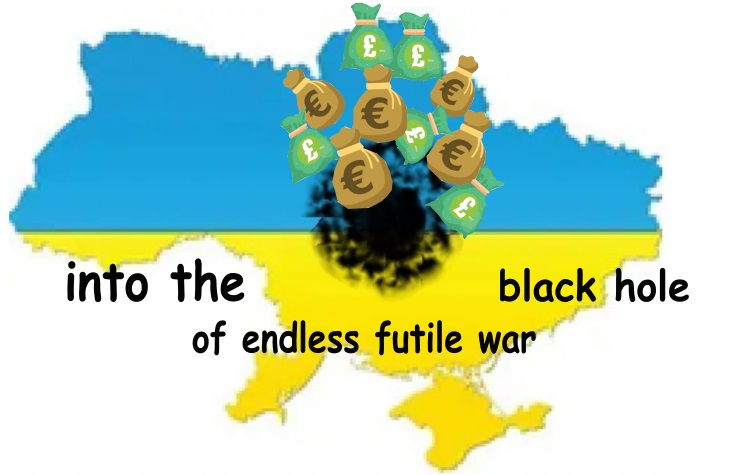
Von der Leyen pushes ahead with reparations loan for Ukraine as Belgium maintains its opposition.
Euro News, By Jorge Liboreiro, 03/12/2025
Ursula von der Leyen has offered sweeping guarantees for Belgium to agree to an unprecedented reparations loan for Ukraine. Belgian authorities say risks could be fatal. EU leaders will gather on 18 December to make a final decision. If no deal is found, the EU will resort to joint debt.
The European Commission will provide Belgium with sweeping guarantees to unblock a controversial reparations loan for Ukraine, Ursula von der Leyen has said, forging ahead with the plan despite risks deemed “disastrous” by Belgian authorities.
The guarantees, outlined in legal texts presented on Wednesday, consist of bilateral contributions by member states, a backstop by the EU budget, legal safeguards against retaliation and a new prohibition on transferring sovereign assets back to Russia.
It is the boldest and most comprehensive attempt by the Commission to overcome Belgium’s resistance before a crucial EU summit on 18 December. Ukraine has said it would need a fresh injection of foreign funding as early as spring next year…………………………………………..
An untested scheme
The reparations loan is von der Leyen’s preferred option to cover Ukraine’s financial and military needs for the next two years, estimated at €135 billion. The EU is meant to contribute at least €90 billion, with the rest backed by other Western allies, which do not include the United States, as it no longer provides external support.
Under the untested scheme, the Commission would channel the immobilised assets of the Russian Central Bank into a zero-interest line of credit for Ukraine.
Kyiv would be asked to repay the loan only after Moscow agreed to compensate for the damages caused by its war of aggression – a virtually unthinkable scenario.
The bulk of the assets, about €185 billion, are held at Euroclear, a central securities depository in Brussels. There are €25 billion in other locations across the bloc.
This means Belgium holds the cardinal vote in negotiations.
Since the start of discussions in September, Belgium has firmly demanded bulletproof and all-encompassing guarantees from other member states to shield itself against Moscow’s scorched-earth retaliation and prevent multi-billion-euro losses.
Another key worry is that the sanctions behind the assets, which are subject to renewal by unanimity, might be derailed by a single country’s veto. A premature lifting of the restrictions would release the Russian funds and precipitate the collapse of the loan.
The European Central Bank has declined to provide an emergency liquidity backstop to help governments raise the necessary cash to protect Euroclear.
Belgium’s unwavering resistance
Even before von der Leyen took the stage, Belgium dug its heels in.
Earlier on Wednesday, Belgian Foreign Minister Maxime Prévot said the reparations loan was “the worst” of the three available financial options to support Ukraine.
“Our door has always remained open and still is. However, we have the frustrating feeling of not having been heard. Our concerns are being downplayed,” Prévot said before heading into a ministerial meeting of NATO.
The Commission’s proposals “do not address our concerns in a satisfactory manner. It is not acceptable to use the money and leave us alone facing the risks,” he added, suggesting that he was aware of the content of the legal documents before they were made public by the head of the Commission.
Prévot said that for the loan to move ahead, his country would require guarantees that “go beyond” Euroclear and Belgium, easily exceeding €185 billion of the assets.
“We are not seeking to antagonise our partners or Ukraine,” he said. “We are simply seeking to avoid potentially disastrous consequences for a member state that is being asked to show solidarity without being offered the same solidarity in return.”
In her presentation, von der Leyen sought to address the Belgian reservations with broader guarantees – backed by both member states and the EU budget – that Euroclear will have liquidity at all times to honour the claim of the Russian Central Bank.
The guarantees will also cover any potential awards from arbitration and be complemented by safeguards to nullify retaliation against European property.
Additionally, the EU will introduce a novel measure to prohibit the return of sovereign assets to Russia. The law will be based on Article 122 of the treaties, which has been used only for economic emergencies, and approved by a qualified majority. In practice, it will defang individual vetoes and prevent a sudden removal of sanctions.
In yet another overture to Belgium, von der Leyen opened the door to using the entire pool of €210 billion in Russian sovereign assets across the bloc and invited other G7 allies, like Canada, the UK and Japan, to mimic the instrument.
However, it is unclear if the offering will be enough to convince Belgium.
However, it is unclear if the offering will be enough to convince Belgium.
Last week, Belgian Prime Minister Bart De Wever said that prolonging the sanctions by a qualified majority would “enhance the practical appearance that sanctions are open-ended, effectively permanent and thus expropriatory in character”.
“These risks are unfortunately not academic but real,” De Wever said.
If no deal is found on the reparations loan, the EU will resort to joint borrowing, as it did during the COVID-19 pandemic, von der Leyen said on Wednesday.
The issuance would amount to about €45 billion for 2026 alone.
The option of common debt, advocated by Belgium, would leave the Russian assets untouched and avoid any legal pitfalls. But the idea is opposed by the vast majority of member states because of the immediate impact it would have on national treasuries……………………………………………
In his scathing letter to von der Leyen, De Wever warned that moving forward with the reparations loan at this stage “would have, as collateral damage, that we, as the EU, are effectively preventing reaching an eventual peace deal”…………………….
Ambassadors will begin discussions on the legal texts later on Wednesday, following von der Leyen’s anticipated presentation. The goal is to have a deal when EU leaders meet in mid-December for a make-or-break summit, which means a very tight timeframe.
Adding to the pressure is an $8.1 billion programme that the International Monetary Fund (IMF) is meant to grant Ukraine. For the IMF to make a final decision, it will need firm commitments by European allies to ensure Kyiv’s macro-economic stability.
Strictly speaking, the main text of the reparations loan can be approved by a qualified majority, which means that, in theory, Belgium could be overruled. But officials and diplomats admit that such a scenario would be politically untenable.https://www.euronews.com/my-europe/2025/12/03/von-der-leyen-pushes-ahead-with-reparations-loan-for-ukraine-as-belgium-maintains-its-oppo
Theft of Russian wealth is tying the entire EU bloc to a sinking ship, or worse, all-out war.
Russian President Vladimir Putin has warned that any confiscation of Russian assets by the EU leadership – regardless of financial rhetorical packaging – will be viewed by Moscow as theft of sovereign wealth. Russia has vowed it will respond robustly with legal challenges under existing treaties to exact compensation. This is what Belgium is fearful of and why it is resisting von der Leyen’s loan reparation scheme.
In trying to get Belgium onboard, von der Leyen has written legal guarantees that all EU members will share any legal and financial repercussions.
The criminal, irresponsible Euro elites like von der Leyen, Kallas, Merz, Macron, and NATO’s Rutte, are lashing the EU financially to a sinking ship.
European Commission President Ursula von der Leyen is pushing ahead with a reckless plan to confiscate over €200 billion in Russia’s sovereign wealth for the purpose of propping up the corrupt NeoNazi Kiev regime and prolonging a futile proxy war.
It is hard to imagine a more crass course of action. Yet the so-called European leadership around Von der Leyen is zealously steering towards disaster. At least the hapless captain of the Titanic tried to avert collision with an iceberg. The Euro captains are heading full steam ahead.
Von der Leyen’s proposed scheme is fancifully called a “reparations loan” and pretends, through legalistic rhetoric, not to be a confiscation of Russia’s assets. But it boils down to theft. Theft to continue the bloodiest war in Europe since the Second World War, which marked the defeat of Nazi Germany.
Von der Leyen, a former German defense minister, is supported by other obsessively Russophobic Euro elites. The EU’s foreign minister Kaja Kallas, a former Estonian prime minister, asserts that the seizure of Russian money and pumping it into the Kiev regime is aimed at forcing Moscow to negotiate a peaceful end to the nearly four-year conflict. Such twisted logic is an Orwellian distortion of reality.
Belgium and other European states are extremely wary of the unprecedented and audacious move. Belgium, which holds the majority of frozen Russian wealth – some €185 bn – in its Euroclear depository, is anxious that it will be financially ruined if Moscow holds the EU liable for illegal seizure of wealth. Other EU members, like Hungary and Slovakia, are concerned that the Russophobic leadership is undermining any diplomatic initiatives by the U.S. Trump administration and the Kremlin to negotiate a peace settlement.
Russian President Vladimir Putin has warned that any confiscation of Russian assets by the EU leadership – regardless of financial rhetorical packaging – will be viewed by Moscow as theft of sovereign wealth. Russia has vowed it will respond robustly with legal challenges under existing treaties to exact compensation. This is what Belgium is fearful of and why it is resisting von der Leyen’s loan reparation scheme.
The European leaders are to hold a summit on December 18-19 to decide on the proposal. So desperate are the Russophobic elites that they have been assiduously piling political pressure on the Belgian government to relent in its opposition to go along with the scheme. In trying to get Belgium onboard, von der Leyen has written legal guarantees that all EU members will share any legal and financial repercussions. Thus, the unelected European Commission president is taking it upon herself to write a suicide note for the whole of Europe.
Essentially, the proposed loan reparation scheme is based on using Russian immobilized investments in EU banks as a guarantee to give €140 bn in an interest-free hand-out to Ukraine. The financial life-line is necessary because Ukraine is bankrupt after four years of fighting a proxy war on behalf of NATO against Russia.
Ukraine and its NATO sponsors have lost this conflict as Russian forces gather momentum with superior military force. But rather than meeting Russia’s terms for peace, the Euro elites want to keep on “fighting to the last Ukrainian”. To sue for peace would be an admission of complicity in a proxy war and would be politically disastrous for the European warmongers. In covering up their criminal enterprise and lies, they are compelled to keep the “defense of Ukraine” charade going.
Given the rampant graft and embezzlement at the core of the Kiev regime as indicated by the recent firing of top ministers and aides, it is certain that much of the next EU loan will end up in offshore bank accounts, foreign properties and being snorted up the noses of the corrupt regime.
Von der Leyen’s artful deception of theft claims that the Russian assets are not confiscated permanently but rather will be released when Moscow eventually pays “war damages” to Ukraine. In other words, the scheme is a blackmail operation, one that Russia will never comply with because it is premised on Russia as a guilty aggressor, rather than, as Moscow and many others see it, as acting in self-defense to years of NATO fueled hostility culminating in the CIA coup in Kiev in 2014 and weaponizing of a NeoNazi regime to provoke Russia. Therefore, under von der Leyen’s scheme, Russia’s frozen funds will, in effect, never be returned and, to add insult to injury, will have been routed through to the benefit of Kiev mafia.
Such a criminal move is highly provocative and dangerous. It could be interpreted by Moscow as an act of war given the huge scale of plunder of the Russian nation. At the very least, Russia will pursue compensation under international treaties and laws that could end up destroying Belgium and other EU states from financial liabilities. How absurd is that? Von der Leyen and her Russophobic ilk are setting up Europe for bankruptcy by stealing Russia’s wealth for propping up a corrupt NeoNazi regime that has already sacrificed millions of Ukrainian military casualties?
Alternatively, if the EU leadership does not get away with its madcap robbery scheme at the summit on December 18-19, the “Plan B” is for the EU 27 members to take out a joint debt from international markets to carry the Kiev regime through another two years of attritional war.
The insanity of the EU leaders is unfathomable. It is driven by ideological, futile obsession to “subjugate” Russia. Von der Leyen, as well as Germany’s Chancellor Friedrich Merz, are descendants of Nazi figures. For these people, there is an atavistic quest to defeat Russia and assert European “greatness”.
They lost their proxy war in Ukraine with much blood on their hands. But instead of desisting from their destructive obsession, they are desperately trying to find new ways to keep it going.
The criminal, irresponsible Euro elites like von der Leyen, Kallas, Merz, Macron, and NATO’s Rutte, are lashing the EU financially to a sinking ship. They are bringing the entire European bloc down with them, splintering as they go.
What these elites are doing is destroying the European Union as we know it, and they profess to uphold. Ironically, it is they, not Russia, that is the biggest enemy to democracy and peace in Europe.
‘A New Form of Genocide’: Gazans Feel Little Relief from Israeli Strangulation Since the Ceasefire.

December 6, 2025 By Tareq S. Hajjaj Republished from Mondoweiss, https://scheerpost.com/2025/12/06/a-new-form-of-genocide-gazans-feel-little-relief-from-israeli-strangulation-since-the-ceasefire/
It’s been nearly two months since the ceasefire was reached in Gaza. Hopes were high among the 2 million Palestinians in the besieged Strip that not only would the Israeli bombings stop, but that everything they had been deprived of for the past two years – food, clean water, adequate medicine and healthcare – would flood into Gaza to ease their struggles. The hopes of regaining a fragment of the life they knew before the war, have dissipated, as the reality of a “new genocide” sets in.
Though some aid has come into Gaza, and people have tried to restore some semblance of normalcy, the reality in Gaza is far from peacetime. Israeli bombs are still falling, people cannot return to their home, and sufficient food aid and medicines are still in short supply.
The strain being felt by Gaza’s institutions, particularly its hospitals, and by ordinary Gazans, remains alarmingly close to wartime conditions. The Government Media Office in Gaza says that the humanitarian situation has not changed during or after the ceasefire, contrary to Israeli claims, and that the siege on Gaza has continued, with border crossings remaining effectively closed. What little goods do enter Gaza, the government says, does not meet “even the minimal needs of the population.”
In the first month of the ceasefire, according to the UN, Israel rejected over 100 requests for the entry of humanitarian aid into Gaza. Today, the World Food Programme says that dietary diversity remains low, and roughly 25 percent of households in Gaza are still reporting eating only one meal daily.
Ismail al-Thawabteh, Director of the Government Media Office in Gaza, says Israel is trying to present a misleading image suggesting it allows the flow of goods. In reality, the amount entering Gaza does not exceed one-third of what was agreed upon in the humanitarian protocol of the ceasefire. “Instead of 600 trucks per day—the minimum needed to meet essential requirements—Israel permits only about 200 trucks, most of which carry limited-value commercial or aid items.”
The UN Office for the Coordination of Humanitarian Affairs (UN OCHA) has reported that agencies are still required to coordinate all entry of humanitarian aid convoys with Israeli authorities. For reference, between the 12th and 18th of November, OCHA said humanitarian organizations coordinated 51 missions with the Israeli authorities. Of those 51 missions, just over half (27) were actually facilitated into Gaza; five were cancelled, 15 were impeded and four were denied.
Palestinians in Gaza tell Mondoweiss that they are feeling “suffocated,” as authorities remain unable to resolve crises such as malnutrition, shortages of food and medicine, or provide even minimal protection against harsh weather conditions.
“This is a new form of genocide,” says Khalil al-Deqran, spokesperson for the Ministry of Health in Gaza. “The policy of refusing to allow in what is necessary for people’s survival mirrors what happened earlier, when food was withheld, and malnutrition was deliberately created.”
The Ministry of Health only receives about 25% of its basic needs, causing the condition of hospitals in Gaza, according to the spokesperson, to be “deplorable and difficult”, especially in winter, when large numbers of patients, particularly children, seek care. He notes that some pediatric wards are operating at five times their bed capacity, as children live in torn tents or on the streets, leading to widespread disease. “With Israel preventing the entry of shelter materials and reconstruction supplies, the health environment becomes even more dangerous, increasing mortality and the spread of illnesses.”
The Ministry of Health said that essential medications for chronic diseases such as hypertension, heart conditions, and diabetes, which affect 350,000 patients in Gaza, are still barred by Israel from entering the Strip. Infant formula also continues to be restricted, allowed only through a few traders and in minimal quantities. Israel also prevents the entry of critical hospital supplies, including electrical generators, lab equipment, imaging devices, incubators, intensive care units, and operating room equipment – all the essential supplies needed by Gaza’s already devastated hospitals to continue functioning. “The situation remains terrible and exceedingly difficult,” the spokesperson says. Israel has not committed to the humanitarian protocol, and what has been allowed in does not amount to a drop in the ocean of the health sector’s needs.”
“There are multiple cases of malnutrition across Gaza due to the lack of infant formula and the blocking of protein-rich foods such as meat, fish, eggs, and dairy. What enters today consists mainly of non-essential food items, which perpetuates malnutrition” the health ministry said.
“The majority of the trucks Israel allows in carry low-nutritional-value items such as processed foods, chocolate, soft drinks, and snacks, as an attempt to evade humanitarian obligations while keeping the population in a state of absolute food deprivation,” al-Thawabteh said.
According to al-Thawabteh, the Gaza Strip requires a consistent flow of essential goods: grains, flour, proteins, livestock, red and white meat, table eggs, nutritional supplements, shelter materials, construction supplies, agricultural inputs, and raw materials for local industries. He stresses that Israel treats these goods as “prohibited or heavily restricted items.”
By his measure, there have been no real improvements on the ground since the ceasefire. Instead, he says Gaza is witnessing a “deliberate engineering of a starvation policy,” in which Israel showcases images of aid trucks to appear compliant, while “in reality blocking essential supplies and rationing aid in ways that worsen the humanitarian crisis.” This behavior, he explains, “confirms that Israel uses the agreement as a political cover to prolong crises, not as a humanitarian or legal commitment toward civilians. The siege continues, restrictions continue, and the humanitarian infrastructure remains under immense pressure.”
‘The war is not over’
Ordinary families in Gaza are feeling the squeeze every day. Niveen al-Sharfa, a mother of five living in a tent in Gaza City, says nothing has changed since the ceasefire. Even when some goods are available in the markets, her family still cannot afford to buy them. “We expected that once the war ended and the ceasefire began, we would see reconstruction, open border crossings, improvements in hospitals, and the entry of winter essentials such as clothing, shelter, and other necessities. But none of this happened. We are still living in torn tents, and still far from our homes.”
Al-Sharfa recalls that during the war she lived in constant fear under bombardment, but says that even now she remains afraid of hearing at any moment that someone has been killed. “Nothing has changed… everything is the same,” she says.
Even those who experienced slight improvements in daily life after the ceasefire find their hopes diminished when looking at the broader picture.
Amer al-Sultan was displaced from his home in the Jabalia Camp in northern Gaza. He says that life has changed “a little” after the ceasefire in terms of the availability of some food— though prices remain high — unlike during the height of the war, when famine pushed people to eat the leaves off of trees. “I expected to return to my home, but unfortunately, I did not. My home lies inside the yellow zone, and this makes me feel every day that the war has not ended.”
“The world thinks the war is over, but as long as there is an army inside the yellow zone, the war is not over. Just last night, we woke up to the sound of bombardment, explosions, and gunfire in those areas. How can we believe the war has ended when we sleep and wake to the sound of bombs?”
Nidaa al-Dahdouh, a mother of two, sees no sign that the war has ended as long as her children are not living normal lives. She wants to see them going to school, instead of waking up in the morning to collect firewood or to stand in long lines for food aid. “When the war ends, I will see my children getting ready in the morning to go to school wearing warm clothes,” she says. “But so far, they are still suffering in tents and the cold that comes with it.”
“We hoped for safety after the war, that we would return to our homes, and feel that the endless killing had stopped. But none of that happened. We hoped that basic goods would return to their normal prices, but that did not happen either. Yes, some items are available—like fish, for example—but the price is extremely high, and I cannot afford it. So for me, it is as if it does not exist at all.”
Tareq S. Hajjaj is the Gaza Correspondent for Mondoweiss and a member of the Palestinian Writers Union. Follow him on Twitter/X at @Tareqshajjaj.
Bombed Chornobyl shelter no longer blocks radiation and needs major repair – IAEA
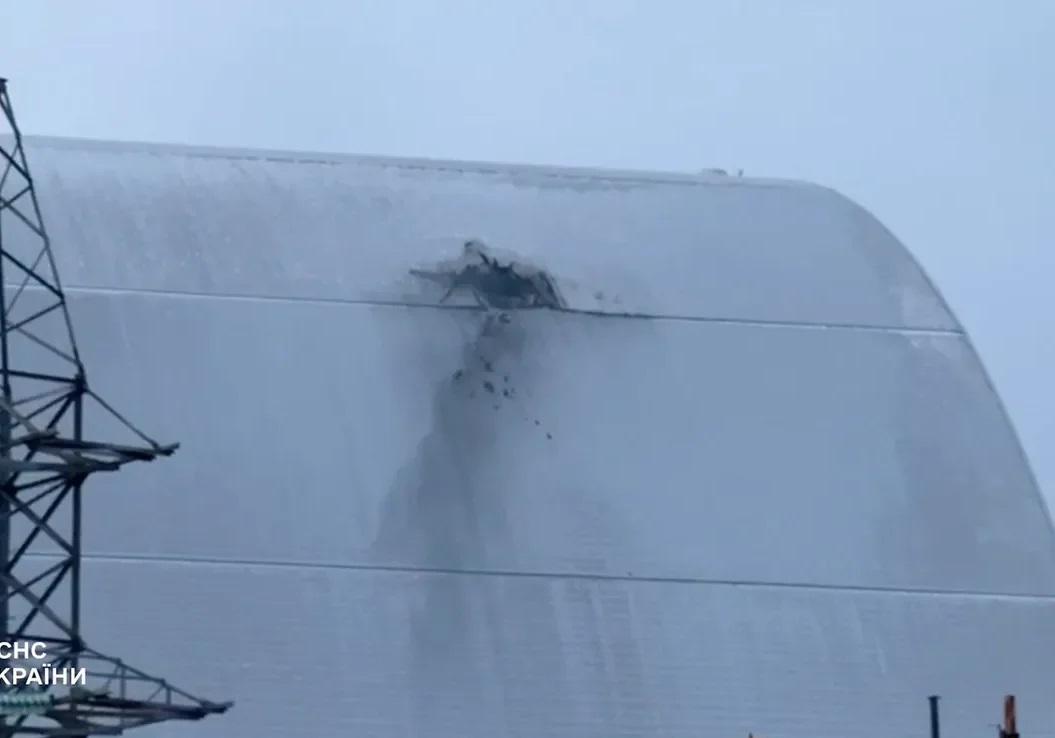
Drone attack that Ukraine blamed on Russia blew hole in painstakingly erected €1.5bn shield meant to allow for final clean-up of 1986 meltdown site.
Guardian staff and agencies, 6 Dec 25
The protective shield over the Chornobyl disaster nuclear reactor in Ukraine, which was hit by a drone in February, can no longer perform its main function of blocking radiation, the International Atomic Energy Agency (IAEA) has announced.
In February a drone strike blew a hole in the “new safe confinement”, which was painstakingly built at a cost of €1.5bn ($1.75bn) next to the destroyed reactor and then hauled into place on tracks, with the work completed in 2019 by a Europe-led initiative. The IAEA said an inspection last week of the steel confinement structure found the drone impact had degraded the structure.
The 1986 Chornobyl explosion – which happened when Ukraine was under Moscow’s rule as part of the Soviet Union – sent radiation across Europe. In the scramble to contain the meltdown, the Soviets built over the reactor a concrete “sarcophagus” with only a 30-year lifespan. The new confinement was built to contain radiation during the decades-long final removal of the sarcophagus, ruined reactor building underneath it and the melted-down nuclear fuel itself.
The IAEA director general, Rafael Grossi, said an inspection mission “confirmed that the [protective structure] had lost its primary safety functions, including the confinement capability, but also found that there was no permanent damage to its load-bearing structures or monitoring systems”.
Grossi said some repairs had been carried out “but comprehensive restoration remains essential to prevent further degradation and ensure long-term nuclear safety”……………………………https://www.theguardian.com/world/2025/dec/06/chornobyl-disaster-shelter-no-longer-blocks-radiation-and-needs-major-repair-iaea
South Korea’s nuclear submarine gamble raises prospect of underwater arms race in Asia.

Reuters, 5 Dec 25
- Summary
- South Korea’s nuclear subs could pressure Japan to develop similar capabilities
- Seoul’s ambitions align with US objectives to counter China’s influence
- North Korea warns Seoul’s plan could trigger “nuclear domino” effect
SEOUL/WASHINGTON/TOKYO, Dec 5 (Reuters) – South Korea’s pursuit of nuclear-powered submarines is gaining traction following President Donald Trump’s endorsement, ending decades of U.S. resistance in a move that could reshape Asia’s security landscape and escalate an underwater arms race.
Seoul has long sought to join the elite group of nations operating nuclear submarines to counter North Korea. Trump’s approval removed a key barrier by granting access to fuel under a nuclear agreement between the countries.
Still, South Korea’s rapidly developing programme could irk China and pressure Japan to develop similar capabilities, analysts and former military officials say.
“Submarines are highly effective attack systems. An arms race in the region is inevitable,” said Choi Il, a retired South Korean Navy submarine captain.
Seoul argues nuclear propulsion is crucial to counter North Korea’s undersea threats, including submarine-launched ballistic missiles. It has repeatedly said it will not acquire nuclear weapons and respects the non-proliferation regime.
South Korean President Lee Jae Myung on Wednesday described the deal as a major achievement from his meeting with Trump and said it would enhance security flexibility and defence autonomy.
North Korea claims to be developing similar capabilities, with state media showing leader Kim Jong Un inspecting what it said was a nuclear-powered submarine in March.
How advanced its programme is remains uncertain, but some analysts suspect Pyongyang is receiving Russian assistance, a possibility that South Korea’s military has said it is closely monitoring. Russia and North Korea have said they are beefing up defence cooperation, but have not provided details on technical cooperation on defence……………………………………………………… https://www.reuters.com/world/china/south-koreas-nuclear-submarine-gamble-raises-prospect-underwater-arms-race-asia-2025-12-05/
Ukraine’s Zaporizhzhia nuclear plant temporarily lost power overnight, IAEA says.
By Reuters, December 6, 2025, https://www.reuters.com/business/energy/ukraines-zaporizhzhia-nuclear-plant-temporarily-lost-power-overnight-iaea-says-2025-12-06/
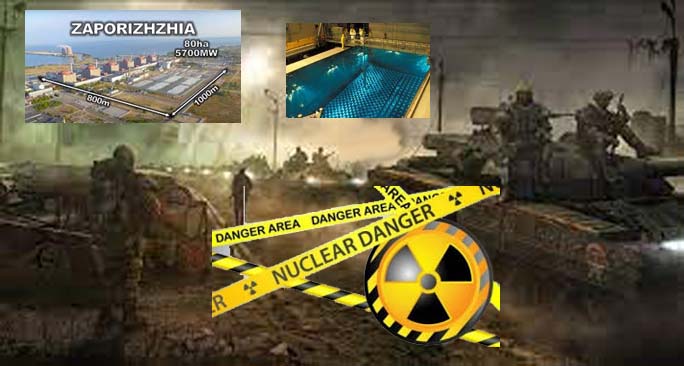
Dec 6 (Reuters) – Ukraine’s Zaporizhzhia nuclear power plant temporarily lost all off-site power overnight, the International Atomic Energy Agency said on Saturday, citing its Director General Rafael Mariano Grossi.
The nuclear plant, Europe’s largest, has been under Russian control since March 2022, when Russian forces overran much of southeastern Ukraine. It is not currently producing electricity but relies on external power to keep the nuclear material cool and avoid a meltdown.
The plant was reconnected to a 330-kilovolt (kV) power line after a half-hour outage, the IAEA said.
A 750 kV line that was also disconnected earlier was back in operation, the Russian-installed management of the plant said later on Saturday, and stable power supply had been restored.
Radiation levels remained normal, the management said.
Widespread military activities overnight affected Ukraine’s electricity grid and prompted operating nuclear power plants (NPPs) to reduce output, the IAEA added.
Reporting by Gnaneshwar Rajan and Yazhini M V in Bengaluru; Editing by Aidan Lewis and Bernadette Baum
Illegal drone shot down at nuclear submarine base
Officials are investigating an illegal drone which flew over the Atlantic coast base
Ap Correspondent, Independent UK, 05 December 2025
French authorities have launched an investigation into an unauthorised drone overflight of the nation’s nuclear-armed submarine base on the Atlantic coast.
The incident, confirmed by officials on Friday, involved multiple drones detected on Thursday night above the highly sensitive Île Longue base in Brittany, western France.
This strategic facility serves as the home port for France’s four nuclear ballistic missile submarines: Le Triomphant, Le Téméraire, Le Vigilant, and Le Terrible.
While French media reported several aerial intruders, military authorities have refrained from disclosing their exact number or type.
Defence Minister Catherine Vautrin confirmed that personnel at the base successfully intercepted the overflight. However, she did not specify whether this involved firing shots, electronic jamming, or other countermeasures. The identity of those responsible for the incursion remains unclear.
Ms Vautrin stated: “Any overflight of a military site is prohibited in our country. I want to commend the interception carried out by our military personnel at the Île Longue base.”
A number of European Union member countries have reported mysterious drone flights in their airspace in recent months. Some led to airport shutdowns, disrupting commercial flights. Others have been detected near or over military facilities………………………….. https://www.independent.co.uk/news/world/europe/drone-france-brittany-nuclear-base-b2879026.html
British Energy Ruled Out Nuclear At Heysham Due to Geological Fault.
Letter sent by Email today…https://lakesagainstnucleardump.com/2025/12/05/british-energy-ruled-out-nuclear-at-heysham-due-to-geological-fault/
Dear Lizzi Collinge MP
I am sure that you felt the earth move on December 4th along with everyone else in the region as there was a sudden movement along faults in the Morecambe bay area between Silverdale and Heysham. This was very scary for all concerned, we thought there had been a massive explosion in Milnthorpe and immediate thoughts went to Heysham’s dodgy old reactors.
SHUT DOWN OLD EMBRITTLED REACTORS AT HEYSHAM
Following on from our previous correspondence with you, the latest earthquake is a major reason why the old and embrittled reactors at Heysham should be mothballed – there would still be jobs on the site (maybe even more than now) for many years to come to ensure safe shut down and decommissioning.
GEOLOGICAL FAULT IS REASON BRITISH ENERGY SAID NO TO NEW BUILD AT HEYSHAM
The movement of the tectonic plates along the fault near Heysham on December 4th is also a major reason why there should be no new nuclear as advised by British Energy in 2002 and reported in the Lancashire Telegraph. We would suggest that MPs should ask for a copy of British Energy’s survey which found that a geological fault in the Heysham area rules out a Heysham 3 and 4. For the nuclear industry and local politicians to be ignoring this advice now in the context of a 3.3 earthquake in the Heysham area could be regarded as being reckless with the public’s safety.
Kind regards
Marianne, Radiation Free Lakeland
Fault rules out new build at Heysham, 18TH APRIL 2002
A GEOLOGICAL fault in the land next to Heysham 1 and 2 has ruled out the possibility of ever building a new nuclear power station at that site.
This week British Energy admitted it would be “impossible” to construct a Heysham 3 or 4.
Local environmentalists have recently been campaigning to stop an expansion of the area’s nuclear power capability fearing that Heysham could be chosen under the Government’s energy review.
But a British Energy survey has revealed that the vacant land has a geological fault which makes it unsuitable for development.
A spokesman said: “We have a certain amount of land but it is not suitable and a Heysham 3 or 4 has never been on the cards.
There are better places around the country to build new power stations.”
Embrittled Old Reactors
-
Archives
- February 2026 (233)
- January 2026 (308)
- December 2025 (358)
- November 2025 (359)
- October 2025 (376)
- September 2025 (258)
- August 2025 (319)
- July 2025 (230)
- June 2025 (348)
- May 2025 (261)
- April 2025 (305)
- March 2025 (319)
-
Categories
- 1
- 1 NUCLEAR ISSUES
- business and costs
- climate change
- culture and arts
- ENERGY
- environment
- health
- history
- indigenous issues
- Legal
- marketing of nuclear
- media
- opposition to nuclear
- PERSONAL STORIES
- politics
- politics international
- Religion and ethics
- safety
- secrets,lies and civil liberties
- spinbuster
- technology
- Uranium
- wastes
- weapons and war
- Women
- 2 WORLD
- ACTION
- AFRICA
- Atrocities
- AUSTRALIA
- Christina's notes
- Christina's themes
- culture and arts
- Events
- Fuk 2022
- Fuk 2023
- Fukushima 2017
- Fukushima 2018
- fukushima 2019
- Fukushima 2020
- Fukushima 2021
- general
- global warming
- Humour (God we need it)
- Nuclear
- RARE EARTHS
- Reference
- resources – print
- Resources -audiovicual
- Weekly Newsletter
- World
- World Nuclear
- YouTube
-
RSS
Entries RSS
Comments RSS
 nuclear-news