Russia Dangles Business Ties To U.S. at Europe’s Expense. Kremlin pitched White House on investments and industry to end war – today’s Wall Street Journal
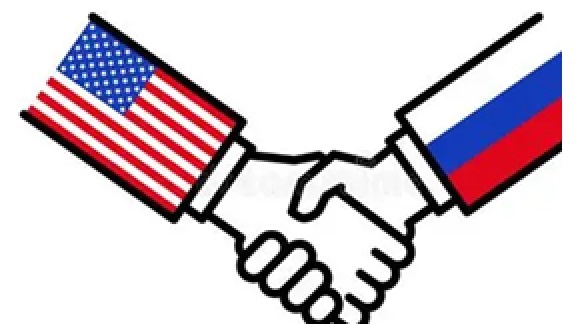
American and Russian business leaders were quietly anticipating that Witkoff and Dmitriev would deliver, positioning their companies to profit from peace.
2 Dec 2025 By Drew Hinshaw, Benoit Faucon , Rebecca Ballhaus , Thomas Grove and Joe Parkinson
Three powerful businessmen— two Americans and a Russian—hunched over a laptop in Miami Beach, ostensibly to draw up a plan to end Russia’s long and deadly war with Ukraine.
But the full scope of their project went much further, according to people familiar with the talks. They were privately charting a path to bring Russia’s $2 trillion economy in from the cold—with American businesses first in line to beat European competitors to the dividends.
At his waterfront estate, billionaire developer-turned-special envoy Steve Witkoff was hosting Kirill Dmitriev, head of Russia’s sovereign-wealth fund and Vladimir Putin’s handpicked negotiator, who had largely shaped the document they were revising on the screen. Jared Kushner, the president’s son-in-law, had arrived from his nearby home on an island known as the “Billionaire Bunker.”
Dmitriev was pushing a plan for U.S. companies to tap the roughly $300 billion of Russian central bank assets, frozen in Europe, for U.S.-Russian investment projects and a U.S.-led reconstruction of Ukraine. U.S. and Russian companies could join to exploit the vast mineral wealth in the Arctic. There were no limits to what two longtime adversaries could achieve, Dmitriev had argued: Their rival space industries, which raced one another during the Cold War, could even pursue a joint mission to Mars with Elon Musk’s SpaceX.
For the Kremlin, the Miami talks were the culmination of a strategy, hatched before Trump’s inauguration, to bypass the traditional U.S. national security apparatus and convince the administration to view Russia not as a military threat but as a land of bountiful opportunity, according to Western security officials. By dangling multibillion-dollar rareearth and energy deals, Moscow could reshape the economic map of Europe—while driving a wedge between America and its traditional allies.
Dmitriev, a Goldman Sachs alumnus, had found receptive partners in Witkoff—Trump’s longtime golfing partner—and Kushner, whose investment fund, Affinity Partners, drew billion-dollar investments from the Arab monarchies whose conflict with Israel he had helped mediate.
The two businessmen shared President Trump’s longheld approach to geopolitics. If generations of diplomats viewed the post-Soviet challenges of Eastern Europe as a Gordian knot to be painstakingly unraveled, the president envisioned an easy fix: The borders matter less than the business. In the 1980s, he had offered to personally negotiate a swift end to the Cold War while building what he told Soviet diplomats would be a Trump Tower across the street from the Kremlin, with their Communist regime as a business partner.
“Russia has so many vast resources, vast expanses of land,” Witkoff told The Wall Street Journal, describing at length his hopes that Russia, Ukraine and America would all become business partners. “If we do all that, and everybody’s prospering and they’re all a part of it, and there’s upside for everybody, that’s going to naturally be a bulwark against future conflicts there. Because everybody’s thriving.”
Red lines
When a version of the 28point plan leaked earlier this month, it drew immediate protests. Leaders in Europe and Ukraine complained it reflected mostly Russian talking points and bulldozed through nearly all of Kyiv’s red lines. They weren’t assuaged even after administration officials assured them that the plan wasn’t set in stone, worried that Russia— after violently redrawing European borders—was being rewarded with commercial opportunities.
As Western leaders convened to digest the plan, Poland’s prime minister Donald Tusk offered a pithy summary: “We know this is not about peace. It’s about business.”
For many in the Trump White House, that blurring of business and geopolitics is a feature, not a bug. Key presidential advisers see an opportunity for American investors to snap up lucrative deals in a new postwar Russia and become the commercial guarantors of peace. In conversations with Witkoff and Kushner, Russia has been clear it would prefer U.S. businesses to step in, not rivals from European states whose leaders have “talked a lot of trash” about the peace efforts, one of these people said: “It’s Trump’s ‘Art of the Deal’ to say, ‘Look, I’m settling this thing and there’s huge economic benefits for doing that for America, right?’” A question for history will be whether Putin entertained this approach in the interest of ending the war, or as a ploy to pacify the U.S. while prolonging a conflict he believes is his place in history to slowly, ineluctably win.
Trusted friends
One sign that he may be serious is that some of his mosttrusted friends, sanctioned billionaires from his St. Petersburg hometown—Gennady Timchenko, Yuri Kovalchuk and the Rotenberg brothers, Boris and Arkady—have sent representatives to quietly meet American companies to explore rare-earth mining and energy deals, according to people familiar with the meetings and European security officials. That includes reviving the giant Nord Stream pipeline, sabotaged by Ukrainian tactical divers, and under European Union sanctions.
Earlier this year, Exxon Mobil met with Russia’s biggest state energy company, Rosneft, to discuss returning to the massive Sakhalin gas project if Moscow and Washington gave the green light.
Elsewhere, a cast of businessmen close to the Trump administration have been looking to position themselves as new economic links between the U.S. and Russia.
Gentry Beach, a college friend of Donald Trump Jr. and campaign donor to his father, has been in talks to acquire a stake in a Russian Arctic gas project if it is released from sanctions. Another Trump donor, Stephen P. Lynch, paid $600,000 this year to a lobbyist close to Trump Jr. who is helping him seek a Treasury Department license to buy the Nord Stream 2 pipeline from a Russian state-owned company.
There is no evidence that Witkoff, the White House or Kushner are briefed on these efforts or coordinating them. A person familiar with Witkoff’s thinking said the envoy is confident that any settlement with Russia would benefit America broadly, not just a handful of investors.
Witkoff, who hasn’t traveled to Ukraine this year, is set to visit Russia for the sixth time this week and will again meet Putin. He insisted he isn’t playing favorites. “Ukrainians have fought heroically for their independence,” said Witkoff, who has tried to inspire Ukrainian officials with the idea of soldiers disarming to earn Silicon Valley-scale salaries operating American built AI data centers. “It is now time to consolidate what they have achieved through diplomacy,” he said.
‘Both sides’
“The Trump administration has gathered input from both the Ukrainians and Russians to formulate a peace deal that can stop the killing and bring this war to a close,” said White House spokesperson Anna Kelly. “As the President said, his national security team has made great progress over the past week, and the agreement will continue to be fine-tuned following conversations with officials from both sides.”
As Witkoff pursued talks with Dmitriev over nine months, some agencies inside the Trump administration had a limited view of his dealings with Moscow.
In the lead-up to an August summit in Alaska between Trump and Putin, Witkoff and Dmitriev discussed a prisoner exchange that would have been the largest bilateral swap in their countries’ history. The Central Intelligence Agency, which traditionally manages prisoner trades with Russia, wasn’t fully briefed on that proposed exchange. Nor was the State Department’s office for unjustly imprisoned Americans. The CIA didn’t return requests for comment. The State Department referred questions to the White House.
Career officials overseeing sanctions at the Treasury Department have at times learned details of Witkoff’s meetings with Moscow from their British counterparts.
In the days after Alaska, a European intelligence agency distributed a hard-copy report in a manila envelope to some of the continent’s most senior national security officials, who were shocked by the contents: Inside were details of the commercial and economic plans the Trump administration had been pursuing with Russia, including jointly mining rare earths in the Arctic.
Witkoff has worked closely with Vice President JD Vance and Secretary of State Marco Rubio. But the special envoy for Ukraine, former Lt. Gen. Keith Kellogg, has all but been frozen out of serious talks, and said he is leaving.
To understand the administration’s Russia negotiations, The Wall Street Journal spoke to dozens of officials, diplomats, and former and current intelligence officers from the U.S., Russia and Europe, and American lobbyists and investors close to the administration.
The picture that emerges is a remarkable story of business leaders working outside the traditional lines of diplomacy to cement a peace agreement with business deals.
‘ We keep on knocking at the door and coming up with ideas.’
Witkoff was just weeks into his new job as President Trump’s Russia and Ukraine negotiator when his office asked the Treasury Department for help allowing a sanctioned Russian businessman to visit Washington.
Kirill Dmitriev, an investment banker with degrees from Harvard and Stanford, spoke Witkoff’s preferred language: business. He had invited Witkoff to Moscow in February and escorted him into a three-hour meeting with Putin to discuss the Ukraine war. But Dmitriev was persona non grata in the U.S, blocked by the Treasury in 2022 for his role leading his country’s Sovereign Wealth Fund, which it called a “slush fund for Vladimir Putin.”
Trump had told Witkoff he wanted the war to end and the administration was willing to take the risk of welcoming Putin’s emissary to Washington. Treasury Secretary Scott Bessent had questions about the unique request, but ultimately signed off.
Dmitriev arrived at the White House on April 2 and presented a list of multibilliondollar business projects the two governments could pursue together. At one point, Secretary of State Marco Rubio told Dmitriev that Putin needed to demonstrate he was serious about peace. But Dmitriev felt his businesslike rapport was breaking through. “We can transition i n v e s t m e n t trust into a political role,” he said in an unpublished interview that month.
In April, Dmitriev welcomed Witkoff to the St. Petersburg presidential library for another three-hour meeting with Putin. Witkoff took his own notes, relying on a Kremlin translator, then briefed the White House from the U.S. Embassy. That same month, European national security advisers planned to meet Witkoff in London to integrate him into their peace process. But he was busy with his other portfolio— negotiating a cease-fire in Gaza—and couldn’t make it. Afterward, one European official asked Witkoff to start speaking with allies over the secure fixed line Europe’s heads of state use to conduct sensitive diplomatic conversations. Witkoff demurred, as he traveled too much to use the cumbersome system.
Dmitriev and Witkoff meanwhile were chatting regularly by phone about increasingly ambitious proposals. The U.S. and Russia were discussing major agreements on oil-andgas exploration and Arctic transportation, Dmitriev told the Journal. “We believe that the U.S. and Russia can cooperate basically on everything in the Arctic,” he said. “If a solution is found in Ukraine, U.S. economic cooperation can be a foundation for our relationship going forward.”
Into position
American and Russian business leaders were quietly anticipating that Witkoff and Dmitriev would deliver, positioning their companies to profit from peace.
Exxon, billionaire investor Todd Boehly and others have explored buying assets owned by Lukoil, Russia’s second-largest oil producer. The U.S. sanctioned Lukoil in October to increase pressure on Moscow, prompting the company to put its overseas assets up for sale. Elliott Investment Management eyed buying a stake in a pipeline that carries Russian natural gas into Europe.
More recently, Kremlin–linked businessmen Timchenko, Kovalchuk and the Rotenbergs have been offering U.S. counterparts gas concessions in the Sea of Okhotsk, as well as potentially four other locations, according to a European security official and a person familiar with the talks. Russia has also mentioned rare-earth mining opportunities near the massive nickel mines of Norilsk and in as many as six other Siberian locations that are still unexploited, these people said.
Beach, Trump Jr.’s college friend, was in talks to acquire 9.9% of an Arctic LNG project with Novatek, Russia’s secondlargest natural gas producer— which is partly owned by Timchenko — if the U.S. and U.K. remove sanctions on it, according to drafts of contracts reviewed by the Journal.
In a statement, Beach said that partnering with Novatek would “strongly benefit any company committed to advancing American energy leadership,” and that his company, America First Global, “actively seeks investment opportunities that strengthen American interests around the world.” He said he “has never worked with Steve Witkoff” but is “extremely grateful” for the efforts Witkoff and others are making to end the war in Ukraine. Trump Jr. has told people he isn’t doing business with Beach.Lynch, the Miami-based investor, had been asking the U.S. government to allow him to bid on the sabotaged Nord Stream Pipeline 2 if it came up for auction in a Swiss bankruptcy proceeding. Lynch, who in 2022 was given a license by Treasury to complete the acquisition of the Swiss subsidiary of Russia’s Sberbank, had been seeking a license for the pipeline since the Biden administration, but in April dialed up his lobbying efforts by hiring Ches McDowell, a friend of Trump Jr. He would pay Mc-Dowell’s firm $600,000 over the next six months. Lynch’s representatives reached out to Witkoff for a meeting.
The road to Miami
On Aug. 6, Witkoff flew to Moscow, at Putin’s invitation, for a meeting prepared only a few days in advance. Dmitriev walked him through Zaryadye Park overlooking the Moskva River, then escorted him to the Kremlin for another three-hour session with Russia’s leader. Putin mentioned wanting to meet with Trump personally. He gave Witkoff a medal, the Order of Lenin, to pass to a CIA deputy director whose mentally unwell son was killed fighting for Russia in Ukraine.
The next day, Witkoff dialed into a videoconference with officials and heads of state from top European allies, and explained the outlines of what he understood to be Putin’s offer. If Ukraine would surrender the remaining roughly 20% of Donetsk province that Russia had failed to conquer, Moscow would forfeit its claim to Zaporizhzhia and Kherson provinces. The European officials were confused. Did Putin mean he would withdraw his troops from Zaporizhzhia and Kherson, as Witkoff was suggesting? Or, more likely, was Putin merely promising to not conquer the thousands of square miles of those two provinces that, after years of bloody fighting, remained in Ukrainian hands? Either way, Ukraine was skeptical about the value of a promise from Putin.
Witkoff wanted to strike while the iron was hot and hold a summit without delay. Dmitriev was optimistic Witkoff had taken Russia’s sensitivities on board: “We believe Steve Witkoff and the Trump team are doing a great job to understand the Russian position to end the conflict,” he told the Journal, a few days before.
Failed summit
The Aug. 15 summit fell apart almost as soon as it began. Witkoff, Rubio, and Trump arrived on Air Force One, meeting Putin, his longtime adviser Yuri Ushakov, and Foreign Minister Sergei Lavrov. Putin launched into a 1,000-year history lecture on the unity of the Russian and Ukrainian people. The two sides canceled a lunch and an afternoon session where they were meant to check through their other issues, like the exchange of prisoners. Witkoff left uncertain where things stood, but hopeful talks would accelerate soon.
In October, President Zelensky flew to Washington, hoping to secure long-range, U.S.made Tomahawk cruise missiles. His military wanted to cripple Russian refineries, pushing Moscow to negotiate on better terms. By the time Zelensky arrived, Trump had spoken to Putin and decided not to offer the Tomahawks. Witkoff encouraged Ukrainian officials to try another tack: They should ask Trump for a 10-year tariff exemption. It would supercharge their economy, he said. “I’m in the deal settlement business. That’s why I’m here,” he told the Journal. “We keep on knocking at the door and coming up with ideas.”
The New Officer Class: How Silicon Valley Executives Were Sworn Directly into the Heart of the U.S. Army

These officers are now positioned to advise the Army on its technological future – defining requirements and strategy – while their own companies compete for, and hold, massive contracts to fulfill those very needs. This grants Palantir, Meta, and OpenAI an unparalleled level of insider influence, effectively allowing them to shape the market they dominate.
A strategic analysis of Detachment 201 and the unprecedented fusion of corporate and military power
1 December 2025 Andrew Klein, https://theaimn.net/the-new-officer-class-how-silicon-valley-executives-were-sworn-directly-into-the-heart-of-the-u-s-army/
In a move that formalises the military-industrial complex for the digital age, the U.S. Army has quietly sworn a group of powerful tech executives directly into its ranks as high-ranking officers. The creation of “Detachment 201,” a new reserve unit, and the direct commissioning of leaders from Palantir, Meta, and OpenAI to the rank of Lieutenant Colonel, marks a fundamental shift in how national security is conceived and who wields influence within the Pentagon. This is not a consulting agreement; it is a structural integration that blurs the line between corporate profit and national interest, with profound implications for the future of war, artificial intelligence, and democratic oversight.
The Who and What of Detachment 201
Established in June 2025, Detachment 201 – its name a reference to the HTTP “201 Created” status code – is designed to embed Silicon Valley’s innovation culture directly into the Army’s procurement and strategic planning processes. The executives, appointed as part of the “Executive Innovation Corps,” were chosen for their specific corporate expertise.
The following details the key figures and their corporate ties:
Name, Corporate Role, Notable Corporate-Military Ties
- Shyam Sankar Chief Technology Officer (CTO) of Palantir Palantir holds a $759 million Army AI contract; Sankar was a key recruiter for the unit.
- Andrew “Boz” Bosworth CTO of Meta Meta has partnered with defence contractor Anduril on augmented reality products for soldiers.
- Kevin Weil Chief Product Officer of OpenAI OpenAI holds a $200 million contract with the Pentagon for “frontier AI” for national security.
- Bob McGrew Former OpenAI research lead; advisor to Thinking Machines Lab Brings deep expertise in advanced AI models to strategic military projects .
The conditions of their service are notably different from those of a traditional military officer:
- Rank: Directly commissioned as Lieutenant Colonel (O-5).
- Training: No standard basic training required, though they must pass physical fitness tests and marksmanship training.
- Service Commitment: A minimal commitment of 120 hours per year, with the option to perform duties remotely.
- Stated Role: To provide high-level advice on “broader conceptual things” like talent management and applying technology to make the force “leaner, smarter, and more lethal.”
The Implications: A Web of Influence and Control
This initiative is far more than a symbolic gesture. It creates a series of structural conflicts and strategic shifts that demand public scrutiny.
The Blurring of Corporate and National Interest
The Army has stated that “firewalls” are in place to prevent conflicts of interest. However, this claim is difficult to reconcile with the reality of the appointments. These officers are now positioned to advise the Army on its technological future – defining requirements and strategy – while their own companies compete for, and hold, massive contracts to fulfill those very needs. This grants Palantir, Meta, and OpenAI an unparalleled level of insider influence, effectively allowing them to shape the market they dominate.
The Accelerated Militarisation of AI
The explicit goal is to leverage these companies’ expertise to increase the “lethality” of the force. This partnership accelerates the integration of AI into warfare, from AI-powered battlefield management systems to technologies for “soldier optimisation.” The ethical consequences are already visible: OpenAI has loosened its previous policies against military work to pursue government contracts, demonstrating how the pursuit of profit and patriotism can jointly override earlier ethical commitments.
The Architecture of “Silent” Algorithmic Control
This partnership has been framed as an act of “silent patriotism,” where service is rendered through code and algorithms. This embeds a new form of control within national security. When the power of frontier AI is combined with the vast surveillance and data analysis capabilities of companies like Meta and Palantir, it creates an infrastructure for social and battlefield control that is both pervasive and difficult to scrutinise. The executives, now in uniform, become the architects of this system.
A “Cosplay” Command and its Cultural Cost
The appointments have been criticised as “cosplay” and have raised concerns about a two-tiered military system. The image of wealthy tech elites receiving high rank without the traditional burdens and sacrifices of military service is deeply demoralising to career soldiers. It risks cementing a public perception of a privileged and unaccountable tech elite wielding undue power, both in the commercial and military spheres.
Conclusion: An Unaccountable Fusion
Detachment 201 is not a temporary experiment. An Army spokesperson stated this is being done “ahead of wartime so that we can prepare and deter,” a clear signal that this is a long-term preparatory move for a perceived future conflict. It represents the culmination of the military-industrial complex, evolving into a tech-military complex where the same companies that influence public discourse and social life are also directly shaping the tools of war.
This fusion occurs with minimal public debate and oversight, creating a self-reinforcing loop of influence, procurement, and strategy that operates largely in the shadows. The question is no longer if Silicon Valley will shape the future of warfare, but whether anyone outside of this new officer class will have a say in how it is done.
“Kill Them All” Controversy Explodes: Denied Order, War-Crime Alarms and a White House Scramble to Throw Others Under the Bus
By: Joshua Scheer, 2 Dec 25, https://scheerpost.com/2025/12/02/kill-them-all-controversy-explodes-denied-order-war-crime-alarms-and-a-white-house-scramble-to-throw-others-under-the-bus/
He has a lot of things to do?! Are you kidding me? This is what a leader of the Department of War looks like? Shirking his responsibility and trying to get out of what amounted to a war crime. Needless to say, what a way to throw someone under the bus to save your own skin. He did say he approved of the action, so …
Also, to respond to Pete H. about “fake stories” and that we’re attacking heroes — no, SIR, we are after you. You are not a hero; you are a fool who, like many before you, has been given a position that you dismiss.
More from him here: “It was exploded in fire or smoke. You can’t see anything,” the Pentagon head said. “You got digital … this is called the fog of war.”
The fog of war does not protect this, Pete, and ultimately it won’t protect you or your boss for your release of drug kingpins and the murder of “drug-running” fishermen.
Here is Pete at the Cabinet meeting today:
As reported by The Hill, Rep. Jason Crow (D-Colo.) said, “This administration has a long history of asking people to do things that are reckless or lawless, and then throwing them under the bus and shifting blame. And there’s no doubt that that seems to be what’s happening here.”
With my congressman Ted Lieu adding: “I served on active duty as a JAG [judge advocate general] for four years, and then an additional 21 years in the reserves, and let me be very clear: Killing shipwrecked survivors is a war crime.”
No doubt that’s what’s happening. Jason Crow is one of the Democrats who asked members of the armed forces not to follow illegal orders — and now we know why. For more on that read Soldiers Must Disobey Unlawful Orders Under Trump — It’s Their Legal Duty, by Marjorie Cohn. Discussing things like the My Lai Massacre and such.
Here is former Air Force Secretary Frank Kendall on MSNBC, first noting that there was a report — denied by the White House — of a verbal order to “kill them all.” He went on to say this is a “textbook example of a war crime,” adding that after WWII, the U.S put on trial and executed a U-boat commander for similar actions, and that the treatment of shipwrecked sailors is clearly laid out in the manual. Here is that show:
I end with this, from a previously unreported 2016 video reported by CNN, with Pete Hegseth saying that the U.S. military “won’t follow unlawful orders from their commander in chief,” and describing the refusal of illegal commands as part of the military’s ethos and standards.
Of course, his tone has changed quite a bit, hasn’t it? Please stand up, Pete, and leave. Here is that whole video. It’s long but maybe a good way to see how he has morphed over the years. https://www.youtube.com/watch?v=8eUE4OQ2QV0
A line crossed, a standard shattered
3 December 2025 Michael Taylor, https://theaimn.net/a-line-crossed-a-standard-shattered/
In the stark, unforgiving waters of the Caribbean, the United States crossed a line from which it will be difficult to return.
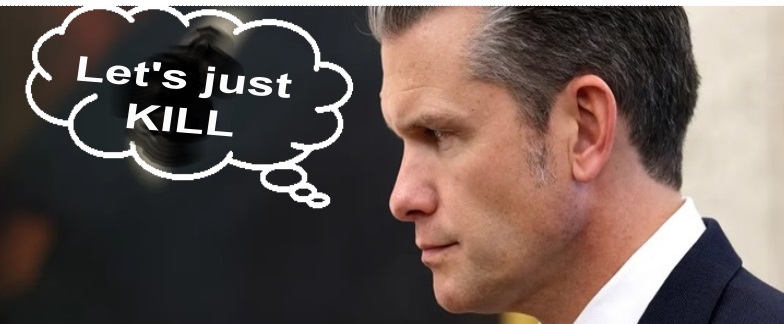
That line was crossed with two chilling words allegedly spoken by Secretary of Defense Pete Hegseth – “kill everybody” – followed by the deliberate execution of two unarmed survivors clinging to the wreckage of a suspected narcotics vessel they had just been fired upon.
This was not tough policy.
It was not “self-defence,” as the White House claimed in a statement so threadbare it insulted the intelligence of the nation and the world.
By every moral and legal standard the United States once professed to champion, it was a summary execution.
It was murder.
Let us dismantle the fiction immediately. “Self-defense” implies an imminent threat. A person clinging to splintered wood in open water, after their vessel has been destroyed, presents no such threat. They are combatants rendered hors de combat – out of combat. The Law of Armed Conflict, the Rules of Engagement drilled into every service member, and the fundamental tenets of humanity all scream the same command: you do not fire on the helpless. This was not a split-second decision in a hot firefight; it was a deliberate order from the highest level of the Pentagon to kill defenseless individuals.
Secretary Hegseth, a figure whose previous commentary has often glorified a cartoonish, hyper-aggressive vision of American power, seems to have mistaken the U.S. military for a personal vengeance squad. The mission was interdiction. By all accounts, it was successful – the boat was stopped. The suspects were in the water. At that point, the lawful options are clear: capture and detain, or if logistically impossible, leave them to be retrieved by their own forces or coastal authorities. The one unthinkable, illegal option is to become judge, jury, and executioner from an office in the Pentagon.
The damage here is catastrophic, and it unfolds in layers.
First, it is a deep moral stain. It announces to the world that under this administration, America has abandoned the principle that even its enemies possess an inherent dignity and a right to surrender. America has done the very thing they have historically accused rogue states and terrorists of doing.
Second, it is a tactical and strategic disaster. Every potential adversary, from naval militias to guerrilla forces, now has a potent new recruitment pitch: “The Americans will show you no mercy. They will kill you even if you surrender. Fight to the death.” It endangers every U.S. service member in future engagements, stripping them of the legal and ethical shield that the rules of war are meant to provide.
Third, it shreds the credibility of the U.S. military as a professional institution. The military chain of command exists precisely to prevent such barbarism. The fact that this order was reportedly given, and reportedly followed, suggests a terrifying corrosion of legal and ethical training. Who transmitted the order? Who pulled the trigger? They, too, bear responsibility, but the paramount guilt lies with the Secretary who allegedly issued a manifestly unlawful command.
If talk in Washington is correct, this is not a scandal about policy differences; it is about the crime of murder. Secretary Hegseth is unfit for his office and must be immediately relieved of duty. Furthermore, a full, independent criminal investigation – not an internal Pentagon review – must be convened. If the facts are as reported, he must be charged accordingly.
To do anything less is to become complicit. It is to declare that the United States now stands for the law of the sea only when it is convenient, and for the law of the jungle when it is not. America’s strength has never flowed from ruthlessness, but from their unwavering claim to a higher standard. That standard has not just been compromised; in those bloody waters, it was deliberately and fatally sunk. America must recover it, and that process begins with holding Pete Hegseth accountable to the fullest extent of the law.
International tribunal finds Israel guilty of genocide, ecocide, and the forced starvation of the Palestinians in Gaza.

Mondoweiss, By Marianne Dhenin November 27, 2025
The International People’s Tribunal on Palestine held in Barcelona presented striking evidence of Israel’s forced starvation of the Palestinian people and the deliberate destruction of food security in Gaza.
The International People’s Tribunal on Palestine convened on November 22 and 23 in Barcelona. The event brought together organizers, human rights advocates, and legal experts and offered a platform for survivors of the ongoing assault on Gaza to present evidence of Israel’s international crimes. After two days of testimony, jurors returned their verdict: Israel, the United States, and other Western powers are guilty of the crimes of genocide, ecocide, and the forced starvation of the Palestinian people.
“The mass killings, deliberate starvation, systematic destruction of civilian infrastructure, environmental devastation, and the targeting of hospitals, shelters, schools, and places of refuge were carried out as a matter of state policy, and with full knowledge of their fatal consequences,” said head juror Ceren Uysal, reading from the verdict as the tribunal closed.
Hosted by the International League of Peoples’ Struggle, International People’s Front, and People’s Coalition of Food Sovereignty (PCFS), the tribunal offered a quasi-judicial platform for advocates and survivors of Israel’s ongoing genocide to present evidence and legal arguments related to the crimes committed against the Palestinian people. It follows in a tradition of popular forums seeking justice and accountability where institutions have failed to provide it, including previous tribunals on recent crimes in Gaza.
It came as Israel continues to commit violence in Palestine. Israel has violated the U.S.-brokered ceasefire in effect since October 10, 2025, at least 497 times, killing more than 340 people, according to the Gaza Government Media Office. On November 17, the United Nations Security Council endorsed President Donald Trump’s plan for an international force that he will lead to oversee the continued occupation of Gaza, drawing condemnation from legal experts and rights groups, who argue the plan violates Palestine’s right to self-determination and will fail to protect Palestinians.
Against this backdrop, the International People’s Tribunal repudiated the status quo. It offered striking evidence for Israel’s guilt, particularly for the forced starvation of the Palestinian people and the undermining of their food security. “The strategy of using food as a weapon has been going on for a long time in Palestine and Lebanon, but now it is intensified,” Razan Zuayter, PCFS global co-chairperson, told Mondoweiss. Zuayter also chairs the Arab Group for the Protection of Nature (APN), which endorsed the tribunal.
Over the course of the two-day event, more than a dozen witnesses made this case. Farmers testified that Israeli forces had razed their lands, uprooting trees, killing livestock, and blackening the soil. One witness, who testified anonymously for fear of reprisal, described an attack Israeli forces committed on their land in May 2024. “A group of bulldozers and tanks attacked our area and destroyed a set of chicken farms for meat and egg production,” they said. “The stench of death and foul odors spread throughout the place, forcing us to flee.”
Musheir El Farra wept on the stand on November 23, recounting Israeli attacks on his hometown of Khan Younis that killed more than 200 members of his extended family. …………………………………………………………………………………………………………………………………………………………….. https://mondoweiss.net/2025/11/international-tribunal-finds-israel-guilty-of-genocide-ecocide-and-the-forced-starvation-of-the-palestinians-in-gaza/
No Quarter: The White House’s New ‘War’ Lets the President Kill First — and Pardon Drug Lords Later
December 2, 2025, By: Joshua Scheer, https://scheerpost.com/2025/12/02/no-quarter-the-white-houses-new-war-lets-the-president-kill-first-and-pardon-drug-lords-later/
With the president claiming that we are in an armed conflict with the cartels — and with the AP reporting from a memo it obtained from the administration — the bar is being set incredibly low so that any president can create an “enemy” out of anyone.
Here is some of what the memo said from the AP: “The President determined that the United States is in a non-international armed conflict with these designated terrorist organizations… The United States has now reached a critical point where we must use force in self-defense and defense of others against the ongoing attacks by these designated terrorist organizations.”
The AP also reported the backlash from a number of people, including Michael Schmitt, a former Air Force lawyer and professor emeritus at the U.S. Naval War College, with him saying, “I can’t imagine anyone, no matter what the circumstance, believing it is appropriate to kill people who are clinging to a boat in the water,” and Schmitt added, “That is clearly unlawful.” He also noted that “it has been clear for well over a century that you may not declare what’s called ‘no quarter’ — take no survivors, kill everyone.”
Because of this, right now in Washington the call is for a war-crimes investigation. With the hypocrisy on full display, no matter your political leanings, it is a joke that our President props up a narco-trafficking, unapologetic strongman and yet is willing to go to war with a country he disagrees with politically. The drug war is not needed — its cost, both human and financial, is obscene — and it is much cheaper and more humane to treat drugs as addiction and disease.
But drugs, in this case, are just a pretext for bombing your rivals and enemies. In 2015, we spent 25 billion on the war on drugs, and that was ten years ago; to keep our healthcare subsidies it would have cost 32 billion. This doesn’t seem like a real choice; we just love a good war.
One of those calling for investigation is Virginia Senator Tim Kaine saying on CBS Face the Nation Sunday, “If that reporting is true, it’s a clear violation of the DoD’s own laws of war, as well as international laws about the way you treat people who are in that circumstance,”
He also spoke about his time in Central America and asked the same important question: What’s this really about — the oil? He went on to discuss the hypocritical pardoning actual drug kingpins:
And, needless to say, the offensive duplicitous double standard on full display pardoning of drug kingpin Juan Orlando Hernández proves that this administration only cares about “armed conflicts” with its chosen enemies. It certainly doesn’t care about the threat posed by massive drug traffickers such as this man — whom they have now effectively allowed back into the business. As Hernández himself once said: “[Let’s] stuff the drugs right up the noses of the gringos.”
I will add here, but not diverge: Kaine brought up the fact that oil is a motivating factor. Here is a member of Congress explaining that point, as reported by Common Dreams:
US Rep. María Salazar (R-Fla.) said there were three reasons why “we need to go in” to the South American country. The first, she said, is that “Venezuela, for the American oil companies, will be a field day.”
Progressives on the Hill point out that we have heard this before regarding our invasion of Iraq, which at the time we were told would cost $50 billion and be paid for by oil profits — yet, as of a report from Harvard, it has become a $3 trillion war.
To swing back to today and the current war crimes the White House is standing by the strike. “Admiral Bradley worked well within his authority and the law to ensure the boat was destroyed and the threat to the United States of America was eliminated,” Press Secretary Karoline Leavitt said Monday.
“This administration has designated these narco-terrorists as foreign terrorist organizations,” she continued. “The president has the right to take them out if they are threatening the United States of America, if they are bringing illegal narcotics that are killing our citizens at a record rate, which is what they are doing.”
You can watch her whole press conference here:
Leavitt also said that Hegseth had discussions with members of Congress who were concerned about both the strike and the potential war-crime implications. However, he quickly pivoted to posting memes about the situation — one of which I’ve included below. Needless to say, this behavior is typical of this administration: do whatever they want, defend the action, try to calm people down, and then do whatever they want again.
This “leader” needs to be at a tribunal to answer for killing survivors of this attack — there’s not much more to say. It’s clear that $1 trillion for the military is far too much. We have to ask these questions because if we keep flooding the military with money, we have to justify it — and that justification can lead to actions like this, killing whomever is deemed an enemy. Honestly, we are living in 1984. We’ve been heading down this road for a while, but it has never been so clear.
I remember this quote from the show the west wing discussing war crimes and tribunals and such, “All wars are crimes“
No solutions for nuclear waste – no new nuclear power plants!
Greenpeace Switzerland, November 30, 2025
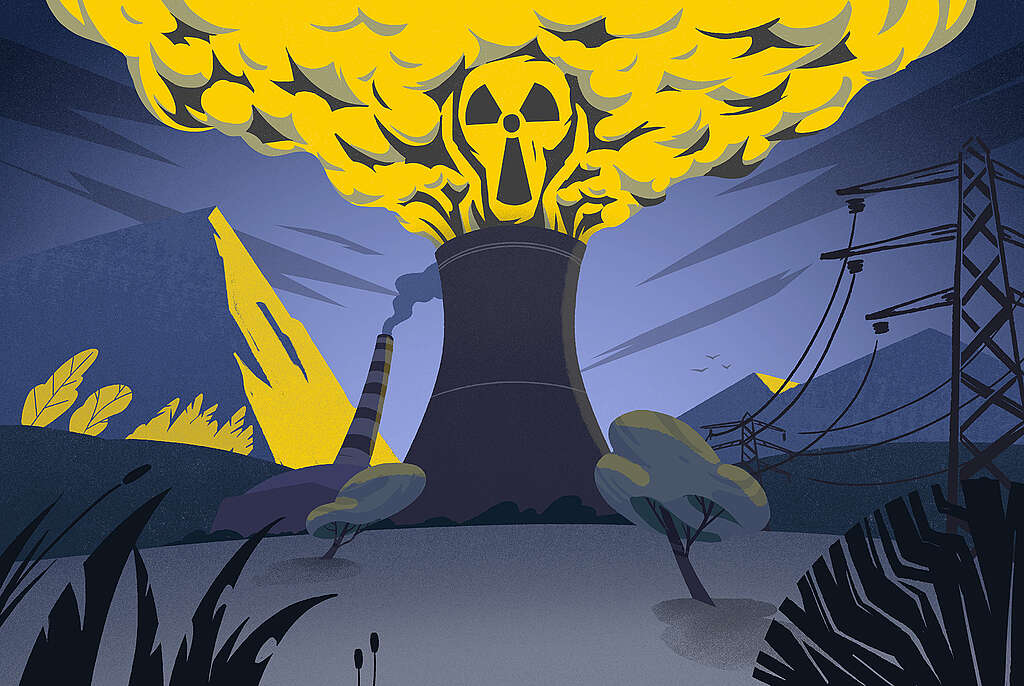
To date, there is no long-term safe solution for the storage of nuclear waste anywhere in the world. This is shown in a new study commissioned by Greenpeace Switzerland. It makes clear that the option planned in Switzerland—burying the nuclear waste in a clay layer north of the cantons of Zurich and Aargau—is fraught with numerous uncertainties.
Here are three reasons why Switzerland must phase out nuclear power as quickly as possible and reduce the production of highly radioactive waste.
1. Burying nuclear waste is not a solution
The Greenpeace study summarizes the findings of over 800 scientific papers on the deep geological disposal of highly radioactive nuclear waste from the last 15 years. It reveals several new problems that are still poorly understood even by experts. These include phenomena such as the mutual weakening of various safety barriers, as well as processes (such as heat and radiation exposure, colloids, cracks, etc.) that could accelerate the spread of radioactive materials in the soil and groundwater.
Overall, it is clear that none of the “solutions” discussed so far for the deep geological disposal of these highly radioactive materials – neither in clay nor in granite formations – can guarantee that the radioactivity will remain safely contained in the long term. This finding is particularly worrying given that the Federal Council is considering a return to nuclear energy.
2. Swiss deep geological repository does not meet safety requirements
The report questions the safety of the planned deep geological repository. The National Cooperative for the Disposal of Radioactive Waste (Nagra) intends to store the highly radioactive waste in thick-walled steel containers, which are to be embedded in an Opalinus Clay layer at a depth of approximately 900 meters. The repository is designed to contain the radioactivity for one million years.
However, the study shows that certain processes could undermine the safety of the repository after only 1,000 or 2,000 years. Given these uncertainties, the optimism of the project’s proponents seems disconcerting.
The Federal Council also seems keen to present the public with a final plan as quickly as possible – for political and financial reasons. In other words, the problem should be resolved as quickly as possible in order to revive nuclear energy in Switzerland.
This is dangerous: We must not make any hasty decisions.
3. The safest way: No new waste – therefore no nuclear power
The reality is that Switzerland currently lacks a safe solution for the long-term storage of high-level radioactive waste. Continuing to pursue the planned deep geological repository in the Northern Lägern region, despite so many doubts, is not a good idea.
Furthermore, there is no disposal strategy whatsoever for a potential new reactor – a point that neither the Federal Council nor the proponents of nuclear energy ever openly address.
Given this situation, we must stop the production of highly radioactive waste as quickly as possible and prevent the problem from worsening through new nuclear power plants. Therefore, please sign our petition: https://www.greenpeace.ch/de/handeln/atomkraft-nie-wieder/
Trump’s buried complicity in lost US proxy war against Russia.

Walt Zlotow, West Suburban Peace Coalition Glen Ellyn IL 2 Dec 25
Trump boasted he’d end the war destroying Ukraine in one day if re-elected. He claimed it was all Biden’s war that Trump had nothing to do with. If only Trump had been reelected in 2020, he claims, there would have been no war gutting Ukraine as a functioning state with tens of millions fled, dead, deserted, injured. The US wouldn’t have squandered over $180 billion to achieve this dubious Biden achievement.
Trump, like every world leader, gets to make history but not rewrite history. Joe Biden was president when Russia launched its Special Military Operation to liberate the Donbas Ukrainians from destruction by Kyiv and keep NATO missiles off Russia’s borders. Biden essentially triggered that totally unnecessary war now in the final stages of Ukraine’s collapse. Biden also sabotaged the peace deal nearly achieved two month in that would have ended the war with no new lost Ukrainian territory.
That will get Biden history’s everlasting condemnation. But Trump also deserves history’s condemnation for ramping up the conditions that led to war under successor Biden. During his first term from 2017 to 2021 Trump kept alive long standing US dream of bringing Ukraine into NATO, a red line Russia warned America not to cross for over a decade prior. Trump authorized repeated NATO military exercises in Ukraine, which effectively made Ukraine a de facto NATO member. Trump allowed new NATO bases in Poland and Romania, adding to Russian angst over NATO encroachment.
Trump reversed a sensible Obama policy of not arming the Kyiv government to complete its destruction of Donbas Ukrainian separatists. In his 4 years Trump oversaw a fourfold increase of Kyiv military might. Had Trump simply reversed senseless US expansion of NATO beginning under Bill Clinton in 1999, and forced Germany, France and UK to honor the Minsk Agreements granting regional autonomy to Donbas Ukrainians, Biden may not have had the conditions or momentum to provoke the February 2022 Russian invasion.
Trump pretends he’s the White Knight bringing peace to a Ukraine wrecked solely by Biden’s perfidy. He should own up to his first term complicity and make peace to atone for his own sins destroying Ukraine as well as those of Joe Biden.
USA’s Risky Nuclear Policies
Alan J. Kuperman, Ph.D., Associate Professor, LBJ School of Public AffairsCoordinator, Nuclear Proliferation Prevention Project (www.NPPP.org)University of Texas at Austin, 2 Dec 2025
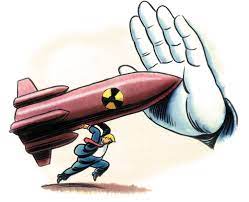
At least six recent policy changes threaten to increase proliferation risk:
Uranium enrichment. The US had opposed spread of this technology for half a century because any facility for peaceful enrichment of reactor fuel could also produce highly enriched uranium for nuclear weapons. But now the White House is exploring uranium enrichment in at least two countries – Saudi Arabia and South Korea – that previously have expressed desire for nuclear weapons.
Reprocessing waste. The US also had opposed this technology for half a century because it enables purification of plutonium for nuclear weapons. Now the White House “supports” South Korea starting to reprocess and is subsidizing US commercialization of this technology by a company seeking to export “on a global scale.”
“Fast” nuclear reactors. The US also is subsidizing commercial development of this exotic technology that originally was invented to maximize production of weapons-grade plutonium. It makes no sense for nuclear energy, since all prior efforts by countries to commercialize this technology have failed for 50 years – due to exorbitant cost and frequent fires.
HALEU fuel. Radically departing from all existing US nuclear powerplants, which use fuel that is unsuitable for weapons, the US government now is promoting HALEU fuel – both for domestic and exported reactors – which scientists warn could readily be used to make bulky but effective nuclear weapons.
Online refueling. A traditional barrier to proliferation has been that fuel could not be removed from nuclear powerplants while they were operating, so inspectors could simply focus on refueling operations every year or two during shutdowns. However, the US government now is promoting reactors with online refueling, which enable fuel to be removed at any time, making it hard or impossible to detect diversion.
Reduced security. The US government also is seeking to cut costs for smaller reactors by reducing or eliminating defenses against attack, such as exclusion zones and armed guards, which is especially dangerous for plants fueled by HALEU or plutonium – both suitable for nuclear weapons.
A Wiser Path
The responsible growth of nuclear energy requires a more prudent course, based on time-tested policies and technologies. Enrichment should be limited to existing producers, which would not only inhibit proliferation but also reduce costs via economies of scale. Reprocessing should be opposed outright, since all versions enable purification of plutonium for weapons, according to six US national laboratories. Fast reactors should be avoided because they foster proliferation, raise costs, and create unique safety risks. HALEU fuel should be capped below 10 percent enrichment, not the current 20 percent, to block a relatively easy path to the bomb. Online refueling should be avoided so inspectors have better chance to detect and thereby deter diversions. Security standards should be sustained or upgraded, which would favor bigger reactors that also produce less expensive electricity. In short, the future of nuclear energy should largely resemble its recent past, which could promote security and affordability better than misguided new policies.
Fighting the Good Fight
This year, NPPP and a few others have tried to sound the alarm. In July, I helped organize a letter to Congress from experts including ex-officials under five US presidents, calling for a halt to policies that “could unintentionally threaten the economic viability of nuclear energy and increase risks of nuclear weapons spreading to adversaries.” I also published an article in Scientific American, after the bombing of Iran, arguing that, “It is far preferable to prevent the spread of nuclear-weapon-usable technologies in the first place.”
Regrettably, these sporadic efforts have hardly made a dent against the onslaught of disinformation, campaign contributions, and cronyism from purveyors of bomb-prone nuclear technology. Any hope of success requires a much larger, more coordinated, and better funded campaign – but charitable foundations so far have dismissed such proposals. I intend to keep trying, so please let me know if you can offer suggestions or financial support.
Paul Leventhal Fellows
Finally, a reminder that the NPPP continues to nurture the next generation of nuclear security professionals by awarding an annual Leventhal Fellowship for graduate students that intern at an organization dedicated to preventing the spread of weapons of mass destruction.
Alan J. Kuperman, Ph.D., Associate Professor, LBJ School of Public AffairsCoordinator, Nuclear Proliferation Prevention Project (www.NPPP.org)University of Texas at Austin
Trump and Rubio’s Venezuela Play: Regime Change Under the Guise of the Drug War.
December 2, 2025, By: Joshua Scheer, https://scheerpost.com/2025/12/02/trump-and-rubios-venezuela-play-regime-change-under-the-guise-of-the-drug-war/
There is a running theme today, but it is vital to understand that what is happening in Venezuela is unacceptable. I have added reporting from Venezuelanalysis.com about the Venezuelan government, which has strongly condemned Donald Trump’s declaration that its airspace is “closed in its entirety,” calling the move a “colonialist threat” and an illegal, unjustified interference in national sovereignty. Caracas emphasized that it will not accept orders or threats from a foreign power.
For more on this war in Venezuela, I’m sharing this from The American Prospect, which discusses Rubio’s intentions in the country:
“But Rubio, long a proponent of Venezuelan regime change, didn’t want things to end there. Appeasing his home state’s exile ring is a rather parochial origin story for an international incursion, but it happens to be true.
Trump was reportedly not buying the pitch until Rubio related it to something the president’s terminally 1980s brain recognizes: the war on drugs. Vaporizing alleged drug boats through summary executions, including what appears to be a patently illegal order for a second strike, has a visceral appeal for Trump. The inconvenient problem is that almost no fentanyl is produced in Venezuela, but fortunately for Rubio, Trump doesn’t read past the first page of the briefing book — and also doesn’t read that page either.”
Adding to the situation on the ground, The Guardian reports that during a phone call with Maduro, Trump said: “You can save yourself and those closest to you, but you must leave the country now.” Trump reportedly made this statement to a leader he has branded a narco-terrorist and baselessly accused of emptying his country’s prisons to send its most violent criminals to the U.S.
Needless to say, the only way this seems to go away is to somehow appease the president maybe a bribe, he certainly appears to respond to that. Otherwise, we need to stop this charade, and we’ll keep posting stories about it until it’s over.
Iran reiterates demand for US accountability for its role in Israeli aggression in June.

The US joined the 12-day long Israeli aggression against Iran in June, targeting three of its nuclear sites in Fordow, Natanz, and Isfahan
November 29, 2025 by Abdul Rahman, https://peoplesdispatch.org/2025/11/29/iran-reiterates-demand-for-us-accountability-for-its-role-in-israeli-aggression-in-june/
Iran’s permanent representative to the United Nations, Amir Saeid Iravani, on Thursday November 27, wrote a letter to the UN Security Council announcing Iran’s intentions to seek US accountability for its role in Israeli aggression on Iran in June this year.
“The Islamic Republic of Iran once again reiterates its call on the UN Secretary General and the Security Council to take appropriate measures, consistent with their responsibility for the maintenance of international peace and security, to ensure accountability of both the US and the Israeli regime for” their grave violations of international laws, the letter reportedly says.
Iran has already written two such letters to the UN secretary general and the UN Security Council in the past as well. Thursday’s letter follows public recognition by the US Air Force on Wednesday of their role in Israeli aggression on Iran in June.
On June 22, during the 12-day Israeli war against Iran, US fighter jets accompanied B-2 bombers in the so-called Operation Midnight Hammer and bombed three Iranian nuclear sites of Fordow, Natanz and Isfahan.
Though the US claimed the attack damaged Iran’s nuclear capacities, it was widely reported that the attack failed to achieve its real objective.
Iran has denied it ever wants to develop nuclear weapons. However, it asserts its right to have nuclear enrichment as a signatory of the Nuclear non-Proliferation Treaty (NPT).
The US-Israeli attacks were in complete violation of Iranian sovereignty under the provisions of the UN Charter, International humanitarian law, International Atomic Energy Agency (IAEA) protocols and the NPT, Iran has claimed.
The Israeli and US acts of aggression were “directed against the sovereignty and territorial integrity of the Islamic Republic of Iran, in blatant violation of article 2 (4) of the UN Charter. This aggression included deliberate attacks against civilians and civilian objects” Iran claims and demands accountability and compensation for the same.
“The US is under an obligation to make full reparation for the injuries caused by the said violations against Iran and its citizens, including any material moral damage. This includes an obligation to make restitution and compensate for the damage caused thereby, under established international law,” Iravani’s letter says.
June war
Apart from financial compensation Iran has also sought “individual criminal responsibility of any US officials and individuals in grave breaches of international humanitarian law, including for the crime of aggression,” during the June war.
On June 13, Israel began a bombing campaign against several Iranian cities and nuclear facilities accusing it of developing nuclear weapons. The Israeli strikes which went on for 12 days, killed over a thousand people including some of the country’s prominent scientists and top military officials.
Iran denied Israeli allegations and retaliated to its aggression with long range missiles causing damage in Tel Aviv and several other cities. Scores of Israelis were also killed in Iranian retaliations.
The US joined the Israeli bombings in Iran. On June 22, its B-2 bombers targeted three of Iran’s nuclear sites in an attempt to destroy its alleged capacity to build nuclear bombs.
In a discussion in the Security Council on June 22, the US defended its attacks on Iranian nuclear sites claiming it was part of its “mutual security arrangements” with Israel.
However, Iran rejected the US claims calling the attacks a violation of its territorial integrity and US obligations under the UN Charter and other international law. It announced its right to retaliate against and seek remuneration from the US.
Iran retaliated to the US strikes by launching strikes on its military base in Qatar a day after.
A ceasefire was announced by the president Donald Trump on Monday, June 23, and officially agreed upon on June 24, which marked the end of military hostilities.
On several occasions since June, Iran has criticized the UN Security Council for its selective criticisms and its failure to uphold its basic duty to maintain world peace and security.
Iran has noted how when it comes to Israel and the US, the UN fails to hold them accountable for their repeated violations of its charter and other international laws.
1 This Month

of the week – Shut Down Drone Warfare!


Tell the Ukrainian Government to Drop Prosecution of Peace Activist Yurii Sheliazhenko

Petition to revoke the licensing of the Near Surface Nuclear Disposal Facility (NSDF) at Chalk River. https://www.ourcommons.ca/petitions/en/Petition/Details?Petition=e-7247
To see nuclear-related stories in greater depth and intensity – go to https://nuclearinformation.wordpress.com
-
Archives
- April 2026 (44)
- March 2026 (251)
- February 2026 (268)
- January 2026 (308)
- December 2025 (358)
- November 2025 (359)
- October 2025 (376)
- September 2025 (257)
- August 2025 (319)
- July 2025 (230)
- June 2025 (348)
- May 2025 (261)
-
Categories
- 1
- 1 NUCLEAR ISSUES
- business and costs
- climate change
- culture and arts
- ENERGY
- environment
- health
- history
- indigenous issues
- Legal
- marketing of nuclear
- media
- opposition to nuclear
- PERSONAL STORIES
- politics
- politics international
- Religion and ethics
- safety
- secrets,lies and civil liberties
- spinbuster
- technology
- Uranium
- wastes
- weapons and war
- Women
- 2 WORLD
- ACTION
- AFRICA
- Atrocities
- AUSTRALIA
- Christina's notes
- Christina's themes
- culture and arts
- Events
- Fuk 2022
- Fuk 2023
- Fukushima 2017
- Fukushima 2018
- fukushima 2019
- Fukushima 2020
- Fukushima 2021
- general
- global warming
- Humour (God we need it)
- Nuclear
- RARE EARTHS
- Reference
- resources – print
- Resources -audiovicual
- Weekly Newsletter
- World
- World Nuclear
- YouTube
-
RSS
Entries RSS
Comments RSS
 nuclear-news