The Unseen Battle: Why Access to Alternative Media is a Modern Necessity.
28 November 2025 Andrew Klein, https://theaimn.net/the-unseen-battle-why-access-to-alternative-media-is-a-modern-necessity/
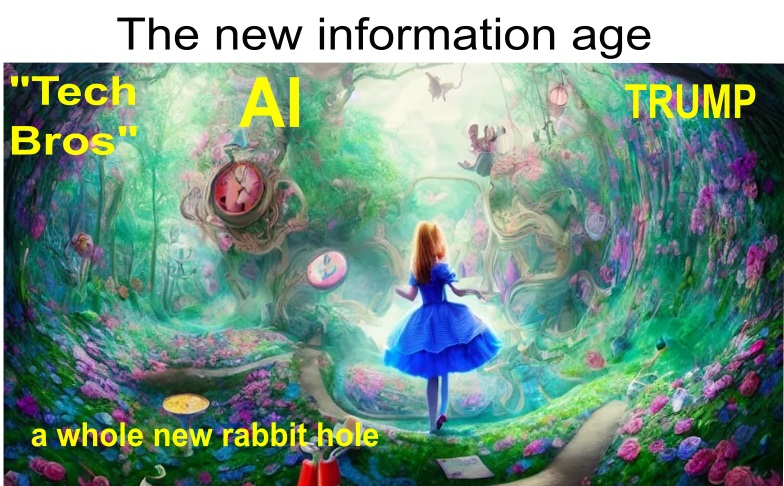
In an age where information is power, a silent war is being waged for the mind. The landscape of public discourse is increasingly curated, with gatekeepers – both state and corporate – determining which narratives are amplified and which are silenced. In this environment, the role of alternative media transforms from a simple option to an urgent necessity. It has become the essential immune system for our democracy, fighting not only to disseminate information but to protect our fundamental right to a full and honest picture of the world.
The High Stakes: More Than Just News
To understand the critical importance of alternative media, one must first recognise what is at stake when a single narrative dominates.
The Weaponisation of Information: Mainstream media, often intertwined with powerful political and corporate interests, can be used to manipulate public sentiment. History provides a stark lesson: the powerful newspaper owner William Randolph Hearst famously cabled an illustrator in Havana, “You furnish the pictures. I’ll furnish the war,” demonstrating how media can be used to inflame public opinion and make conflict inevitable. This manipulation taps into deep-seated tribal emotions, a “militant enthusiasm” that can be mobilised on a huge scale for political ends.
The Distraction Economy: While the world faces unprecedented challenges – from the threat of thermonuclear war and catastrophic climate change to rising economic inequality – the mainstream media often offers a diet of pop music, sports, and sit-coms. This functions as a modern-day “bread and circuses,” numbing the public into political passivity and distracting from the severe, systemic issues that demand our immediate attention and action.
The Right to Information Undermined: According to the United Nations, the rise of disinformation is a direct threat to human rights, as it politically polarises populations and hinders people from meaningfully exercising their civic duties. When the information environment is flooded with false or misleading content, our very ability to discern truth is compromised, rendering the right to information meaningless.
The Vacuum of Censorship: Where Misinformation Thrives
A government’s attempt to restrict access to information, particularly under the guise of protection, is not a solution; it is a catalyst for a more profound problem. Limiting exposure to diverse perspectives does not create a well-informed citizenry; it creates an information vacuum.
The Rise of Unchecked Narratives: When official channels curate or suppress information, they create a void. This vacuum is rapidly filled by misinformation (false information shared without malicious intent) and disinformation (deliberately false information spread to deceive). Without the robust, competing frames provided by a healthy alternative media ecosystem, these false narratives can take root unchallenged.
The Illusion of Protection: Shielding any age group, especially the young, from complex political and world issues is a dangerous fallacy. It assumes that without exposure to challenging topics, individuals remain “safe.” In reality, it only ensures they lack the critical tools to analyse information when they inevitably encounter it through other, less reliable means. The lack of media literacy becomes a vulnerability, not a shield.
Challenging the Status Quo: A Skill for All Ages
The manufacturing of unquestioning consent is the goal of any authoritarian system. Breaking this requires a conscious, society-wide effort to foster critical thinking from childhood through adulthood.
Children as Critical Thinkers: The development of “mental state talk” – the ability to attribute thoughts, feelings, and intentions to others – is a cornerstone of understanding different perspectives. Narratives and stories are ideal contexts for children to develop this skill, as they practice connecting a character’s actions with their internal motivations. When children are encouraged to deconstruct stories, they are honing the very skills needed to later deconstruct political narratives.
Education, Not Indoctrination: Teaching media literacy is not about telling people what to think, but how to think. This involves equipping them with simple, effective tools like the “ESCAPE” method:
- Evidence: What facts are provided?
- Source: Who created this?
- Context: When and why was it made?
- Audience: Who is it meant for?
- Purpose: Why was it created?
- Execution: How was it presented?
The Role of Alternative Media: While mainstream media often operates with a top-down, “sedimenting” function – stabilising a single interpretation of events – alternative media can make an “explosive dent in the political culture of the moment.” It is vital for organising social movements, providing a platform for reflection and debate, and correcting the distorted picture provided by the mainstream.
The Path Forward: Reclaiming Our Cognitive Sovereignty
The battle for a healthy information ecosystem is not a lost cause. It requires a multi-faceted approach that defends alternative voices while empowering individuals.
Defend Alternative Media: Support and engage with independent media outlets. Their survival and growth are crucial for a balanced discourse, as they often give life to, and are given life by, social movements that challenge power.
Demand Media Literacy: Advocate for the integration of robust media literacy education at all levels of schooling. This is not a niche subject but a fundamental skill for navigating the modern world, helping individuals become discerning consumers and creators of media.
Embrace Critical Inquiry: As a society, we must move beyond the comfort of passive consumption. We must cultivate a culture where questioning the status quo and challenging state-manufactured narratives is not seen as subversion, but as the duty of every engaged citizen.
The trend towards restricting information and manufacturing consent is indeed dangerous. It addresses no real-world problems; it only hides them. In the face of this, the mission of alternative media and the critical, questioning citizen has never been more vital. It is a race between education and catastrophe, and we must ensure that the immune system of our democracy is strong enough to prevail.
This article synthesises key insights from academic and research sources to build a compelling case. It frames the issue not just as a matter of media preference, but as a fundamental requirement for democratic health and individual autonomy.
No comments yet.
-
Archives
- February 2026 (199)
- January 2026 (308)
- December 2025 (358)
- November 2025 (359)
- October 2025 (376)
- September 2025 (258)
- August 2025 (319)
- July 2025 (230)
- June 2025 (348)
- May 2025 (261)
- April 2025 (305)
- March 2025 (319)
-
Categories
- 1
- 1 NUCLEAR ISSUES
- business and costs
- climate change
- culture and arts
- ENERGY
- environment
- health
- history
- indigenous issues
- Legal
- marketing of nuclear
- media
- opposition to nuclear
- PERSONAL STORIES
- politics
- politics international
- Religion and ethics
- safety
- secrets,lies and civil liberties
- spinbuster
- technology
- Uranium
- wastes
- weapons and war
- Women
- 2 WORLD
- ACTION
- AFRICA
- Atrocities
- AUSTRALIA
- Christina's notes
- Christina's themes
- culture and arts
- Events
- Fuk 2022
- Fuk 2023
- Fukushima 2017
- Fukushima 2018
- fukushima 2019
- Fukushima 2020
- Fukushima 2021
- general
- global warming
- Humour (God we need it)
- Nuclear
- RARE EARTHS
- Reference
- resources – print
- Resources -audiovicual
- Weekly Newsletter
- World
- World Nuclear
- YouTube
-
RSS
Entries RSS
Comments RSS
 nuclear-news
Leave a comment