Risks of Restarting Duane Arnold nuclear plan
October 1, 2025, Sierra Club, Iowa Chapter
Risks of Restarting Duane Arnold Nuclear Plant and Iowa’s Renewable Energy Future
Sierra Club Iowa Chapter urges legislators and the public to oppose the restart of the Duane Arnold nuclear plant and to support Iowa’s transition to safe, clean, and renewable energy sources.
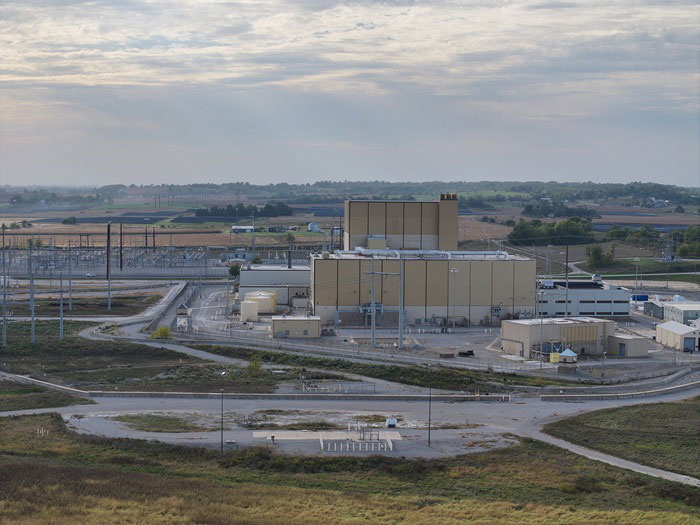
On September 29, 2025, the Iowa Chapter of the Sierra Club hosted a press conference to address NextEra Energy’s proposal to restart the Duane Arnold nuclear plant, which has been in decommissioning since 2020. Experts in nuclear energy, public health, and environmental law provided insight into the risks of nuclear power and Iowa’s proven success with renewables.
To see the recording of the press conference: Iowa’s Energy Future – Nuclear Risks vs. Renewable Solutions
To see the presentation slides:
Renewables vs. Nuclear in Iowa by Mark Z. Jacobson
Analysis of Changes in Local Health Near Duane Arnold Nuclear Plant by Joseph Mangano
The press conference was held to address NextEra Energy’s proposal to restart the Duane Arnold nuclear plant in Iowa, which has been in decommissioning since 2020. The company has requested federal approval to transfer connections from three planned solar projects to support the nuclear restart. The goal of the press conference was to inform the public about this proposal, its broader implications for Iowa’s energy future, and to provide clear, fact-based information about the challenges and alternatives to nuclear energy.
Restarting Duane Arnold poses significant safety, environmental, and economic risks. The plant’s GE Mark I reactor design is decades old and has known safety flaws, and components may have degraded during the five years of decommissioning. Nuclear energy generates highly radioactive spent fuel that remains dangerous for hundreds of thousands of years, and routine plant operations can impact local communities’ health, including increased cancer rates and infant mortality. Delays in decommissioning the Duane Arnold plant increase safety and financial risks, while the potential use of public funding raises concerns about taxpayers bearing the cost. Additionally, the abandonment of previously planned solar projects shifts resources away from proven renewable energy solutions, further undermining Iowa’s clean energy future.
Speakers highlighted that Iowa has the tools and proven capacity to meet its energy needs safely, affordably, and sustainably through renewable energy sources like wind and solar. Experts emphasized that the state can continue to lead with clean energy while avoiding the safety and financial risks of nuclear power. This amplified importance of science backed decision-making and public participation to ensure Iowa’s energy future is secure, clean, and renewable.
“Iowa now gets nearly 79% of its electricity from wind, water, and solar. Despite that, electricity prices here are about three cents per kilowatt-hour below the national average. The idea that renewables raise costs is simply a myth, in fact, they keep prices low,” said Mark Z. Jacobson, Director of the Atmosphere/Energy Program at Stanford University.
“Before Duane Arnold began operating, cancer rates in nearby counties were 6.5% below the state average. But after decades of operation, those same counties showed cancer rates more than 12% higher. That translates to nearly 500 additional cancer cases among local residents under age 40,” said Joseph Mangano, Executive Director of the Radiation and Public Health Project.
“Nuclear power is not clean or renewable. Uranium mining leaves radioactive waste, reactors routinely leak tritium into groundwater, and the spent fuel remains dangerous for hundreds of thousands of years with no solution in sight,” said Wally Taylor, Conservation Chair and Legal Chair of the Iowa Chapter of the Sierra Club.
“The Duane Arnold reactor uses the same GE Mark I design as the Fukushima reactors that melted down in 2011. This is an old, well-documented, and dangerous design, so flawed that even in the 1970s, engineers warned it could lead to a devastating accident. Fukushima proved those warnings were justified,” said Don Safer, Co-Chair of the Sierra Club Grassroots Network Nuclear Free Team.
More about the Speakers:……………………………………………….. https://www.sierraclub.org/iowa/blog/2025/10/risks-restarting-duane-arnold-nuclear-plan
No comments yet.
1 This Month


18 March Webinar @ 1 PM EST: An Assessment of SMR Projects: The Case of Canada
register for the zoom:
https://us02web.zoom.us/webinar/register/WN_o8BIIOUvQ2ONJR1nta65DQ#/registration


of the week – STOP SMALL MODULAR REACTORS IN CANADA
To see nuclear-related stories in greater depth and intensity – go to https://nuclearinformation.wordpress.com
-
Archives
- March 2026 (139)
- February 2026 (268)
- January 2026 (308)
- December 2025 (358)
- November 2025 (359)
- October 2025 (376)
- September 2025 (258)
- August 2025 (319)
- July 2025 (230)
- June 2025 (348)
- May 2025 (261)
- April 2025 (305)
-
Categories
- 1
- 1 NUCLEAR ISSUES
- business and costs
- climate change
- culture and arts
- ENERGY
- environment
- health
- history
- indigenous issues
- Legal
- marketing of nuclear
- media
- opposition to nuclear
- PERSONAL STORIES
- politics
- politics international
- Religion and ethics
- safety
- secrets,lies and civil liberties
- spinbuster
- technology
- Uranium
- wastes
- weapons and war
- Women
- 2 WORLD
- ACTION
- AFRICA
- Atrocities
- AUSTRALIA
- Christina's notes
- Christina's themes
- culture and arts
- Events
- Fuk 2022
- Fuk 2023
- Fukushima 2017
- Fukushima 2018
- fukushima 2019
- Fukushima 2020
- Fukushima 2021
- general
- global warming
- Humour (God we need it)
- Nuclear
- RARE EARTHS
- Reference
- resources – print
- Resources -audiovicual
- Weekly Newsletter
- World
- World Nuclear
- YouTube
-
RSS
Entries RSS
Comments RSS
 nuclear-news
Leave a comment