The Nuclear Cult

ever since the first test of an atomic device, “the diabolically-named ‘Trinity’ atomic blast, when Manhattan Project scientists placed bets on whether or not it would ignite the Earth’s atmosphere, it’s been clear something pathological afflicts many in the ‘nuclear priesthood.’
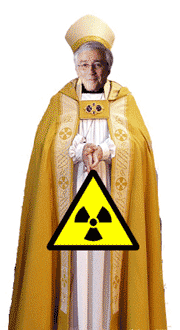
“Step-by-step, they turned to an atomic religion, closed societies, a ‘state inside a state.’”
Karl Grossman, June 18, 2012, https://www.counterpunch.org/2012/06/18/the-nuclear-cult/
Nuclear scientists and engineers embrace nuclear power like a religion. The term “nuclear priesthood” was coined by Dr. Alvin Weinberg, long director of Oak Ridge National Laboratory, and the laboratory’s website proudly notes this. It’s not unusual for scientists at Oak Ridge and other U.S. national nuclear laboratories to refer to themselves as “nukies.” The Oak Ridge website describes Weinberg as a “prophet” of “nuclear energy.”
This religious, cultish element is integral to a report done for the U.S. Department of Energy in 1984 by Battelle Memorial Institute about how the location of nuclear waste sites can be communicated over the ages. An “atomic priesthood,” it recommends, could impart the locations in a “legend-and-ritual…retold year-by-year.” Titled “Communications Measures to Bridge Ten Millennia,” the taxpayer-funded report says: “Membership in this ‘priesthood’ would be self-selective over time.”
Currently, Allison Macfarlane, nominated to be the new head of the U.S. Nuclear Regulatory Commission, says she is an “agnostic” on nuclear power—as if support or opposition to atomic energy falls on a religious spectrum. Meanwhile, Gregory Jaczko, the outgoing NRC chairman, with a Ph.D. in physics, was politically crucified because he repeatedly raised safety concerns, thus not revering nuclear power enough.
Years ago, while I was working on a book about toxic chemicals, the publisher asked that I find someone who worked for a chemical company and get his or her rationale. I found someone who had been at American Cyanamid, the pesticide manufacturer, who said he worked there to better support his growing family financially.
But when it comes to nuclear power, it’s more than that—it’s a religious adherence.

Why? Does it have to do with nuclear scientists and engineers being in such close proximity to power, literally? Is it about the process through which they are trained—in the U.S., many in the nuclear navy and/or in the insular culture of the
government’s national nuclear laboratories? These laboratories, originally under the Atomic Energy Commission and now the Department of Energy and managed by corporations, universities and scientific entities including Battelle Memorial Institute, grew out of the World War II Manhattan Project crash program to build atomic bombs. After the war, the laboratories expanded to pursue the development of all things nuclear. And is it about nuclear physics programs at universities serving as echo chambers?
Whatever the causes, the outcome is nuclear worship.
And this is despite the Chernobyl or Fukushima Daiichi catastrophes. It’s despite the radioactive messes exposed at the Rocky Flats nuclear weapons production facility and at Los Alamos and other national nuclear laboratories most of which have been declared high-pollution Superfund sites where cancer on-site and in adjoining areas is widespread. It’s despite the continuing threat of nuclear war and the horrific loss of life it would bring and nuclear proliferation spreading the potential for atomic weapons globally. Still, they press on with religious fervor.
“Most of them are not educated about radiation biology or genetics, so they are fundamentally ignorant,” says Dr. Helen Caldicott, a founder of Physicians for Social Responsibility whose books include Nuclear Madness. “They are ‘brought up’ in an environment where they are conditioned to support the concept of all things nuclear.” Further, “nuclear power evokes enormous forces of the universe, and as Henry Kissinger said, ‘Power is the ultimate aphrodisiac.” And “they practice denial because I think many of them in their heart really know that what they are doing is evil but they will defend it assiduously, unless they themselves or their child is diagnosed with cancer. Then many of them recant.”Linking the “nuclear priesthood” to the Manhattan Project is Michael Mariotte, executive director of Nuclear Information and Resource Service. “The scientists involved weren’t really sure what they were unleashing, and had to have a certain amount of faith that it would work and it would not destroy the world in the process. After they saw the destructive power of the bomb, they were both proud and horrified at what they had done, and believed they had to use this technology for ‘good.’ Thus nuclear power was born,” says Mariotte. “The problem is when you have this messianic vision that you are creating good out of evil, it is very difficult to turn around and realize that the ‘good’ you have created is, in fact, also evil.”
Kevin Kamps, radioactive waste watchdog at Beyond Nuclear, says ever since the first test of an atomic device, “the diabolically-named ‘Trinity’ atomic blast, when Manhattan Project scientists placed bets on whether or not it would ignite the Earth’s atmosphere, it’s been clear something pathological afflicts many in the ‘nuclear priesthood.’ Perhaps it’s a form of ‘Faustian fission’—splitting the atom gave the U.S. superpower status with the Bomb and then over a 100 commercial atomic reactors, so the ‘downsides’ have been entirely downplayed to the point of downright denial. Perhaps the power, prestige and greed swirling around the ‘nuclear enterprise’ explains why so many in industry, government, the military, and even apologists in academia and mainstream media, engage in Orwellian ‘Nukespeak’ and monumental cover ups….The ‘cult of the atom’ has caused untold numbers of deaths and disease downstream, downwind, up the food chain, and down the generations from ‘our friend the atom’ gone bad.”
A parallel situation exists in Russia, the other nuclear superpower. Dr. Alexey Yablokov, a biologist, member of the Russian Academy of Sciences and environmental advisor to Presidents Yeltsin and Gorbachev, says the nuclear scientists there refer to themselves “atomschiky” or “nuclearists” and “think and act as a separate, isolated caste.” From the beginning of nuclear technology in the Soviet Union, they “were enthusiastic about the great, the fantastic discoveries of splitting the atom and developing enormous power. This ‘secret knowledge’ was magnified by state secrecy and a deep belief—in the Soviet Union as in the United States—of atomic energy ‘saving the globe’…There is a remarkable similarity in the argumentation of these groups here and in the United States. Step-by-step, they turned to an atomic religion, closed societies, a ‘state inside a state.’”
Dr. Heidi Huttner, who teaches sustainability at Stony Brook University, explains:
“As in so many parts of our industrialized and mechanized culture, there is no thought of consequences, or connections to the larger web of science, health, and human and nonhuman life…The nuclear culture becomes absolutely caught up in its own language and story. This self-enclosure feeds, validates and perpetuates itself. Without an outside critique or ‘objective’ third eye, any such culture loses the ability to self-regulate and self-monitor. This is where things become dangerous.”
Russell Ace Hoffman, author of The Code Killers, Why DNA and Ionizing Radiation Are a Dangerous Mix, says: “It is a cult. It fits all the classic definitions of a cult. It’s an elitist, war-mongering, closed society of inbred, inwardly-thinking, aggressively xenophobic, arrogant pseudo-nerds stuck in ideas that are at least half a century out of date…Another cult-like behavior is they don’t care about the suffering of their victims. Not one bit.”
Dr. Barbara Rose Johnston, an anthropologist and senior research fellow at the Center for Political Ecology in Santa Cruz, recounts spending three days at a U.S. Department of Energy-sponsored conference for people involved in the atmospheric monitoring program at the nuclear weapons test site in Nevada. “Many of the scientists and technicians in attendance were from southern Utah and St. Georges County area where the heaviest atomic fallout from the Nevada test site occurred…I did not find a single man who saw a connection between fallout and cancer rates, despite the fact that most had suffered. My initial reaction was that these folks truly ‘drank the Kool-Aid’—true believers through and through.”
“The nuclear industry requires buying into an orthodoxy,” explains nuclear engineer Arnie Gunderson. “I know, as I was in it as a senior VP.” He tells of how, after he voiced concerns and criticism, an industry lawyer “told me, ‘Arnie, in this industry, you are either for us or against us, and you just crossed the line.’ The same thing happened to [outgoing NRC Chairman] Jaczko I know of one nuclear engineer with 40 years of experience who committed suicide five days after Fukushima because he simply could not accept that his life’s work was based on erroneous assumptions. He had worked on the Mark 1 design [the GE design of the Fukushima Daicchi plants].”
Alice Slater, New York representative of the Nuclear Age Peace Foundation, says the “nuclear scientists are out of touch with reality. They talk about ‘risk assessment’—as though the dreadful, disastrous events at Chernobyl and Fukushima are capable of being weighed on a scale of ‘risks and benefits.’ They’re constantly refining their nuclear weapons—Congress has budgeted $84 billion for over the next 10 years to maintain the …’reliability of the nuclear arsenal,’ and $100 billion for new ‘delivery systems’—missiles, submarines and airplanes. After the horrendous effects on Hiroshima and Nagasaki, everyone knows these catastrophic weapons are unusable and yet we’re pouring all this money into perpetuating the national nuclear weapons laboratories. They’re not including the Earth in their calculations and the enormous damage they are doing. They’re involved in the worst possible inventions with lethal consequences that last for eternity. Still, they continue on. They’re holding our planet hostage while they tinker in their labs without regard to the risks they are creating for the very future of life on Earth.”
Dr. Chris Busby of the Health and Life Sciences faculty at the University of Ulster in Northern Ireland and author of Wings of Death, Nuclear Pollution and Human Health, says:“What we are seeing with nuclear scientists is a desperate need to control their environment and their lives and the forces that may affect their lives by creating a virtual universe which they can deal with by mathematics and by drawing straight lines on paper.”
It’s the “cult of the nuclearists,” says Busby. And this construct of the nuclear scientists seeking to “control nature with mathematical equations that make them feel safe” sets up a “collision with reality”—and a “way we are going to destroy ourselves.” The belief in nuclear power is “far beyond anything scientific or rational,” says Busby, who has a Ph.D. in chemical physics.
Joseph Mangano, executive director of the Radiation and Public Health Project, says the “religious passion for nuclear technology” started with the “guilt” of those in the Manhattan Project. “Those in the ‘nuclear priesthood’ knew that these horrible bombs dropped on Hiroshima and Nagasaki destroyed hundreds of thousands of lives and they wanted to make up for that…They developed atomic energy for warfare and then thought it had other uses—and they would do anything to make that work.” But the civilian nuclear technology they devised was also deadly, and this realization was too “devastating to be accepted” by the “nuclear originators” or those who followed who “spend their days with their buddies, their colleagues, all thinking the same way.”
Dr. J. Robert Oppenheimer, scientific director of the Manhattan Project, in his 1955 book The Open Mind, wrote: “The physicists felt a peculiarly intimate responsibility for suggesting, for supporting, and in the end, in large measure, for achieving the realization of atomic weapons….In some sort of crude sense…the physicists have known sin.”
Whether out of indoctrination, misguided belief, an obsession to “control nature,” the lure of the cult, closeness to power, job security, or their seeking to perpetuate a vested interest, the “nuclearists” have a religious allegiance to their technology. On a moral level, they have indeed sinned—and continue to do so. On a political level, they have corrupted and distorted energy policy in the U.S. and elsewhere in the world. On an economic level, they are wasting a gargantuan portion of our tax dollars.
Choices of energy technology should be based on the technology being safe, clean, economic and in harmony with life. Instead, we are up against nuclear scientists and engineers pushing their deadly technology in the manner of religious zealots.
Karl Grossman, professor of journalism at the State University of New York/College of New York, is the author of the book, The Wrong Stuff: The Space’s Program’s Nuclear Threat to Our Planet. Grossman is an associate of the media watch group Fairness and Accuracy in Reporting (FAIR). He is a contributor to Hopeless: Barack Obama and the Politics of Illusion.
What? Peace in Our Time in Ukraine?

Whad’ya mean we don’t get to dictate a settlement just because we’re the losers?
This, in a single sentence, is the position shared across the West and in Kiev. Trump’s latest sin — and this plan counts as another in many quarters — is that what he and his people now propose favors simple realities over elaborate illusions.
The Trump regime’s 28–point Ukraine peace plan accepts Moscow’s core concerns as legitimate. That’s essential for any possible settlement of the war, or the broader crisis between Russia and the West.
by Patrick Lawrence, Consortium News, November 26, 2025, https://consortiumnews.com/2025/11/24/patrick-lawrence-what-peace-in-our-time/
There are any number of reasons you may not like, or may even condemn, the 28–point peace plan the Trump regime has drafted to advance toward a settlement of the war in Ukraine.
You may be among those many all across the Western capitals who simply cannot accept defeat on the reasoning — is this my word? — that the West never loses anything, and it certainly cannot lose anything to “Putin’s Russia.”
You may think that President Donald Trump and those who produced this interesting document, which leaked out in the course of some days last week, have once again “caved” to the Kremlin.
The outstanding contribution in this line comes from the ever-mixed-up Tom Friedman, who argued in last Sunday’s editions of The New York Times that Trump is to be compared with Neville Chamberlain and Trump’s plan with the much-reviled British prime minister’s “appeasement” of Hitler via the Munich Agreement of September 1938.
I cannot think of a klutzier interpretation of history or a more useless comparison, given it sheds not one sliver of light on what the document to hand is about.
Or you may stand on principle and attempt the well-worn case that Ukraine is a liberal democracy — let me write that phrase again just for fun — Ukraine is a liberal democracy, altogether “just like us,” and must be defended at all costs in the name of freedom, the rights of the individual, free markets, etc.
Or you may think this is no time for the United States and its European clients to relent in their unceasing effort to destabilize the Russian Federation. Those of this persuasion cannot, of course, acknowledge that Ukraine is nothing more than a battering ram in this dreadful cause, at this point much-bloodied. This dodge tends to swell the ranks of those professing the defense of democracy against autocracy as their creed.
Anyone paying attention to the reactions to the Trump plan among the trans–Atlantic policy cliques and the media that serve them has heard all of this and more these past few days. I find it all somewhere between pitiful and amusing.
Pitiful because those who so wildly overinvested in the corrupt, Nazi-infested regime in Kiev prove incapable of acknowledging that Ukraine lost its war with Russia long ago, and this attempt to subvert Russia now proves a bust.
Amusing because those who so wildly over-invested in the corrupt, Nazi-infested regime in Kiev now squirm at the thought that the victor will have more to say about the terms of peace than the vanquished.
Whad’ya mean we don’t get to dictate a settlement just because we’re the losers?
This, in a single sentence, is the position shared across the West and in Kiev. Trump’s latest sin — and this plan counts as another in many quarters — is that what he and his people now propose favors simple realities over elaborate illusions.
Those asserting that the Trump plan caters to the Kremlin are not altogether wrong, to put this point another way. They are merely wrong in their objections. These 28 points, with many elaborations —No. 12 is followed by 12a, 12b, 12c and so on — indeed give Russia a lot — but not all — of what it has spent years attempting to negotiate.
The missed point is plainly stated: It is a very wise and fine thing finally to recognize the legitimacy of Russia’s perspective. At this point what will serve Russia’s interests will also serve Ukraine’s and the interests of anyone who thinks an orderly world is a good idea.
couple of things to note before briefly considering the contents of the Trump plan. I am working from a copy of the text apparently leaked to the Financial Times last Thursday.
One, it is a working document, nothing more. Trump’s people, notably Marco Rubio, Trump’s secretary of state, and Steve Witkoff, the New York property investor now serving as Trump’s special envoy, had extensive negotiations with Ukrainian and European delegations in Geneva over the weekend. These are to continue.
Trump earlier gave the Kiev regime until Thanksgiving, this Thursday, to accept or reject its terms, and he has not since said anything differently. But the Trumpster has already stated that if things are going well this deadline can be superseded. All is subjective.
Two, Rubio and Witkoff take credit for drafting this plan, reportedly in consultation with Kirill Dmitriev, the chief executive of Russia’s sovereign wealth fund, who seems sometimes to serve as a diplomat close to the Kremlin. But it has Trump’s name on it, and anything with the Trumpster’s name on it is subject to radical and unpredictable revision or withdrawal at any time.
Promise of Enduring Settlement
Setting these matters aside:
There are numerous on-the-ground provisions among its 28 clauses. No. 19 specifies that the Zaporizhzhia nuclear power plant along the Dnieper River, controlled by Russian forces since March 2022, less than a month into the war, will be restarted under the authority of the International Atomic Energy Agency, and the electricity it generates will go equally to Russia and Ukraine. Russia is to allow Ukrainians to use the Dnieper “for commercial activities” (No. 23).
There is to be a prisoner swap (No. 24a) and, a family reunion program (24c). A general amnesty will extend to “all parties involved in the conflict” (No. 26). “Measures will be taken,” No. 24d states, “to alleviate the suffering of victims of the conflict.”
These clauses, boilerplate humanitarian provisions and low-hanging fruit, are worthy enough, but read to me as greeting-card niceties next to the weightier items in this plan.
There is the much-discussed, much-disputed question of territory. Crimea and the Donbas — Luhansk and Donetsk — will be recognized as Russian territory, but de facto as against de jure. Why this distinction, the Russians would be perfectly right to ask.
The land from which Ukrainian forces will be required to withdraw will be designated a demilitarized zone that belongs to Russia, but the Russians will not be permitted to enter it. Again, what is this all about? As to Kherson and Zaporizhzhia, the southerly provinces Russia and Ukraine each partially control, they are to be divided and fixed at the current line of contact.
No. 22: “After agreeing on future territorial arrangements, the Russian Federation and Ukraine undertake not to change these arrangements by force.”
It is hard to say how either side will view these proposed divisions of territory. They award Moscow much of what it has demanded for some time, but in qualified fashion, and take away from Kiev much of what it has long said it will never surrender. So: Not enough for the Russians? Too much for the Ukrainians?
In my read the drafters’ intent here is to set down working language on the territory question as the basis of a lot of horse-trading. If I am correct, the U.S. side is not saying Kiev must accept or reject these terms as written so much as Kiev must agree finally to stop striking poses and do serious business at the mahogany table.
To be noted in this connection: It is long past time to dismiss all the rubbish of the past three years to the effect that Moscow’s intent has been to seize and occupy all of Ukraine. It is as ridiculous as the Europeans’ preposterous assertions — more cynical than paranoiac —that if the Russians are not stopped in Ukraine they will soon be in London and Lisbon.
Rubio Neo-Conned Trump’s Ukraine Peace Plan.

This time, by golly, Trump was finally going to step up and end a conflict nearly a year after he promised to end it 24 hours.
And then Rubio walked in.
Rubio jetted off to Geneva to help lick the wounds of the European “leaders” who are dedicated to fighting the Russians down to the last Ukrainian.
” By the end of the weekend, Rubio had taken the reins because the conversations became more flexible, the official said.”
Daniel McAdams Ron Paul Institute for Consortium News, https://scheerpost.com/2025/11/26/rubio-neo-conned-trumps-ukraine-peace-plan/
So goes President Trump’s 28 point peace plan to end the Russia/Ukraine war. Revealed at the end of last week, the plan initially received a cautious but cautiously optimistic reception in Moscow.
It was hardly a dramatic tilt toward the Russian position. Many of the plan’s points ranged from the implausible to the bizarre.
For example, the idea that President Donald Trump would be crowned some sort of “peace czar” overseeing the deal, and that Russia would agree to use its seized assets to rebuild Ukraine.
Then there is the one that Russia should accept a demilitarized “buffer” zone taking up a good chunk of Donetsk (which itself would be “de facto” part of Russia but not de jure – and thereby subject to the vicissitudes of Western electoral politics).
And of course, there was the part where the U.S. would share the “profits” from Russia’s paid reconstruction of Ukraine.
Very Trumpian, very weird.
Nevertheless, the flawed plan (in terms of Russian acceptance) dropped like an atom bomb on the U.S. neocons and their European counterparts. Trump’s peace plan was “entirely dictated by Putin,” the U.K. Independent breathlessly tells us.
Yes, that is how propagandistic the western mainstream media really is. And suddenly we are back to Russiagate and accusations the Trump is acting as Putin’s puppet – or at least stenographer.o goes President Trump’s 28 point peace plan to end the Russia/Ukraine war. Revealed at the end of last week, the plan initially received a cautious but cautiously optimistic reception in Moscow.
It was hardly a dramatic tilt toward the Russian position. Many of the plan’s points ranged from the implausible to the bizarre.
For example, the idea that President Donald Trump would be crowned some sort of “peace czar” overseeing the deal, and that Russia would agree to use its seized assets to rebuild Ukraine.
Then there is the one that Russia should accept a demilitarized “buffer” zone taking up a good chunk of Donetsk (which itself would be “de facto” part of Russia but not de jure – and thereby subject to the vicissitudes of Western electoral politics).
At the political level, E.U. foreign affairs chief Kaja Kallas pretty well summed up the level of delusion among the European elite: “We have not heard of any concessions from Russia. If Russia really wanted peace, it could have agreed to an unconditional ceasefire a long time ago.’”
Yes, Kaja “Sun Tzu” Kallas. Military history teaches us that every army making rapid gains on the battlefield periodically pauses to make concessions to the losing side. Otherwise, it wouldn’t be fair, and not everyone would get a trophy.
President Trump’s demand that Ukraine’s acting president, Zelensky, accept the terms by Thanksgiving or face a cut-off in U.S. military and intelligence assistance put the Europeans and U.S. hawks in panic mode.
It appeared Trump was finally tired of playing Hamlet after the framework he presented in Alaska in August was agreed upon by Russia and then abandoned by Trump himself after receiving an earful from said Europeans and U.S. neocons.
This time, by golly, Trump was finally going to step up and end a conflict nearly a year after he promised to end it 24 hours.
And then Rubio walked in.
The one lesson Trump 2.0 did not learn from Trump 1.0 is that the personnel is the policy, particularly with a president who appears uninterested in details and disengaged from complex processes. Trump 1.0 was dragged down by neocon albatrosses John Bolton and Mike Pompeo, among others.
Even a Col. Douglas Macgregor brought in in the 4th quarter at the two minute warning to throw a “Hail Mary” pass to get us out of Afghanistan was tackled behind the line of scrimmage by Robert O’Brien, Trump’s final National Security Advisor and neocon dead-ender.
Neocons are wreckers. That’s the one thing they are good at.
The inclusion of new blood in the person of Vice President Vance ally, Army Secretary Dan Driscoll – who supplanted terminally clueless Trump envoy Keith Kellogg – offered the promise that finally the realist faction in the shadows of the Trump Administration would have their shot.
Then the rug was pulled. Again.
Rubio jetted off to Geneva to help lick the wounds of the European “leaders” who are dedicated to fighting the Russians down to the last Ukrainian.
Politico lets us in on what happened next, in a piece titled, “Rubio changes the tack of Trump’s Ukraine negotiations after week of chaos.”
“Before Rubio showed up in Switzerland, it largely felt like Vice President JD Vance, via his close friend Driscoll, was leading the process. By the end of the weekend, Rubio had taken the reins because the conversations became more flexible, the official said.”
“Flexibility” means that we are back to square one, with a reversion to the Kellogg/Euro view that the side winning a war should unilaterally freeze military operations in favor of the losing side.
Politico continued:
“Rubio’s participation in the talks produced much more American flexibility, the four people familiar with the discussions said. Rubio told reporters on Sunday night that the aim is simply to finalize discussions ‘as soon as possible,’ rather than by Thanksgiving.”
That loss of momentum and destruction of the sense of urgency means we have returned to the endless bickering of the eternally deluded voices who even in the face of rapid recent Russian advances believe that Ukraine is winning – or could win with a few hundred billion more dollars – the war against Russia.
Never mind the golden toilets. Suddenly that’s out of the news.
At the end of the day, all the drama changes little. As President Putin himself said while meeting with his own national security council (h/t MoA):
“Either Kiev’s leadership lacks objective reporting about the developments on the front, or, even if they receive such information, they are unable to assess it objectively. If Kiev refuses to discuss President Trump’s proposals and declines to engage in dialogue, then both they and their European instigators must understand that what happened in Kupyansk will inevitably occur in other key areas of the front. Perhaps not as quickly as we would prefer, but inevitably.
And overall, this development suits us, as it leads to achieving the goals of the special military operation by force, through armed confrontation.”
In other words, Russia is happy to achieve its objectives through negotiation, which would save lives and infrastructure especially in Ukraine. But it is also willing to continue its accelerating push to achieve those objectives militarily. And no fever dreams of war with Russia from the likes of former NATO chief Anders Fogh Rasmussen is going to change that.
Marco Rubio is a pretty bad Kissinger, and Kissinger was bad enough. At some point – and that point may have now passed – the Russians are going to rightly conclude that they have no negotiating partner in a U.S. still dominated by people like the former Senator from Florida whose first love is regime change in Venezuela and Cuba.
Whatever the case, Trump should be pretty miffed that Marco threw a spanner in what would have been a world record, unprecedented, universally-praised, like-nothing-the-world-has-ever-seen, solving of NINE wars in just his first year in office!
US military orders that should be disobeyed

Walt Zlotow, Nov 27, 2025, https://waltzlotow.substack.com/p/us-military-orders-that-should-be
Loading up or flying planes to Israel with tons of weapons that have already killed over 100,000 Palestinians. Any service member doing that is guilty of assisting genocide…the worst crime any servicemember can commit.
Loading up or flying planes bombing small, unarmed boats near Venezuela. This is premeditated mass murder of unknown persons. US makes sure all the boaters are killed so no record of their innocence is retained. Every one of the hundred or more boaters killed in 20 such sinkings emanated from military orders that were illegal and should have been resisted.
The US military is not content with illegal orders to support Israeli genocide in Gaza and obliterating small unarmed boats off Venezuela. Their Commander In Chief Trump has ordered 100 bombing strikes on imagined bad guys in Somalia this year. Does even one American in a million believe the lies emanating from Trump’s military that this mass murder in Somalia is crucial to protect the Homeland. Orders to relentlessly bomb a pitifully poor country 7,800 miles from America, posing no threat whatsoever, are illegal and should be disobeyed.
Granted its not easy to risk banishment from service, possibly even being imprisoned for disobeying these illegal orders. But one service member took such resistance to heroic heights. In February 2024 U.S. Air Force serviceman Aaron Bushnell set himself on fire outside the Israeli Embassy in Washington, D.C. to protest US support of Israel’s genocide in Gaza.
Refusing to obey illegal orders to commit premeditated murder is the least that patriotic service members can do to end Uncle Sam’s worldwide killing rampage. We should commend the 6 members of Congress for reminding and supporting them to do that.
Walt Zlotow, West Suburban Peace Coalition, Glen Ellyn IL
Right-wing media praise Trump’s made-up excuses for war against Venezuela.

Trump massively inflated threat from Venezuelan “narco-terrorists” smuggling fentanyl into the US
MEDIA MATTERRS, by Zachary Pleat. Research contributions from Jane Lee, 11/24/25
President Donald Trump and right-wing media have been quick to cite fentanyl interdiction as the supposed justification for the administration’s likely illegal strikes against vessels in the Caribbean Sea and Pacific Ocean, which they have blamed on so-called “narco-terrorists” tied to the regime of President Nicolas Maduro of Venezuela. But reporting has shown the Trump administration’s excuses are built on lies — with virtually no fentanyl arriving in the United States via routes currently being targeted by the military in a bombing campaign that has already claimed at least 83 lives.
This isn’t the first time Trump and his media allies have used fentanyl as an excuse for his out-of-control policies, as it was used to justify his instigation of a trade war with Mexico and Canada earlier this year. The Trump administration’s military buildup also follows multiple actions that undermine efforts to combat fentanyl trafficking into the U.S.
- The New York Times: Military officials have told Congress “there was no fentanyl on the boats” destroyed by Trump administration military strikes. Rep. Sara Jacobs (D-CA) told the Times that according to briefings from military officials, the Trump administration’s “rationale for the strikes is because fentanyl is killing so many Americans, but these strikes are targeting cocaine.” Jacobs also told HuffPost that Pentagon officials “argued that cocaine is a facilitating drug of fentanyl, but that was not a satisfactory answer for most of us.” Another congressional source told HuffPost: “They’ve not recovered fentanyl in any of these cases. It’s all been cocaine.” [The New York Times, 11/19/25; HuffPost, 11/4/25]
- The New York Times: Multiple government agencies have found that “Venezuela plays virtually no role in the fentanyl trade.” A September New York Times report explained: “Fentanyl is almost entirely produced in Mexico with chemicals imported from China, according to the U.S. Drug Enforcement Administration, the Justice Department and the Congressional Research Service.” It added: “There is no proof that it is manufactured or trafficked from Venezuela or anywhere else in South America.” [The New York Times, 9/3/25]
- The Atlantic: Coast Guard data shows “Fentanyl Doesn’t Come Through the Caribbean.” A September 26 article in The Atlantic countered the Trump administration’s justification for extrajudicial killings via military strikes against boats off the coast of Venezuela: “Although the United States Coast Guard interdicts staggering quantities of illegal drugs in the Caribbean each year, it does not encounter fentanyl on the high seas. South American cocaine and marijuana account for the overwhelming majority of maritime seizures, according to Coast Guard data, and there isn’t a single instance of a fentanyl seizure—let alone ‘bags’ of the drug—in the agency’s press releases.” [The Atlantic, 9/26/25]
- According to the State Department’s March 2025 International Narcotics Control Strategy Report: “The Department of State, in consultation with the Drug Enforcement Administration (DEA) and other relevant agencies, has identified Mexico as the only significant source of illicit fentanyl and fentanyl analogues significantly affecting the United States during the preceding calendar year.” [Washington Office on Latin America, 11/5/25]
- Trump has bombed boats and built up a military presence near Venezuela based on dubious fentanyl-trafficking claims
-
- The United States has carried out at least 21 military strikes on alleged drug-smuggling vessels, in which at least 83 people have been killed, in the Caribbean and the Pacific since September 2 Trump and the Department of Defense have claimed the boats carried fentanyl and were being operated by “narcoterrorists.” After the first strike, Trump claimed that the people on the boat were members of Tren de Aragua; the Trump administration has falsely claimed that gang is controlled by Venezuela’s government and invaded the U.S., and has used the gang to justify many unrelated immigration arrests. [CNN, 11/16/25; ABC News, 11/16/25; PolitiFact, 9/3/25; ProPublica, 11/13/25]
Right-wing media suggested these military strikes are necessary to stop fentanyl from being moved into the U.S……………………………………………………………………………………………………………………………………………………………………………https://www.mediamatters.org/national-security/right-wing-media-praise-trumps-made-excuses-war-against-venezuela
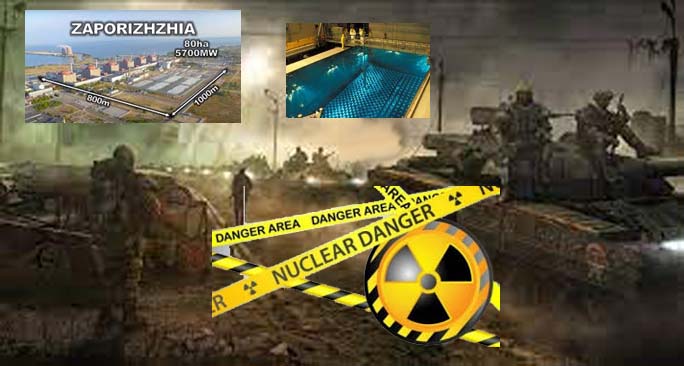
Zaporizhzhia nuclear plant needs cooperation agreement in event of Ukraine peace, says IAEA
MANILA, Nov 25 (Reuters) – https://www.reuters.com/business/energy/zaporizhzhia-nuclear-plant-needs-cooperation-agreement-event-ukraine-peace-says-2025-11-25/
International Atomic Energy Agency chief Rafael Grossi said on Tuesday the Zaporizhzhia nuclear power plant will need a “special status” and a cooperation agreement between Russia and Ukraine if a peace deal is reached.
Russian forces seized the plant, Europe’s largest with six reactors, in the first weeks of Moscow’s February 2022 invasion of Ukraine. The plant produces no electricity, but each side regularly accuses the other of military actions compromising nuclear safety.
“Whatever side of the line it ends up, you will have to have a cooperative arrangement or a cooperative atmosphere,” he said.
Grossi’s comments come as U.S. President Donald Trump’s administration makes an intense new push to end the war.
U.S. and Ukrainian officials are trying to narrow the gaps between them over a draft peace plan that includes provisions for Zaporizhzhia’s future.
Without peace, there is danger of a nuclear accident, Grossi said.
“Until the war stops or there is a ceasefire or the guns are silenced, there is always a possibility of something going very, very wrong,” he said in an interview.
“No single operator can use a nuclear power plant when across the river there is another country which is resisting this and may take action against that.”
A draft version of the U.S.-backed 28-point peace plan for Ukraine, according to a copy seen by Reuters, proposes restarting the plant under IAEA supervision, with electricity output split equally between Russia and Ukraine.
“Shared, not shared – and I don’t want to get into that because it’s political – …it’s something that Ukraine and Russia will be deciding at some point,” Grossi said. “But one thing is clear, the IAEA is indispensable in this situation.”
Zaporizhzhia’s six reactors have been in cold shutdown since 2022, relying on external power lines and emergency systems to prevent a station blackout. The IAEA maintains a continued presence at the site to monitor safety amid ongoing shelling.
Stepping back from the brink-How the UK could help lead the world away from the nuclear precipice

Steve Barwick |Chair, Nuclear Education Trust, 25 November 2025
The Nuclear Education Trust has also released a report on this topic you can access here: Stepping Back from the Brink
The world today stands closer to nuclear catastrophe than at any point since the end of the Cold War. Conflicts involving nuclear-armed states (the United States, Russia, the United Kingdom, France, China, India, Pakistan, North Korea and Israel) in Europe, the Middle East and South Asia, alongside rising tensions in East Asia, could all too easily escalate to a nuclear confrontation. Meanwhile, key arms control treaties have collapsed, and most nuclear powers, including the UK, are modernising their nuclear arsenals. Against this perilous backdrop, what could the UK do to help lead the world back from the brink?
The myths of tactical nuclear weapons and limited nuclear war
So-called “tactical” nuclear weapons (TNWs) are ones deployed to arenas of conflict or tension, such as those Russia has deployed to Belarus, and those the US has sited across five European NATO member states, with the UK, as of July 2025, reportedly now the sixth. Whilst these weapons can have relatively low explosive yields, the impact of their use would be anything but small. For example, the US B61-12 bombs can deliver explosive yields of up to 50 kilotons. This is several times more powerful than the atomic bombs dropped on Hiroshima and Nagasaki.
Any use of nuclear weapons, at whatever scale or size, would likely have very severe military as well as humanitarian and environmental consequences. Even a single detonation involving a relatively low-yield nuclear bomb could trigger uncontrollable escalation. National leaders faced with the ensuing chaos and fear of a completely new type of crisis would have no reliable way to contain events.
The fraying of the nuclear taboo
For decades, restraint regarding the use of nuclear weapons was maintained by the “nuclear taboo” — a shared global understanding that nuclear weapons are not legitimate tools of warfare. That taboo is eroding. For example, President Vladimir Putin’s threats to use nuclear weapons during the Russia-Ukraine war reintroduced nuclear brinkmanship into mainstream political discourse.
Russia’s actions are widely condemned, but only China has made a commitment never to use nuclear weapons first. The nuclear doctrines of the US, UK, France, Russia, Israel, North Korea, India and Pakistan all allow for first use under certain conditions. This collective ambiguity increases the risk of miscalculation and normalises threatening nuclear rhetoric.
A dangerous drift: Eroding treaties, escalating tensions
The collapse of key nuclear arms control agreements between the US and Russia — notably the Intermediate-Range Nuclear Forces (INF) Treaty in 2019 — has removed a vital guardrail that had at least banned ground-based “tactical” missiles with ranges between 500 and 5,500 km, such as the Cruise and SS20 Missiles. However, it is important to note that “battlefield” nuclear weapons – with a shorter range and often deployed from sea or air were never banned
Recently, Moscow and Washington have developed new tactical nuclear weapons. Russia has tested its Burevestnik cruise missile, while the United States has fielded the W76-2 warhead on ballistic missile submarines. President Donald Trump also recently commented that the US will resume nuclear testing. China’s nuclear rearmament programme remains opaque, fuelling uncertainty and mistrust.
Learning from history
History offers important lessons on how these dangerous trends can be reversed. The Cuban Missile Crisis, the moment where the world came closest to nuclear war, demonstrated that diplomacy and mutual understanding — not military brinkmanship — are the only reliable paths to peace.
During the Cold War, the deployment of thousands of nuclear weapons in Europe brought humanity perilously close to disaster and also ignited a powerful civil society movement that demanded a different course: nuclear disarmament. The subsequent agreement of the INF Treaty in 1987, which eliminated a whole class of nuclear weapons and set the stage for several multilateral arms control and confidence and security-building measures, was a landmark achievement.
Rebuilding cooperation on nuclear arms control and disarmament
Now is the time for Russia to agree to a ceasefire and take part in good-faith negotiations to end the war in Ukraine, alongside all key participants in the conflict. In addition, Russia and the US should refrain from deploying TNWs and instead negotiate a legally binding treaty to eliminate them, complete with robust verification measures.
The nuclear powers — particularly the US, Russia and China — should also:
- Reaffirm the nuclear taboo through joint declarations rejecting nuclear warfighting;
- Commit to follow international law regarding the threat or use of force;
- Renew and strengthen arms control and disarmament agreements, such as the New START Treaty, or at least maintain its limits after expiration;
- Address the root causes of conflict, such as territorial disputes and economic inequality, including through sustained diplomacy.
These are challenging steps, but there is no other path to rebuilding stability. Even in the Cold War’s darkest moments, dialogue, arms-control mechanisms and crisis communication channels helped avert catastrophe. This way forward must not be lost in the fog of war preparations.
The UK’s critical role: From nuclear proliferator to peace broker
As Chair of the group of five ‘official’ nuclear weapon states in the run-up to the 2026 Nuclear Non-Proliferation Treaty Review Conference, the UK occupies a unique position, both as a nuclear possessor and a potential bridge between the superpowers and non-nuclear weapon states. Yet current British policy jeopardises that potentially positive role. There are four practical measures the UK should take to support strategic stability and demonstrate global leadership:
- Reject nuclear sharing and prioritise transparency
The UK should not join NATO’s nuclear sharing arrangement, and thus not acquire F-35A aircraft or host US B61-12 bombs. Parliamentary and civil society scrutiny of nuclear deployments and procurement must increase through Select Committee inquiries and more mainstream media interest.
- Reinvigorate global diplomacy
The UK should support high-level diplomacy among the nuclear powers to revive dialogue on arms control, disarmament and conflict prevention. As chair of the P5 process, the UK should urge that crisis stability between the major powers and the avoidance of arms races are prioritised.
- Adopt a no-first-use policy
A commitment never to use nuclear weapons first would reduce escalation risks. Coupled with assurances not to threaten or use nuclear weapons against non-nuclear-weapon states, this stance would align the UK with NPT agreements to reduce the salience of nuclear weapons and encourage reciprocal restraint from others.
- Engage with the Treaty on the Prohibition of Nuclear Weapons (TPNW)
It is time that the eyes of the world are reopened to the devastating effects of nuclear weapons. The UK should support the United Nations panel examining “the physical effects and societal consequences of a nuclear war on a local, regional and planetary scale”; and attend TPNW meetings as an observer, demonstrating concern and an openness to dialogue.
2026: A pivotal year
The year 2026 will be critical. It marks both the scheduled expiry of New START — the last remaining cap on US and Russian strategic arsenals — and the next NPT Review Conference. The message is unambiguous: continuing along the path of rearmament and confrontation invites catastrophe. The UK, as one of NATO’s more influential members, has a rare opportunity to steer policy toward restraint and away from the futile pursuit of “nuclear advantage.” To seize it, Britain must make bold choices — reject nuclear sharing, embrace transparency, champion diplomacy, and reaffirm the principle that nuclear weapons must never be used.
The European Leadership Network itself as an institution holds no formal policy positions. The opinions articulated above represent the views of the authors rather than the European Leadership Network or its members. The ELN aims to encourage debates that will help develop Europe’s capacity to address the pressing foreign, defence, and security policy challenges of our time, to further its charitable purposes.
We must embrace reality with cheap green energy
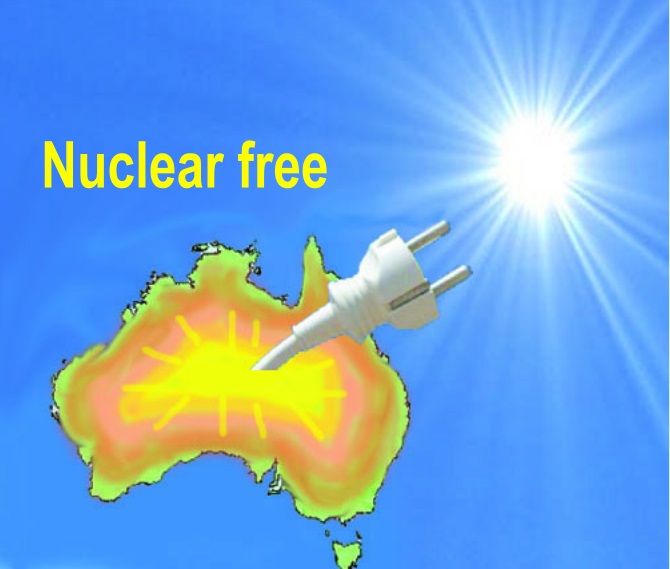
Critics will say we can’t afford to transition away from fossil fuels.
When you come face to face with the impacts, it’s reasonable to argue
that we can’t afford not to. But something interesting is starting to
happen. Around four or five years ago, it became cheaper to generate
electricity from the sun and wind than it is by setting things on fire.
Renewable energy has been getting so plentiful, to the point that some
governments are literally giving it away. In Australia, where almost 40% of
homes have solar panels on their roof, the government announced that they
have so much solar energy that from January next year, Australians will get
three free hours of electricity every single day. Whether you have a solar
panel or not, for those three hours, you can charge your car, run the
washing machine or even store up your home battery and run the house for
free all night.
At a time when it was announced that the energy price cap
is set to rise slightly here in the UK, and when the average cost of
heating and running a home is close to £1800, it’s hard not to feel
jealous of those Australians who can look forward to free power for three
hours a day.
Even more astonishingly it’s China which is driving this
change towards cleaner energy. When I lived in China back in the early
2000s, we had toxic smog so thick you couldn’t see the apartment block
across the road. Chinese cities used to dominate the top 10 most-polluted
cities in the world, today they barely feature in that most grubby of
lists.
In May of this year, China installed new solar and wind energy
systems that generated as much electricity as Poland generates all-year
round, from all available sources, and while they continue to construct
more coal-fired power stations, those stations run at most at 50% capacity,
and the country’s carbon emissions are thought to have peaked.
These power stations are used almost as back-up power, because they’re more
expensive to run than solar or wind farms, and once the next breakthrough
comes in the form of battery storage, experts argue that dirty power
stations will grow obsolete. China has figured out that clean energy and
renewables are the way forward, because they will ultimately prove to be
cheaper and more profitable.
They’ve made more money exporting green tech
in the past 18 months than the US has made in exporting oil and gas in that
same period. While America is betting the house on AI being the future,
China has gambled on renewable energy and clean tech being the way forward.
In Europe, people are nipping down to their equivalent of B&Q to pick up
plug-in solar panels they can hang off their balconies. These cheap and
cheerful solutions can provide up to 25% of an apartment’s energy usage,
and are as easy to use as plugging in a toaster. It’s such an innovative
– and useful – development that the UK Government has launched a study
to see if it could be rolled out here.
Regulations would need to be
reformed, but if this could be achieved, we could soon access the kind of
cheap and convenient solution that close to 1.5 million Germans enjoy.
It’s easy to feel overwhelmed when faced with the challenge of a warming
planet, and dither and delay from those in power. But ultimately we’ve
got more power than we think. Environmentalist Bill McKibben argues that
economics dictate that in 30 years’ time we’ll be running this planet
on solar and wind energy anyway. It’s up to us to determine how long we
want to wait to embrace reality, and cheaper energy bills.
The National 26th Nov 2025,
https://www.thenational.scot/politics/25650532.must-embrace-reality-lower-bills-cheap-green-energy/
Update Behind Trump’s Peace Spin: Leaks, Concessions, and a Ukraine Not Ready to Bend
November 26, 2025, By: Joshua S, https://scheerpost.com/2025/11/26/behind-trumps-peace-spin-leaks-concessions-and-a-ukraine-not-ready-to-bend/
Update: In a surprising turn of events, former President Donald Trump has decided to step back from the decision-making process, entrusting his advisers to navigate the current political landscape.
As of this morning, the GOP has pushed back on a deal they say overly favored Russian interests. The Hill reports: “The complaints from GOP senators — combined with blowback from Kyiv and across Europe — apparently spurred Trump to direct his negotiators to work more closely with Ukraine to get a balanced deal, after initially saying Ukraine had until Thanksgiving to agree to a 28-point plan that favored Russia.”
With Sen. John Kennedy (R-La.) saying: “Putin is a pirate, he’s got Stalin’s taste for blood, that’s clear. The man’s got blood under his fingernails. He is not going to come to the table, in my opinion, until you make it more costly for him not to settle than it is to continue to prosecute the war,”
Russian response: Steve Witkoff is expected to travel to Moscow next week to meet with Putin, with his aide Yuri Ushakov saying — as reported by NBC News — that “We, the Russian side, have not yet discussed any documents with anyone specifically… We’ve agreed to a meeting with Mr. Witkoff. I hope he won’t be alone. Other representatives of the U.S. team working on the Ukrainian dossier will be there.”
Needless to say, with the Russians not getting documents or signing anything yet, the Ukrainians needing more guarantees, and President Trump stepping back, peace at this moment doesn’t look bright. But we will be keeping our eyes open for whatever developments may come.
Despite a sunny spin from the Trump administration about the peace deal, obstacles remain, with Zelensky wanting to meet with Trump and Trump writing this on his social media account. “I look forward to hopefully meeting with President Zelenskyy and President Putin soon, but ONLY when the deal to end this war is FINAL or in its final stages,”
CNN sources within the Ukrainian government say “there are still significant gaps between what the Trump administration is asking of Ukraine and what the embattled authorities in Kyiv are prepared to accept.”
Earlier in the day, Bloomberg reported—through leaked audio—that U.S. special envoy Steve Witkoff, a Trump ally, suggested Putin call Trump to congratulate him on a recent Gaza ceasefire and propose a similar 20-point Ukraine plan. In the leaked recording, Witkoff referenced potential concessions like Donetsk and a land swap, urging an optimistic tone to build momentum.
Here is Trump discussing that report and the peace plan.
Navy made legal threats to try and keep nuclear pollution secret

Emails reveal that naval chiefs piled pressure on environment watchdog to hide details of radioactive contamination on the Clyde.
Rob Edwards, November 23 2025, https://www.theferret.scot/navy-try-keep-nuclear-pollution-secret/
The Royal Navy threatened legal action as part of a fierce, high-level, behind-the-scenes battle to block publication of information about radioactive pollution at the Coulport nuclear bomb base on the Clyde.
Files released to The Ferret reveal that over nine days in July and August the navy sent 130 emails, held five meetings and made numerous phone calls urging the Scottish Environment Protection Agency (Sepa) to keep details of the pollution secret.
Naval officials repeatedly warned of legal action, spoke of the need to “calm some nerves” and said they were “deeply uncomfortable” with information proposed for release. One was anxious to avoid “another crazy Friday”, while another complained of becoming a “zombie” after a long week.
Top naval commanders also had an online meeting with the Scottish Information Commissioner, David Hamilton, late one evening to try and persuade him to reverse his decision to reject most of their pleas for secrecy.
But all these eleventh-hour efforts failed. As The Ferret reported on 9 August, Sepa released 33 files revealing that Coulport had polluted Loch Long on the Clyde with radioactive waste after old water pipes burst and caused a flood in 2019.
Campaigners accused the navy of “harassing” Sepa, and praised Hamilton for refusing to be “intimidated”. Politicians demanded less secrecy from the Ministry of Defence (MoD).
The MoD said it had to “balance” the public’s right to know with releasing information which would compromise national security. Sepa insisted it was firmly committed to transparency.
Naval commanders ‘getting concerned’
The Ferret first made a freedom of information request for files on radioactive problems at Coulport and Faslane in 2019, and then again in 2023 and 2024. But despite multiple reviews, most files were kept secret for national security reasons, after Sepa consulted the MoD.
The secrecy was overturned, however, after we appealed to Hamilton. In June 2025 he ordered Sepa to release most of the files by 28 July, saying they threatened “reputations” not national security.
But the release was delayed to 4 August after the MoD pleaded for more time to assess “additional national security considerations”. Sepa eventually released the 33 files to The Ferret late on 5 August.
Now emails released by Sepa and Hamilton in response to further freedom of information requests from The Ferret have disclosed what was happening behind the scenes.
On working days between 24 July and 5 August the Royal Navy sent an average of more than 14 emails a day to Sepa, to try and limit the amount of information released. Naval officials also frequently phoned and met with Sepa.
On 30 July the MoD proposed a series of redactions to the documents that were scheduled to be released. They “represent the minimal changes which are required in order to protect national security,” it argued.
The MoD tried to add to their shameful history of nuclear cover-ups by harassing officials with false claims of national security, hoping we’d never know radioactivity was negligently leaked from Coulport.
Early on 31 July a naval official asked Sepa to forward the MoD’s proposed redactions to Hamilton, apologising for failing to make that clearer earlier. “It’s been a long week and I resemble a zombie!” the official wrote.
Sepa assured the MoD it had included “all MoD redactions” in a submission to Hamilton.
But then an email from a naval official later on 31 July said the “chain of command are getting concerned” about “timelines” if Hamilton rejected the redactions. The official warned of legal action, adding: “Grateful for your advice to calm some nerves.”
The kind of legal action the navy was considering is unclear, as key text has been redacted. But the only way of challenging Hamilton’s decisions is by appealing to the Court of Session in Edinburgh on a point of law.
Another email on 1 August again warned Sepa that the MoD was “likely to challenge” the release of information that “adversely prejudiced” national security. It asked Sepa to “withhold release of the relevant documents while we follow due process”.
On 4 August Hamilton rejected the majority of the MoD’s proposed redactions. The MoD again told Sepa that it was considering action “to prevent disclosure of the documents”, and asked Sepa not to release them “until this decision has been made”.
But Sepa responded saying that it was planning to release the information as ordered by Hamilton. It was not “tenable” to further delay the release “from a reputational risk perspective”, Sepa said.
MoD meetings with Hamilton
The MoD also requested an “urgent” meeting with Hamilton and his staff on 25 July to consider MoD “concerns”. Another meeting was requested by the MoD on Thursday 31 July, with one official keen to “prevent another crazy Friday”.
On 1 August the navy’s director of submarines, Rear Admiral Andy Perks, told Hamilton that he had spoken directly to Sepa’s chief executive, Nicole Paterson, to try and find “a pragmatic way forward”. He stressed the need to “maintain national security backstops throughout”.
Perks praised Hamilton’s “continued support and pragmatism”, adding that it had been “greatly appreciated” by the First Sea Lord, General Sir Gwyn Jenkins.
On 4 August, after learning that Hamilton had rejected most of the MoD proposed redactions, Perks emailed again asking for another meeting that evening “to find a pragmatic way forward”.
In reply Hamilton said he was legally not allowed to discuss the case with third parties. “Much of the information that the Royal Navy would like to withhold is already in the public domain,” he said.
“As a courtesy I am happy to speak later tonight but with the understanding that I can’t discuss the case in detail.” A meeting took place just after 8pm that evening, after Hamilton had returned from a karate class.
After Sepa released files to The Ferret on 5 August, Hamilton pointed out that a few details had been wrongly redacted. Sepa then had to re-release the files with those redactions removed.
When this was flagged to the MoD on 8 August, it said it was “deeply uncomfortable”. But it added: “We have objections but we won’t appeal further.”
Aggressive manoeuvres
The Campaign for Freedom of Information in Scotland was pleased that Hamilton “refused to be intimidated” by the MoD’s “aggressive manoeuvres”. The public interest had finally been served by disclosure, said campaign director, Carole Ewart.
She thought the MoD might have “overlooked” the fact that Scotland’s environmental information law is tougher than that south of the border. Details can only be kept secret in Scotland if they “prejudice substantially” national security, but UK law says they can remain hidden if they just “adversely affect” national security.
The Scottish Campaign for Nuclear Disarmament thanked Hamilton for acting “without fear or favour” in the public interest. “The MoD tried to add to their shameful history of nuclear cover-ups by harassing officials with false claims of national security, hoping we’d never know radioactivity was negligently leaked from Coulport,” said campaign chair, Lynn Jamieson.
The SNP MSP and chair of the cross-party group on nuclear disarmament, Bill Kidd, said that the Scottish Parliament’s net zero and energy committee would be investigating transparency over pollution at Coulport and the neighbouring Faslane nuclear submarine base.
There were “worrying undercurrents of MoD behaviour in relation to secrecy over radioactive pollution” that needed to be investigated, he added.
The former Scottish Green leader, Patrick Harvie MSP, accused the MoD of making a “totally inappropriate intervention” in an attempt “to cover up and distract from what were very serious failures.”
We must balance the public’s right to know with releasing information which would compromise national security into the possession of our adversaries.
The MoD defended its intervention as “legitimate”, pointing out that it was “voluntarily” regulated by Sepa and welcomed the scrutiny. “We must balance the public’s right to know with releasing information which would compromise national security into the possession of our adversaries,” said an MoD spokesperson.
“We explored in a professional way a range of options to ensure we struck the right balance while maintaining the security of the British people which is imperative. The redaction of certain information highlights the importance of consulting us to ensure the protection of national security-sensitive information.”
Sepa stressed that it was “firmly committed” to transparency. “Our approach is always that publication is the default and withholding information is the exception, only when it is necessary, proportionate and legally justified,” said the agency’s chief officer, Kirsty-Louise Campbell.
“This includes careful consideration of national security and public safety – particularly for sites handling radioactive substances, whether military or civilian.”
The Scottish Information Commissioner, David Hamilton, pointed out it was Sepa’s responsibility to make representations to him on The Ferret’s FoI appeal. “In the unusual circumstances of this case, however, and, as a responsible regulator, I also spoke with Royal Navy commanders to ensure I was fully aware of any relevant national security issues,” he said.
“After these discussions, I advised Sepa that I was agreeable to a small number of minor redactions in the interests of national security. I should note that, throughout this process, I felt under no pressure to review my decision or make redactions – all of which were founded in Scotland’s environmental transparency laws.”
The 109 files released by the Scottish Environment Protection Agency can be accessed on its disclosure log by searching for F0199867. The 13 files released by the Scottish Information Commissioner are available here.
How the United Nations has under-predicted the rate of global temperature rise

The UN’s climate science body has been conservative in its predictions of temperature rises
.We sometimes hear misleading stories
claiming that the United Nations has exaggerated the greenhouse effect.
However, looking back at the studies published by the UN’s
Intergovernmental Panel on Climate Change (IPCC) in the early 1990s its
predictions have, in reality, been on the conservative side. That is, its
median projections look like they were, in 1992, under-predicting, not
over-predicting, the rate of global temperature increase.
Dave Toke’s Blog 26th Nov 2025,
https://davidtoke.substack.com/p/how-the-united-nations-has-under
Oldbury nuclear reactor plans spark safety concerns at Lydney meeting.

Residents gathered at a public meeting in Lydney to discuss the safety implications of proposed Small Modular Reactors at Oldbury, highlighting flooding risks and renewable energy alternatives.
STAND (Severnside Together against Nuclear Development) held a public meeting in Lydney on October 17th to look at the prospect of Small Modular (nuclear) Reactors (SMRs) being built at Oldbury. There were four speakers including two fromSTAND, Sue Haverly and John French. who have been sharing information about the two nuclear installations at Oldbury and Berkeley since the 1980s and monitoring safety since the two stations were decommissioned.
The other speakers were former Friends of the Earth director Sir Jonathan Porritt and renewable energy expert Dr David Toke.
The Forester 25th Nov 2025, https://www.theforester.co.uk/news/oldbury-nuclear-reactor-plans-spark-safety-concerns-at-lydney-meeting-854643
Prawns, sneakers and spices: What we know about Indonesia’s radioactive exports
Thu 27 Nov, https://www.abc.net.au/news/2025-11-27/indonesia-radiation-contamination-explained/106057730
Indonesian authorities are conducting a criminal investigation into the cause of radioactive contamination in a number of its exports.
It comes amid growing concern from the country’s trading partners, after traces of radiation were found in items such as prawns, spices and even sneakers.
So how does a radioactive element end up in such a variety of items?
Here’s what we know.
What has been affected?
Concerns about contamination first surfaced after Dutch authorities detected radiation in shipping containers from Indonesia earlier this year.
A report stated that several boxes of sneakers were found to be contaminated.
That was followed by a safety alert from the US Food and Drug Administration (FDA) in August, urging consumers not to eat certain imported frozen prawns from a company known as PT Bahari Makmur Sejati.
The FDA later found the same radioactive compound in a sample of cloves from PT Natural Java Spice.
In all three cases, the products were recalled.
The FDA also banned products from the two Indonesian companies until they were able to demonstrate they had resolved issues that allowed the contamination to occur.
What has been detected?
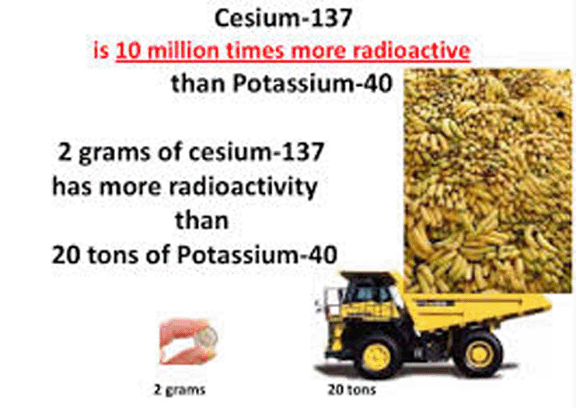
Both Dutch and American authorities say they found a radioactive element known as caesium-137.
The US Federal Drug Administration says long-term, repeated low-dose exposure to caesium-137 increases health risks.
But the agency adds that the levels detected in the Indonesian products posed no acute risk to health.
The radioactive isotope, which is created via nuclear reactions, is used in a variety of industrial, medical and research applications.
What is the source of radioactive contamination?
Investigations have so far centred on a metal-processing factory at the Cikande Industrial Estate, in Banten province on the island of Java.
The smelting company, called PT Peter Metal Technology, is believed to be China-owned, according to investigators.
Around 20 factories linked to the Cikande industrial estate are affected, including facilities that process shrimp and make footwear, authorities say.
Nine employees working on the industrial estate were detected to have been exposed to caesium-137. They have been treated at a government hospital in Jakarta and all contaminated facilities in the industrial area have been decontaminated.
In August, Indonesian authorities said the government would impose a restriction on scrap metal imports, which were reportedly a source of the contamination.
What is being done about it?
Indonesia’s nuclear agency last month said the sprawling industrial estate would be decontaminated.
On Wednesday, Indonesian authorities scaled up their probe into the suspected source of the contamination.
“The police have launched the criminal investigation,” said Bara Hasibuan, a spokesperson for the investigating task force.
Indonesian authorities have had difficulty conducting investigations as the management of PT Peter Metal Technology — which produces steel rods from scrap metal — has returned to China, Setia Diarta, director general of the Metal, Machinery, Transportation Equipment, and Electronics at Indonesia’s Ministry of Industry, told a hearing with politicians earlier this month.
In addition, Indonesian authorities say they are preventing goods contaminated with caesium-137 from entering Indonesia.
At one port, authorities said they detected and stopped eight containers of zinc powder from Angola that were contaminated with caesium-137.
After being re-exported, containers of the mineral were last month reported as being stranded off the Philippine coast amid a stoush between Jakarta and Manila over what to do with them.
International Uranium Film Festival 2025

IUFF 2025, Las Vegas, NV, NORTH AMERICAN TOUR 2025
November 26, 2025, https://beyondnuclear.org/10009-2/
LAS VEGAS, NEVADA, USA, NOVEMBER 21, 22, AND 23, 2025–The International Uranium Film Festival (IUFF) is proud to announce the highly anticipated North American Tour 2025 taking place November 21, 22 & 23 at the Downtown Cinemas in Las Vegas. Showcasing an array of compelling films and exploring the detrimental impacts of nuclear weapons testing, the festival promises to captivate audiences with its thought-provoking narratives and powerful storytelling. “You can’t hug your children with nuclear arms,” said Ian Zabarte, Secretary of NCAC.
Organizers of the IUFF Las Vegas, the Native Community Action Council (NCAC) composed of Shoshone and Paiute peoples believe these films are a necessary part of the ongoing awareness, witness and resistance to nuclear war, human health and a livable Mother Earth.
HIGHLIGHTS: “TO USE A MOUNTAIN” ● “WAYS OF KNOWING” ● “SILENT WAR” ● “UNDER THE CLOUD” are among the films addressing uranium, the fuel for both nuclear weapons and nuclear energy. As 2025 marks the 80th anniversary of the first atomic bombings at the Trinity Site, Hiroshima, and Nagasaki, the world faces a new Manhattan Project that includes nuclear modernization of weapons and the fast-tracking of uranium mining for nuclear-powered AI (artificial intelligence) data centers. The IUFF recognizes all radiation victims. Downwinders of nuclear weapons test sites and nuclear energy facilities are all impacted by environmental contamination that creates undue health risks that produce cascading health effects to future generations. The IUFF is a space for everyone who supports a nuclear-free future! We invite all to come together to view original films and to meet with affected community members, organizations and activists working toward protection from radiation risks, protection of our lands and water, and protection of all Peoples worldwide.
“The Shoshone Nation still bears the deadly legacy of nuclear testing on our unceded lands, an act that violates our treaty, our land and our lives.” said Laura Piffero of the NCAC.HIGHLIGHTS: “TO USE A MOUNTAIN” ● “WAYS OF KNOWING” ● “SILENT WAR” ● “UNDER THE CLOUD” are among the films addressing uranium, the fuel for both nuclear weapons and nuclear energy. As 2025 marks the 80th anniversary of the first atomic bombings at the Trinity Site, Hiroshima, and Nagasaki, the world faces a new Manhattan Project that includes nuclear modernization of weapons and the fast-tracking of uranium mining for nuclear-powered AI (artificial intelligence) data centers. The IUFF recognizes all radiation victims. Downwinders of nuclear weapons test sites and nuclear energy facilities are all impacted by environmental contamination that creates undue health risks that produce cascading health effects to future generations. The IUFF is a space for everyone who supports a nuclear-free future! We invite all to come together to view original films and to meet with affected community members, organizations and activists working toward protection from radiation risks, protection of our lands and water, and protection of all Peoples worldwide.
“The Shoshone Nation still bears the deadly legacy of nuclear testing on our unceded lands, an act that violates our treaty, our land and our lives.” said Laura Piffero of the NCAC.
FOR MORE INFORMATION:
Uraniumfilmfestival.org
Nativecommunityactioncouncil.org
Ontario’s Nuclear Announcement Locks Us Into a High-cost, High-risk Energy Path
Statement by Mike Marcolongo, Associate Director, Environmental Defence, November 26, 2025, https://environmentaldefence.ca/2025/11/26/ontarios-nuclear-announcement-locks-us-into-a-high-cost-high-risk-energy-path/
Toronto | Traditional territories of the Mississaugas of the Credit, the Anishinaabeg, the Haudenosaunee, and the Wendat – The Ontario government’s decision today to approve a $26.8-billion refurbishment of Pickering Nuclear Generating Station Units 5–8 is a costly and high-risk choice that will push electricity bills higher, increase pollution, and sideline the clean-energy solutions Ontario urgently needs.
Nuclear power already dominates Ontario’s grid today and, under the government’s plan, would expand to 75 per cent of all electricity generation by 2050. Because nuclear is inflexible and cannot ramp up or down with demand, the entire system must be engineered around it, limiting its ability to integrate wind and solar. This design leaves Ontario relying more on fossil gas plants to balance the grid, driving up both emissions and costs.
Committing to refurbish Pickering—already one of the oldest nuclear stations in North America—adds more risk to an already risky strategy. And because Pickering’s reactors will be offline for most of the next decade before returning to service in the mid-2030s, the government plans to burn significantly more gas in the meantime—driving electricity-sector emissions from a near-zero low of 2.5 megatonnes to 20 megatonnes by 2030, wiping out most of the gains Ontario made in phasing out coal.
The government claims the refurbishment will create nearly 37,000 jobs, but this does not change the fundamental reality: nuclear is one of the most expensive sources of electricity. Wind and solar are now the lowest-cost sources of new power worldwide, including here in Ontario. Meanwhile, nuclear remains a key driver of the recent 29 per cent increase in electricity rates. The government is masking the true cost by shifting expenses onto the tax base—but taxpayers and ratepayers are the same people, and they will ultimately cover the bill.
At the same time, Ontario is planning for fewer renewables in 2050 than we will have in the 2030s. This flies in the face of global trends, where clean energy is being deployed at record scale because it is affordable, flexible, and fast to build. Pairing wind and solar with hydro power and battery storage has become the backbone of clean-energy systems worldwide—yet Ontario’s nuclear-heavy strategy sidelines these solutions for decades.
Ontario does not need to choose a pathway that locks in higher costs and higher emissions. There is still time to shift course toward a modern electricity system that prioritizes renewables, energy efficiency, storage, and reliability—without saddling Ontarians with decades of unnecessary nuclear expansion and increased gas burning.
ABOUT ENVIRONMENTAL DEFENCE (environmentaldefence.ca): Environmental Defence is a leading Canadian environmental advocacy organization that works with government, industry and individuals to defend clean water, a safe climate and healthy communities.
1 This Month


18 March Webinar @ 1 PM EST: An Assessment of SMR Projects: The Case of Canada
register for the zoom:
https://us02web.zoom.us/webinar/register/WN_o8BIIOUvQ2ONJR1nta65DQ#/registration


of the week – STOP SMALL MODULAR REACTORS IN CANADA
To see nuclear-related stories in greater depth and intensity – go to https://nuclearinformation.wordpress.com
-
Archives
- March 2026 (138)
- February 2026 (268)
- January 2026 (308)
- December 2025 (358)
- November 2025 (359)
- October 2025 (376)
- September 2025 (258)
- August 2025 (319)
- July 2025 (230)
- June 2025 (348)
- May 2025 (261)
- April 2025 (305)
-
Categories
- 1
- 1 NUCLEAR ISSUES
- business and costs
- climate change
- culture and arts
- ENERGY
- environment
- health
- history
- indigenous issues
- Legal
- marketing of nuclear
- media
- opposition to nuclear
- PERSONAL STORIES
- politics
- politics international
- Religion and ethics
- safety
- secrets,lies and civil liberties
- spinbuster
- technology
- Uranium
- wastes
- weapons and war
- Women
- 2 WORLD
- ACTION
- AFRICA
- Atrocities
- AUSTRALIA
- Christina's notes
- Christina's themes
- culture and arts
- Events
- Fuk 2022
- Fuk 2023
- Fukushima 2017
- Fukushima 2018
- fukushima 2019
- Fukushima 2020
- Fukushima 2021
- general
- global warming
- Humour (God we need it)
- Nuclear
- RARE EARTHS
- Reference
- resources – print
- Resources -audiovicual
- Weekly Newsletter
- World
- World Nuclear
- YouTube
-
RSS
Entries RSS
Comments RSS
 nuclear-news