The promise, peril and pragmatism of Britain’s nuclear “renaissance”

LSE Shefali Khanna, Stephen Jarvis, November 21 2025
Nuclear energy’s capacity to help Britain meet its net-zero targets makes it a potentially attractive part of the energy mix. But do the high cost and complicated logistics of building new plants, as well as the emergence of renewable alternatives, make the government’s plans unviable? Shefali Khanna and Stephen Jarvis analyse whether ambition can be realised through delivery.
After decades of stagnation, nuclear energy is staging a comeback. The British government has called its plans for nuclear power a “renaissance”, with a goal to quadruple nuclear capacity by 2050. Projects like Hinkley Point C, under construction in Somerset, and the proposed Sizewell C, in Suffolk, dominate headlines, while small modular reactors (SMRs) promise to make nuclear energy cheaper, faster to deploy and safer. But Britain’s nuclear revival raises questions about how old technologies fit into a rapidly changing energy landscape.
From decline to revival
Britain was a nuclear pioneer. Its first commercial reactor, Calder Hall, opened in 1956 and symbolised postwar scientific ambition. Yet by the 1990s, nuclear energy had lost political and public support………………………………
The nuclear policy push
The British Energy Security Strategy , published in 2022, set an ambitious target of up to 24 gigawatts of nuclear capacity by 2050, meeting roughly a quarter of projected electricity demand. To deliver this the government created Great British Nuclear, a body tasked with accelerating nuclear project approvals and supporting innovative technologies……………Much of the optimism centres on small modular reactors, nuclear units with capacities typically under 500 megawatts, compared with the large gigawatt scale reactors at traditional plants. SMRs can be factory built, reducing on site construction delays and costs that have plagued conventional reactors. In November 2025 a domestic firm, Rolls-Royce SMR, was chosen to build three SMRs in Wylfa, in Wales. And several foreign developers, including NuScale and GE Hitachi, based in America, are vying for contracts. If successful, Britain could become a global exporter of modular nuclear technology, a rare case of industrial strategy aligning with energy policy.
SMRs are still unproven at scale, however. While prototypes exist, none have yet achieved commercial operation in a liberalised electricity market. Cost estimates remain speculative and nuclear waste management challenges persist. The modular approach may simplify construction but not necessarily long-term decommissioning or waste storage.
Economics and financing are the biggest barrier
Despite renewed enthusiasm, nuclear power remains expensive. The cost of Hinkley Point C has risen from £18 billion ($23.6 billion) to over £35 billion ($45.9 billion), with completion delayed from 2025 until as late as 2031. Financing such large projects in a deregulated market is daunting, especially when renewables and battery-storage technologies have seen such rapid cost declines.
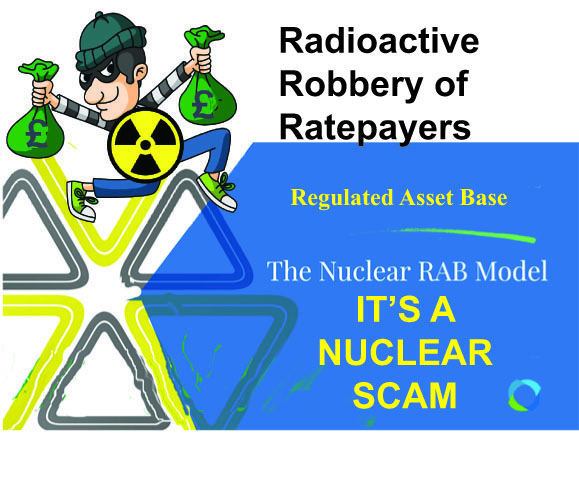
Britain is experimenting with a Regulated Asset Base model, which allows developers to recover some costs from consumers during construction, reducing investor risk but increasing public exposure. This approach could make projects like Sizewell C more viable, yet it effectively shifts financial risk from corporations to consumers, reigniting debates about fairness and affordability.
Safety, waste and trust
Nuclear energy’s social licence remains fragile. Surveys show rising support for nuclear power as part of Britain’s low carbon mix, but opposition can intensify when communities face the prospect of new plants or local waste storage. The government’s search for a geological disposal facility for radioactive waste has struggled. Transparent governance, community benefit schemes and clear communication about risks are vital.
A deeper question is how nuclear fits into a net-zero electricity system increasingly dominated by renewables. Wind and solar costs have fallen dramatically, making them the backbone of Britain’s decarbonisation strategy. But their intermittency creates a need for flexible backup and firm supplies, particularly during dark, still winter days. Here nuclear advocates see an opportunity. Yet the future grid may evolve differently. Advances in battery storage, demand flexibility and even low-carbon thermal sources (such as hydrogen or gas with carbon capture) could provide reliability without the inflexibility and long lead times of nuclear projects. From a systems perspective, nuclear’s value depends on whether it complements or crowds out other low-carbon sources of power.
A combination of offshore wind, interconnectors with Europe and demand-side management could offer cheaper resilience than large scale nuclear expansion. National Grid ESO’s Future Energy Scenarios suggest multiple credible pathways to reliability that do not rely heavily on new nuclear power.
The global dimension
……………………………… Britain wants energy sovereignty but depends on foreign partners for both capital and technology. Balancing national security with project viability will require deft diplomacy and strategic clarity.
From renaissance to realism
Nuclear energy could play a valuable role in Britain’s net-zero transition, but not at any cost. Policymakers must avoid treating it as a silver bullet or a national vanity project. Nuclear should be evaluated within a whole systems framework that considers economic efficiency, environmental impact and technological diversity. A pragmatic approach would prioritise completing current projects (such as Hinkley and Sizewell) efficiently before scaling new builds; rigorous cost transparency in SMR development; integrated planning with renewables and storage; and public engagement to rebuild trust through co-benefits, not just compensation.
The rhetoric of a “nuclear renaissance” is powerful, evoking a return to industrial confidence and scientific progress. But the real test lies in delivery. If Britain can demonstrate that modern nuclear projects are on time, on budget and publicly legitimate, it could indeed reclaim some global leadership. If not, this revival may join a long list of grand plans that stumbled on the realities of cost, complexity and public trust. https://blogs.lse.ac.uk/businessreview/2025/11/21/the-promise-peril-and-pragmatism-of-britains-nuclear-renaissance/
No comments yet.
1 This Month

of the week – Shut Down Drone Warfare!


Tell the Ukrainian Government to Drop Prosecution of Peace Activist Yurii Sheliazhenko

Petition to revoke the licensing of the Near Surface Nuclear Disposal Facility (NSDF) at Chalk River. https://www.ourcommons.ca/petitions/en/Petition/Details?Petition=e-7247
To see nuclear-related stories in greater depth and intensity – go to https://nuclearinformation.wordpress.com
-
Archives
- April 2026 (34)
- March 2026 (251)
- February 2026 (268)
- January 2026 (308)
- December 2025 (358)
- November 2025 (359)
- October 2025 (376)
- September 2025 (257)
- August 2025 (319)
- July 2025 (230)
- June 2025 (348)
- May 2025 (261)
-
Categories
- 1
- 1 NUCLEAR ISSUES
- business and costs
- climate change
- culture and arts
- ENERGY
- environment
- health
- history
- indigenous issues
- Legal
- marketing of nuclear
- media
- opposition to nuclear
- PERSONAL STORIES
- politics
- politics international
- Religion and ethics
- safety
- secrets,lies and civil liberties
- spinbuster
- technology
- Uranium
- wastes
- weapons and war
- Women
- 2 WORLD
- ACTION
- AFRICA
- Atrocities
- AUSTRALIA
- Christina's notes
- Christina's themes
- culture and arts
- Events
- Fuk 2022
- Fuk 2023
- Fukushima 2017
- Fukushima 2018
- fukushima 2019
- Fukushima 2020
- Fukushima 2021
- general
- global warming
- Humour (God we need it)
- Nuclear
- RARE EARTHS
- Reference
- resources – print
- Resources -audiovicual
- Weekly Newsletter
- World
- World Nuclear
- YouTube
-
RSS
Entries RSS
Comments RSS
 nuclear-news
Leave a comment