Zelensky covering up ‘dire’ frontline situation – Moscow

RT, Fri, 21 Nov 2025, https://www.rt.com/russia/628091-un-nebenzia-zelensky-ukraine/
Vladimir Zelensky has barred the Ukrainian military from admitting the loss of key towns to Russia, Moscow’s envoy to the United Nations, Vassily Nebenzia, has said. This is being done to hide the actual situation on the ground in the hopes that the flow of Western aid to Kiev remains unhindered, he suggested.
On Thursday, the chief of Russia’s General Staff, Valery Gerasimov,told President Vladimir Putin that Russian forces have liberated the key logistics hub of Kupyansk in Ukraine’s Kharkov Region.
The Ukrainian General Staff, however, has claimed that the city remains under the control of Kiev’s troops.
Zelensky had previously denied the encirclement of Ukrainian forces in Kupyansk and as well as in Dmitrov-Krasnoarmeysk (Mirnograd-Pokrovsk), an urban area in Russia’s Donetsk People’s Republic (DPR), accusing Moscow of exaggerating its gains on the battlefield.
During his speech at a UN Security Council meeting on Thursday, Nebenzia insisted:
“The situation on the front line for Ukraine “remains dire, if not catastrophic. Russian troops are successfully advancing on essentially all fronts.
“Despite the encirclement of a significant number of Ukrainian troops, massive losses, forced mobilization, and threats to civilians, the head of the Kiev regime forbids acknowledging the loss of cities, orders his troops to hold their positions ‘until the last soldier,’ and bans retreat.
“The policy pursued by the Kiev government has nothing to do with military reality and is purely political in nature. Zelensky wants to show his Western sponsors that the front is holding, because he counts on continued funding for his war with Russia. He needs billions of dollars to keep the war going for him and his cronies to line their pockets and stay in power.“
Last week, the Western-backed National Anti-Corruption Bureau of Ukraine (NABU) announced a probe into a “high-level criminal organization” allegedly led by Timur Mindich, a former business partner of Zelensky. Its members are suspected of siphoning around $100 million in kickbacks from state-owned nuclear operator Energoatom.
The graft scandal has led to the sacking of Ukraine’s energy and justice ministers, with other prominent figures such as Zelensky’s right-hand man, Andrey Yermak, and the head of the National Security Council Rustem Umerov also being linked to the scheme.
How Holtec International became an expanding (and controversial) nuclear power.

In Ukraine, Holtec’s principal state partner, Energoatom, has become the focus of a sweeping corruption inquiry
Holtec now controls the fate of multiple nuclear power plants across the United States………. even though Holtec had never operated a nuclear power plant.
One week after acquiring Palisades for decommissioning, Holtec submitted plans to the Energy Department for restarting the plant. Those plans only came to public light through a Freedom of Information Act request by the activist group Beyond Nuclear, published on its website in October 2023. In March 2024, Holtec secured a $1.52 billion US government loan guarantee and moved forward with an attempt to restart the nuclear reactor, despite expert assessments that the plant was no longer viable.
Following its start as a producer of nuclear waste storage canisters, Holtec International has built an empire around mothballed nuclear power plants and as-yet incomplete nuclear initiatives. The firm’s history of overpromising and underdelivery raises a question: Is this who we should trust with the future of nuclear energy?
Bulletin, By Matt Smith, November 20, 2025
On a 90-degree afternoon in July 2014, the governor, the mayor, and the local state senator gathered before 200 people at Camden, New Jersey’s Broadway Terminal along the Delaware River to celebrate an impending economic miracle. A planned technology center would bring pioneering nuclear technology and hundreds of new jobs to a dismal waterfront known for its unemployment and poverty.
State Sen. Donald Norcross, among those on a stage decorated with an eight-foot-tall banner bearing the red and black logo of Holtec International, said the company behind the deal was “a titan of energy.”
Holtec CEO Krishna Singh could locate his company’s nuclear technology center anywhere, not just in the United States but in the world, Norcross said, “And he chose Camden.”
The 47-acre campus would be used to develop a new kind of nuclear reactor that “cannot under any condition go out of control,” Singh said.
Now, the promised local miracle of economic progress seems, at most, incremental. There is no nuclear power plant assembly line as initially envisioned by Singh. His promised next-generation nuclear reactors remain conceptual a decade later, so far not progressing beyond the drawing board.
Singh made public pronouncements about providing a “path out of hereditary poverty” and a “pathway to the middle class” for Camden residents. The Camden facility would employ some 2,000 laborers and 1,000 professional staff in its first five years, the company said in promotional materials. But it ultimately hired far fewer locals than initially suggested.
In a statement in response to questions for this article, Holtec said that it has exceeded every obligation outlined in its contractual agreement with the state related to its Camden site. Also, the company noted that a court had rejected the state of New Jersey’s view that Holtec had fallen short of commitments, restoring funds that had been withheld based on claims of noncompliance.
New Jersey officials did, however, abandon a partnership with Holtec to build a job training center. Holtec said the state’s move “turned its back on the people of one of America’s poorest cities. The company has continued to invest in workforce development initiatives and to create meaningful opportunities for residents, advancing its mission to contribute to the city’s long-term economic revitalization.”
Documents filed in state and federal courts, records from regulatory agencies, and interviews with officials, activists, ex-employees, and industry analysts show that the Camden project was not a Holtec anomaly. Across its ventures, announcements of grand undertakings have been followed by under-delivery and controversy, as Holtec, a company primarily known for making concrete nuclear waste containers, succeeded in promoting itself as a high-tech leader in nuclear power generation and the decommissioning of nuclear power plants.
Since launching the Krishna P. Singh Technology Campus in Camden, Holtec has expanded aggressively into the decommissioning of shuttered nuclear power plants and a government-backed attempt to revive the largely dormant US nuclear energy sector. Holtec’s business strategy has relied in part on acquiring old nuclear plants and tapping into trust funds that plant operators had paid to the government for the eventual decommissioning of those plants. In some cases, Holtec has then reversed course and tried to restart aging reactors. Internationally, Holtec has positioned itself as spearheading US efforts to expand nuclear power generation in Ukraine and South Korea.
The stakes of that claim are higher now. In Ukraine, Holtec’s principal state partner, Energoatom, has become the focus of a sweeping corruption inquiry alleging years of inflated contracts, illicit payments and political interference in the very projects Holtec helped build at Chernobyl — prompting new scrutiny of the environment in which those projects took shape.
Although many of its projects are either unfinished or less than initially portrayed, Holtec now controls the fate of multiple nuclear power plants across the United States. The company that didn’t fully deliver on initial promises about a technology center in Camden (see sidebar) has been entrusted with billions of dollars from ratepayer-funded decommissioning trust funds, responsibility for some of the nation’s most hazardous nuclear sites, and permission to re-start a closed nuclear reactor—even though Holtec had never operated a nuclear power plant.
Now, Holtec plans to go public in a planned stock offering that Singh told Barron’s could value his company at $10 billion. Singh hopes to sell shares worth 20 percent of the company’s total value in a stock offering that aims to raise capital for an expansion of its oft-stated plans to build small modular reactors (SMRs), a next-generation technology that, for Holtec, remains in the design stage and has not yet been licensed.
The move to go public entrusts yet more financial and public faith in a company whose grand undertakings have often been followed by controversy and under-delivery.
Capitalizing on the failure of Yucca Mountain
………………………………………………………………………………….. Today, Singh oversees a company that has expanded far beyond building nuclear fuel storage casks. Holtec has won contracts to control nuclear plants and manage billions of dollars in federally mandated decommissioning trust funds. However, this aggressive expansion has been overshadowed by serious concerns: 24-year-old bribery allegations (see sidebar) and regulatory violations related to employee radiation exposure risk, quality control in spent fuel transportation and storage systems, and inadequate security. Activists, public officials, and nuclear experts question whether a company with no prior experience in building, operating, or maintaining nuclear power plants—one that has attracted sustained controversy—should be positioned to lead a significant part of America’s nuclear future
………………………………………………………………………….In 2018, Holtec formed a subsidiary called Holtec Decommissioning International and began acquiring shuttered nuclear plants outright. Rather than simply selling storage systems to utilities, Holtec would now buy entire reactor sites, take control of their decommissioning trust funds, and assume responsibility for dismantling the facilities and managing the radioactive waste stored there.
Each closed nuclear plant came with a substantial decommissioning trust fund—money collected from ratepayers over decades to pay for eventual cleanup.
Holtec claimed it could complete the decommissioning work much faster than utilities had planned, promising 10- to 12-year timelines instead of the 60 years allowed by regulators. Also, there was a glittering prospect: Holtec could potentially keep whatever remained in the trust funds after decommissioning was complete………………………………….
For former Nuclear Regulatory Commission (NRC) chairman Gregory Jaczko and other observers skeptical of Holtec’s plans, one important question centers on whether Holtec has been set up in a way that will allow it to be held accountable should things go wrong.
Singh has set up his business via a web of subsidiaries spanning 17 countries across four continents. The company has created dozens of separate entities, from Holtec Orrvilon in Hong Kong to operations in Britain and Ukraine, plus numerous limited liability companies (LLCs) clustered in New Jersey, Delaware, and Florida. These are set up in complex structures, whereby entities often own each other in nested arrangements, with one LLC either a shareholder or a subsidiary of the other.
This structure is perhaps most clearly seen in Holtec’s nuclear decommissioning business. Each closed plant—the Palisades Nuclear Plant in Michigan, the Indian Point plant in New York, and the Pilgrim Nuclear Power Station in Massachusetts—exists within its own special-purpose LLC. These subsidiaries control billions of dollars in decommissioning trust funds while maintaining limited legal liability, according to state attorneys general from Massachusetts and New York.
………………………………………Jaczko noted that there was no corporate entity positioned to provide a financial backstop if something went wrong.
………………………….“This structure is far less transparent and accountable than what we typically see for power plant ownership,” he said. “It appears that there is no corporate entity with sufficient resources to provide capital and cover operating expenses in the event of revenue losses, whether due to accidents or plant problems requiring extended shutdowns.”………………………………………………………….
A tangled tale: Holtec in Ukraine
…………………………………….. Anti-corruption officials in Ukraine in early November announced a $100 million corruption scandal that forced out the senior leadership of Energoatom, the principal state partner with Holtec at Chernobyl. The officials describe corruption and a lack of oversight at the agency—during periods that overlapped Holtec’s work. As of press time, allegations had not included Holtec itself.
……………………………Holtec’s promotional materials continue to present its Ukraine record as evidence of competence and reliability. Ukrainian authorities, meanwhile, continue collecting evidence to support allegations that agencies overseeing the U.S. company were compromised.
Publicly available information does not indicate that Holtec has been formally accused of wrongdoing in the Ukrainian corruption cases.
…………………….According to Holtec’s and the Ukrainian government’s project documents, the company served as the prime contractor for what is known as the Interim Spent Nuclear Fuel Dry Storage Facility, or ISF-2, which is designed to hold spent fuel from undamaged reactors at Chernobyl, which had remained in operation until 2000. Holtec hired YUTEM-Engineering as its principal subcontractor. That is, Holtec had a direct, if unwitting, role in hiring and managing a key local company whose owner had financial ties to what official Ukrainian investigations said was a notorious corruption network.
Holtec’s Ukrainian venture began in the mid-2000s, when the country confronted a growing crisis over its nuclear waste. Each year, Ukraine paid Russia approximately $200 million to dispose of the spent fuel from its 15 reactors. American officials grew increasingly worried about this dependency, diplomatic cables released by WikiLeaks show. In leaked cables, those officials touted Holtec as a means to pry Ukraine from Russia’s nuclear embrace. The geopolitical urgency also had a practical side: Holtec might help secure waste in the still-hazardous Chernobyl Exclusion Zone.
Ukraine decided to make the depopulated land around the old plant into a general-purpose nuclear waste storage site serving both the old plant and its spent fuel, as well as spent fuel from power plants elsewhere in the country.
The most visually prominent of the three separate projects is a massive arch-shaped sarcophagus that contains the old, damaged portion of the Chernobyl complex. But there are two lesser-known facilities, and that’s where Holtec supplied management, technical know-how, and equipment. Holtec was the main contractor for what was called the Interim Storage Facility-2 for spent fuel from Chernobyl reactors. And it supplied equipment and engineering support for the Centralized Spent Fuel Storage Facility, built to store nuclear waste from elsewhere.
In its prime contractor role, Holtec was to hire, manage, and pay subcontractors doing on-the-ground civil engineering work, according to records from the Chernobyl management agency, Ukraine’s public spending audit agency (hyperlined document in Ukrainian), and other documents.
Holtec’s work was supported by international heavyweights: the International Atomic Energy Agency and the European Bank for Reconstruction and Development. The company nonetheless found itself in the company of controversial figures.
Holtec’s main local partner for the ISF-2 project was the firm YUTEM-Engineering, whose owner had ties to Maksym Mykytas, the head of a construction empire. According to official records, Holtec hired, managed, and paid YUTEM on that project.
Anti-corruption agencies have accused Mykytas of masterminding multimillion-dollar collusion and bribery schemes related to, among other things, the repository for waste from outside Chernobyl. On that centralized fuel storage project, Holtec was not responsible for hiring or managing YUTEM, which became mired in bid-rigging and bribery scandals.
Evidence connects YUTEM to a wider alleged criminal enterprise that’s been the subject of multiple high-profile investigations of alleged embezzlement, fraud, bribery, and bid-rigging. The Bulletin traced these ties via multiple records, including Mykyta’s asset declaration from 2017, when he was a member of Ukraine’s parliament, showing he received money or equity worth approximately $75,000 in a transaction with YUTEM’s owner.
Mykytas was not just any politician. According to Ukraine’s National Anti-Corruption Bureau, he was the alleged mastermind of a sprawling network of companies used to embezzle state funds.
……………………………..Eventually, investigations into Mykytas caused progress on the nationwide storage facility to stall, though all the sites at Chernobyl eventually passed testing and licensing phases. By then, Holtec and Ukrainian officials were announcing another ambitious nuclear effort: a commitment to build 20 small modular reactors across the war-torn country. The announcement came despite Holtec having no US-approved reactor design and no experience building or running nuclear plants, and despite Russia’s ongoing campaign of bombing energy infrastructure, once again pitting a grand vision against a complex and hazardous reality.
……………………………….In December, Energoatom, Ukraine’s state-owned nuclear company, announced it was discussing with Holtec the idea of building a factory for SMR components to make Ukraine a regional center for the production and export of nuclear technologies.
In January, Energoatom announced its officials had held a video conference with Singh to discuss ideas such as a new factory for producing parts for SMRs, a joint Energoatom-Holtec engineering and training center, and “implementation of SMR-300 technology in Ukraine,” according to an agency announcement.……………………………
Holtec’s unusual strategy in Michigan. And elsewhere.
…………………………………….. unlike some competitors who have made at least incremental progress toward deployment, Holtec’s SMR vision has remained mostly notional. It wasn’t until July, when Holtec obtained an operating license for Palisades, that the company had ever obtained regulatory approval to operate a reactor.
Holtec, in a statement, said its announced plans to install SMR reactors in Michigan five years from now show that it is ahead of its competitors.
At its Camden facility, Holtec has announced plans to install a simulator to mimic the reactor conditions of its SMR. The company describes the facility as an innovation center for SMR design, employing over 600 highly skilled workers and says it will be “where the US’s first SMRs will be constructed and shipped for commercial deployment in this decade.” But no reactor manufacturing has begun as the company awaits regulatory approvals for its designs.
Even so, these paper reactors have yielded concrete returns.
In September 2024, the US Department of Energy granted Holtec a $1.52 billion loan guarantee to restart the mothballed Palisades nuclear power plant in Michigan. The re-commissioning of Palisades is controversial in its own right, but Holtec has also woven its still-unproven SMR program into the Palisades narrative. Though the loan formally supports the restart of an existing unit at the plant, Holtec has presented the site as a dual project: a place to both reboot old infrastructure and a site for new SMRs, making Palisades “ground zero for America’s nuclear renaissance,” according to company marketing materials.
This renaissance story seems to be absent from federal records, however. The SMR-300 design does not yet have an NRC license application on file. Holtec suspended the SMR-160’s licensing process in 2023 and has begun only informal pre-application discussions for the new design, according to the NRC. The target date for filing formal applications from scratch is sometime in 2026, according to a Holtec presentation to the NRC.
The idea of SMRs continues to deliver. Singh now describes Palisades as the birthplace of a nuclear revival, promising to deploy Holtec’s SMR-300 design on the Michigan lakeshore by 2030……………
……………………………Although it lacks US certification for its SMR designs, Singh has pursued this SMR strategy internationally. In India, it envisions hundreds of reactors.
………………………………………How decommissioning became re-commissioning
Holtec bought the Palisades nuclear plant in 2018, gaining access to a $592 million fund set aside for decommissioning.
But Holtec’s stewardship of the Palisades plant soon took a swift course change. …………………………….
One week after acquiring Palisades for decommissioning, Holtec submitted plans to the Energy Department for restarting the plant. Those plans only came to public light through a Freedom of Information Act request by the activist group Beyond Nuclear, published on its website in October 2023. In March 2024, Holtec secured a $1.52 billion US government loan guarantee and moved forward with an attempt to restart the nuclear reactor, despite expert assessments that the plant was no longer viable.
…………………………………………….“They lied about what they were going to do at Palisades. They said they were taking over ownership to decommission the plant. Little did we know, they weren’t even intending to decommission,” said Kevin Kamps with Beyond Nuclear, an anti-nuclear advocacy group. “This was a trick to get their hands on the plant.”
………………………………………………………………………………………………………….The questions about Indian Point
……………………………………………………………………………………Community fears intensified in 2021 when Holtec announced plans to discharge radioactive wastewater from Indian Point into the Hudson River. State lawmakers swiftly passed legislation blocking such discharges. Holtec sued the state in April 2024, arguing the law unlawfully infringed on federal authority over nuclear safety. A federal judge ruled in favor of Holtec in September 2025, but New York is appealing the decision.
…………………………Holtec’s financial disclosures raise additional concerns. In meetings with state officials, company executives admitted that project delays or unexpected costs could undermine their business model…………………………………………………………….
Vision vs. reality
The story of Holtec often comes down to moments when soaring vision collides with terrestrial problems……………………………………..
……………………………………Holtec International capitalized on the federal government’s failure to create a national nuclear waste repository, creating a captive market for concrete casks now on-site at power plants across America. From this foundation, CEO Krishna Singh launched a more audacious expansion into decommissioning, acquiring shuttered nuclear plants outright. The company took control of billions in ratepayer-funded decommissioning trust funds, promising to clean up sites in a fraction of the time planned by utilities, with the glittering prospect of keeping any leftover money.
This aggressive growth, however, relies on financial and operational strategies that have drawn unflattering scrutiny. . Holtec structures its decommissioning projects through a web of special-purpose corporations (LLCs), which own the plants and control their trust funds, potentially leaving no backstop if a project encounters costly problems. Instead of legal guarantees, Singh has offered his word and his company’s reputation.
Now, Holtec is asking the public and investors for even greater faith as it plans a multibillion-dollar initial public stock offering. The capital raised is intended to fund another expansive promise. Yet, like the future of high-tech jobs once promised for Camden, these SMRs remain in the concept stage. The company has built an empire on mothballed plants and sidelined projects while selling a vision of a nuclear renaissance. Its history leaves a question for regulators and potential investors: Is this who the world should trust with a large portion of the future of nuclear energy?
Matt Smith is a freelance reporter with 30 years of experience covering business, the environment, and other topics. https://thebulletin.org/2025/11/how-holtec-international-became-an-expanding-and-controversial-nuclear-power/?utm_source=ActiveCampaign&utm_medium=email&utm_content=Disasters%20in%20a%20post-truth%20world&utm_campaign=20251117%20Monday%20Newsletter%20%28Copy%29
Press-hating president kisses up to press-murdering crown prince

Nov. 18, 2025 / Freedom of the Press Foundation, https://freedom.press/issues/press-hating-president-kisses-up-to-press-murdering-crown-prince/
President Donald Trump shamefully welcomed Saudi Crown Prince Mohammed bin Salman to the White House today. He brushed aside questions about Prince Mohammed’s role in the gruesome murder of Washington Post journalist Jamal Khashoggi, commenting that “things happen” and “You don’t have to embarrass our guest by asking a question like that.”
Freedom of the Press Foundation Director of Advocacy Seth Stern said:
“Somehow calling a female reporter ‘piggy’ was only the second-most offensive anti-press utterance to come out of the president’s mouth in recent days. And somehow Biden’s infamous fist bump is now only the second-most disgusting public display of flattery by a U.S. president to journalist-murderer Mohammed bin Salman.
“Scolding a U.S. reporter for asking questions about MBS ordering a fellow journalist to be bonesawed signals to dictators everywhere that they can murder journalists with impunity — as if Trump hadn’t already sent that message clearly enough by bankrolling and arming Israel while it does just that in Gaza.
“Today’s fiasco felt like the nail in the coffin for whatever was left of the U.S.’s global standing as a leader on press freedom. The next president is going to have their work cut out for them in rebuilding that credibility. In the meantime, judges, lawmakers, and everyone else in a position to slow the backslide need to step up and rise to the moment before more journalists get killed.”
Quiet, Piggy: How Calling a Female Reporter Livestock Became Just Another Tuesday in the Death of American Democracy (Part 2)

The rude one is Mary Bruce, for mentioning unpleasantness.
A female reporter asks about a child sex trafficker whose files implicate powerful men: “Quiet, piggy.”
A female reporter asks about a murdered journalist: “Don’t embarrass our guest.”
The rude one is Mary Bruce, for mentioning unpleasantness.
A female reporter asks about a child sex trafficker whose files implicate powerful men: “Quiet, piggy.”
A female reporter asks about a murdered journalist: “Don’t embarrass our guest.”
21 November 2025 David Tyler, https://theaimn.net/quiet-piggy-how-calling-a-female-reporter-livestock-became-just-another-tuesday-in-the-death-of-american-democracy-part-2/
Part Two: The Nine Year War on Women Who Dare to Speak
This is the second of a three part analysis examining how Donald Trump’s “quiet piggy” comment reveals the systematic dismantling of democratic norms. Part One explored how the flood the zone strategy and attention economy conspire to make outrages disappear. Part Two examines the nine year war on women who dare to speak. Part Three will map the global authoritarian playbook for destroying press freedom.
In Part One, we examined how the “quiet piggy” incident almost disappeared entirely, buried under an industrial scale production of amnesia. We watched journalists stand silent while their colleague was called livestock. We saw the system work as designed
But to understand why this moment matters, we need to zoom out. Because calling a female reporter a pig isn’t an isolated outburst. It’s the latest instalment in a nine year campaign to normalise contempt for women who dare to ask awkward questions.
This campaign has measurable effects. Rising violence. Shrinking rights. Women driven from public life. And it’s not happening in isolation. It’s part of a global pattern where authoritarian movements always target women first, testing how much cruelty a society will tolerate before expanding to other populations. Women who speak are the canaries in the coalmine of fascism. And right now, the canaries are copping it.
The Timeline: From ‘Pussy’ to ‘Piggy’
Let’s be clear about the progression. The pattern is clear when you step back far enough to see it whole.
Trump announced his first presidential campaign in June 2015 with a speech calling Mexican immigrants rapists and criminals. But it was October 2016 that marked the real watershed: the Access Hollywood tape.
“Grab ’em by the pussy. You can do anything.”
That was the beta test. The question wasn’t whether he’d said it, the tape was clear enough. The question was whether America would care.
The answer, delivered in November 2016, was a collective shrug and an electoral college victory.
That’s when the war on women went from guerrilla tactics to full mechanised assault.
The through line from “grab ‘em by the pussy” to “quiet piggy” isn’t a character flaw. It’s a deliberate, sustained campaign to normalise contempt for women, to make casual misogyny just another quirk of the national conversation.
And it’s worked beyond Trump’s wildest authoritarian fantasies.
The Downstream Effects Are Measurable
This isn’t abstract cultural commentary. The effects of normalising contempt for women are documented, measurable, and accelerating.
Since 2016, researchers have found:
- Violence: Spikes in domestic violence in counties that voted heavily for Trump. Increased reports of harassment and assault on college campuses following Trump rallies.
- Political Participation: Measurable decreases in women running for office in regions where Trump style misogyny is most normalised. Women candidates facing unprecedented levels of gendered harassment and threats.
- Youth Radicalisation: Teenage boys expressing increasingly hostile attitudes toward girls’ autonomy. The mainstreaming of incel ideology among young men who’ve come of age entirely during the Trump era.
- Media and Journalism: Female journalists specifically targeted for rape and death threats. Physical assaults at Trump rallies and events.
This isn’t happening because Trump occasionally says something crude. It’s happening because he’s made cruelty toward women a central feature of his political brand, and millions of people have adopted that brand as their identity.
Female Journalists as Specific, Systematic Targets
But women journalists face a particular kind of targeting that goes beyond general misogyny. They’re attacked not just for being women, but for being women who dare to ask questions.
The pattern is unmistakable:
Isolation: Female journalists who ask tough questions are cut off from access, singled out for crowd harassment. The message: step out of line and you’re on your own.
Delegitimisation: Female reporters are dismissed as biased, emotional, unprofessional. Their questions are framed as partisan attacks rather than legitimate journalism.
Sexualisation: Unlike male journalists who are merely called fake news, female journalists face explicitly sexual harassment. Rape threats. Fantasies about violence. Their bodies weaponised as tools of intimidation.
The combination is devastating. It’s not enough to be a good journalist. You have to be willing to endure systematic harassment, threats to your family’s safety, and the knowledge that your own colleagues might not defend you.
Family games
How many important questions don’t get asked because female journalists have calculated the cost and decided it’s too high?
The Pattern: Women Who Ask Are the Problem
Now let’s examine the specific context that made “quiet piggy” land so hard: the week in which Trump made clear that women asking questions about powerful men’s crimes would be treated as the problem, not the crimes themselves.
Catherine Lucey asked about the Epstein files. She got called a pig.
Mary Bruce from ABC asked Saudi crown prince Mohammed bin Salman about ordering Jamal Khashoggi’s murder. She got scolded for rudeness.
The combination reveals the structure perfectly.
The Epstein Files
Jeffrey Epstein ran a child sex trafficking operation that serviced wealthy, powerful men for decades. Trump fought to keep those files secret. When a reporter asked why, the response was hostility. The deflection is textbook: make the question the problem, not the answer.
The Khashoggi Murder
Jamal Khashoggi was murdered, dismembered with a bone saw, on the crown prince’s orders. But when Mary Bruce asked about it, Trump’s response wasn’t outrage at the murder. It was annoyance at the reporter for bringing it up.
“You’re mentioning somebody that was extremely controversial,” Trump said. “Whether you like him, or didn’t like him, things happen.”
Things happen.
A journalist gets murdered, and the President of the United States dismisses it with the fatalism of someone explaining a flat tyre.
Notice who’s rude in Trump’s telling. Not the crown prince who ordered a hit. Not the killers who wielded the saw.
The rude one is Mary Bruce, for mentioning unpleasantness.
Let’s be explicit about what these two incidents together reveal:
A female reporter asks about a child sex trafficker whose files implicate powerful men: “Quiet, piggy.”
A female reporter asks about a murdered journalist: “Don’t embarrass our guest.”
The crimes, raping children, murdering dissidents, barely register as problematic in Trump’s response. What registers as offensive is the impudence of women presuming they have the right to ask about them.
This is patriarchy in its purest form: women who speak are the problem, not the men who commit atrocities.
The Global Pattern: Women as Canaries in the Coal Mine
This isn’t just an American phenomenon. Scan the global authoritarian landscape and you’ll see the same pattern repeated with depressing consistency.
- Brazil’s Bolsonaro: Openly celebrated rape culture, joked about sexual assault. He won. The downstream effects included spiking violence against women.
- The Philippines’ Duterte: Made rape jokes about missionaries, threatened to shoot female rebels. He won. Press freedom collapsed.
- India’s Modi: Presides over epidemic levels of sexual violence while Hindu nationalist movements push women out of public life.
- Hungary’s Orbán: Dismantled reproductive rights, pushed “traditional family values” as cover for authoritarian consolidation.
- Afghanistan’s Taliban: Within months of retaking power, erased women from public existence. The logical endpoint of treating women as less than human.
- Tony Abbott stood in front of a banner calling Julia Gillard a witch and a bitch.
The pattern is universal: authoritarians always target women first. Always test the boundaries of acceptable cruelty against women before expanding to other populations.
Women, and specifically women who speak, women who question, women who refuse to be quiet, are the canaries in the coalmine of fascism.
When a society tolerates calling female reporters livestock, it’s not a gaffe. It’s a dress rehearsal for broader violence.
So far, not enough people have flinched.
The Cracks in the Edifice: Why He’s Scared Now
There’s a reason Trump’s lashing out with particular viciousness right now, and it’s not strength. It’s fear.
His air of invincibility is cracking:
- Democrats dominating off year elections in districts he won
- Forced to reverse course on Epstein files under public pressure
- Economic turbulence as tariffs and chaos spook markets
- His approval rating softening in key swing states
- Wounded authoritarians are more dangerous than confident ones. When bullies sense they’re losing, they don’t retreat gracefully. They escalate. They lash out harder, faster, more recklessly.
The “quiet piggy” outburst might be evidence of a man on the back foot, overreacting to a question he should have deflected with his usual blizzard of lies.
But don’t mistake fear for weakness. Cornered animals bite. Failing authoritarians would rather burn everything down than admit defeat.
And female journalists, already the most vulnerable, already the most systematically targeted, become the easiest targets when the lashing out intensifies.
Part Two Conclusion: The War Continues
So we’ve traced the nine year escalation from “grab ‘em by the pussy” to “quiet piggy.” We’ve documented the measurable downstream effects, rising violence, shrinking rights, women driven from public life.
We’ve watched this pattern repeat globally, from Brazil to the Philippines to Hungary to Afghanistan, with women always the first targets of authoritarian consolidation.
And we’ve recognised what this means: women who speak are canaries in the coalmine of fascism. When they’re silenced, everyone else is next.
The “quiet piggy” moment isn’t an isolated incident. It’s the latest chapter in a systematic campaign to make women, and particularly women who ask uncomfortable questions, afraid to speak.
And it’s working.
In Part Three, we’ll examine the authoritarian playbook for destroying press freedom: the four phase strategy that moves from delegitimisation through intimidation to isolation and violence. We’ll see how this playbook has succeeded globally and how it’s being deployed in America right now. And we’ll explore whether we have the courage to resist before silence becomes survival.
For now, understand this: the war on women who dare to speak is a war on democracy itself. When female journalists learn to be quiet, everyone learns to be quiet.
The only question is whether we’ll let that lesson stick.
Russian Attacks Cripple Ukraine’s Nuclear Power Output
Oil Price, By Charles Kennedy – Nov 20, 2025,
Russian attacks on energy infrastructure in western Ukraine have left hundreds of thousands of Ukrainians without power as of Thursday as nuclear power plants are curbing generation because of damaged transmission lines.
Damage to power lines has forced nuclear power plants, which generate more than half of the country’s electricity, to reduce production, a representative of Ukraine’s national nuclear energy company Energoatom told Reuters today.
Earlier this week, Rafael Mariano Grossi, the Director General of the International Atomic Energy Agency (IAEA), said that two Ukrainian nuclear power plants have been operating at reduced capacity for the past ten days after a military attack damaged an electrical substation critical for nuclear safety and security.
Russia and Ukraine have intensified attacks on each other’s energy infrastructure in recent weeks, with Russia targeting Ukrainian power and gas supply and Ukraine hitting Russian refineries, oil depots, and export facilities. ……………………………………………. https://oilprice.com/Latest-Energy-News/World-News/Russian-Attacks-Cripple-Ukraines-Nuclear-Power-Output.html
Department of Energy Seeks to Eliminate Radiation Protections Requiring Controls “As Low As Reasonably Achievable”
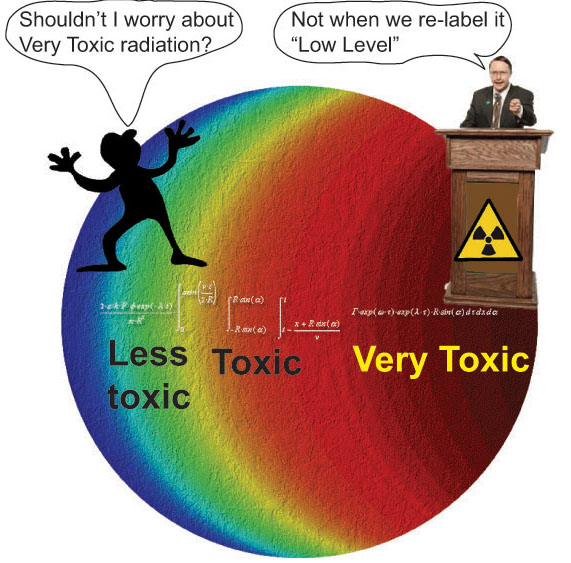
Santa Fe, NM – An internal Department of Energy (DOE) memorandum eliminates worker and public radiation protection rules known “As Low As Reasonably Achievable” (ALARA). This fundamental departure from decades of accepted health physics practices is being promoted by senior DOE political appointees with little background in health or radiation control. It is marked as “URGENCY: High” under the auspices of the DOE Deputy Secretary, the Under Secretary for Science, and the Administrator of the National Nuclear Security Administration. The memorandum awaits the final signature of DOE Secretary Chris Wright.
The memo’s stated goal is to:
“…remove the ALARA principle from all DOE directives and regulations, including DOE Order 458.1, Radiation Protection of the Public and the Environment, NE [Office of Nuclear Energy] Order 458.1, Radiation Protection of the Public, and, upon completion of the rulemaking process, 10 CFR [Code of Federal Regulations] 835, Occupational Radiation Protection.” [1]
It follows the playbook of the Heritage Foundation’s Project 2025, which called for:
“Set[ting] clear radiation exposure and protection standards by eliminating ALARA (“as low as reasonably achievable”) as a regulatory principle and setting clear standards according to radiological risk and dose rather than arbitrary objectives.”[2]
Contrary to Project 2025’s assertion that ALARA is just “arbitrary objectives,” the U.S. Occupational Safety and Health Administration declares it to be:
“…the cornerstone principle of radiation safety, emphasizing that radiation exposure should be minimized to the lowest possible levels while still allowing essential tasks to be performed. This principle applies everywhere radiation is present, including medical, industrial, nuclear, and research settings… ALARA is not just a recommendation—it is a legal and ethical requirement in radiation-related industries.”[3]
The elimination of ALARA protections is likely to increase radiation exposures to workers and weaken cleanup standards at contaminated sites where DOE has binding legal requirements with the impacted states (e.g., Los Alamos Lab, NM; Hanford Nuclear Reservation, WA and West Valley Demonstration Project, NY), as well as DOE Legacy Management sites where residual contamination remains after completion of claimed “cleanup” (e.g., Rocky Flats, CO and Weldon Spring, MO).
DOE’s memo purports to remove red tape constraining construction of new nuclear power plants, which inevitably experience huge cost overruns at ratepayers’ expense because of the inherent economic problems with nuclear power. However, because DOE’s primary mission is expanding nuclear weapons production, the elimination of ALARA protections will hit workers and nearby communities by allowing higher worker and public doses.
Two pertinent examples are the expanding production of plutonium “pit” bomb cores at the Los Alamos Lab and future pit production at the Savannah River Site in South Carolina. At the same time, the independent Defense Nuclear Facilities Safety Board’s role of nuclear safety oversight is being crippled by the Trump Administration’s refusal to nominate candidates to the Board. Moreover, DOE’s termination of ALARA rules can even downgrade international radiation protection standards because the Department provides staff and training for the United Nations’ International Atomic Energy Agency.
DOE’s high-level memorandum relies heavily upon a recent study by its Idaho National Laboratory.[4] According to the memo, the INL Report concluded:
“The balance of available scientific evidence indicates that annual dose rates of 5,000 mrem or less have not been shown to result in detectable increases in adverse health outcomes across diverse human populations and exposure scenarios. Furthermore, substantial evidence suggests that even 10,000 mrem/year may maintain a reasonable safety margin based on available epidemiological and radiobiological data.”
This is highly debatable (see comments by an independent epidemiologist below). By way of comparison, a standard chest X-ray is around 10 millirem (mrem) and an average annual radiation dose from all sources (including natural) to any one individual in the United States is around 600 mrem.[5] The INL report begins to rationalize public radioactive doses that are up to 16 times higher.
The Idaho National Laboratory is where DOE extracted weapons grade uranium from spent reactor fuel for warhead production, resulting in significant ground water contamination and “temporary” storage of liquid high-level waste now estimated to cost billions of dollars to stabilize. Nevertheless, according to INL Director John Wagner, the Idaho National Laboratory Report specifically recommends:
- Eliminating all ALARA requirements and limits below the 5,000 mrem occupational dose limit in order to reduce “unnecessary economic burdens.”
- Multiplying five-fold the allowed public radioactive dose limit from 100 mrem per year to 500 mrem per year.
- Supporting ongoing research on low-dose radiation effects to “further refine scientific understanding and regulatory approaches.”
Ongoing research on low-dose radiation effects” is aimed at the Linear No-Threshold principle, which maintains that no dose of radiation is safe. Related, ALARA is considered to be the global bedrock of radiation protection for nuclear workers and the public and is widely accepted as best practices by health physics professionals. Historically, more than 10,000 DOE workers have filed compensation claims for their occupational illnesses, which argues for strengthening, not weakening, occupational protection standards.
In parallel with DOE under Trump Executive Orders, the Nuclear Regulatory Commission (which oversees the nuclear energy industry) is questioning the Linear No-Threshold (LNT) principle. In recent written comment to the NRC, epidemiologist Joseph Mangano summarized decades of studies supporting LNT. His cited evidence includes:
- Studies of low-dose pelvic X-rays to pregnant women in the mid-1950s that concluded that a single X-ray would nearly double the risk of the child dying of cancer or leukemia by age ten.
- A 1990 study by the Committee on the Biological Effects of Ionizing Radiation (BEIR) that concluded that cancers and genetic damage increase with low-level radiation as a linear, non-threshold function of the dose. It included over 900 references that support LNT.
- A second BEIR study in 2005 that reiterated the risks of low-dose radiation exposures.
- A 2020 systematic review of 26 studies involving 91,000 individuals with solid cancers and 13,000 with leukemia that documented excess risks caused by low dose radiation.
- A 2023 study of 309,932 workers at nuclear plants in France, the United Kingdom, and the United States that found 28,089 had died of solid cancers with occupational doses well below Hiroshima and Nagasaki atomic bomb survivors. This suggests that the Linear No-Threshold model may actually underestimate the harmful effects of prolonged low radiation doses.[6]
Jay Coghlan, Director of Nuclear Watch New Mexico, concluded: “The Trump Administration is pumping taxpayers’ money into the much hyped “nuclear renaissance,” now in its third or fourth failed attempt, while cutting Medicaid for the poor and cutting taxes for the rich. But this time the corporate nuclear titans are being given a leg up by cutting nuclear safety protections for workers and the public, inevitably causing more illnesses. The good news is that fundamental market economics will eventually collapse the nuclear industry. However, one has to ask, at what safety costs to other sectors, such as the expanding production of nuclear weapons for the new arms race?”
Palestinians Will Not Let the Genocide Kill Their Hopes: The Forty-Seventh Newsletter (2025)
The Palestinian people continue to resist the inhuman Israeli occupation and genocide, turning art and culture into spaces of memory, dignity, and hope.
20 November 2025. Tricontinental: Institute for Social Research.
In the United Nations’ Humanitarian Situation Update #340 on the Gaza Strip (12 November 2025), there is a section on the distress experienced by more than 1 million Palestinian children in Gaza. The most common symptoms among children reported in the assessment are ‘aggressive behaviour (93 per cent), violence toward younger children (90 per cent), sadness and withdrawal (86 per cent), sleep disturbances (79 per cent), and education avoidance (69 per cent)’. Children account for about half the population in Gaza, where the median age is 19.6 years. They will struggle for a very long time to overcome these symptoms. There is no end in sight to the concrete conditions that produce them, namely the ongoing genocide and occupation.
Children face extraordinary attacks by the Israeli forces, some of which were documented in a recent report by Defense for Children International. For instance, on 22 October 2025, sixteen-year-old Saadi Mohammad Saadi Hasanain and a group of other children went to Saadi’s destroyed home to collect some of his belongings and firewood. Israeli quadcopters opened fire on them, forcing the children to scatter. Two of the boys escaped the attack; Saadi and another boy could not. The next morning, Saadi’s family found the body of the other boy, his head crushed. Beside him they found Saadi’s phone, his shoes, and his pants. Saadi’s shirt was tied around the body of the murdered boy. There is no news of Saadi, and his family fears he has been taken by Israeli forces.
Our latest dossier, Despite Everything: Cultural Resistance for a Free Palestine, includes a powerful line from the eighteen-year-old Gazan artist Ibraheem Mohana, who came of age during the genocide: ‘They started the war to kill our hopes, but we won’t let that happen’. We won’t let that happen. That refusal is a powerful sensibility.
The title of the dossier references the words of Palestinian actor and filmmaker Mohammad Bakri – despite everything, including the genocide, Palestinian culture will endure and will flourish. Not only will Palestinian culture survive the genocide, but it is the people’s cultural resources that will help heal the children and provide them with a pathway back to some level of sanity. Art is a safe refuge, a practice that allows a people to manage trauma that cannot be assimilated into their collective life. The trauma imposed on Palestinians is not necessarily an event but a process, a total way of life. Palestinian life, in fact, is marked by trauma. Art is a refuge from such trauma. No wonder that so many children who survive war and its afflictions on the body and mind can find a measure of healing through the therapy of art…………………………………………….
Art can be a refusal to be erased, a testimony against imperialist narratives, and an attempt to keep historical memory alive. ‘Whatever I can use to protect myself – paintbrush, pen, gun – they are tools of self-defence’, wrote the late Palestinian novelist and militant of the Popular Front for the Liberation of Palestine Ghassan Kanafani. Palestinian artists pointed out that South Africans produced murals, music, poetry, and theatre as part of the anti-apartheid struggle (which we documented in our dossier on the Medu Art Ensemble).
The imprint of the fight for human dignity is not only present on the battlefields of national liberation but equally in the hearts of the people who aspire to win their freedom, even as others seek to deny them that right. The struggle of the oppressed to win their freedom is a struggle to vitalise cultural resources into a democratic force of their own.’………………………………………..
Since 7 October 2023, Israeli bombs have fallen on the sites of Palestinian social reproduction (bakeries, fishing boats, agricultural fields, homes, hospitals) and institutions of Palestinian cultural life (universities, galleries, mosques, and libraries). One of these institutions is the Edward Said Public Library in northern Gaza, which attracted dozens of visitors every day. The poet Mosab Abu Toha founded the library in 2017 and, in 2019, decided to raise money for a second branch in Gaza City which had a computer lab where children and adults could learn to use computer programmes and design websites.
In November 2023, the Israelis bombed the Gaza Municipal Library. Over the following months, they also bombed Gaza’s public universities, destroying their libraries. By April 2024, thirteen public libraries had been erased. ……………………………………………………………………
Abu Toha built the Edward Said Public Library in the aftermath of the fifty-one-day bombardment of Gaza in 2014. During the bombardment, the poet Khaled Juma wrote perhaps one of the most powerful elegies for Palestinian survival:
Oh, rascal children of Gaza.
You who constantly disturbed me with your screams under my window,
You who filled every morning with rush and chaos,
You who broke my vase and stole the lonely flower on my balcony,
Come back –
And scream as you want,
And break all the vases,
Steal all the flowers.
Come back.
Just come back.
Just come back. https://thetricontinental.org/newsletterissue/palestine-children-art/
‘It’s like arguing with robots’: negotiators on the state of Cop30 talks.

Three representatives of developing countries speak candidly about meetings
behind closed doors in Belém. In the negotiating rooms at the Cop30
climate conference, representatives from vulnerable countries work to get
the best deal they can. Here, three of them reveal what happens behind
closed doors. ‘They don’t listen. They don’t want to listen’; ‘I get
very frustrated with the developed countries’ positions’; ‘Some are
saying: “Why even come to Cop?”’
Guardian 21st Nov 2025, https://www.theguardian.com/environment/2025/nov/21/cop30-climate-summit-brazil-negotiators-talks-developing-countries
Japan approves restart of world’s biggest nuclear power plant
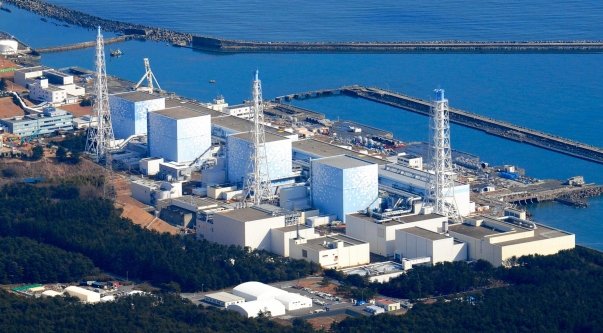
Reactor at Niigata to reopen more than a decade after Fukushima disaster as country returns to atomic energy. Japan has approved the restart of the world’s largest nuclear power plant more than a decade after its closure following the Fukushima disaster, as the country returns to atomic energy to address rising power costs.
The governor of Niigata prefecture approved the
reactivation of one reactor unit on Friday, clearing the last major hurdle
to restarting the Kashiwazaki-Kariwa plant. Japan has been gradually
restarting reactors, reopening 14 out of 54 that were closed. Another four
are waiting for local governments to give the green light and eight more
are pending regulatory approval, according to Yamashita.
FT 21st Nov 2025, https://www.ft.com/content/c5244861-0a72-42a7-87d6-b98497ad82ae
Trump’s Westinghouse nuclear deal comes with unresolved questions
Unpacking the unusual details of the administration’s $80 billion deal with the nuclear giant.
Alexander C. Kaufman, LATITUDE MEDIA, November 20, 2025
Last month, the Trump administration announced a deal to spend at least $80 billion to build at least 10 new large-scale Westinghouse reactors, a move that seemed to anoint a “national champion” in nuclear power. On its face, the agreement appeared to offer these new U.S. AP1000s — the type of reactor built at Southern Company’s Plant Vogtle in Georgia — with a guarantee of financing akin to direct funding from the Department of Energy’s Loan Programs Office.
But exactly how the $80 billion will be spent and when remains an open question.
The details are unusual. Rather than coming from the Energy Department, the Department of Commerce brokered the deal in what one Republican source described as an example of the administration’s internal “chaos.” Rather than coming from the federal budget, the $80 billion appears to be contingent upon Japan fulfilling its $550 billion investment in the U.S. that President Donald Trump negotiated in Tokyo last month. Rather than funneling the money through an entity such as the LPO, the disbursement process remains unclear.
“Without a sense of how this $80 billion is going to be used for nuclear in the U.S., it’s not going to give actual developers or owner-operators a chance to structure their own finances in response,” Advait Arun, a former Treasury Department analyst who now researches capital markets and energy finance at the Center for Public Enterprise think tank, told Latitude Media. “Is $80 billion going to go through LPO? Will it go through the White House? Are there other costs? There [are] all these different ways to imagine how the $80 billion will flow.”
Adding to the uncertainty, a top Energy Department official said this week the federal government may take ownership of the new reactors outright.
“The role of having the government involved in private markets is sacrosanct; you just don’t do it,” Carl Coe, the Energy Department’s chief of staff, said at a conference hosted by the Tennessee Advanced Energy Business Council. “But this is a national emergency.”
In a statement, Cameco, the Canadian uranium giant that owns a 49% stake in Westinghouse, said the initial agreement with the Trump administration set the stage to “negotiate and enter into definitive” contracts. Brookfield Asset Management, the private equity firm that owns the 51% share of the nuclear giant, told Latitude Media it expected to broker a binding contract by early next year. ……………………………………………………………………….
The big investor-owned utilities — Exelon, Duke, or Southern Company, for example — are arguably the ones with the resources to pursue a new nuclear deal. But so far, they have resisted building the plants themselves.
“I wouldn’t build a nuclear plant,” Calvin Butler, CEO of utility giant Exelon, told CNBC last week. “What I could do is lean in on combined-cycle gas turbines. What I could do is build community solar. What I could do is own battery storage.”
In an earnings call earlier this month, Duke CEO Harry Sideris said North Carolina’s biggest utility would need to sort out some insurance policy to manage cost overruns before embarking on its loose plans to build more than a gigawatt of new nuclear power by 2037.
“We still need to figure out what we’re going to do with cost overrun protection and how we’re going to protect our investors and our customers from overruns,” Sideris told investors on the call. “Nothing going forward until we have those other items resolved.”
Westinghouse is pursuing alternative ways to bring down the cost of new reactors. Earlier this week, the company debuted new artificial intelligence software it’s developing with Google to streamline construction and reduce the enormous cost of interest payments on loans from slow buildouts.
‘A shiny toy’
That the landmark Westinghouse agreement came through the Commerce Department rather than the Energy Department is a sign of the lack of coordination between agencies under the Trump administration, a Republican source with direct knowledge of the White House’s nuclear plans told Latitude Media.
“Everyone is running around the globe trying to make deals to bring a shiny toy back to the president,” said the source, who spoke on condition of anonymity.
The source said it was a situation of “the left hand not knowing what the right is doing,” and expressed doubt that the Japanese would direct that much funding toward a non-Japanese company in the U.S.
But that might be about to change. In late October, hard-right stalwart Sanae Takaichi took office as prime minister, pushing her plans to rebuild her country’s nuclear sector. More than half of Japan’s operable reactors are still offline as part of a nationwide shutdown that occurred after the 2011 Fukushima-Daiichi accident, but the new Takaichi administration is aiming to restart those reactors and build new ones………………. https://www.latitudemedia.com/news/trumps-westinghouse-nuclear-deal-comes-with-unresolved-questions/
Israel accelerates production of Iron Dome with US aid money.
By Tzally Greenberg, Nov 21, 2025, https://www.defensenews.com/global/mideast-africa/2025/11/21/israel-accelerates-production-of-iron-dome-with-us-aid-money/?utm_source=sailthru&utm_medium=email&utm_campaign=c4-overmatch
JERUSALEM — Israel will accelerate production of Iron Dome components with “billions of dollars” of U.S. aid money, the Israeli Defense Ministry said Nov. 20.
The announcement comes amid a tense ceasefire in Gaza and Lebanon, as Hezbollah continues to arm and strengthen itself in Lebanon and Hamas declares that it has no intention of giving up weapons. Israel used Iron Dome interceptors to intercept thousands of rockets fired from these two fronts during the two-year “Iron Swords” war.
Government officials here did not specify the exact amount of the purchase, but its Defense Ministry noted that the it will be made from the special U.S. aid package approved by Congress in April 2024 under the Biden administration, totaling at $8.7 billion.
This is the second purchase of interceptors from Rafael by the Israeli Defense Ministry in the past year that from that pot of money.
Israeli officials have said Iron Dome interceptors caught thousands of rockets fired from Gaza and Lebanon.
Iron Dome is an air defense system that intercepts short- and medium-range rockets and missiles, mortars, drones, helicopters and more. The Israeli Air Force claims that since the defense system began its operational service in 2011 it has shown a 95% interception success rate.
Rafael Advanced Defense Systems is the prime contractor for the Iron Dome defense system, collaborating with ELTA Systems – a division in Israel Aerospace Industries (IAI), and mPrest Systems.
Less for Health Care, More for the Pentagon
Even with U.S. health premiums set to double, senators gave essential health funds as a bonus to the $1 trillion Pentagon.
By Lindsay Koshgarian | November 20, 2025
The government shutdown ended with a failure to solve the problem of steeply rising health insurance premiums.
The GOP’s “Big Beautiful Bill,” which slashed programs like Medicaid and SNAP to fund tax cuts for the wealthy and a $1 trillion Pentagon, allows tax credits that reduce these health costs for ordinary people to expire at the end of this year.
As a result, millions of Americans who receive health insurance through the Affordable Care Act marketplace will see their health insurance premiums double (or worse). Democrats demanded a fix for the problem, but ultimately ended the shutdown without one.
But even in the midst of the shutdown, Senators were still busy. They approved a $32 billion increase for the Pentagon on a bipartisan basis, approving the increase by a vote of 77-20 as part of a larger bill, the National Defense Authorization Act……………………….
The Senate’s $32 billion increase comes on top of the previously passed $156 billion increase from the president’s Big Bad Bill. That already promised to push military spending over the $1 trillion mark — by a significant margin, the most we’ve ever spent on the Pentagon during peacetime.
The Senate’s additional $32 billion adds insult to injury. Much of that sum would go to shipbuilding and buying more F-35s, fighter jets which are considered outrageously expensive and often criticized as ineffective………………………….
But it’s not over — the House and Senate still need to reconcile their Pentagon funding levels. While that will likely happen behind closed doors, members of Congress will still be receptive to calls from their constituents. It’s not too late to defeat that $32 billion.
And then we can get to work using that money to save health care subsidies and keep millions of Americans from losing health insurance. https://otherwords.org/less-for-health-care-more-for-the-pentagon/
∙
TEPCO’s Kashiwazaki nuclear plant hit with another security flaw
Japan’s nuclear watchdog said Thursday another faulty antiterrorism measure
had been found at the Kashiwazaki-Kariwa nuclear complex, operated by Tokyo
Electric Power Company Holdings Inc. The Nuclear Regulation Authority
convened an emergency meeting to discuss responses to the latest discovery
that a TEPCO employee had made an unauthorized copy of a confidential
document in June and stored it in his desk at the complex in Niigata
Prefecture, northwest of Tokyo. TEPCO is preparing to restart a reactor at
the site for the first time since the 2011 crisis at its Fukushima plant.
Mainichi 21st Nov 2025, https://mainichi.jp/english/articles/20251120/p2g/00m/0bu/053000c
Iran says IAEA vote nullified inspections deal with UN watchdog
Iran’s foreign minister said an accord it reached with the UN nuclear
watchdog is now invalid after the agency’s 35-member Board of Governors
adopted a Western-backed resolution demanding greater transparency from
Tehran. The resolution demanded Iran allow international verification of
its enriched uranium stockpile and access to atomic sites hit in June by US
and Israeli strikes. “Today, in an official letter to the
Director-General of the Agency, it was announced that this understanding is
no longer valid and is considered terminated,” Abbas Araghchi said on
Thursday. He was referring to an interim agreement signed between Tehran
and the International Atomic Energy Agency in Cairo in September aimed at
eventually resuming inspections of sites stricken by the attacks.
Iran International 20th Nov 2025,
https://www.iranintl.com/en/202511205237
Energy bills to rise to pay for nuclear plant and discount scheme.
Ofgem raises price cap by £3 a year for the typical household as levies to fund the construction of Sizewell C and the Warm Home Discount take effect.
Times 21st Nov 2025, https://www.thetimes.com/business/energy/article/uk-energy-bills-to-rise-28p-a-month-from-january-sds62lvdb
1 This Month


18 March Webinar @ 1 PM EST: An Assessment of SMR Projects: The Case of Canada
register for the zoom:
https://us02web.zoom.us/webinar/register/WN_o8BIIOUvQ2ONJR1nta65DQ#/registration


of the week – STOP SMALL MODULAR REACTORS IN CANADA
To see nuclear-related stories in greater depth and intensity – go to https://nuclearinformation.wordpress.com
-
Archives
- March 2026 (138)
- February 2026 (268)
- January 2026 (308)
- December 2025 (358)
- November 2025 (359)
- October 2025 (376)
- September 2025 (258)
- August 2025 (319)
- July 2025 (230)
- June 2025 (348)
- May 2025 (261)
- April 2025 (305)
-
Categories
- 1
- 1 NUCLEAR ISSUES
- business and costs
- climate change
- culture and arts
- ENERGY
- environment
- health
- history
- indigenous issues
- Legal
- marketing of nuclear
- media
- opposition to nuclear
- PERSONAL STORIES
- politics
- politics international
- Religion and ethics
- safety
- secrets,lies and civil liberties
- spinbuster
- technology
- Uranium
- wastes
- weapons and war
- Women
- 2 WORLD
- ACTION
- AFRICA
- Atrocities
- AUSTRALIA
- Christina's notes
- Christina's themes
- culture and arts
- Events
- Fuk 2022
- Fuk 2023
- Fukushima 2017
- Fukushima 2018
- fukushima 2019
- Fukushima 2020
- Fukushima 2021
- general
- global warming
- Humour (God we need it)
- Nuclear
- RARE EARTHS
- Reference
- resources – print
- Resources -audiovicual
- Weekly Newsletter
- World
- World Nuclear
- YouTube
-
RSS
Entries RSS
Comments RSS
 nuclear-news