COP30 won’t save us, but China might.
From Fix the News, 17 Nov 25
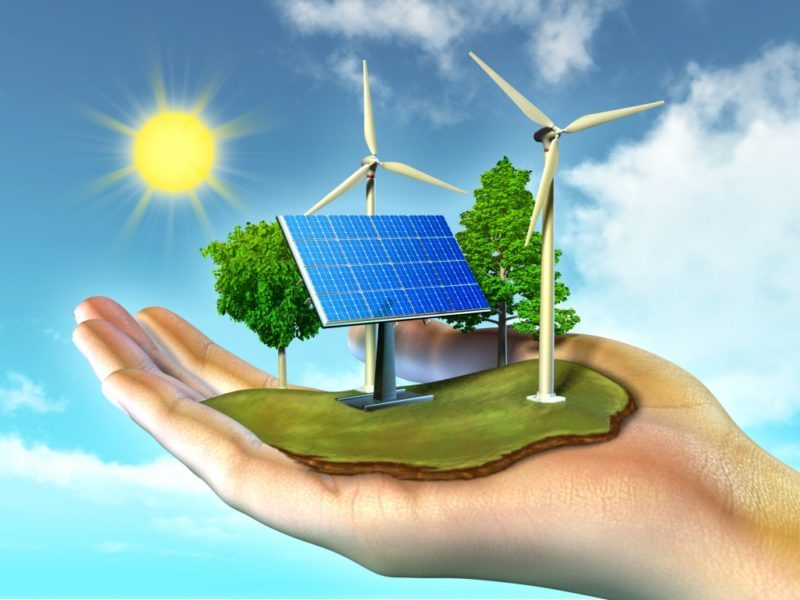
We’ve been writing about China’s renewable energy revolution here for years, so we know it’s not news to you. But it does feel like something has shifted in the last few weeks; that mainstream outlets seem to have finally woken up to what’s actually happening and more importantly, what it means. It’s not just that China is building lots of solar and wind. It’s that China might actually be the country that saves us from climate catastrophe.
This is a difficult thing for many of us in the West to get our heads around. China has been the world’s collective climate bogeyman for so long, the largest emitter, still pumping out coal, refusing to make the commitments everyone else has agreed to. But, as negotiations kick off in earnest at COP30 in Belém, the story has flipped. China’s emissions are plateauing and more crucially, they’re now supplying the technology for the energy transition to everyone else.
The Economist says China is “a new type of superpower: one which deploys clean electricity on a planetary scale;” already home to a terawatt of installed solar capacity, more than double what the United States and Europe have combined. It makes more money from exporting green technology than America (the world’s biggest petrostate) makes from exporting fossil fuels.
Reuters notes that China now dominates clean energy supply chains and files three times more clean-tech patents than the rest of the world combined. “China is now the main engine of the global clean energy transition.”
The New York Times reports that China’s overseas investments in clean energy have exceeded $225 billion since 2011, more than the Marshall Plan, adjusted for inflation. In Pakistan, a standalone panel costs farmers $125, and they never have to worry about buying diesel again. In Nepal, electric vehicles now make up 76% of new car sales because the Chinese Seres Mini EV sells for $10,000. These aren’t moral decisions. They’re economic ones.
But the journalist who captures it best is Ambrose Evans-Pritchard in The Telegraph. He starts with the grim reality that CO2 emissions hit record levels last year, oceans are the warmest ever recorded, and forests are burning at unprecedented rates. Then he introduces the idea of a “second derivative” – the early signs of an energy shift most people are missing.
Global fossil use in industry peaked in 2014. Sales of petrol and diesel cars peaked in 2017. Transport emissions are finally rolling over. China’s coal use appears to have peaked. Its emissions have fallen by 1% this year.
His conclusion is worth repeating: “We may or may not avert a scorching runaway world of two degrees plus, but whether we succeed will have nothing to do with anything said or agreed to by the 50,000 people descending on Belém. It will be decided by geopolitics, market prices and the tidal force of technological change.”
Try not to worry too much about the climate summits. What matters far more is that China is now playing midwife to a clean energy transition that makes economic sense for the 80% of humanity that lives in countries that import fossil fuels. Those 6.4 billion people have no reason to stay dependent on shipments from petrostates anymore, when they can import solar panels made by the world’s first electrostate.
This doesn’t mean the problem is solved, energy is too big and complicated for that. China and India are still building coal plants. Almost every country is building fossil gas. But the trajectory has changed. And it’s changed not because of international agreements or appeals to the better angels of our nature, but because national self-interest is finally aligning with climate action.
No comments yet.
1 This Month


18 March Webinar @ 1 PM EST: An Assessment of SMR Projects: The Case of Canada
register for the zoom:
https://us02web.zoom.us/webinar/register/WN_o8BIIOUvQ2ONJR1nta65DQ#/registration


of the week – STOP SMALL MODULAR REACTORS IN CANADA
To see nuclear-related stories in greater depth and intensity – go to https://nuclearinformation.wordpress.com
-
Archives
- March 2026 (129)
- February 2026 (268)
- January 2026 (308)
- December 2025 (358)
- November 2025 (359)
- October 2025 (376)
- September 2025 (258)
- August 2025 (319)
- July 2025 (230)
- June 2025 (348)
- May 2025 (261)
- April 2025 (305)
-
Categories
- 1
- 1 NUCLEAR ISSUES
- business and costs
- climate change
- culture and arts
- ENERGY
- environment
- health
- history
- indigenous issues
- Legal
- marketing of nuclear
- media
- opposition to nuclear
- PERSONAL STORIES
- politics
- politics international
- Religion and ethics
- safety
- secrets,lies and civil liberties
- spinbuster
- technology
- Uranium
- wastes
- weapons and war
- Women
- 2 WORLD
- ACTION
- AFRICA
- Atrocities
- AUSTRALIA
- Christina's notes
- Christina's themes
- culture and arts
- Events
- Fuk 2022
- Fuk 2023
- Fukushima 2017
- Fukushima 2018
- fukushima 2019
- Fukushima 2020
- Fukushima 2021
- general
- global warming
- Humour (God we need it)
- Nuclear
- RARE EARTHS
- Reference
- resources – print
- Resources -audiovicual
- Weekly Newsletter
- World
- World Nuclear
- YouTube
-
RSS
Entries RSS
Comments RSS
 nuclear-news
Leave a comment