New U.S. nuclear power boom begins with old, still-unsolved problem: What to do with radioactive waste
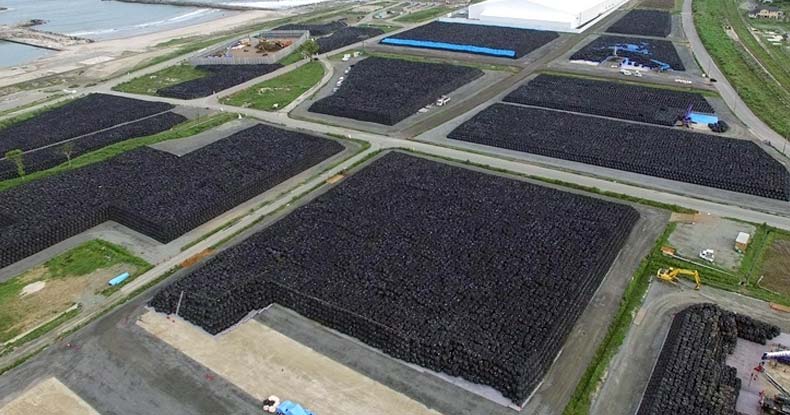
“I’m not sure that the tech industry has really thought through whether they want to be responsible for managing nuclear waste at their data center sites.”
Bob Woods CNBC, Sun, Nov 9 2025
Key Points
- The Trump administration aims to quadruple the current nuclear energy output over the next 25 years through construction of conventional reactors and next-gen small modular reactors, but a clear solution has yet to emerge for the old issue of radioactive waste.
- More than 95,000 metric tons of spent nuclear fuel (with a minority from weapons programs) sits temporarily stockpiled in special water-filled pools or dry casks at 79 sites in 39 states.
- The Department of Energy has no permanent disposal facility for nuclear waste, leaving taxpayers on the hook for payments to utilities of up to $800 million every year in damages, a bill that has reached $11.1 billion since 1998, and could grow to $44.5 billion in the future.
Nuclear power is back, largely due to the skyrocketing demand for electricity, including big tech’s hundreds of artificial intelligence data centers across the country and the reshoring of manufacturing. But it returns with an old and still-unsolved problem: storing all of the radioactive waste created as a byproduct of nuclear power generation.
In May, President Trump issued executive orders aimed at quadrupling the current nuclear output over the next 25 years by accelerating construction of both large conventional reactors and next-gen small modular reactors. Last week, the U.S. signed a deal with Westinghouse owners Cameco and Brookfield Asset Management to spend $80 billion to build nuclear plants across the country that could result in Westinghouse attempting to spinoff and IPO a stand-alone nuclear power company with the federal government as a shareholder.
There’s a growing consensus among governments, businesses and the public that the time is right for a nuclear power renaissance, and even if the ambitious build-out could take a decade or more and cost hundreds of billion of dollars, it will be an eventual boon to legacy and start-up nuclear energy companies, the AI-fixated wing of the tech industry and investors banking on their success.
But there are plenty of reasons to be skeptical. Only two nuclear power plants have been built since 1990 — more than $15 billion over budget and years behind schedule — and they went online in just the last two years. Almost all of the 94 reactors currently operating in 28 states, generating about 20% of the nation’s electricity, were built between 1967 and 1990. And though often unspoken, there’s the prickly issue that’s been grappled with ever since the first nuclear energy wave during the 1960s and ’70s: how to store, manage and dispose of radioactive waste, the toxic byproduct of harnessing uranium to generate electricity — and portions of which remain hazardous for millennia.
Solutions, employing old and new technologies, are under development by a number of private and public companies and in collaboration with the Department of Energy, which is required by law to accept and store spent nuclear fuel.
The most viable solution for permanently storing nuclear waste was first proffered back in 1957 by the National Academy of Sciences. Its report recommended burying the detritus in deep underground repositories (as opposed to the long-since-abandoned notion of blasting it into low-Earth orbit). It wasn’t until 1982, though, that Congress passed the Nuclear Waste Policy Act, assigning the DOE responsibility for finding such a site…………………………………
Other nations have moved forward with the idea. Finland, for instance, is nearing completion of the world’s first permanent underground disposal site ………………………………………..
An American startup, Deep Isolation Nuclear, is combining the underground burial concept with oil-and-gas fracking techniques. The methodology, called deep borehole disposal, is achieved by drilling 18-inch vertical tunnels thousands of feet below ground, then turning horizontal. Corrosion-resistant canisters — each 16 feet long, 15 inches in diameter and weighing 6,000 pounds — containing nuclear waste are forced down into the horizontal sections, stacked side-by-side and stored, conceivably, for thousands of years………………………………………………………………..
Recycling radioactive waste for modular reactors
An entirely different, old-is-new-again technology, pioneered in the mid-1940s during the Manhattan Project, is gathering steam. It involves reprocessing spent fuel to extract uranium and other elements to create new fuel to power small modular reactors. The process is being explored by several startups, including Curio, Shine Technologies and Oklo.

Oklo has gained attention among investors drawn to its two-pronged approach to nuclear energy. The company — which went public via a SPAC in 2024, after early-stage funding from OpenAI CEO Sam Altman, Peter Thiel’s venture capital firm and others — announced in September that it is earmarking $1.68 billion to build an advanced fuel reprocessing facility in Oak Ridge, Tennessee. Concurrently, the company signed an agreement with the Tennessee Valley Authority “to explore how we can take used nuclear fuel sitting on its sites and convert it into fuel we can use in our reactors,” said a company spokeswoman……………………………..
Oklo exemplifies both the promise and the perplexity associated with the rebirth of nuclear power. On one hand is the attraction of repurposing nuclear waste and building dozens of SMRs to electrify AI data centers and factories. On the other hand, the company has no facilities in full operation, is awaiting final approval from the NRC for its Aurora reactor, and is producing no revenue. Oklo’s stock has risen nearly 429% this year, with a current market valuation of more than $16.5 billion, but share prices have fluctuated over the past month.
“It’s a high-risk name because it’s pre-revenue, and I anticipate that the company will need to provide more details around its Aurora reactor plans, as well as the [fuel reprocessing] program on the [November 11] earnings report call,” said Jed Dorsheimer, an energy industry analyst at William Blair in a late October interview. “
In the meantime, more than 95,000 metric tons of spent nuclear fuel (about 10,000 tons is from weapons programs) sits temporarily stockpiled aboveground in special water-filled pools or dry casks at 79 sites in 39 states, while about 2,000 metric tons are being produced every year. ………………………………………………………………………
Allison Macfarlane, professor and director of the School of Public Policy and Global Affairs at the University of British Columbia, as well as the chair of the NRC from 2012–2014, deems spent fuel reprocessing as far too expensive and a source of new waste streams, and dismisses deep borehole disposal as a “non-starter.”……………………
As far as nuclear waste, “we need to put [it] deep underground,” Macfarlane said.
………………………………………………………………….the rush to build new reactors — and generate even more waste — marches on alongside the data center boom……………………………….
Those long timelines alone should be a deterrent, said Tim Judson, executive director of the Nuclear Information Resource Service, a nonprofit advocate for a nuclear-free world. “It is fanciful to think that nuclear energy is going to be helpful in dealing with the increases in electricity demand from data centers,” he said, “because nuclear power plants take so long to build and the data centers are being built today.”
And then there’s the waste issue, Judson said. “I’m not sure that the tech industry has really thought through whether they want to be responsible for managing nuclear waste at their data center sites.”
But you can count Gates, the big tech billionaire who was backing nuclear even before the AI data center boom, as having not only thought about the waste problem, but dismissed it as major impediment. “The waste problems should not be a reason to not do nuclear,” Gates said in an interview with the German business publication Handelsblatt back in 2023….. https://www.cnbc.com/2025/11/09/nuclear-power-energy-radioactive-waste-storage-disposal.html
No comments yet.
1 This Month
To see nuclear-related stories in greater depth and intensity – go to https://nuclearinformation.wordpress.com
-
Archives
- February 2026 (192)
- January 2026 (308)
- December 2025 (358)
- November 2025 (359)
- October 2025 (376)
- September 2025 (258)
- August 2025 (319)
- July 2025 (230)
- June 2025 (348)
- May 2025 (261)
- April 2025 (305)
- March 2025 (319)
-
Categories
- 1
- 1 NUCLEAR ISSUES
- business and costs
- climate change
- culture and arts
- ENERGY
- environment
- health
- history
- indigenous issues
- Legal
- marketing of nuclear
- media
- opposition to nuclear
- PERSONAL STORIES
- politics
- politics international
- Religion and ethics
- safety
- secrets,lies and civil liberties
- spinbuster
- technology
- Uranium
- wastes
- weapons and war
- Women
- 2 WORLD
- ACTION
- AFRICA
- Atrocities
- AUSTRALIA
- Christina's notes
- Christina's themes
- culture and arts
- Events
- Fuk 2022
- Fuk 2023
- Fukushima 2017
- Fukushima 2018
- fukushima 2019
- Fukushima 2020
- Fukushima 2021
- general
- global warming
- Humour (God we need it)
- Nuclear
- RARE EARTHS
- Reference
- resources – print
- Resources -audiovicual
- Weekly Newsletter
- World
- World Nuclear
- YouTube
-
RSS
Entries RSS
Comments RSS
 nuclear-news
Leave a comment