How Russia is risking nuclear catastrophe with attempts to syphon power from Ukraine’s biggest plant
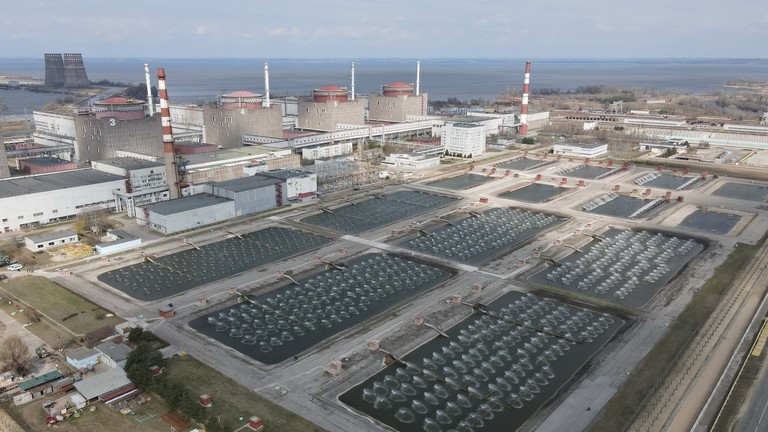
The exiled mayor of Enerhodar, close to Zaporizhzhia, reveals his fear of an ecological catastrophe
Sam Kiley, In Zaporizhzhia, Wednesday 29 October 2025, https://www.independent.co.uk/news/world/europe/zaporizhzhia-nuclear-plant-ukraine-russia-war-b2855001.html
Europe’s biggest nuclear reactor has become a battlefield in Ukraine’s defence against Russian invaders as they risk a catastrophic meltdown in its efforts to connect it to Moscow’s national grid.
The Zaporizhzhia nuclear power plant (ZNPP), which has six reactors, was captured by Russian troops early in the invasion of Ukraine in 2022. It has remained a dangerous potential flashpoint for a nuclear disaster ever since.
Fighting and bombardments by both sides of the complex and the power station itself, which has been entirely occupied by Russian forces who base troops in its buildings, have forced the “cold shutdown” of the reactors.
This means that its nuclear material is not used to generate power but needs to be constantly cooled.
The fighting cut electricity from Ukraine, meaning that the cooling system had to rely entirely on diesel generators and a skeleton staff for a month.
Regular power was only restored in the last week, after the longest period the ZNPP had been disconnected from electricity to drive its cooling systems.
Russia needs to cut the Ukrainian power link in order to install its connection into the Russian network – a long-stated ambition.
“The Russian Federation is putting in its power line, but elements of it have been successfully damaged by Ukraine,” explained Mykhailo Shuster, nuclear expert and former director of procurement at Energoatom – Ukraine’s nuclear power agency.
“Russia is now at a high level of readiness, and to connect it, the power supply from Ukraine must be interrupted.”
It is unclear whether Russia has been able to connect the Ukrainian plant to its own network during the 30-day outage. If it did so, it would then have to install converter stations to synchronise the two grids.
But the power cuts to the cooling systems, combined with the near collapse of the water supplies there after Russia blew up the Kakhova Dam – the main water source for the ZNPP – is causing jitters among local leaders.
The exiled mayor of the now-occupied Enerhodar, the town next to Zaporizhzhia, told The Independent he fears nuclear fallout could melt into the groundwater around the plant, contaminate the Dnipro River and eventually the Black Sea.
“Kakhovka Dam is destroyed; there is nothing to cool it with – even if they miraculously restore the equipment in the future,” he said.
“Worst case scenario: the water will eventually evaporate from the cooling pond, and there will be nothing to cool nuclear fuel.”
“It can melt the concrete and go into the groundwater,” Dmytro Orlov added from his office in Zaporizhzhia. Mayor Orlov runs humanitarian programmes for the thousands of people, mostly nuclear power workers, who fled the advancing Russians from his town to safety here.
The mayor recalled the 1986 Chernobyl disaster, which remains the worst nuclear disaster in history.
“The estimated amount of nuclear fuel there is about 10 times more than in Chernobyl,” he warned.
A small team of inspectors from the International Atomic Energy Authority regularly inspects the power station and has reported military training and explosions in and around the facility.
Russian artillery and mortars have been seen shelling and bombing Ukrainian towns and villages on the opposite bank of the Dnipro.
After power was restored, IAEA director general Mario Grossi said: “What was once virtually unimaginable – a nuclear power plant regularly losing off-site power – has unfortunately become a common occurrence during this devastating war. However, this was the most challenging loss of power event we have experienced so far.
“There is still much work to do to further reduce the risks of a nuclear accident.”
No comments yet.
1 This Month
10 March A LIVE WEBINAR THE REAL EFFECTS OF NUCLEAR POWER
What the Industry Isn’t Telling Us
1:00 PM Mountain, 2 pm Central, 3 pm Eastern. Live on the Keepers of the Water Facebook page



18 March Webinar @ 1 PM EST: An Assessment of SMR Projects: The Case of Canada
register for the zoom:
https://us02web.zoom.us/webinar/register/WN_o8BIIOUvQ2ONJR1nta65DQ#/registration


of the week – STOP SMALL MODULAR REACTORS IN CANADA
To see nuclear-related stories in greater depth and intensity – go to https://nuclearinformation.wordpress.com
-
Archives
- March 2026 (119)
- February 2026 (268)
- January 2026 (308)
- December 2025 (358)
- November 2025 (359)
- October 2025 (376)
- September 2025 (258)
- August 2025 (319)
- July 2025 (230)
- June 2025 (348)
- May 2025 (261)
- April 2025 (305)
-
Categories
- 1
- 1 NUCLEAR ISSUES
- business and costs
- climate change
- culture and arts
- ENERGY
- environment
- health
- history
- indigenous issues
- Legal
- marketing of nuclear
- media
- opposition to nuclear
- PERSONAL STORIES
- politics
- politics international
- Religion and ethics
- safety
- secrets,lies and civil liberties
- spinbuster
- technology
- Uranium
- wastes
- weapons and war
- Women
- 2 WORLD
- ACTION
- AFRICA
- Atrocities
- AUSTRALIA
- Christina's notes
- Christina's themes
- culture and arts
- Events
- Fuk 2022
- Fuk 2023
- Fukushima 2017
- Fukushima 2018
- fukushima 2019
- Fukushima 2020
- Fukushima 2021
- general
- global warming
- Humour (God we need it)
- Nuclear
- RARE EARTHS
- Reference
- resources – print
- Resources -audiovicual
- Weekly Newsletter
- World
- World Nuclear
- YouTube
-
RSS
Entries RSS
Comments RSS
 nuclear-news
Leave a comment