Roll up, roll up for your free plutonium.

The 19-25 metric tons of plutonium Trump would be redirecting into the civil nuclear sector had previously been slated for permanent disposal as nuclear waste left over from the Cold War era. Disposing of it is far cheaper than reprocessing it — $20 billion versus $49 billion according to the senators’ letter — and also isolates it from potentially falling into the wrong hands.
Trump is preparing a dangerous giveaway to struggling commercial nuclear startups, writes Linda Pentz Gunter
Imagine you are a commercial nuclear reactor startup company but you just can’t quite start up because there’s one little problem. Your “new” reactor design needs a special kind of fuel. And that fuel requires a particular ingredient: plutonium.
Plutonium is the trigger component of a nuclear bomb. The countries that developed nuclear weapons — as well as those that have reprocessed irradiated reactor fuel in order to separate the plutonium from uranium — have massive surplus piles of plutonium left over, an ever-present security threat.
Now imagine that a former board member of one of those struggling startup companies, Oklo, is Chris Wright, the current US Secretary of Energy in the Trump government. Lo and behold, all of a sudden, that same carnival barker who passes for a US president is offering your former company plutonium for free from a stockpile of close to 20 metric tons or more.
The White House has announced that it will begin revealing its lucky free plutonium recipients on December 31 based on applications received by the US Department of Energy by November 21, according to Reuters. The news agency put the plutonium surplus amount at 19.7 metric tons, although the Trump administration has suggested it has 25 tons to spare.
That amount, according to a letter sent to the Trump administration by one senator — Ed Markey — and two representatives— Don Beyer, John Garamendi — all Democrats — is enough for at least 2,000 nuclear bombs.
Dishing out plutonium “to private industry for commercial energy use,” the trio wrote in their September 10 letter, “goes against long-standing, bipartisan US nuclear security policy. It raises serious weapons proliferation concerns, makes little economic sense, and may adversely affect the nation’s defense posture.”
Markey wrote to Trump again on September 23, specifically enquiring whether it was more than just a peculiar coincidence that Wright’s former company, Oklo, would be the beneficiary of the plutonium handout.
Earlier, with his colleagues, Markey had expressed concern that “the transfer of weapons-usable plutonium to private industry would increase the risk of nuclear weapons proliferation, including to rogue states or terrorists.”
Markey now wanted to know whether “a serious conflict of interest may exist within your Administration on this issue because the plutonium transfer will benefit Secretary of Energy Chris Wright’s former company.”
Saying that he had “questions about the propriety of the transaction,” Markey noted that in addition to the free plutonium, Trump’s Department of Energy was also supporting Oklo to build a $1.7 billion reprocessing plant in Tennessee that would enable Oklo to further extract the plutonium needed for its as yet unlicensed micro-reactors.

Markey went on to question whether the administration even cared whether or not a new Oklo-owned reprocessing plant made any sense but was instead backing the project with taxpayer money “because Oklo stands to benefit financially and Secretary Wright is acting in his former company’s interest.”
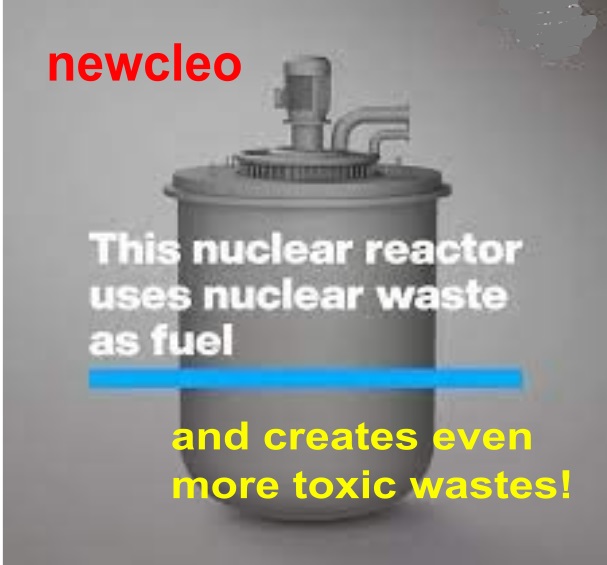
Among the eager corporations already lined up for their plutonium handouts are not only Oklo but also a foreign corporation, the now French-based but originally British nuclear company, newcleo, as well as US-based Valar Atomics, which has been criticized for developing a reactor that would not only consume but also produce plutonium.
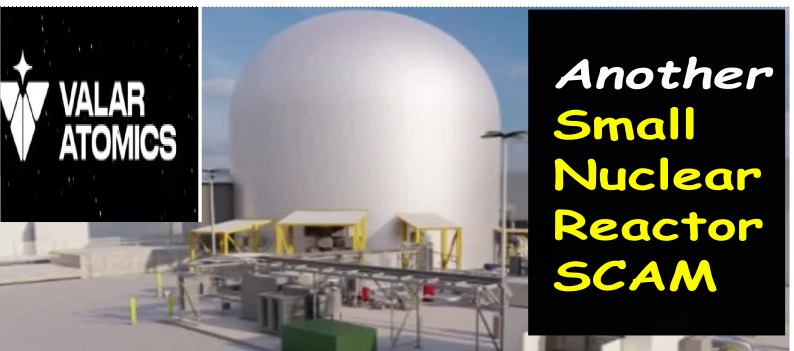
Perhaps to celebrate the impending largesse, newcleo announced on October 20 that it has entered into a partnership with Oklo and will invest $2 billion to develop advanced nuclear fuel fabrication and manufacturing facilities.
On the very day — May 23rd —that Trump released his executive orders fast-tracking nuclear power expansion, Valar Atomics put out its own statement celebrating the news. (Do you think they’d seen the EOs in advance, or maybe even written parts of them themselves?)
Echoing the identical language repeatedly used by Trump officials, the Valar Atomics statement said: “There’s a new arm to national nuclear security: Dominance. Dominance in civilian nuclear technology development, dominance in nuclear energy infrastructure deployment, dominance in shaping global development.”
We should note here that the word “dominance” appears 35 times in the Heritage Foundation’s Project 2025 guide to autocracy, which contains an entire section called American Energy and Science Dominance and another called Restoring American Energy Dominance.
Accordingly, we now have something called the National Energy Dominance Council, headed by Secretary of the Interior Doug Burgum. Burgum heralded the newcleo-Oklo deal, saying: “This agreement to implement newcleo’s advanced fuel expertise into Oklo’s powerhouses and invest $2 billion into American infrastructure and advanced fuel solutions is yet another win for President Donald J. Trump’s American Energy Dominance Agenda.”
Standing in the way of such dominance, according to Valar Atomics and others, remains the US Nuclear Regulatory Commission (NRC). In April, Valar Atomics had joined the states of Texas, Utah, Louisiana, Florida, and Arizona, as well as fellow reactor companies Last Energy and Deep Fission, to sue the NRC. Their beef is that, going back to the days of NRC predecessor, the Atomic Energy Commission, there has been an annoying insistence “to require licenses even for reactors that use small amounts of special nuclear material that have no effect on US defense and security or public health and that the NRC itself has stated do not pose public health and safety risks.”
Innovation, complains Valar Atomics, is made “virtually impossible,” by the NRC. “Their rules — created in the overreaction to the Three Mile Island incident — shuttered the nuclear industry. Simply testing a reactor prototype takes five to seven years, at best. This is not the way to foster innovation! To regain our dominance in nuclear energy, the status quo must change, quickly.”
The suit is currently under discussion for a possible resolution, given that the Trump DOE is moving fast to rein in any excessive safety oversight by the newly downsized NRC, where the mission statement now extolls the “benefits” of nuclear energy for the US public.
The 19-25 metric tons of plutonium Trump would be redirecting into the civil nuclear sector had previously been slated for permanent disposal as nuclear waste left over from the Cold War era. Disposing of it is far cheaper than reprocessing it — $20 billion versus $49 billion according to the senators’ letter — and also isolates it from potentially falling into the wrong hands. ……………………………………………………………………………………………………………………………..
Plutonium has no place in the civil nuclear sector. But it should have no place in our lives, period, if we really want to avoid nuclear proliferation or worse.
Linda Pentz Gunter is the founder of Beyond Nuclear and serves as its international specialist. Her book, No To Nuclear. Why Nuclear Power Destroys Lives, Derails Climate Progress and Provokes War, can be pre-ordered now from Pluto Press. https://beyondnuclearinternational.org/2025/10/26/roll-up-roll-up-for-your-free-plutonium/
No comments yet.
1 This Month

of the week – Shut Down Drone Warfare!


Tell the Ukrainian Government to Drop Prosecution of Peace Activist Yurii Sheliazhenko

Petition to revoke the licensing of the Near Surface Nuclear Disposal Facility (NSDF) at Chalk River. https://www.ourcommons.ca/petitions/en/Petition/Details?Petition=e-7247
To see nuclear-related stories in greater depth and intensity – go to https://nuclearinformation.wordpress.com
-
Archives
- April 2026 (44)
- March 2026 (251)
- February 2026 (268)
- January 2026 (308)
- December 2025 (358)
- November 2025 (359)
- October 2025 (376)
- September 2025 (257)
- August 2025 (319)
- July 2025 (230)
- June 2025 (348)
- May 2025 (261)
-
Categories
- 1
- 1 NUCLEAR ISSUES
- business and costs
- climate change
- culture and arts
- ENERGY
- environment
- health
- history
- indigenous issues
- Legal
- marketing of nuclear
- media
- opposition to nuclear
- PERSONAL STORIES
- politics
- politics international
- Religion and ethics
- safety
- secrets,lies and civil liberties
- spinbuster
- technology
- Uranium
- wastes
- weapons and war
- Women
- 2 WORLD
- ACTION
- AFRICA
- Atrocities
- AUSTRALIA
- Christina's notes
- Christina's themes
- culture and arts
- Events
- Fuk 2022
- Fuk 2023
- Fukushima 2017
- Fukushima 2018
- fukushima 2019
- Fukushima 2020
- Fukushima 2021
- general
- global warming
- Humour (God we need it)
- Nuclear
- RARE EARTHS
- Reference
- resources – print
- Resources -audiovicual
- Weekly Newsletter
- World
- World Nuclear
- YouTube
-
RSS
Entries RSS
Comments RSS
 nuclear-news
Leave a comment