‘You and the Atom Bomb’: how George Orwell’s 1945 essay predicted the Cold War and nuclear proliferation
October 20, 2025, Ibrahim Al-Marashi, Adjunct Professor, IE School of Humanities, IE University; California State University San Marcos, https://theconversation.com/you-and-the-atom-bomb-how-george-orwells-1945-essay-predicted-the-cold-war-and-nuclear-proliferation-267708
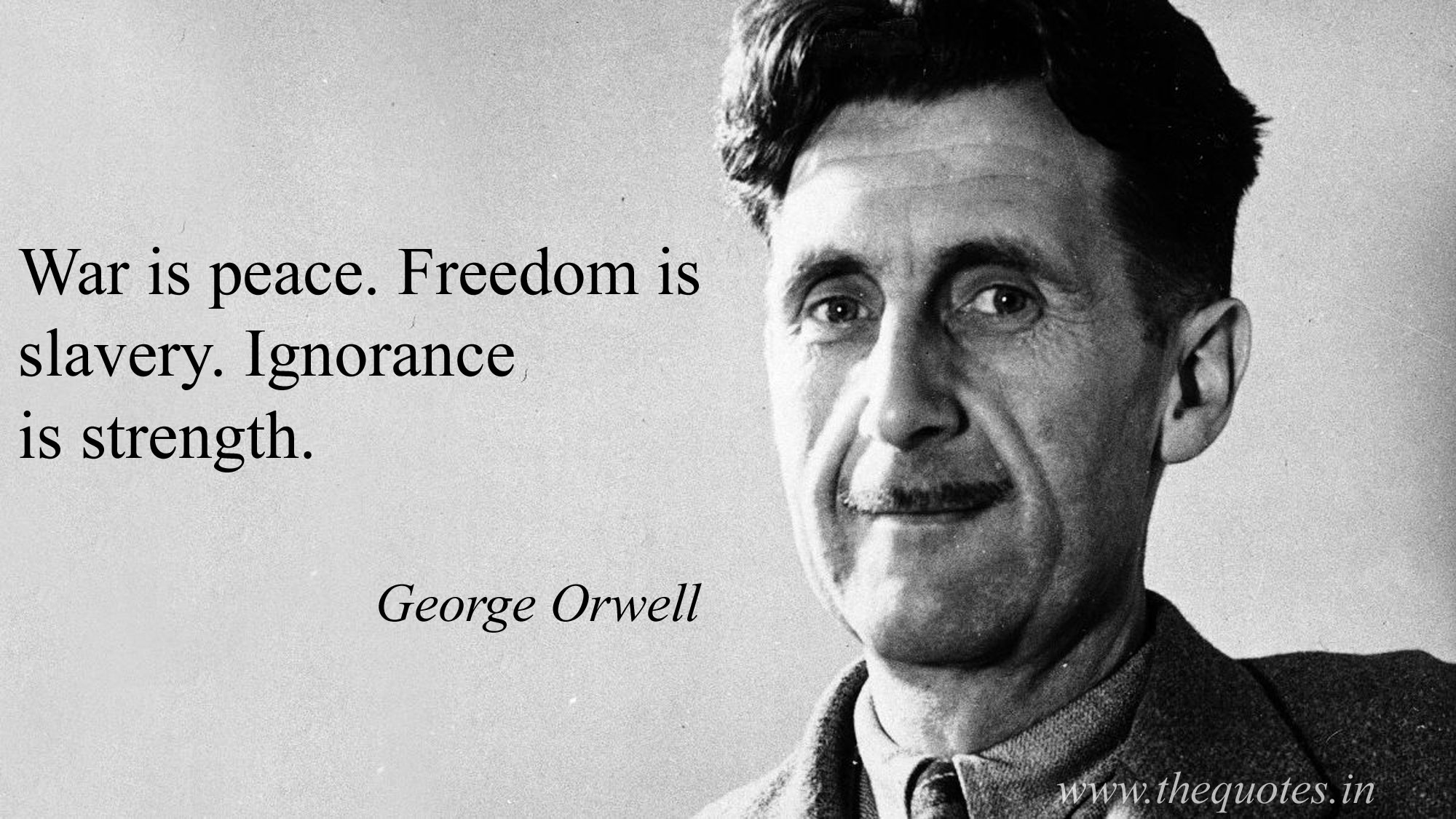
August 2025 marked the 80th anniversary of the 1945 atomic bombings of Hiroshima and Nagasaki. Just a month after the attacks, on 19 October 1945, George Orwell published an essay in the London Tribune, entitled “You and the Atom Bomb”. In it, he surmised what if “the great nations make a tacit agreement never to use the atomic bomb against one another?” He wrote that what would emerge is a “peace that is no peace”, and “a permanent state of ‘cold war’”, introducing an enduring metaphor that would define geopolitics for decades.
In the essay, Orwell also predicted nuclear proliferation: “The bomb is fantastically expensive and that its manufacture demands an enormous industrial effort, such as only three or four countries in the world are capable of making.” Indeed, all five permanent members of the Security Council of the United Nations (UN), which was also established 80 years ago, have now obtained “the bomb”, the USSR being the second in 1949.
Since then, its threat has shaped and justified global conflict. Both Iraq and Iran have been accused of seeking the bomb, but instead of diplomatic non-proliferation, the US and Israel have, in both cases, used armed force to prevent these nations from obtaining nuclear weapons.
One of the reasons the UN approved the 1991 Gulf War was the existence of intelligence that Iraq had a nuclear weapons program. In 2003, the US and UK attempted to get the UN to approve a similar war to dismantle Iraq’s alleged nuclear weapons – based on flawed intelligence that had been plagiarised from my very own University of Oxford thesis.
In June 2025, Israel attacked Iran for allegedly seeking a nuclear weapon, also on the basis of “intelligence” reports. The world held its breath during the ensuing 12-day war, which could all too easily have escalated into nuclear conflict.
Today, artificial intelligence (AI) may allow a nation or terrorist group to build an atomic bomb in ways that Orwell’s contemporaries – the likes of Einstein and Oppenheimer – could have never envisioned.
Novels and the Cold War
In 1949, just four years after You and the Atom Bomb, Orwell’s novel 1984 was published. It is a dystopian novel that foreshadows the Cold War he had predicted in 1945, with three fictional geopolitical blocs – Oceania (North America and Britain), Eurasia (USSR and Europe), and Eastasia (China and its neighbours) – forming a series of ever-shifting alliances to control the “Disputed territories.”
The novel was prescient – it written before the North Atlantic Treaty Organization (Nato) and the Warsaw Pact, and before terms such as the “First”, “Second” and “Third World” had taken root.
However, it was his contemporary, WWII British Naval Intelligence officer Ian Fleming, who used the novel to predict a different facet of 21st century power dynamics. In his wildly successful James Bond novels (and their even more popular film adaptations), the greatest threat to global security is not national governments like the USSR, but super-powerful individual actors, such as criminal mastermind Ernst Stavro Blofeld and the scientist Dr No.
In recent decades, Fleming’s vision of concentrated individual power as the nexus of geopolitical threat has materialised time and time again. In 2001, Osama bin Laden ushered in the 20-year Global War on Terror. Media mogul Rupert Murdoch holds inordinate power over international politics, swaying elections and major votes like the 2016 Brexit vote. It was Elon Musk, not NASA, who created a space program and provided internet to Ukraine after the 2022 Russian invasion, giving SpaceX power not seen since the days of the British East India Company.
Atomic AI and dirty bombs
The path to obtaining a nuclear weapon has not changed much since Hiroshima, though AI might make it easier for states that seek atomic bombs. Advances in AI may also make it easier for a terrorist group to produce and detonate a conventional explosive combined with radioactive material, causing psychological and economic disruption, otherwise known as a “dirty bomb”.
Orwell’s writing exposes the hypocrisy of this term, as he forces us to ask whether it means that regular nuclear weapons are, by default, “clean bombs”. Nevertheless, for all the fear of an improvised, terrorist dirty bomb attack, the dirtiest are those covered with depleted uranium (DU), which are widely used by Western military forces.
DU was initially produced 80 years ago as a “waste” by-product of uranium enrichment during the Manhattan Project. Its scientists discovered that it could be used to create armour-piercing weapons.
These were used by the US and UK during both the 1991 Gulf War and 2003 Iraq War. They still contaminate the soil, leading to cancer, birth defects, and other illnesses. Today, Ukraine not only suffers from the continuing fallout of Chernobyl – both it and Russia have been using these weapons since 2022.
Fake news in 1945
While AI has supercharged what we typically think of as Orwellian – surveillance states like those depicted in 1984 – Orwell also wrote about how technology allowed for misinformation. In 1944, he questioned fake reports of non-existent German air raids over Britain which were broadcast on Nazi radio, and highlighted their value as propaganda in the event of a potential German victory.
Today, 80 years on, the same thing is still happening. In June 2025, during the 12-Day War between Israel and Iran, AI-fabricated deepfake videos showed nuclear mushroom clouds detonating over destroyed Iranian atomic facilities.
Some argue today that the Cold War between Washington and Moscow never ended, giving Orwell’s metaphor an enduring legacy. Nevertheless, US writer and political commentator Walter Lippman is generally credited for inventing the term in 1947, proving Orwell’s assertion from the novel 1984: “He who controls the past controls the future; who controls the present controls the past.”
No comments yet.
1 This Month
19 February – VIRTUAL EVENT-Decision Time: AI and Our Nuclear Arsenal
12:45 p.m. Central / 1:45 p.m. Eastern
To see nuclear-related stories in greater depth and intensity – go to https://nuclearinformation.wordpress.com
-
Archives
- February 2026 (192)
- January 2026 (308)
- December 2025 (358)
- November 2025 (359)
- October 2025 (376)
- September 2025 (258)
- August 2025 (319)
- July 2025 (230)
- June 2025 (348)
- May 2025 (261)
- April 2025 (305)
- March 2025 (319)
-
Categories
- 1
- 1 NUCLEAR ISSUES
- business and costs
- climate change
- culture and arts
- ENERGY
- environment
- health
- history
- indigenous issues
- Legal
- marketing of nuclear
- media
- opposition to nuclear
- PERSONAL STORIES
- politics
- politics international
- Religion and ethics
- safety
- secrets,lies and civil liberties
- spinbuster
- technology
- Uranium
- wastes
- weapons and war
- Women
- 2 WORLD
- ACTION
- AFRICA
- Atrocities
- AUSTRALIA
- Christina's notes
- Christina's themes
- culture and arts
- Events
- Fuk 2022
- Fuk 2023
- Fukushima 2017
- Fukushima 2018
- fukushima 2019
- Fukushima 2020
- Fukushima 2021
- general
- global warming
- Humour (God we need it)
- Nuclear
- RARE EARTHS
- Reference
- resources – print
- Resources -audiovicual
- Weekly Newsletter
- World
- World Nuclear
- YouTube
-
RSS
Entries RSS
Comments RSS
 nuclear-news
Leave a comment