Straight from the horses’ mouths: Nuclear is a dead end.
By Ben Kritz, October 2, 2025, https://www.manilatimes.net/2025/10/02/opinion/columns/straight-fromthe-horses-mouths-nuclear-is-a-dead-end/2193114
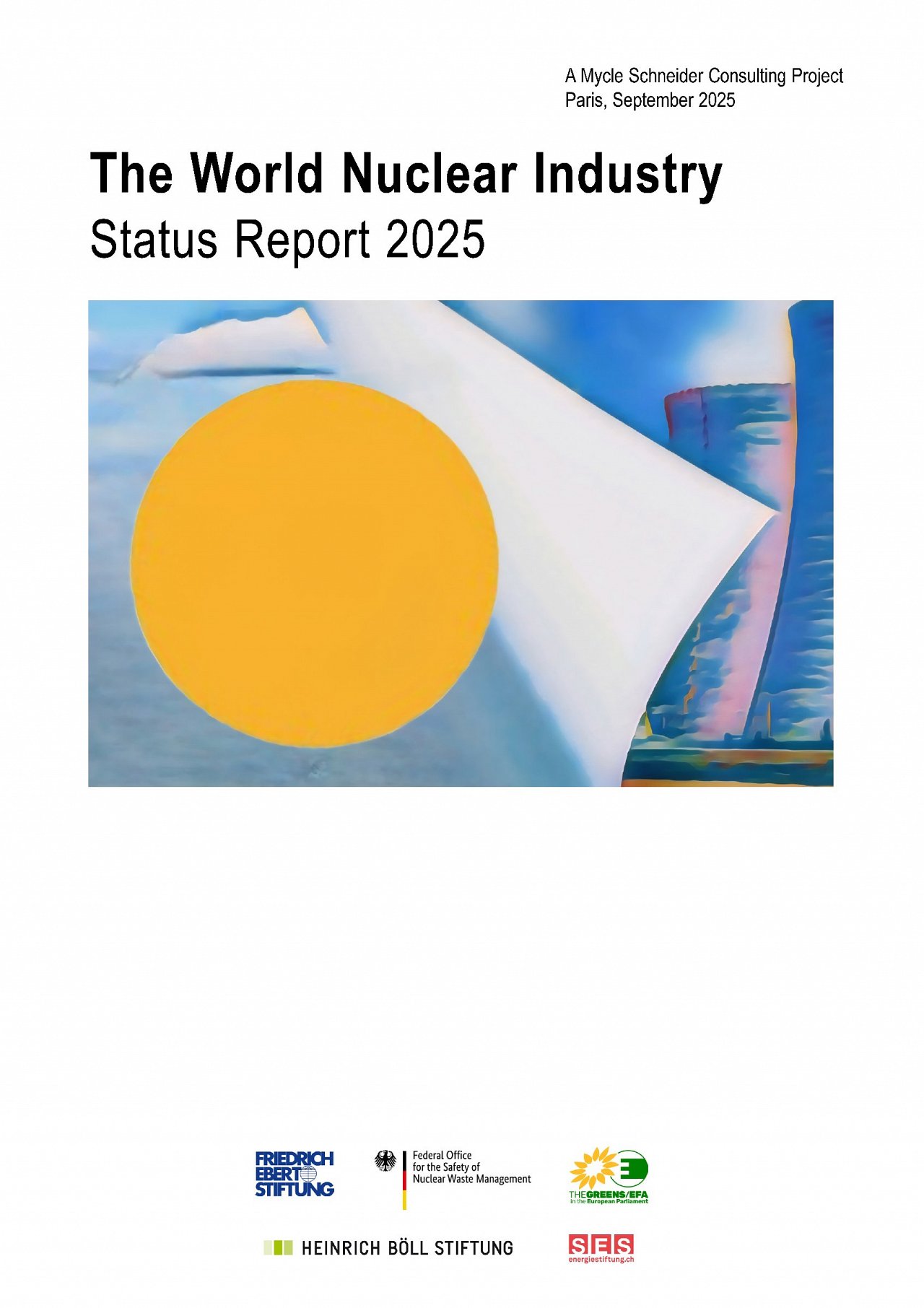
ONE of the most authoritative and anticipated reports about the nuclear energy sector is the annual World Nuclear Industry Status Report (WNISR), which for close to 20 years has tracked the progress, or lack thereof, of the nuclear industry. It is, at least in my opinion, a better source for detailed information on the nuclear sector than the annual reports of the International Atomic Energy Agency (IAEA), because while the IAEA does provide completely reliable and detailed information, it provides a bit less than does the WNISR, and has an obvious positive bias toward nuclear energy.
The WNISR by contrast is completely neutral; even the bit of commentary that prefaces this year’s 589 pages of data and status updates confines itself to simply acknowledging the current reality of nuclear policy and activity, and leaves it to the audience to draw their own conclusions.
There are a few pieces of good news for nuclear enthusiasts in the 2025 WNISR. Nuclear power generation rose to 2,677 terawatt-hours in 2024, and generation capacity reached 369.4 gigawatts (GW). Those are both record highs, but on the other hand, they are both less than 1 percent higher than the previous records, and so are really not overwhelming evidence of a growing sector. One indication of that is that nuclear’s share of generating capacity declined slightly (by less than 1 percent) year on year, and is now at 9.0 percent. That is only about half its historic peak of 17.5 percent in 1996.
Other factoids that might encourage nuclear proponents are that there are three countries building their first nuclear plants — Bangladesh, Egypt and Turkey — all of which are being constructed and largely financed by Russia’s Rosatom. The number of reactor startups was higher than the number of shutdowns in 2024. Seven plants were brought online — three in China, and one each in France, the United Arab Emirates, the United States and India, while four were closed, two in Canada, and one each in Russia and Taiwan. At the end of 2024, there were 409 reactors operating worldwide (that number has since gone down by one this year), which were the same number as at the end of 2023. The number of operating reactors peaked in 2002 with 438, operated in 32 countries; since then, the sector has slowly declined. There are only 31 countries as of now, and the number of reactor closures across the past 20-odd years has been slightly higher than the number of startups.
For example, the WNISR notes that from 2005 to 2024, there were 104 startups and 101 closures, which might seem like a modest gain. But any nuclear expansion is solely attributable to China; in that time period, there were 51 startups and no closures in China. In the rest of the world, there was a net decline of 48 in the number of operating reactors, with a corresponding decline in generating capacity of 27 GW.
China has big numbers in everything because China is very big; in its broader energy mix, nuclear power is at best an afterthought, and is declining even there. Nuclear’s share in the total energy mix in China fell for the third straight year in 2024, down to 4.5 percent. While nuclear capacity did increase by 3.5 GW from a year earlier, it was overwhelmed by the growth in solar capacity, which increased by 278 GW. In China, since 2010, the output of nuclear has increased by a factor of six. But on the other hand, the output of solar increased by a factor of more than 800, and wind by a factor of 20. Renewables’ share of the energy mix increased from 18.7 percent in 2010 to 33.7 percent in 2024, or in other words, outpaced nuclear by 7.5 times.
Prospects for growth
The simple answer is that there aren’t any; some incremental gains here and there may be possible, but the idea that nuclear is the go-to solution for decarbonization is not at all supported by real-world trends. The first problem is that existing nuclear power is quickly reaching the end of its useful life. The WNISR notes that the average age of the presently operating power reactors has been increasing since 1984 and stands at 32.4 years as of mid-2025. The average age at closure of the 28 reactors permanently shut down between 2020 and 2024 was 43.2 years. The nuclear industry is going to have to expend increasing effort and resources in senior care for its aging plants just to maintain the status quo of stagnation and gradual slow decline.
Investment figures bear that out. Over the past decade, the WNISR notes that nuclear investment has been essentially stagnant, although not nonexistent; in the same time period, investment in renewables has increased by 21 times.
Apart from the three newcomers (Egypt, Bangladesh and Turkey) that are actually building reactors, the WNISR identifies 12 others with prospects for nuclear power sometime in the future, four of which are in Africa. It may come as a discouraging surprise to our own Department of Energy and nuclear cheerleaders here that the Philippines is not even mentioned.
In fact, the name “Philippines” appears exactly once in the 589 pages of the report, on a chart listing countries that have abandoned or suspended reactor constructions since 1970. But to be fair, the recent passage of the Philippine Nuclear Safety Act and its subsequent creation of an actual regulating body are recent developments, so the 2026 WNISR will probably include it.
None of the other countries noted are even close to beginning construction, or even seriously considering it. In fact, the World Nuclear Association, which is definitely an optimistic source of information, in a Sept. 19 report concluded that only one additional country besides those already building reactors — Poland — is likely to join the nuclear energy community within the next 15 years.
The WNISR’s overall conclusion kind of says it all: “2024 has seen an unprecedented boost in solar and battery capacity expansion driven by continuous significant cost decline. As energy markets are rapidly evolving, there are no signs of vigorous nuclear construction and the slow decline of nuclear power’s role in electricity generation continues.”
The Philippines’ nuclear aspirations, and likely those of any other country anywhere else, are clearly swimming against the tide. That does not make nuclear development impossible, but it almost certainly means that any development that is achieved will have much less impact than anticipated. And, nuclear being what it is, that impact will cost more and take longer to achieve than expected.
The broad picture painted by the WNISR brings us back to the conclusion of the Cato Institute assessment I discussed in the first part of this column on Tuesday, and bear in mind this is coming from a deeply conservative source: “The problem is not so much that money will be wasted on large numbers of uneconomic facilities. Rather, it is the opportunity costs of the time and human resources that are consumed by nuclear power and not available to other, quicker, more cost-effective and less financially risky options. We appear now to be facing serious risks from climate change, and there will not be a second chance if we fail to tackle it because too many resources are being consumed by an option — new nuclear — that will not work.”
No comments yet.
1 This Month
29 Jan. Thursday 7-8 p.m. Webinar – World’s Largest Nuclear Station in Port Hope, ON?
To see nuclear-related stories in greater depth and intensity – go to https://nuclearinformation.wordpress.com/


31st January – Challenging the War Machine – a DECLASSIFIED UK SUMMIT


Website of the Week
Now until to February 10, 2026 Radioactive waste storage in France: the debate is finally open! How to participate?
-
Archives
- January 2026 (288)
- December 2025 (358)
- November 2025 (359)
- October 2025 (376)
- September 2025 (258)
- August 2025 (319)
- July 2025 (230)
- June 2025 (348)
- May 2025 (261)
- April 2025 (305)
- March 2025 (319)
- February 2025 (234)
-
Categories
- 1
- 1 NUCLEAR ISSUES
- business and costs
- climate change
- culture and arts
- ENERGY
- environment
- health
- history
- indigenous issues
- Legal
- marketing of nuclear
- media
- opposition to nuclear
- PERSONAL STORIES
- politics
- politics international
- Religion and ethics
- safety
- secrets,lies and civil liberties
- spinbuster
- technology
- Uranium
- wastes
- weapons and war
- Women
- 2 WORLD
- ACTION
- AFRICA
- Atrocities
- AUSTRALIA
- Christina's notes
- Christina's themes
- culture and arts
- Events
- Fuk 2022
- Fuk 2023
- Fukushima 2017
- Fukushima 2018
- fukushima 2019
- Fukushima 2020
- Fukushima 2021
- general
- global warming
- Humour (God we need it)
- Nuclear
- RARE EARTHS
- Reference
- resources – print
- Resources -audiovicual
- Weekly Newsletter
- World
- World Nuclear
- YouTube
-
RSS
Entries RSS
Comments RSS
 nuclear-news
Leave a comment