Book Review: A Call to Arms About the Threat of Anti-Science
By Dan Falk. 10.03.2025. https://undark.org/2025/10/03/book-review-science-under-siege/?utm_source=Undark%3A+News+%26+Updates&utm_campaign=00d7f4a4e8-RSS_EMAIL_CAMPAIGN&utm_medium=email&utm_term=0_5cee408d66-185e4e09de-176033209
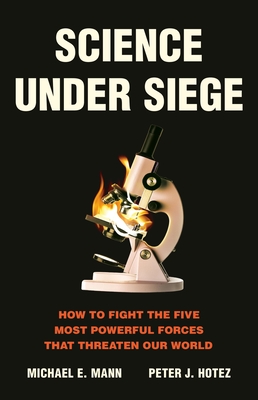
“Science Under Siege,” by Michael E. Mann and Peter J. Hotez, is an impassioned manifesto against attacks on science.
In the 1995 book “The Demon Haunted World,” the astronomer Carl Sagan warned that the United States was turning its back on science, and that the consequences would be dire. Near the start of their new book, “Science Under Siege: How To Fight The Five Most Powerful Forces That Threaten Our World,” Michael E. Mann and Peter J. Hotez cite Sagan’s vision of science as a “candle in the dark,” and argue that what the astronomer feared is now coming to pass. In fact, readers may get the impression that the situation is already much worse than what Sagan envisioned.
While Sagan was primarily concerned with the rise of pseudoscience, Mann and Hotez fear that we’re now in the midst of an anti-science boom, led by people, corporations, and governments who intentionally spread false or misleading information. “Anti-science has already caused serious illness and mass casualties in the near term,” they write. “Unmitigated, it will in the long term take millions more lives, produce misguided national policies, and have long-lasting catastrophic consequences, including potentially, the destabilization of our civilization.”
Mann and Hotez are not merely observers, but scientists who have found themselves on the front lines of the ongoing attacks on science. Mann is a climate scientist at the University of Pennsylvania, and director of the Penn Center for Science, Sustainability, and the Media. Hotez is a pediatrician and vaccine scientist at Baylor College of Medicine, where he is also the co-director of the Texas Children’s Center for Vaccine Development. In 2022, he was nominated for the Nobel Peace Prize for his work on a patent-free Covid-19 vaccine.
While attacks on science have taken many forms, the authors highlight the current pushback against vaccines and skepticism over climate science as two of the most urgent issues. Mann and Hotez describe the resistance to climate science and vaccines as a one-two punch, but add that there is a third punch as well, in the form of mis- and disinformation. The authors point to the devastating consequences of resistance to public health measures, especially vaccines, which came to the fore during the Covid-19 pandemic, the death toll from which currently stands at 1.2 million Americans, according to the World Health Organization.
Many of those deaths, they suggest, could have been prevented had people been vaccinated and followed social distancing and mask guidelines. And they’re not shy about saying who’s to blame: “The deaths occurred mostly along a political partisan divide,” they write, “with those living in Republican-majority (‘red’) states disproportionately suffering most of the deaths and disabilities as a consequence of being targeted by propaganda and misinformation from elected leaders, extremist media, and the modern political Right.”
Resistance to vaccines isn’t new, but the authors argue that the anti-vaxx movement reached new heights as the pandemic wore on: “Heading into 2023, the pandemic’s fourth year, we witnessed an expanded alliance of malevolent billionaires, tech bros, and high-net worth individuals — plutocrats, prominent podcasters, and far-right extremists, including Steve Bannon and the ‘Proud Boys’ — marching at anti-vaccine rallies and joining forces with the more established antivaccine activists.”
They rebuke Marjorie Taylor Greene, a Republican member of Congress, for calling those who administer vaccines “medical brown shirts,” using language associated with Nazis. And (not surprisingly) they chastise those who continue to give oxygen to the long-debunked alleged link between vaccines and autism.
Then there’s the climate crisis. The world is warming, global wind patterns and ocean currents are shifting, ocean levels are rising, and extreme weather events are becoming more frequent. Mann and Hotez call out many sources of climate misinformation, including “petrostates” — nations whose revenues are largely derived from fossil fuels. (The petrostates are one of the five “powerful forces” referenced in the book’s subtitle, the others being plutocrats, propagandists, the press, and pros — referring to scholars who use their credentials to promote unsupported or contrarian views.) Of the petrostates, Russia tops the authors’ list. Citing Russia’s dependence on fossil fuels and its authoritarian leadership, including what they see as a desire to destabilize Western democracy, they write: “These factors combine in a perfect storm of consequences for the global spread of civilization-threatening antiscience.”
No comments yet.
1 This Month
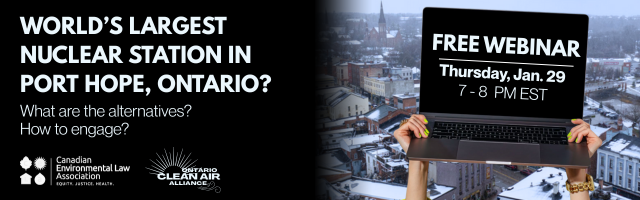
29 Jan. Thursday 7-8 p.m. Webinar – World’s Largest Nuclear Station in Port Hope, ON?
To see nuclear-related stories in greater depth and intensity – go to https://nuclearinformation.wordpress.com/
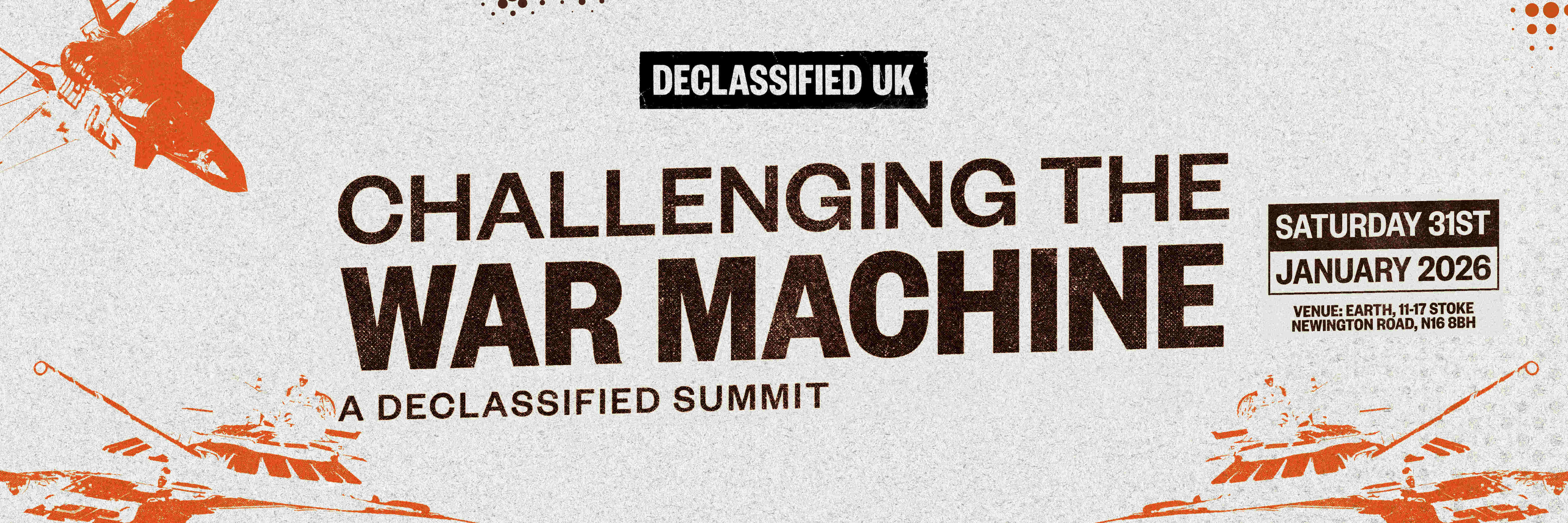
31st January – Challenging the War Machine – a DECLASSIFIED UK SUMMIT

Website of the Week
Now until to February 10, 2026 Radioactive waste storage in France: the debate is finally open! How to participate?
-
Archives
- January 2026 (288)
- December 2025 (358)
- November 2025 (359)
- October 2025 (376)
- September 2025 (258)
- August 2025 (319)
- July 2025 (230)
- June 2025 (348)
- May 2025 (261)
- April 2025 (305)
- March 2025 (319)
- February 2025 (234)
-
Categories
- 1
- 1 NUCLEAR ISSUES
- business and costs
- climate change
- culture and arts
- ENERGY
- environment
- health
- history
- indigenous issues
- Legal
- marketing of nuclear
- media
- opposition to nuclear
- PERSONAL STORIES
- politics
- politics international
- Religion and ethics
- safety
- secrets,lies and civil liberties
- spinbuster
- technology
- Uranium
- wastes
- weapons and war
- Women
- 2 WORLD
- ACTION
- AFRICA
- Atrocities
- AUSTRALIA
- Christina's notes
- Christina's themes
- culture and arts
- Events
- Fuk 2022
- Fuk 2023
- Fukushima 2017
- Fukushima 2018
- fukushima 2019
- Fukushima 2020
- Fukushima 2021
- general
- global warming
- Humour (God we need it)
- Nuclear
- RARE EARTHS
- Reference
- resources – print
- Resources -audiovicual
- Weekly Newsletter
- World
- World Nuclear
- YouTube
-
RSS
Entries RSS
Comments RSS
 nuclear-news
Leave a comment