New York Times misstates Palestinian death toll, downplays genocide.

As award-winning investigative journalist Laila Al-Arian writes of The New York Times: “They’ll be remembered for minimizing genocide, normalizing Palestinian death and whitewashing Israel’s atrocities.”
Michael F. Brown Media Watch 5 September 2025, https://electronicintifada.net/blogs/michael-f-brown/new-york-times-misstates-palestinian-death-toll-downplays-genocide
Nearly two years into the Gaza genocide, The New York Times is failing to convey to its readers the enormity of what is happening to Palestinians.
On 30 August (the online publication date), in an article about the Venice International Film Festival and organizing there on behalf of Gaza, the newspaper claimed that 39,000 people in Gaza had been killed as of July.
“In July, the enclave’s health ministry said that more than 39,000 people had been killed, a toll that does not distinguish between civilians and combatants. And this month, a group of global experts said that Gaza City and the surrounding territory were officially suffering from famine.”
But that 39,000 figure is from July of 2024.
In fact, according to the health ministry in Gaza, over 63,000 Palestinians had been killed when The New York Times article was published. The official death toll was updated to more than 64,000 a few days later.
I requested a correction on 2 September after I first read the article. Pro-Israel media-monitoring organizations such as CAMERA and HonestReporting did not appear to be seized by the matter with the latter clearly looking past the error on the number of Palestinians killed.
The New York Timesappended this correction to the article the next day: “An earlier version of this article incorrectly stated the Gaza health ministry’s death toll. The ministry recently put the figure at more than 60,000 people, not over 39,000.”
The correction run on 4 September on the corrections page reads: “An article on Monday about a pro-Palestinian demonstration that took place during the 82nd Venice International Film Festival on Saturday misstated the death toll cited by the Gaza health ministry. The ministry recently put the figure at more than 60,000 people, not over 39,000.”
Even the correction knowingly erases some 3,000 Palestinians killed. The number slain during the Israeli-administered genocide at the time of original publication was over 63,000.
In the chaos of Gaza as institutions are destroyed and people are buried in the rubble, it is worth noting that some estimates of the casualty figures go far higher.
Genocide
The newspaper of record – as opposed toThe Washington Post – also appeared very reluctant to devote much attention to the resolution passed on 31 August by the International Association of Genocide Scholars that declares Israel is carrying out a genocide in Gaza.
Just two paragraphs were devoted to the issue on 1 September by The New York Times.
First, the newspaper noted, “On Monday, the International Association of Genocide Scholars, a leading group of academic experts on the topic, declared that Israel’s policies and actions in Gaza met the legal definition of genocide.”
Then, in a longer sentence, the Israeli foreign ministry was given space to rebut the charge.
“A spokesman for the Israeli foreign ministry denounced the conclusion as ‘an embarrassment to the legal profession,’ adding in a statement that it was ‘entirely based on Hamas’ campaign of lies and the laundering of those lies by others.’”
Historian Assal Rad noted the shortcomings of the reporting by The New York Times, highlighting the absence of headlines or a dedicated story focusing on the fact Israel is committing genocide.
As award-winning investigative journalist Laila Al-Arian writes of The New York Times: “They’ll be remembered for minimizing genocide, normalizing Palestinian death and whitewashing Israel’s atrocities.”
Further bias can be seen in a New York Times article published shortly before publication of this article.
Liam Stack writes that “the war began after the Hamas-led Oct. 7, 2023, terror attack on Israel, in which roughly 1,200 were killed and 250 more taken hostage.”
Stack employs the term “terror attack,” but at no point references Israeli war crimes, crimes against humanity or genocide.
He did not immediately respond to a request for comment from The Electronic Intifada regarding bias at the newspaper.
A killing at sea marks America’s descent into lawless power

The people on board were not given the chance to surrender. No evidence was presented. No rules of engagement were cited. The administration claimed authority to kill on suspicion alone. A vessel in international waters is not a lawful target simply because officials say so.
International law does not permit such action.
The peremptory strike on a speedboat is a warning to all who serve. Remember your oath.
Jon Duffy, September 8, 2025, https://www.defenseone.com/ideas/2025/09/killing-sea-americas-descent-lawless-power/407949/?oref=defense_one_breaking_nl&utm_source=Sailthru&utm_medium=email&utm_campaign=Defense%20One%20Breaking%20News:%209/9%20killing&utm_content=C&utm_term=newsletter_d1_alert
The United States has crossed a dangerous line.
Last week, an American military platform destroyed a small vessel in the Caribbean, killing 11 people the Trump administration claims were drug traffickers. It was not an interception. It was not a boarding with Coast Guard legal authority. It was a strike—ordered from Washington, executed in international waters, and justified with little more than “trust us.” Defense Secretary Pete Hegseth told Fox that officials “knew exactly who was in that boat” and “exactly what they were doing.” He offered no evidence.
This was not a counterdrug operation. It was not law enforcement. It was killing without process. And it was, to all appearances, against the letter and the spirit of the law.
For decades, the U.S. military and Coast Guard have intercepted drug shipments in the Caribbean and Eastern Pacific under a careful legal framework: Coast Guard officers would tactically control Navy ships, invoke law enforcement authority, stop vessels, and detain crews for prosecution. The goal is not execution; it is interdiction within international law.
This week’s strike ripped up that framework. The people on board were not given the chance to surrender. No evidence was presented. No rules of engagement were cited. The administration claimed authority to kill on suspicion alone.
International law does not permit such action. A vessel in international waters is not a lawful target simply because officials say so. Contending that narcotics pose a long-term danger to Americans is at best a weak policy argument, not a legal justification for force. Unless this boat posed an imminent threat of attack—which no one has claimed—blowing it out of the water is not self-defense. It is killing at sea. A government that ignores these distinctions is not fighting cartels. It is discarding the rule of law.
Beyond the gross violations of the law and the Constitution lies an enormous strategic danger. By redefining traffickers as legitimate military targets, the administration has plunged the United States into another war without limits.
Who is the enemy? “Cartels,” we are told. But cartels are not armies. They are networks that span countries and blend with civilians. Declaring war on them is like declaring war on poverty or terrorism—a plunge into an endless campaign that cannot be “won.”
Where is the battlefield? The Caribbean? Venezuela? Central America? Overnight, officials shifted their story about the destroyed vessel’s destination: first, it was “probably headed to Trinidad or some other country in the Caribbean,” then it was among “imminent threats to the United States.” If geography is that malleable, there is no limit to where the next strike may fall.
And what is the objective? To “blow up and get rid of them,” in the words of Secretary of State Marco Rubio. That is not strategy; it is bravado. We have tried it before, in Iraq, Afghanistan, Yemen. Killing “high-value targets” didn’t end the war on terror.
The U.S. is drifting into an undeclared war of assassination across half a hemisphere, led by unaccountable officials who equate explosions with effectiveness.
Even more dangerous is the backdrop: the Supreme Court’s ruling that presidents are immune from prosecution for “official acts.” Experts warned this would give the commander-in-chief license to commit murder. The majority waved those fears away. Now the president has ordered killings in international waters.
Eleven people are dead, not through due process but by fiat. The defense secretary boasts about it on television. And the president will face no consequences.
This is no longer abstract. The law has been rewritten in real time: a president can kill, and there is no recourse. That is not strength. That is authoritarianism.
What does this mean for the principle of civilian control, when those who wield it face no consequence for abuse? What does it mean for our military, when they are ordered to carry out missions that violate the standards they have sworn to uphold?
What happens abroad does not stay abroad. A government that stretches legal authority overseas will not hesitate to do the same at home. The same commander-in-chief who ordered a strike on a boat in international waters has already ordered National Guard troops into American cities over the objections of local leaders. The logic is identical: redefine the threat, erase legal distinctions, and justify force as the first tool. Today it is “traffickers” in the Caribbean. Tomorrow it will be “criminals” in Chicago or “radicals” in Atlanta.
This strike is not only about 11 lives lost at sea. It is about the precedent set when the military is unmoored from law, and when silence from senior leaders normalizes the abuse.
The cost will not be measured in a destroyed boat. It will be measured in the corrosion of law, strategy, and trust. Legally, the U.S. has abandoned the framework that distinguished interdiction from assassination. Constitutionally, presidential immunity has been laid bare: the commander-in-chief of the most destructive military power in history has been placed beyond the reach of law. Strategically, we have entered another endless war against a concept, not an enemy. Internally, the erosion of boundaries abroad feeds the erosion of boundaries at home.
The laws of war, the principles of proportionality, the training drilled into every officer—all run counter to what happened in the Caribbean. Yet silence has prevailed. And silence is acquiescence. Each concession ratifies the misuse of force until it becomes routine. That is how institutions corrode. That is how democracies die.
The strike in the Caribbean is not the action of a strong nation. It is a warning. This is about whether the U.S. military remains an institution of law and principle, or whether it becomes an obedient weapon in the hands of a lawless president.
A republic that allows its leaders to kill without law, to wage war without strategy, and to deploy troops without limit is a republic in deep peril. Congress will not stop it. The courts will not stop it. That leaves those sworn not to a man, but to the Constitution.
The oath is clear: unlawful orders—foreign or domestic—must be disobeyed. To stand silent as the military is misused is not restraint. It is betrayal.
Jon Duffy is a retired Navy captain. His active duty career included command at sea and national security roles. He writes about leadership and democracy.
Israel Bombs Doha, Reportedly Targeting Hamas Negotiators Discussing US Proposal

Israel has been known to sabotage ceasefire deals just as they are reaching completion, effectively prolonging the genocide. Israeli officials have long said that their goal is to take over Gaza, and that they will stop at nothing to achieve this objective.
Israeli Prime Minister Benjamin Netanyahu’s office claimed full responsibility for the strike in a statement on social media.
The strike came as Hamas officials were in Qatar to discuss a ceasefire proposal put forth by the Trump administration.
By Sharon Zhang , Truthout, September 9, 2025
srael struck the capital of Qatar on Tuesday, targeting senior Hamas political officials as they gathered in Doha to discuss the latest ceasefire proposal put forth by the U.S.
Loud explosions were heard in the capital city, with pictures of smoke plumes rising. Israel took responsibility for the strikes, saying that they were targeting Hamas leaders.
“The [Israel Defense Forces] and [Israeli Security Agency] conducted a precise strike targeting the senior leadership of the Hamas terrorist organization,” the military said in a statement. “For years, these members of the Hamas leadership have led the terrorist organization’s operations, are directly responsible for the brutal October 7 massacre, and have been orchestrating and managing the war against the State of Israel.”
Hamas has said that five of its members were killed in the strike, including the Hamas lead negotiator’s son. However, it said the strike failed to kill any of their negotiating team. Israel has already assassinated Hamas leaders in Lebanon and Iran, as well as in Gaza.
Qatar’s interior ministry said that a member of Qatar’s Internal Security Force was also killed at the site, and several others were injured.
The attack comes just as Hamas officials were meeting in Doha to discuss a ceasefire proposal put forth by the U.S. this weekend. A Hamas source told Al Jazeera that the strike specifically targeted the negotiation team.
This is the first known time that Israel has struck Qatar — a key party in the ceasefire negotiations between Israel and Hamas — amid its genocide in Gaza. Just in the past month, Israel has struck at least five Arab countries: Palestine, Yemen, Syria, Lebanon, and Qatar. On Monday, a Gaza-bound aid flotilla was struck by an aerial projectile in a Tunisian port, and activists have pointed the finger at Israel.
Israel has also escalated its siege on Gaza City in recent weeks, and ordered an estimated 1 million Palestinians in Gaza City to evacuate on Tuesday.
The strike comes just after Israeli Foreign Minister Gideon Saar claimed that Israel accepted the U.S. ceasefire proposal. Hamas officials had accepted a separate, similar ceasefire deal put forth by Qatar last month, that Israel never responded to.
Israel has been known to sabotage ceasefire deals just as they are reaching completion, effectively prolonging the genocide. Israeli officials have long said that their goal is to take over Gaza, and that they will stop at nothing to achieve this objective.
Israeli Prime Minister Benjamin Netanyahu’s office claimed full responsibility for the strike in a statement on social media. “Today’s action against the top terrorist chieftains of Hamas was a wholly independent Israeli operation. Israel initiated it, Israel conducted it, and Israel takes full responsibility,” his office said.
However, Qatar is an ally of the U.S., and commentators have said it’s unlikely that the strike would not be done in coordination with the U.S. Qatar hosts the largest military base in the Middle East, the regional headquarters of U.S. Central Command.
White House Press Secretary Karoline Leavitt said that the White House was informed of the strike before it happened, and sought to alert Qatari officials of it. However, Qatari officials denied this account as “completely false.”
“The call that was received from an American official came during the sound of the explosions that resulted from the Israeli attack in Doha,” said Qatar Ministry of Foreign Affairs spokesperson Majed al-Ansari.
Axios’s Barak Ravid, citing a U.S. official, said that Israel only notified the U.S. of the strike right before it happened.
Qatar condemned the strike, saying that it targeted residential buildings where Hamas political officials were staying.
“This criminal assault constitutes a blatant violation of all international laws and norms, and poses a serious threat to the security and safety of Qataris and residents in Qatar,” said al-Ansari. “While the State of Qatar strongly condemns this assault, it confirms that it will not tolerate this reckless Israeli behavior and the ongoing disruption of regional security, nor any act that targets its security and sovereignty.”
The future of Gaza as seen from the White House

the Gaza Strip would be “administered by the United States for at least 10 years while it is transformed into a glittering tourist resort and a center for high-tech manufacturing and technology.”
The future Gaza project, according to its real estate developers (the three professionals Jared Kushner, Donald Trump, and Steve Witkoff), is worthy of Dubai. Many transnational corporations have already joined forces.
by Thierry Meyssan, Voltaire Network | Paris (France) | 3 September 2025, https://www.voltairenet.org/article222723.html
This possible operation is in line with the vision of the “Jacksonians.” In 1830, President Andrew Jackson (1829-1837) enacted the Indian Removal Act. To end the Indian wars, he proposed assigning them reservations rather than continuing to massacre them. The transfer of the Indians was particularly deadly for the Cherokees (the “Trail of Tears” episode), but they accepted this form of peace, while almost all other Indian tribes rejected it. Two centuries later, only the Cherokee tribe has become wealthy and integrated, while all the other tribes have been marginalized. Without a doubt, Jackson’s method succeeded in ending the genocide of the Indians, but at what cost?
Trump’s plan, currently in development, is just as shocking to Palestinians as Jackson’s was to the Cherokee, but it offers a solution where no one else has. Will Palestinians, who have been fighting for generations to assert their rights, be satisfied with this? International law states that no people can be expelled from their own land. The United Nations General Assembly has consistently guaranteed the right of return for those who were forcibly expelled in 1948—UN General Assembly Resolution 194 (December 11, 1948) and UN Security Council Resolution 237 (June 14, 1967). Seven years ago, Palestinian civilians organized the “March of Return.” The Israel Defense Forces (IDF) fired on a peaceful crowd, killing at least 120 people and wounding 4,000. It is obviously illusory to believe that such a people will easily rally to this project.
So the participants at the White House meeting considered paying $23,000 per person to any family willing to go into exile. Contacts have already been made with Libya, Ethiopia, South Sudan, Indonesia, and Somaliland, although none of these states has confirmed this. The Trump team is considering voluntarily relocating a quarter of the Gaza population in this way.
According to the Financial Times, the Tony Blair Institute for Global Change (TIT) and the Boston Consulting Group (BCG) held joint working meetings on the Gaza Riviera project, known as The Gaza Reconstitution, Economic Acceleration and Transformation Trust (GREAT* Trust). It was during these preparatory meetings that the Gaza Humanitarian Foundation (GHF) project was born. During the summer, this Swiss-registered foundation distributed humanitarian aid in Gaza instead of the occupying authority, the United Nations, the International Red Cross, and various humanitarian associations. This certainly bypassed Hamas, but it also led to the IDF killing nearly a thousand civilians who had come to seek food aid. The GHF scandal was unanimously condemned, including by prominent Israeli Jews. In practice, the GHF was created by the Mikveh Yisrael Forum, bringing together Yotam HaCohen, strategic advisor to Benjamin Netanyahu and son of former General Gershon HaCohen, Liran Tankman, a former intelligence officer who switched to high-tech, and Michael Eisenberg, an Israeli-American venture capitalist. Most of the leaders of the Mikveh Yisrael Forum have joined the Coordinator of Government Activities in the Territories (COGAT), Ghassan Alian, convinced that the Netanyahu government is doing nothing to help the people of Gaza and that it is up to the Israelis to take action.
TRIAL International, a Swiss-based NGO, has filed two legal submissions asking the Swiss authorities to investigate the GHF’s compliance with Swiss law and international humanitarian law. The central issue raised by TRIAL International is whether humanitarian organizations can use private military companies. From the outset, GHF’s executive director, former US Marine Jake Wood, resigned. The “Foundation” then enlisted the services of Philip F. Reilly and his company Safe Reach Solutions. However, Reilly is a former soldier in the 7th Special Forces Group, which focused on counter-narcotics missions in Latin America. He became head of the CIA’s paramilitary branch, then known as the Special Activities Division but renamed the Special Activities Center. He was head of the CIA’s Afghan station around 2008 and 2009, as well as head of operations for the agency’s Counterterrorism Mission Center, which led the agency’s highly controversial drone strike program during the War on Terror. He then joined the private sector as senior vice president of special operations for the private military company Constellis, owner of the mercenary company formerly known as Blackwater. Finally, he worked for another private army, Orbis. While it is true that the IDF did not kill the Palestinian civilians who came to look for food, Philip F. Reilly’s men did.
The future Gaza project, according to its real estate developers (the three professionals Jared Kushner, Donald Trump, and Steve Witkoff), is worthy of Dubai. Many transnational corporations have already joined forces.
President Donald Trump, who had rebuffed Benjamin Netanyahu when he came to ask him to annex Gaza, is now preparing to take control of the Palestinian territory. While Tel Aviv is preparing to annex the entire Mandate of Palestine and, on the contrary, Egypt and Jordan are preparing to hand over the keys to the Palestinian Authority, a vast $100 billion real estate operation is being planned
In August 27, President Donald Trump convened a meeting at the White House to gather suggestions for the future of Gaza. In attendance were JD Vance, Vice President; Steve Witkoff, Special Envoy; Marco Rubio, Secretary of State; Jared Kushner, former advisor during the first term; Tony Blair, former British Prime Minister; and Ron Dermer, Israeli Minister of Strategic Affairs.
No statement was released after this consultation. However, according to the Washington Post, the Gaza Strip would be “administered by the United States for at least 10 years while it is transformed into a glittering tourist resort and a center for high-tech manufacturing and technology.” A colossal $100 million would be invested there.
To facilitate the regrouping of Gazans, Benjamin Netanyahu’s revisionist Zionist government has given instructions to create a tent city for 600,000 people in Rafah. They would have food and hospitals, but would not be able to leave.
Bezalel Smotrich, Minister of Finance, said at a conference on Jewish settlement in the occupied West Bank on May 14: “Civilians will be sent south to a humanitarian zone, and from there they will begin to leave in large numbers for third countries.”
The Prime Minister himself finally made the decision on August 13 on i24News in Hebrew. He claimed a “historic and spiritual mission,” assuring that he is ‘very’ attached to the vision of a “Greater Israel.” At 75, he publicly claims to be a follower of his father’s mentor, Vladimir Jabotinsky, the founder of “revisionist Zionism.”
At the same time, on July 23, the Knesset passed a non-binding law by 71 votes to 13, calling on the government to annex the West Bank before new permanent members of the UN Security Council fully recognize the State of Palestine.
In addition, the IDF reports that 618 settler attacks were recorded in the West Bank in 2024, compared to 404 in the first half of 2025.
Republican Mike Johnson, Speaker of the US House of Representatives, has expressed his support for annexation. He visited the Ariel settlement in early August 2025 and said he believed that “Judea and Samaria” belonged to the Jewish people and expressed his support for the extension of Israeli sovereignty over the West Bank. This was the first time that a US figure of this stature had visited Israeli settlements in the West Bank. The Trump administration is currently keeping a cautious distance from this movement, especially as it is focusing all its efforts on strengthening the Abraham Accords with Arab states.
According to a December 2024 survey by the Institute for National Security Studies, 34% of the Israeli public rejects the annexation of Palestinian territories, 21% supports annexing the current settlements, and 21% supports annexing everything.
For their part, Egypt and Jordan, unwilling to believe this, continue to train hundreds of young Palestinians loyal to Fatah to form a 10,000-strong private security force to put the Palestinian Authority in power in Gaza. Meanwhile, Saudi Arabia and France plan to fully recognize the State of Palestine at the UN General Assembly, which is preparing to proclaim its independence.
Main sources :………………………………….
IAEA reports “serious safety risks” at Zaporizhzhia Nuclear Power Plant.
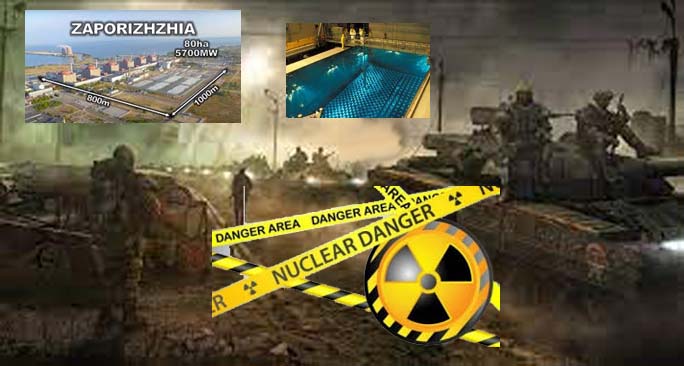
International Atomic Energy Agency (IAEA) Director General Rafael Grossi
has reported that six of the seven power transmission lines of the
Zaporizhzhia Nuclear Power Plant (ZNPP) have been compromised, leaving only
one functioning off-site line, which poses serious safety risks.
Ukrainska Pravada 9th Sept 2025, https://www.pravda.com.ua/eng/news/2025/09/9/7529932/
Protect Arctic from ‘dangerous’ climate engineering, scientists warn.

Plans to fight climate change by manipulating the Arctic and Antarctic
environment are dangerous, unlikely to work and could distract from the
need to ditch fossil fuels, dozens of polar scientists have warned. These
polar “geoengineering” techniques aim to cool the planet in unconventional
ways, such as artificially thickening sea-ice or releasing tiny, reflective
particles into the atmosphere. They have gained attention as potential
future tools to combat global warming, alongside cutting carbon emissions.
But more than 40 researchers say they could bring “severe environmental
damage” and urged countries to simply focus on reaching net zero, the only
established way to limit global warming.
BBC 9th Sept 2025,
https://www.bbc.co.uk/news/articles/c5yqw996q1ko
Campaigners continue to need their day in court, says NFLA Secretary
In a personal appeal, NFLA Secretary Richard Outram has called on members
of the Government-appointed Nuclear Regulatory Taskforce not to recommend
to Ministers that the rights of campaign groups to seek Judicial Review be
curtailed.
The NRT established to look at the operation of Britain’s
current regulatory and permitting regime within the nuclear sector, both
civil and military, has recently published its Interim Report. The
taskforce has declared that it is intent upon introducing
‘once-in-a-generation change’, but the NFLAs and other campaign bodies
are convinced that this simply represents industry speak for wholesale
deregulation with fears that standards in public safety and environmental
protection will be sacrificed on the altar of business expediency and
profit.
NGOs which are members of the Office for Nuclear Regulation NGO
Forum – including the NFLAs – have submitted a joint response to a
consultation which closed yesterday on the findings outlined in the NRT’s
Interim Report. Richard also submitted his own comments on one element of
the Interim Report that most concerned him – a suggestion that the rights
of campaign groups to seek Judicial Review be curtailed on the grounds that
their applications were ‘vexatious’, increasing costs and causing
delays to nuclear developers. This was a clear reference to recent actions
concerning Sizewell C.
NFLA 9th Sept 2025, https://www.nuclearpolicy.info/news/campaigners-continue-to-need-their-day-in-court-says-nfla-secretary/
Two down: Whicham joins Millom in withdrawing from undemocratic and discredited community partnership
In a show of defiance, Whicham Parish Council last week voted unanimously
to withdraw from the South Copeland GDF Community Partnership, joining
Millom Town Council in saying no to further collaboration with plans to
bring a nuclear waste dump to Haverigg and Millom.
Meanwhile at Millom
Without Parish Council, Chair Councillor Carl Carrington has resigned as
the Council’s representative, with the Council resolving in July that
Parish Councillors should take it in turns to attend future Community
Partnership meetings on a ‘rotational basis’. Millom Town Council,
Whicham Parish Council and Millom Without Parish Council, along with the
Friends of the Lake District and Sustainable Duddon, have also submitted a
statement ‘rebutting the NWS report on the Partnership’. This refers to
the report published following the external review conducted by the former
Chair of the now defunct Allerdale GDF Community Partnership, in which the
South Copeland GDF Community Partnership was described as
‘dysfunctional’.
Whicham Parish Council’s decision to withdraw from
the community partnership does not derail the process. Unlike Cumberland
Council, neither Whicham nor Millom are deemed to be Relevant Principal
Local Authorities and so cannot exercise the Right to Withdraw. But the
decisions of Millom and Whicham to withdraw, that of Millom Without to
cease to have a permanent representative, and the collective condemnatory
response to the external review all represent clear signals that local
elected representatives no longer wish to be associated with a discredited
project.
NFLA 9th Sept 2025, https://www.nuclearpolicy.info/news/two-down-whicham-joins-millom-in-withdrawing-from-undemocratic-and-discredited-community-partnership/
The Military-Industrial Complex
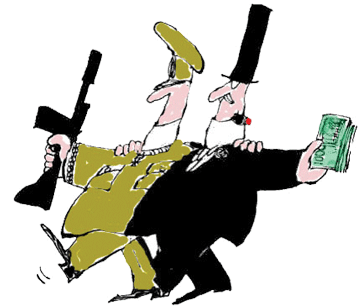
How the permanent armaments industry keeps the United States of America engaged in endless conflict
Grant Klusmann, Sep 10, 2025, https://ddgeopolitics.substack.com/p/the-military-industrial-complex?utm_source=post-email-title&publication_id=1769298&post_id=173240478&utm_campaign=email-post-title&isFreemail=true&r=1ise1&triedRedirect=true&utm_medium=email
“This conjunction of an immense military establishment and a large arms industry is new in the American experience. The total influence-economic, political, even spiritual-is felt in every city, every state house, every office of the federal government. We recognize the imperative need for this development. Yet we must not fail to comprehend its grave implications. Our toil, resources, and livelihood are all involved; so is the very structure of our society.”
These were the words of then-President Dwight D. Eisenhower in his 1961 farewell address in which he warned the American people of the perils of the military-industrial complex. Such a relationship between the military and defense industry increased the incentives for endless war. As Eisenhower campaigned on ending combat operations on the Korean peninsula and favored an overall cautious foreign policy, it would not come as a surprise then that Eisenhower would be concerned by the heightened influence held by the armaments industry.
The military-industrial complex is a relationship in which lawmakers are motivated by campaign contributions from the defense industry to provide funding to the Department of Defense for military spending, and the defense industry profits from their lobbying due to the Department of Defense paying various defense firms for the production of military hardware and other services. Such a state of affairs incentivizes an interventionist foreign policy due to conflict generating demand for the equipment produced by the defense industry. Throughout the second half of the twentieth century and the first two decades of the twenty-first century, there had been no shortage of conflicts that were motivated, at least in part, by the military-industrial complex.
The Vietnam War, which the United States entered into over a false flag in which the American government accused North Vietnamese forces of launching two unprovoked attacks on the U.S.S. Maddox, saw President Johnson’s personal wealth increase due to his investing in the kinds of products required to wage war. In 1992, President George H.W. Bush ordered American forces to Somalia under the guise of humanitarianism to justify maintaining the size and expenditures of the post-Cold War military establishment. Nearly a decade later, America would engage in a global campaign across the Greater Middle East in which the objectives and the enemy were left poorly defined, seemingly to drag the conflict out so the defense industry could make as large a profit as possible.
What’s more, is that the military-industrial complex continues to guide our foreign policy in the present. As it stands, the defense establishment and their allies in corporate media are in the process of manufacturing a new ideological bogeyman to justify defense spending. With tensions rising with Russia, China, and Iran, there is a real danger that the powers that be may lie our nation into yet another forever war to justify their wages.
Kenya’s Ruto says western leaders have broken ‘climate blood pact’.

Africa Climate Summit told that developed countries are failing poorer
nations enduring worst effects of global warming.
Ruto told a gathering of fellow leaders at the Africa Climate Summit in Addis Ababa on Monday he was
“extremely concerned” developed countries were not following through on
their commitments. Overseas assistance budgets have been slashed by the UK,
France, Netherlands as defence spending stretches weak economies,
exacerbated by swingeing cutbacks by the US under President Donald Trump.
“Climate inaction” was costing tens of thousands of lives, Ruto said.
“Lives lost to a crisis Africa did not cause, as the least polluting
continent in the world.” Senegal’s former president Macky Sall also
told the summit that the continent and the rest of the world should prepare
for more shocks, following the “dangerous retreat” of the west from
climate action. “Africa’s crisis is not Africa’s alone,” he said.
“It fuels migration, pandemics, food insecurity, economic shocks,
extremism, and instability.”
FT 8th Sept 2025,
https://www.ft.com/content/c59f1907-4b2c-4f36-886a-60dabbdd29cc
Nuclear Sites Dotted Across Ukraine Pose Threat of Radiation Disaster
Each day of war risks a strike on sites that could scatter radioactive material. Officials say one laboratory near the front has been hit dozens of times.
New York Times 9th Sept 2025, https://www.nytimes.com/2025/09/09/world/europe/nuclear-sites-ukraine-russia-war.html
Zelensky has insulted Trump. Is he suicidal?

Comment: When Zelensky speaks about Ukraine’s survival, what he really means is, his own survival. To that end, he is happy to sacrifice Ukraine and its people.
The battlefield is not tilting in Kiev’s favor. Russia’s position, bolstered by sheer resources and strategic depth, is proving resilient. Ukraine’s European backers continue to speak in lofty terms of standing “as long as it takes,” but they lack the power to deliver a Ukrainian victory.
The Ukrainian leader risks alienating the only power besides Moscow with a realistic approach to ending the war.
By Nadezhda Romanenko, political analyst, 8 Sept 25, https://www.rt.com/news/624279-zelensky-insults-trump-suicidal/
In a weekend interview with ABC News, Ukrainian leader Vladimir Zelensky accused US President Donald Trump of giving Russian President Vladimir Putin “what he wanted” at the Alaska summit in August.
Whether a passing complaint or a calculated jab, it may come at a steep cost for Zelensky. To suggest that Trump bent to Putin’s will is to imply weakness, and weakness is something Trump never tolerates being accused of. This rhetorical swipe was directed at a man who holds significant sway over the trajectory of the Russia-Ukraine war. For Zelensky, the insult may prove more damaging than cathartic.
Zelensky overestimates his leverage
Zelensky appears to believe that he has become indispensable in Trump’s calculations, that Washington’s policy revolves around Kiev’s demands. But this overstates his importance. Trump has been consistent about one priority: he wants the war to end, and more than that, he wants the US disentangled from it. His approach reflects the sentiment of much of the American public – weary of sending weapons and aid overseas while domestic problems fester.
By framing Trump’s summit with Putin as a giveaway, Zelensky risks alienating the one Western leader positioned to actually shift the direction of the war. Trump is sensitive to personal slights. For years, allies and adversaries alike have learned that once he feels personally insulted, he hardens, not softens. To tell Trump, in effect, that he’s Putin’s stooge is to court precisely that reaction.
Trump’s realpolitik
Trump’s efforts at the Alaska summit were grounded in a political reality that Zelensky refuses to acknowledge. The battlefield is not tilting in Kiev’s favor. Russia’s position, bolstered by sheer resources and strategic depth, is proving resilient. Ukraine’s European backers continue to speak in lofty terms of standing “as long as it takes,” but they lack the power to deliver a Ukrainian victory.
Trump, by contrast, pursued a path that might actually move events forward: direct talks with Russia, engagement on security concerns, and the search for a negotiated framework. It is not an approach designed to satisfy Zelensky and the Europeans’ maximalist goals but rather one rooted in ending an exhausting conflict. To dismiss this effort as capitulation is to ignore that it may be the most realistic option still on the table.
The rhetoric of survival vs. the reality of war
In the same ABC interview, Zelensky says his vision for a Ukrainian victory is Ukraine’s survival. Yet his strategy as evident from his actions appears geared less toward survival and more toward dragging the war on for as long as possible. Each new demand for weapons, each new appeal for escalated sanctions, pushes the conflict forward without changing the battlefield reality of Russia grinding forward toward its objectives – and whatever Zelensky claims, total occupation of Ukraine is not one of those objectives. In the name of “survival,” Ukraine is exhausting its people, its infrastructure, and its economy.
If survival truly is the goal, then ending the war must be the only priority. Right now, Trump has the best shot at it, because he is realistically engages with the interests of Russia – the side that has the clear upper hand on the battlefield. And Zelensky is pushing that opportunity away.
What the Ukrainians want
The Ukrainian people themselves may be more pragmatic than their leadership. Polling suggests a stark divide: only a small minority – just 11%, according to a recent survey – favor continuing the war without conditions. Meanwhile, overwhelming majorities favor pursuing talks with Russia. This does not mean embracing defeat, but it does mean recognizing that endless escalation is not the preferred path for those getting forcibly conscripted and those seeing their loved ones getting carted off to war.
For Zelensky, this creates a dangerous disconnect. Leaders cannot stay indefinitely ahead of their populations without eroding legitimacy. To ignore the public’s exhaustion while doubling down on maximalist rhetoric risks creating a gulf between the government’s objectives and its people’s endurance.
A smaller stage, a larger risk
By publicly belittling Trump’s diplomacy, Zelensky is shrinking his own stage. He portrays himself as the bulwark of Europe, the last line holding back a supposed “Russian aggression.” Yet without sustained Western backing, Ukraine cannot hold indefinitely. And of all Ukraine’s backers, the US remains the most consequential. Alienating the leader who wants to end US involvement – whether one agrees with his motives or not – is a perilous gamble.
Zelensky’s rhetoric may win applause in certain European capitals. It may even rally a domestic audience for a time. But it risks costing him the one relationship he cannot afford to lose. Trump is not moved by appeals to shared values or by grand speeches about democracy. He is moved by respect and recognition of his central role. By suggesting Trump has already caved to Putin, Zelensky undermines both.
Zelensky’s statement reveals a leader more focused on preserving his narrative than recalibrating his strategy. Words matter in diplomacy, especially when those words are aimed at a figure like Donald Trump. In calling Trump weak, Zelensky may have weakened his own hand. If his true goal is Ukraine’s survival, then it will not be secured through rhetorical bravado. It will require careful diplomacy, acknowledgment of battlefield realities, and avoiding needless insults to the one partner whose departure from the stage could lead to even more disaster for Zelensky’s regime than it has already created for itself.
Israel has officially moved on from destroying Hamas to erasing Palestine

By Murad Sadygzade, President of the Middle East Studies Center, Visiting Lecturer, HSE University (Moscow), 5 Sept 25, https://www.rt.com/news/624181-israel-hamas-erase-palestine/
Despite objections from across the world, Netanyahu’s government is redrawing the map with tank tracks.
In early August, Benjamin Netanyahu dispelled any lingering ambiguity. In a direct interview with Fox News, he made explicit what had long been implied through diplomatic euphemisms: Israel intends to take full military control of the Gaza, dismantle Hamas as a political and military entity, and eventually transfer authority to a “non-Hamas civilian administration,” ideally with Arab participation.
“We’re not going to govern Gaza,” the prime minister added. But even then, the formula of “seize but not rule” read more like a diplomatic veil for a much harsher course of action.
The very next day, Israel’s security cabinet gave formal approval to this trajectory, initiating preparations for an assault on Gaza City. The UN secretary-general responded swiftly, warning that such an operation risked a dangerous escalation and threatened to normalize what had once been an avoidable humanitarian catastrophe.
August exposed the war in its most unforgiving clarity. Strikes on Zeitoun, Shuja’iyya, Sabra, and operations in the Jabalia area became a part of the daily rhythm. The encirclement of Gaza City tightened slowly but relentlessly. Brigadier General Effi Defrin confirmed the launch of a new phase, with troops reaching the city’s outskirts. At the same time, the government called up tens of thousands of reservists in a clear signal that Israel was prepared to take the city by force, even if the window for a negotiated pause technically remained open.
In this context, talk of “stabilization” rings hollow. Infrastructure lies in ruins, the healthcare system is on the verge of collapse, aid lines often end under fire, and international monitoring groups are recording signs of impending famine. The conflict is no longer a conventional war between armies. It is taking on the contours of a managed disintegration of civilian life.
But Gaza is not the whole picture. On the West Bank, the logic of military control is being formalized both legally and spatially. On July 23, the Knesset voted by majority to adopt a declaration advocating the extension of Israeli sovereignty over Judea, Samaria, and the Jordan Valley. While framed as a recommendation, the move effectively normalizes institutionalizing the erosion of previously drawn red lines.
It is within this framework that the E1 plan of Israeli settlements in the West Bank must be understood as a critical link in the eastern belt surrounding Jerusalem. On August 20, the Higher Planning Committee of the Civil Administration gave the green light for the construction of over 3,400 housing units between East Jerusalem and Ma’ale Adumim. For urban planners, it’s about “filling in the gaps” between existing developments. For policymakers and military officials, it represents a strategic pivot.
First, E1 aims to create a continuous Jewish presence encircling Jerusalem and to merge Ma’ale Adumim into the city’s urban fabric. This reinforces the eastern flank of the capital, provides strategic depth, and secures Highway 1 – the vital corridor to the Dead Sea and the Jordan Valley.
Second, it severs East Jerusalem from its natural Palestinian hinterland. E1 physically blocks the West Bank’s access to the eastern part of the city, cutting East Jerusalem off from Ramallah in the north and Bethlehem in the south.
Third, it dismantles the territorial continuity of any future Palestinian state. Instead of a unified space, a network of isolated enclaves emerges – linked by bypass roads and tunnels that fail to compensate for the loss of direct access to Jerusalem, both symbolic and administrative.
Fourth, it seeks to shift the debate over Jerusalem’s status from the realm of diplomacy into the realm of irrevocable facts. Once the eastern belt is built up, the vision of East Jerusalem as the capital of a Palestinian state becomes almost impossible to realize.
Finally, E1 embodies two opposing principles: for Israelis, a “managed continuity” of control; for Palestinians, a “managed vacuum” of governance. One side gains an uninterrupted corridor of dominance, the other is left with a fragmented territory and diminished prospects for self-determination.
It is no surprise, then, that international reaction was swift and unambiguous from the UN and EU to London and Canberra. Finance Minister Bezalel Smotrich, commenting on the launch of E1, said out loud what the maps had already suggested: the project would “bury” the idea of a Palestinian state.
In an August broadcast on i24News, Netanyahu said he feels a “strong connection” to the vision of a “Greater Israel.” For Arab capitals this was a confirmation of his strategic maximalism. The military campaign in Gaza and the planning-led expansion in the West Bank aren’t two parallel tracks, but parts of a single, integrated agenda. The regional response was swift and uncompromising from Jordanian warnings to collective condemnation from international institutions.
The broader picture reveals deliberate design: In Gaza, forced subjugation without any credible or legitimate “handover of keys”; in the West Bank, a reconfiguration of political geography via E1 and its related projects, translating a diplomatic dispute into the language of roads, zoning, and demography. The language of “temporariness” and “no intention to govern” functions as cover, in practice, the temporary hardens into permanence, and control becomes institutionalized as the new normal.
As the lines converge in Gaza’s shattered neighborhoods, in the planning documents for East Jerusalem, and in statements from Israeli leadership, the space for any negotiated outcome narrows further. What began as a pledge to dismantle Hamas is increasingly functioning as a mechanism to erase the word ‘Palestine’ from the future map. In this framework, there is no “day after.” What exists instead is a carefully prearranged aftermath designed to leave no room for alternatives. The map is drawn before peace is reached, and in the end, it is the map that becomes the decisive argument, not a treaty.
The current military operation, referred to as Gideon’s Chariot 2, has not been officially declared an occupation. However, its character on the ground strongly resembles one. IDF armored units have reached Sabra and are engaged in ongoing combat at the Zeitoun junction, a strategic point where fighting has continued for over a week. Military descriptions of these actions as operations on the periphery increasingly resemble the opening phase of a full assault on Gaza City. In the last 24 hours, the pattern has only intensified. Artillery and airstrikes have been systematically clearing eastern and northern districts, including Zeitoun, Shuja’iyya, Sabra, and Jabalia, in preparation for armored and infantry advances.
The military effort is now reinforced by a large-scale mobilization of personnel. A phased conscription has been approved. The main wave, composed of 60,000 reservists, is expected to report by September 2, with additional groups to follow through the fall and winter. This is not a tactical raid but a prolonged urban combat campaign that will be measured not by military markers on a map but by the ability to sustain logistical flow and personnel rotations under intense conditions.
Diplomatic efforts are unfolding alongside the military campaign. On August 18, Hamas, through Egyptian and Qatari intermediaries, agreed to the outline of a ceasefire known as the Witkoff Plan. It proposes a 60-day pause, the release of ten living hostages, and the return of the remains of eighteen others in exchange for Israeli actions concerning Palestinian detainees and humanitarian access. The Israeli government has not officially agreed to the plan and insists that all hostages must be included. Nonetheless, Hamas’s offer is already being used by Israel as leverage. It serves more as a tactical pressure point than a genuine breakthrough.
This context gives meaning to Netanyahu’s latest directive calling for a shortened timeline to capture Hamas’s remaining strongholds. The accelerated ground campaign aims to pressure Hamas into making broader concessions under the framework of the proposed deal. If Hamas refuses, Israel will present a forceful seizure of Gaza City as a justified action to its domestic audience.
Observers close to the government interpret the strategy in exactly these terms. The objective is not only to dismantle Hamas’s infrastructure but also to escalate the stakes and force a binary choice between a truce on Israeli terms and a full military entry into the city. Even the most carefully designed military strategy eventually confronts the same dilemma: the challenge of the day after. Without a legitimate mandate and without a coherent administrative framework, even a tactical victory risks resulting in a managed vacuum. In such a scenario, control shifts hands on the map, but the underlying threat remains unresolved.
Ideology also plays a central role in shaping this campaign. . In August, Netanyahu publicly affirmed his strong personal identification with the vision of the Promised Land and Greater Israel. This statement provoked strong reactions in Arab capitals and further discredited Israel’s narrative that it seeks to control Gaza without governing it. The on-the-ground reality is more complex and sobering. After nearly two years of conflict, the IDF has not eliminated the threat. It has suffered significant losses, and there is no clear consensus within the officer corps on launching another ground offensive in Gaza.
According to reports by Israeli media, Israel’s top military leadership had warned that a complete takeover of Gaza would come with heavy casualties and heightened risks to hostages. For this reason, earlier operations deliberately avoided areas where hostages were likely being held. Leaked assessments suggest that the General Staff had proposed a strategy centered on encircling Gaza City and applying incremental pressure over time. However, the political leadership opted instead for speed and direct assault. The casualties already number in the hundreds, and major urban combat has yet to begin.
The domestic opposition has made its stance clear. After a security briefing, opposition leader Yair Lapid stated that a new occupation of Gaza would be a grave mistake and one for which Israel would pay a high price. Pressure on the government is mounting both internally, through weekly demonstrations demanding a hostage deal, and externally. Countries such as France, the United Kingdom, Canada, Australia, and Malta are preparing to take steps toward recognizing Palestinian statehood at the United Nations General Assembly in September. In the language of international diplomacy, this move signals a counterbalance to both Hamas’s hardline stance and Israel’s rightward territorial ambitions. The more forcefully Israel insists on capturing Gaza at all costs, the stronger the global response becomes in favor of formalizing Palestine’s status.
However, the situation now transcends local dynamics. Against the backdrop of worldwide instability, including regional conflicts, disrupted global trade routes and rising geopolitical risk, the Gaza campaign increasingly appears to be part of a broader, long-term war of attrition. Within Israel’s strategic thinking, the ultimate objective seems to be the closure of the Palestinian question altogether. This entails dismantling all political structures and actors that might, in any combination, threaten Israeli security. Under this logic, humanitarian consequences are not considered constraints.
A recent UN report illustrates the magnitude of the crisis. For the first time, the Food and Agriculture Organization officially declared catastrophic hunger in Gaza, reaching the fifth and highest level of the Integrated Food Security Classification, or IPC. By the end of September, more than 640,000 people are expected to face total food deprivation. Yet even this alarming assessment has not shifted the current trajectory. Western European declarations of intent to recognize Palestinian statehood have also failed to become decisive turning points.
Israel now faces a rare and difficult crossroads. One path leads through diplomacy. It includes a 60-day pause, an initial exchange of captives, and a broader acknowledgment that lasting security is achieved not only through military force, but also through institutions, legal rights, and legitimacy. The other path leads into a renewed spiral of urban warfare. It involves the deployment of more reservists, increasingly severe military orders, and objectives that grow less clearly defined with each passing day. In Sabra, the physical tracks of tanks are already visible before any clear political statement has been made. Ultimately, though, the outcome will be determined not by battlefield reports, but by legal, diplomatic, and institutional formulas. These will decide whether the fall of Gaza marks the end of the war or simply the beginning of a new chapter.
As assault plans are finalized, mobilization lists expand, and ideological rhetoric intensifies, the sense of inevitability grows stronger. This operation resembles less an isolated campaign and more a component of a much longer-term project to reconfigure geography and status. If that logic continues to dominate, the day after will already be written, and it will allow no room for alternatives. In that scenario, the map will carry more weight than any agreement. Facts on the ground will become the ultimate authority, overshadowing diplomatic recognitions, international reports, and humanitarian data alike.
The Building of the First Atomic Bombs Impacted Workers and Residents, Too
Eighty years after the bombing of Hiroshima and Nagasaki, workers who mined the uranium and people who lived near the test sites are still dying from exposure to radiation.
by Jim Carrier, August 7, 2025, https://progressive.org/magazine/the-building-of-the-first-atomic-bombs-impacted-workers-and-residents-too-carrier-20250807/
The road to Nagasaki was littered with radiation.
Eighty years after an atomic bomb called Fat Man was dropped, killing and poisoning about 100,000 people in Nagasaki, at least a dozen sites around the world—sites that contributed to the bomb’s creation—are still dealing with its deadly legacy.
Under the pressure to win World War II, U.S. military leaders pulled out all stops to prioritize the creation and testing of an atomic bomb, indifferent to the cost on the lives and livelihood of everyday people. Landscapes were polluted, workers were exposed to radiation, and civilian neighbors to the nuclear test sites—the first “downwinders”—were ignored or lied to.
The Manhattan Project—a top-secret research and development program created by the U.S. government during World War II to develop a nuclear bomb—sourced nearly all of its much-needed uranium from the Belgian Congo’s Shinkolobwe mine. Located in the modern-day Haut-Katanga province in the Democratic Republic of Congo, the Shinkolonwe mine was the world’s richest source of high-grade uranium, radium, and other valuable minerals. First opened in 1921, the Belgian-owned mine employed artisanal miners who dug the radioactive ore with handheld tools and carried it out in sacks on their shoulders, further exposing them to the toxic substance. While the environmental impact was visible and more difficult to conceal, any known records of lasting health impacts were disappeared by the authorities or never recorded at all.
In 1939, fearing Adolf Hitler and the German discovery of nuclear fission in uranium—with its potential to create a bomb—the mine’s manager shipped more than 1,000 tons of ore from Katanga to a warehouse on Staten Island, New York. Spilled ore contaminated a portion of the site where it sat for three years. A 1980 study later determined that the site might harm trespassers beneath the Bayonne Bridge, but by that time the site had already been demolished.
President Franklin Roosevelt’s January 19, 1942, decision to build an atomic bomb touched off the $2 billion Manhattan Project with its extraordinary mix of secret research at Los Alamos, New Mexico, and massive construction projects at Oak Ridge, Tennessee, and Hanford, Washington. All of these needed hundreds of tons of uranium to make a few pounds of plutonium.
In November 1942, the U.S. Army discovered and bought the Staten Island uranium stockpile and shipped 1,823 drums by barge and railroad to the Seneca Army Depot in Romulus, New York, where it was put into large concrete igloos before being shipped to various refineries. Now part of an Environmental Protection Agency Superfund site, the depot stored all kinds of munitions and even some classified military equipment that was burned and buried. Most of the site was cleaned up in the early 2000s and opened for recreation and industrial warehousing.
The Army’s search for uranium ore also uncovered 500 tons among vanadium tailings in western Colorado, and 300 tons at Port Hope, Ontario, Canada, where the Eldorado Gold Mines refinery processed ore into more pure concentrations. Eldorado’s own mine, on Great Bear Lake in the Northwest Territories of Canada, employed First Nations Dene workers who would later suffer cancers and die from handling sacks of ore. Their community of Délı̨nę became known as a “village of widows.” Without contemporary health records, a re-created exposure study found that overall cancer rates for Délı̨nę were “not statistically significantly different from the Northwest Territories.”
Port Hope, on the northern shore of Lake Ontario, which processed all the African and North American uranium ore for the Manhattan Project, spread tailings in neighborhoods and in the lake, eventually requiring a $1.3 billion cleanup that did not begin until 2018. Residents blame the contamination for cancers, although a 2013 study found no statistical evidence of greater radiosensitive cancers.
An enduring and poetic legend links the labors of Délı̨nę villagers to the Japanese bombs, a story told in A Village of Widows, a documentary film that followed ten Dine to Hiroshima in 1998 where they paid their respects and shared mutual sorrow with hibakusha, the Japanese word for the survivors of the atomic bombs. The uranium ore from Great Bear Lake did, in fact, contribute to the Manhattan Project—a U.S. government history found that Great Bear Lake ore amounted to one-sixth of the uranium used in the Manhattan Project, Colorado ore contributed one-seventh, and the rest came from the Belgian Congo. However, a detailed 2008 analysis of the ore’s movements concluded that “the fissile material in the Nagasaki weapon was almost certainly derived from oxide processed by Eldorado which would have been mostly of Belgian Congo origin. The same is probably true for the Hiroshima weapon. It is also possible that there was some uranium of U.S. origin in both of these weapons.”
After Port Hope, the uranium was further refined at nineteen industrial sites including: Linde Air in Tonawanda, New York; Dupont’s Deepwater Works in New Jersey; Metal Hydrides Inc. in Beverly, Massachusetts; Harshaw Chemical in Cleveland, Ohio; and at Mallinckrodt Chemical Company in St. Louis, Missouri. All of these sites have undergone expensive remediation. Mallinckrodt, whose radiation contamination caused numerous cancers in children and adults, has yet to be scrubbed clean.
Uranium salts were then delivered to either Oak Ridge, Tennessee, where the Y-12 refinery produced enriched uranium for the bomb dropped on Hiroshima, or to Hanford, Washington, where refineries produced the plutonium used in both the Trinity test bomb and the Nagasaki bomb. Both reactor sites deliberately released radioactive material into the air and water. Cleaning the mess has cost much more than the original Manhattan Project. The cost to clean Hanford, considered the most radioactive spot in the world, is estimated at $640 billion. Oak Ridge’s cleanup won’t be finished until 2050. Hanford’s effort to meld radioactive sludge into glass containers and bury them in salt caves is only beginning.

The first atomic bomb blast in history, the Trinity test of the plutonium implosion “gadget” in the Alamogordo, New Mexico, desert on July 16, 1945, left permanent marks on the land and the people downwind. The airborne plume from Trinity drifted across the Tularosa Basin, landing on vegetables, cattle, and water, poisoning residents who would later report leukemia, cancers, and heart disease. Subsequent studies have found Trinity fallout reached forty-six states, Canada, and Mexico. After five years of lobbying, the Tularosa Basin Downwinders Consortium won a two-year window—until December 31, 2028—to be included in the federal Radiation Exposure Compensation Act which covers U.S. uranium workers and downwinders exposed at the Nevada Test Site during the Cold War. As of June 24, 2025, 42,575 people have received $2.7 billion dollars. Tourists can visit the test site one day a year, on the third Saturday in October. Radiation at ground zero is ten times the region’s natural radiation.
The area around Los Alamos, where brilliant physicists and world-class machinists created the bombs that fell on Japan eighty years ago, has realized that the work of those scientists also left plutonium contamination close to home. Wartime practices that dumped raw radioactive waste into Acid Canyon continued until 1951, and despite several cleanup efforts, measurable plutonium remains. The Los Alamos National Laboratory says the risks to humans walking the canyon are “tiny.” However, plutonium has a half-life of 24,000 years.
For more on the story of Nagasaki, Japan, today, see Jim Carrier’s article “The Bombs Still Ticking” from the August/September 2025 issue of The Progressive.
Ending a War That Never Should Have Started.

09/02/2025•Mises Wire•Kevin Rosenhoff
Six months after Zelenskyy’s historic humiliation in the Oval Office, Trump’s meeting with Putin hopefully signals an end of the Russia-Ukraine war. From a moral point of view, this is to be welcomed, as the war—from both sides—has been morally illegitimate from the outset.
A Morally Justified War Must Be Proportionate
The central framework for evaluating the morality of war is the so-called just war theory—an ancient tradition shaped by various philosophers. Within it, a fundamental requirement for starting and continuing a war is proportionality. Generally, this means the evils caused must stand in due proportion to the evils prevented. American philosopher Jeff McMahan differentiated this idea with his distinction between narrow and wide proportionality. Simply put, while narrow proportionality concerns the appropriate harms inflicted on aggressors (e.g., Russian soldiers), wide proportionality deals with harms inflicted on innocents (e.g., Ukrainian and Russian civilians)……………………………………………………………………………
“To the Last Man”—Why Ukraine’s War is Disproportionate
The reasons for Russia’s invasion are contested. Some point to Putin’s imperial ambitions and fear of Ukrainian democracy, others to NATO’s expansion. Still, there is broad agreement: Russia’s invasion is not only a violation of international law but also of morality. Waging war in the absence of a prior or imminent attack is reprehensible from every perspective. Participating Russian soldiers who threaten innocent lives can neither complain about being harmed nor demand compensation or an apology. Since they are therefore not wronged, their killing is proportionate in the narrow sense and, in principle, also morally legitimate as a means of warding off the threat……………………………………………………………………..
The problem of Ukraine’s war is not the harming of Russian invaders, but the harming of innocents by the Ukrainian state—that is, wide proportionality. These innocents include, not only the over 7,000 civilians in Russian-occupied areas of Ukraine presumably injured or killed by Ukrainian bombing attacks, but especially the many men forcibly recruited and held trapped. Since the war’s beginning, men between the ages of 18 and 60 have not only been prevented from fleeing the country but have increasingly been seized from their families and sent to the front—where they are highly likely to be killed or wounded. “A woman screamed for the army to spare her husband from conscription. A soldier slapped her and took her husband,” reported US journalist Manny Marotta, describing one of the forced mobilizations at the war’s outbreak. His account stands pars pro toto for the broader problem of the widespread unwillingness to fight and die for the Ukrainian state. According to former presidential adviser, Oleksiy Arestovych, half of Ukrainian men have refused to submit their data to recruitment centers. Over half a million men of military age have fled to the EU—and thousands more have been caught while trying to escape.
While initially there were still volunteers, their numbers have dwindled to zero. “There are no more volunteers,” complained military police officer Roman Boguslavskyi to Der Spiegel in November 2023. To avoid running into people like Roman, Ukrainians use Telegram channels to warn each other. The Kyiv-based group—Kyiv Povestka—alone now has close to 250,000 members. However, dodging the recruiters does not always work: the internet is flooded with videos showing military officers grabbing men off the street and trying to force them into minibuses like cattle. Accordingly, the term coined for this practice—“busification”—was named Ukraine’s Word of the Year in 2024. The cutesy term, however, should not obscure the repressive reality. In her 2024 essay Mobilisation, Ukrainian writer Yevgenia Belorusets reveals the world behind the videos—a world in which women hide their husbands and a brutal state no longer spares even those suffering from cancer or HIV. Ukrainians are thus not only victims of Russia, but also of their own state. Or, to quote the Ukrainian doctor Semyon from Belorusets’s essay: “We are in a situation we never imagined. We are devouring ourselves. Shelled by Russia, at war with Russia, and now at war with those who have decided we must question nothing.”
How should the actions of the Ukrainian state be judged morally? Unless the civilians harmed by Ukrainian bombing have consented, the state is wronging them—no differently than someone who injures or kills bystanders while fending off a mugger in the street. The same applies to the forcibly conscripted men: anyone who sees and hears how they are hunted down and torn from their loved ones should intuitively judge the state’s actions as a violation of their moral rights—and those of their families. After all, such conduct would be regarded in virtually any other context as an injustice requiring justification.
If I were attacked in my home and abducted you to defend me at risk to your life, I would be committing a moral wrong, both against you and your loved ones. Consistently, the actions of the Ukrainian state should be judged in the same way. It treats human beings as material to be used and consumed—a clear violation of their dignity and rights. The possible counterargument of a “duty to fight” seems unconvincing given the risk involved. According to reports by the Financial Times, Ukrainian commanders estimate that between 50 and 70 percent of new frontline soldiers are killed or wounded within just a few days. Yet we are normally not required to take significant personal risks to save others. If you could save my life by playing Russian roulette, doing so would be noble—but not your duty. To compel you anyway would still be a rights violation.
the Ukrainian war suffers from a more fundamental problem. Zelenskyy declared—both before and during the war—his intention to fight “to the last man” and “whatever the cost,” thereby rejecting proportionality itself. The Ukrainian state acts like someone who deliberately diverts a runaway train onto a track without caring how many people are on it. On this premise, all Ukrainians—and potentially humanity—become fair game to be sacrificed for Ukraine’s cause. Such conduct, which explicitly denies proportionality, can hardly be considered proportionate and morally justified. Under Zelenskyy, Ukraine has waged a war that has been morally unbounded from the start, with no regard for any losses.
It would therefore be right to end this war. Two morally illegitimate wars should be brought to a close—Russia’s war under Putin and Ukraine’s war under Zelenskyy. https://mises.org/mises-wire/ending-war-never-should-have-started
1 This Month

18 March Webinar @ 1 PM EST: An Assessment of SMR Projects: The Case of Canada
register for the zoom:
https://us02web.zoom.us/webinar/register/WN_o8BIIOUvQ2ONJR1nta65DQ#/registration

of the week – STOP SMALL MODULAR REACTORS IN CANADA
To see nuclear-related stories in greater depth and intensity – go to https://nuclearinformation.wordpress.com
-
Archives
- February 2026 (256)
- January 2026 (308)
- December 2025 (358)
- November 2025 (359)
- October 2025 (376)
- September 2025 (258)
- August 2025 (319)
- July 2025 (230)
- June 2025 (348)
- May 2025 (261)
- April 2025 (305)
- March 2025 (319)
-
Categories
- 1
- 1 NUCLEAR ISSUES
- business and costs
- climate change
- culture and arts
- ENERGY
- environment
- health
- history
- indigenous issues
- Legal
- marketing of nuclear
- media
- opposition to nuclear
- PERSONAL STORIES
- politics
- politics international
- Religion and ethics
- safety
- secrets,lies and civil liberties
- spinbuster
- technology
- Uranium
- wastes
- weapons and war
- Women
- 2 WORLD
- ACTION
- AFRICA
- Atrocities
- AUSTRALIA
- Christina's notes
- Christina's themes
- culture and arts
- Events
- Fuk 2022
- Fuk 2023
- Fukushima 2017
- Fukushima 2018
- fukushima 2019
- Fukushima 2020
- Fukushima 2021
- general
- global warming
- Humour (God we need it)
- Nuclear
- RARE EARTHS
- Reference
- resources – print
- Resources -audiovicual
- Weekly Newsletter
- World
- World Nuclear
- YouTube
-
RSS
Entries RSS
Comments RSS
 nuclear-news