Global majority of countries now signed onto the UN nuclear ban treaty
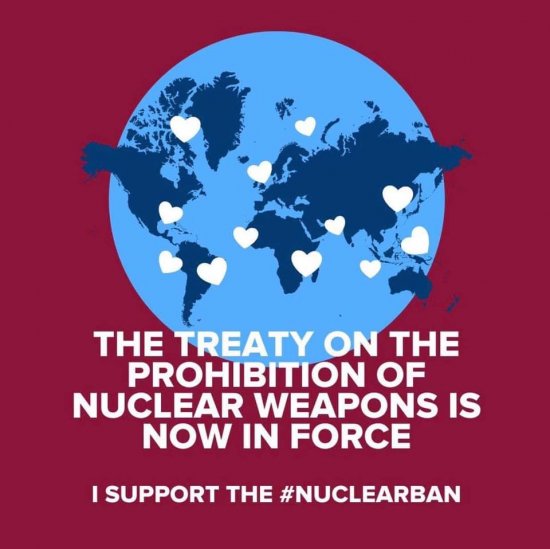
Kyrgyzstan has signed, and Ghana has ratified the Treaty on the Prohibition of Nuclear Weapons (TPNW), bringing the numbers of those who signed, ratified or acceded into the global majority. Kyrgyzstan’s Minister of Foreign Affairs, Zheenbek Kulubaev signed the treaty at the United Nations earlier today while Samuel Okudzeto Ablakwa, Foreign Minister of Ghana, deposited his country’s ratification, bringing the total to 99 out of 197 eligible states that have taken legal action under the treaty.
This is a key milestone for what is still a young treaty which was adopted by the UN just over just 8 years ago and only came into force under 5 years ago.
The TPNW outlaws nuclear weapons and all activities associated with them, including production, possession, testing, threats or use.
The TPNW was inspired by efforts to build the legal bulwark against the catastrophic humanitarian harm that nuclear weapons are known to cause. As we know from the evidence from the United States’ nuclear attacks on Hiroshima and Nagasaki 80 years ago, the effects of nuclear weapons are uniquely cruel and inhumane because of the indiscriminate, lasting, intergenerational harm they cause.
The International Campaign to Abolish Nuclear Weapons won the Nobel Peace Prize in 2017 for its work that led to the adoption of the TPNW. ICAN’s Executive Director, Melissa Parke, welcomed today’s news: “I warmly congratulate Kyrgyzstan and Ghana on their actions today. The TPNW is the best way to ensure real security from the existential threat nuclear weapons pose to the future of humanity, because as long as they exist, nuclear weapons are bound to be used, intentionally or by accident. The treaty is the sane alternative to the misguided and dangerous doctrine of nuclear deterrence and a new nuclear arms race that don’t provide security, but instead threaten it.”
Ms Parke continued: “The nuclear-armed countries and their allies that endorse the use of nuclear weapons are a distinct minority and they have no right to continue to threaten the future of the rest of the world. The TPNW is the pathway under international law to the fair and verifiable elimination of nuclear weapons so these nine countries have no excuse to continue to defy the majority here at the UN”.
The expanding influence of the TPNW has broken the hold nuclear-armed states and their flawed and dangerous doctrine of nuclear deterrence had on the public debate around nuclear weapons. The TPNW states are directly challenging deterrence doctrine as both a threat to all countries and an obstacle to nuclear disarmament – an objective the nuclear-armed states themselves say they share.
Theodora Williams Anti, from ICAN partner Foundation for Security and Development in Africa (FOSDA) said “Ghana’s ratification of the UN Treaty on the Prohibition of Nuclear Weapons is a proud moment for our nation and a powerful statement to Africa and the world. By joining the majority of states in rejecting these weapons of mass destruction, Ghana affirms its unwavering commitment to peace, human security, and the protection of future generations. This milestone reminds us that true strength lies not in the threat of annihilation, but in the courage to choose dialogue, cooperation, and a safer world for all.”
95 states have signed the treaty, which has 74 states parties. Four countries acceded to the treaty without signing beforehand as permitted under its Article 14.
The fact that the global majority of states are now on board the treaty sends a strong signal to the nuclear-armed states and their allies which support the use of nuclear weapons in their defence strategies that they are the minority and increasingly regarded by the international community as irresponsible actors threatening global security.
The TPNW has made nuclear weapons as unacceptable as chemical and biological weapons. The more countries that join the treaty, the more the diplomatic pressure builds on the pro-nuclear states and the more isolated they will become with all the diplomatic and reputational costs involved.
No comments yet.
1 This Month
Chernobyl: The Lost Tapes – A good documentary on Chernobyl on SBS available On Demand for the next 3 weeks– https://www.sbs.com.au/ondemand/tv-program/chernobyl-the-lost-tapes/2352741955560

of the week–London Campaign for Nuclear Disarmament

Tell the Ukrainian Government to Drop Prosecution of Peace Activist Yurii Sheliazhenko
To see nuclear-related stories in greater depth and intensity – go to https://nuclearinformation.wordpress.com
-
Archives
- April 2026 (139)
- March 2026 (251)
- February 2026 (268)
- January 2026 (308)
- December 2025 (358)
- November 2025 (359)
- October 2025 (376)
- September 2025 (257)
- August 2025 (319)
- July 2025 (230)
- June 2025 (348)
- May 2025 (261)
-
Categories
- 1
- 1 NUCLEAR ISSUES
- business and costs
- climate change
- culture and arts
- ENERGY
- environment
- health
- history
- indigenous issues
- Legal
- marketing of nuclear
- media
- opposition to nuclear
- PERSONAL STORIES
- politics
- politics international
- Religion and ethics
- safety
- secrets,lies and civil liberties
- spinbuster
- technology
- Uranium
- wastes
- weapons and war
- Women
- 2 WORLD
- ACTION
- AFRICA
- Atrocities
- AUSTRALIA
- Christina's notes
- Christina's themes
- culture and arts
- Events
- Fuk 2022
- Fuk 2023
- Fukushima 2017
- Fukushima 2018
- fukushima 2019
- Fukushima 2020
- Fukushima 2021
- general
- global warming
- Humour (God we need it)
- Nuclear
- RARE EARTHS
- Reference
- resources – print
- Resources -audiovicual
- Weekly Newsletter
- World
- World Nuclear
- YouTube
-
RSS
Entries RSS
Comments RSS
 nuclear-news
Leave a comment