50 States One Israel – Wikipedia

26 Sept 25 https://en.wikipedia.org/wiki/50_States_One_Israel
50 States One Israel was a conference held in Israel from September 14, 2025 to September 18, 2025[1] for state legislators from the United States and members of the Israeli government.[2][3] Hosted by the Israeli Foreign Ministry, the conference was described as the largest delegation of elected officials to visit Israel.[2] According to Lior Haiat, Deputy Director for North America at the Foreign Ministry, lawmakers including state legislators from all 50 states were in attendance.[2]
Background
………………………….. The conference, including travel, is paid entirely by the Israeli government.[4]
According to a July 8, 2025 letter to Oregon Representative David Gomberg sent by Israel’s consulate-general to the Northwest, The Ministry of Foreign Affairs will provide “roundtrip economy airfare from New York to Tel Aviv (including domestic U.S. flights to NYC),” and “all in-country transportation, accommodations, meals, and guided programming.”[1] Five lawmakers from every state were expected to attend.[5
……………… On September 15, 2025, attendees visited the Western Wall and the Church of the Holy Sepulchre.[6] Later, Foreign Minister Gideon Sa’ar urged American lawmakers to pass anti-BDS laws in their states.[7] In the evening, Prime Minister of Israel Benjamin Netanyahu gave a welcome address to the delegation.[8][9] ……………………..
On September 17, 2025, President of Israel Isaac Herzog addressed the delegation, saying that Israel’s “ironclad bond with the United States of America [exists] because we drink from the same fountain: the values of the Bible”.[11]………………….
Attendees…………incomplete list of 105 lawmakers named here
Impact
In the period following the conference, several participants faced criticism from constituents, the general public, and family. The daughter of New Mexico State Senator Jay Block took to social media platforms to register her disgust with her father’s participation in the conference, stating “It seems like he sold his soul to the devil and is now just peddling lies and propaganda… I just genuinely hope that this will be the end of my dad’s political career…”[61] Leading up to a potential government shutdown, Republican House Speaker Matt Hall of Michigan had instructed the Republican caucus not to leave the state while the budget was not completed and removed all bills from Representative Jaime Greene’s committee for her absence in attending the event.[62]
References.…………………………………………………
‘Near Daily’ Israeli Assaults on Lebanon Have Become Non-News for Western Media

Belén Fernández, September 26, 2025, https://fair.org/home/near-daily-israeli-assaults-on-lebanon-have-become-non-news-for-western-media/
The Israeli military unleashed a large wave of air strikes on densely populated towns in South Lebanon on Thursday, September 18—although you’d never know it from the Western corporate media, who have increasingly lost interest in reporting on Israel’s unceasing war on its northern neighbor. This proceeds unabated in spite of a ceasefire, brokered by the United States and France, that ostensibly took hold last November. Prior to Thursday’s strikes, area residents were given an hour to evacuate.
The BBC (9/18/25) was one of the few corporate outlets that managed to find a bit of space for these events, under the headline, “Israeli Air Strikes Hit Southern Lebanon.” The outlet noted that
an Israeli military spokesman said the targets were infrastructure belonging to Hezbollah and in response to the group’s attempts to re-establish activities in the area. He provided no evidence.
The piece also explained that Israel “has carried out air strikes on people and places it says are linked to Hezbollah almost every day, despite a deal that ended the war with the group in November.”
Reuters (9/18/25) managed an even shorter writeup—and took Israel’s word for it in the headline: “Israel Attacks Hezbollah Targets in South Lebanon.”
No casualties were reported in these particular attacks, but the fiery spectacle naturally sent a whole lot of people fleeing in terrorized panic. The fact that such terrorism by the state of Israel transpires “almost every day” is perhaps part of the reason the media have largely relegated it to the realm of non-news.
Another part of the reason might be that outlets are too busy serving as apologists (FAIR.org, 4/11/25, 4/25/25, 6/6/25) for the ongoing US-backed genocide in the nearby Gaza Strip, which Israel launched in October 2023, and which has thus far officially killed more than 65,000 Palestinians, including 20,000 children—although this is likely a grave underestimate.
‘Along the border’
It was the momentum of this very genocide—and the accompanying astronomical increase in America’s already-astronomical financial and military assistance to Israel—that spurred Israel to once again go after Lebanon (pardon, “Hezbollah infrastructure”). Between October 2023 and November 2024, Israel killed more than 4,000 people in Lebanon and injured nearly 17,000 (Al Jazeera, 8/7/25).
In the seven months following the “ceasefire” agreement, another 250 people were killed, as the New York Times (7/9/25) acknowledged in one of its sporadic reports on Israel’s “near-daily strikes,” while also acknowledging that the Israelis had “held onto five positions along the border in violation of the agreement.” Had the paper wanted to be precise, it might have specified that these five positions are not simply “along the border,” but rather entirely within Lebanese territory.
Speaking of occupying Lebanese territory, it bears mentioning that the US is currently wrapping up construction of a gigantic fortress in the hills overlooking Beirut, which will soon serve as the country’s new embassy. It “dwarfs any government facility in Lebanon,” as observed by Lebanese journalist Habib Battah in an article for MERIP (4/10/24).
Boasting a trapezoidal swimming pool and buffed marble courtyard, the “19-structure ziggurat” also comprises a “labyrinth of megalithic blast walls emerging from deep excavation pits.” In other words, it’s the perfect setting for the US to continue strong-arming Lebanon into disarming Hezbollah, which, in addition to being one of Israel’s pet nemeses, has long been a thorn in the side of US empire, complicating America’s pursuit of regional hegemony.
And while Lebanese President Joseph Aoun is fully on board with the disarmament plan and the handing over of Hezbollah’s weapons to the Lebanese army, he warned in the aftermath of Thursday’s air strikes that the “silence of the states sponsoring the ceasefire agreement is a dangerous failure that encourages these attacks.” It is hardly a stretch to add that media silence similarly encourages such aggression, adding an extra layer to the impunity Israel already knows so well.
Given that Hezbollah is the only force in Lebanese history that has proved capable of defending the country from Israeli predations, pretending that Israel isn’t continuously bombing Lebanon during a “ceasefire” also seems like a pretty good way of denying that there is any further need for Hezbollah. The Lebanese army, for its part, has not once managed to protect the nation from its bellicose neighbor to the south—a failure directly related to the US’s longtime “security cooperation” with Lebanon’s armed forces.
When corporate media outlets do find themselves obliged to document Israeli strikes on Lebanon, this is done in typically decontextualized fashion. Hezbollah are generally understood to be the “bad guys”; rarely is it mentioned that the group owes its very existence to the 1982 Israeli invasion of Lebanon, greenlit by the US, that killed tens of thousands of Lebanese and Palestinians, and occurred in the context of a brutal 22-year Israeli occupation of South Lebanon.
‘Governments have been largely silent’
On Sunday, September 21, there was a relative flurry of corporate media activity after reports emerged that four of the five people killed in an Israeli drone strike on the South Lebanese town of Bint Jbeil—three of whom were children—were US citizens. The four got top billing, for example, in the CNN headline “Four US Citizens Killed, Including Three Children, in Israeli Strike on Lebanon, Says Lebanese Government,” with the fifth, non-American victim banished to the text of the article (9/21/25). CNN has now updated the headline as follows: “Five Killed in Israeli Strike on Lebanon, But Claim Some Were US Citizens Is Being Disputed.”
Indeed, the frequent selectivity of media coverage means it is sometimes easier to keep up with Israel’s activities in Lebanon by checking the Israeli military’s English-language X account—although the content must first be translated from Israel-speak about “terrorists,” “precision strikes” and so forth.
On Thursday, the same day as the underreported attacks on South Lebanon—and one year and one day after Israel detonated personal electronic devices across the country in an unprecedented terrorist attack, killing 12 and wounding thousands—the army’s X account broadcast another attack on eastern Lebanon that was unreported by the corporate media.
The next day, Friday, there was so much news out of Lebanon that the X post required bullet points, including one registering that “a Hezbollah ‘Radwan Force’ terrorist was eliminated in Tebnine, southern Lebanon.”
Bullet points were incidentally also necessitated the previous week when Israel slaughtered 31 journalists in air strikes on Yemen—another of the no fewer than six countries that Israel managed to attack in the span of 72 hours. The X version of this particular event began by claiming that the Israelis had “struck military targets belonging to the Houthi terrorist regime in the areas of Sanaa and Al Jawf in Yemen.
As the Washington Post (9/19/25) noted, the Israeli army “did not respond to a request for evidence of military activity at the site” where the journalists were struck. But why bother presenting evidence when you are never, ever held accountable? Even the Post found it worth remarking that “governments have been largely silent on the Israeli strike.”
‘Raising fears for truce’
As for intermittent media silence on Lebanon, one effect of this is to normalize Israel’s unending war on the country. And yet sometimes it does have to be talked about at length, as in the aforementioned New York Times article (7/9/25) acknowledging Israel’s “near-daily strikes” that ran under the headline “Israel Launches New Ground Incursion in Lebanon, Raising Fears for Truce.” No kidding.
This article was occasioned by the visit to Beirut of US special envoy Tom Barrack, who was set to receive the Lebanese government’s response to the “road map” to Hezbollah’s disarmament. The Times reported: “Just hours before Mr. Barrack’s visit, Israel launched a wave of airstrikes across southern and eastern Lebanon,” while the “announcement of renewed Israeli ground operations came shortly after” his arrival. Following his meeting with President Aoun, Barrack nonetheless declared himself “unbelievably satisfied” with Lebanon’s response to the disarmament plan.
Fast forward to September 18 and the Reuters (9/18/25) nod to the South Lebanon air strikes, which includes this detail:
The Lebanese army warned on Thursday that Israeli attacks and violations risked hampering its deployment in the south, and could block the implementation of its plan to end Hezbollah’s armed presence south of the Litani River.
Which makes one wonder if perhaps an end to the war on Lebanon isn’t what Israel wants at all.
Cato Institute: Nuclear power’s hamster wheel

Beyond Nuclear,September 23, 2025 https://beyondnuclear.org/cato-institute-nuclear-powers-hamster-wheel/
Accelerating climate change demands a stop to wasting precious little time along with human and financial resources being diverted from real solutions on nuclear power that’s going nowhere.
The conservative Cato Institute’s Fall 2025 status report on “The Next Nuclear Renaissance?” provides a comprehensive status report and global overview, nuclear nation by nation.
The report is best summed up in its concise conclusion:
The mystery is why the nuclear industry retains any credibility. Throughout its history, nuclear proponents have made rosy claims about the safety and economics of the next generation of nuclear projects, but they have all gone unfulfilled. In the early years of nuclear development, claims that processes such as learning by doing, technology change, standardization, economies of scale, and economies of number would result in improved performance had an intuitive credibility. However, after repeated failures to produce the forecasted results, why are renewed claims of this type being taken seriously now? Is it simple ignorance of the past, or are there other factors that make policymakers cling to a belief in nuclear?
Why are people unwilling to consider the reason that nuclear projects fail so often is the technology itself? Instead, they fall back on old, tired excuses such as unsympathetic regulators, delays caused by local protestors, and simply not getting the right ‘recipe’ for building nuclear power plants.
In March 2025, UK Prime Minister Keir Starmer claimed: For too long, blockers have had the upper hand in legal challenges—using our court processes to frustrate growth. We’re putting an end to this challenge culture by taking on the NIMBYs and a broken system that has slowed down our progress as a nation.
Starmer has created a taskforce to streamline safety regulation, but he has offered no evidence that the delays and cost escalation suffered at Hinkley Point C are in any way attributable to opposition or obstructive regulation—and he cannot because there is none.
The problem is not so much that money will be wasted on large numbers of uneconomic facilities. Rather, it is the opportunity costs of the time and human resources that are consumed by nuclear power and not available to other, quicker, more cost-effective and less financially risky options. We appear now to be facing serious risks from climate change, and there will not be a second chance if we fail to tackle it because too many resources are being consumed by an option—new nuclear—that will not work.”
Sorry, Donald Trump and Keir Starmer – Scotland doesn’t need nuclear
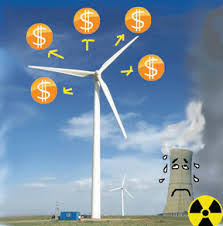
Craig Dalzell: I’M going to preface this article by saying that unlike
many of my comrades across the green and environmental movement, I’m not
ideologically against nuclear power per se.
In this decade of the 21st
century, we’re seeing the true energy transition start to change the
world around us faster than we realise. When I was in school, renewables
were taught as a thing that existed but were likely to only supply a small
fraction of the energy future. Today, wind and increasingly solar power are
dominating the globe in terms of new installed capacity.
Just after I left
high school in 2002, the total combined new energy generation installed
between both renewables and nuclear was about 20% of the global total that
year. Now, it’s more like 80%. And that’s massively overemphasising the
impact of nuclear.
The International Energy Agency’s 2025 Global Energy
Review found that more than 7GW of new nuclear power capacity was brought
online in the previous year compared to 700GW of new wind turbines and
solar photovoltaic panels (with solar providing around three-quarters of
that capacity). The age not just of renewables but of solar power
specifically, appears to be crashing over us.
It makes sense. The panels
are now cheap and easy to produce as once you have a production line going
it can just keep fabricating them. They’re easy to install just about
anywhere (to the point where in places like Germany it’s increasingly
common to see folk hanging them from their balconies). And every single new
panel installed anywhere starts producing power immediately with no fuel,
almost no maintenance and will keep producing power for decades.
The efficiencies of production have been stark. A solar PV panel in my school
days cost about £4.87 per watt in today’s prices. That panel now costs
about 20p per watt. A 96% price reduction in real terms.
Conventional nuclear power, on the other hand, requires years to decades of planning and
construction, truly massive upfront capital costs and the plants don’t
produce any power until they are switched on.
One way that the nuclear
sector is adapting is through the development of “small modular
reactors” (SMRs). Last week, Keir Starmer used Donald Trump’s state
visit to sign a deal for the US to produce such reactors for the UK. Costs
are expected to remain high though. Right now, a watt of conventional
nuclear energy costs about three to five times as much as solar and even
the best estimates for SMR cost reductions aren’t expected to make up
that gap.
The UK Government accepts that SMRs will only reduce the cost of
electricity by about 20% compared to conventional nuclear, which will mean
they will remain the most expensive way to generate electricity for the
foreseeable future. The future of energy, especially in Scotland, isn’t
going to be expensive conventional nuclear or expensive and untested SMRs.
It’s going to be by capturing the wind, waves and sun all around us and
bottling it for later use.
The National 25th Sept 2025, https://www.thenational.scot/politics/25496145.sorry-donald-trump-keir-starmer—scotland-doesnt-need-nuclear/
Spain and Italy, not US, protecting 22 Americans on Global Sumud Flotilla targeted for destruction by Israel.
Walt Zlotow, West Suburban Peace Coalition, Glen Ellyn IL 25 Sept 25
The Global Sumud Flotilla consists of 52 boats seeking to bring food and medicine to over 2,000,000 beleaguered Palestinians starving in Gaza from the Israeli genocide there. It contains over 500 incredibly courageous unarmed volunteers facing endless attack by Israel. Twenty-two Americans including 6 ex-service members are aboard.
The Flotilla is under constant Israeli attack using unmanned drones, deployment of incendiary devices, and dispersal of chemical substances to stop the Flotilla from reaching starving Palestinians.
Yesterday Spanish Prime Minister Pedro Sanchez announced Spain will join Italy in sending a military warship to help the Flotilla. While attending the UN Summit in New York Sanchez did not hold back from condemning Israel’s grotesque attacks on the innocent humanitarians:
“The government of Spain insists that international law be respected and that the right of our citizens should be respected to sail through the Mediterranean in safe conditions. Tomorrow we will dispatch a naval vessel from Cartagena with all necessary resources in case it was necessary to assist the flotilla and carry out a rescue operation.”
The US response to endless Israeli attacks on humanitarian boats, some containing Americans risking their lives to bring aid to starving Palestinians? Nada, nothing, zilch. Why would the US do anything that might interfere with their enabling of Israel’s genocide in Gaza? Despicable US refusal to end the genocide in Gaza, even if it means Americans might die, is further evidence American foreign policy is dictated by the practitioners of genocide in Israel.
There are 296 battle force ships in the US Navy, the world’s largest. But when it comes to endangered Americans seeking to aid the starving Palestinians their government is complicit in starving, the US is essentially saying, ‘Sorry boys, we don’t have a ship to spare’.
Safety fears as external power to Zaporizhzhia nuclear plant still out after three days

Guardian, 27 Sept 25 https://www.theguardian.com/world/2025/sep/27/safety-fears-as-external-power-to-zaporizhzhia-nuclear-plant-still-out-after-three-days
Ukrainian officials among those concerned Russia is manufacturing crisis to keep hold of frontline plant
External power to the Russian-occupied Zaporizhzhia nuclear plant has been cut for more than three days, a record outage that has prompted safety concerns over the six-reactor site on the frontline of the Ukraine war.
Emergency generators are being used to power cooling and safety systems after the final power line into the plant was cut on the Russian side at 4.56pm on Tuesday and there is no immediate sign that the line will be reconnected.
Rafael Grossi, the director general of the International Atomic Energy Agency (IAEA), described the situation as “deeply concerning” on Wednesday and met Vladimir Putin on Thursday but the situation has continued.
Western experts and Ukrainian officials fear the Kremlin is manufacturing a crisis to consolidate its grip over the plant, which is Europe’s largest, and that Russia is taking high-risk steps to turn on at least one reactor despite the wartime conditions.
“Russia is using the nuclear power station as a bargaining chip,” said one Ukrainian government official, while a specialist at Greenpeace said the Russian occupation had entered “a new critical and potentially catastrophic phase”.
Stress tests by European regulators after the 2011 Japanese reactor disaster at Fukushima indicated that a nuclear plant should be able to operate without external power for 72 hours. Going beyond that time limit is untried, Ukrainian sources said.
Russia seized the Zaporizhzhia nuclear plant in March 2022 and its reactors, once capable of powering 4m homes, were put into cold shutdown for safety.
Ukraine regards the nuclear plant as its own but the plant has cropped up in negotiations between Donald Trump and Putin. Trump has tried to suggest the US should to take control, while the Kremlin has said it wants to restart all the reactors and connect them to the Russian grid – a task considered feasible only during peacetime.
External power has been lost at Zaporizhzhia nine times before. On each occasion the damage was done in Ukrainian-held territory by Russian forces striking energy infrastructure across the Dnipro. The final 750-kilovolt electricity line had run across the river, with Ukraine willing to supply energy to maintain safety.
On Tuesday the line was damaged on the Russian side, about a mile from the plant. The plant’s Russian operators said repair efforts were “complicated by ongoing shelling by the Ukrainian armed forces”, though Ukraine says it never fires at or around the plant, arguing it would be unacceptably risky.
The IAEA said it had been told by the Russian operators that there was enough diesel to power the generators for 20 days without fuel resupply. But Grossi said loss of external power “increases the likelihood of a nuclear accident”.
Seven out of 18 available generators are powering cooling on site but if they were to fail, Ukrainian sources said, there would be a risk that the nuclear fuel in the six reactors would heat uncontrollably over a period of weeks, leading to a meltdown.
An accelerated version of this scenario happened at Fukushima because the reactors had just been operating. A 9.0-magnitude earthquake struck Japan and the hot reactors on the site were automatically shut down in response. Emergency generators continued to pump cooling water around the reactor but these were knocked out by a tsunami that followed minutes later. Three nuclear cores at the plant melted down within three days, though the fuel remained contained. Nobody was killed [?] but more than 100,000 were evacuated.
Zoom Nuclear Waste Scholar Series: The Body is an Archive: Unearthing Hidden Histories of Radiation and Public Trust Through Baby Teeth

Date & Time
Oct 4, 2025 05:00 AM in Etc/GMT-10 https://us02web.zoom.us/webinar/register/WN_Fn65SAKXRkWuWzmUfA4FKw#/registration
Description
What can a child’s tooth reveal about history, risk, and trust in science? In his talk on Fri, October 3 at noon PT, Professor Jeffrey Sanders will trace how the St. Louis Baby Tooth Survey turned thousands of donated teeth into powerful evidence that Cold War nuclear fallout was entering children’s bones—evidence that helped secure the 1963 Nuclear Test Ban Treaty. He follows the surprising afterlives of this archive, from rediscovery in a New Jersey garage to cutting-edge research today that uses lasers to link early exposures to later health effects. Along the way, he asks enduring questions about science, activism, and public trust: Who gets to measure risk, control knowledge, and decide what stories our bodies can still tell?
The Real Violent Extremists Are The Freaks Who Run The US Empire
Caitlin Johnstone, Sep 26, 2025, https://www.caitlinjohnst.one/p/the-real-violent-extremists-are-the?utm_source=post-email-title&publication_id=82124&post_id=174612556&utm_campaign=email-post-title&isFreemail=true&r=1ise1&triedRedirect=true&utm_medium=email
The real violent extremists are the oligarchs and imperialists who run the US-centralized empire from both mainstream parties.
Not Antifa. Not trans people. Not anti-genocide activists. Not protesters against ICE.
The extremists who are inflicting the real violence and abuse in our world are the ones committing genocide, starting wars, backing blockades, imposing starvation sanctions, arming proxy conflicts, circling the planet with hundreds of military bases, and flirting with nuclear armageddon.
Donald Trump is a violent extremist. Joe Biden is a violent extremist. Keir Starmer is a violent extremist. Benjamin Netanyahu is a violent extremist.
Oligarchs who knit themselves into the murderous imperial power structure like Jeff Bezos, Elon Musk, Peter Thiel, Miriam Adelson and Larry Ellison are violent extremists.
The Democratic Party is a violent extremist organization. The Republican Party is a violent extremist organization.
War profiteers like Raytheon, Lockheed Martin and Northrop Grumman are violent extremist organizations.
Empire management firms which facilitate imperial violence and control like Palantir, Oracle and Starlink are violent extremist organizations.
There is no designated terrorist group foreign or domestic which can hold a candle to the death toll and human suffering that has been inflicted by the western empire.
I think it’s worth remembering this as the empire harnesses the emotional hysteria around Charlie Kirk’s death to whip up a moral panic about violent radical leftists in the United States in order to justify increased authoritarian measures to stomp out political dissent. The real violence is coming from the powerful manipulators who want you consenting to these measures. The call is coming from inside the house.
The US and its allies have killed millions of people in their wars of aggression since 9/11, and displaced tens of millions. Their cruel sanctions have killed tens of millions since 1970. Their policies of imperialist extraction force populations throughout the global south to live lives of endless poverty and toil. They are currently perpetrating a genocide in full view of the entire world.
These are the violent extremists. The only reason they are able to claim that some kid wearing a keffiyeh or a balaclava is a violent extremist while they themselves are not is because they control the narrative. The plutocrats who benefit from the imperial status quo own and control the media platforms and information systems which people use to learn about the world, and they use this narrative control to frame the imperial status quo as normal and any opposition to it as freakish extremism.
That’s the only reason a westerner who supports genocide, warmongering, militarism and imperialism gets to call themselves a “centrist” or a “moderate”. They live in an empire whose propagandists actively normalize imperial abuses while spinning any deviation from this violent madness as abnormalities on the radical political fringe.
But it’s a lie. Genocide is violent extremism. Mass murder is violent extremism. Siege warfare is violent extremism. Global tyranny is violent extremism.
Peace is moderate and normal. Justice is moderate and normal. Health is moderate and normal. Equality is moderate and normal. Equitable wealth and resource distribution is moderate and normal.
The genocidal, ecocidal, omnicidal nightmare we see before us in our world today is what it looks like when the violent extremists are in charge.
Putin just gave Trump the opportunity to maintain nuclear restraint. Will he seize it?
Bulletin, By Matthew Bunn | September 25, 2025
President Donald Trump has an opportunity to avoid the dangers of an unrestrained nuclear arms competition—something he has repeatedly warned about. New START, the last treaty limiting US and Russian nuclear arms, expires this coming February. This happens as China is engaged in a rapid nuclear buildup, Russia is building exotic new nuclear delivery systems and rattling its nuclear saber over the war in Ukraine, and North Korea continues its smaller but still frightening nuclear expansion with weapons now able to reach the continental United States.
To deter all these threats at once, many people in Washington are arguing that the United States should leap past the New START limits when the treaty expires, adding hundreds or even thousands of additional nuclear warheads. That, however, would mean a world with no limits at all on strategic nuclear forces for the first time in half a century. A US nuclear buildup, coupled with growing US missile defenses, would likely provoke still further buildups in Russia and China, leading to all the unpredictability and risk of a nuclear competition with no agreed limits.’But Russian President Vladimir Putin has just opened an opportunity to avoid that, at least for now.
Speaking at a meeting of his advisory Security Council on Monday—only hours ahead of the UN General Assembly in New York—Putin announced that “Russia is prepared to continue adhering to the central quantitative limitations of the New START treaty for one year.” He added that the offer stands as long as the United States does the same and does not take other steps “that undermine or disrupt the existing balance of deterrence potentials.” This is an important reversal. Putin has repeatedly rejected arms control talks throughout the war in Ukraine.
President Trump should quickly take Putin’s offer, while pushing Russia to also accept a return to on-site inspections and data exchanges. The president should then use that “pause” with limits still in place to explore what new accords might look like, in discussions with Russia, China, and potentially other nuclear powers…………………………………………………………………………………………………… https://thebulletin.org/2025/09/putin-just-gave-trump-the-opportunity-to-maintain-nuclear-restraint-will-he-seize-it/
Trump administration plans nearly $6B in arms sales to Israel: Report

By Michelle Price, The Associated Press and Matthew Lee, The Associated Press. Sep 20, 2025
The Trump administration has told Congress it plans to sell nearly $6 billion in weapons to Israel, a fresh surge of support for the U.S. ally as it faces increasing isolation over its war in Gaza.
It includes a $3.8 billion sale for 30 AH-64 Apache helicopters, nearly doubling Israel’s current stocks, and a $1.9 billion sale for 3,200 infantry assault vehicles for the Israeli army, according to a U.S. official and another person familiar with the proposal who spoke on condition of anonymity to discuss plans that have not been made public.
The weapons would not be delivered for two to three years or longer.
The huge sales come as U.S. plans to broker an end to the nearly two-year war between Israel and Hamas have stalled and after Israel’s strike on Hamas leaders in Doha, Qatar, drew widespread condemnation among U.S. allies in the Middle East.
The U.S. has kept up its support despite growing international pressure on Israel and attempts from a growing number of U.S. Senate Democrats to block the sale of offensive weapons to Israel.
The State Department declined to comment on the sales, which were first reported by The Wall Street Journal.
Israel has launched a new offensive, pressing forward with plans to take over Gaza City, as a professional organization of scholars studying genocide has said Israel is committing genocide in Gaza.
The U.K, which last year said it was suspending exports of some weapons to Israel out of concerns they could be used to violate international humanitarian laws, recently barred Israeli government officials from attending the country’s biggest arms fair.
Turkey also said it was closing its airspace to Israeli government planes and any cargo of arms for the Israeli military, and Italian Prime Minister Giorgia Meloni in a speech condemned Israeli attacks on Gaza as disproportionate.
Trump said Friday that he plans to meet Turkish President Recep Tayyip Erdogan in Washington next week, with plans to discuss the purchases of Boeing aircraft and a deal for F-16 fighter jets.
The Biden administration paused a shipment of 2,000-pound bombs to Israel over concerns about civilian casualties, but Trump lifted that hold when he took office in January.
The Trump administration has already approved about $12 billion in major military assistance to Israel this year. Most recently, the U.S. in June approved a half-billion-dollar arms sale to Israel to resupply its military with bomb guidance kits for precision.
This latest request from the Trump administration was sent to Congress about a month ago.
The amount of the $6 billion package was confirmed by two other people familiar with the matter and granted anonymity to discuss it because the plans were not public.
Congress routinely conducts informal reviews of such arms sales at the committee level, sending the requests back to the State Department for the more formal process.
These sales are part of a 10-year agreement between the U.S. and Israel that is nearing its end.
Price reported from Porto, Portugal. Associated Press writers Aamer Madhani and Lisa Mascaro contributed to this report.
Russia, Iran sign nuclear power plants deal as sanctions loom
Agreement between Rosatom and Iran targets energy expansion with eight new nuclear plants planned by 2040.
By Usaid Siddiqui and Reuters, 24 Sep 2025, https://www.aljazeera.com/news/2025/9/24/russia-iran-sign-nuclear-power-plants-deal-as-sanctions-loom
Russia and Iran have signed a memorandum of understanding on the construction of small nuclear power plants in Iran, according the Russian state nuclear corporation Rosatom, as Tehran has been engaged in a diplomatic push to avert new sanctions over its nuclear programme.
The agreement was signed by Rosatom chief Alexei Likhachev and Iran’s top nuclear official, Mohammad Eslami, on Wednesday at a meeting in Moscow. Rosatom described it as a “strategic project”.
Eslami, who is also Iran’s vice president, told Iranian state media earlier this week that the plan was to construct eight nuclear power plants as Tehran seeks to reach 20GW of nuclear energy capacity by 2040.
Iran, which suffers from electricity shortages during high-demand months, has only one operating nuclear power plant, in the southern city of Bushehr. It was built by Russia and has a capacity of approximately 1GW.
The development comes amid looming sanctions on Iran, after the United Nations Security Council voted on Friday not to permanently lift economic sanctions on Iran over its nuclear programme, meaning sanctions will return by September 28 if no significant deal is reached beforehand.
Russia was among four nations that voted to stop the sanctions from being reintroduced.
Iran pushed back against the UNSC vote, saying the resumption of sanctions would “effectively suspend” the country’s cooperation with the International Atomic Energy Agency (IAEA), the UN watchdog.
The vote followed a 30-day process launched in late August by the United Kingdom, France and Germany – known as the E3 – to reinstate sanctions unless Tehran meets their demands.
The E3 have accused Tehran of breaching its nuclear commitments, including by building up a uranium stockpile of more than 40 times the level permitted under a 2015 nuclear deal, from which Trump unilaterally withdrew in 2018, during his first term. The deal allowed Iran to enrich uranium up to 3.67 percent purity.
In its defence, Iran says it boosted its nuclear enrichment only after Trump withdrew from the deal and reimposed sanctions on the country. Tehran deems the US action a violation of the 2015 deal.
Iranian officials have accused the European trio of abusing the dispute mechanism contained in the 2015 Treaty on the Non-Proliferation of Nuclear Weapons (NPT), which allows for the application of sanctions under a “snapback mechanism”.
New sanctions would result in freezing of Iranian assets abroad, a halt in arms deals with Tehran, and penalise the development of ballistic missile programme, among other measures.
Iran has repeatedly denied pursuing nuclear weapons but affirmed its right to peacefully pursue nuclear energy. Addressing the United Nations General Assembly on Wednesday, Iran’s President Masoud Pezeshkian said Tehran would never seek a nuclear bomb.
On Tuesday, Iran’s Supreme Leader Ayatollah Ali Khamenei said Tehran will not directly negotiate with the United States over Iran’s nuclear programme, calling talks with the US “a sheer dead end”.
Tensions escalated this June, when Israel launched a 12-day war on Iran, with Israeli and US forces striking several nuclear facilities.
In move that could Bring in NATO, Spain joins Italy in Sending Rescue Ship for Sumud Gaza Aid Flotilla
INFORMED COMMENT, Juan Cole, 09/25/2025, https://www.juancole.com/2025/09/spain-rescue-flotilla.html
Ann Arbor (Informed Comment) – On Wednesday, the socialist government of Pedro Sánchez in Spain announced that it would dispatch a rescue ship to be in the vicinity of the 50 ships that make up the Sumud (steadfastness) flotilla aiming to provide humanitarian relief to the Gaza Strip. It joins Italy in this endeavor. This according to Carlos E. Cué and Miguel González at El Pais.
The Sumud has come under repeated Israeli drone fire. On Wednesday, Israeli drones dropped explosives in the vicinity of the ships moored off the island of Crete, but caused no damage or injuries.
Prime Minister Sánchez said from the UN General Assembly meeting in New York, “The government of Spain requires that international law be observed and that the right of our citizens to navigate the Mediterranean in conditions of security be respected. For this reason, tomorrow a Maritime Action vessel will depart [the base in Cartagena] with all the means of assisting the flotilla or of carrying out any rescue, if necessary.”
Israel has routinely violated the law of the seas by attacking ships in international waters. Spanish citizens are taking part in the Sumud flotilla, and Spain is saying they have the right to do so.
Some 82% of Spaniards categorize what Israel is doing in Gaza as a genocide, a massive proportion that demonstrates that Israel’s actions are condemned by large numbers of people on both the left and the right. But note that 85% of centrists and 97% of Spaniards on the left view the Gaza campaign as genocidal.
The Maritime Action ship is not intended to shoot down attacking Israeli drones or to defend the Sumud ships from being boarded by the Israeli military. It will, however, rescue any passengers that end up in the sea because of Israeli actions.
It should be underlined, however, that it is entirely possible that the Maritime Action vessel will come under Israeli fire, which would spark an enormous diplomatic and military crisis.
Spain and Italy are both NATO members, and Article 5 says that “an attack on one is an attack on all.” NATO invoked this principle after the September 11, 2001, al-Qaida attacks on New York City and Washington, D. C., which is why there were NATO troops in Afghanistan but not in Iraq, which the rest of NATO did not view as a belligerent.
Thus, if Israel attacks the Spanish escort ship, it could stir up a strong European reaction, and would put the Trump administration on the spot, since Trump will side with Israel against NATO.
Spain’s maritime action vessels can accommodate 80 passengers. They are also armed with a 76-millimeter gun, two machine guns, and a surveillance drone of their own. This one will have a crew of 50 and 8 medical staff.
Sanchez’s government reached out to Italy for coordination, and sought to add another country to the escort, such as Ireland.
For her part, Italian PM Giorgia Meloni, from a far right party, faced a national strike involving 500,000 people on Monday over her refusal to recognize a Palestinian state alongside France and Britain. She said Tuesday that she’d recognize Palestine if Hamas releases Israeli hostages and if the organization is excluded from any Palestinian government going forward. This position was the one taken by British Prime Minister Keir Starmer until Sunday, when he folded before the weight of sentiment among his back-benchers.
North Korea building nuclear weapon stockpile, says Seoul
North Korea is believed to have accumulated large quantities of
weapons-grade uranium, according to South Korea. Seoul’s Unification
Minister Chung Dong-young on Thursday cited an assessment that Pyongyang
possesses 2,000kg (about 4,400 pounds) of highly enriched uranium “at a
purity of 90 percent or higher”. If confirmed, the amount would also
signal a sharp increase in North Korea’s stockpile of nuclear material.
Intelligence provided by civilian experts reveals that North Korea is
operating four enrichment plants, he added.
Aljazeera 25th Sept 2025, https://www.aljazeera.com/news/2025/9/25/north-korea-building-nuclear-weapon-stockpile-says-seoul
SNP defence plans ‘risk EU and NATO membership’, analyst warns
Current SNP policy states that nuclear weapons would be removed from
Scotland ‘in the safest and quickest way possible’ after independence. A
defence analyst has warned the SNP’s current plans for defence risk
potential future EU membership, NATO relations and independence.
He also
stressed ditching nuclear would take “a minimum” of two decades. Edward
Arnold, a senior research fellow for European security within the
International Security department at the Royal United Services Institute
(RUSI), has said Scotland must avoid giving NATO a “massive headache” by
ditching nuclear – a move he said would, in turn, aggravate EU members.
Current SNP policy states that nuclear weapons would be removed from
Scotland “in the safest and quickest way possible” after independence. It
also states that Scotland would apply to join NATO and the European Union,
participating fully in the EU’s Common Security and Defence Policy.
However, Mr Arnold told The Herald NATO membership and the removal of the
Trident nuclear deterrent at Faslane are “completely incompatible”.
Herald 25th Sept 2025, https://www.heraldscotland.com/politics/westminster/25492447.snp-defence-plans-risk-eu-nato-membership-analyst-warns/
Britain recognises Palestine. Now what?
| Declassified, UK 25 Sept 25 This week, UK prime minister Keir Starmer announced that Britain has officially recognised the state of Palestine. The Labour government had previously said it would only use the threat of recognition to pressure Israel to agree to a ceasefire and allow aid into Gaza .This clearly didn’t work and, amid mounting public pressue, the UK joined the Canadian, Australian, and Portuguese governments in recognising Palestine based on 1967 borders. Foreign Office maps have now been updated to include Gaza and the West Bank as “Palestine” rather than the “Occupied Palestinian Territories”. Benjamin Netanyahu responded to the move with fury, vowing that a Palestinian state “will not happen” and claiming the move “endangers our existence and constitutes an absurd reward for terrorism”. The Israeli prime minister found sympathy in British circles, with Nigel Farage sending his condolences and Tory party leader Kemi Badenoch calling the move “absolutely disastrous”. But what does recognition actually mean? For starters, it will not mean that Palestinians have the right to defend themselves from Israel – a right that is apparently exclusively available to the Israelis. “Our position is clear”, wrote Starmer in Israeli media outlet Ynet. “The Palestinian state must be demilitarised. It will have no army or air force”. Israel will thus continue to control the land, sea, and air borders around Palestine, signifiying no meaningful change in the current status quo. The Palestinians will also be deprived of their right to self-determination, with Starmer stressing that “Hamas can have no future” in Palestine, including “no role in government” or security. So what is Britain actually recognising? As Ilan Pappé recently wrote in Declassified, “geographically recognising [Palestine in its current state] is tantamount to recognising a disempowered political entity stretching over less than 20 percent of the West Bank”. There are currently more than 800,000 Jewish settlers in the West Bank, with more settlements being approved by the Israeli government and extremist ministers pushing for annexation of the area. Gaza, meanwhile, has been razed to the ground. In these circumstances, Britain’s recognition of Palestine looks more like empty gesture politics than a statement of intent to change the material reality on the ground. Indeed, it is difficult to take Starmer seriously when the UK continues to arm Israel and send spy flights over Gaza, while refusing to impose a trade ban on products from illegal settlements. Rather than helping to bring a new Palestinian reality into being, then, Starmer appears to be recognising a cadaver that the UK government had a hand in killing. |
1 This Month

of the week – Shut Down Drone Warfare!


Tell the Ukrainian Government to Drop Prosecution of Peace Activist Yurii Sheliazhenko

Petition to revoke the licensing of the Near Surface Nuclear Disposal Facility (NSDF) at Chalk River. https://www.ourcommons.ca/petitions/en/Petition/Details?Petition=e-7247
To see nuclear-related stories in greater depth and intensity – go to https://nuclearinformation.wordpress.com
-
Archives
- March 2026 (251)
- February 2026 (268)
- January 2026 (308)
- December 2025 (358)
- November 2025 (359)
- October 2025 (376)
- September 2025 (257)
- August 2025 (319)
- July 2025 (230)
- June 2025 (348)
- May 2025 (261)
- April 2025 (305)
-
Categories
- 1
- 1 NUCLEAR ISSUES
- business and costs
- climate change
- culture and arts
- ENERGY
- environment
- health
- history
- indigenous issues
- Legal
- marketing of nuclear
- media
- opposition to nuclear
- PERSONAL STORIES
- politics
- politics international
- Religion and ethics
- safety
- secrets,lies and civil liberties
- spinbuster
- technology
- Uranium
- wastes
- weapons and war
- Women
- 2 WORLD
- ACTION
- AFRICA
- Atrocities
- AUSTRALIA
- Christina's notes
- Christina's themes
- culture and arts
- Events
- Fuk 2022
- Fuk 2023
- Fukushima 2017
- Fukushima 2018
- fukushima 2019
- Fukushima 2020
- Fukushima 2021
- general
- global warming
- Humour (God we need it)
- Nuclear
- RARE EARTHS
- Reference
- resources – print
- Resources -audiovicual
- Weekly Newsletter
- World
- World Nuclear
- YouTube
-
RSS
Entries RSS
Comments RSS
 nuclear-news