Pakistan nuclear weapons, 2025

Bulletin, By Hans M. Kristensen, Matt Korda, Eliana Johns, Mackenzie Knight-Boyle | September 4, 2025
Pakistan continues to slowly modernize its nuclear arsenal with improved and new delivery systems, and a growing fissile material production industry. Analysis of commercial satellite images of construction at Pakistani army garrisons and air force bases shows what appear to be newer launchers and facilities that might be related to Pakistan’s nuclear forces, although authoritative information about Pakistan’s nuclear units is scarce.
We estimate that Pakistan has produced a nuclear weapons stockpile of approximately 170 warheads, which is unchanged since our last estimate in 2023 (see Table 1). The US Defense Intelligence Agency projected in 1999 that Pakistan would have 60 to 80 warheads by 2020 (US Defense Intelligence Agency (1999, 38), but several new weapon systems have been fielded and developed since then, which leads us to a higher estimate. Our estimate comes with considerable uncertainty because neither Pakistan nor other countries publish much information about the Pakistani nuclear arsenal.
With several new delivery systems in development, four plutonium production reactors, and an expanding uranium enrichment infrastructure, Pakistan’s stockpile has the potential to increase further over the next several years. The size of this increase will depend on several factors, including how many nuclear-capable launchers Pakistan plans to deploy, how its nuclear strategy evolves, and how much the Indian nuclear arsenal grows. We estimate that the country’s stockpile could potentially grow to around 200 warheads by the late 2020s. But unless India significantly expands its arsenal or further builds up its conventional forces, it seems reasonable to expect that Pakistan’s nuclear arsenal will not grow significantly, but might level off as its current weapons programs are completed.
………………………………….. Analyzing Pakistan’s nuclear forces is particularly fraught with uncertainty, given the lack of official state-originating data. The Pakistani government has never publicly disclosed the size of its arsenal and does not typically comment on its nuclear doctrine. Unlike some other nuclear-armed states, Pakistan does not regularly publish any official documentation explaining the contours of its nuclear posture or doctrine. Whenever such details emerge in the public discourse, they usually originate from retired officials commenting in their personal capacities. The most regular official source on Pakistani nuclear weapons is the Inter Services Public Relations (ISPR), the media wing of the Pakistan Armed Forces, which publishes regular press releases for missile launches and occasionally couples them with launch videos.
Occasionally, other countries offer official statements or analysis about Pakistan’s nuclear forces. ……………………………………………………………………
Pakistan’s nuclear doctrine
Pakistan has historically maintained a deliberately ambiguous nuclear doctrine, including through refusal to endorse or reject a no-first-use policy.
…………………………..Within its broader philosophy of “credible minimum deterrence,” which seeks to emphasize a defensive and limited but flexible nuclear posture, Pakistan operates under a nuclear doctrine that it calls “full spectrum deterrence.” This posture is aimed mainly at deterring India, which Pakistan identifies as its primary adversary.
…………………………..Pakistan’s nuclear posture—particularly its development and deployment of tactical nuclear weapons—has created considerable concern in other countries, including the United States, which fears that it increases the risk of escalation and lowers the threshold for nuclear use in a military conflict with India.
…………………………..Nuclear security, command-and-control, and crisis management
Over the past decade-and-a-half, the US assessment of nuclear weapons security in Pakistan appears to have changed considerably from confidence to concern, particularly because of the introduction of tactical nuclear weapons in the Pakistani arsenal. ……………………………………………………………………..
2025 India-Pakistan conflict
In May 2025, India and Pakistan engaged in a brief conflict, during which India launched conventional missile strikes against several Pakistani military facilities. The conflict, which lasted days, included an escalatory exchange of fire from both sides following the April 22 terrorist attack in Pahalgam, Indian-administered Kashmir.
In the aftermath of the conflict, the Pakistan Air Force (PAF) and the Military Engineer Services—which conducts construction and maintenance operations for all branches of the Pakistani military—issued a series of public procurement contracts for post-strike repairs at a variety of military bases, indicating which facilities suffered damage due to the conflict (Mishra 2025). ……………………
……………………….One study concluded that although the “mutual possession of nuclear weapons heavily conditioned the response of both sides” and “overt nuclear signaling was lower than in many prior India-Pakistan crises, … the crisis underscores that South Asia is one of the most likely theaters for nuclear war, even if that prospect was not imminent in this instance” (Clary 2025).
Fissile materials, warheads, and missile production
Pakistan has a well-established and diverse fissile material production complex that is expanding. This includes four heavy-water plutonium production reactors at the Khushab Complex, three of which were completed in the past 15 years. ………………………………………….
We estimate that Pakistan currently is producing sufficient fissile material to build 14 to 27 new warheads per year, although we estimate that the actual warhead increase in the stockpile probably averages around 5 to 10 warheads per year.[2]…………………………………………..
Nuclear-capable aircraft and air-delivered weapons…………………………………………………………………………………..
Land-based ballistic missiles…………………………………………………………………………….
Land-based missile garrisons…………………………………………………………………………..
Ground- and sea-launched cruise missiles…………………………………………………………………….. https://thebulletin.org/premium/2025-09/pakistan-nuclear-weapons-2025/?utm_source=ActiveCampaign&utm_medium=email&utm_content=Pakistan%20s%20nuclear%20arsenal&utm_campaign=20250904%20Thursday%20Newsletter%20%28Copy%29
No comments yet.
1 This Month
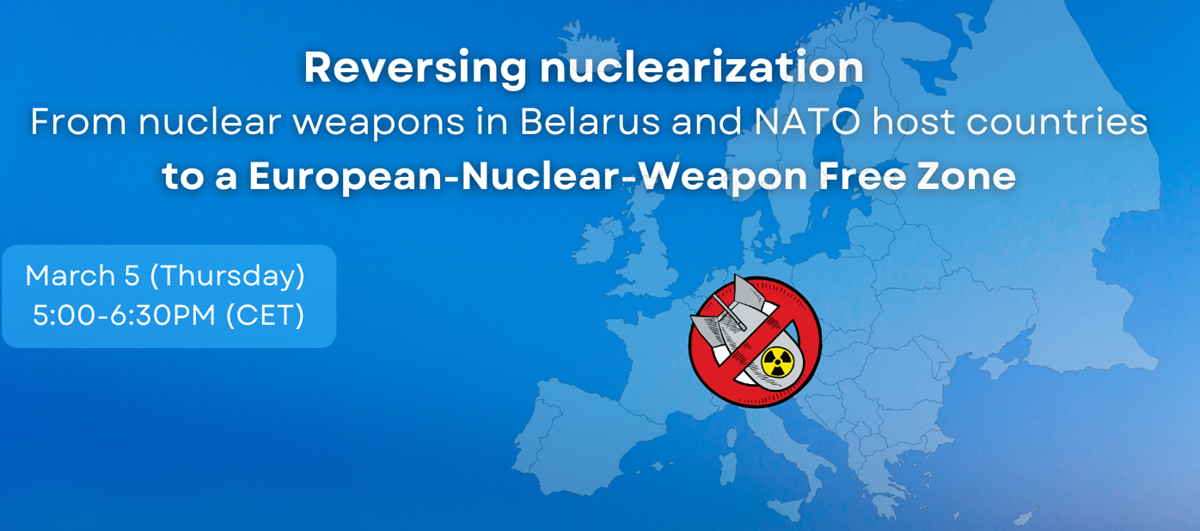
5 March -Online – Reversing nuclearization:
From nuclear weapons in Belarus and NATO host countries to a European-Nuclear-Weapon Free Zone
11am-12:30pm Eastern Time USA / 5pm-6:30pm CET

of the week – Advocating for a
nuclear free beach – https://www.samuellawrencefoundation.org/
The Samuel Lawrence Foundation advocates for a Nuclear Waste Free Beach at San Onofre, join us and take action!
10 March A LIVE WEBINAR THE REAL EFFECTS OF NUCLEAR POWER
What the Industry Isn’t Telling Us
1:00 PM Mountain, 2 pm Central, 3 pm Eastern. Live on the Keepers of the Water Facebook page

18 March Webinar @ 1 PM EST: An Assessment of SMR Projects: The Case of Canada
register for the zoom:
https://us02web.zoom.us/webinar/register/WN_o8BIIOUvQ2ONJR1nta65DQ#/registration

of the week – STOP SMALL MODULAR REACTORS IN CANADA
To see nuclear-related stories in greater depth and intensity – go to https://nuclearinformation.wordpress.com
-
Archives
- March 2026 (51)
- February 2026 (268)
- January 2026 (308)
- December 2025 (358)
- November 2025 (359)
- October 2025 (376)
- September 2025 (258)
- August 2025 (319)
- July 2025 (230)
- June 2025 (348)
- May 2025 (261)
- April 2025 (305)
-
Categories
- 1
- 1 NUCLEAR ISSUES
- business and costs
- climate change
- culture and arts
- ENERGY
- environment
- health
- history
- indigenous issues
- Legal
- marketing of nuclear
- media
- opposition to nuclear
- PERSONAL STORIES
- politics
- politics international
- Religion and ethics
- safety
- secrets,lies and civil liberties
- spinbuster
- technology
- Uranium
- wastes
- weapons and war
- Women
- 2 WORLD
- ACTION
- AFRICA
- Atrocities
- AUSTRALIA
- Christina's notes
- Christina's themes
- culture and arts
- Events
- Fuk 2022
- Fuk 2023
- Fukushima 2017
- Fukushima 2018
- fukushima 2019
- Fukushima 2020
- Fukushima 2021
- general
- global warming
- Humour (God we need it)
- Nuclear
- RARE EARTHS
- Reference
- resources – print
- Resources -audiovicual
- Weekly Newsletter
- World
- World Nuclear
- YouTube
-
RSS
Entries RSS
Comments RSS
 nuclear-news
Leave a comment