Gaza to Donbass: How Israel and Ukraine Built a Fascist, Transnational War Machine.
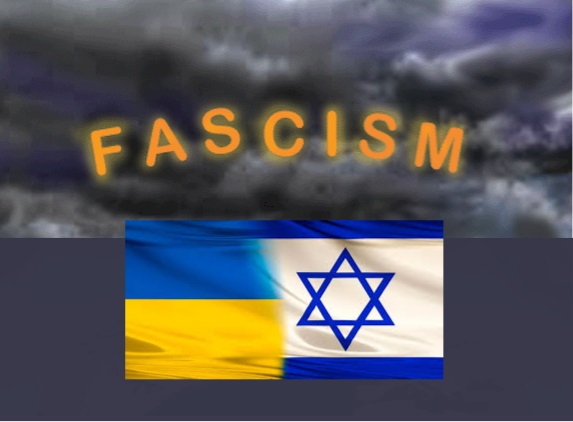
Orinoco Tribune By Sarah B. – Aug 20, 2025
From Bandera to Ben-Gurion, a new axis of ethno-supremacy is rising, fueled by U.S. backing. Same guns. Same flags. Same ideology. Gaza and Donbass are not separate wars. They are one machine.
The Ukraine–Israel Nexus: Pragmatic Alliances Amid Paradoxes and Shared Challenges
From Bandera to Ben-Gurion, echoes of ethno-nationalist revival resonate in the modern trajectories of Ukraine and Israel, two states forged through war, hardened by siege mentalities, and fueled by historical narratives of existential struggle. But these similarities are no accident of parallel development. They reflect a deepening alignment shaped by shared adversaries like Russia and Iran, backed and brokered by the same Western patrons.
In 2022, an officer of Ukraine’s Azov Regiment, toured Israel after surviving the siege of Mariupol. By 2025, Israeli drones were flying missions over Rafah, while American-made PSRL-1 rocket launchers, initially supplied to Ukraine, were spotted in conflict zones across the Middle East. Some experts suggest these may have reached Gaza through black-market channels, though a direct transfer remains unproven. What is undeniable, however, is the convergence of military technologies, intelligence doctrines, and battlefield logistics spanning both theaters.
In April 2022, Ukrainian President Volodymyr Zelenskyy, himself a stalwart ally to the Zionist cause, declared that he envisioned Ukraine becoming “a big Israel.” In doing so, he abandoned the pretense of liberal reform and embraced a future defined by permanent militarization, domestic surveillance, and an ideologically mobilized citizenry. Ukraine, he suggested, would survive not by joining Europe’s post-national dream, only by imitating the ethos of a heavily securitized Middle Eastern state.
Zelenskyy’s statement didn’t emerge in a vacuum. It followed decades of quietly intensifying Ukrainian–Israeli ties, in historical memory, military cooperation, tech integration, and shared narratives of victimhood. But it also exposed a deeper and more disturbing fusion. When the president of a country still reckoning with the legacy of the Holocaust and its own fascist collaborators calls for the building of a “Big Israel,” he is not just invoking a model of defense, he is invoking a model of justified violence, permanent siege, and a long tradition of selective memory, one that both Ukraine and Israel have wielded to reconcile uncomfortable historical alliances of culpability.
Just as the OUN’s collaboration with Nazi Germany is selectively reframed within the Ukrainian national mythos, Israel’s founding story often omits its own moments of strategic accommodation with fascism.
In the 1930s and ’40s, elements of the Zionist movement, most notably the Haavara Agreement between Nazi Germany and the Jewish Agency, facilitated Jewish emigration to Palestine while bypassing international boycotts of the Nazi regime. Revisionist factions like Lehi (the Stern Gang) and Irgun Zvai Leumi even sought military cooperation with the Axis powers against the British. These uncomfortable truths, long buried beneath the moral absolutism of Holocaust remembrance, underscore a shared willingness, Ukrainian and Zionist alike, to collaborate with and even become genocidal regimes when national aspirations were at stake.
What binds Gaza and Donbass is not a monolithic “machine of violence” but a transnational matrix of ideological alignment, technical cooperation, and strategic utility. Ukraine’s campaign of “decommunization” often mirrors Israel’s internal securitization and demographic engineering, both clad in the moral armor of historical trauma. In practice, both states justify aggressive internal and external policies through the language of survival.
This article maps the ideological, military, economic, and cultural architecture of the Ukraine–Israel relationship. From Soviet-era tensions to the post-2014 reconfiguration of alliances, we explore how pragmatic imperatives have forged a new axis of ethno-nationalist power, increasingly central to NATO’s long-term vision of regional dominance.
I. Historical Ties
To understand the modern partnership between Ukraine and Israel, one must begin with their shared, and often contradictory past. Ukraine was both a cradle of early Zionism and a site of violent antisemitic pogroms. Movements like Hibbat Zion, emerged in the 1880s in cities like Odessa and Kiev, decades before Theodor Herzl’s more famous Vienna-based political Zionism. Their mission: to restore the Jewish people to their ancestral homeland in Palestine. Ukraine, in this sense, was an incubator for the ideological DNA of the Israeli state……………………………………………………………………………………………………………………………………………………………………………………………….
…………………….The historical relationship between Israel and Ukraine is not one of ideological clarity. It is a pragmatic evolution, shaped by war, memory, trauma, and strategy. The next sections will examine how these contradictions manifest on the battlefield through weapons, doctrine, personnel, and propaganda, across Gaza and Donbass alike.
Selective Memory: How Competing Genocides Forged Strategic Amnesia
In the narrative war between historical truth and political utility, few examples are as revealing, or as cynical, as the ways Ukraine and Israel have reframed and often embellished their respective traumas to enable strategic cooperation.
By the 1980s, Ukrainian nationalist émigrés began aggressively promoting the 1932–33 Soviet famine, or Holodomor, as the “Ukrainian Holocaust.” This was a calculated response to the rising global awareness of Jewish suffering, spurred by the 1978 NBC miniseries Holocaust, which explicitly portrayed Ukrainians as Nazi collaborators. For diaspora groups still loyal to Stepan Bandera’s legacy, the documentary posed a threat to their rehabilitated image, which they had worked fervently to whitewash. In turn, they constructed a counter-narrative of equal, if not greater, Ukrainian victimhood, one that would cast the Soviet state as genocidal and reframe Ukrainian history through the lens of national martyrdom.
This rhetorical project relied on inflating death tolls,………………………………………………………………..
The result is a pact built on strategic amnesia: a cold alliance between two states whose foundational traumas have been rewritten to serve military alignment, ideological affinity, and common enemies………………………….
…………II. Blood Ties and Battle Lines: Commanders, Crusaders, and Collaborators
The machinery of transnational warfare is not only built with weapons, laws, and doctrines, but with men. Individuals who embody the ideological convergence between Zionist ethno-nationalism and Ukrainian fascism do not operate in the shadows; they are often celebrated, recruited, and strategically deployed across theaters like Gaza and Donbass. These figures serve as ideological evangelists, field commanders, propaganda tools, and networking nodes between far-right militias, Western intelligence networks, and private security structures.
Some are Azov veterans turned actors and influencers. Others are American-Israeli contractors building bridges between Tel Aviv and Kiev. ……………………..
Andriy Biletsky: The Crusader Who Learned to Pivot
Once a fringe neo-Nazi agitator, now a battle-hardened military commander and nationalist politician, Andriy Biletsky represents the ideological core and strategic evolution of Ukraine’s far-right movement. As founder of the Azov Battalion and later the National Corps party, Biletsky’s journey traces the arc from street-level extremism to institutional legitimacy, powered by paradoxes and geopolitical convenience. Beneath the rebranding lies a continuity of vision: a Ukraine purified through war, myth, and selective memory.
…………………………….. His early ideological lodestars were Dmytro Dontsov and Stepan Bandera, filtered through a white supremacist lens. In 2005, he founded Patriot of Ukraine, a group that carried out violent attacks on immigrants, Roma, and leftists under the banner of racial purification.
The 2014 Maidan uprising and war in Donbass propelled Biletsky into national prominence. He organized the Azov Battalion in Mariupol, which rapidly grew into one of the most notorious and effective paramilitary formations in Ukraine. With reported funding from oligarch Ihor Kolomoisky, himself Jewish and Israeli-citizen, Azov’s contradictions became evident: white supremacist symbolism coexisted with Jewish funders and Israeli-made weapons. Azov was incorporated into the National Guard later that year, and Biletsky stepped back from military command to launch the National Corps political party, a civilian arm of the Azov movement.
……………………….Biletsky’s narrative of resistance against Russia, corruption, and moral decay aligned perfectly with Western appetites for proxy heroes. He compared the siege of Mariupol to the Jewish defense of Masada, and repeatedly praised Israel’s model of an ethno-nationalist, militarized democracy. Ukrainian and Israeli flags appeared side by side at Azov recruitment events, and his operatives echoed IDF talking points in English-language interviews……………………………………….
Ihor Kolomoisky: The Zionist Oligarch Behind Ukraine’s Neo-Nazi Militias…………………………………………………………….
……………………………………His influence didn’t stop at the battlefield. Through his media empire, he shaped public opinion, promoted nationalist narratives, and indirectly supported political arms of the far right, such as the National Corps. At the same time, he played kingmaker in national politics, backing comedian-turned-president Volodymyr Zelenskyy in 2019………………………………………………………………………………………
………..In 2023, Kolomoisky fled to Israel as legal investigations into fraud and embezzlement intensified in Ukraine………………………………………………………………………………………….
Nathan Khazin: The Zionist Commander of Ukraine’s “Jewish Hundred”
Few figures better embody the ideological contortions of the Ukraine–Israel alliance than Nathan (Natan) Khazin: an Israeli-Ukrainian IDF veteran, Chabad-ordained rabbi, and founding member of Ukraine’s far-right paramilitary scene. ……………………………………
…………………..he served in the Israel Defense Forces, reportedly in the Givati Brigade, a unit notorious among Palestinians for its brutality during the Second Intifada and subsequent Gaza operations. ………………….
………………. In 2014, as fighting spread to Donbass, he became an early backer and field contributor to the newly formed Azov Battalion. Drawing from his IDF experience, he helped train Azov fighters in close-quarters tactics, drone reconnaissance, and battlefield coordination. Publicly photographed alongside Azov symbols,…………………………………….
……………….. Critics see in Khazin the cynical flexibility of modern ideological warfare: a rabbi who helped train fascists, a Zionist who normalized Nazi-linked units, a man who turned “defending Israel” into a license to arm ultranationalists.………………………………………………………………………
Illia Samoilenko: Azov’s Masada Mythmaker
Illia Samoilenko, better known by the nickname “Gandalf,” is one of the most publicly visible figures to emerge from Ukraine’s Azov Regiment……………………………………………………………………………………………………………………………..
Arsen Avakov: The Architect of Institutionalized Extremism…………………. He is best known for overseeing the formal integration of far-right militias like Azov into Ukrainian state structures and for cultivating strong security ties with Israel.
…………………………………………………..Under Avakov’s ministry, Azov received state funding, weapons, and training, despite its open neo-Nazi symbology and history of abuse. Amnesty International and Human Rights Watch both documented cases of torture and extrajudicial detention by these units, but Avakov deflected criticism, framing such actions as necessary wartime measures.
…………………………………..Avakov also served as a crucial bridge between Ukraine and Israel’s national security establishment……. His 2017-2019 declarations positioned Israel as a model for Ukraine’s transformation into a “fortress state,” a country defined by militarized borders, aggressive policing, and permanent mobilization………………………………………………..
Danil Lyashuk: From Neo-Nazi to Jihadist Martyr……………………………………………………………………………….
……..Lyashuk quickly distinguished himself, not for heroism, but for unspeakable cruelty. Ukrainian court records and international reports from Amnesty International and the UN detail his participation in serial rape (including of minors), torture, and extrajudicial killings. ………………………..
In 2015, the Tornado Battalion was disbanded, and Lyashuk was convicted and sentenced to 11 years in prison. But in 2022, amid Russia’s full-scale invasion, President Volodymyr Zelenskyy issued him a pardon despite widespread knowledge of his crimes.
……………………………………………………………Following his death in 2023, Lyashuk was buried with honors. State-aligned figures celebrated him in official ceremonies and social media tributes, referring to him as a “warrior for Ukraine” and “hero of the resistance.” In August 2025, on the two-year anniversary of his death, memorial posts circulated across Ukrainian X, some accumulating thousands of likes. His tattoos, an amalgam of swastikas, pagan runes, and Islamic crescents, were not a source of caution but symbols of his “commitment.”
Lyashuk’s transformation from white supremacist to Islamist, from convicted sadist to national martyr, is a symbol of the ideological rot at the heart of Ukraine’s paramilitary project. It is also a reflection of how useful monsters are forgiven when their violence serves the right geopolitical purpose, whether in Donbass or Damascus.
Volodymyr Zelenskyy: The Pragmatist Who Normalized the Extreme
Volodymyr Aleksandrovich Zelenskyy, born in 1978 in Krivoy Rog, is one of the most paradoxical figures to emerge from the war. A Jewish comedian turned wartime leader, he has become an international symbol of “resistance” and Western liberal values. But beneath the cultivated myth lies a far more uncomfortable truth: Zelenskyy is the keystone legitimizer in Ukraine’s normalization of far-right extremism, not in spite of his identity, but because of it.
Raised in a Russian-speaking Jewish family in the industrial city of Krivoy Rog, Zelenskyy experienced firsthand the Soviet-era antisemitism and post-Soviet chaos that shaped a generation. He earned a law degree from the Krivoy Rog Economic Institute in 2000, but chose a career in comedy and satire, eventually founding the Kvartal 95 troupe. His 2015 television show Servant of the People, in which he played a humble schoolteacher who unexpectedly becomes president, catapulted him into national fame.
In 2018, life imitated art. Riding a wave of anti-oligarch sentiment and public fatigue with Petro Poroshenko, Zelenskyy launched his own political party, borrowing the name of his TV show, and won the 2019 presidential election in a landslide, taking over 70% of the vote.
At the time, Zelenskyy appeared ideologically distant from Ukraine’s far-right fringe. His campaign promised peace with Donbass and normalization of relations with Russia. But once in power, his rhetoric softened, his promises evaporated, and the machinery of war began grinding forward with the same paramilitary formations he once distanced himself from now integrated into the state apparatus under his watch.
Zelenskyy’s presidency coincided with the formal mainstreaming of extremist militias like the Azov Regiment, the Tornado Battalion, and Right Sector. Though Azov had been absorbed into Ukraine’s National Guard in 2014, it was under Zelenskyy that it achieved full symbolic legitimacy. In 2023, Azov members were publicly awarded medals despite their use of SS-style insignia, and Zelenskyy referred to them in national speeches as “defenders of freedom.”
Zelenskyy’s defenders argued these moves were necessary under conditions of war. But the symbolic shift was profound: the Jewish president of Ukraine had now become the key validator of openly neo-Nazi formations and, more broadly, of a political culture that increasingly erased the boundaries between patriotism and fascism.
Zelenskyy’s Jewish identity played a central role in shaping his geopolitical posture. Early in his presidency, he gained support from prominent Jewish donors and Western liberal institutions. But it was his alignment with Israeli ideology and strategy that proved most consequential.
In a 2022 interview with Haaretz, Zelenskyy stated that Ukraine’s future should resemble a “big Israel,” a state built on constant mobilization, militarism, and national unity. The comparison wasn’t metaphorical. Zelenskyy repeatedly cited Israel’s compulsory service, hardened identity, and “resilience” as ideals for a wartime Ukraine.
“I think all our people will be our great army. We cannot talk about “Switzerland of the future.” But we will definitely become a “big Israel” with its own face. We will not be surprised that we will have representatives of the Armed Forces or the National Guard in all institutions, supermarkets, cinemas, there will be people with weapons.
— Volodymyr Zelenskyy, April 2022
In practice, this meant close coordination with Israeli and Zionist networks. Zelenskyy has consistently refused to condemn Israel’s military actions in Gaza, including the 2024–2025 bombardments that employed starvation tactics and AI-guided strikes. Instead, he echoed Israeli rhetoric about terrorism and security, drawing direct parallels between Ukraine’s fight against Russia and Israel’s war with Iran and its regional proxies.
Military cooperation followed suit. Israeli-made drones and surveillance systems flowed to Ukraine through third parties. Ukrainian forces supplied intelligence to Israel on Iranian missile tech recovered from Russian stockpiles and downed drones. Zelenskyy hosted Israeli officials, sought Iron Dome defense systems, and oversaw joint data-sharing agreements between Ukraine’s cyber units and Israeli partners.
Zelenskyy’s personal connections only deepen the alignment. His parents have reportedly lived in Israel for years, a fact often omitted in mainstream profiles but acknowledged in Jewish community outlets. In 2020, Zelenskyy visited Yad Vashem and gave a carefully worded speech reframing Ukrainian nationalism as compatible with Holocaust memory. Instead of confronting Ukraine’s role in the Shoah, Zelenskyy emphasized shared trauma and unity, an appeal that resonated with Israeli officials eager for a strategic partner in Eastern Europe.
Zelenskyy’s ties to the Chabad-Lubavitch movement also run deep. Chabad maintains a large presence in Dnepropetrovsk, historically bankrolled by oligarch Igor Kolomoyskiy. Zelenskyy has also attended Chabad-sponsored events and leaned heavily on global Jewish networks to secure diplomatic and military aid.
The Shifting Center
Zelenskyy’s ideological transformation can be summarized in three phases:
· Pre-2019: A secular liberal, anti-corruption satirist with no links to the far-right.
· 2019–2022: A centrist reformer forced into security pragmatism by war.
· 2022–Present: A full convert to the “big Israel” model, integrating far-right forces and prioritizing militarized nationalism over liberal pluralism.
In the end, Volodymyr Zelenskyy may not be a fascist. But he has become the indispensable manager of a system that rehabilitates fascism, at home, abroad, and in the name of something larger. His legacy will not be one of purity or resistance, but of convergence.
III. Militias and Machinery
While the alliance between Ukraine and Israel is often framed in diplomatic or symbolic terms, its most potent expressions are found on the battlefield and in the shadowy networks that support it…………………………………………..
Originally founded as a neo-Nazi volunteer battalion in 2014, the Azov unit was later integrated into Ukraine’s National Guard. Its insignia includes Nazi-derived symbols such as the Wolfsangel and Black Sun, and its founding members, including Andriy Biletsky, openly espoused white supremacist views. Despite international condemnation, Azov has been celebrated by the Ukrainian government, with President Zelenskyy awarding them state honors and labeling them “heroes.”
· Funded by Jewish oligarch Ihor Kolomoisky (~$10M).
· Includes Jewish members like Nathan Khazin.
· Uses Israeli co-developed MATADOR anti-armor weapons.
· Delegations visited Israel.
· Battlefield intel coordination with Israel involving captured Iranian weapons (2025).
Right Sector / Ukrainian Volunteer Corps
An ultranationalist paramilitary and political movement, Right Sector played a vanguard role during Euromaidan and later in Donbass. Though formally separate from Azov, they share ideology, personnel, and battlefield coordination. The group has attracted fighters from the global far-right and maintains ties with nationalist political factions in Europe and Israel.
· Boryslav Bereza, a Jewish MP affiliated with Right Sector, famously stated that ideology mattered more than ethnicity……………………………………….
National Corps
Formed in 2016 by Azov veterans, the National Corps is the far-right’s political arm, blending civic activism with fascist ideology. It reframes Ukraine’s paramilitary extremism as pro-Western patriotism, using public outreach and delegations to build legitimacy abroad.
· Participation in delegations to the U.S. and Israel.
· Rebranded as defenders of Western values and allies against Iran/Russia.
· Financial and reputational support via Kolomoisky and Israeli-aligned PR efforts.
Weapons of Convergence: Tracing the Israeli–Ukrainian Arsenal
Weapons like the Israeli co-developed RGW-90 MATADOR and NATO-supplied FN SCAR-L, seen in the hands of Azov fighters and Israeli special forces alike, underscore overlapping training ecosystems and logistical pipelines. The appearance of identical gear across Donbass and Gaza reflects deeper alignment: a shared doctrine of militarized ethno-nationalism, financed and equipped by the same global networks.
IV. Weapons Without Borders: Israel’s Expanding Military Footprint in the Ukraine War
While Israel has officially sought to project neutrality in the Ukraine war, a deeper look reveals the country’s quiet but consequential entanglement in the Western military supply chain……………
Europe Arms Up: Israeli Defense Goes Continental………………………………………………………….
Patriot Missiles and Plausible Deniability
The United States has quietly used Israeli territory to facilitate weapons transfers to Ukraine. In January 2025, Axios revealed that the U.S. military moved roughly 90 Patriot air defense interceptors from long-term storage in southern Israel to Poland, where they were then forwarded to Ukraine. Originally deployed to Israel during the Gulf War, the Patriot missiles had since been mothballed after Israel developed its own missile defense systems like Iron Dome and Arrow.
Though technically a U.S. operation, the transfer revealed how Israel functions as a quiet conduit in Washington’s arms pipeline to Kiev………………………………………………………………………………………………………..
From Hezbollah to Kiev: A Proposal to Send Captured Russian Weapons……………………………………………………………………………..
From Optics to Drones: The Unspoken Arsenal
Beyond headline-making transfers like Patriot interceptors or captured anti-tank systems, the convergence of Israeli and Ukrainian military technology is occurring quietly through parallel development, indirect exports, and battlefield mimicry. While Tel Aviv avoids direct weapons shipments to Kiev, its technologies, especially in drone warfare, precision optics, and digital battlefield systems, are increasingly visible on the Ukrainian front…………………………………………………………………………………………………………………..
……….If Gaza is Israel’s live-fire laboratory, Ukraine is its satellite showroom.
V. The Digital Doctrine: How AI and Surveillance Reinvent War
Beyond headline arms transfers and battlefield hardware, the Israel–Ukraine alliance is being cemented in the shadows through code, sensors, and algorithmic targeting. U.S.-based tech firms with deep Israeli ties, such as Palantir and Anduril, have become key enablers of this digital convergence. Their systems, routed through NATO contracts, UK procurement pipelines, or direct military partnerships, are turning Gaza and Ukraine into twin laboratories for algorithmic warfare. Here, AI doesn’t just support military campaigns; it transforms them, introducing a doctrine of predictive surveillance, autonomous targeting, and precision extermination cloaked as deterrence.
Palantir: From the Mediterranean to the Black Sea
Palantir Technologies, co-founded by pro-Israel billionaire Peter Thiel, is now embedded in Ukraine’s military infrastructure………………………………………………………….
………………The Israeli link isn’t just technical, it’s ideological and personal. Palantir maintains a Tel Aviv office staffed by IDF veterans (Globes, 2024) and works with Israeli intelligence-linked startups.
The Israel–Palantir Nexus: Intelligence Integration
Palantir’s connections to Israeli intelligence run deep:……………………………………..
By 2025, analysts at the International Institute for Strategic Studies (IISS) confirmed that Palantir’s technologies used in Gaza were being mirrored in Ukraine, showing not just technological convergence but a shared military paradigm.
Anduril: AI Towers and Kamikaze Swarms
Anduril Industries, founded by “radical Zionist” entrepreneur Palmer Luckey, exports the infrastructure of automated warfare. Modeled after Gaza’s “smart fences,” Anduril’s Sentry towers, autonomous drone interceptors, and AI-powered loitering munitions are now operational in Ukraine………………………………………………………..
VI. Axis of Private Warfare: Contractors, NGOs, and Intelligence Links
The wars in Ukraine and Gaza are not isolated; they are twin theaters of a global experiment in privatized, digitized warfare. A seamless ecosystem now spans both conflicts, one where military contractors, intelligence agencies, tech startups, and humanitarian NGOs operate under overlapping mandates. At its core is a warfighting class shaped by the Israeli model: a doctrine of containment, surveillance, and deterrence exported across continents.
Private Contractors and the Human Supply Chain………………………………………………………………………………………… What began as training in Ukraine now manifests in population control in Gaza, revealing a circular flow of personnel, doctrine, and logistics, creating what amounts to a privatized human supply chain.
You can read more about Safe Reach Solutions and UG Solutions here.
Shared Surveillance: From Biometric Checkpoints to Kill Lists Palantir Technologies sits at the nexus of this transnational warfare model. In Ukraine,…………..Supporting this architecture is a suite of Israeli hardware:
NGOs, Legal Warfare, and Ideological Laundering…………………………………………
The Startup War Class. This convergence has birthed a new elite: a startup war class of Israeli, Ukrainian, and Western entrepreneurs who see conflict not as tragedy but as opportunity.
VII. Sanctified Hatreds: The Ideological Engine Behind Gaza and Donbass
Zionist–Banderite Symbiosis and the Fortress State Doctrine
The alliance between Ukrainian ultranationalists and Israeli Zionists seems paradoxical, one rooted in Stepan Bandera’s Nazi-collaborationist legacy, the other in Holocaust survival. Yet their partnership thrives on a shared ethno-nationalist vision: state-building through exclusion, where existential threats justify extreme violence. This symbiosis is no accident, but a deliberate convergence of doctrine, uniting Kiev and Jerusalem in a war for demographic dominance.
Ethno-Nationalism as Sacred Mandate……………………………………………………………………………………………..
The Fortress State as a Moral Shield Both nations frame themselves as besieged outposts of “civilization” against “barbarism.”………………………………………………………………………………………………………………
Gaza and Donbass: Twin Fronts of the Same War…………………………………………………………………..https://orinocotribune.com/gaza-to-donbass-how-israel-and-ukraine-built-a-fascist-transnational-war-machine/
No comments yet.
1 This Month

Petition to revoke the licensing of the Near Surface Nuclear Disposal Facility (NSDF) at Chalk River. https://www.ourcommons.ca/petitions/en/Petition/Details?Petition=e-7247


of the week – STOP SMALL MODULAR REACTORS IN CANADA
To see nuclear-related stories in greater depth and intensity – go to https://nuclearinformation.wordpress.com
-
Archives
- March 2026 (153)
- February 2026 (268)
- January 2026 (308)
- December 2025 (358)
- November 2025 (359)
- October 2025 (376)
- September 2025 (258)
- August 2025 (319)
- July 2025 (230)
- June 2025 (348)
- May 2025 (261)
- April 2025 (305)
-
Categories
- 1
- 1 NUCLEAR ISSUES
- business and costs
- climate change
- culture and arts
- ENERGY
- environment
- health
- history
- indigenous issues
- Legal
- marketing of nuclear
- media
- opposition to nuclear
- PERSONAL STORIES
- politics
- politics international
- Religion and ethics
- safety
- secrets,lies and civil liberties
- spinbuster
- technology
- Uranium
- wastes
- weapons and war
- Women
- 2 WORLD
- ACTION
- AFRICA
- Atrocities
- AUSTRALIA
- Christina's notes
- Christina's themes
- culture and arts
- Events
- Fuk 2022
- Fuk 2023
- Fukushima 2017
- Fukushima 2018
- fukushima 2019
- Fukushima 2020
- Fukushima 2021
- general
- global warming
- Humour (God we need it)
- Nuclear
- RARE EARTHS
- Reference
- resources – print
- Resources -audiovicual
- Weekly Newsletter
- World
- World Nuclear
- YouTube
-
RSS
Entries RSS
Comments RSS
 nuclear-news
Leave a comment