Biggest nuclear tests in history: Tsar Bomba, Castle Bravo and their global impact

Edited By Kushal Deb : Aug 25, 2025, https://www.wionews.com/photos/biggest-nuclear-tests-tsar-bomba-castle-bravo-global-impact-1756122889360/1756122889362
Tsar Bomba
Tsar Bomba is the most powerful nuclear test in the history of nuclear weapons. A Soviet Tu-95 bomber dropped it from 13,000 feet, accompanied by a parachute, in Novaya Zemlya, a remote archipelago in the northern fringes of the U.S.S.R., on October 30, 1961, at around 11.32 am in Moscow time. Yielding nearly 50 megatons, it produced mushroom clouds over 40 miles high and 25 miles from end to end and equivalent to the explosion of 57 million tons of TNT. Houses within a 20km radius were completely destroyed. A 5-5.5 magnitude seismic event was felt across the world. The explosion’s shockwave circled the Earth three times and broke windows as far as 1,000 km away.
The Soviet Union was condemned unanimously by Great Britain, Sweden, and the United States. Glaciers around Novaya Zemlya were found with elevated levels of radiation because of the blast. In the following years Soviet Union and the United States signed several treaties, namely the Partial Test Ban Treaty (1963), to restrict the development of nuclear weapons. It banned nuclear weapons tests in the atmosphere, outer space, and underwater; only underground testing was allowed. Several other treaties followed, like the Outer Space Treaty (1967) prohibited placing nuclear weapons in orbit or testing them in space, Treaty on the Prohibition of Nuclear Weapons in Latin America (1967), establishing Latin America as a nuclear-weapon-free zone.
Castle Bravo
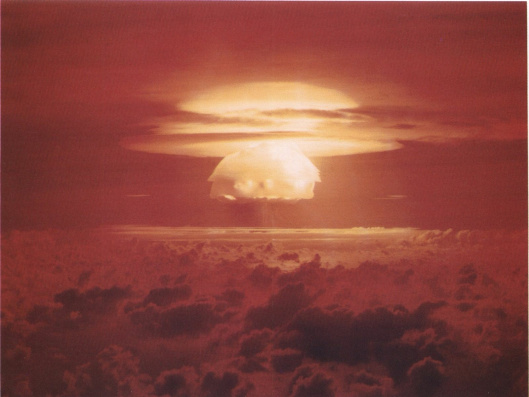
The US tested its first dry Thermonuclear device on March 1, 1954, in the Marshal Islands. Castle Bravo, with a 15 megaton yield, had produced a mushroom cloud that grew to nearly four-and-a-half miles wide and reached a height of 130,000 feet six minutes after the detonation.
Scientists have terribly miscalculated its capacity, intended to be a 5–6 megaton detonation, following the impact, radioactive fallout contaminated surrounding islands, exposing locals and U.S. personnel to dangerous radiation levels. An estimation states that 665 inhabitants of the Marshall Islands were overexposed to radiation. The fallout spread over 7,000 square miles. Europe, Australia, India, and Japan all found traces of radioactive material, starting a widespread outcry for a Nuclear Testing ban.
Castle Yanke
It was tested on May 5, 1954, at Bikini Atoll in the Marshall Islands. It was part of the Castle series tests, of which Ivy Mike and Castle Romeo were a part. Yanke contributed a yield of approximately 13–13.5 megatons, vaporised the test island, and generated a mushroom cloud affectionately estimated at 43 km in height. Although the yield of Castle Yankee was smaller than Castle Bravo, it still contributed to radioactive fallout in the nearby areas around the atoll.
Castle Romeo
Castle Romeo was tested by the US on March 26, 1954, just after the test of Castle Bravo. It yielded 11 megatons of TNT after the explosion, and the extreme red, orange, and yellow hues cloud became a popular representation of the nuclear explosion in the media. This thermonuclear test caused extensive radioactive contamination in the Pacific.
Ivy Mike
Ivy Mike was the world’s first successful hydrogen bomb test. The test marked a shift from fission-based weapons to fusion technology. It also pushed the Soviet Union to accelerate its thermonuclear program. It was also detonated in the Marshal Islands on November 1, 1952. The explosion produced 10.4 megatons of TNT. It spread across 1.8 to 3.2 miles and rose above 25 miles.
No comments yet.
1 This Month
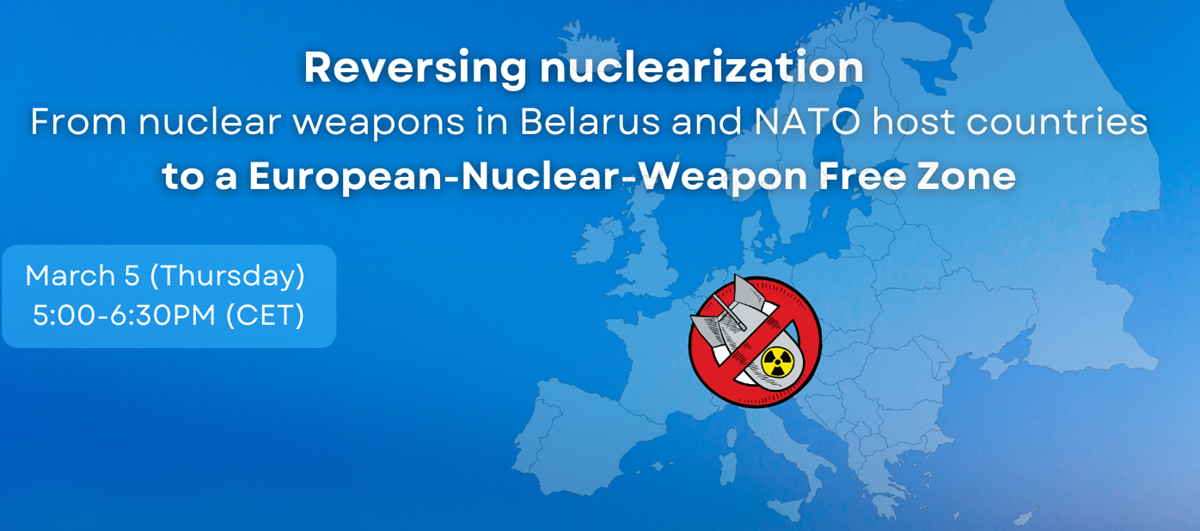
5 March -Online – Reversing nuclearization:
From nuclear weapons in Belarus and NATO host countries to a European-Nuclear-Weapon Free Zone
11am-12:30pm Eastern Time USA / 5pm-6:30pm CET

of the week – Advocating for a
nuclear free beach – https://www.samuellawrencefoundation.org/
The Samuel Lawrence Foundation advocates for a Nuclear Waste Free Beach at San Onofre, join us and take action!

10 March A LIVE WEBINAR THE REAL EFFECTS OF NUCLEAR POWER
What the Industry Isn’t Telling Us
1:00 PM Mountain, 2 pm Central, 3 pm Eastern. Live on the Keepers of the Water Facebook page

18 March Webinar @ 1 PM EST: An Assessment of SMR Projects: The Case of Canada
register for the zoom:
https://us02web.zoom.us/webinar/register/WN_o8BIIOUvQ2ONJR1nta65DQ#/registration

of the week – STOP SMALL MODULAR REACTORS IN CANADA
To see nuclear-related stories in greater depth and intensity – go to https://nuclearinformation.wordpress.com
-
Archives
- March 2026 (18)
- February 2026 (268)
- January 2026 (308)
- December 2025 (358)
- November 2025 (359)
- October 2025 (376)
- September 2025 (258)
- August 2025 (319)
- July 2025 (230)
- June 2025 (348)
- May 2025 (261)
- April 2025 (305)
-
Categories
- 1
- 1 NUCLEAR ISSUES
- business and costs
- climate change
- culture and arts
- ENERGY
- environment
- health
- history
- indigenous issues
- Legal
- marketing of nuclear
- media
- opposition to nuclear
- PERSONAL STORIES
- politics
- politics international
- Religion and ethics
- safety
- secrets,lies and civil liberties
- spinbuster
- technology
- Uranium
- wastes
- weapons and war
- Women
- 2 WORLD
- ACTION
- AFRICA
- Atrocities
- AUSTRALIA
- Christina's notes
- Christina's themes
- culture and arts
- Events
- Fuk 2022
- Fuk 2023
- Fukushima 2017
- Fukushima 2018
- fukushima 2019
- Fukushima 2020
- Fukushima 2021
- general
- global warming
- Humour (God we need it)
- Nuclear
- RARE EARTHS
- Reference
- resources – print
- Resources -audiovicual
- Weekly Newsletter
- World
- World Nuclear
- YouTube
-
RSS
Entries RSS
Comments RSS
 nuclear-news
Leave a comment